
Teacher Notes This Power Point presentation has been
Teacher Notes • This Power. Point presentation has been designed to support teachers to deliver a lesson on the features of narrative texts. • It specifically addresses the Australian Curriculum content descriptors for English: Literature – Creating literature. • This Power. Point can be used in conjunction with the following supporting materials, available on the Teach Starter website: Writing Narrative Upper Primary Power. Point Narrative Writing Pack Direct and Indirect Characterisation Posters Five Senses Graphic Organiser Narrative Writing Planning Template

Symbols I do: my turn to talk. This is the explanation section of our lesson where you are required to listen. We do: this is where we discuss or work on the concepts together. You do: your turn to be involved. You may be working in a group or on an activity individually.
Narrative Features Upper Primary
The Features of Narrative Texts • Narrative features (sometimes called narrative elements) are the text characteristics which can be found in most narratives. • Some of the most important narrative features are: - setting - characterisation - plot - viewpoint. • Let’s examine each of these narrative features in more detail.
Setting • The setting locates a narrative within a time and a place. • Some narratives take place within a single setting. For example, the narrative George’s Marvellous Medicine by Roald Dahl takes place at George’s house. The narrative unfolds over a single day. • Other narratives take place across a number of settings. For example, the narrative Harry Potter and the Philosopher’s Stone by J. K. Rowling begins in London, then moves to Hogwarts School. The narrative unfolds over an entire year. • The setting can greatly affect the events that unfold in a narrative’s plot. The actions of the characters will also be greatly affected by the setting. For example, a narrative set in a haunted castle is likely to be very different to a narrative set in the desert.
Describing the Setting • Settings must be created for the reader using descriptive language. • As writers, it is our responsibility to decide which details about the setting we wish to describe for the reader and which details we wish to leave to the reader’s imagination. • One of the most effective ways to describe the setting of a narrative is to use descriptive language which appeals to the five senses (sight, sound, smell, touch, taste). • Another effective way to describe the setting of a narrative is to use imagery which makes your words come alive (simile, metaphor, personification, onomatopoeia). • Creating a particular mood is also important when describing setting.
Describing the Setting – Example Close your eyes. Try and visualise the setting being described. The thirsty, barren earth sat despairingly beneath the hot, blazing sun. A dusty odour permeated the air. The gentle pattering of rain had not been heard in this unforgiving landscape for many years now. The heat, scorching and oppressive, draped thickly over the land like a blanket. No living soul could ever survive in this stark and desolate place. A collection of rocks, the sole inhabitants, sat as still as statues on the hot desert floor. Above them, a wisp of white cloud scribbled lazy patterns across the turquoise-blue sky. Now open your eyes.
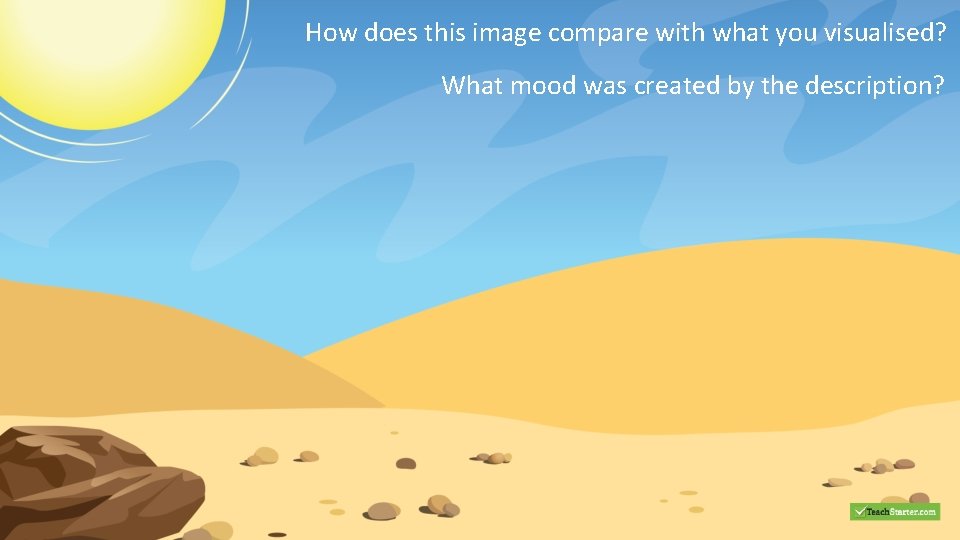
How does this image compare with what you visualised? What mood was created by the description?
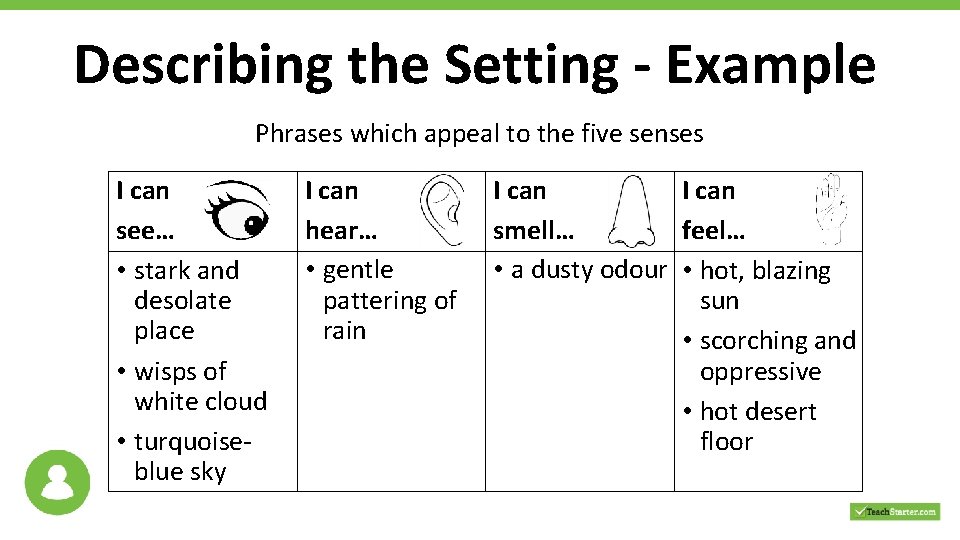
Describing the Setting - Example Phrases which appeal to the five senses I can see… • stark and desolate place • wisps of white cloud • turquoiseblue sky I can hear… • gentle pattering of rain I can smell… feel… • a dusty odour • hot, blazing sun • scorching and oppressive • hot desert floor
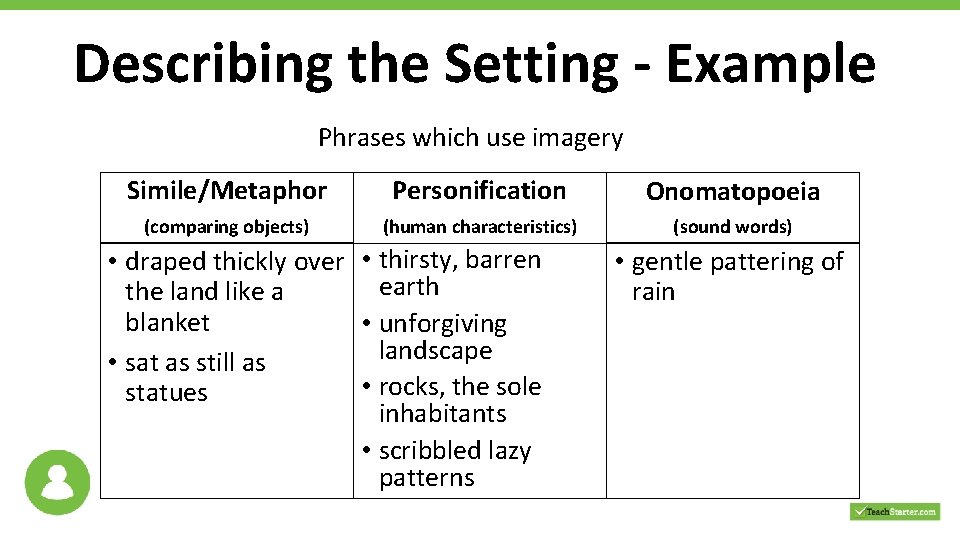
Describing the Setting - Example Phrases which use imagery Simile/Metaphor Personification Onomatopoeia (comparing objects) (human characteristics) (sound words) • draped thickly over • thirsty, barren earth the land like a blanket • unforgiving landscape • sat as still as • rocks, the sole statues inhabitants • scribbled lazy patterns • gentle pattering of rain
Describing the Setting - Activity • You are now going to work with a partner to write a description of the narrative setting on the following slide. • Use the Five Senses Graphic Organiser to brainstorm what you might see, hear, smell, touch and taste in this setting. • Write a list of images that could further add to your description. Try and include some comparative images (simile and metaphor), some sound words (onomatopoeia) or give a non-living object some human characteristics (personification). • Use all of your ideas to write a paragraph describing the setting. Aim for at least five sentences. Remember to create a particular mood.
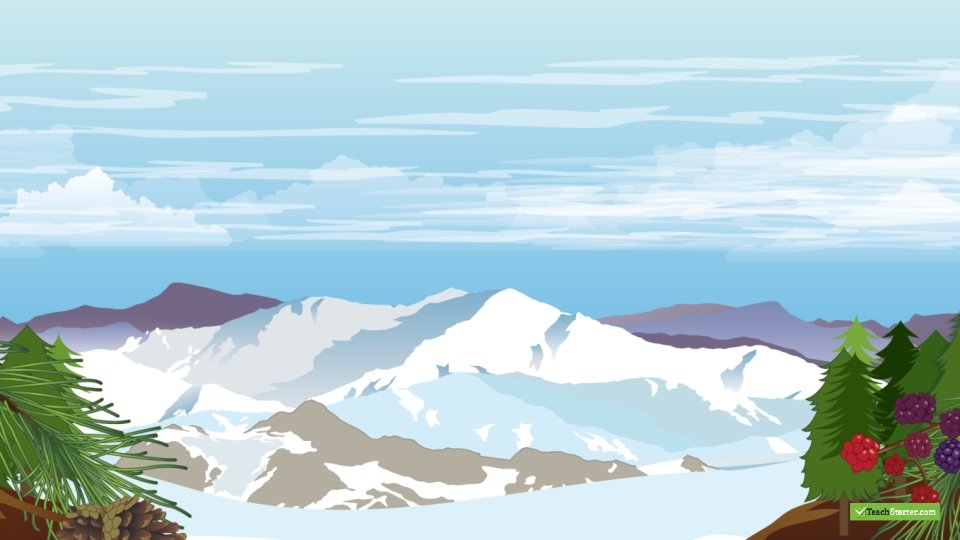
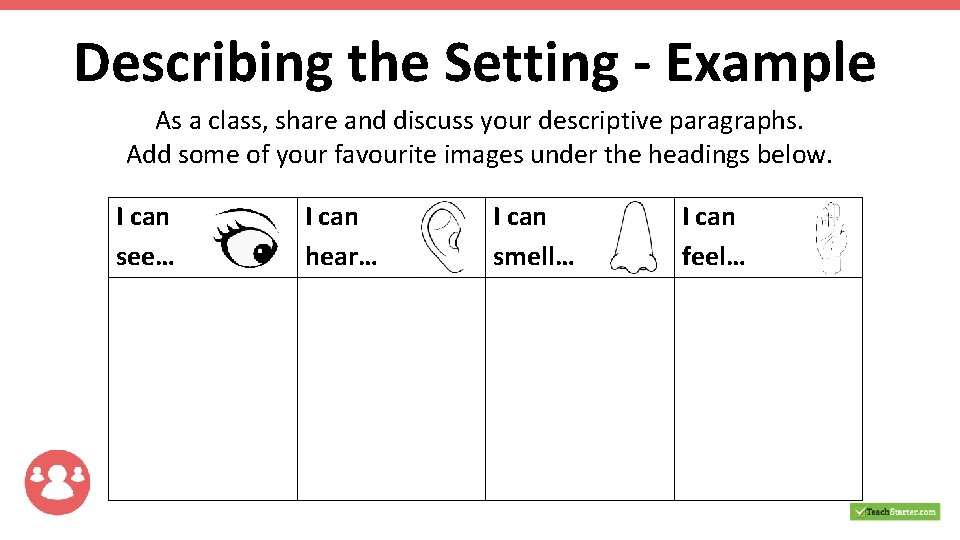
Describing the Setting - Example As a class, share and discuss your descriptive paragraphs. Add some of your favourite images under the headings below. I can see… I can hear… I can smell… I can feel…
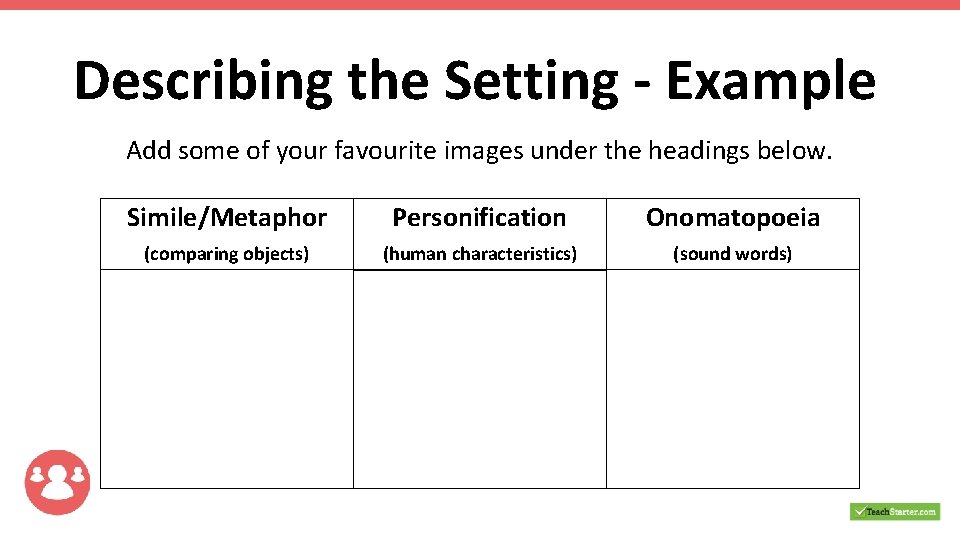
Describing the Setting - Example Add some of your favourite images under the headings below. Simile/Metaphor Personification Onomatopoeia (comparing objects) (human characteristics) (sound words)
Characterisation • The main character or characters are the focus of a narrative’s plot. They can be people, animals, imaginary beings or magical objects. • Because of a want or need, the characters must make decisions and take action on a problem or issue. This directs the plot of the narrative. • As writers, it is our responsibility to make our characters seem ‘real’ to the reader. This can be achieved by providing detailed descriptions of each character’s appearance, personality and emotions. • The process of describing the characters of a narrative is called ‘characterisation’. Characterisation can be direct (telling the reader) or indirect (showing the reader).
Indirect Characterisation • Indirect characterisation is a more sophisticated method of writing about a character than direct characterisation. • The five methods of indirect characterisation are: - Speech: What does the character say? How do they speak? - Thoughts: What are the characters private thoughts and feelings? - Effect on others: How do people react to the character? - Actions: What does the character do? How do they behave? - Looks: What does the character look like? What expressions do they use? • You can remember these five methods using the acronym ‘STEAL’.
Characterisation - Example Close your eyes. Try and visualise the character being described. Professor Paleo sighed deeply as he wiped his plump, sweaty hands on his beige Safari suit. He was exhausted, but he was not going to give up now. The professor’s pet eagle perched loyally on his wide-brimmed hat, watching his master dusting away layers of sand. The professor kindly passed him a worm from the pocket of his shorts. How he loved his master! Suddenly, the excited professor jumped; his spectacles sliding off the end of his nose. His moustache twitched with anticipation. “Oh my, what have we here? ” he whispered, bending down again for a closer look. “Could it be? ” Slowly, gently, he pulled the dinosaur fossil out of the hot, barren earth. Now open your eyes.
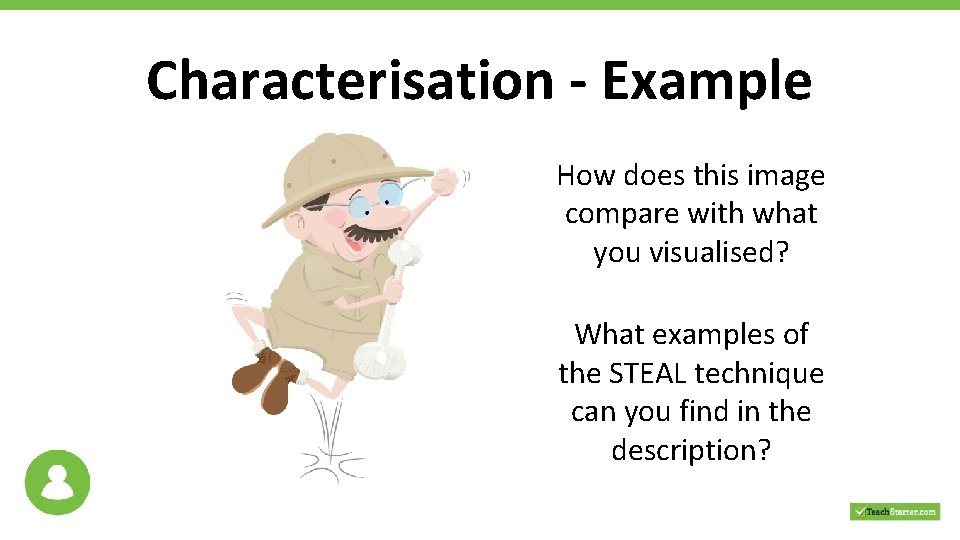
Characterisation - Example How does this image compare with what you visualised? What examples of the STEAL technique can you find in the description?
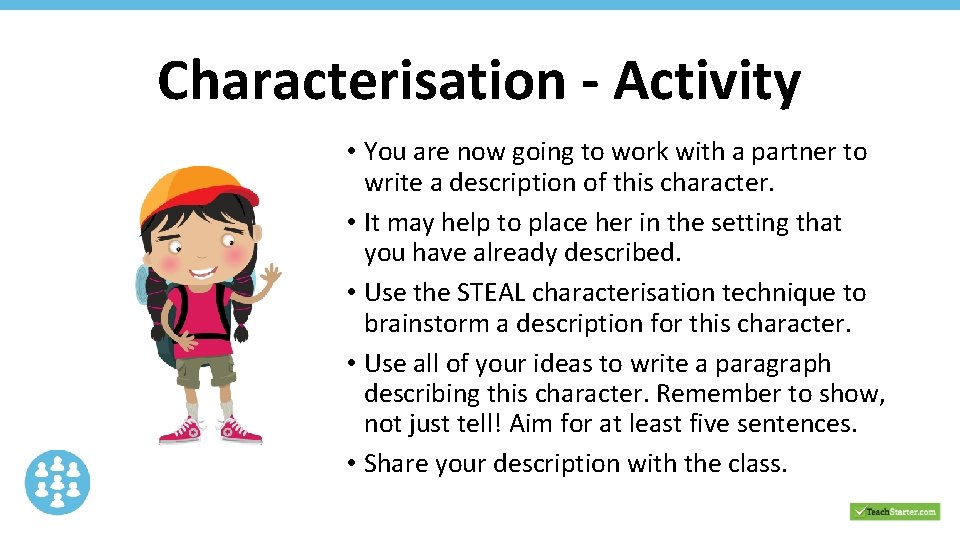
Characterisation - Activity • You are now going to work with a partner to write a description of this character. • It may help to place her in the setting that you have already described. • Use the STEAL characterisation technique to brainstorm a description for this character. • Use all of your ideas to write a paragraph describing this character. Remember to show, not just tell! Aim for at least five sentences. • Share your description with the class.
Plot • The plot is the sequence of events that unfold within a narrative. • A problem or challenge (which must be overcome by the main characters) is central to the development of a plot. This problem or challenge is called the ‘complication’. • As the main characters attempt to overcome the complication, a series of events unfolds. These events lead to a point of high suspense, called the ‘climax’. • The climax is the ‘big moment’ of the narrative; the point at which the main character will either succeed or fail in their task. The outcome of the climax is called the ‘resolution’. • The resolution may be positive or negative for the main characters.
Developing Plot • Developing ideas for a plot can be challenging. It can help to draw upon some basic story types and mould them to your own setting and characters. Some of these include: - Overcoming Evil: The main characters must defeat a villain, which threatens them or their home e. g. The Harry Potter Series by J. K Rowling - The Quest: The main characters go on a journey, in search of a specific person, object or outcome e. g. The Hobbit by J. R. R Tolkien - The Contest: The main characters go head-to-head to win a prize or competition e. g. Charlie and the Chocolate Factory by Roald Dahl - The Transformation: The main character begins as an unpleasant person, then is redeemed e. g. A Christmas Carol by Charles Dickens.
Developing Plot - Example Orientation Sahara desert, present day. Professor Paleo uncovers a rare dinosaur fossil. He intends to use the fossil to support his research into this little-known dinosaur. Complication The fossil is stolen from Professor Paleo by his nemesis, the evil Doctor Raptor wants to add the rare fossil to his own private collection. Events and Climax Professor Paleo tracks Doctor Raptor across the desert. When he catches up with him, Doctor Raptor threatens to throw the rare fossil into a deep canyon. Resolution Professor Paleo’s pet eagle swoops down on the unsuspecting Doctor Raptor and recovers the fossil. The Professor’s research is
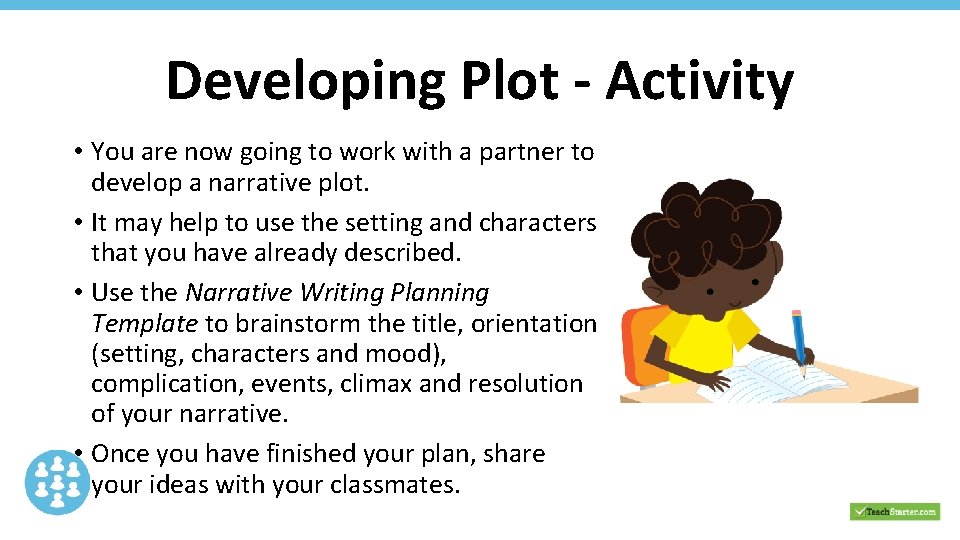
Developing Plot - Activity • You are now going to work with a partner to develop a narrative plot. • It may help to use the setting and characters that you have already described. • Use the Narrative Writing Planning Template to brainstorm the title, orientation (setting, characters and mood), complication, events, climax and resolution of your narrative. • Once you have finished your plan, share your ideas with your classmates.
Viewpoint • Every narrative has a narrator (the person who is telling the story). The narrator controls how the story is presented to the reader. Because of this, the reader will usually see the story from the perspective of the narrator. • Sometimes, the narrator is one of the characters in the story. Because the character is telling the reader about events that happen to them, they use pronouns such as ‘I’ and ‘me’. An example of a first-person narrative is Diary of a Wimpy Kid by Jeff Kinney. • Sometimes, the narrator is someone not involved in the story. Because the narrator is telling the reader about events that happen to other people, they use pronouns such as ‘he’, ‘she’ and ‘they’. An example of a third-person narrative is Charlotte’s Web by E. B. White.
Narrative Features – Activity • Choose a narrative viewpoint that would be well-suited to the narrative plot you have already developed. • In pairs or individually, use your plan to write a short narrative. Aim for at least one page of your workbook. • Once you have finished, be sure to carefully edit your work for errors. • Share your narrative with your classmates.
- Slides: 26