
Teacher Guidance Each theme is standalone and can
- Slides: 2
Teacher Guidance • Each theme is stand-alone and can be used independently or as a whole package. • The materials are fully adaptable and designed to be used flexibly, depending on the age and needs of the pupils and the time available. • We strongly recommend that teachers read the book fully prior to using the teaching materials to gain an understanding of themes covered, some of which may be more appropriate for upper Key Stage 2. On slides where particular consideration needs to be taken, this has been indicated within the notes. • Suggestions of additional supporting materials, including You. Tube videos, are provided in the notes on relevant slides. We strongly recommend that videos are watched in their entirety before sharing with pupils to ensure that they are appropriate and that they have not been corrupted in any way. • The package provides rich opportunities for oracy: please see Pi. XL’s Oracy Progression Map for further information about the development of oracy and supporting materials.
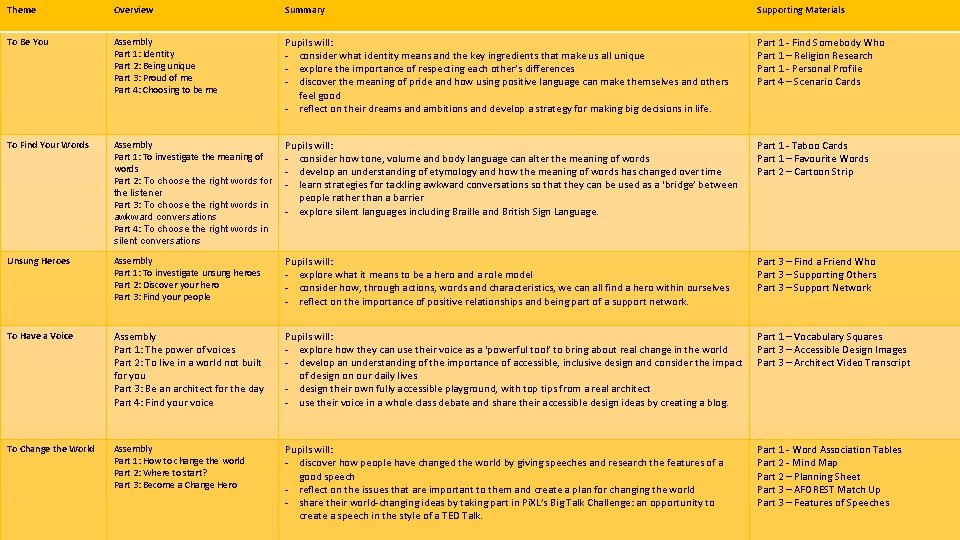
Theme Overview Summary Supporting Materials To Be You Assembly Part 1: Identity Part 2: Being unique Part 3: Proud of me Part 4: Choosing to be me Pupils will: - consider what identity means and the key ingredients that make us all unique - explore the importance of respecting each other’s differences - discover the meaning of pride and how using positive language can make themselves and others feel good - reflect on their dreams and ambitions and develop a strategy for making big decisions in life. Part 1 - Find Somebody Who Part 1 – Religion Research Part 1 - Personal Profile Part 4 – Scenario Cards To Find Your Words Assembly Part 1: To investigate the meaning of words Part 2: To choose the right words for the listener Part 3: To choose the right words in awkward conversations Part 4: To choose the right words in silent conversations Pupils will: - consider how tone, volume and body language can alter the meaning of words - develop an understanding of etymology and how the meaning of words has changed over time - learn strategies for tackling awkward conversations so that they can be used as a ‘bridge’ between people rather than a barrier - explore silent languages including Braille and British Sign Language. Part 1 - Taboo Cards Part 1 – Favourite Words Part 2 – Cartoon Strip Unsung Heroes Assembly Part 1: To investigate unsung heroes Part 2: Discover your hero Part 3: Find your people Pupils will: - explore what it means to be a hero and a role model - consider how, through actions, words and characteristics, we can all find a hero within ourselves - reflect on the importance of positive relationships and being part of a support network. Part 3 – Find a Friend Who Part 3 – Supporting Others Part 3 – Support Network To Have a Voice Assembly Part 1: The power of voices Part 2: To live in a world not built for you Part 3: Be an architect for the day Part 4: Find your voice Pupils will: - explore how they can use their voice as a ‘powerful tool’ to bring about real change in the world - develop an understanding of the importance of accessible, inclusive design and consider the impact of design on our daily lives - design their own fully accessible playground, with top tips from a real architect - use their voice in a whole class debate and share their accessible design ideas by creating a blog. Part 1 – Vocabulary Squares Part 3 – Accessible Design Images Part 3 – Architect Video Transcript To Change the World Assembly Part 1: How to change the world Part 2: Where to start? Part 3: Become a Change Hero Pupils will: - discover how people have changed the world by giving speeches and research the features of a good speech - reflect on the issues that are important to them and create a plan for changing the world - share their world-changing ideas by taking part in Pi. XL’s Big Talk Challenge: an opportunity to create a speech in the style of a TED Talk. Part 1 - Word Association Tables Part 2 - Mind Map Part 2 – Planning Sheet Part 3 – AFOREST Match Up Part 3 – Features of Speeches