
Teachable Unit Membrane Structure and Function Junior level
Teachable Unit - Membrane Structure and Function • Junior level course (cell biology or physiology) • 3 week unit on membrane structure/function (including cell signaling/communication) • Week 1: Membrane components/structure and transport mechanisms • Week 2: Properties of membrane-interacting molecules
This Tidbit • Late week 2 • Goals – Reinforce concepts of how molecules interact with membranes – Use experimental data to infer how molecules interact with cells

Learning Outcomes • Compare and contrast ligand interactions with cells • Describe different mechanisms by which molecules interact with cells • Based on physical properties and concentration gradients, predict how different molecules interact with cell membranes
cell “I have an idea…Let’s start thinking outside of the box…. ”
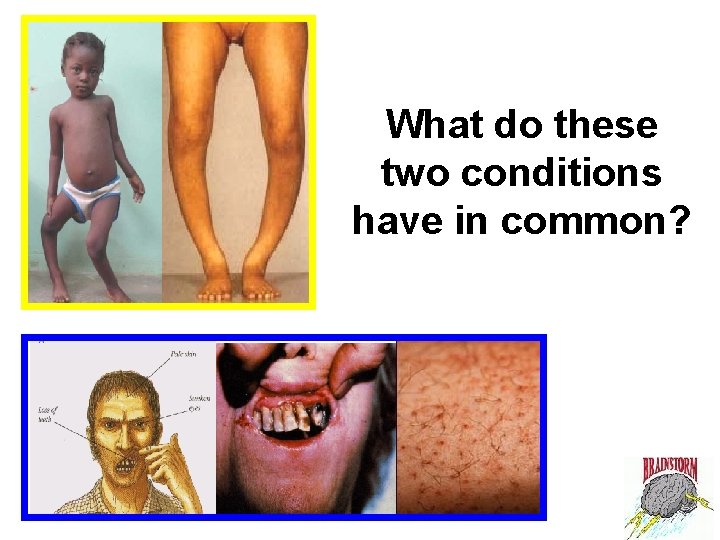
What do these two conditions have in common?
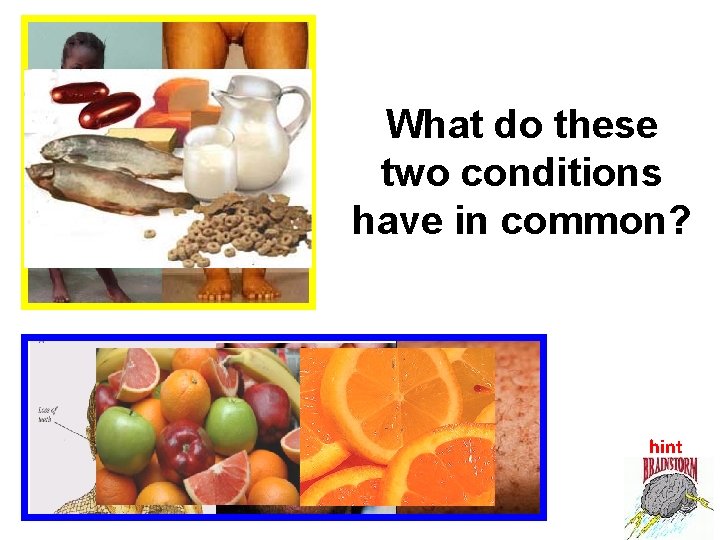
What do these two conditions have in common? hint
Vitamin deficiency is bad, so we take vitamins… but… After you eat them… How are vitamins able to affect cells?
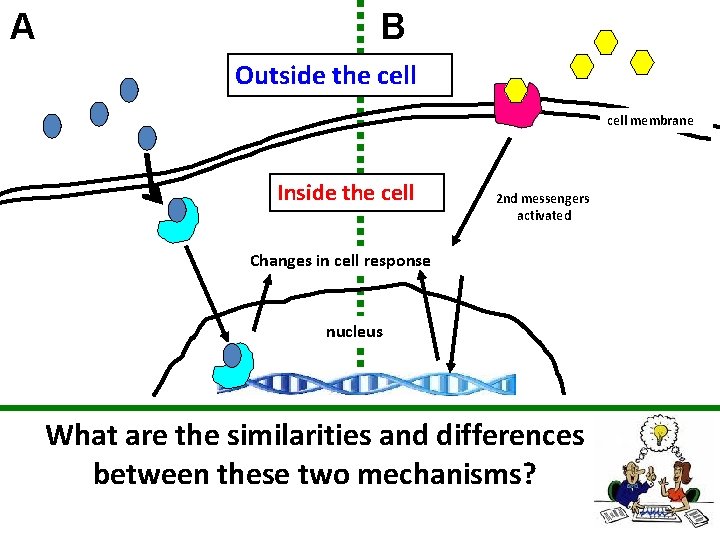
A B Outside the cell membrane Inside the cell 2 nd messengers activated Changes in cell response nucleus What are the similarities and differences between these two mechanisms?
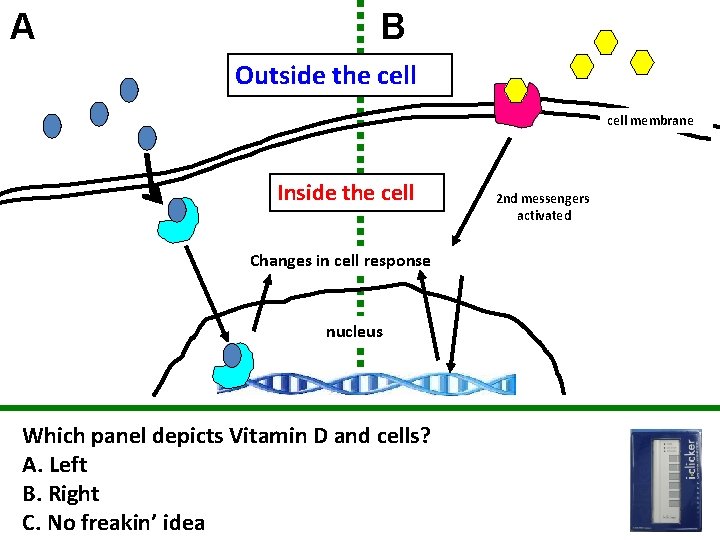
A B Outside the cell membrane Inside the cell Changes in cell response nucleus Which panel depicts Vitamin D and cells? A. Left B. Right C. No freakin’ idea 2 nd messengers activated

Vitamin D hint
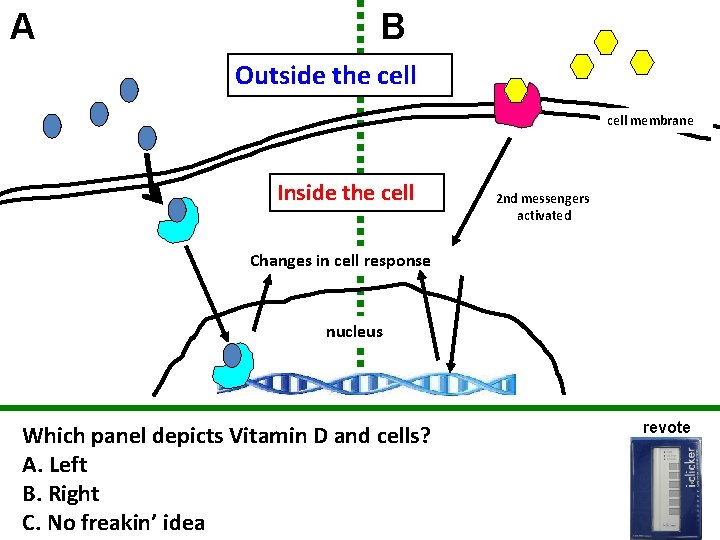
A B Outside the cell membrane Inside the cell 2 nd messengers activated Changes in cell response nucleus Which panel depicts Vitamin D and cells? A. Left B. Right C. No freakin’ idea revote
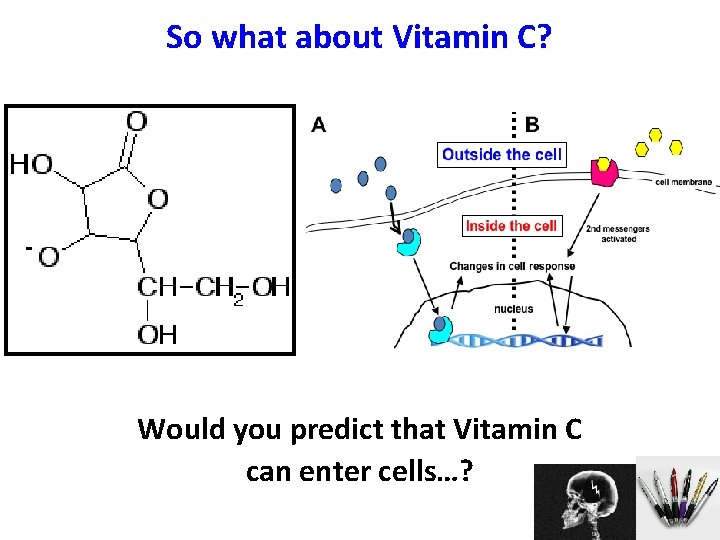
So what about Vitamin C? Would you predict that Vitamin C can enter cells…?
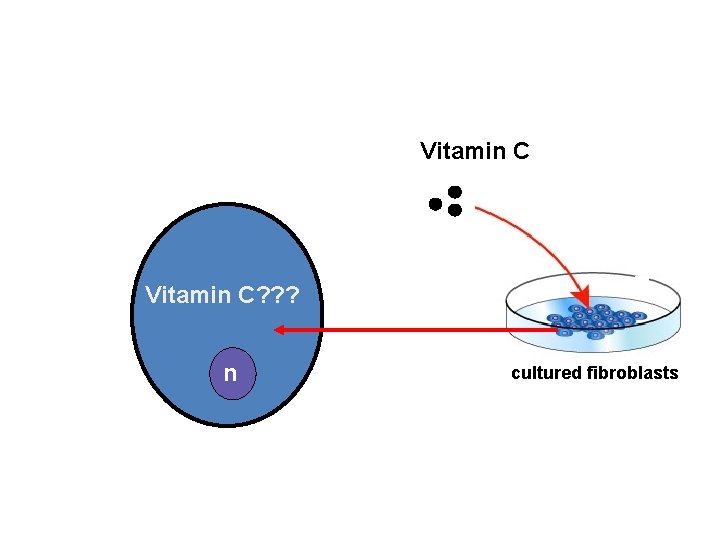
Vitamin C? ? ? n cultured fibroblasts
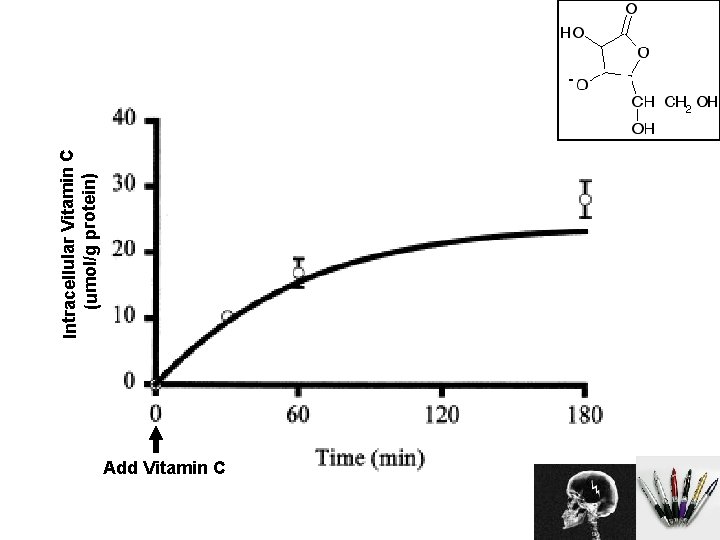
Intracellular Vitamin C (umol/g protein) Vit C Vitamin C? ? ? N Add Vitamin C
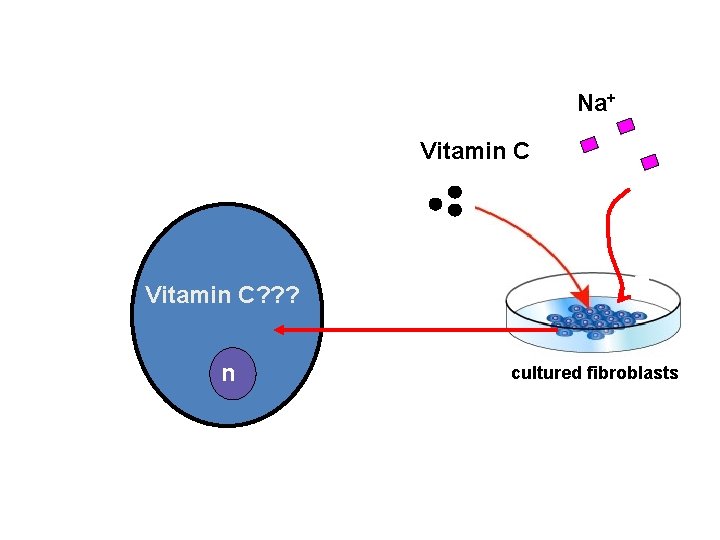
Na+ Vitamin C? ? ? n cultured fibroblasts
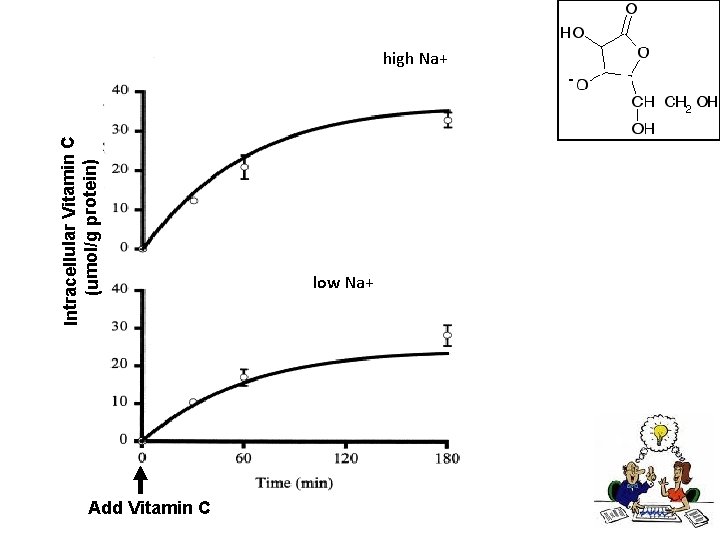
Intracellular Vitamin C (umol/g protein) high Na+ w/Na+ Add Vitamin C low Na+
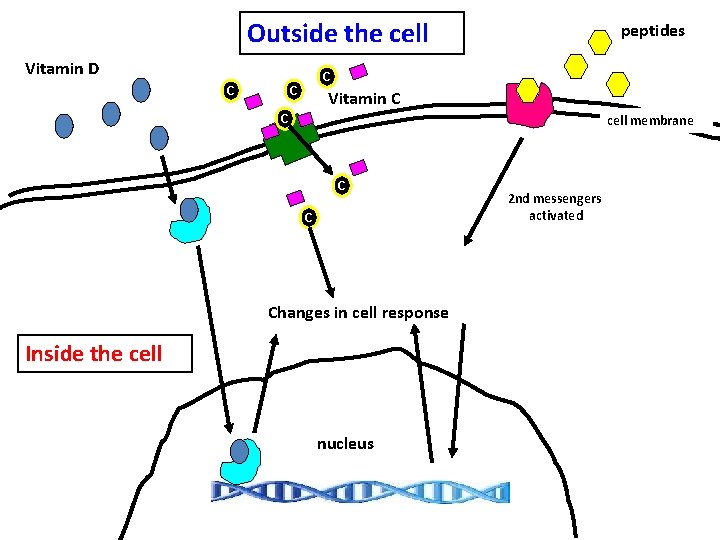
Outside the cell Vitamin D peptides C C C Vitamin C cell membrane C Changes in cell response Inside the cell nucleus 2 nd messengers activated
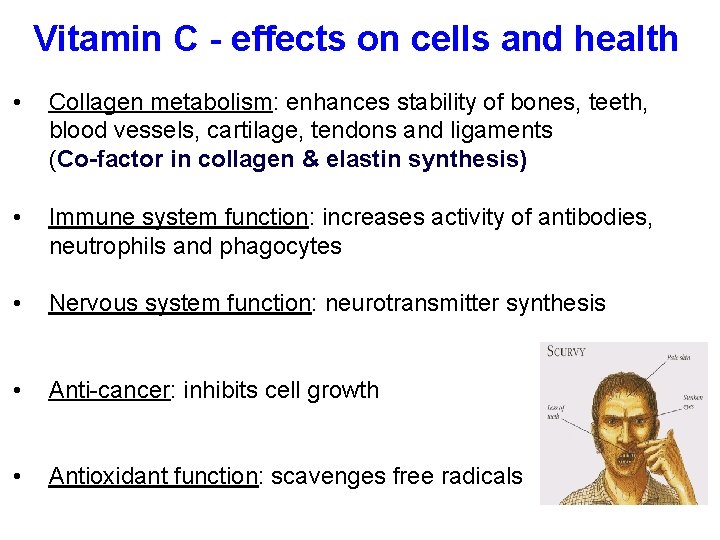
Vitamin C - effects on cells and health • Collagen metabolism: enhances stability of bones, teeth, blood vessels, cartilage, tendons and ligaments (Co-factor in collagen & elastin synthesis) • Immune system function: increases activity of antibodies, neutrophils and phagocytes • Nervous system function: neurotransmitter synthesis • Anti-cancer: inhibits cell growth • Antioxidant function: scavenges free radicals
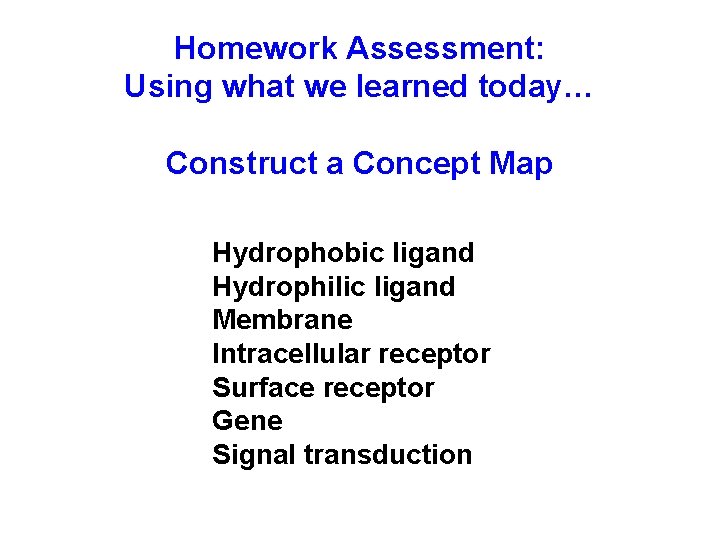
Homework Assessment: Using what we learned today… Construct a Concept Map Hydrophobic ligand Hydrophilic ligand Membrane Intracellular receptor Surface receptor Gene Signal transduction
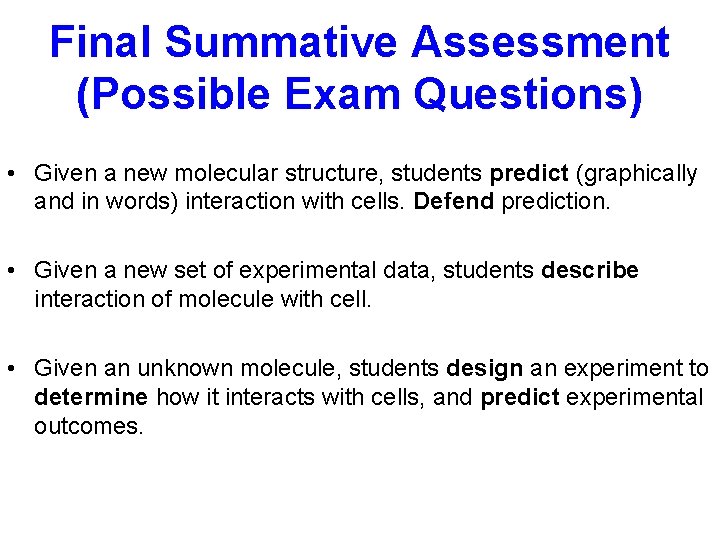
Final Summative Assessment (Possible Exam Questions) • Given a new molecular structure, students predict (graphically and in words) interaction with cells. Defend prediction. • Given a new set of experimental data, students describe interaction of molecule with cell. • Given an unknown molecule, students design an experiment to determine how it interacts with cells, and predict experimental outcomes.
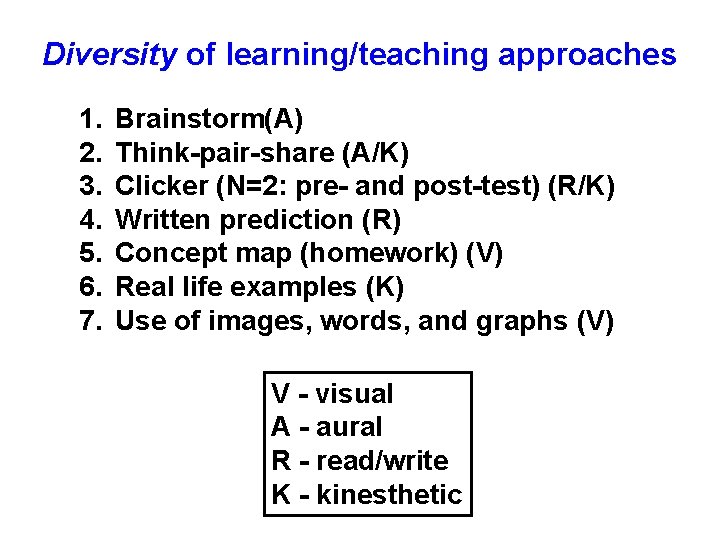
Diversity of learning/teaching approaches 1. 2. 3. 4. 5. 6. 7. Brainstorm(A) Think-pair-share (A/K) Clicker (N=2: pre- and post-test) (R/K) Written prediction (R) Concept map (homework) (V) Real life examples (K) Use of images, words, and graphs (V) V - visual A - aural R - read/write K - kinesthetic

Thanks to…. We would like to thank the Summer Institute for this opportunity. We would also like to thank our fearless leader (MP) for all of her help, support and patience…and sense of humor! Lastly thanks to all of you ! And to our hosts for the hospitality…
- Slides: 22