
Teach Grow Inspire Kindergarten Mr Mitchell Ms Watson
- Slides: 8
Teach Grow Inspire Kindergarten Mr. Mitchell Ms. Watson -Johnson Ms. Smith Ms. Sanchez
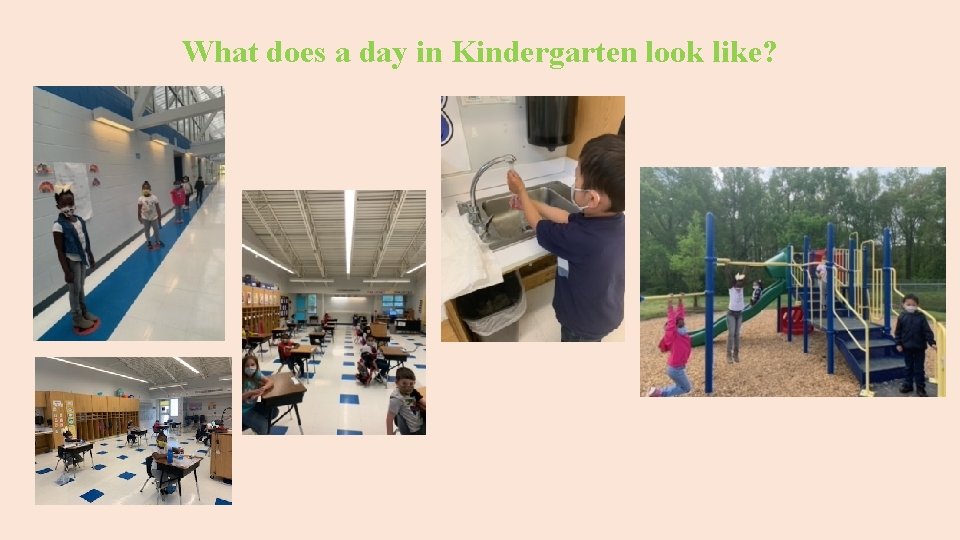
What does a day in Kindergarten look like?
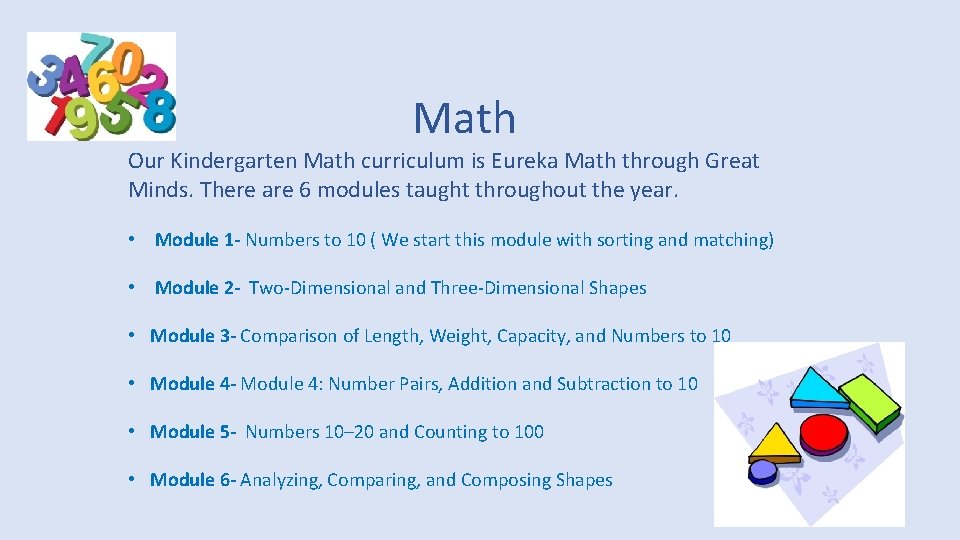
Math Our Kindergarten Math curriculum is Eureka Math through Great Minds. There are 6 modules taught throughout the year. • Module 1 - Numbers to 10 ( We start this module with sorting and matching) • Module 2 - Two-Dimensional and Three-Dimensional Shapes • Module 3 - Comparison of Length, Weight, Capacity, and Numbers to 10 • Module 4 - Module 4: Number Pairs, Addition and Subtraction to 10 • Module 5 - Numbers 10– 20 and Counting to 100 • Module 6 - Analyzing, Comparing, and Composing Shapes
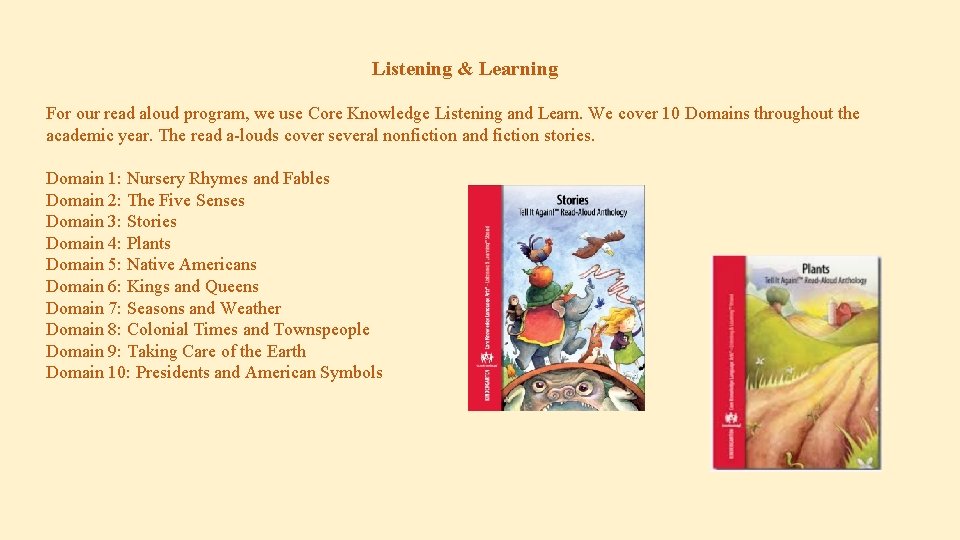
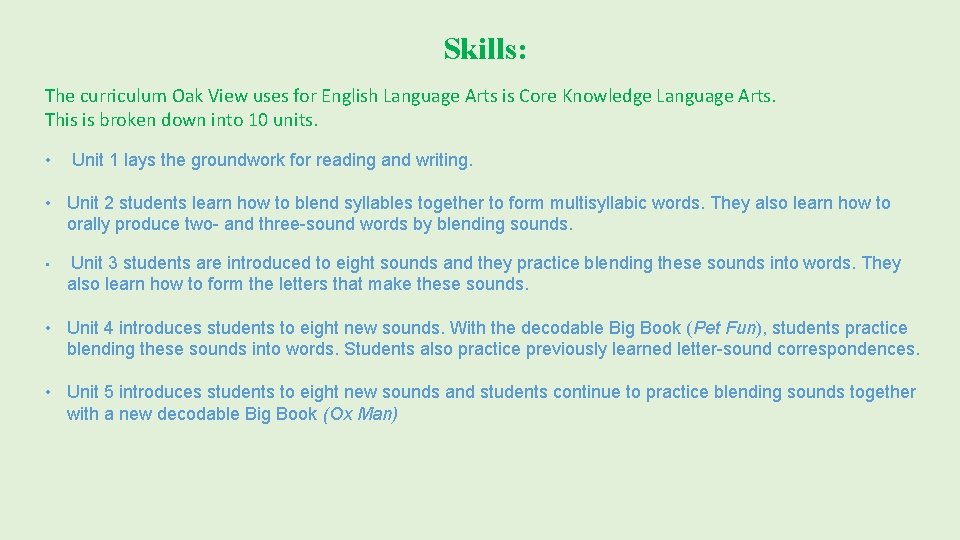
Listening & Learning For our read aloud program, we use Core Knowledge Listening and Learn. We cover 10 Domains throughout the academic year. The read a-louds cover several nonfiction and fiction stories. Domain 1: Nursery Rhymes and Fables Domain 2: The Five Senses Domain 3: Stories Domain 4: Plants Domain 5: Native Americans Domain 6: Kings and Queens Domain 7: Seasons and Weather Domain 8: Colonial Times and Townspeople Domain 9: Taking Care of the Earth Domain 10: Presidents and American Symbols
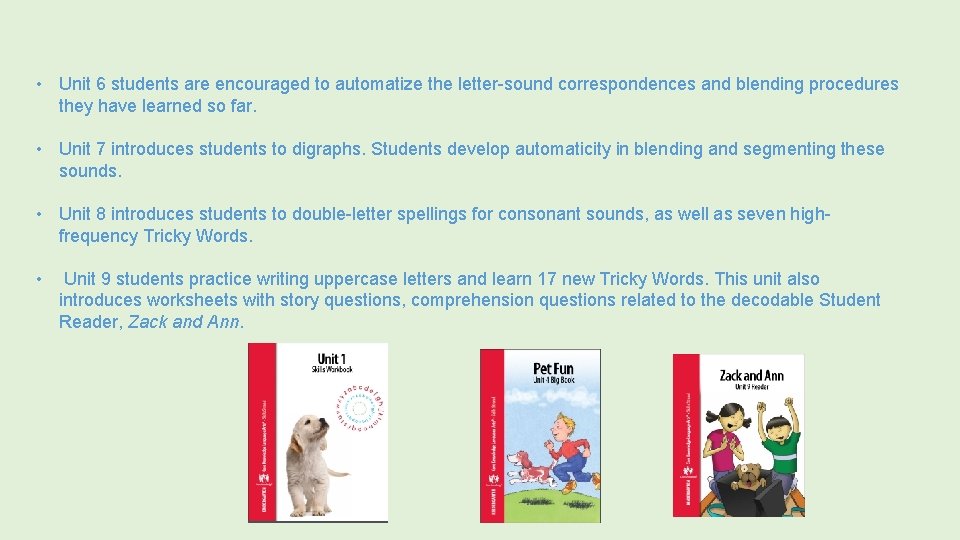
Skills: The curriculum Oak View uses for English Language Arts is Core Knowledge Language Arts. This is broken down into 10 units. • Unit 1 lays the groundwork for reading and writing. • Unit 2 students learn how to blend syllables together to form multisyllabic words. They also learn how to orally produce two- and three-sound words by blending sounds. • Unit 3 students are introduced to eight sounds and they practice blending these sounds into words. They also learn how to form the letters that make these sounds. • Unit 4 introduces students to eight new sounds. With the decodable Big Book (Pet Fun), students practice blending these sounds into words. Students also practice previously learned letter-sound correspondences. • Unit 5 introduces students to eight new sounds and students continue to practice blending sounds together with a new decodable Big Book (Ox Man)
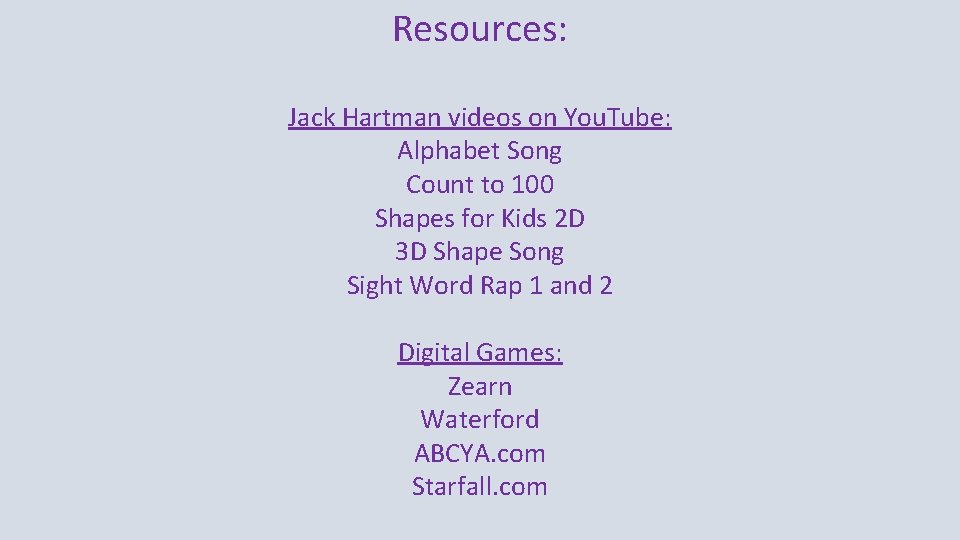
• Unit 6 students are encouraged to automatize the letter-sound correspondences and blending procedures they have learned so far. • Unit 7 introduces students to digraphs. Students develop automaticity in blending and segmenting these sounds. • Unit 8 introduces students to double-letter spellings for consonant sounds, as well as seven highfrequency Tricky Words. • Unit 9 students practice writing uppercase letters and learn 17 new Tricky Words. This unit also introduces worksheets with story questions, comprehension questions related to the decodable Student Reader, Zack and Ann.
Resources: Jack Hartman videos on You. Tube: Alphabet Song Count to 100 Shapes for Kids 2 D 3 D Shape Song Sight Word Rap 1 and 2 Digital Games: Zearn Waterford ABCYA. com Starfall. com