
TCT 2013 Late Breaking Clinical Trials III Thursday
TCT 2013: Late Breaking Clinical Trials III – Thursday, October 31, 2013. 10: 20– 10: 32 P. M. – Main Arena. DUTCH PEERS (TWENTE II): A Prospective, Randomized, "All-Comers" Trial of Third-Generation Zotarolimus-Eluting vs. Everolimus-Eluting Coronary Stents Clemens von Birgelen 1, 2, Hanim Sen 1, Ming Kai Lam 1, Peter W. Danse 3, Gillian A. J. Jessurun 4, Raymond W. M. Hautvast 5, K. Gert van Houwelingen 1, Alexander R. Schramm 4, R. Melvyn Tjon Joe Gin 3, J. (Hans) W. Louwerenburg 1, Frits H. A. F. de Man 1, Martin G. Stoel 1, Marije M. Löwik 1, Gerard C. M. Linssen 6, Salah A. M. Saïd 6, Mark B. Nienhuis 7, Patrick M. J. Verhorst 1, Mounir W. Z. Basalus 1, Carine J. M. Doggen 2, Kenneth Tandjung 1 1 Thoraxcentrum Twente, Medisch Spectrum Twente, Dpt. of Cardiology, Enschede, 2 Dpt. of Health Technology and Services Research, University of Twente, Enschede, Hospital, Dpt. of Cardiology, Arnhem, 4 Scheper Hospital, Dpt. of Cardiology, Emmen, 5 Medical Center Alkmaar, Dpt. of Cardiology, Alkmaar, 6 Hospital Group Twente, Dpt. of Cardiology, Almelo and Hengelo, 7 Queen Beatrix Hospital, Dpt. of Cardiology, Winterswijk, the Netherlands 3 Rijnstate

Disclosure Statement C. von Birgelen, MD Ph. D ü Institutional Research Grant: Abbott Vascular, Biotronik, Boston Scientific, Medtronic ü Consultancy: Abbott Vascular, Boston Scientific, Medtronic ü Travelling Expenses: Biotronik ü Speakers Honorarium: Biotronik and MSD q Major Stock Shareholder / Equity q Royalty Income q Ownership / Founder q Intellectual Property Rights q Other Financial Benefit
Background • Second-generation drug-eluting stents (DES) with biocompatible durable coatings are efficacious and safe. • Third-generation durable coating DES use the same coatings but have novel stent platforms with more flexible designs. They may be delivered more easily in complex lesions but might be longitudinally less stable. • Outcome data for Promus Element were published, but no such data were available for Resolute Integrity. • We investigated in all-comers whether clinical outcome is similar following randomized use of both DES.
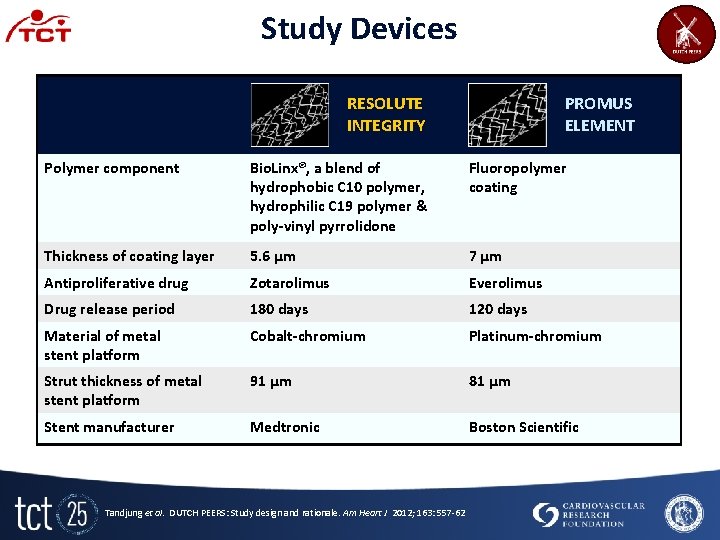
Study Devices RESOLUTE INTEGRITY PROMUS ELEMENT Polymer component Bio. Linx®, a blend of hydrophobic C 10 polymer, hydrophilic C 19 polymer & poly-vinyl pyrrolidone Fluoropolymer coating Thickness of coating layer 5. 6 µm 7 µm Antiproliferative drug Zotarolimus Everolimus Drug release period 180 days 120 days Material of metal stent platform Cobalt-chromium Platinum-chromium Strut thickness of metal stent platform 91 μm 81 μm Stent manufacturer Medtronic Boston Scientific Tandjung et al. DUTCH PEERS: Study design and rationale. Am Heart J 2012; 163: 557 -62
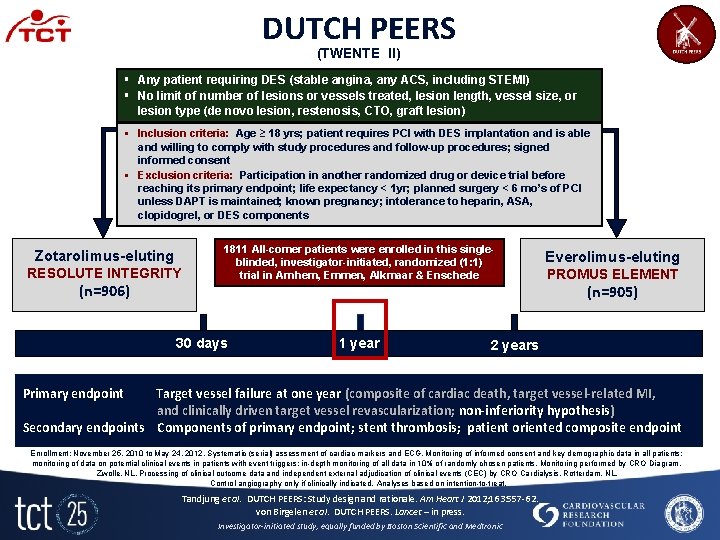
DUTCH PEERS (TWENTE II) § Any patient requiring DES (stable angina, any ACS, including STEMI) § No limit of number of lesions or vessels treated, lesion length, vessel size, or lesion type (de novo lesion, restenosis, CTO, graft lesion) § Inclusion criteria: Age ≥ 18 yrs; patient requires PCI with DES implantation and is able and willing to comply with study procedures and follow-up procedures; signed informed consent § Exclusion criteria: Participation in another randomized drug or device trial before reaching its primary endpoint; life expectancy < 1 yr; planned surgery < 6 mo’s of PCI unless DAPT is maintained; known pregnancy; intolerance to heparin, ASA, clopidogrel, or DES components Zotarolimus-eluting RESOLUTE INTEGRITY (n=906) 1811 All-comer patients were enrolled in this singleblinded, investigator-initiated, randomized (1: 1) trial in Arnhem, Emmen, Alkmaar & Enschede Everolimus-eluting PROMUS ELEMENT (n=905) 30 days 1 year 2 years Primary endpoint Target vessel failure at one year (composite of cardiac death, target vessel-related MI, and clinically driven target vessel revascularization; non-inferiority hypothesis) Secondary endpoints Components of primary endpoint; stent thrombosis; patient oriented composite endpoint Enrollment: November 25, 2010 to May 24, 2012. Systematic (serial) assessment of cardiac markers and ECG. Monitoring of informed consent and key demographic data in all patients; monitoring of data on potential clinical events in patients with event triggers; in-depth monitoring of all data in 10% of randomly chosen patients. Monitoring performed by CRO Diagram, Zwolle, NL. Processing of clinical outcome data and independent external adjudication of clinical events (CEC) by CRO Cardialysis, Rotterdam, NL. Control angiography only if clinically indicated. Analyses based on intention-to-treat. Tandjung et al. DUTCH PEERS: Study design and rationale. Am Heart J 2012; 163: 557 -62. von Birgelen et al. DUTCH PEERS. Lancet – in press. Investigator-initiated study, equally funded by Boston Scientific and Medtronic
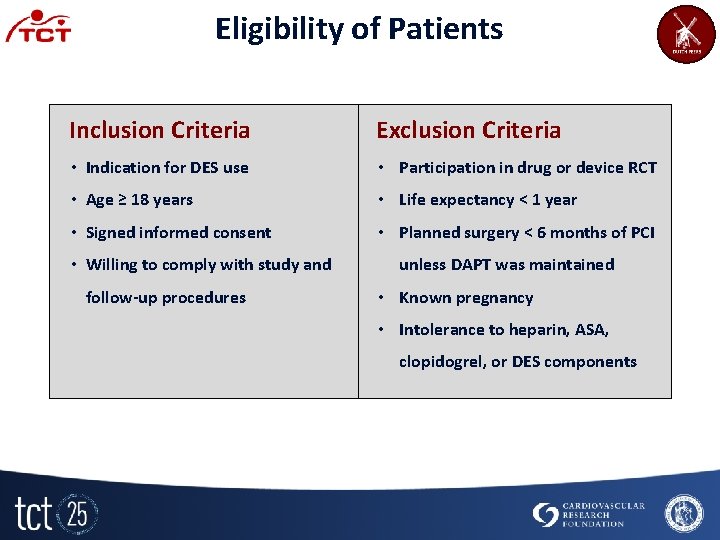
Eligibility of Patients Inclusion Criteria Exclusion Criteria • Indication for DES use • Participation in drug or device RCT • Age ≥ 18 years • Life expectancy < 1 year • Signed informed consent • Planned surgery < 6 months of PCI • Willing to comply with study and follow-up procedures unless DAPT was maintained • Known pregnancy • Intolerance to heparin, ASA, clopidogrel, or DES components
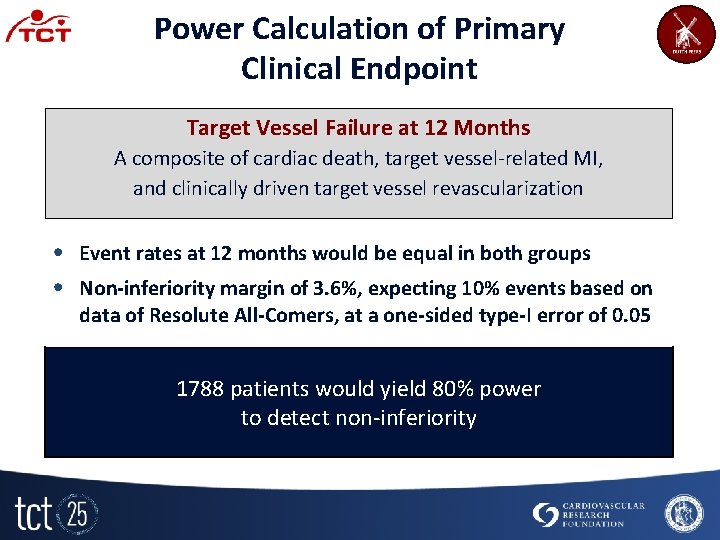
Power Calculation of Primary Clinical Endpoint Target Vessel Failure at 12 Months A composite of cardiac death, target vessel-related MI, and clinically driven target vessel revascularization • Event rates at 12 months would be equal in both groups • Non-inferiority margin of 3. 6%, expecting 10% events based on data of Resolute All-Comers, at a one-sided type-I error of 0. 05 1788 patients would yield 80% power to detect non-inferiority
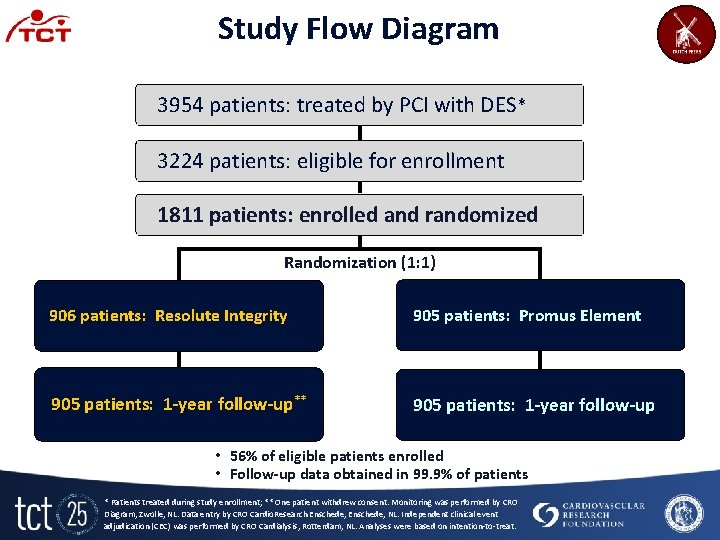
Study Flow Diagram 3954 patients: treated by PCI with DES* 3224 patients: eligible for enrollment 1811 patients: enrolled and randomized Randomization (1: 1) 906 patients: Resolute Integrity 905 patients: Promus Element 905 patients: 1 -year follow-up** 905 patients: 1 -year follow-up • 56% of eligible patients enrolled • Follow-up data obtained in 99. 9% of patients * Patients treated during study enrollment; ** One patient withdrew consent. Monitoring was performed by CRO Diagram, Zwolle, NL. Data entry by CRO Cardio. Research Enschede, NL. Independent clinical event adjudication (CEC) was performed by CRO Cardialysis, Rotterdam, NL. Analyses were based on intention-to-treat.
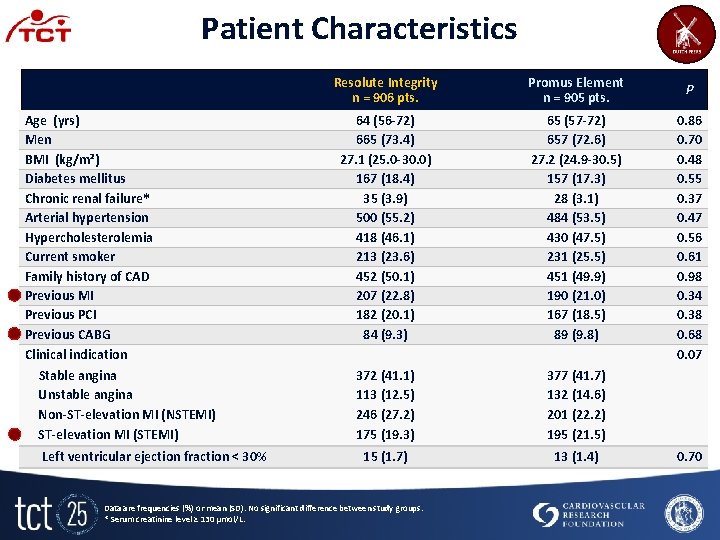
Patient Characteristics Age (yrs) Men BMI (kg/m²) Diabetes mellitus Chronic renal failure* Arterial hypertension Hypercholesterolemia Current smoker Family history of CAD Previous MI Previous PCI Previous CABG Clinical indication Stable angina Unstable angina Non-ST-elevation MI (NSTEMI) ST-elevation MI (STEMI) Left ventricular ejection fraction < 30% Resolute Integrity n = 906 pts. Promus Element n = 905 pts. 64 (56 -72) 665 (73. 4) 27. 1 (25. 0 -30. 0) 167 (18. 4) 35 (3. 9) 500 (55. 2) 418 (46. 1) 213 (23. 6) 452 (50. 1) 207 (22. 8) 182 (20. 1) 84 (9. 3) 65 (57 -72) 657 (72. 6) 27. 2 (24. 9 -30. 5) 157 (17. 3) 28 (3. 1) 484 (53. 5) 430 (47. 5) 231 (25. 5) 451 (49. 9) 190 (21. 0) 167 (18. 5) 89 (9. 8) 372 (41. 1) 113 (12. 5) 246 (27. 2) 175 (19. 3) 377 (41. 7) 132 (14. 6) 201 (22. 2) 195 (21. 5) 15 (1. 7) 13 (1. 4) Data are frequencies (%) or mean (SD). No significant difference between study groups. * Serum creatinine level ≥ 130 μmol/L. P 0. 86 0. 70 0. 48 0. 55 0. 37 0. 47 0. 56 0. 61 0. 98 0. 34 0. 38 0. 68 0. 07 0. 70
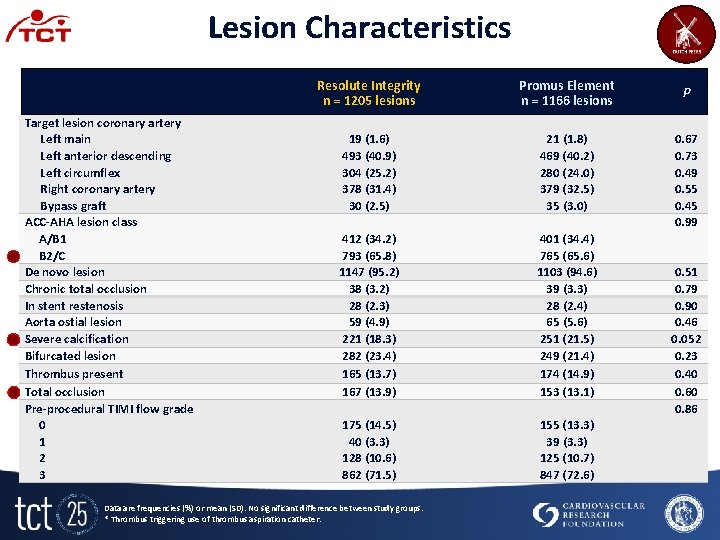
Lesion Characteristics Target lesion coronary artery Left main Left anterior descending Left circumflex Right coronary artery Bypass graft ACC-AHA lesion class A/B 1 B 2/C De novo lesion Chronic total occlusion In stent restenosis Aorta ostial lesion Severe calcification Bifurcated lesion Thrombus present Total occlusion Pre-procedural TIMI flow grade 0 1 2 3 Resolute Integrity n = 1205 lesions Promus Element n = 1166 lesions 19 (1. 6) 493 (40. 9) 304 (25. 2) 378 (31. 4) 30 (2. 5) 21 (1. 8) 469 (40. 2) 280 (24. 0) 379 (32. 5) 35 (3. 0) 412 (34. 2) 793 (65. 8) 1147 (95. 2) 38 (3. 2) 28 (2. 3) 59 (4. 9) 221 (18. 3) 282 (23. 4) 165 (13. 7) 167 (13. 9) 401 (34. 4) 765 (65. 6) 1103 (94. 6) 39 (3. 3) 28 (2. 4) 65 (5. 6) 251 (21. 5) 249 (21. 4) 174 (14. 9) 153 (13. 1) 175 (14. 5) 40 (3. 3) 128 (10. 6) 862 (71. 5) 155 (13. 3) 39 (3. 3) 125 (10. 7) 847 (72. 6) Data are frequencies (%) or mean (SD). No significant difference between study groups. * Thrombus triggering use of thrombus aspiration catheter. P 0. 67 0. 73 0. 49 0. 55 0. 45 0. 99 0. 51 0. 79 0. 90 0. 46 0. 052 0. 23 0. 40 0. 60 0. 86
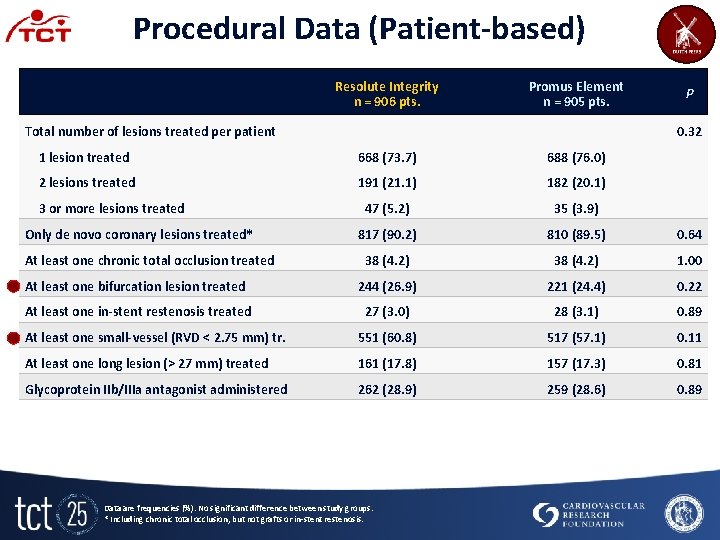
Procedural Data (Patient-based) Resolute Integrity n = 906 pts. Promus Element n = 905 pts. Total number of lesions treated per patient P 0. 32 1 lesion treated 668 (73. 7) 688 (76. 0) 2 lesions treated 191 (21. 1) 182 (20. 1) 47 (5. 2) 35 (3. 9) 817 (90. 2) 810 (89. 5) 0. 64 38 (4. 2) 1. 00 At least one bifurcation lesion treated 244 (26. 9) 221 (24. 4) 0. 22 At least one in-stent restenosis treated 27 (3. 0) 28 (3. 1) 0. 89 At least one small-vessel (RVD < 2. 75 mm) tr. 551 (60. 8) 517 (57. 1) 0. 11 At least one long lesion (> 27 mm) treated 161 (17. 8) 157 (17. 3) 0. 81 Glycoprotein IIb/IIIa antagonist administered 262 (28. 9) 259 (28. 6) 0. 89 3 or more lesions treated Only de novo coronary lesions treated* At least one chronic total occlusion treated Data are frequencies (%). No significant difference between study groups. * Including chronic total occlusion, but not grafts or in-stent restenosis.
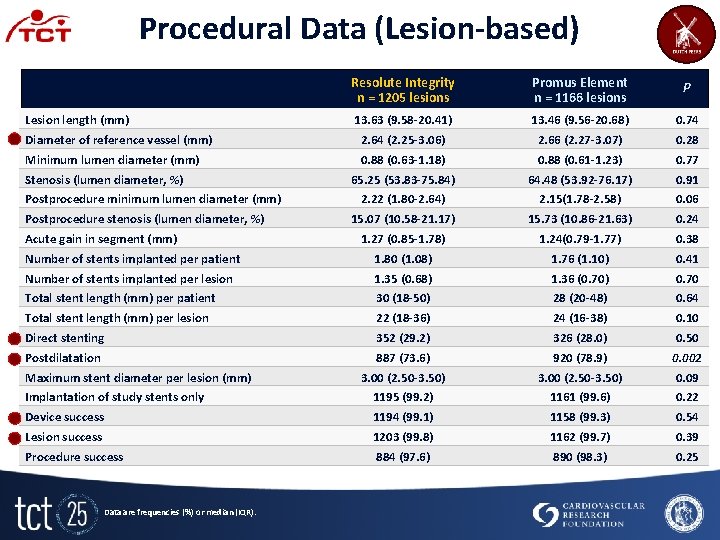
Procedural Data (Lesion-based) Resolute Integrity n = 1205 lesions Promus Element n = 1166 lesions P 13. 63 (9. 58 -20. 41) 13. 46 (9. 56 -20. 68) 0. 74 Diameter of reference vessel (mm) 2. 64 (2. 25 -3. 06) 2. 66 (2. 27 -3. 07) 0. 28 Minimum lumen diameter (mm) 0. 88 (0. 63 -1. 18) 0. 88 (0. 61 -1. 23) 0. 77 65. 25 (53. 83 -75. 84) 64. 48 (53. 92 -76. 17) 0. 91 2. 22 (1. 80 -2. 64) 2. 15(1. 78 -2. 58) 0. 06 15. 07 (10. 58 -21. 17) 15. 73 (10. 86 -21. 63) 0. 24 1. 27 (0. 85 -1. 78) 1. 24(0. 79 -1. 77) 0. 38 Number of stents implanted per patient 1. 80 (1. 08) 1. 76 (1. 10) 0. 41 Number of stents implanted per lesion 1. 35 (0. 68) 1. 36 (0. 70) 0. 70 Total stent length (mm) per patient 30 (18 -50) 28 (20 -48) 0. 64 Total stent length (mm) per lesion 22 (18 -36) 24 (16 -38) 0. 10 Direct stenting 352 (29. 2) 326 (28. 0) 0. 50 Postdilatation 887 (73. 6) 920 (78. 9) 0. 002 3. 00 (2. 50 -3. 50) 0. 09 Implantation of study stents only 1195 (99. 2) 1161 (99. 6) 0. 22 Device success 1194 (99. 1) 1158 (99. 3) 0. 54 Lesion success 1203 (99. 8) 1162 (99. 7) 0. 39 Procedure success 884 (97. 6) 890 (98. 3) 0. 25 Lesion length (mm) Stenosis (lumen diameter, %) Postprocedure minimum lumen diameter (mm) Postprocedure stenosis (lumen diameter, %) Acute gain in segment (mm) Maximum stent diameter per lesion (mm) Data are frequencies (%) or median (IQR).
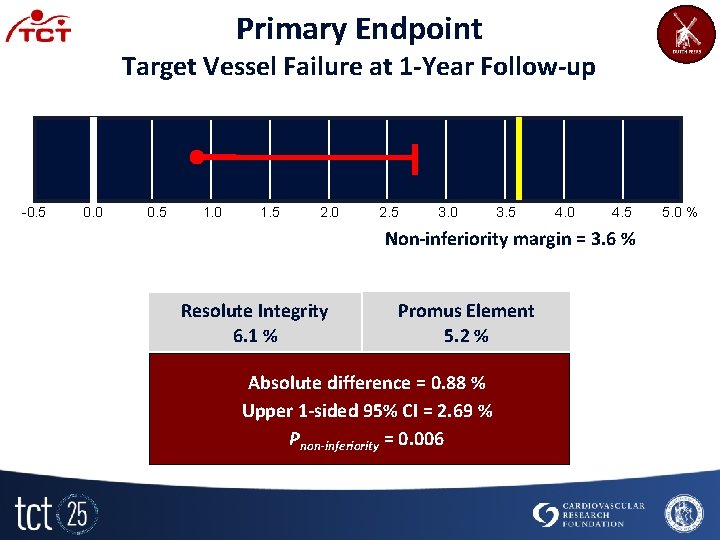
Primary Endpoint Target Vessel Failure at 1 -Year Follow-up -0. 5 0. 0 0. 5 1. 0 1. 5 2. 0 2. 5 3. 0 3. 5 4. 0 4. 5 Non-inferiority margin = 3. 6 % Resolute Integrity 6. 1 % Promus Element 5. 2 % Absolute difference = 0. 88 % Upper 1 -sided 95% CI = 2. 69 % Pnon-inferiority = 0. 006 5. 0 %
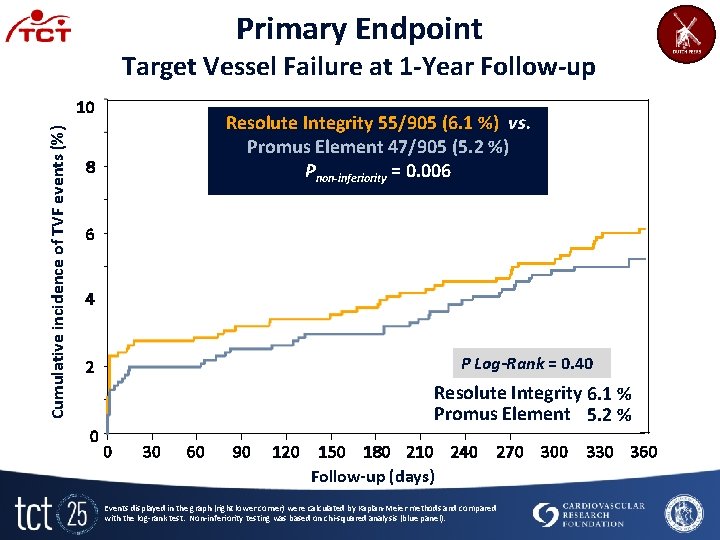
Primary Endpoint Target Vessel Failure at 1 -Year Follow-up Cumulative incidence of TVF events (%) 10 Resolute Integrity 55/905 (6. 1 %) vs. Promus Element 47/905 (5. 2 %) Pnon-inferiority = 0. 006 8 6 4 P Log-Rank = 0. 40 2 0 Resolute Integrity 6. 1 % Promus Element 5. 2 % 0 30 60 90 120 150 180 210 240 Follow-up (days) 270 300 Events displayed in the graph (right lower corner) were calculated by Kaplan-Meier methods and compared with the log-rank test. Non-inferiority testing was based on chi-squared analysis (blue panel). 330 360
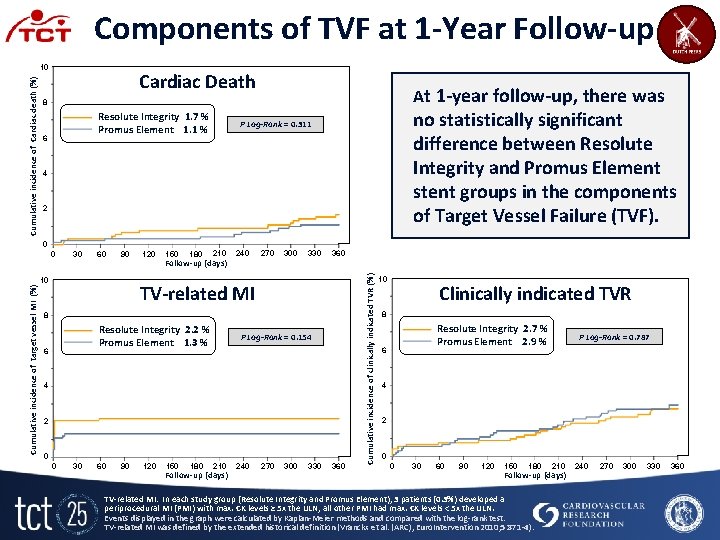
Components of TVF at 1 -Year Follow-up Cumulative incidence of cardiac death(%) Cumulative incidence of Cardiac death 10 Cardiac Death At 1 -year follow-up, there was 8 Resolute Integrity 1. 7 % Promus Element 1. 1 % 6 no statistically significant difference between Resolute Integrity and Promus Element stent groups in the components of Target Vessel Failure (TVF). P Log-Rank = 0. 311 4 2 0 30 60 90 Cumulative incidence of target vessel MI (%) 10 120 150 180 210 Follow-up (days) 240 270 300 330 360 TV-related MI 8 Resolute Integrity 2. 2 % Promus Element 1. 3 % 6 P Log-Rank = 0. 154 4 2 0 0 30 60 90 120 150 180 210 Follow-up (days) 240 270 300 330 360 Cumulative incidence of clinically indicated TVR (%) 0 10 Clinically indicated TVR 8 Resolute Integrity 2. 7 % Promus Element 2. 9 % 6 P Log-Rank = 0. 787 4 2 0 0 30 60 90 120 150 180 210 Follow-up (days) TV-related MI: In each study group (Resolute Integrity and Promus Element), 3 patients (0. 3%) developed a periprocedural MI (PMI) with max. CK levels ≥ 5 x the ULN; all other PMI had max. CK levels < 5 x the ULN. Events displayed in the graph were calculated by Kaplan-Meier methods and compared with the log-rank test. TV-related MI was defined by the extended historical definition (Vranckx et al. (ARC), Euro. Intervention 2010; 5: 871 -4). 240 270 300 330 360
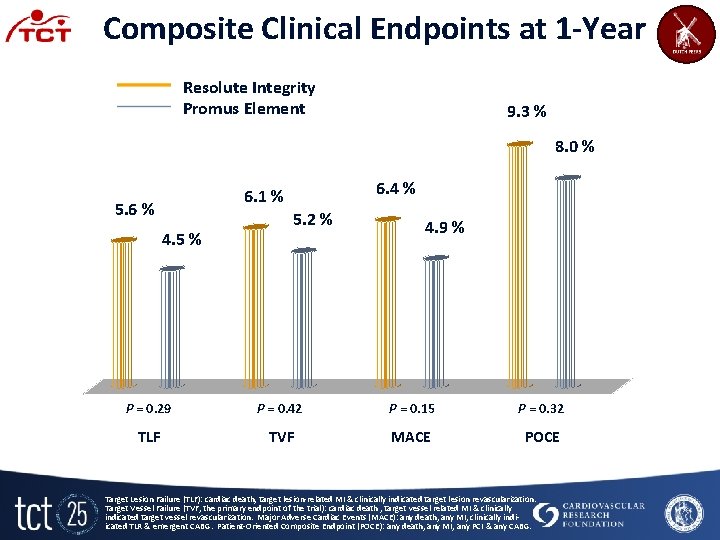
Composite Clinical Endpoints at 1 -Year Resolute Integrity Promus Element 9. 3 % 8. 0 % 6. 4 % 6. 1 % 5. 6 % 4. 5 % 5. 2 % 4. 9 % P = 0. 29 P = 0. 42 P = 0. 15 P = 0. 32 TLF TVF MACE POCE Target Lesion Failure (TLF): cardiac death, target lesion-related MI & clinically indicated target lesion revascularization. Target Vessel Failure (TVF, the primary endpoint of the trial): cardiac death , target vessel related MI & clinically indicated target vessel revascularization. Major Adverse Cardiac Events (MACE): any death, any MI, clinically indiicated TLR & emergent CABG. Patient-Oriented Composite Endpoint (POCE): any death, any MI, any PCI & any CABG.
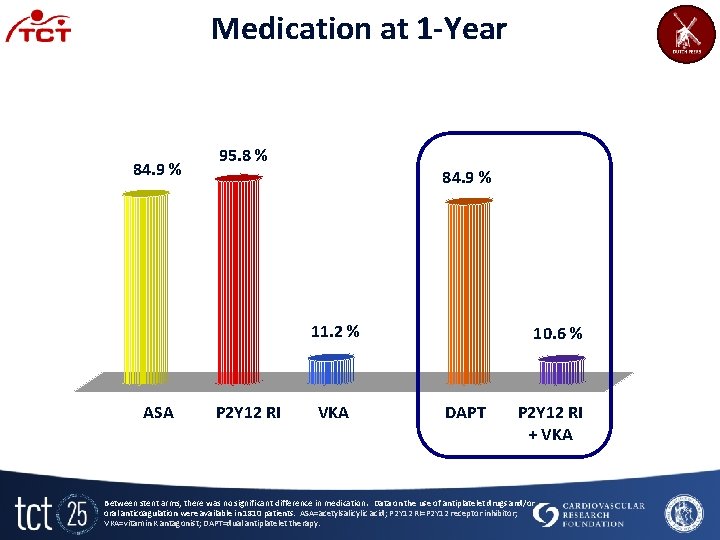
Medication at 1 -Year 84. 9 % 95. 8 % 84. 9 % 11. 2 % ASA P 2 Y 12 RI VKA 10. 6 % DAPT P 2 Y 12 RI + VKA Between stent arms, there was no significant difference in medication. Data on the use of antiplatelet drugs and/or oral anticoagulation were available in 1810 patients. ASA=acetylsalicylic acid; P 2 Y 12 RI=P 2 Y 12 receptor inhibitor; VKA=vitamin K antagonist; DAPT=dual antiplatelet therapy.
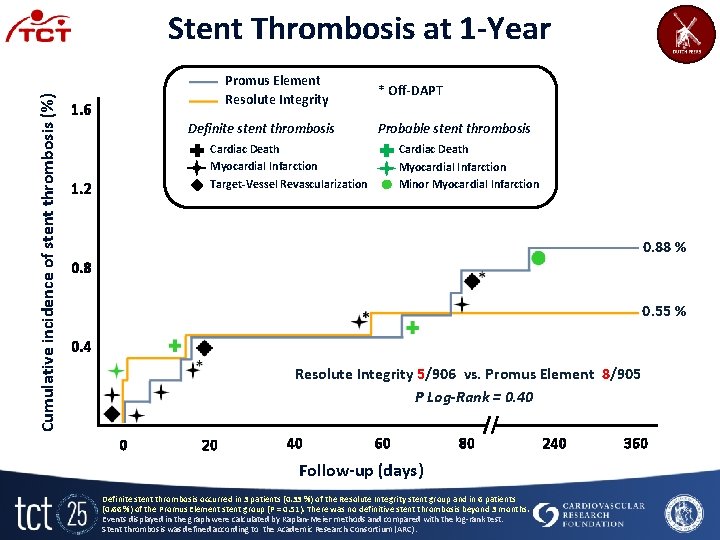
Cumulative incidence of stent thrombosis (%) Stent Thrombosis at 1 -Year Promus Element Resolute Integrity 1. 6 Definite stent thrombosis * Off-DAPT Probable stent thrombosis Cardiac Death Myocardial Infarction Target-Vessel Revascularization 1. 2 Cardiac Death Myocardial Infarction Minor Myocardial Infarction 0. 88 % 0. 8 0. 55 % 0. 4 Resolute Integrity 5/906 vs. Promus Element 8/905 P Log-Rank = 0. 40 0 20 40 60 80 Follow-up (days) Definite stent thrombosis occurred in 3 patients (0. 33 %) of the Resolute Integrity stent group and in 6 patients (0. 66 %) of the Promus Element stent group (P = 0. 51). There was no definitive stent thrombosis beyond 3 months. Events displayed in the graph were calculated by Kaplan-Meier methods and compared with the log-rank test. Stent thrombosis was defined according to the Academic Research Consortium (ARC). 240 360
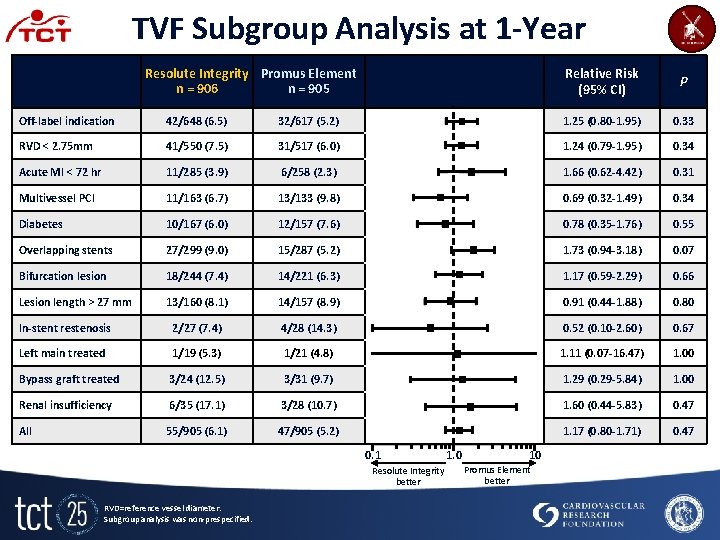
TVF Subgroup Analysis at 1 -Year Resolute Integrity Promus Element n = 906 n = 905 Relative Risk (95% CI) P Off-label indication 42/648 (6. 5) 32/617 (5. 2) 1. 25 (0. 80 -1. 95) 0. 33 RVD < 2. 75 mm 41/550 (7. 5) 31/517 (6. 0) 1. 24 (0. 79 -1. 95) 0. 34 Acute MI < 72 hr 11/285 (3. 9) 6/258 (2. 3) 1. 66 (0. 62 -4. 42) 0. 31 Multivessel PCI 11/163 (6. 7) 13/133 (9. 8) 0. 69 (0. 32 -1. 49) 0. 34 Diabetes 10/167 (6. 0) 12/157 (7. 6) 0. 78 (0. 35 -1. 76) 0. 55 Overlapping stents 27/299 (9. 0) 15/287 (5. 2) 1. 73 (0. 94 -3. 18) 0. 07 Bifurcation lesion 18/244 (7. 4) 14/221 (6. 3) 1. 17 (0. 59 -2. 29) 0. 66 Lesion length > 27 mm 13/160 (8. 1) 14/157 (8. 9) 0. 91 (0. 44 -1. 88) 0. 80 In-stent restenosis 2/27 (7. 4) 4/28 (14. 3) 0. 52 (0. 10 -2. 60) 0. 67 Left main treated 1/19 (5. 3) 1/21 (4. 8) 1. 11 (0. 07 -16. 47) 1. 00 Bypass graft treated 3/24 (12. 5) 3/31 (9. 7) 1. 29 (0. 29 -5. 84) 1. 00 Renal insufficiency 6/35 (17. 1) 3/28 (10. 7) 1. 60 (0. 44 -5. 83) 0. 47 All 55/905 (6. 1) 47/905 (5. 2) 1. 17 (0. 80 -1. 71) 0. 47 0. 1 Resolute Integrity better RVD=reference vessel diameter. Subgroup analysis was non-prespecified. 1. 0 10 Promus Element better
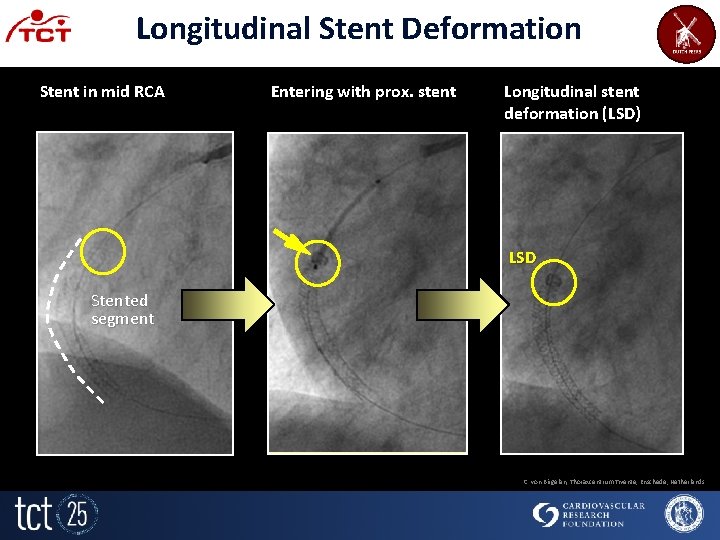
Longitudinal Stent Deformation Stent in mid RCA Entering with prox. stent Longitudinal stent deformation (LSD) LSD Stented segment C. von Birgelen, Thoraxcentrum Twente, Enschede, Netherlands
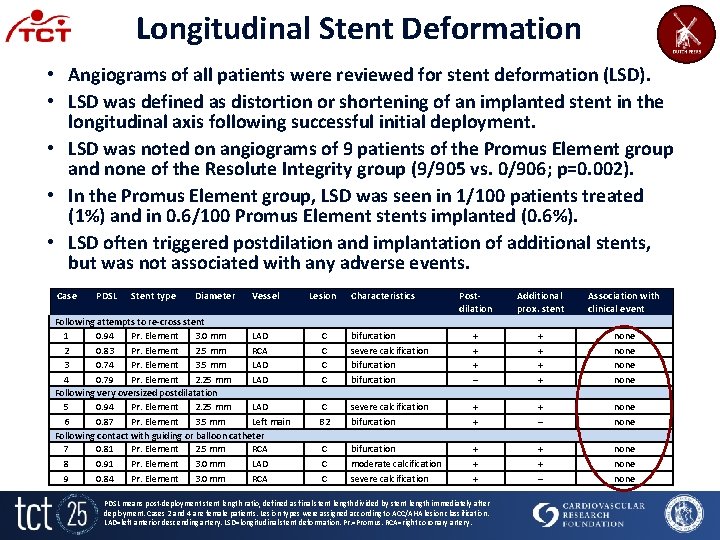
Longitudinal Stent Deformation • Angiograms of all patients were reviewed for stent deformation (LSD). • LSD was defined as distortion or shortening of an implanted stent in the longitudinal axis following successful initial deployment. • LSD was noted on angiograms of 9 patients of the Promus Element group and none of the Resolute Integrity group (9/905 vs. 0/906; p=0. 002). • In the Promus Element group, LSD was seen in 1/100 patients treated (1%) and in 0. 6/100 Promus Element stents implanted (0. 6%). • LSD often triggered postdilation and implantation of additional stents, but was not associated with any adverse events. Case PDSL Stent type Diameter Vessel Following attempts to re-cross stent 1 0. 94 Pr. Element 3. 0 mm LAD 2 0. 83 Pr. Element 2. 5 mm RCA 3 0. 74 Pr. Element 3. 5 mm LAD 4 0. 79 Pr. Element 2. 25 mm LAD Following very oversized postdilatation 5 0. 94 Pr. Element 2. 25 mm LAD 6 0. 87 Pr. Element 3. 5 mm Left main Following contact with guiding or balloon catheter 7 0. 81 Pr. Element 2. 5 mm RCA 8 0. 91 Pr. Element 3. 0 mm LAD 9 0. 84 Pr. Element 3. 0 mm RCA Lesion Characteristics Postdilation Additional prox. stent Association with clinical event C C bifurcation severe calcification bifurcation + + + – + + none C B 2 severe calcification bifurcation + + + – none C C C bifurcation moderate calcification severe calcification + + + – none PDSL means post-deployment stent length ratio, defined as final stent length divided by stent length immediately after deployment. Cases 2 and 4 are female patients. Lesion types were assigned according to ACC/AHA lesion classification. LAD=left anterior descending artery. LSD=longitudinal stent deformation. Pr. =Promus. RCA=right coronary artery.
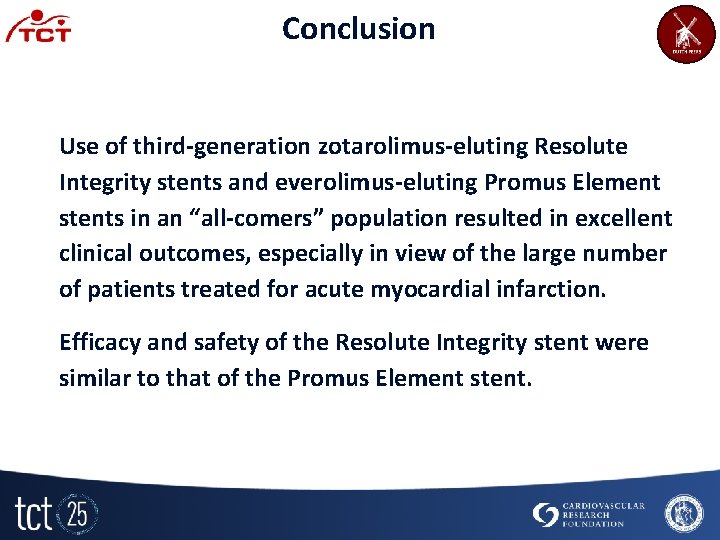
Conclusion Use of third-generation zotarolimus-eluting Resolute Integrity stents and everolimus-eluting Promus Element stents in an “all-comers” population resulted in excellent clinical outcomes, especially in view of the large number of patients treated for acute myocardial infarction. Efficacy and safety of the Resolute Integrity stent were similar to that of the Promus Element stent.
DUTCH PEERS (TWENTE II) Simultaneous publication online in The Lancet
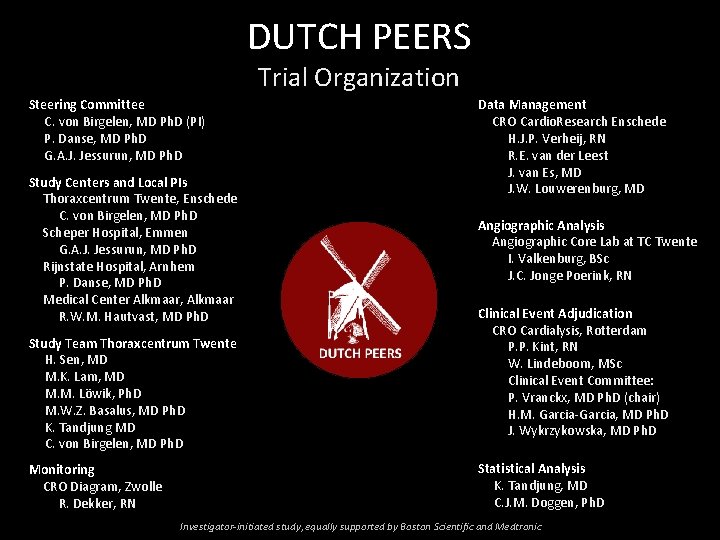
DUTCH PEERS Trial Organization Steering Committee C. von Birgelen, MD Ph. D (PI) P. Danse, MD Ph. D G. A. J. Jessurun, MD Ph. D Study Centers and Local PIs Thoraxcentrum Twente, Enschede C. von Birgelen, MD Ph. D Scheper Hospital, Emmen G. A. J. Jessurun, MD Ph. D Rijnstate Hospital, Arnhem P. Danse, MD Ph. D Medical Center Alkmaar, Alkmaar R. W. M. Hautvast, MD Ph. D Study Team Thoraxcentrum Twente H. Sen, MD M. K. Lam, MD M. M. Löwik, Ph. D M. W. Z. Basalus, MD Ph. D K. Tandjung MD C. von Birgelen, MD Ph. D Monitoring CRO Diagram, Zwolle R. Dekker, RN Data Management CRO Cardio. Research Enschede H. J. P. Verheij, RN R. E. van der Leest J. van Es, MD J. W. Louwerenburg, MD Angiographic Analysis Angiographic Core Lab at TC Twente I. Valkenburg, BSc J. C. Jonge Poerink, RN Clinical Event Adjudication CRO Cardialysis, Rotterdam P. P. Kint, RN W. Lindeboom, MSc Clinical Event Committee: P. Vranckx, MD Ph. D (chair) H. M. Garcia-Garcia, MD Ph. D J. Wykrzykowska, MD Ph. D Statistical Analysis K. Tandjung, MD C. J. M. Doggen, Ph. D Investigator-initiated study, equally supported by Boston Scientific and Medtronic

Backup Slides
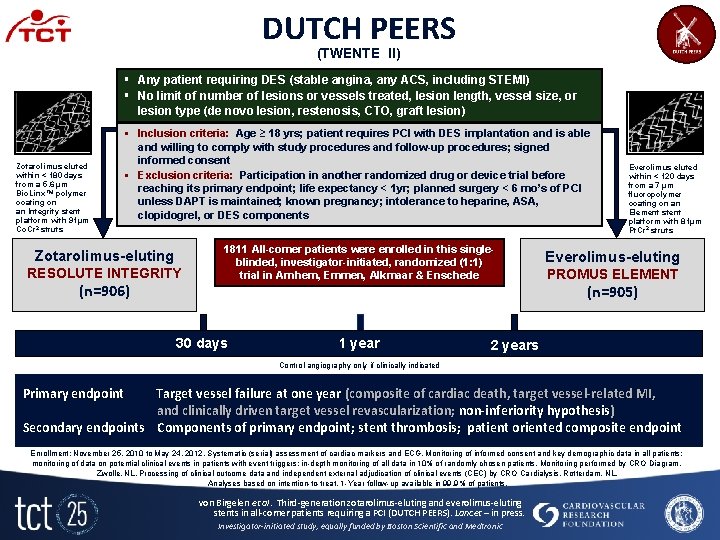
DUTCH PEERS (TWENTE II) § Any patient requiring DES (stable angina, any ACS, including STEMI) § No limit of number of lesions or vessels treated, lesion length, vessel size, or lesion type (de novo lesion, restenosis, CTO, graft lesion) Zotarolimus eluted within < 180 days from a 5. 6 µm Bio. Linx™ polymer coating on an Integrity stent platform with 91µm Co. Cr 2 struts § Inclusion criteria: Age ≥ 18 yrs; patient requires PCI with DES implantation and is able and willing to comply with study procedures and follow-up procedures; signed informed consent § Exclusion criteria: Participation in another randomized drug or device trial before reaching its primary endpoint; life expectancy < 1 yr; planned surgery < 6 mo’s of PCI unless DAPT is maintained; known pregnancy; intolerance to heparine, ASA, clopidogrel, or DES components Zotarolimus-eluting RESOLUTE INTEGRITY (n=906) 1811 All-comer patients were enrolled in this singleblinded, investigator-initiated, randomized (1: 1) trial in Arnhem, Emmen, Alkmaar & Enschede Everolimus eluted within < 120 days from a 7 µm fluoropolymer coating on an Element stent platform with 81µm Pt. Cr 2 struts Everolimus-eluting PROMUS ELEMENT (n=905) 30 days 1 year 2 years Control angiography only if clinically indicated Primary endpoint Target vessel failure at one year (composite of cardiac death, target vessel-related MI, and clinically driven target vessel revascularization; non-inferiority hypothesis) Secondary endpoints Components of primary endpoint; stent thrombosis; patient oriented composite endpoint Enrollment: November 25, 2010 to May 24, 2012. Systematic (serial) assessment of cardiac markers and ECG. Monitoring of informed consent and key demographic data in all patients; monitoring of data on potential clinical events in patients with event triggers; in-depth monitoring of all data in 10% of randomly chosen patients. Monitoring performed by CRO Diagram, Zwolle, NL. Processing of clinical outcome data and independent external adjudication of clinical events (CEC) by CRO Cardialysis, Rotterdam, NL. Analyses based on intention-to-treat. 1 -Year follow-up available in 99. 9% of patients. von Birgelen et al. Third-generation zotarolimus-eluting and everolimus-eluting stents in all-comer patients requiring a PCI (DUTCH PEERS). Lancet – in press. Investigator-initiated study, equally funded by Boston Scientific and Medtronic
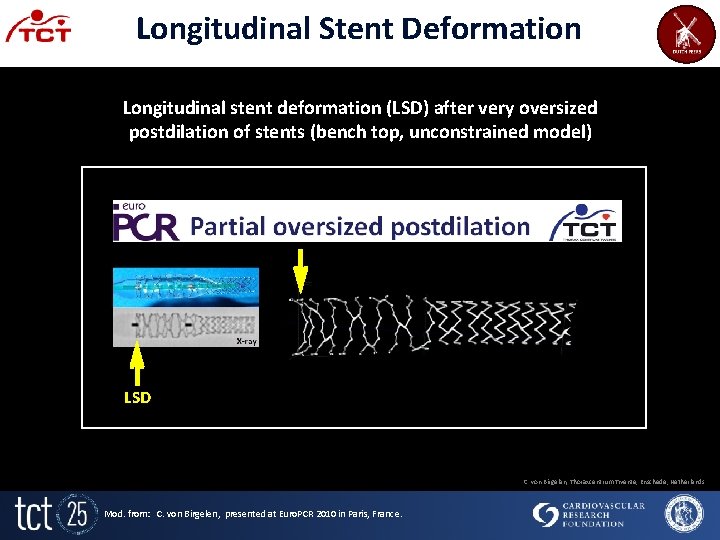
Longitudinal Stent Deformation Longitudinal stent deformation (LSD) after very oversized postdilation of stents (bench top, unconstrained model) LSD C. von Birgelen, Thoraxcentrum Twente, Enschede, Netherlands Mod. from: C. von Birgelen, presented at Euro. PCR 2010 in Paris, France.
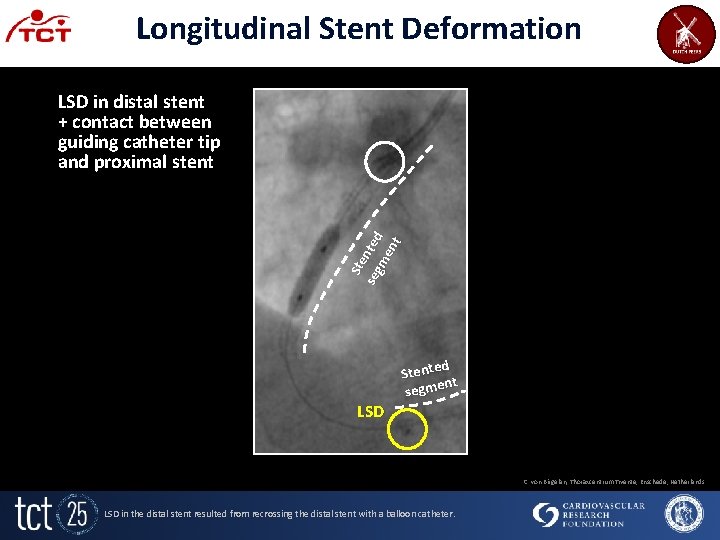
Longitudinal Stent Deformation Ste seg nted me nt LSD in distal stent + contact between guiding catheter tip and proximal stent LSD d Stente t n segme C. von Birgelen, Thoraxcentrum Twente, Enschede, Netherlands LSD in the distal stent resulted from recrossing the distal stent with a balloon catheter.
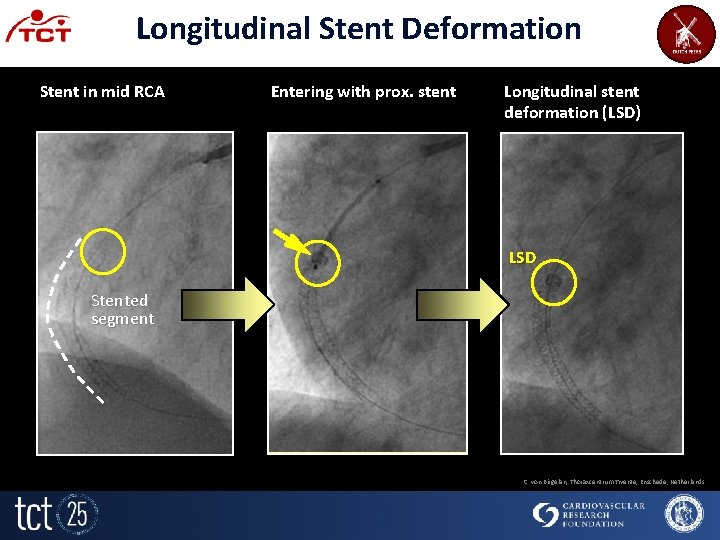
Longitudinal Stent Deformation Stent in mid RCA Entering with prox. stent Longitudinal stent deformation (LSD) LSD Stented segment C. von Birgelen, Thoraxcentrum Twente, Enschede, Netherlands
- Slides: 29