
TCOM INTRODUCATION AND ANSA OVERVIEW ADULT NEEDS AND




- Slides: 32
TCOM INTRODUCATION AND ANSA OVERVIEW ADULT NEEDS AND STRENGTHS ASSESSMENT April D. Fernando, Ph. D Contributions by the Alameda County Behavioral Health Care Agency TCOM Providers Collaborative
w
TCOM/ANSA TRAINING 101 PRECERTIFICATION AGENDA • Orientation to TCOM 9: 15 - 10: 00 9: 00 -9: 20 • 6 Principles / Rating 9: 20 -9: 50 • ANSA Domains and Items 9: 50 -10: 20 • Break 10: 20 -10: 35 • Clinical Vignette Practice 10: 30 -11: 20 • Vignette Review and Certification Next steps 11: 20 -11: 50 Agencies can customize here and also list agency contacts for ANSA Trainers and supports
GETTING TO KNOW EACH OTHER INTRODUCTIONS • Organization, role • ANSA/CANS experience • Hopes for the day
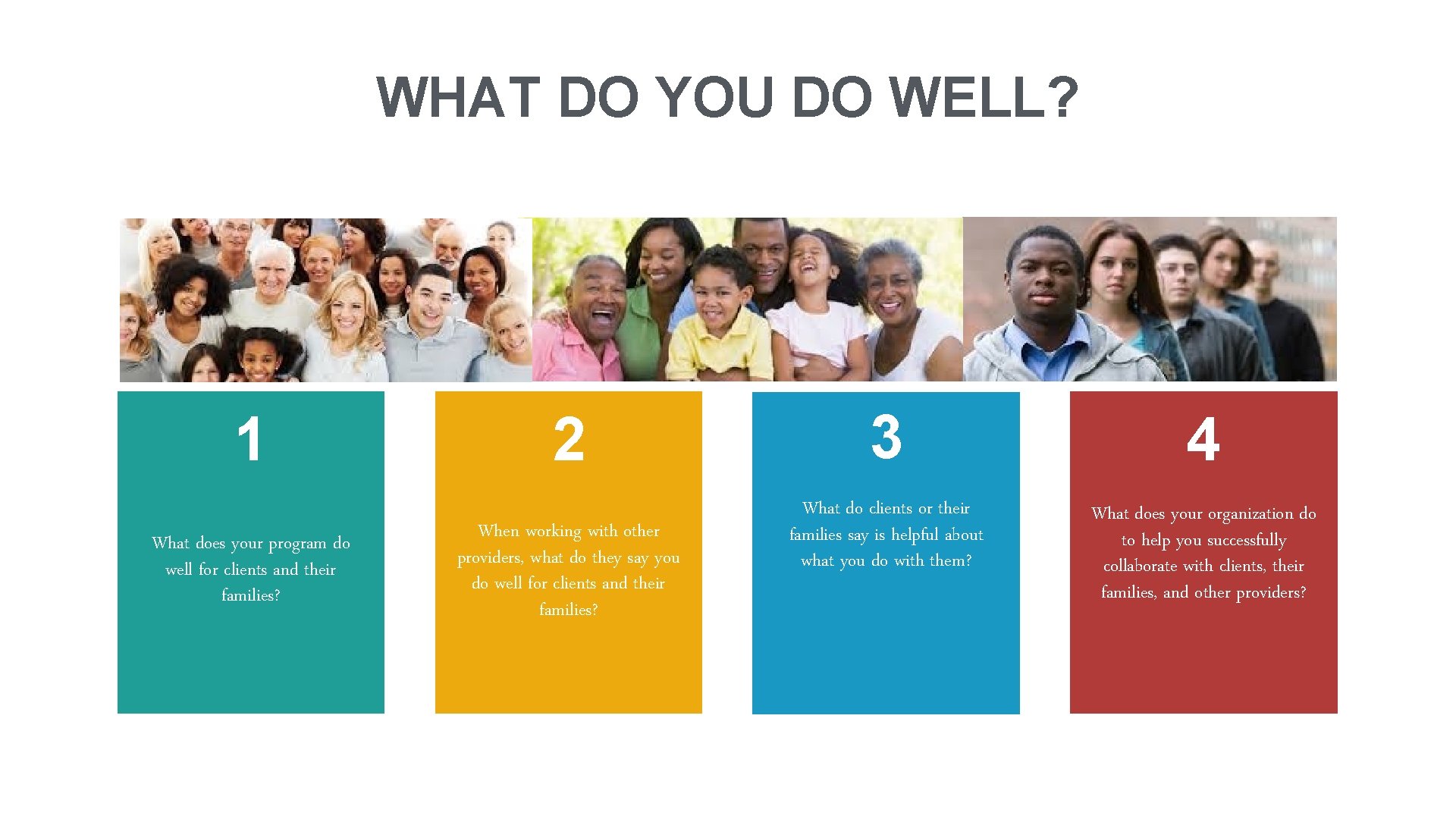
WHAT DO YOU DO WELL? 1 What does your program do well for clients and their families? 2 When working with other providers, what do they say you do well for clients and their families? 3 4 What do clients or their families say is helpful about what you do with them? What does your organization do to help you successfully collaborate with clients, their families, and other providers?
IDENTIFYING OUR STRENGTHS MATTERS • Provides us with clues and building blocks for moving goals forward. • Success through collaboration often provides us (including individuals and families) with the courage and perseverance to try new practices, or engage in and new initiatives. • Developing from initial successes or strengths is something we can continue to support.
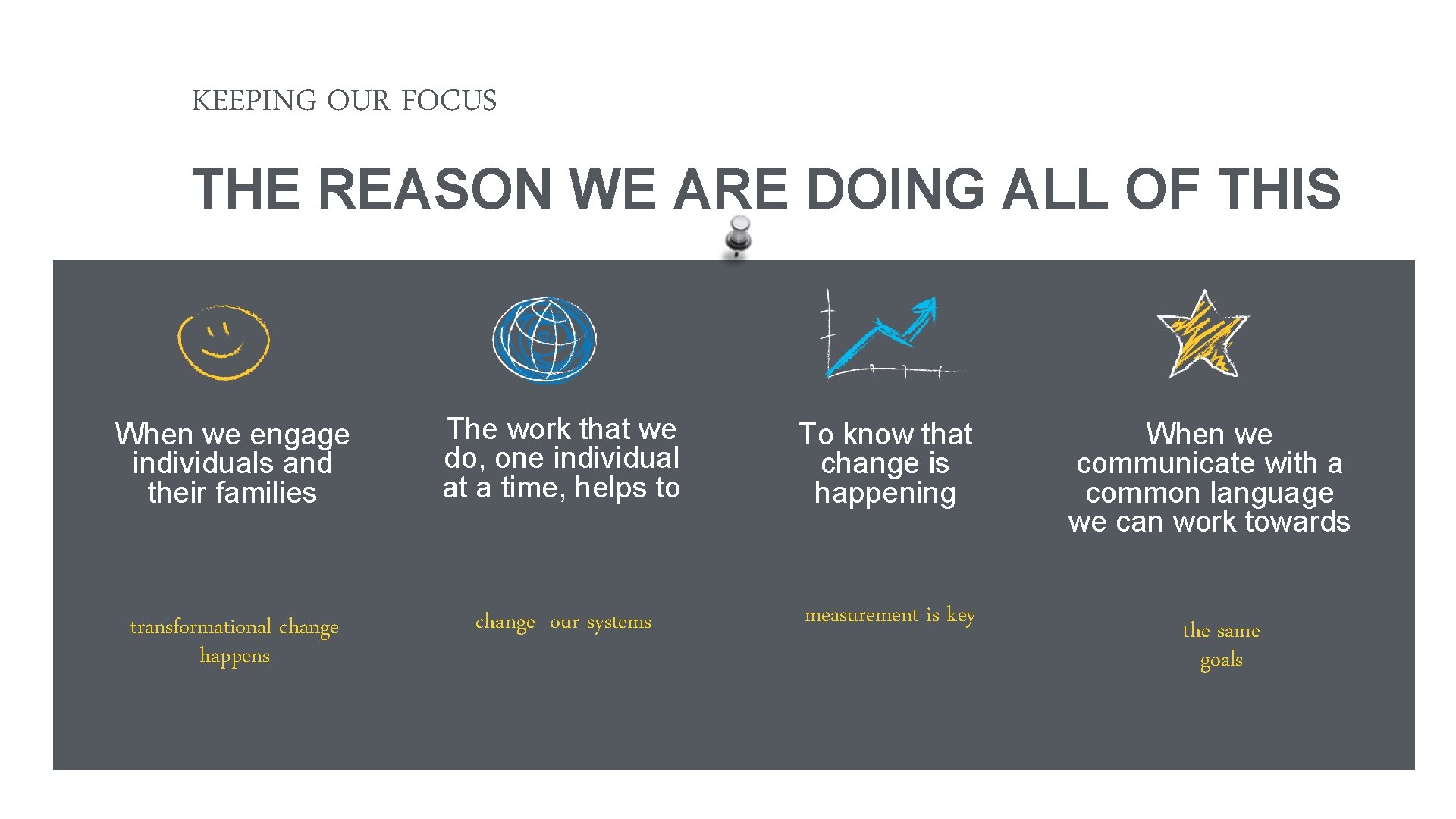
KEEPING OUR FOCUS THE REASON WE ARE DOING ALL OF THIS When we engage individuals and their families The work that we do, one individual at a time, helps to To know that change is happening transformational change happens change our systems measurement is key When we communicate with a common language we can work towards the same goals
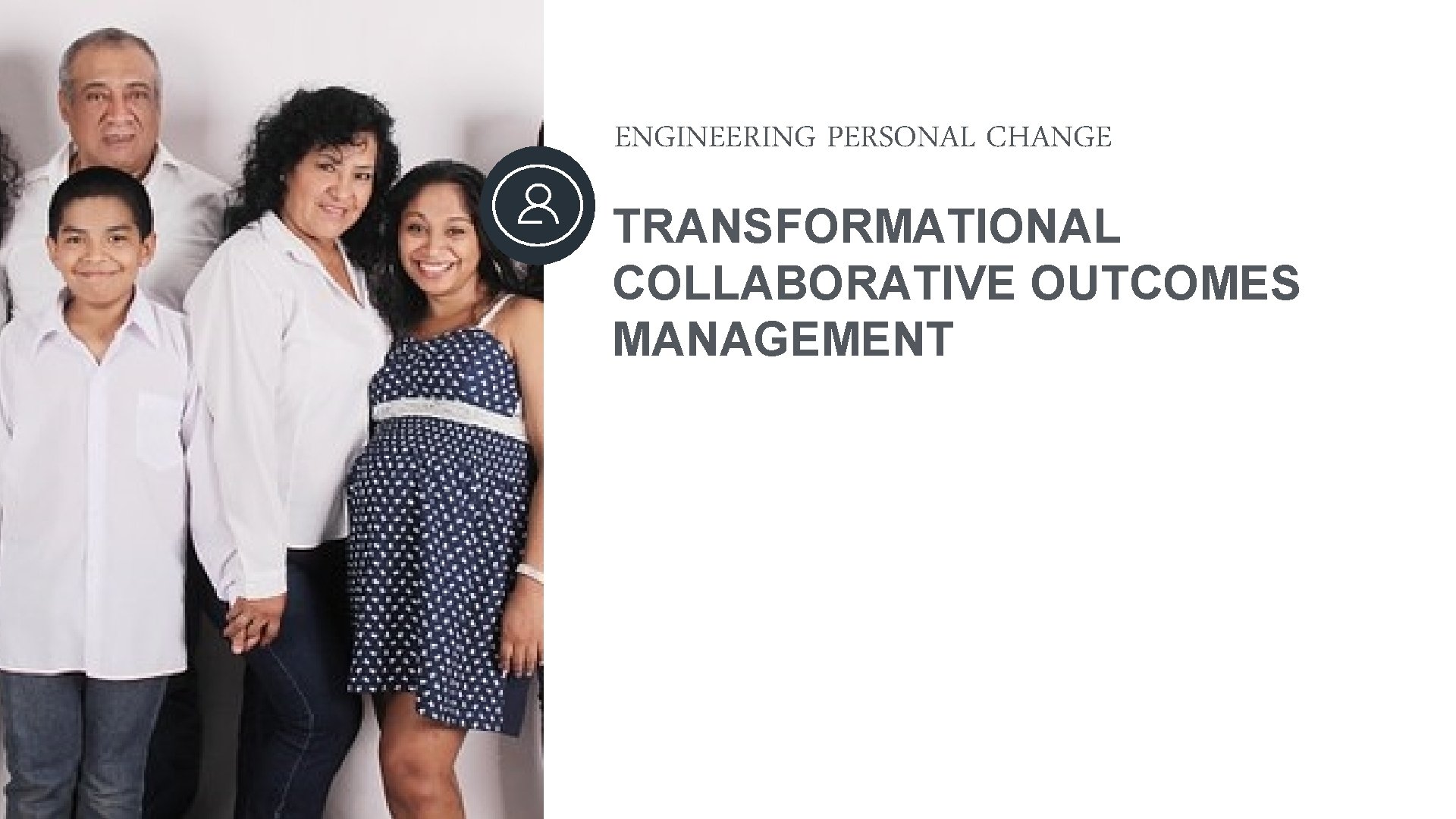
ENGINEERING PERSONAL CHANGE TRANSFORMATIONAL COLLABORATIVE OUTCOMES MANAGEMENT
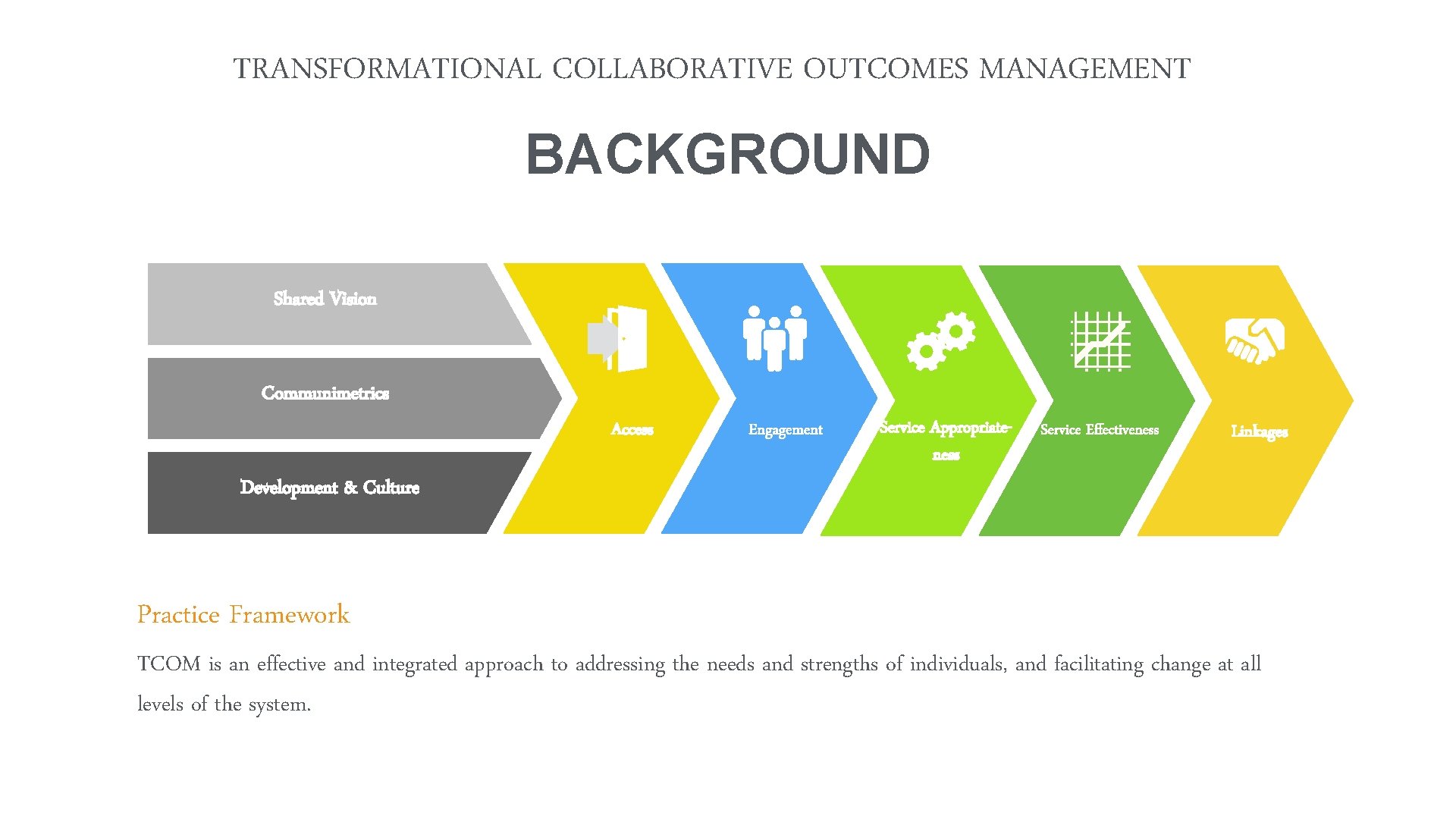
TRANSFORMATIONAL COLLABORATIVE OUTCOMES MANAGEMENT BACKGROUND Shared Vision Communimetrics Access Engagement Service Appropriateness Service Effectiveness Linkages Development & Culture Practice Framework TCOM is an effective and integrated approach to addressing the needs and strengths of individuals, and facilitating change at all levels of the system.
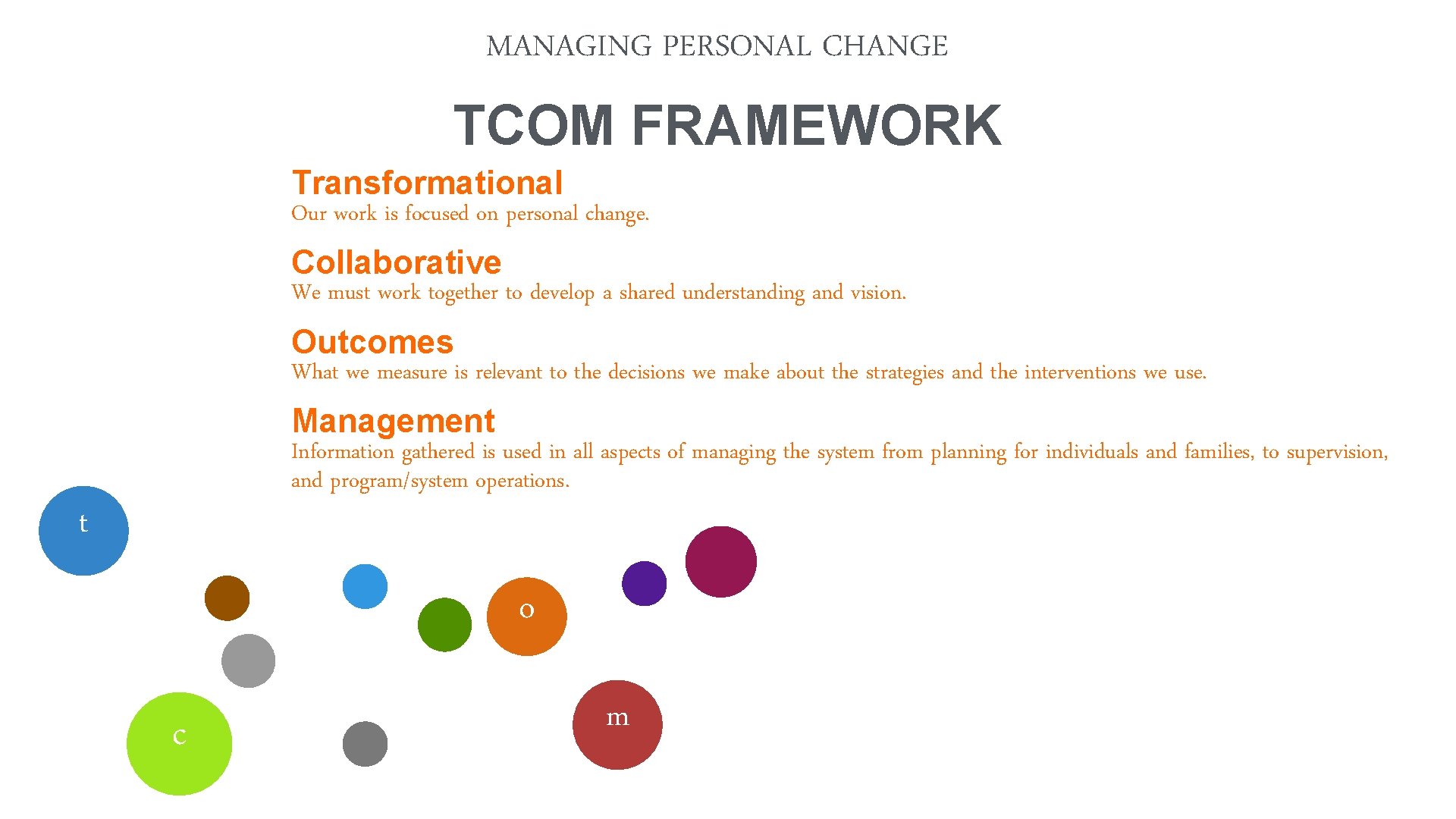
MANAGING PERSONAL CHANGE TCOM FRAMEWORK Transformational Our work is focused on personal change. Collaborative We must work together to develop a shared understanding and vision. Outcomes What we measure is relevant to the decisions we make about the strategies and the interventions we use. Management Information gathered is used in all aspects of managing the system from planning for individuals and families, to supervision, and program/system operations. t o c m
MISSING THE MARK We are focused on the Wrong Target • • • Managing services rather than the transformational change We manage to caseload levels regardless of the clinical needs of the clients The pay rate is the same regardless of the level of need of the client, making it better to take on the easier cases Supervision time is taken up by compliance issues System management is about doing the same thing as cheaply as possible
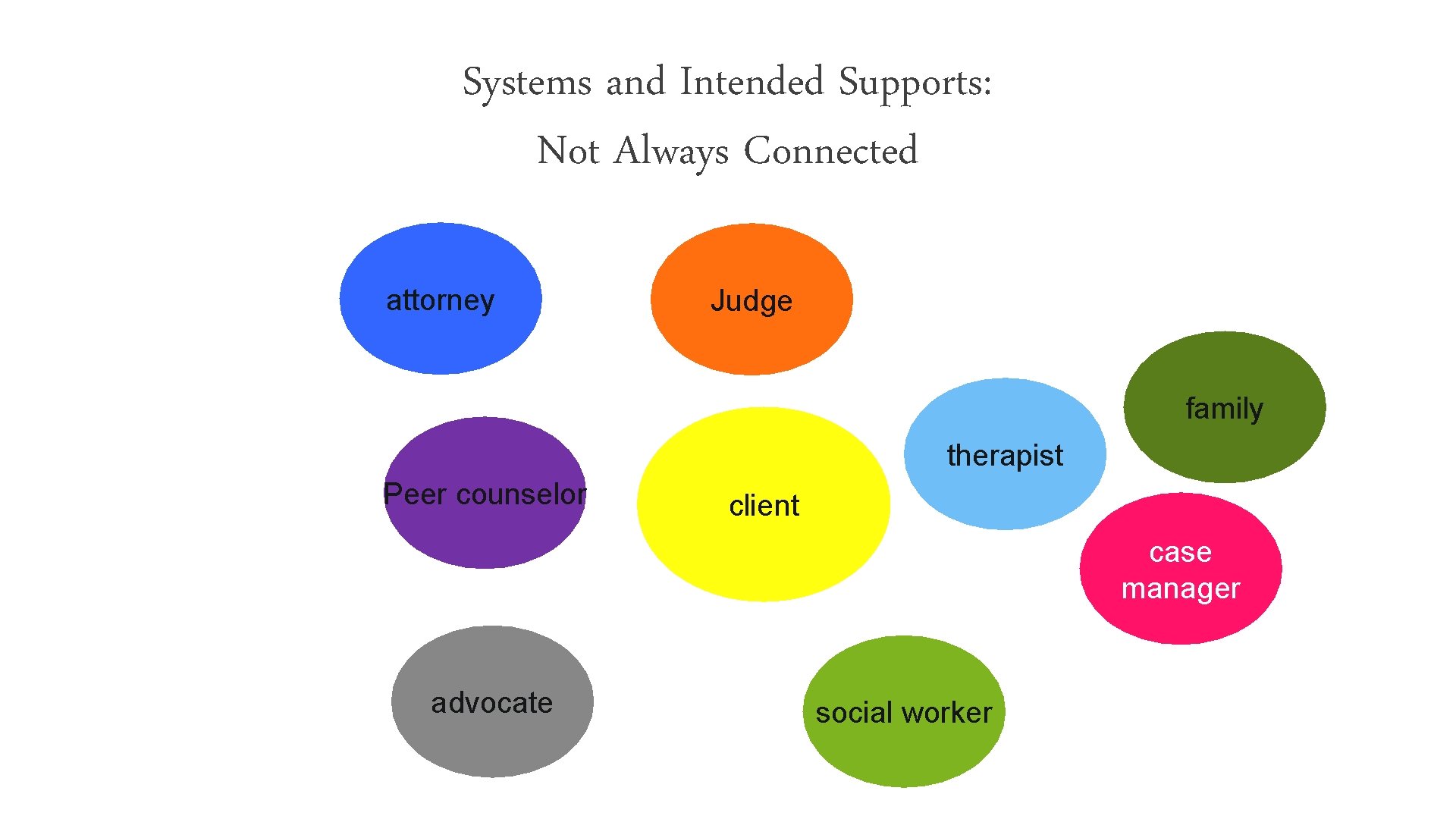
Systems and Intended Supports: Not Always Connected attorney Judge family therapist Peer counselor client case manager advocate social worker
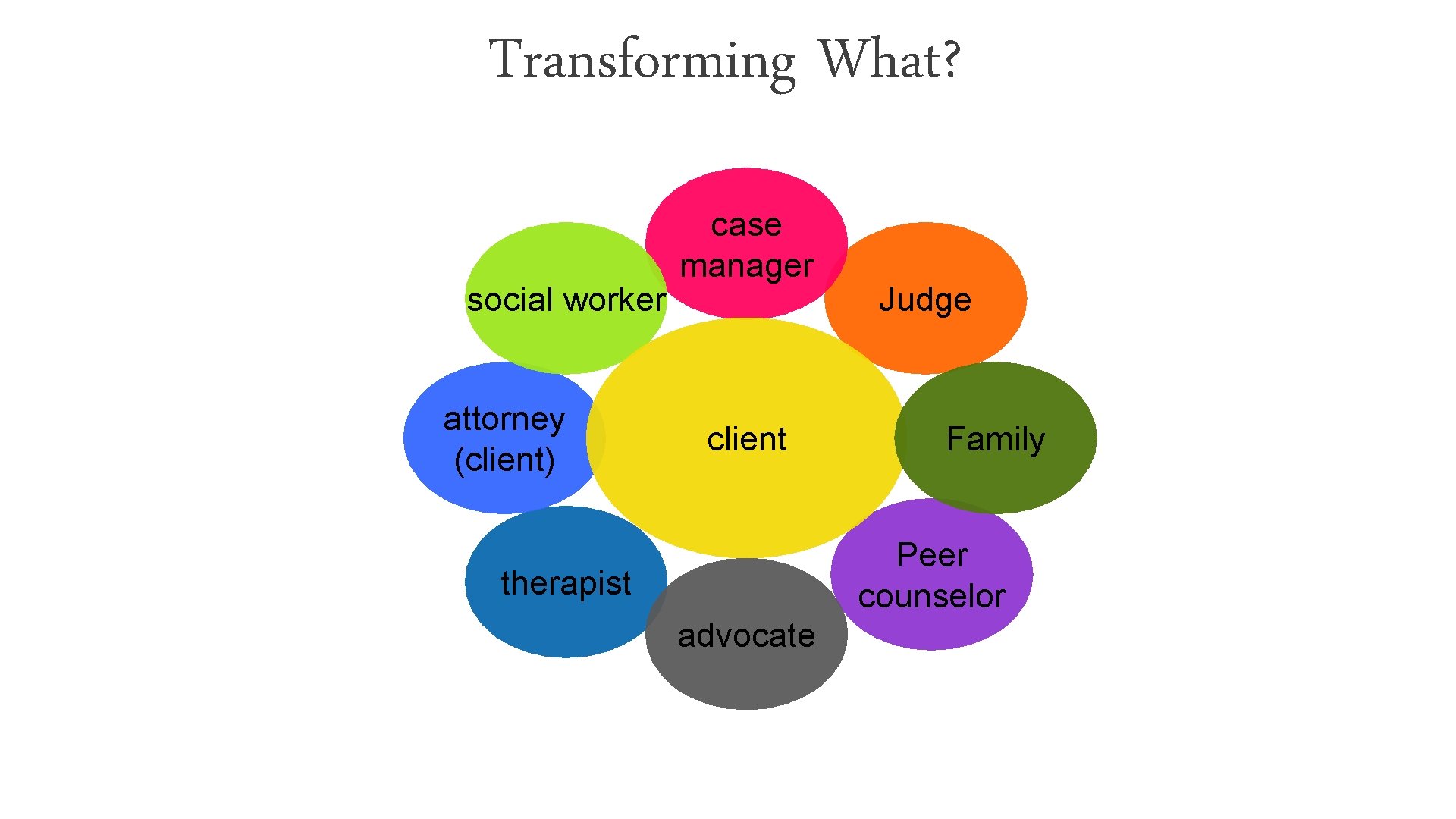
Transforming What? social worker attorney (client) case manager client Family Peer counselor therapist advocate We have to transform our system so that we can better transform our lives. Judge
THE KEY TO CREATING AN EFFECTIVE SYSTEM OF CARE MANAGING THE TENSIONS IN OUR WORK Philosophy Always return to the shared vision. The shared vision is always rooted in the best interests of clients. [TCOM] Strategy Represent the shared vision and communicate it throughout the system with a standard language and assessment. [ANSA/CANS] Tactics Activities that promote the philosophy at all levels of the system simultaneously. [Interventions, Resources]
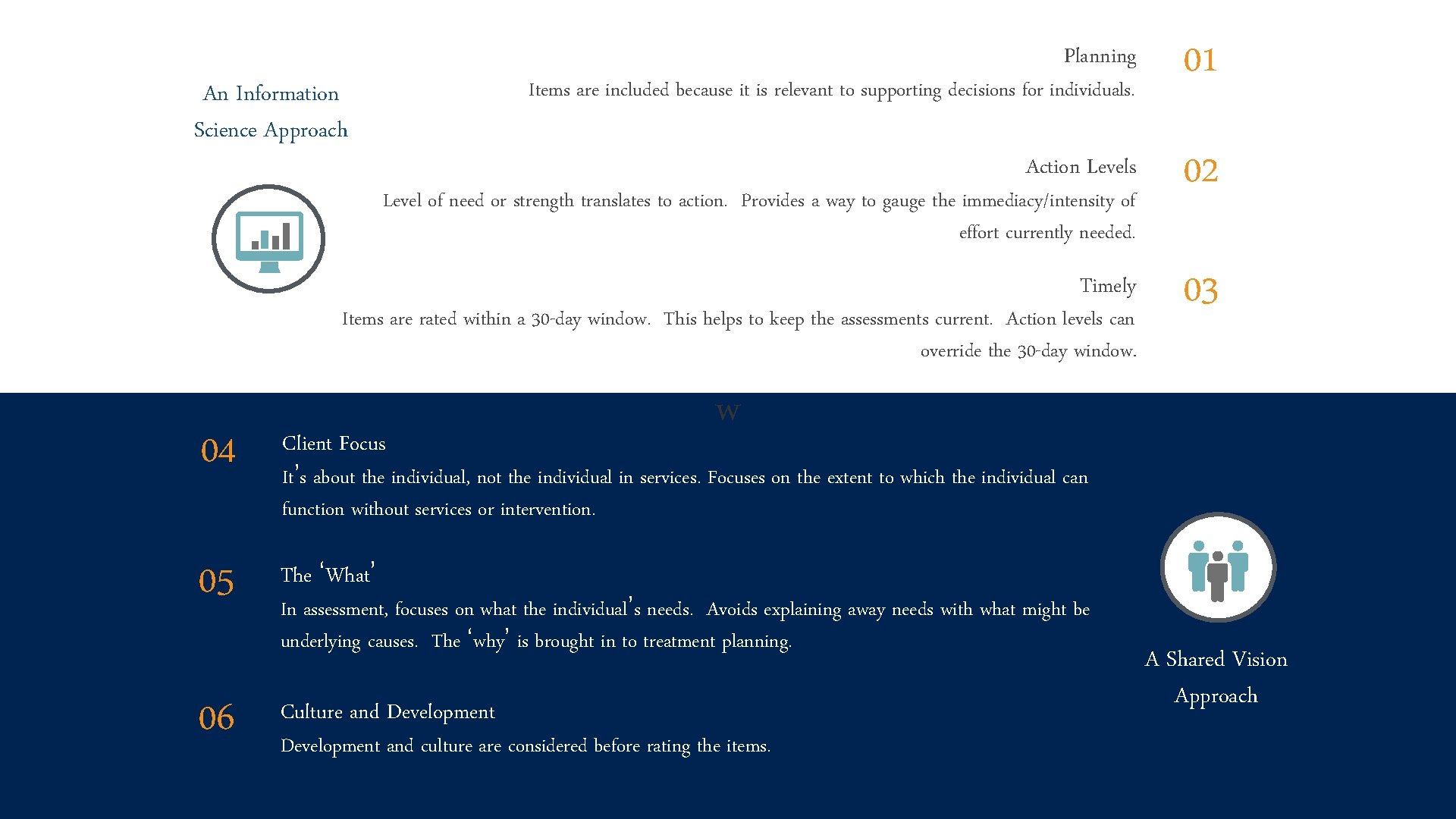
Planning 01 Action Levels 02 Timely 03 Items are included because it is relevant to supporting decisions for individuals. An Information Science Approach Level of need or strength translates to action. Provides a way to gauge the immediacy/intensity of effort currently needed. Items are rated within a 30 -day window. This helps to keep the assessments current. Action levels can override the 30 -day window. 04 Client Focus 05 The ‘What’ 06 w It’s about the individual, not the individual in services. Focuses on the extent to which the individual can function without services or intervention. In assessment, focuses on what the individual’s needs. Avoids explaining away needs with what might be underlying causes. The ‘why’ is brought in to treatment planning. Culture and Development and culture are considered before rating the items. A Shared Vision Approach
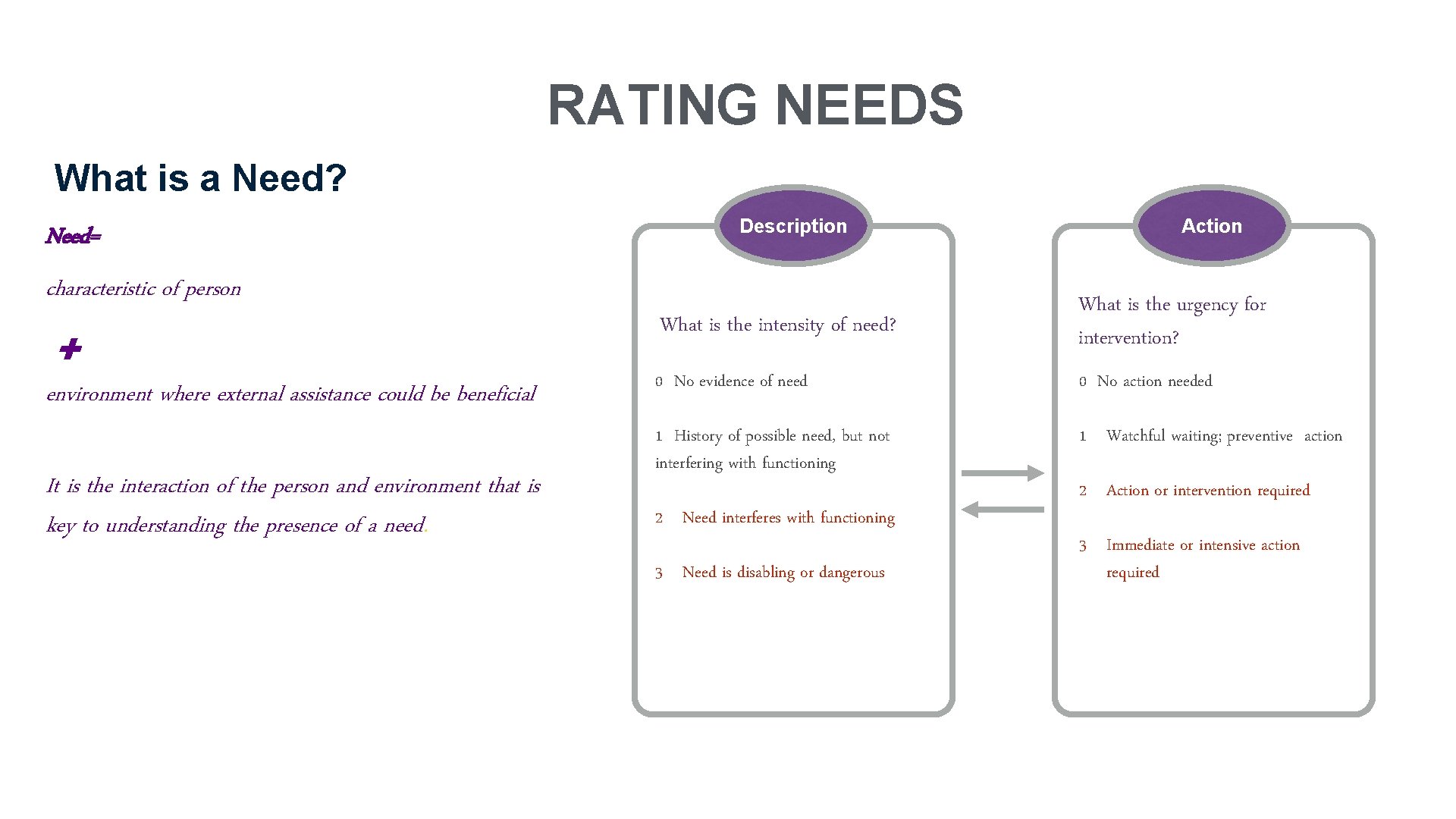
RATING NEEDS What is a Need? Need= characteristic of person ✚ environment where external assistance could be beneficial It is the interaction of the person and environment that is key to understanding the presence of a need. Description Action What is the intensity of need? What is the urgency for intervention? 0 No evidence of need 0 No action needed 1 History of possible need, but not interfering with functioning 1 Watchful waiting; preventive action 2 Need interferes with functioning 3 Need is disabling or dangerous 2 Action or intervention required 3 Immediate or intensive action required For treatment planning: Items rated ‘ 2’ or ‘ 3’ must be addressed in the plan.
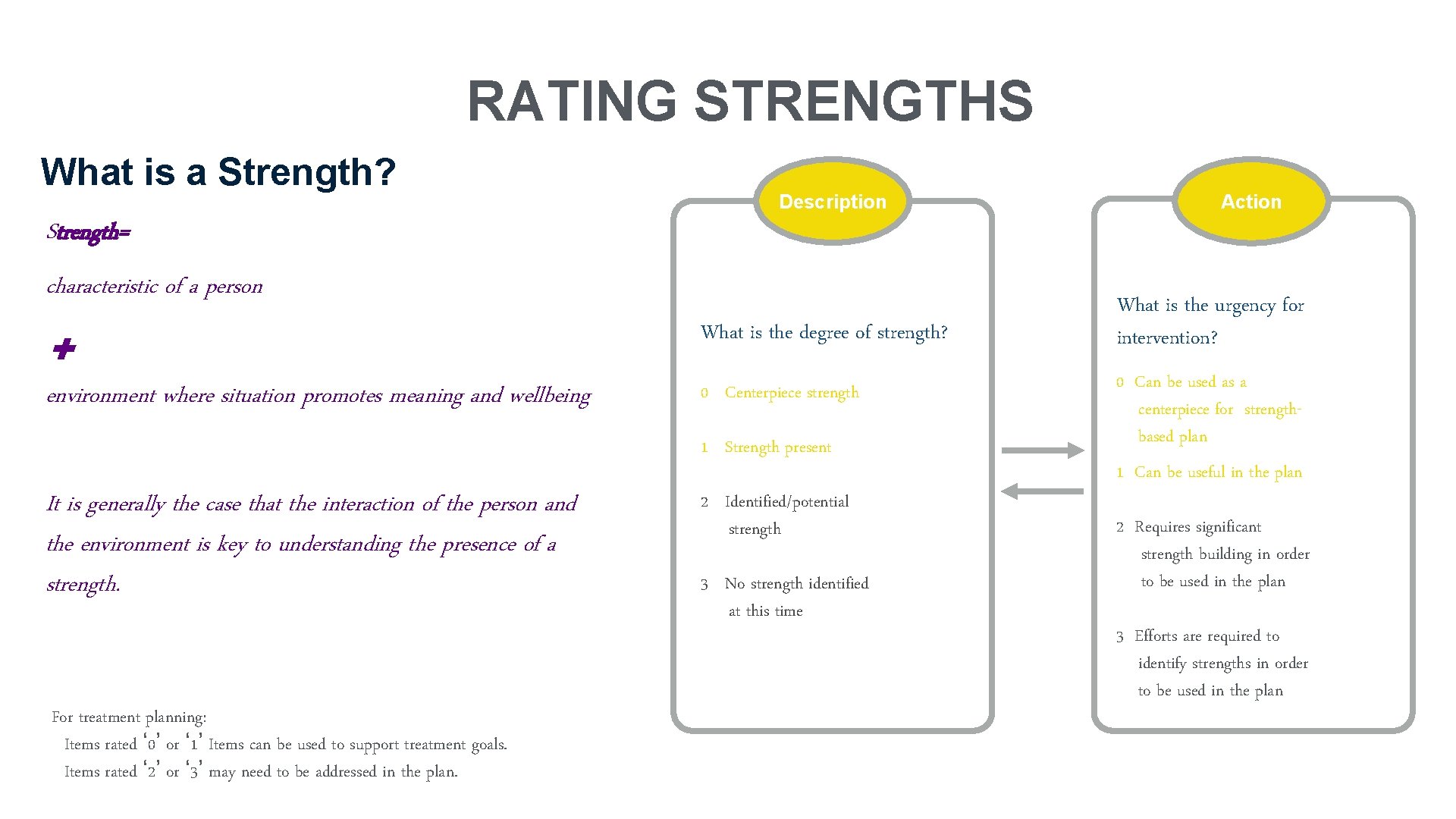
RATING STRENGTHS What is a Strength? Description Action Strength= characteristic of a person ✚ environment where situation promotes meaning and wellbeing What is the degree of strength? 0 Centerpiece strength 1 Strength present It is generally the case that the interaction of the person and the environment is key to understanding the presence of a strength. For treatment planning: Items rated ‘ 0’ or ‘ 1’ Items can be used to support treatment goals. Items rated ‘ 2’ or ‘ 3’ may need to be addressed in the plan. 2 Identified/potential strength 3 No strength identified at this time What is the urgency for intervention? 0 Can be used as a centerpiece for strengthbased plan 1 Can be useful in the plan 2 Requires significant strength building in order to be used in the plan 3 Efforts are required to identify strengths in order to be used in the plan
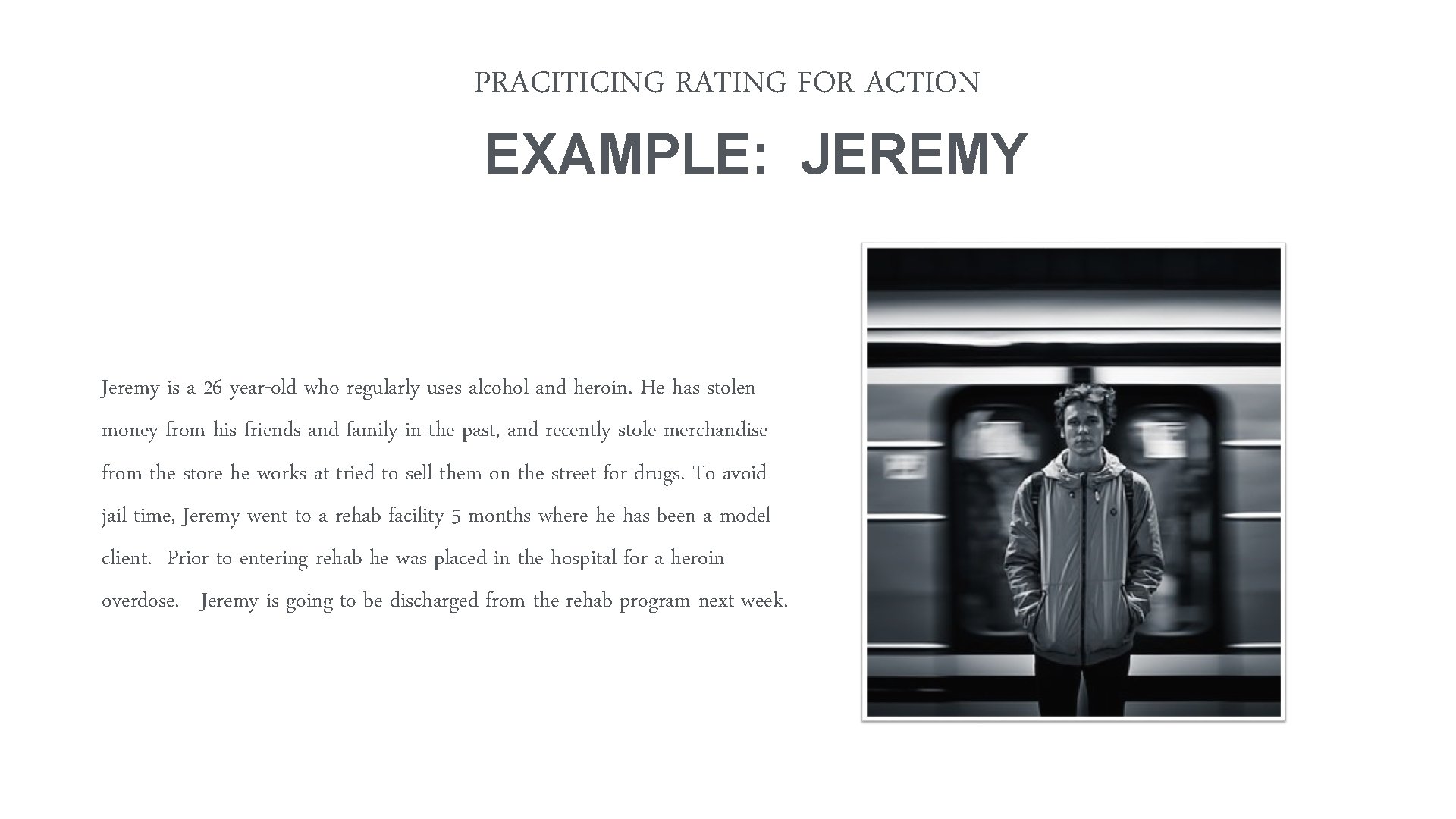
PRACITICING RATING FOR ACTION EXAMPLE: JEREMY Jeremy is a 26 year-old who regularly uses alcohol and heroin. He has stolen money from his friends and family in the past, and recently stole merchandise from the store he works at tried to sell them on the street for drugs. To avoid jail time, Jeremy went to a rehab facility 5 months where he has been a model client. Prior to entering rehab he was placed in the hospital for a heroin overdose. Jeremy is going to be discharged from the rehab program next week.
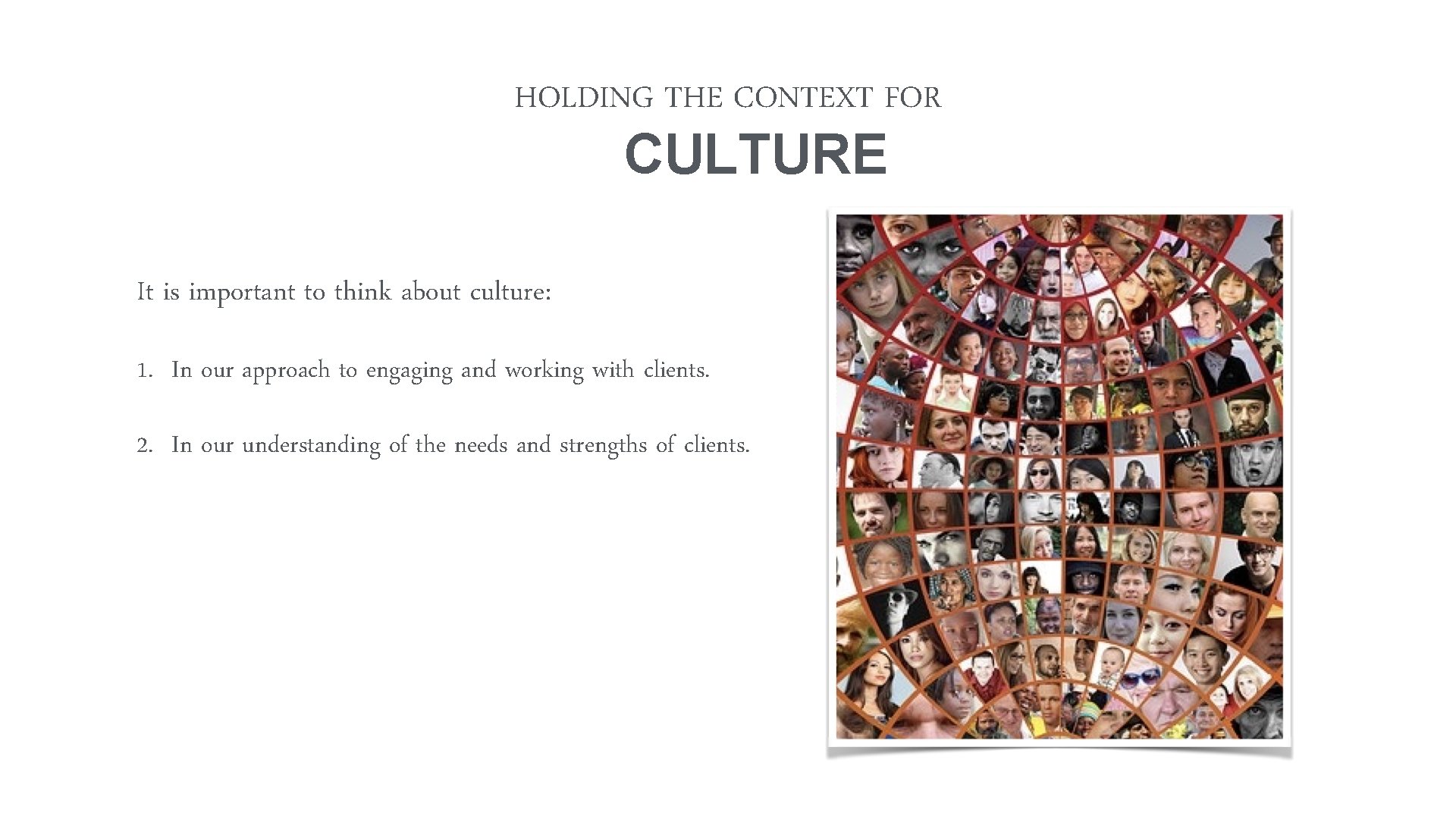
HOLDING THE CONTEXT FOR CULTURE It is important to think about culture: 1. In our approach to engaging and working with clients. 2. In our understanding of the needs and strengths of clients.
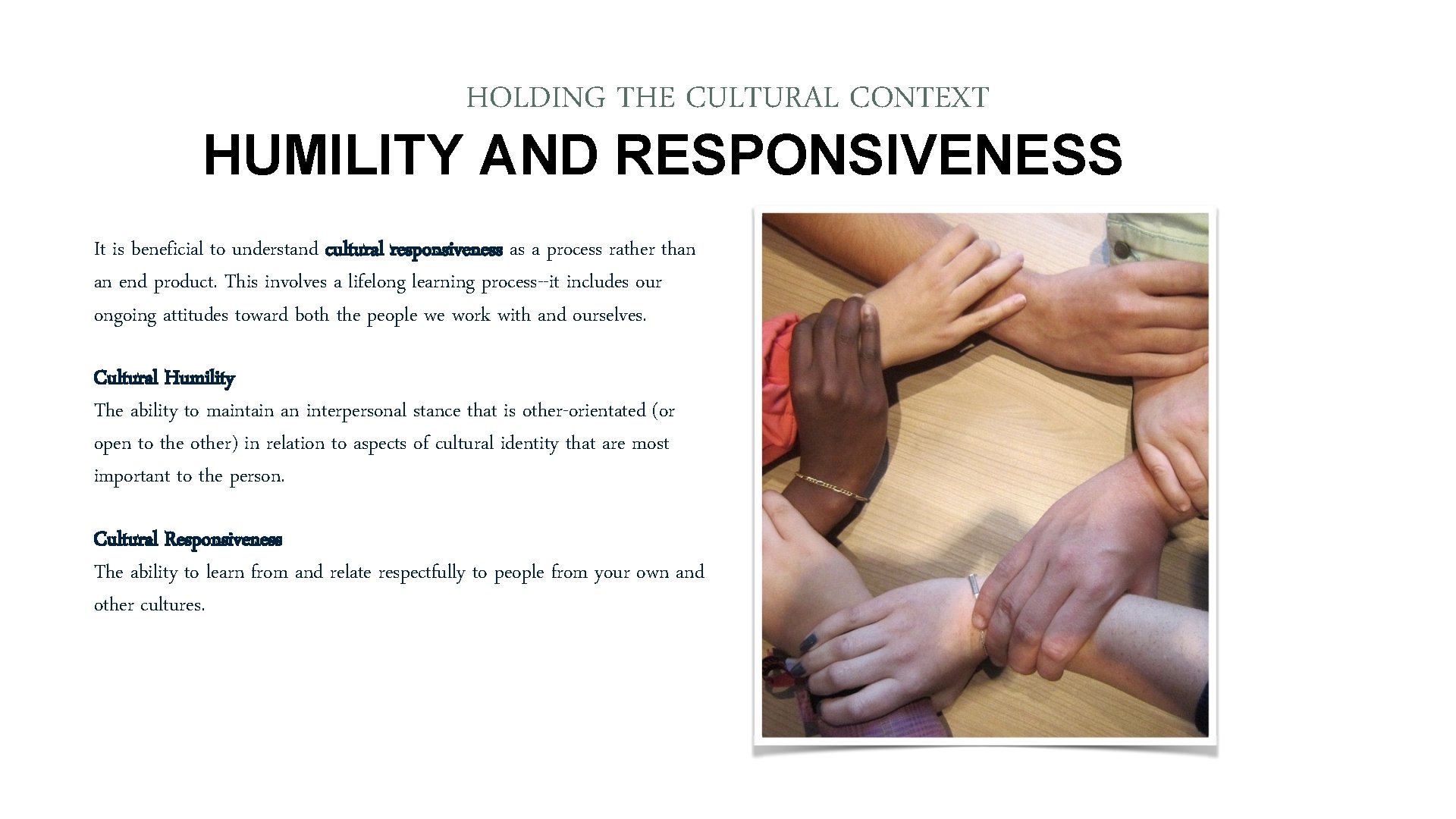
HOLDING THE CULTURAL CONTEXT HUMILITY AND RESPONSIVENESS It is beneficial to understand cultural responsiveness as a process rather than an end product. This involves a lifelong learning process--it includes our ongoing attitudes toward both the people we work with and ourselves. Cultural Humility The ability to maintain an interpersonal stance that is other-orientated (or open to the other) in relation to aspects of cultural identity that are most important to the person. Cultural Responsiveness The ability to learn from and relate respectfully to people from your own and other cultures.
HOLDING THE CULTURAL CONTEXT CULTURAL HUMILITY GUIDING FACTORS Lifelong commitment to self-evaluation and self-critique We are never finished — we never arrive at a point where we are done learning. Therefore, we must be humble and flexible, bold enough to look at ourselves critically and desire to learn more. Desire to fix power imbalances Recognizing that everyone brings something different to the proverbial table of life helps us see the value of each person. Develop partnerships with people and groups who advocate for others We cannot individually commit to self evaluation and fixing power imbalances without advocating within the larger organizations in which we participate. Cultural humility, by definition, is larger than our individual selves — we must advocate for it systemically.
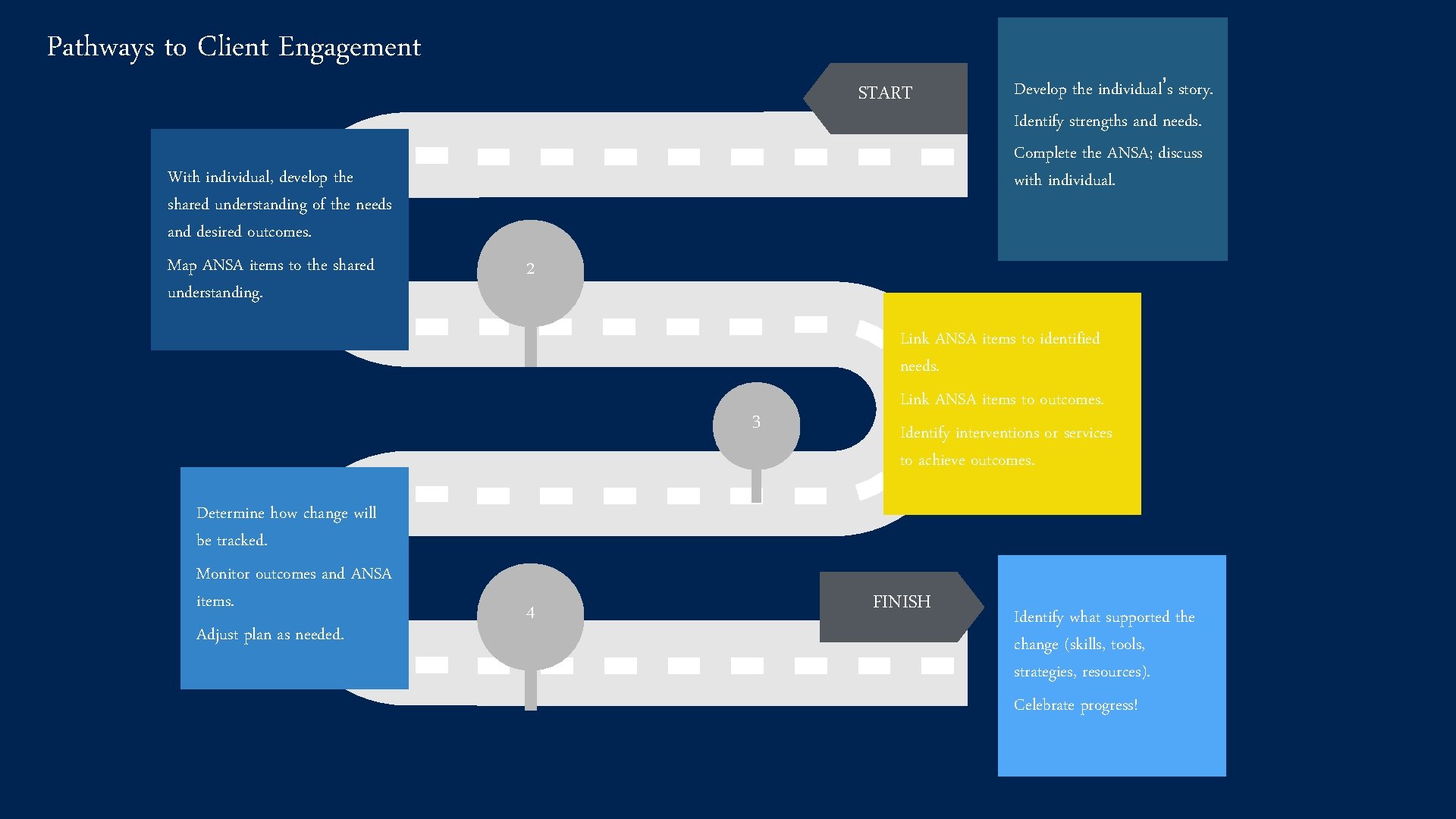
Pathways to Client Engagement With individual, develop the shared understanding of the needs and desired outcomes. Map ANSA items to the shared understanding. START 2 3 Determine how change will be tracked. Monitor outcomes and ANSA items. Adjust plan as needed. Develop the individual’s story. Identify strengths and needs. Complete the ANSA; discuss with individual. 4 Link ANSA items to identified needs. Link ANSA items to outcomes. Identify interventions or services to achieve outcomes. FINISH Identify what supported the change (skills, tools, strategies, resources). Celebrate progress!
ACBHCS ANSA DOMAINS AND ITEMS • Domains • Traumatic/Adverse Childhood Experiences • Life Functioning • Individual Strengths • Cultural Factors • Behavioral Health Needs • Risk Behaviors • Caregiver Needs (optional) • Extension Modules • Health • Vocational & Career • Developmental Needs • Parenting/Caregiving • Substance Use • Traumatic Stress • Suicide Risk • Dangerousness • Crime
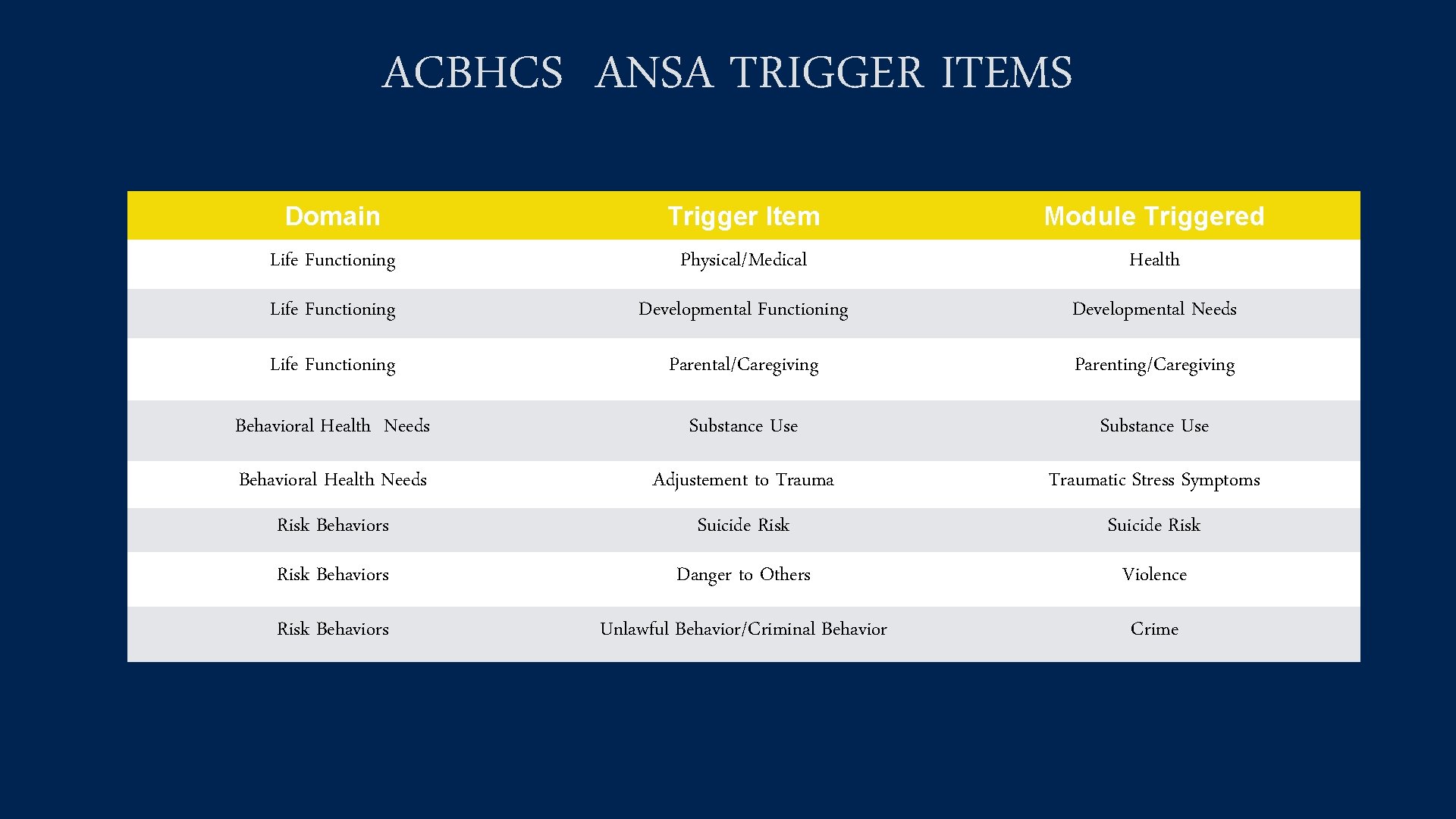
ACBHCS ANSA TRIGGER ITEMS Domain Life Functioning Trigger Item Physical/Medical Module Triggered Health Life Functioning Developmental Needs Life Functioning Parental/Caregiving Parenting/Caregiving Behavioral Health Needs Substance Use Behavioral Health Needs Adjustement to Traumatic Stress Symptoms Risk Behaviors Suicide Risk Behaviors Danger to Others Violence Risk Behaviors Unlawful Behavior/Criminal Behavior Crime
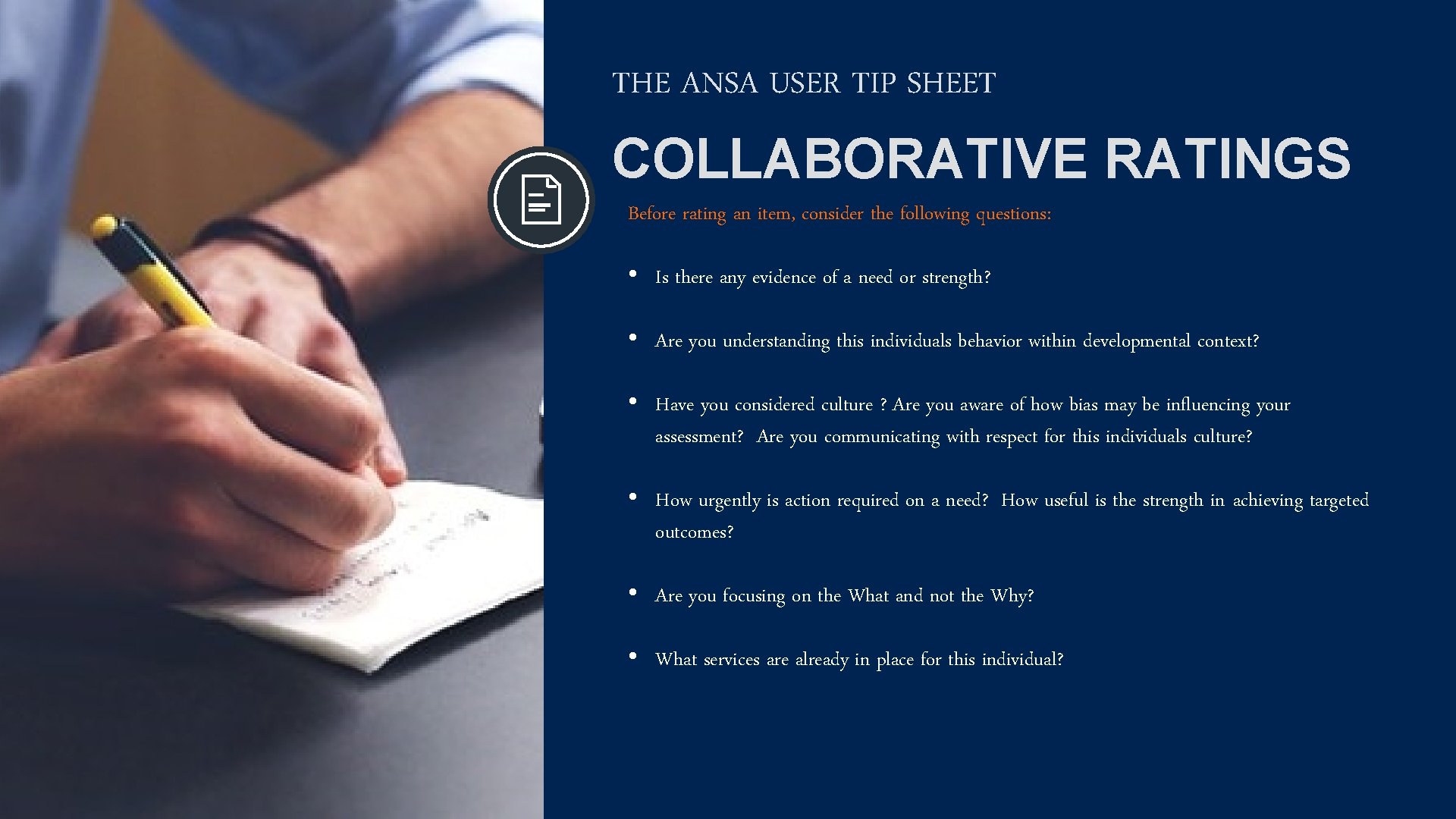
THE ANSA USER TIP SHEET COLLABORATIVE RATINGS Before rating an item, consider the following questions: • Is there any evidence of a need or strength? • Are you understanding this individuals behavior within developmental context? • Have you considered culture ? Are you aware of how bias may be influencing your assessment? Are you communicating with respect for this individuals culture? • How urgently is action required on a need? How useful is the strength in achieving targeted outcomes? • Are you focusing on the What and not the Why? • What services are already in place for this individual?
TIPS TO RATING A VIGNETTE If there is no information in the vignette related to a particular item: § rate a NEED 0 (no need) § rate a STRENGTH 3 (no strength) Take the vignette literally Review the ANSA User Tip Sheet.
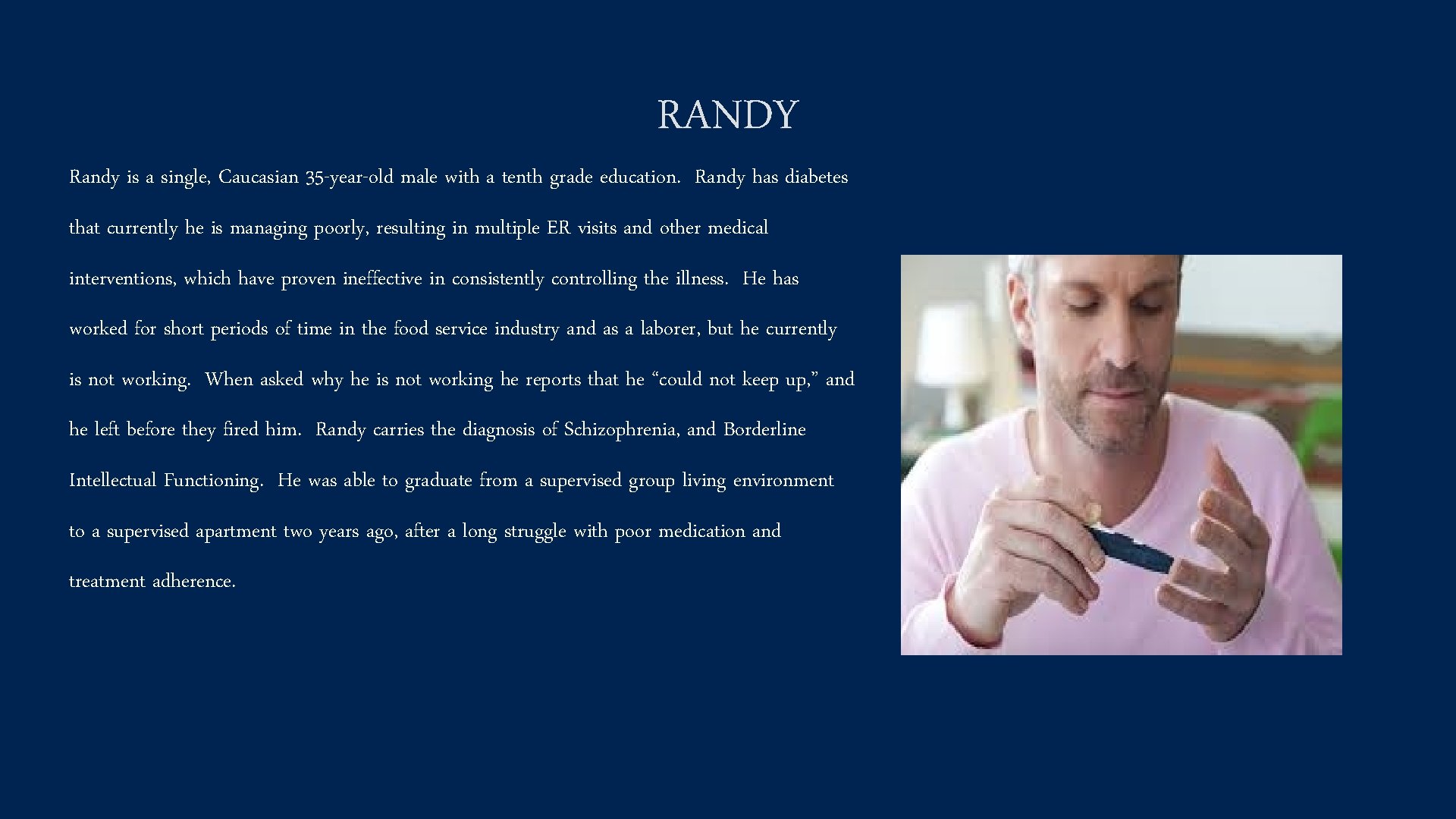
RANDY Randy is a single, Caucasian 35 -year-old male with a tenth grade education. Randy has diabetes that currently he is managing poorly, resulting in multiple ER visits and other medical interventions, which have proven ineffective in consistently controlling the illness. He has worked for short periods of time in the food service industry and as a laborer, but he currently is not working. When asked why he is not working he reports that he “could not keep up, ” and he left before they fired him. Randy carries the diagnosis of Schizophrenia, and Borderline Intellectual Functioning. He was able to graduate from a supervised group living environment to a supervised apartment two years ago, after a long struggle with poor medication and treatment adherence.
LETS PRACTICE! ANSA PRACTICE VIGNETTE • Divide into groups of 2 8 people • Read vignette • Discuss as group and mark only ONE ANSA tool • Complete Life Domain Functioning and Risk Domain (NEED) • Complete Individual Strengths Domain (STRENGTH) *Attempt consensus as you collaboratively rate each item
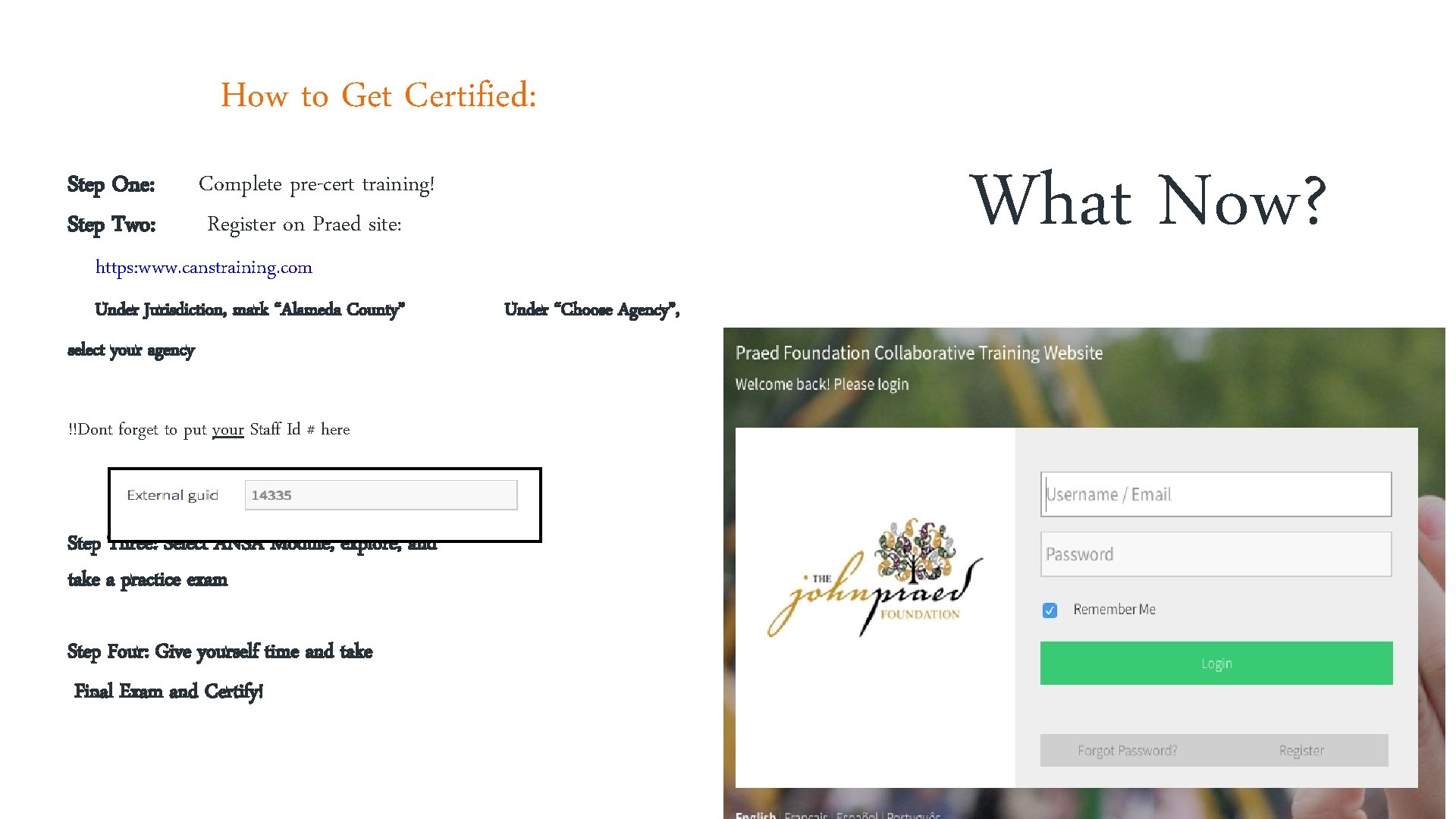
How to Get Certified: Step One: Step Two: What Now? Complete pre-cert training! Register on Praed site: https: www. canstraining. com Under Jurisdiction, mark “Alameda County” select your agency !!Dont forget to put your Staff Id # here Step Three: Select ANSA Module, explore, and take a practice exam Step Four: Give yourself time and take Final Exam and Certify! Under “Choose Agency”,
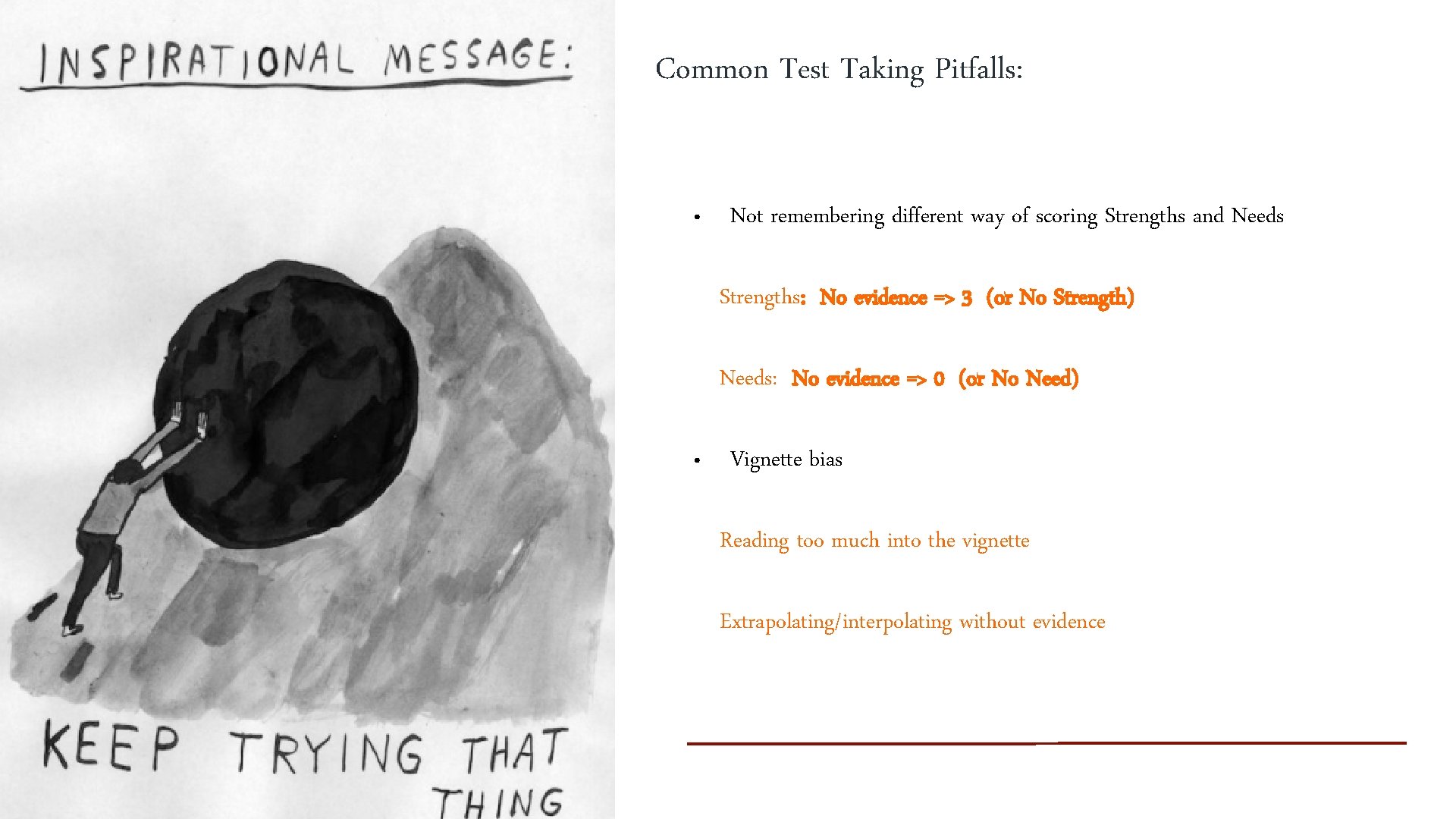
Common Test Taking Pitfalls: • Not remembering different way of scoring Strengths and Needs Strengths: No evidence => 3 (or No Strength) Needs: No evidence => 0 (or No Need) • Vignette bias Reading too much into the vignette Extrapolating/interpolating without evidence
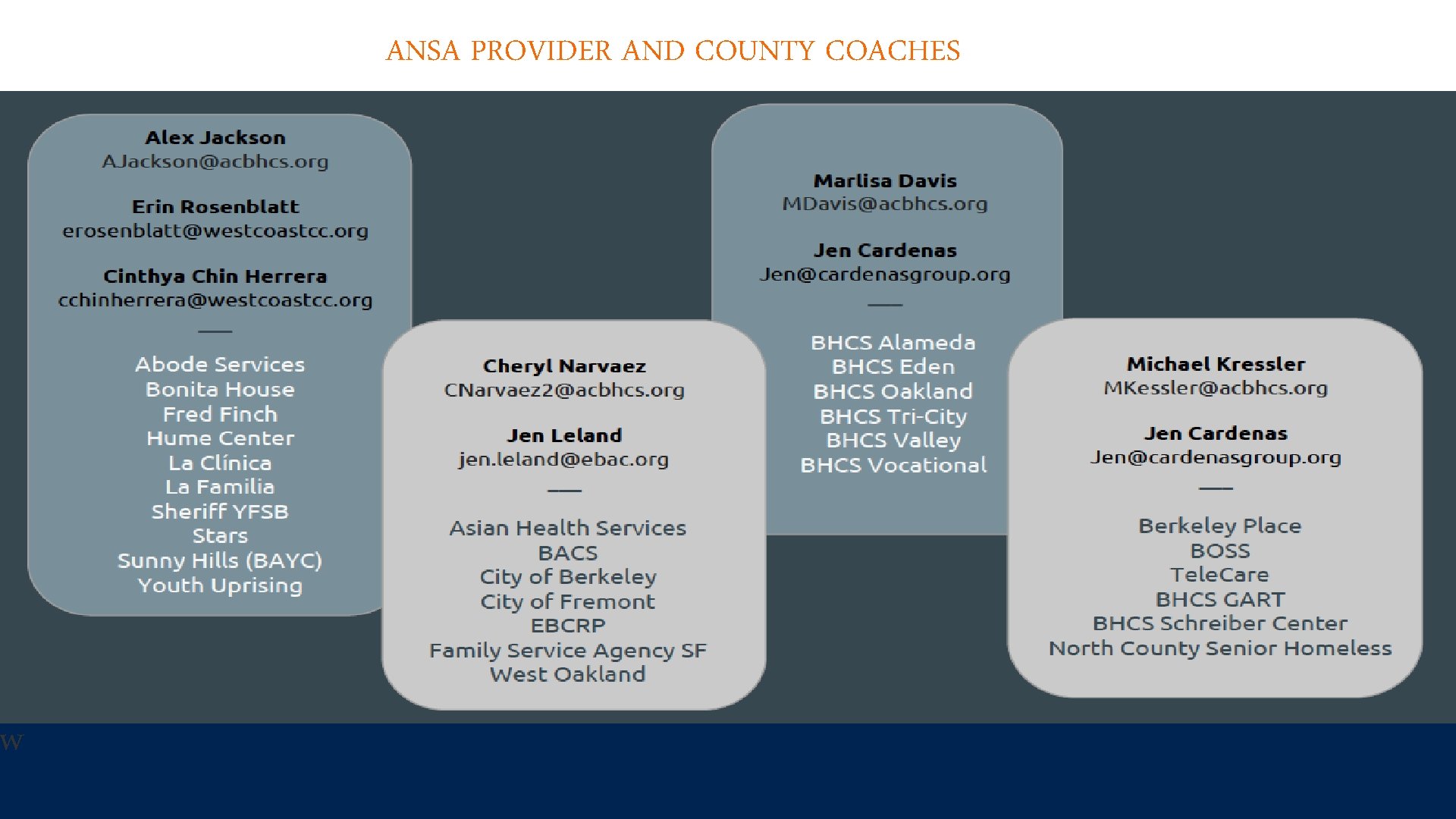
w ANSA PROVIDER AND COUNTY COACHES
w