
Taxonomy The science of naming and grouping organisms
- Slides: 26
Taxonomy The science of naming and grouping organisms
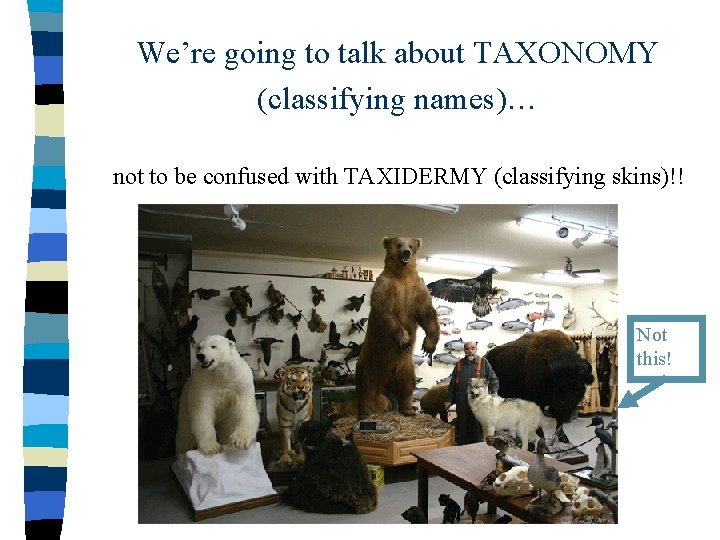
We’re going to talk about TAXONOMY (classifying names)… not to be confused with TAXIDERMY (classifying skins)!! Not this!
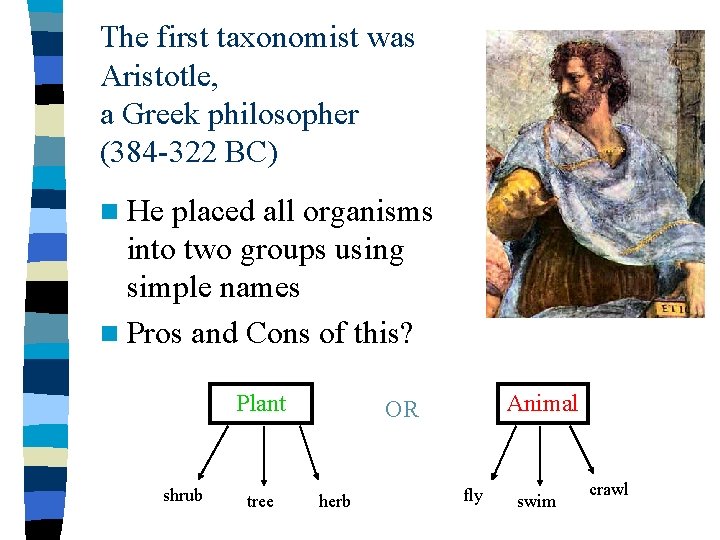
The first taxonomist was Aristotle, a Greek philosopher (384 -322 BC) n He placed all organisms into two groups using simple names n Pros and Cons of this? Plant shrub tree Animal OR herb fly swim crawl
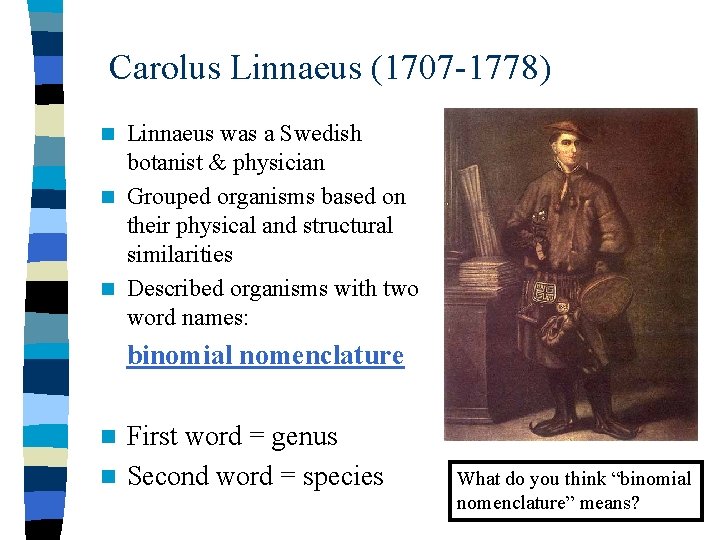
Carolus Linnaeus (1707 -1778) Linnaeus was a Swedish botanist & physician n Grouped organisms based on their physical and structural similarities n Described organisms with two word names: n binomial nomenclature First word = genus n Second word = species n What do you think “binomial nomenclature” means?
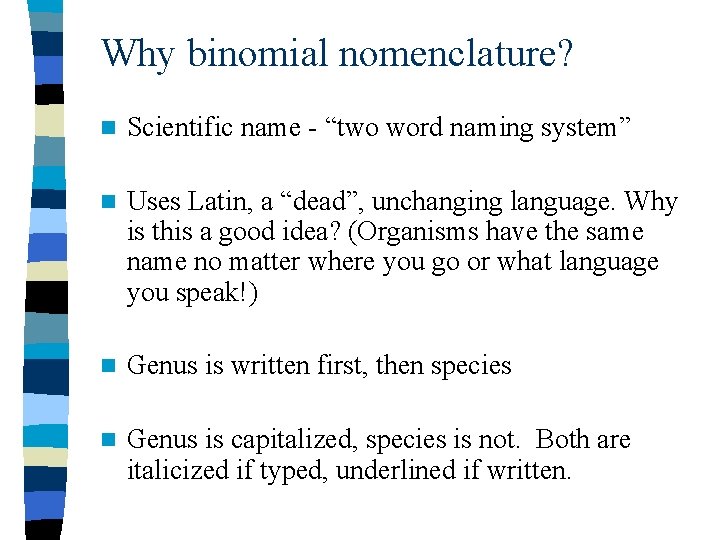
Why binomial nomenclature? n Scientific name - “two word naming system” n Uses Latin, a “dead”, unchanging language. Why is this a good idea? (Organisms have the same no matter where you go or what language you speak!) n Genus is written first, then species n Genus is capitalized, species is not. Both are italicized if typed, underlined if written.
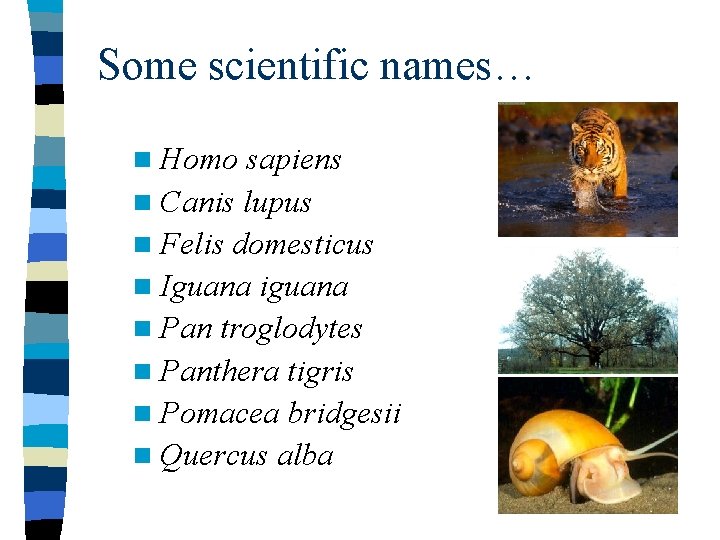
Some scientific names… n Homo sapiens n Canis lupus n Felis domesticus n Iguana iguana n Pan troglodytes n Panthera tigris n Pomacea bridgesii n Quercus alba
Taxonomic hierarchy n Names organisms and their relationships from very broad to very specific n Can anyone name all 7 taxa? ? n Kingdom…
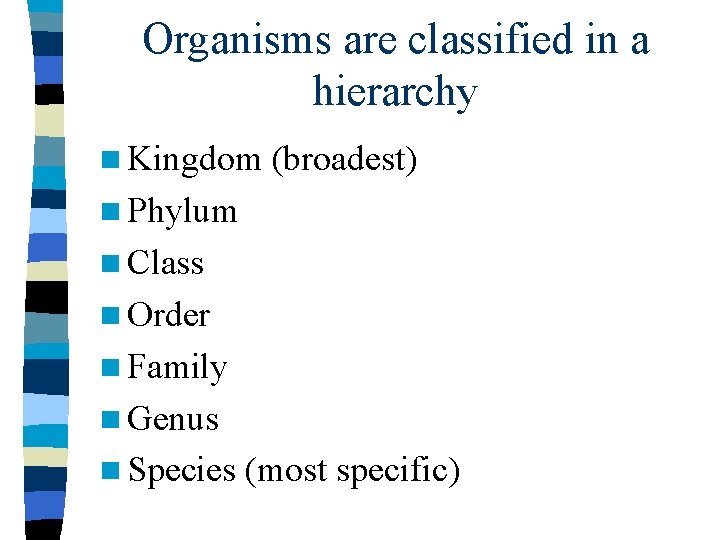
Organisms are classified in a hierarchy n Kingdom (broadest) n Phylum n Class n Order n Family n Genus n Species (most specific)
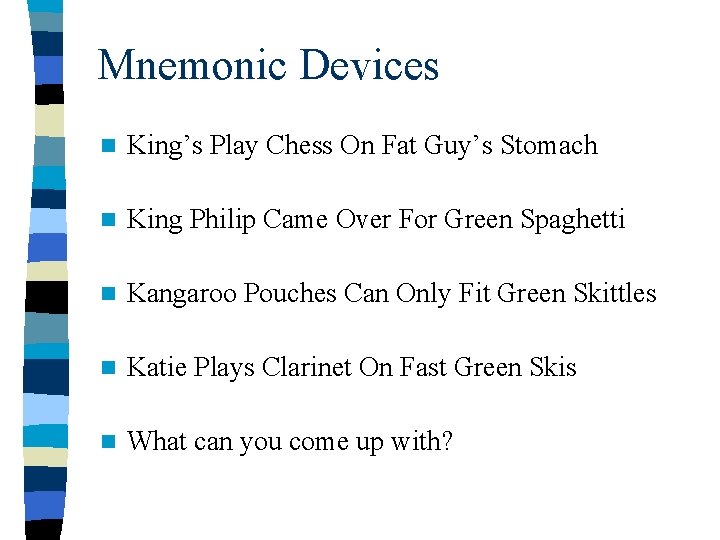
Mnemonic Devices n King’s Play Chess On Fat Guy’s Stomach n King Philip Came Over For Green Spaghetti n Kangaroo Pouches Can Only Fit Green Skittles n Katie Plays Clarinet On Fast Green Skis n What can you come up with?
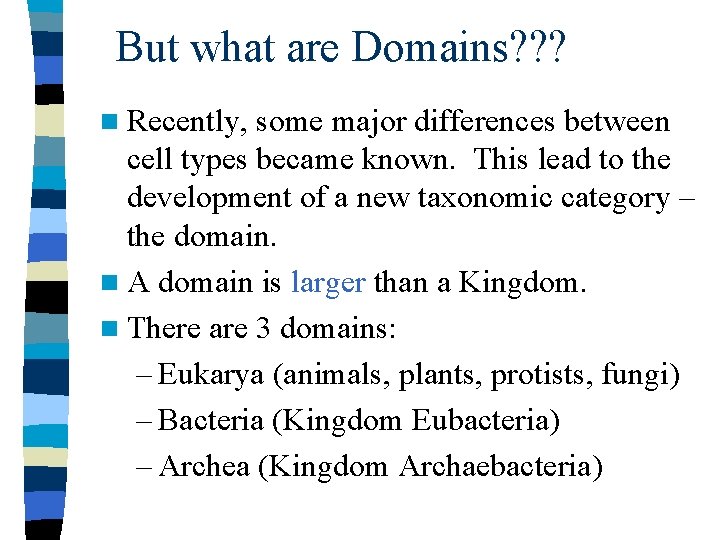
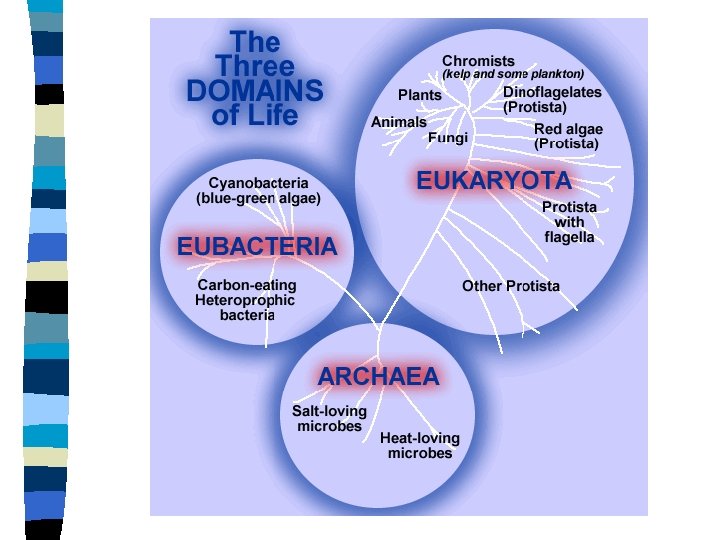
But what are Domains? ? ? n Recently, some major differences between cell types became known. This lead to the development of a new taxonomic category – the domain. n A domain is larger than a Kingdom. n There are 3 domains: – Eukarya (animals, plants, protists, fungi) – Bacteria (Kingdom Eubacteria) – Archea (Kingdom Archaebacteria)
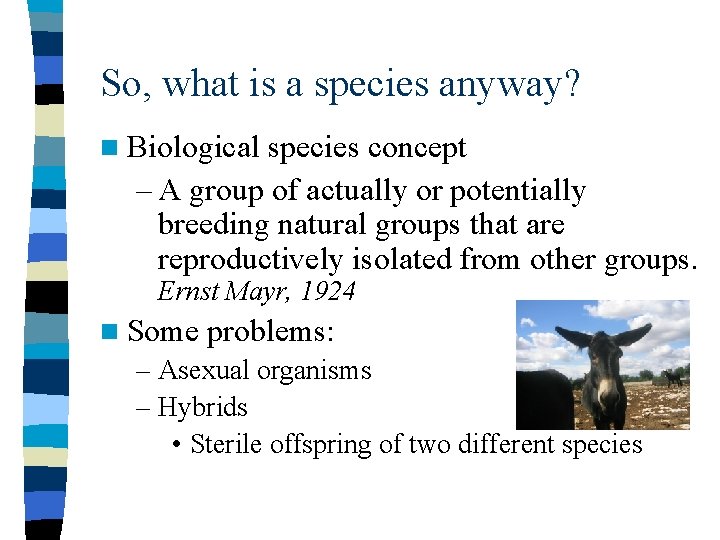
So, what is a species anyway? n Biological species concept – A group of actually or potentially breeding natural groups that are reproductively isolated from other groups. Ernst Mayr, 1924 n Some problems: – Asexual organisms – Hybrids • Sterile offspring of two different species
How many species are out there? n There are probably around 10 million species worldwide, but estimates range from 5 -30 million! n Over 5 million live in the tropics n Only 2 million species have been formally described (and over half of these are insects!!) n Each year, there approximately three bird species discovered, many fish species, and countless insects and other small or microscopic organisms
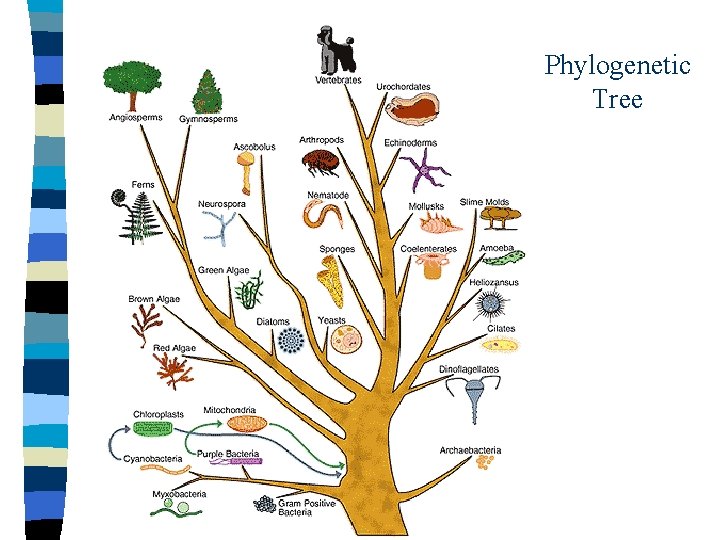
Why is taxonomy useful? n Helps prevent confusion among scientists n Helps to show organisms are related n Can be used to reconstruct phylogenies – evolutionary histories – of an organism or group
Phylogenetic Tree
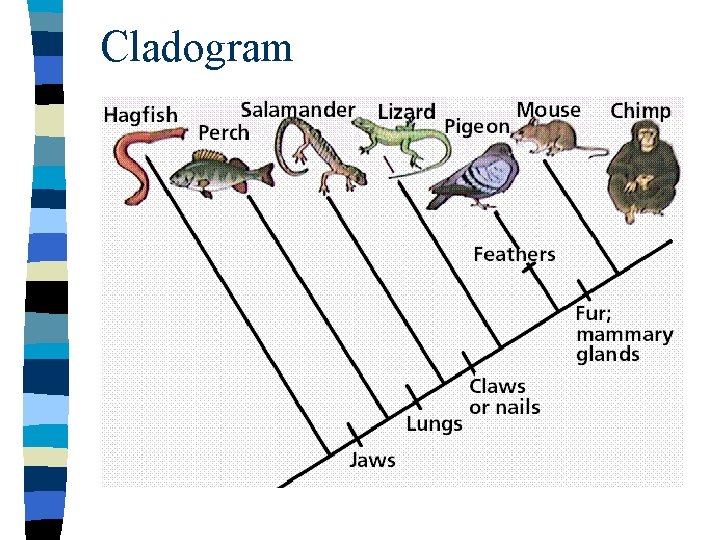
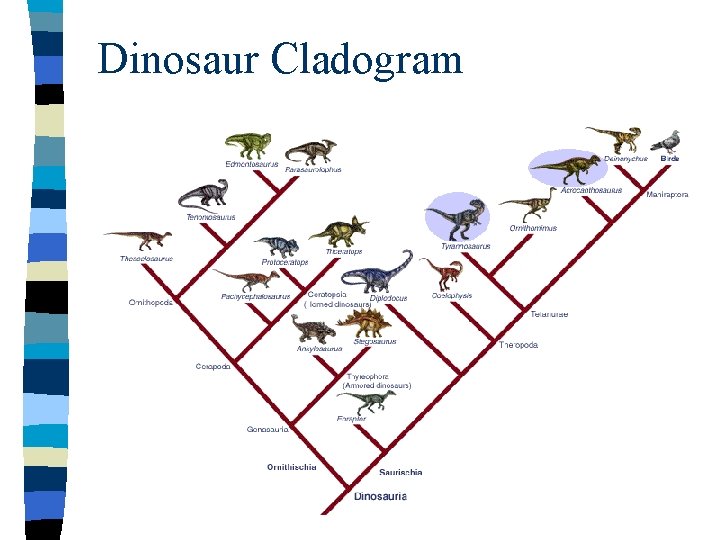
Cladograms n Graph showing when different groups diverged from a common ancestral line n Points where they split are often noted with a feature that was different between ancestral group and a “new” feature in the group that split off.
Cladogram
Dinosaur Cladogram
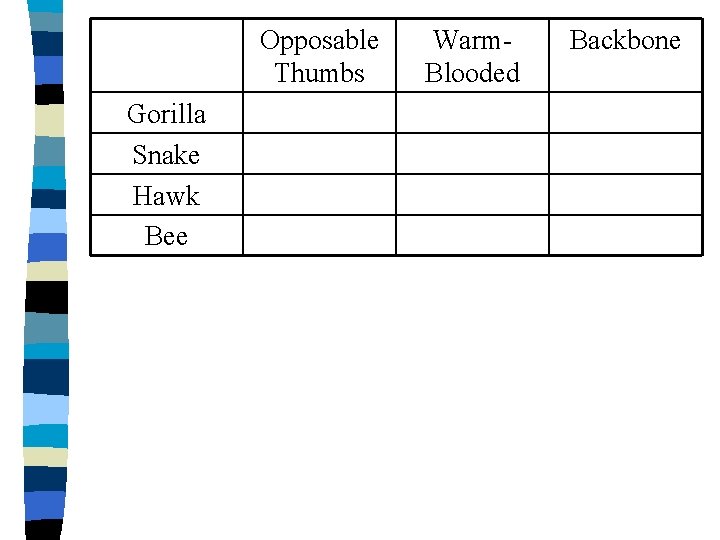
Opposable Thumbs Gorilla Snake Hawk Bee Warm. Blooded Backbone
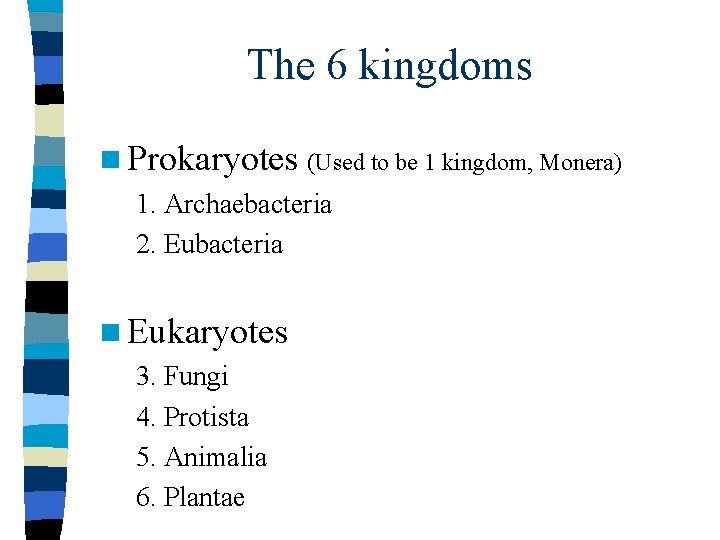
The 6 kingdoms n Prokaryotes (Used to be 1 kingdom, Monera) 1. Archaebacteria 2. Eubacteria n Eukaryotes 3. Fungi 4. Protista 5. Animalia 6. Plantae
Overview of the 6 kingdoms
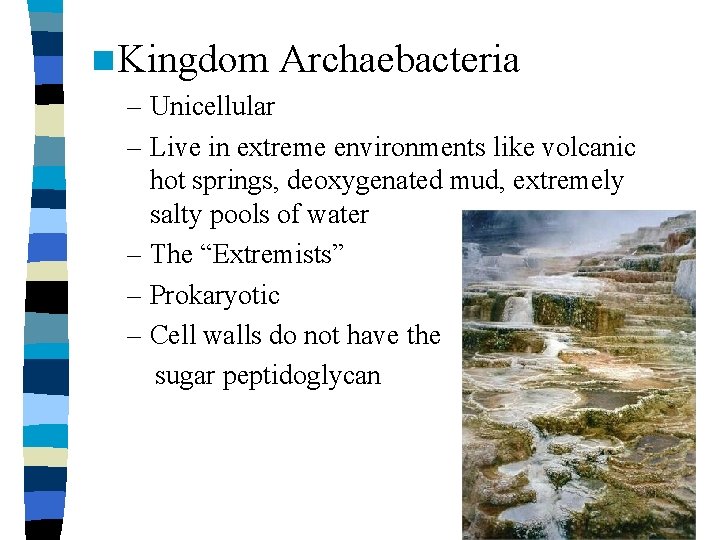
n Kingdom Archaebacteria – Unicellular – Live in extreme environments like volcanic hot springs, deoxygenated mud, extremely salty pools of water – The “Extremists” – Prokaryotic – Cell walls do not have the sugar peptidoglycan
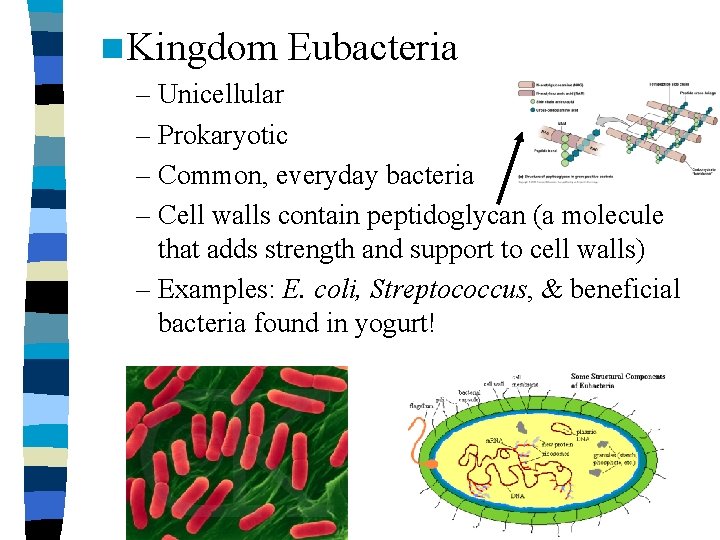
n Kingdom Eubacteria – Unicellular – Prokaryotic – Common, everyday bacteria – Cell walls contain peptidoglycan (a molecule that adds strength and support to cell walls) – Examples: E. coli, Streptococcus, & beneficial bacteria found in yogurt!
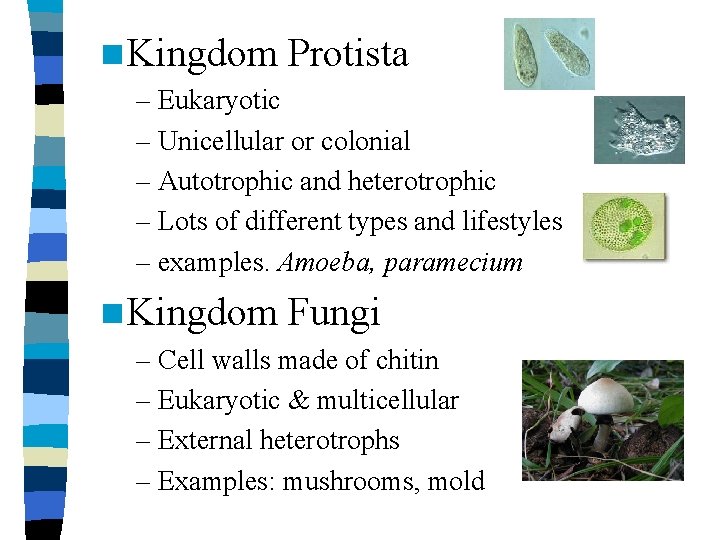
n Kingdom Protista – Eukaryotic – Unicellular or colonial – Autotrophic and heterotrophic – Lots of different types and lifestyles – examples. Amoeba, paramecium n Kingdom Fungi – Cell walls made of chitin – Eukaryotic & multicellular – External heterotrophs – Examples: mushrooms, mold
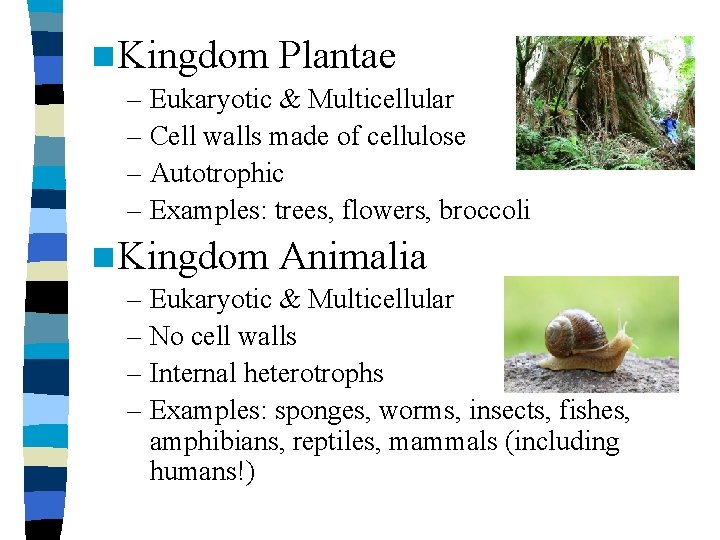
n Kingdom Plantae – Eukaryotic & Multicellular – Cell walls made of cellulose – Autotrophic – Examples: trees, flowers, broccoli n Kingdom Animalia – Eukaryotic & Multicellular – No cell walls – Internal heterotrophs – Examples: sponges, worms, insects, fishes, amphibians, reptiles, mammals (including humans!)
THE END (Nothing is cuter than a baby sloth with shampoo horns!)