
Taxonomy Phylum Chordata Subphylum Cephalochordata amphioxus or lancelet
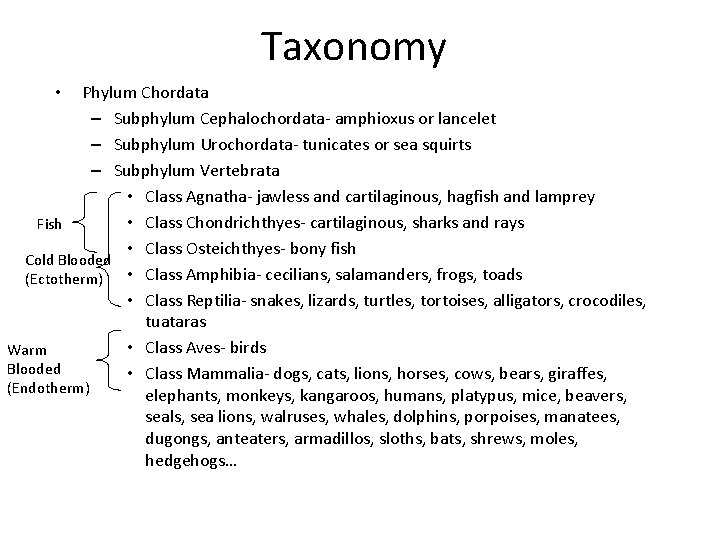
Taxonomy Phylum Chordata – Subphylum Cephalochordata- amphioxus or lancelet – Subphylum Urochordata- tunicates or sea squirts – Subphylum Vertebrata • Class Agnatha- jawless and cartilaginous, hagfish and lamprey • Class Chondrichthyes- cartilaginous, sharks and rays Fish • Class Osteichthyes- bony fish Cold Blooded (Ectotherm) • Class Amphibia- cecilians, salamanders, frogs, toads • Class Reptilia- snakes, lizards, turtles, tortoises, alligators, crocodiles, tuataras • Class Aves- birds Warm Blooded • Class Mammalia- dogs, cats, lions, horses, cows, bears, giraffes, (Endotherm) elephants, monkeys, kangaroos, humans, platypus, mice, beavers, seals, sea lions, walruses, whales, dolphins, porpoises, manatees, dugongs, anteaters, armadillos, sloths, bats, shrews, moles, hedgehogs… •
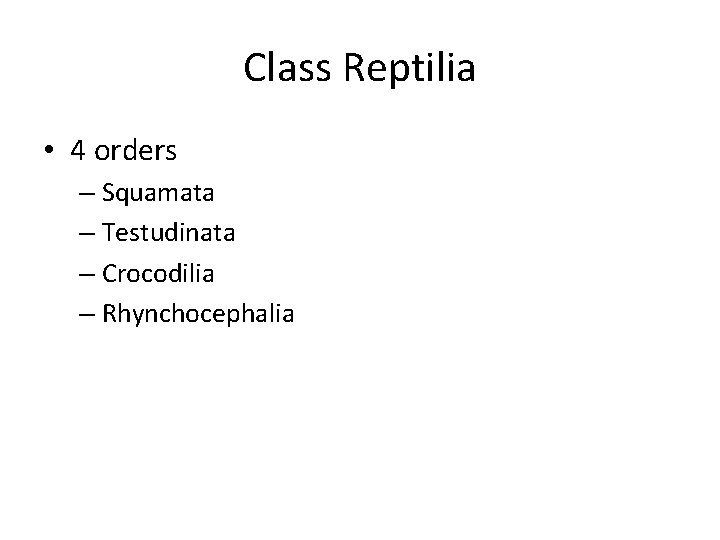
Class Reptilia • 4 orders – Squamata – Testudinata – Crocodilia – Rhynchocephalia
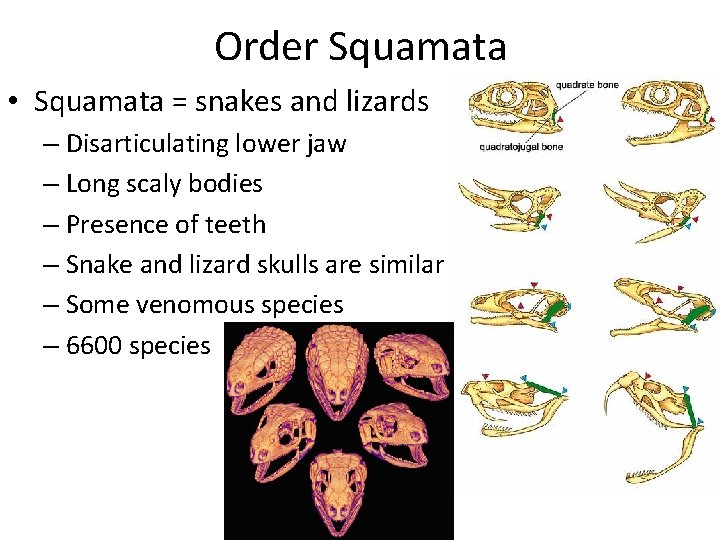
Order Squamata • Squamata = snakes and lizards – Disarticulating lower jaw – Long scaly bodies – Presence of teeth – Snake and lizard skulls are similar – Some venomous species – 6600 species

Snakes Movement • Lack appendages • Serpentine movement- used in crawling and swimming, winding of the snake in a series of S curves • Concertina movement- drawing itself into a tight S shape, then extending itself forward. Used when the snake is between 2 structures • Rectilinear- movement involves scutes (broad scales on the ventral side of the snake). The snake forces the scutes forward, they grip the earth, and the animal pulls itself forward in a straight line. • Sidewinding- used by snakes in deserts or sandy areas where traction is poor. Shuffles sideways through the sand while only touching at 2 or 3 points of the body.
Snakes • Diet- strictly carnivorous – – – Rodents Insects Lizards small mammals Eggs Other snakes
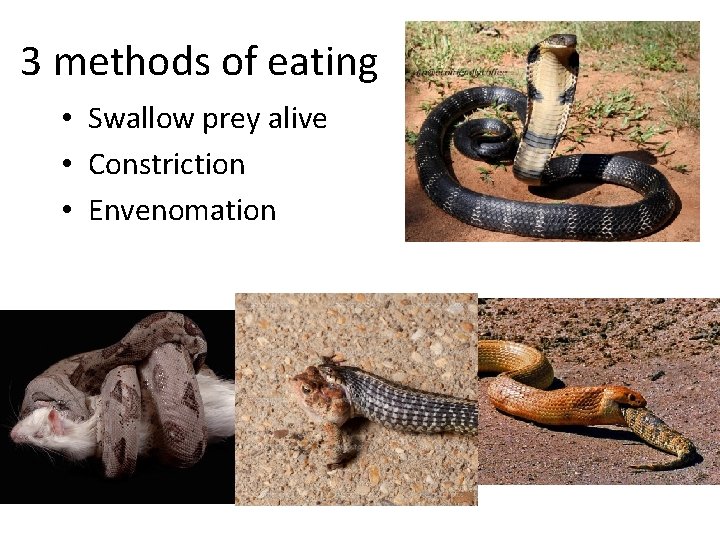
3 methods of eating • Swallow prey alive • Constriction • Envenomation
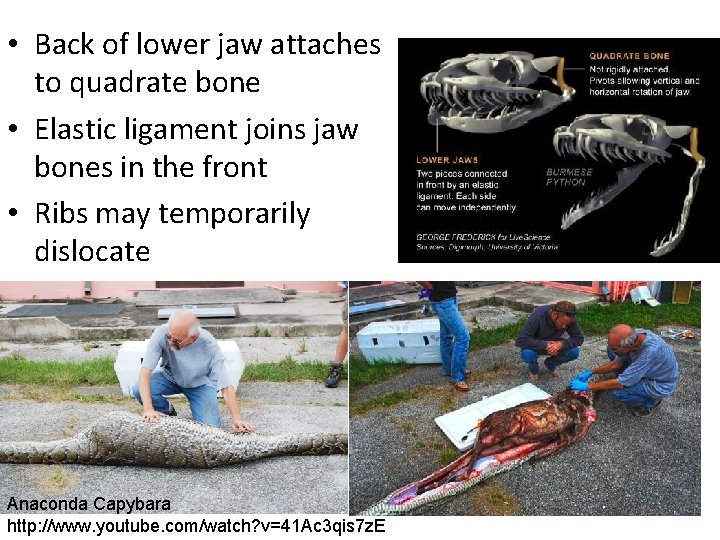
• Back of lower jaw attaches to quadrate bone • Elastic ligament joins jaw bones in the front • Ribs may temporarily dislocate Anaconda Capybara http: //www. youtube. com/watch? v=41 Ac 3 qis 7 z. E
• Venom – Neurotoxin- attacks the nervous system and often quickly paralyzes the prey – Hemotoxin- more deadly for large animals; slower than neurotoxin, it destroys blood vessels and red blood cells Snakes of AR http: //herpsofarkansas. com/Snake/Home. Page AR-snakes pdf
Snakes • Sensing – Jacobson’s organs – Pit vipers have heat-sensing pits between the nostrils and the eyes – Snakes can’t hear but can detect some vibrations in the ground
Lizards • 2 pairs of limbs • External ear openings so they can sense airborne sounds • Eyelids- lizards can close their eyes; snakes eyes are permanently open with membrane to protect • Belly is covered with scales similar to the rest of the body
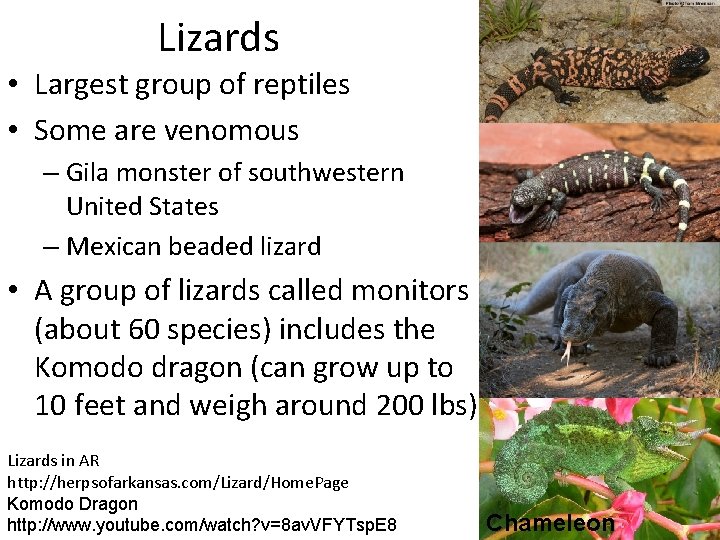
Lizards • Largest group of reptiles • Some are venomous – Gila monster of southwestern United States – Mexican beaded lizard • A group of lizards called monitors (about 60 species) includes the Komodo dragon (can grow up to 10 feet and weigh around 200 lbs) Lizards in AR http: //herpsofarkansas. com/Lizard/Home. Page Komodo Dragon http: //www. youtube. com/watch? v=8 av. VFYTsp. E 8 Chameleon
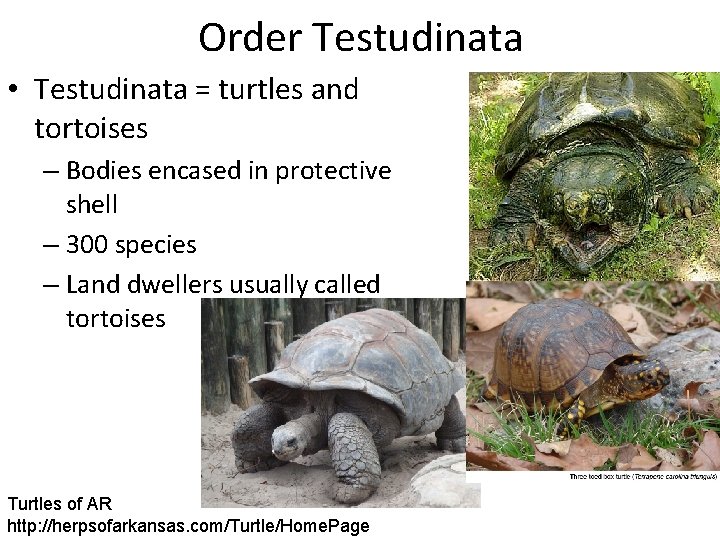
Order Testudinata • Testudinata = turtles and tortoises – Bodies encased in protective shell – 300 species – Land dwellers usually called tortoises Turtles of AR http: //herpsofarkansas. com/Turtle/Home. Page
Order Crocodilia • Crocodilia = alligators, caimans, crocodiles, and gharials – 4 -chambered heart – Some parental care – 21 species
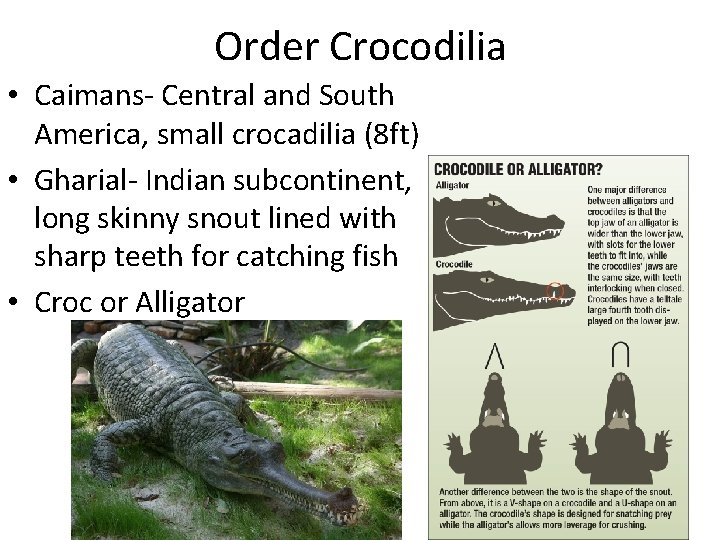
Order Crocodilia • Caimans- Central and South America, small crocadilia (8 ft) • Gharial- Indian subcontinent, long skinny snout lined with sharp teeth for catching fish • Croc or Alligator
Order Crocodilia • Stealthy carnivores • Body can be submerged with just eyes and nostrils above water • All are oviparous
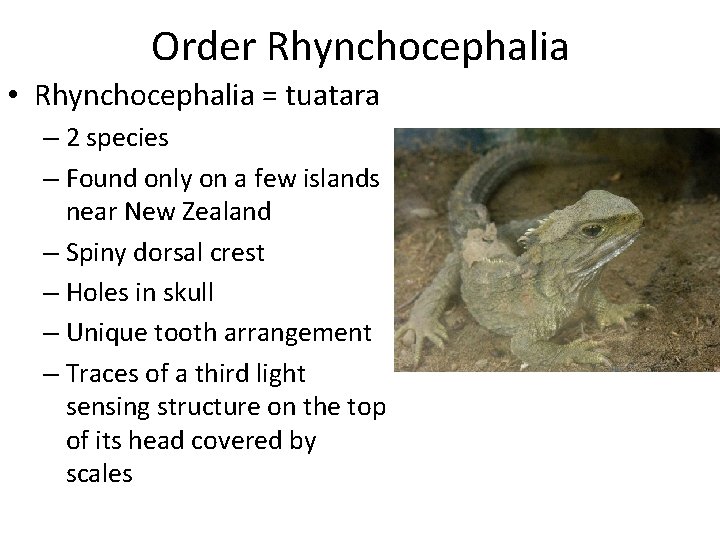
Order Rhynchocephalia • Rhynchocephalia = tuatara – 2 species – Found only on a few islands near New Zealand – Spiny dorsal crest – Holes in skull – Unique tooth arrangement – Traces of a third light sensing structure on the top of its head covered by scales
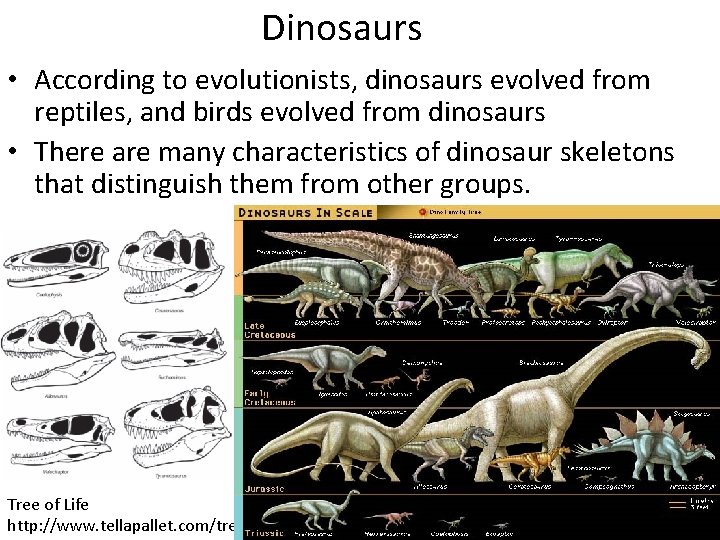
Dinosaurs • According to evolutionists, dinosaurs evolved from reptiles, and birds evolved from dinosaurs • There are many characteristics of dinosaur skeletons that distinguish them from other groups. Tree of Life http: //www. tellapallet. com/tree_of_life. htm
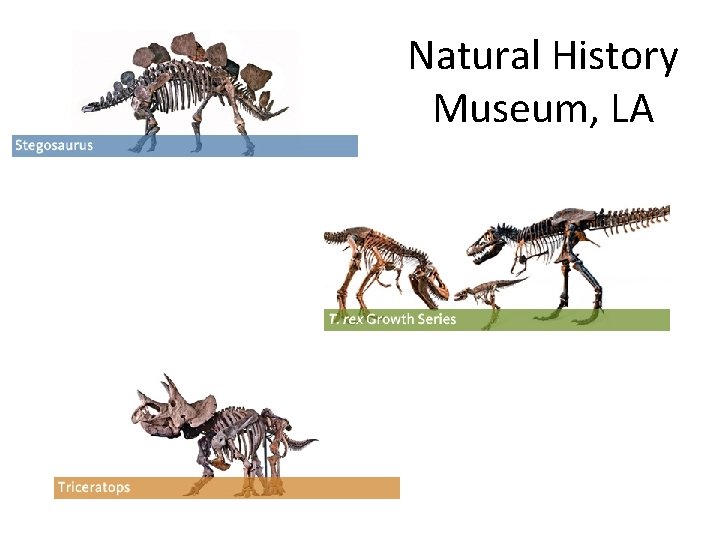
Natural History Museum, LA
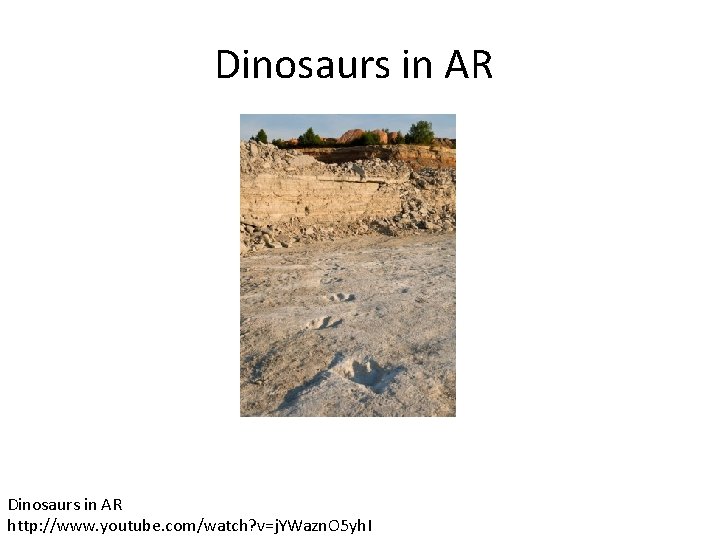
Dinosaurs in AR http: //www. youtube. com/watch? v=j. YWazn. O 5 yh. I
- Slides: 19