
Taxonomy of Marine Organisms video Whale Watch Workshop



- Slides: 76
Taxonomy of Marine Organisms video Whale Watch Workshop III March 20 th 2: 45 -3: 45 pm Mr. Law video 2
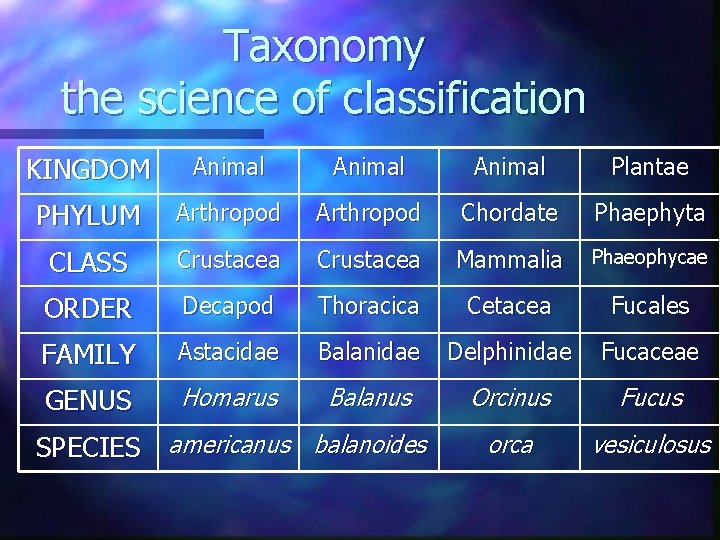
Taxonomy the science of classification KINGDOM Animal Plantae PHYLUM Arthropod Chordate Phaephyta CLASS Crustacea Mammalia Phaeophycae ORDER Decapod Thoracica Cetacea Fucales FAMILY Astacidae Balanidae Delphinidae Fucaceae GENUS Homarus Balanus Orcinus Fucus orca vesiculosus SPECIES americanus balanoides
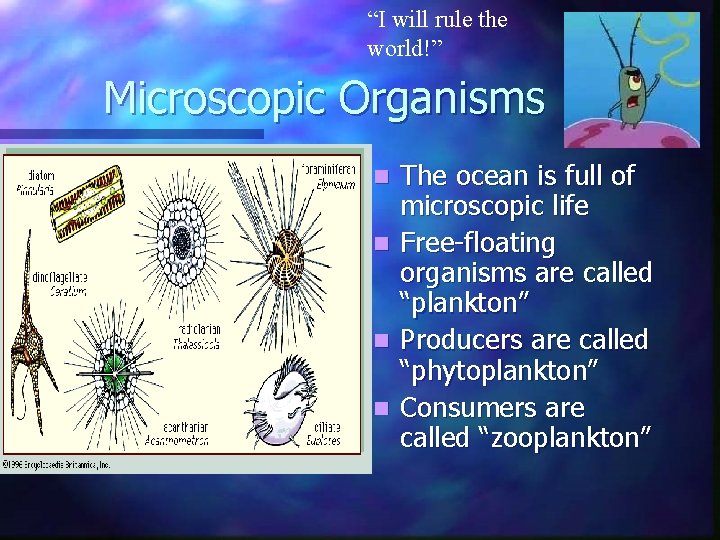
“I will rule the world!” Microscopic Organisms n n The ocean is full of microscopic life Free-floating organisms are called “plankton” Producers are called “phytoplankton” Consumers are called “zooplankton”
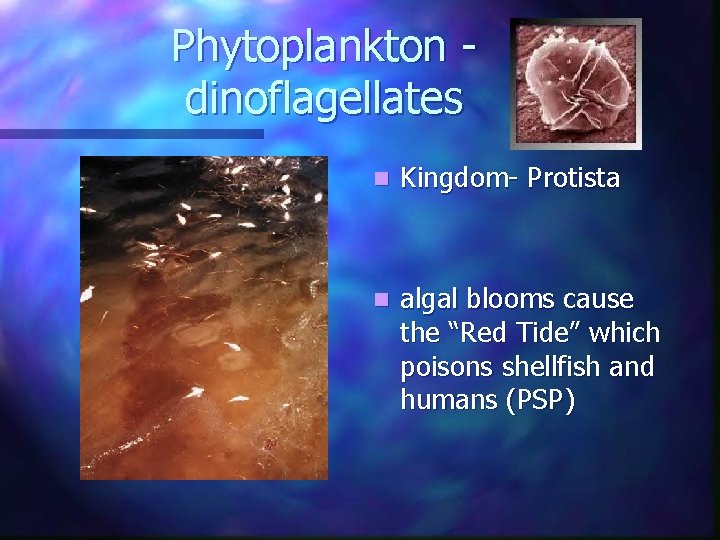
Phytoplankton dinoflagellates n Kingdom- Protista n algal blooms cause the “Red Tide” which poisons shellfish and humans (PSP)
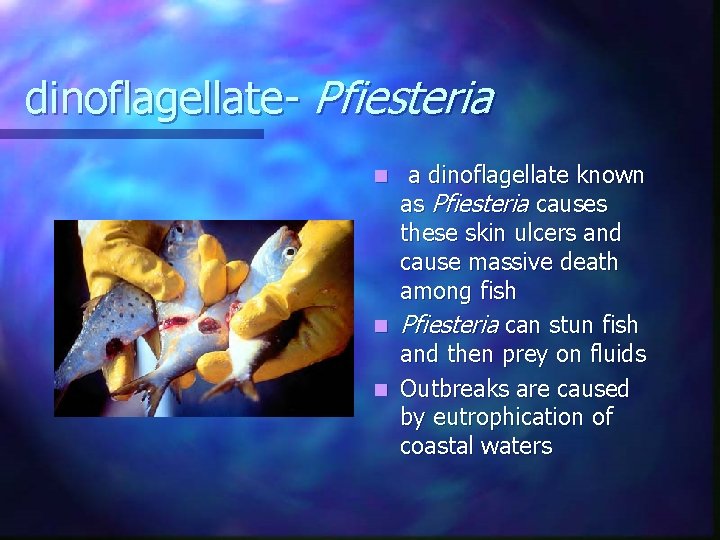
dinoflagellate- Pfiesteria a dinoflagellate known as Pfiesteria causes these skin ulcers and cause massive death among fish n Pfiesteria can stun fish and then prey on fluids n Outbreaks are caused by eutrophication of coastal waters n
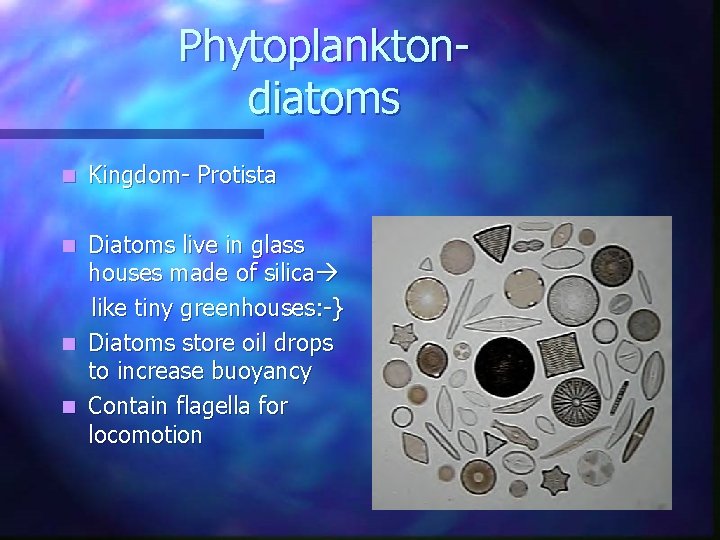
Phytoplanktondiatoms n Kingdom- Protista Diatoms live in glass houses made of silica like tiny greenhouses: -} n Diatoms store oil drops to increase buoyancy n Contain flagella for locomotion n
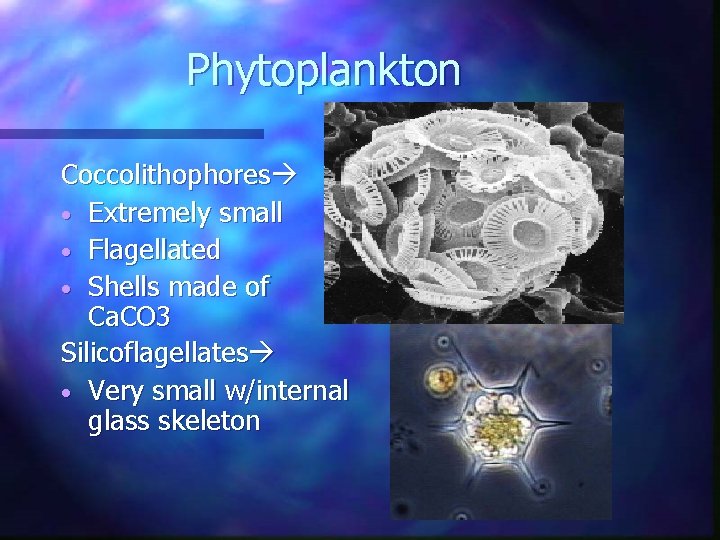
Phytoplankton Coccolithophores • Extremely small • Flagellated • Shells made of Ca. CO 3 Silicoflagellates • Very small w/internal glass skeleton
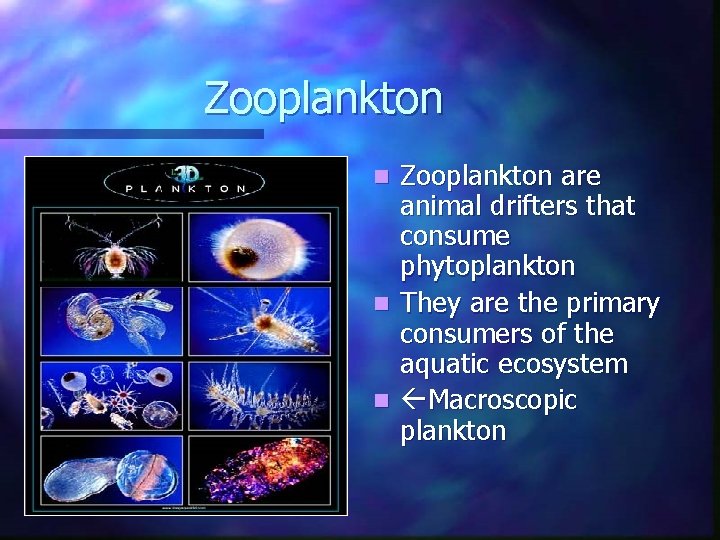
Zooplankton are animal drifters that consume phytoplankton n They are the primary consumers of the aquatic ecosystem n Macroscopic plankton n
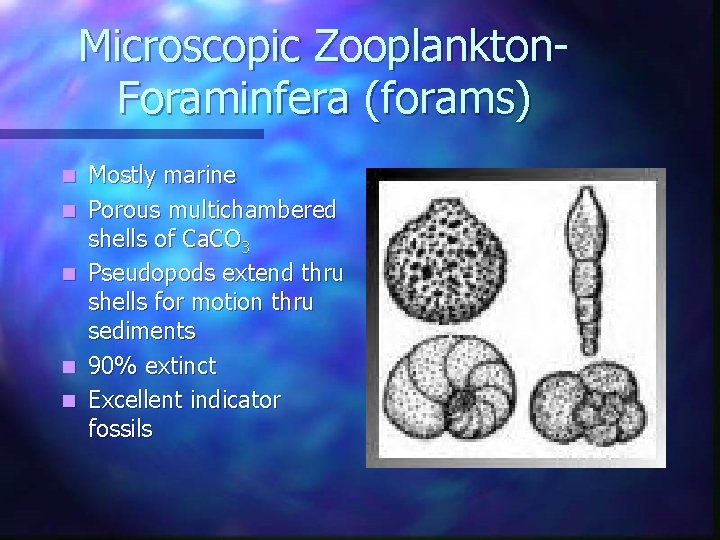
Microscopic Zooplankton. Foraminfera (forams) n n n Mostly marine Porous multichambered shells of Ca. CO 3 Pseudopods extend thru shells for motion thru sediments 90% extinct Excellent indicator fossils
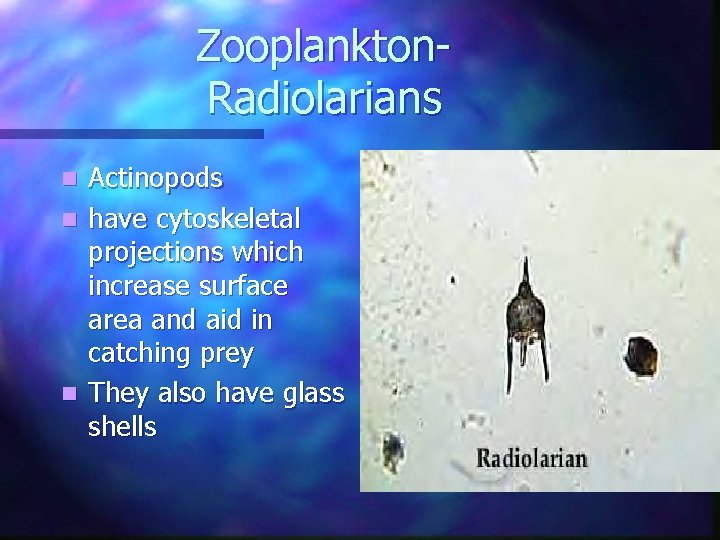
Zooplankton. Radiolarians Actinopods n have cytoskeletal projections which increase surface area and aid in catching prey n They also have glass shells n
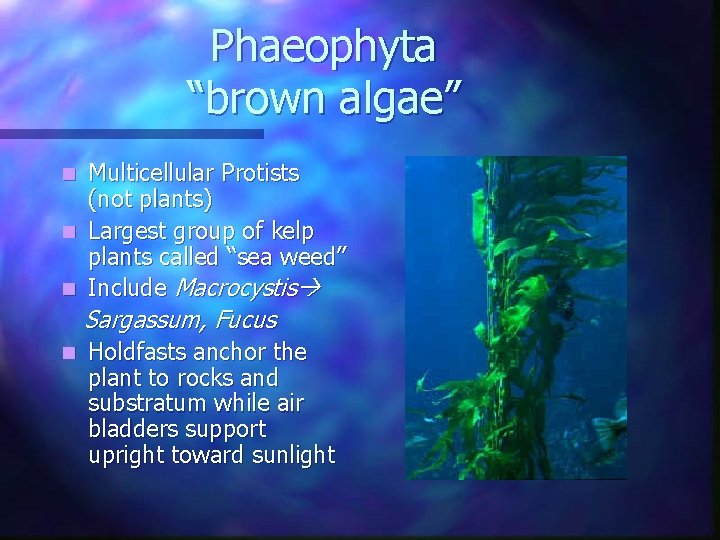
Phaeophyta “brown algae” Multicellular Protists (not plants) n Largest group of kelp plants called “sea weed” n Include Macrocystis n Sargassum, Fucus n Holdfasts anchor the plant to rocks and substratum while air bladders support upright toward sunlight
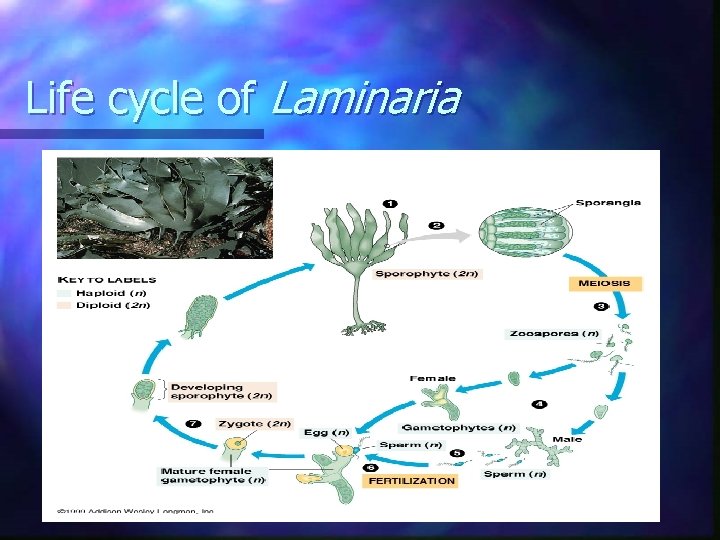
Life cycle of Laminaria
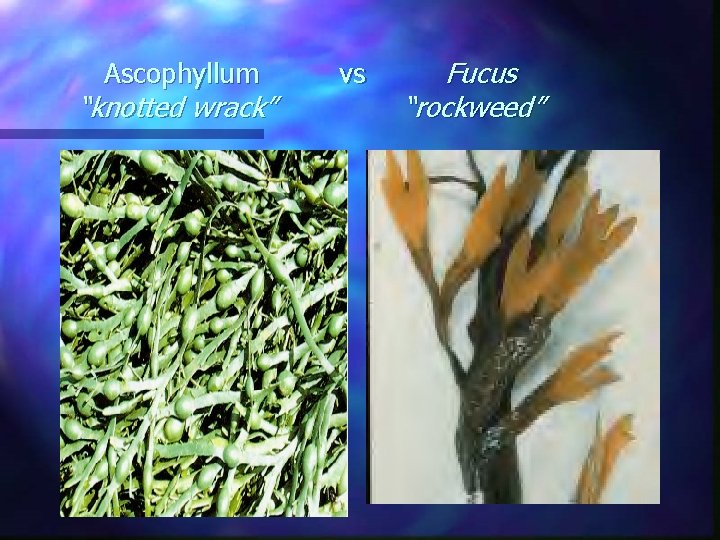
Ascophyllum “knotted wrack” vs Fucus “rockweed”
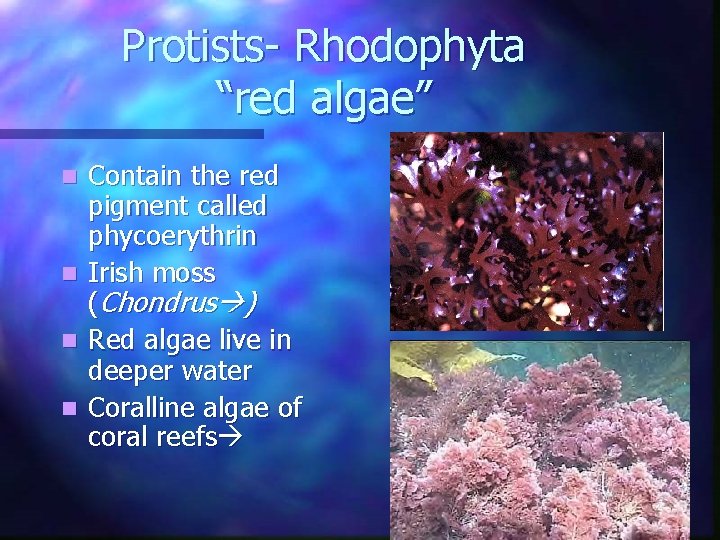
Protists- Rhodophyta “red algae” Contain the red pigment called phycoerythrin n Irish moss (Chondrus ) n Red algae live in deeper water n Coralline algae of coral reefs n
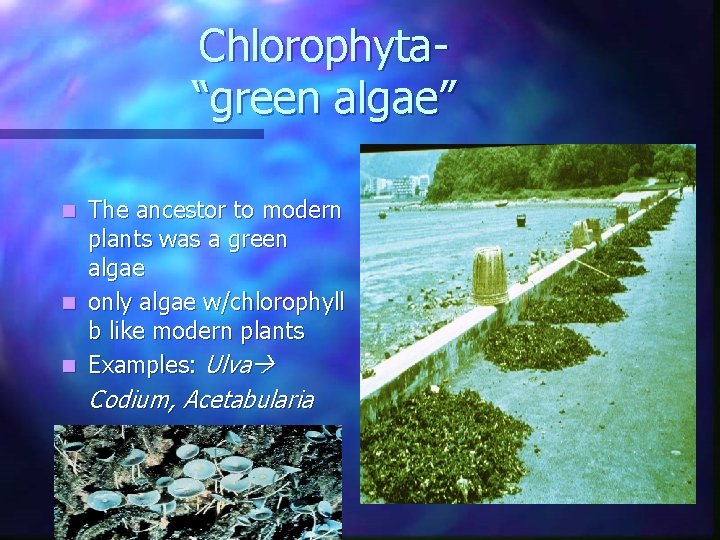
Chlorophyta“green algae” The ancestor to modern plants was a green algae n only algae w/chlorophyll b like modern plants n Examples: Ulva n Codium, Acetabularia
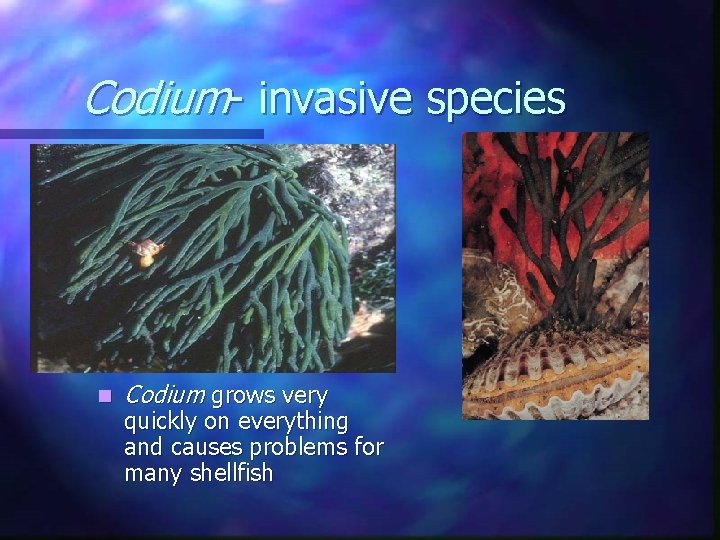
Codium- invasive species n Codium grows very quickly on everything and causes problems for many shellfish
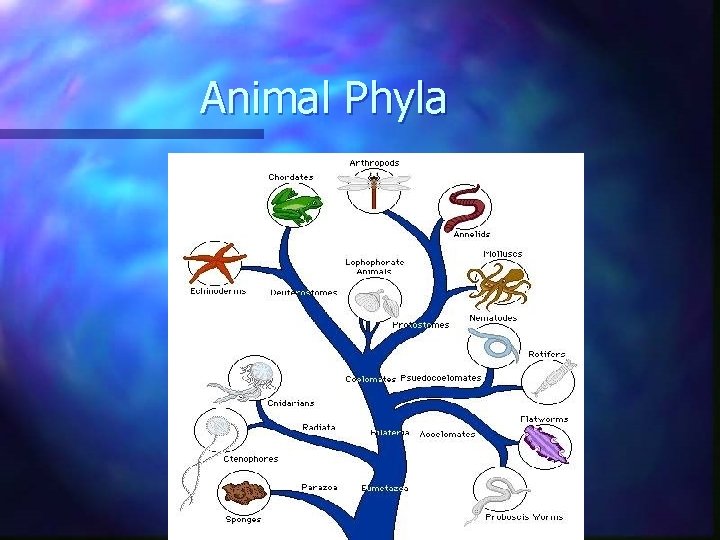
Animal Phyla
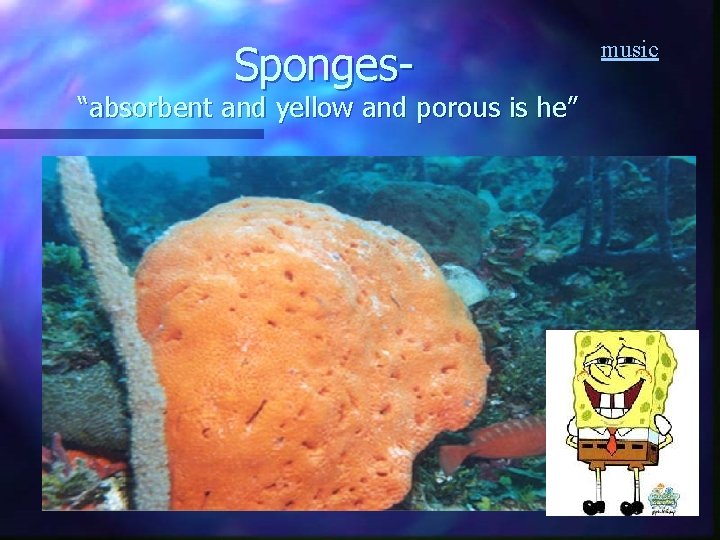
Sponges- “absorbent and yellow and porous is he” music
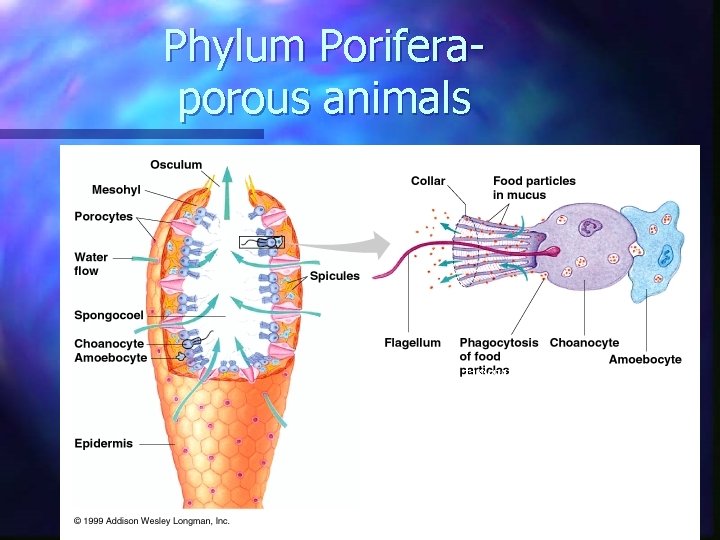
Phylum Poriferaporous animals Lack true tissues (Parazoa) Lack symmetery Filter feeders that digest intracellularly
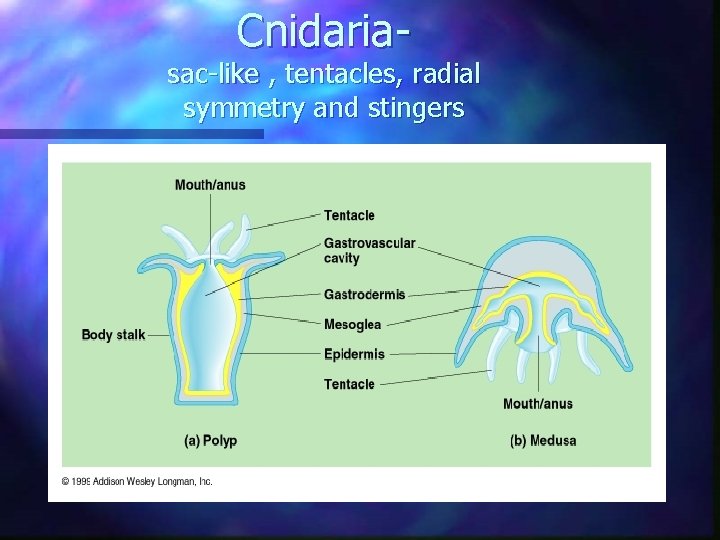
Cnidaria- sac-like , tentacles, radial symmetry and stingers
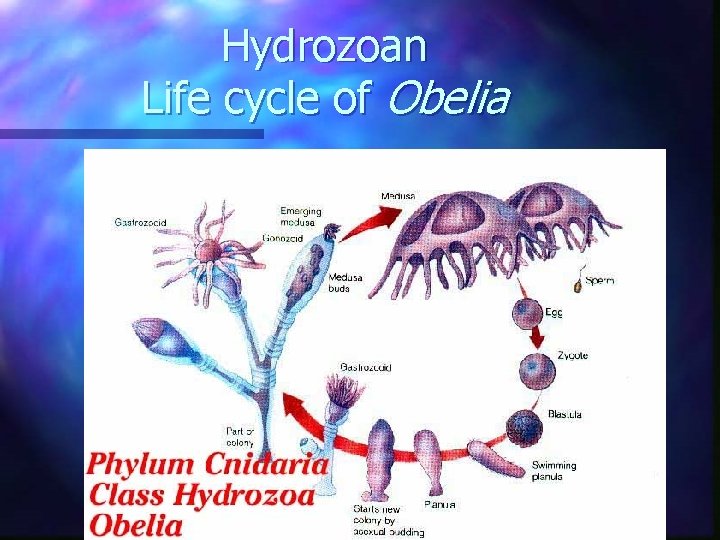
Hydrozoan Life cycle of Obelia
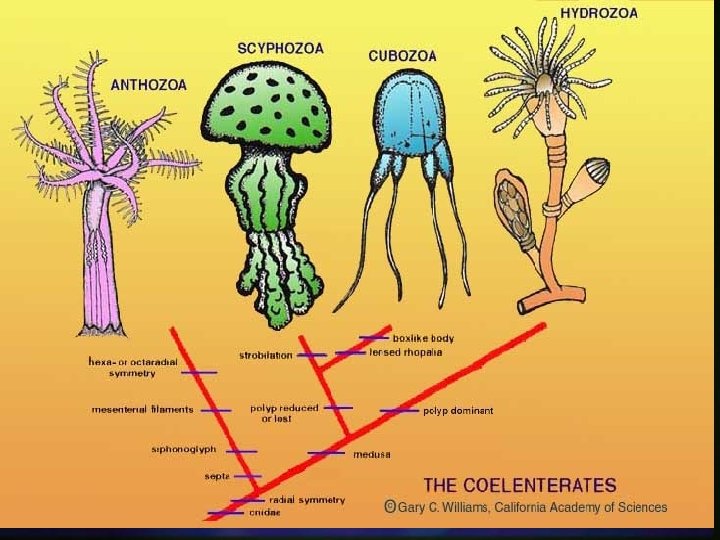
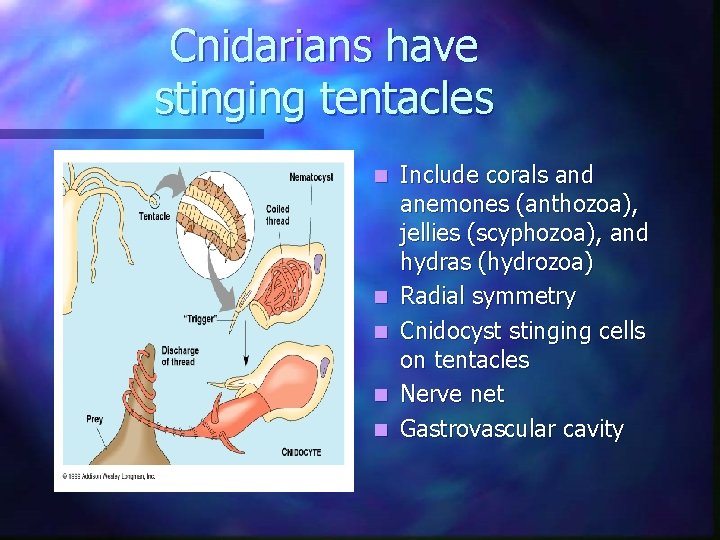
Cnidarians have stinging tentacles n n n Include corals and anemones (anthozoa), jellies (scyphozoa), and hydras (hydrozoa) Radial symmetry Cnidocyst stinging cells on tentacles Nerve net Gastrovascular cavity
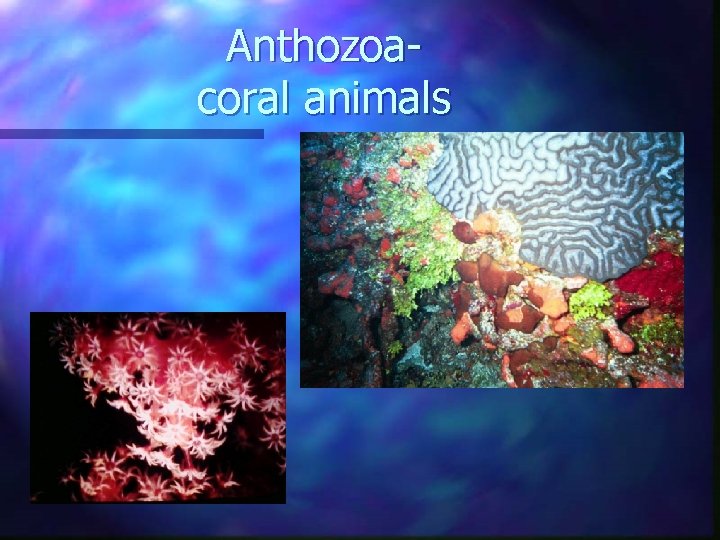
Anthozoacoral animals
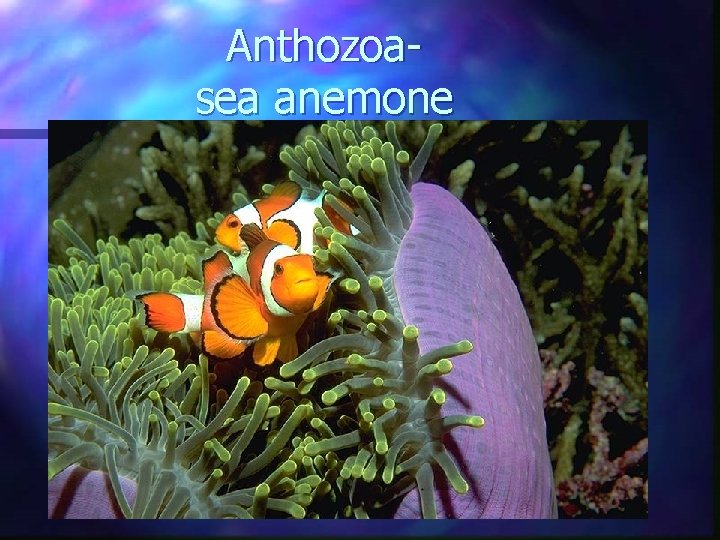
Anthozoasea anemone
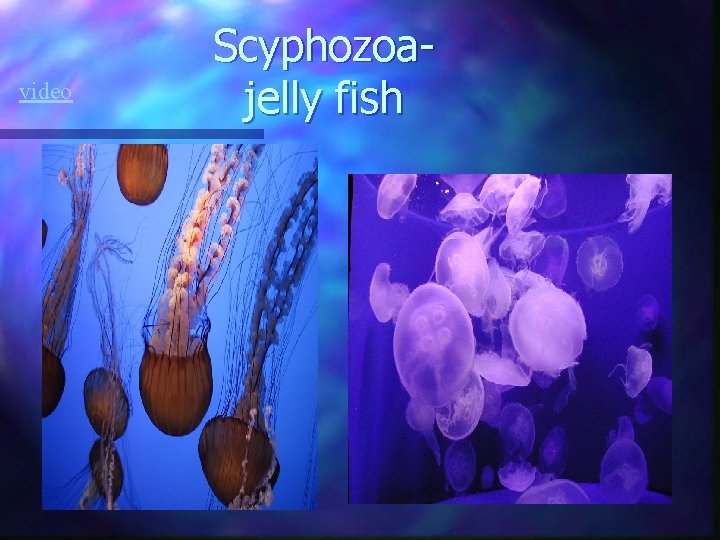
video Scyphozoajelly fish
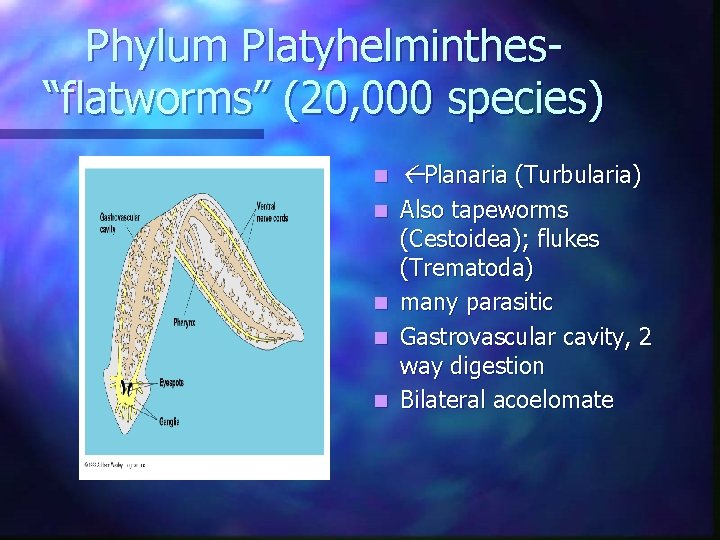
Phylum Platyhelminthes“flatworms” (20, 000 species) n Planaria (Turbularia) Also tapeworms (Cestoidea); flukes (Trematoda) n many parasitic n Gastrovascular cavity, 2 way digestion n Bilateral acoelomate n
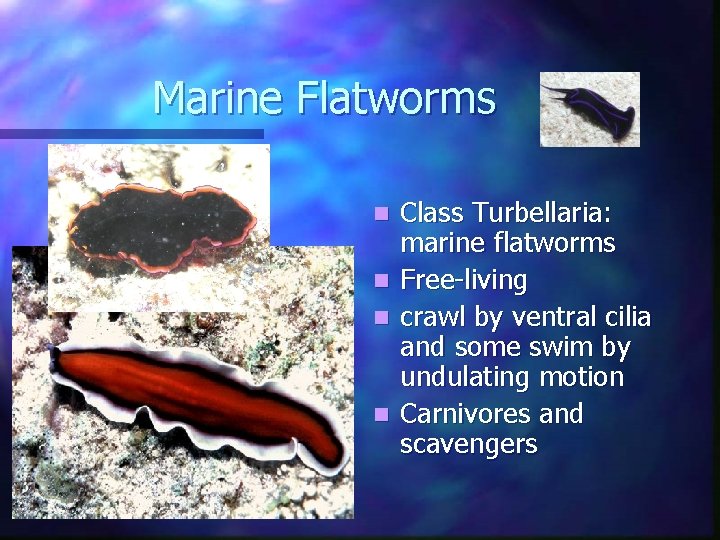
Marine Flatworms n n Class Turbellaria: marine flatworms Free-living crawl by ventral cilia and some swim by undulating motion Carnivores and scavengers
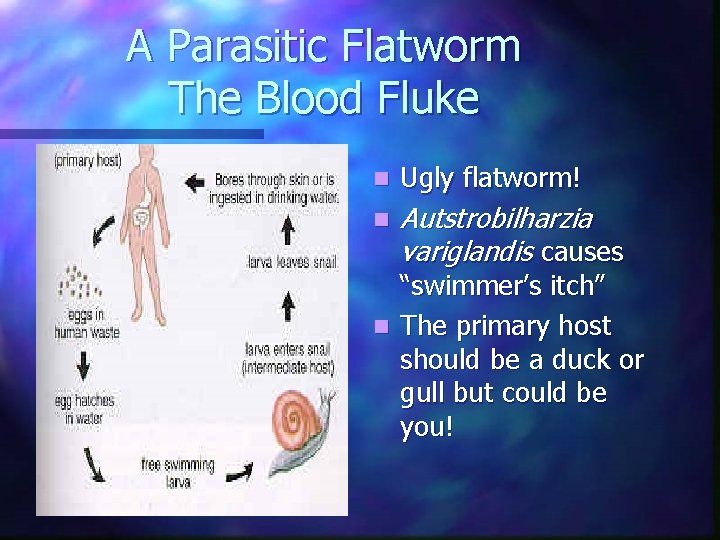
A Parasitic Flatworm The Blood Fluke n Ugly flatworm! n Autstrobilharzia variglandis causes “swimmer’s itch” n The primary host should be a duck or gull but could be you!
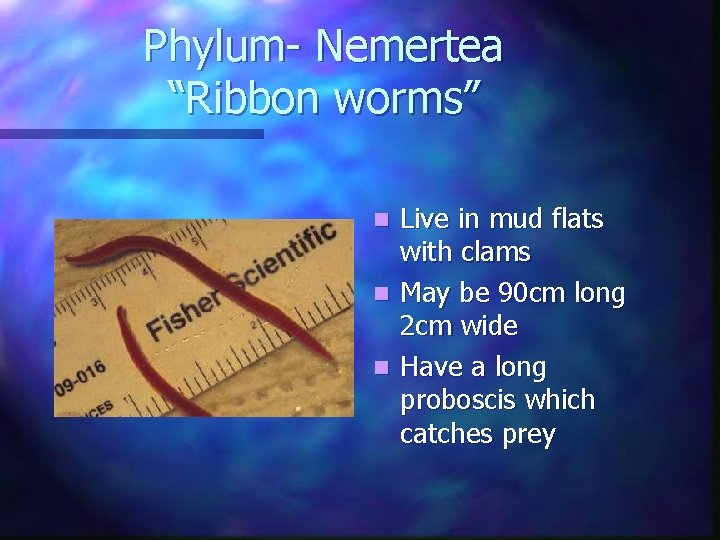
Phylum- Nemertea “Ribbon worms” Live in mud flats with clams n May be 90 cm long 2 cm wide n Have a long proboscis which catches prey n
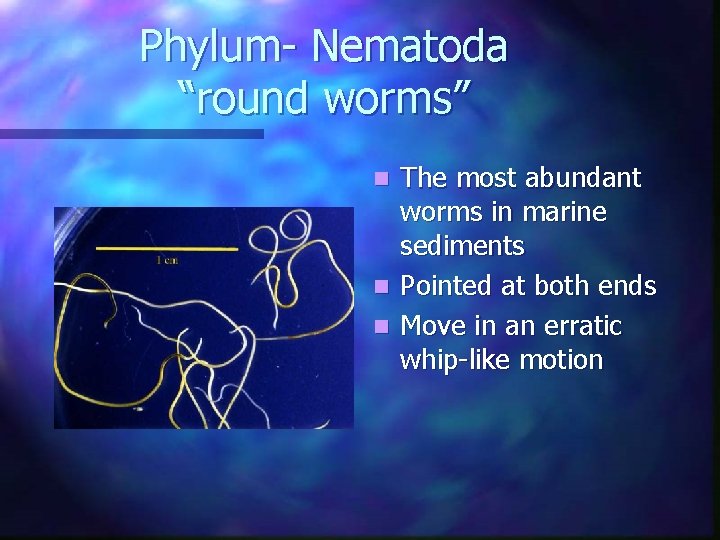
Phylum- Nematoda “round worms” The most abundant worms in marine sediments n Pointed at both ends n Move in an erratic whip-like motion n
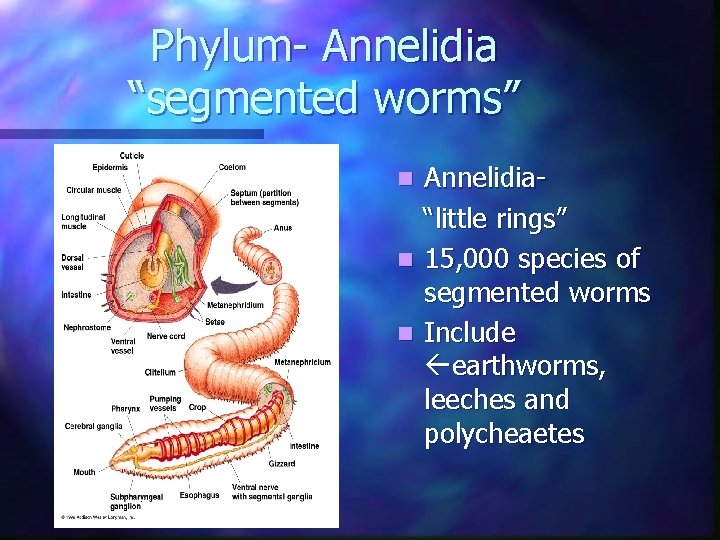
Phylum- Annelidia “segmented worms” Annelidia“little rings” n 15, 000 species of segmented worms n Include earthworms, leeches and polycheaetes n
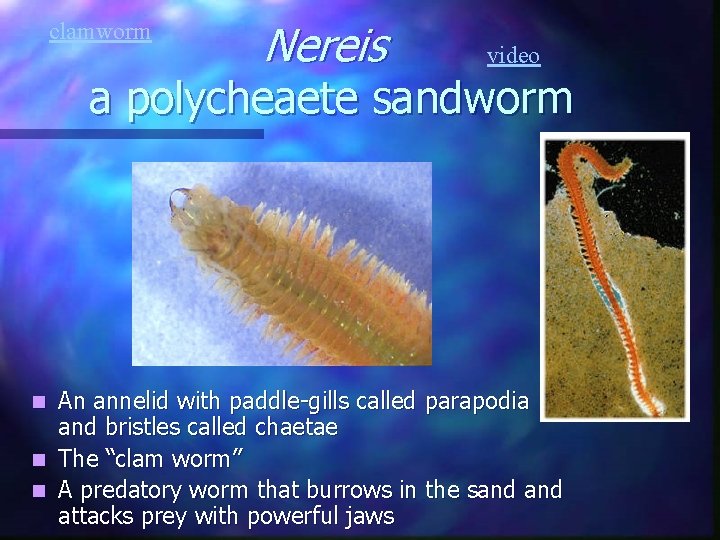
clamworm Nereis video a polycheaete sandworm An annelid with paddle-gills called parapodia and bristles called chaetae n The “clam worm” n A predatory worm that burrows in the sand attacks prey with powerful jaws n
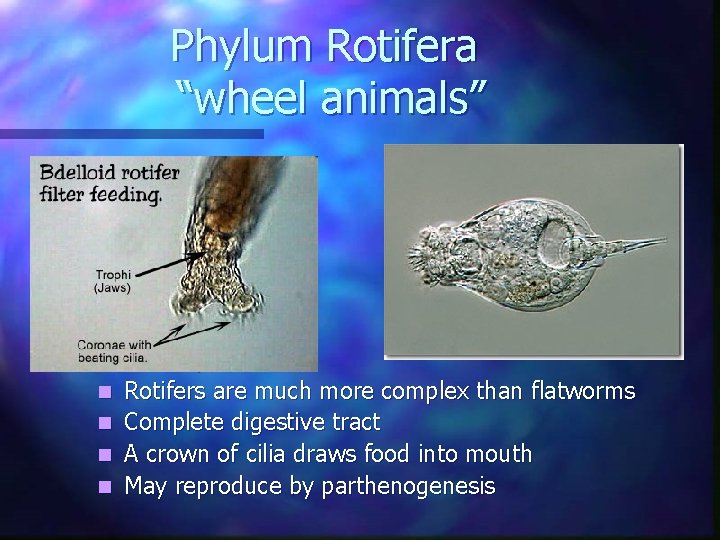
Phylum Rotifera “wheel animals” n n n 1800 species Rotifers are much more complex than flatworms Complete digestive tract A crown of cilia draws food into mouth May reproduce by parthenogenesis
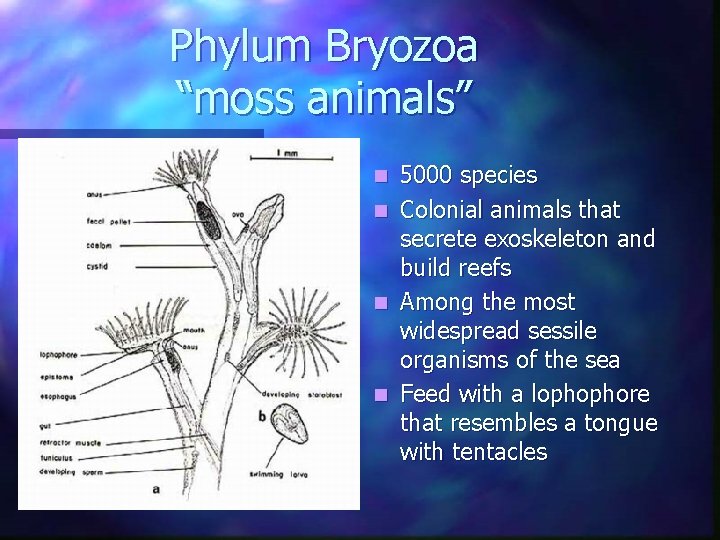
Phylum Bryozoa “moss animals” 5000 species n Colonial animals that secrete exoskeleton and build reefs n Among the most widespread sessile organisms of the sea n Feed with a lophophore that resembles a tongue with tentacles n
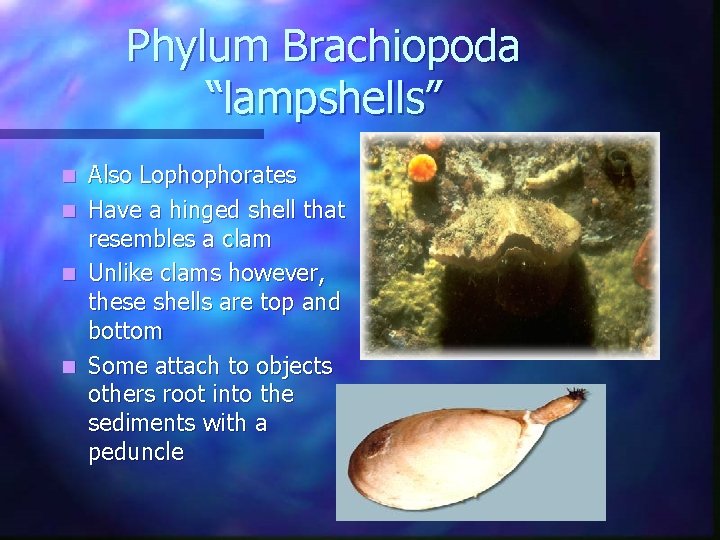
Phylum Brachiopoda “lampshells” Also Lophophorates n Have a hinged shell that resembles a clam n Unlike clams however, these shells are top and bottom n Some attach to objects others root into the sediments with a peduncle n
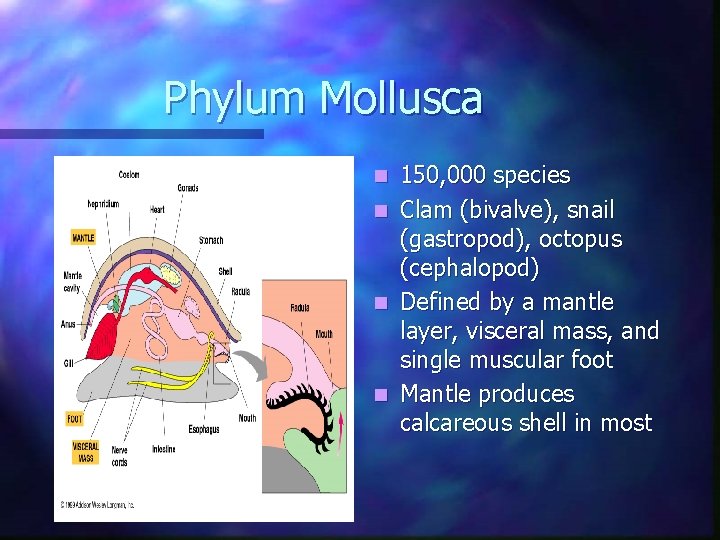
Phylum Mollusca 150, 000 species n Clam (bivalve), snail (gastropod), octopus (cephalopod) n Defined by a mantle layer, visceral mass, and single muscular foot n Mantle produces calcareous shell in most n
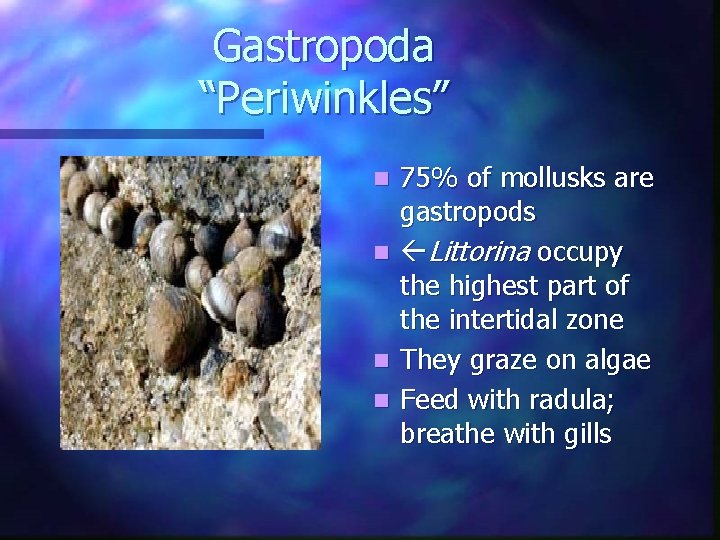
Gastropoda “Periwinkles” 75% of mollusks are gastropods n Littorina occupy the highest part of the intertidal zone n They graze on algae n Feed with radula; breathe with gills n
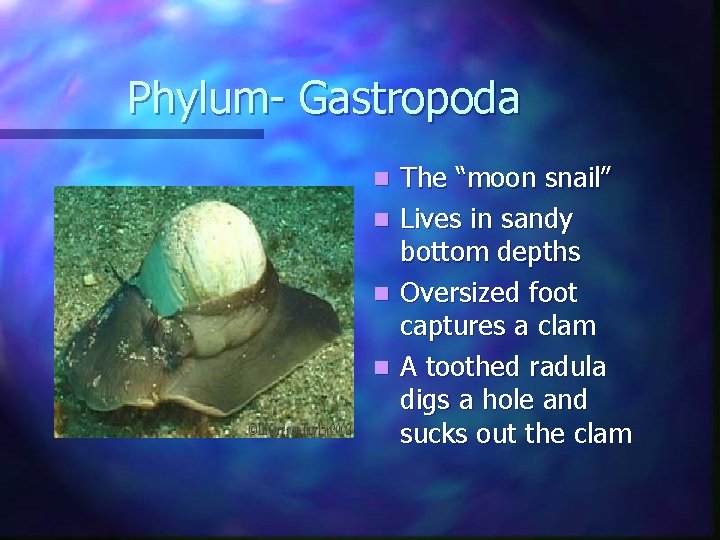
Phylum- Gastropoda n n The “moon snail” Lives in sandy bottom depths Oversized foot captures a clam A toothed radula digs a hole and sucks out the clam
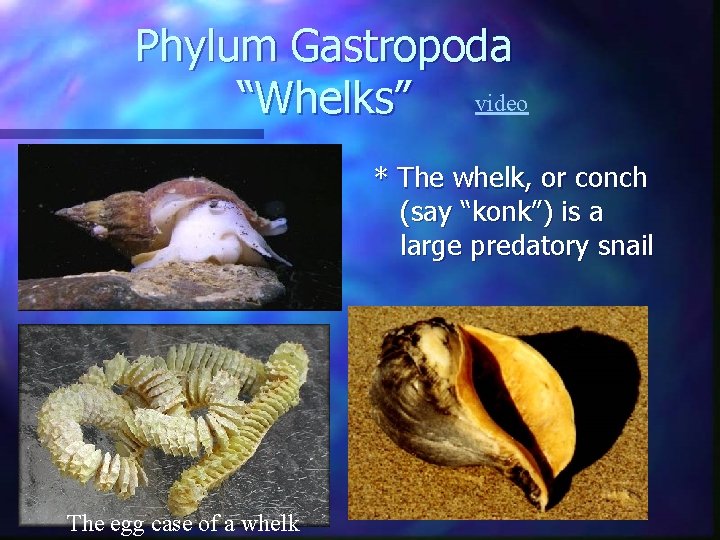
Phylum Gastropoda “Whelks” video * The whelk, or conch (say “konk”) is a large predatory snail The egg case of a whelk
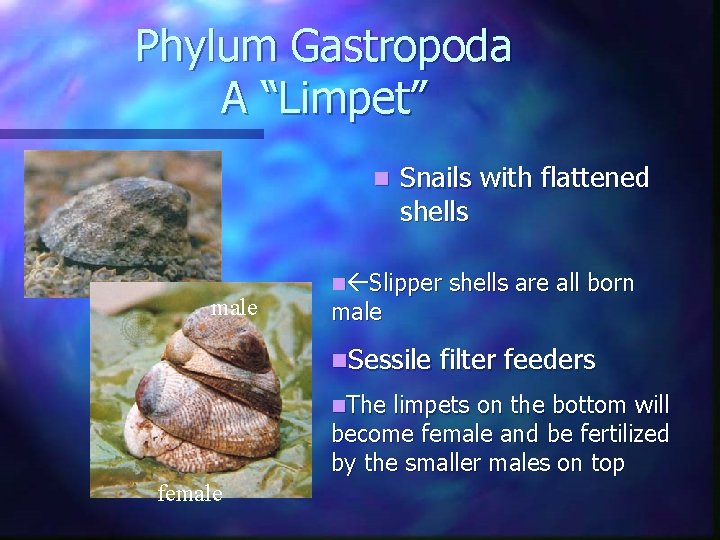
Phylum Gastropoda A “Limpet” n male Snails with flattened shells n Slipper male n. Sessile n. The shells are all born filter feeders limpets on the bottom will become female and be fertilized by the smaller males on top female
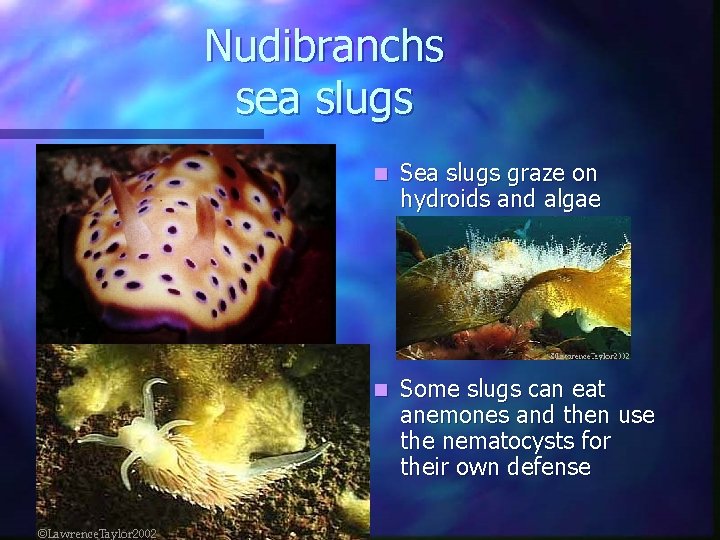
Nudibranchs sea slugs n Sea slugs graze on hydroids and algae n Some slugs can eat anemones and then use the nematocysts for their own defense
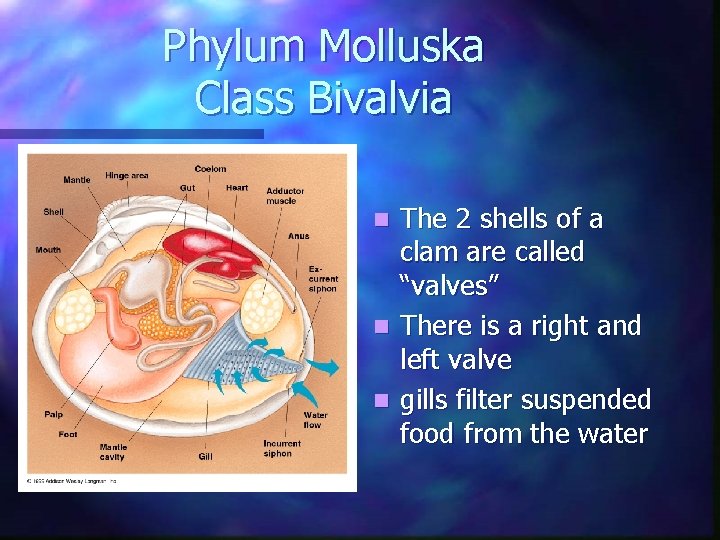
Phylum Molluska Class Bivalvia The 2 shells of a clam are called “valves” n There is a right and left valve n gills filter suspended food from the water n
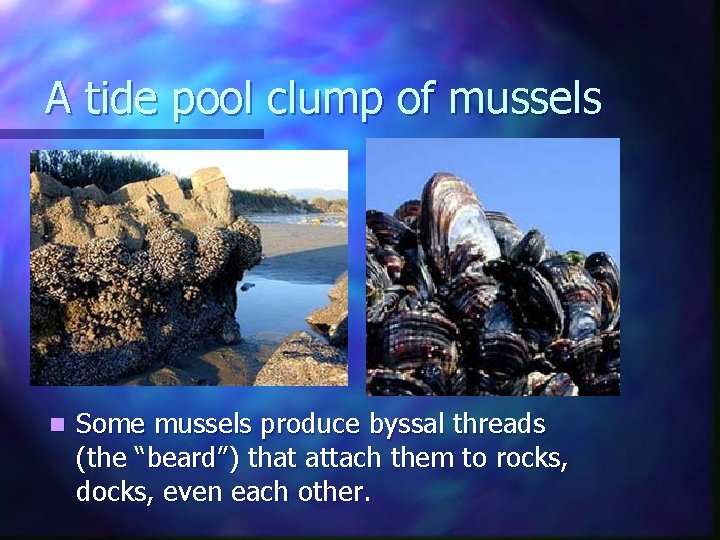
A tide pool clump of mussels n Some mussels produce byssal threads (the “beard”) that attach them to rocks, docks, even each other.
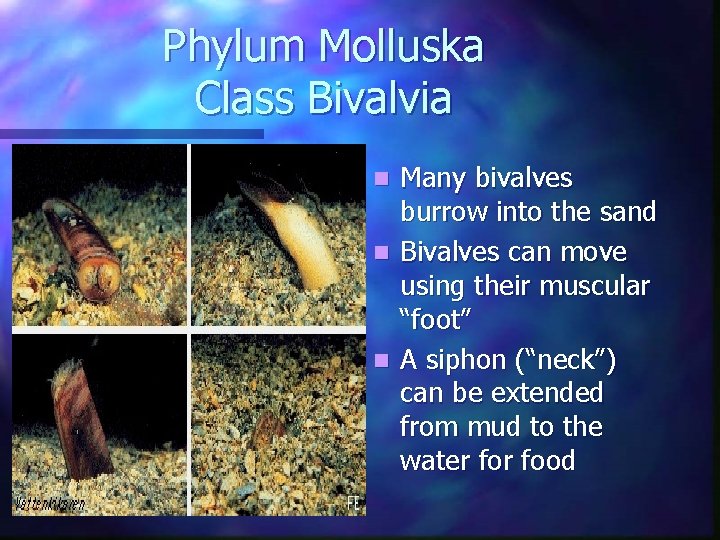
Phylum Molluska Class Bivalvia Many bivalves burrow into the sand n Bivalves can move using their muscular “foot” n A siphon (“neck”) can be extended from mud to the water food n
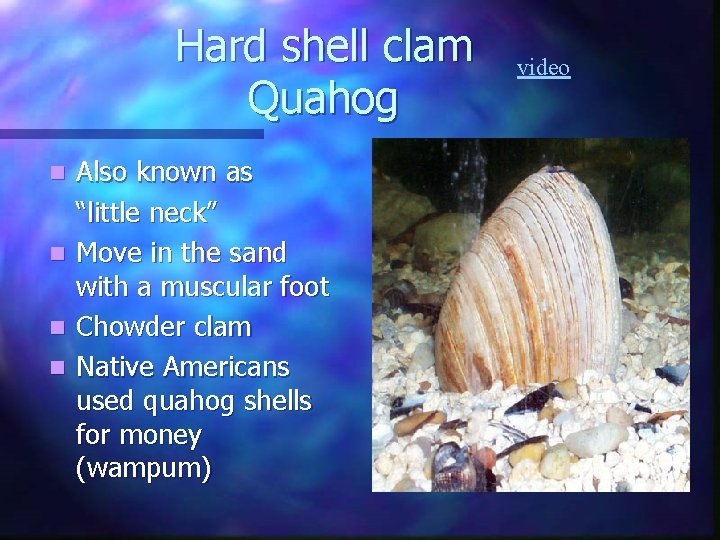
Hard shell clam Quahog Also known as “little neck” n Move in the sand with a muscular foot n Chowder clam n Native Americans used quahog shells for money (wampum) n video
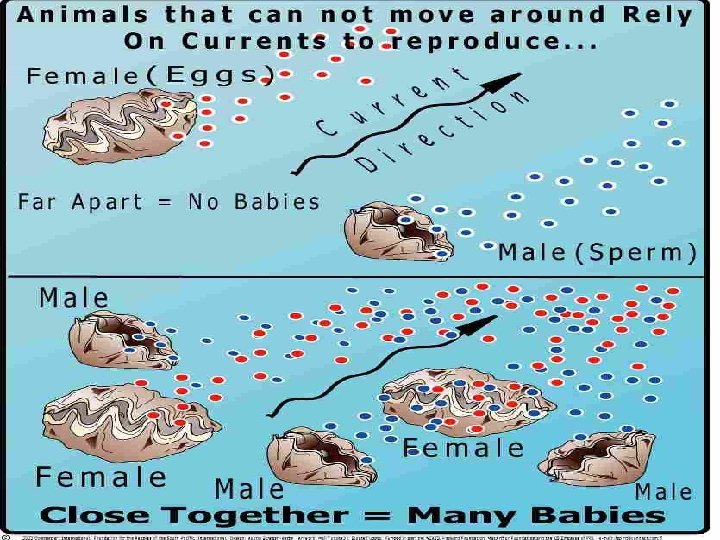
Life cycle of a Quahog
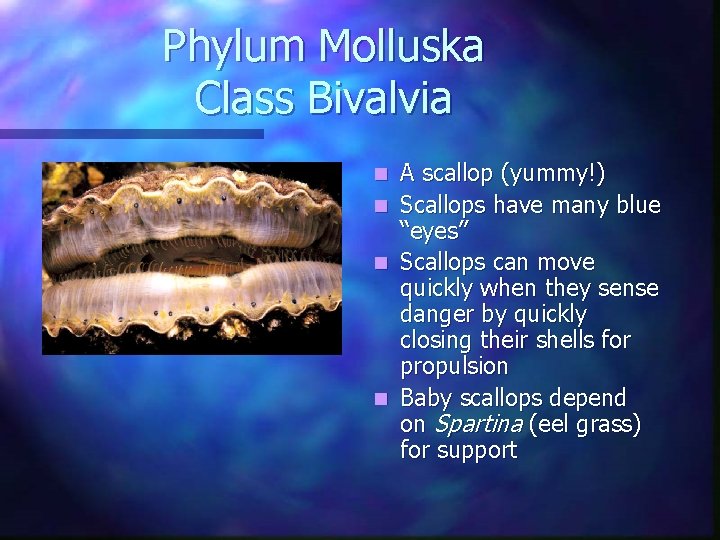
Phylum Molluska Class Bivalvia A scallop (yummy!) n Scallops have many blue “eyes” n Scallops can move quickly when they sense danger by quickly closing their shells for propulsion n Baby scallops depend on Spartina (eel grass) for support n
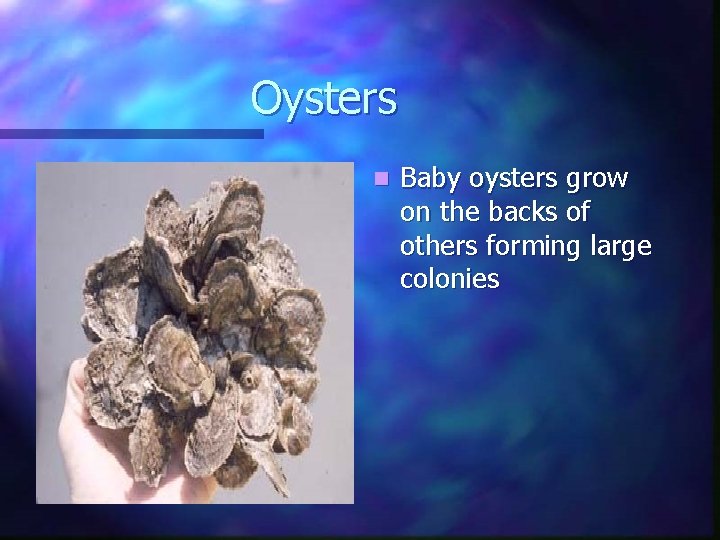
Oysters n Baby oysters grow on the backs of others forming large colonies
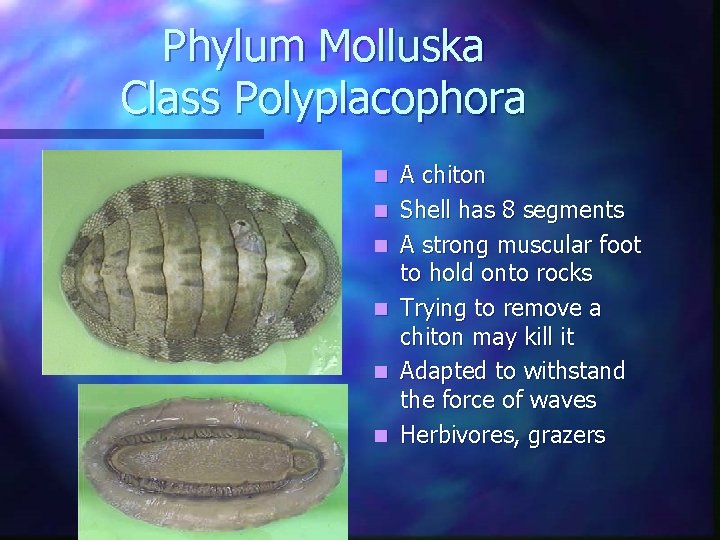
Phylum Molluska Class Polyplacophora n n n A chiton Shell has 8 segments A strong muscular foot to hold onto rocks Trying to remove a chiton may kill it Adapted to withstand the force of waves Herbivores, grazers
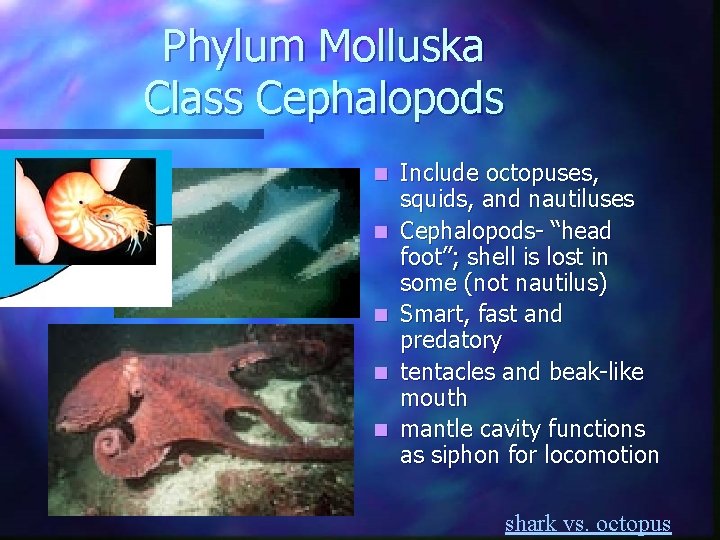
Phylum Molluska Class Cephalopods n n n Include octopuses, squids, and nautiluses Cephalopods- “head foot”; shell is lost in some (not nautilus) Smart, fast and predatory tentacles and beak-like mouth mantle cavity functions as siphon for locomotion shark vs. octopus
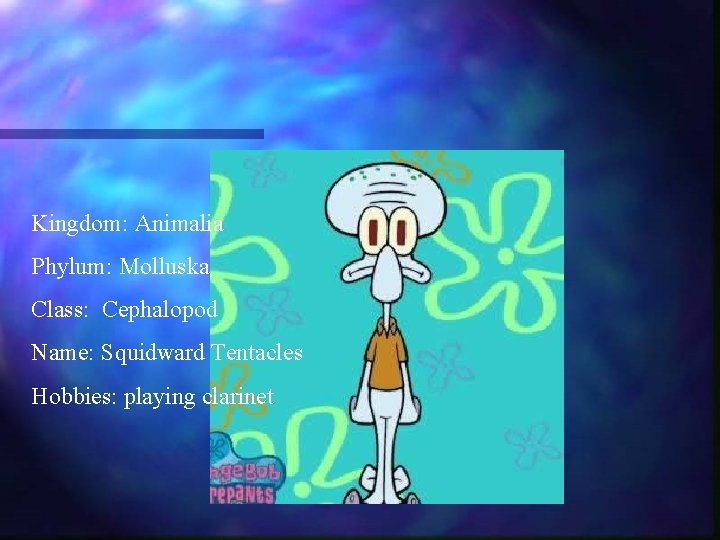
Kingdom: Animalia Phylum: Molluska Class: Cephalopod Name: Squidward Tentacles Hobbies: playing clarinet
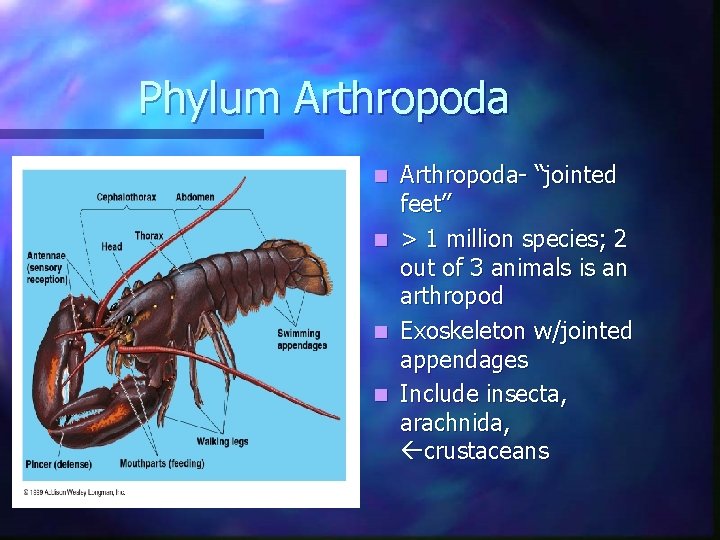
Phylum Arthropoda- “jointed feet” n > 1 million species; 2 out of 3 animals is an arthropod n Exoskeleton w/jointed appendages n Include insecta, arachnida, crustaceans n
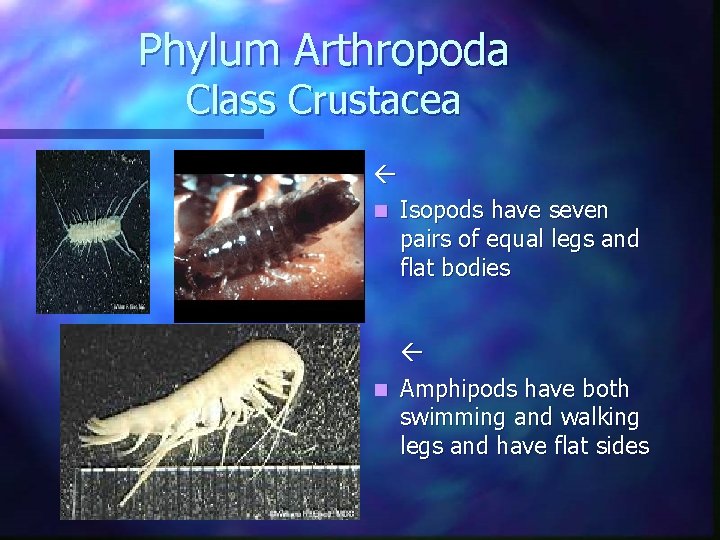
Phylum Arthropoda Class Crustacea n Isopods have seven pairs of equal legs and flat bodies n Amphipods have both swimming and walking legs and have flat sides
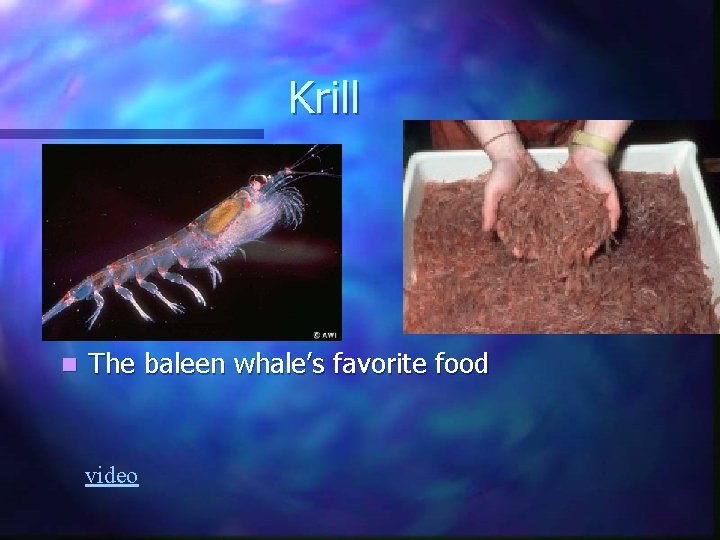
Krill n The baleen whale’s favorite food video
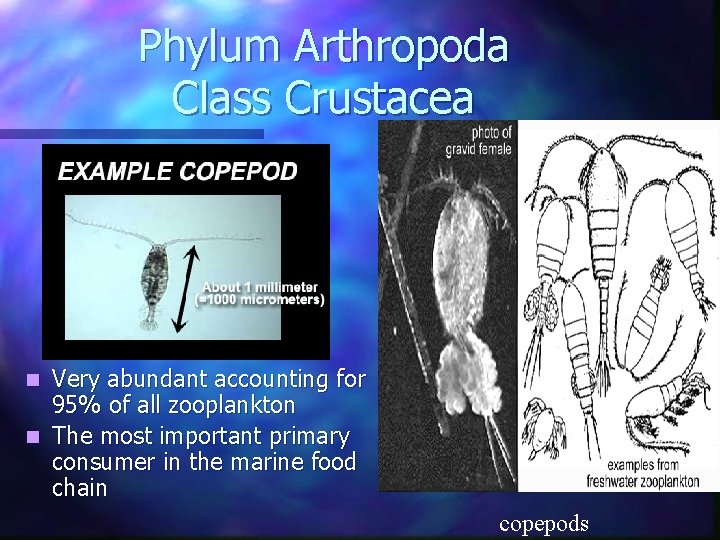
Phylum Arthropoda Class Crustacea Very abundant accounting for 95% of all zooplankton n The most important primary consumer in the marine food chain n copepods
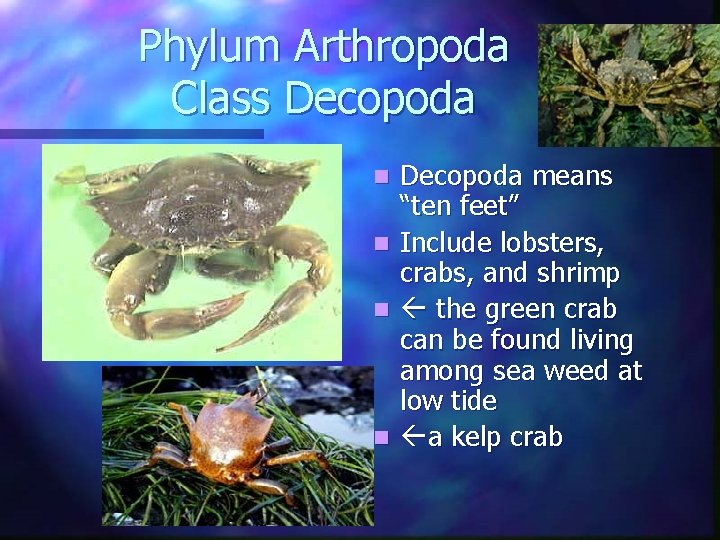
Phylum Arthropoda Class Decopoda n n Decopoda means “ten feet” Include lobsters, crabs, and shrimp the green crab can be found living among sea weed at low tide a kelp crab
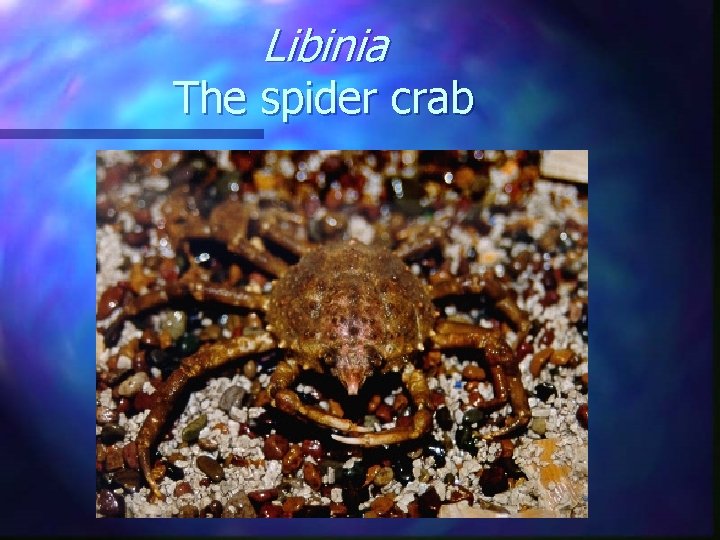
Libinia The spider crab
Kingdom: Animalia Phylum: Arthropoda Class: Decopoda Name: Eugene Krab Hobbies: eating dead stuff (oh yeah, and making $)
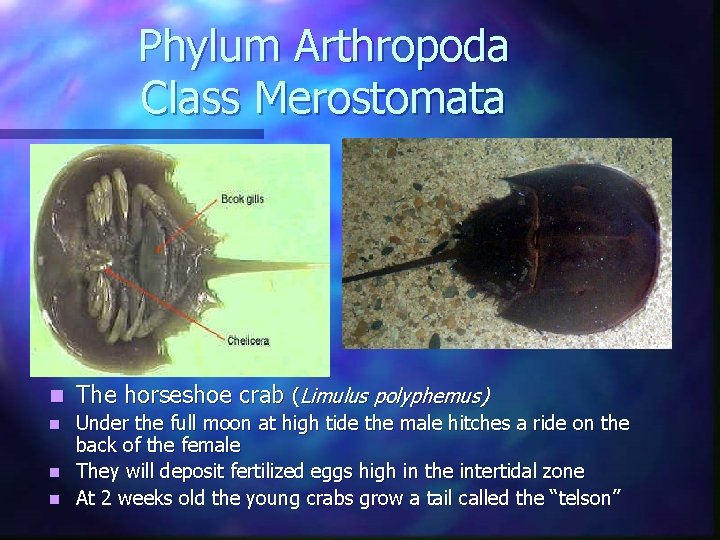
Phylum Arthropoda Class Merostomata n The horseshoe crab (Limulus polyphemus) Under the full moon at high tide the male hitches a ride on the back of the female n They will deposit fertilized eggs high in the intertidal zone n At 2 weeks old the young crabs grow a tail called the “ telson” n
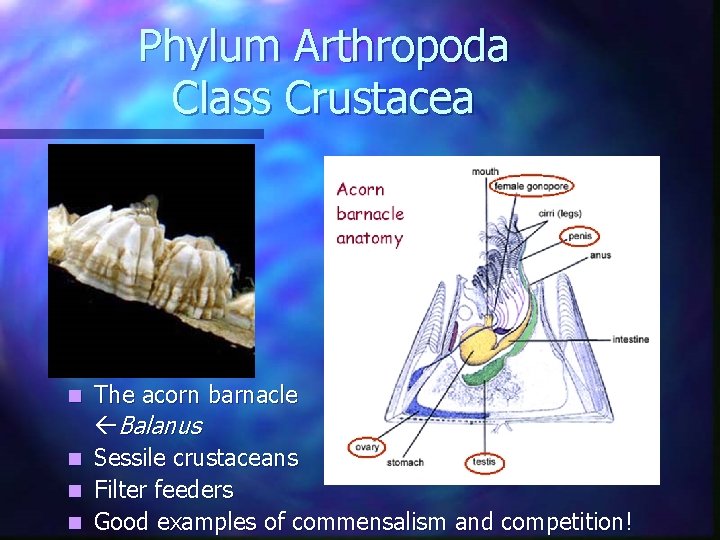
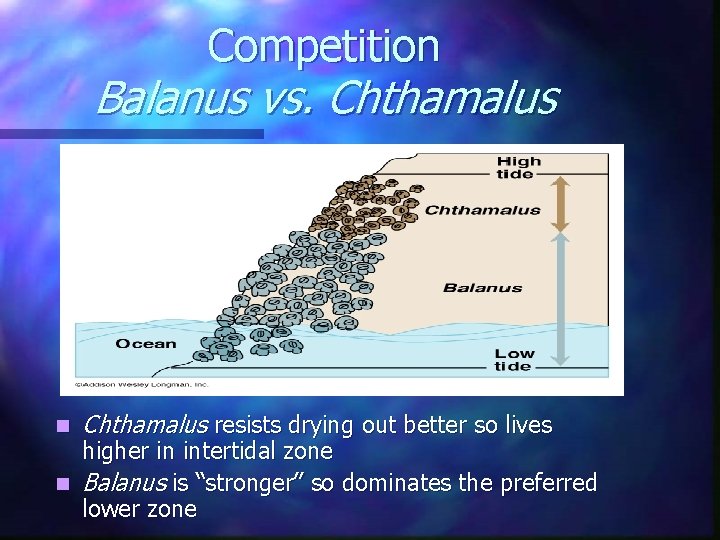
Phylum Arthropoda Class Crustacea The acorn barnacle Balanus n Sessile crustaceans n Filter feeders n Good examples of commensalism and competition! n
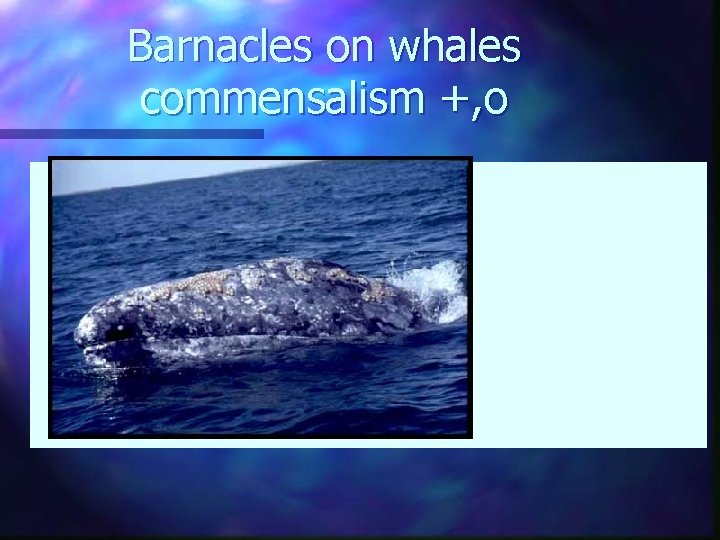
Barnacles on whales commensalism +, o
Competition Balanus vs. Chthamalus n Chthamalus resists drying out better so lives higher in intertidal zone n Balanus is “stronger” so dominates the preferred lower zone
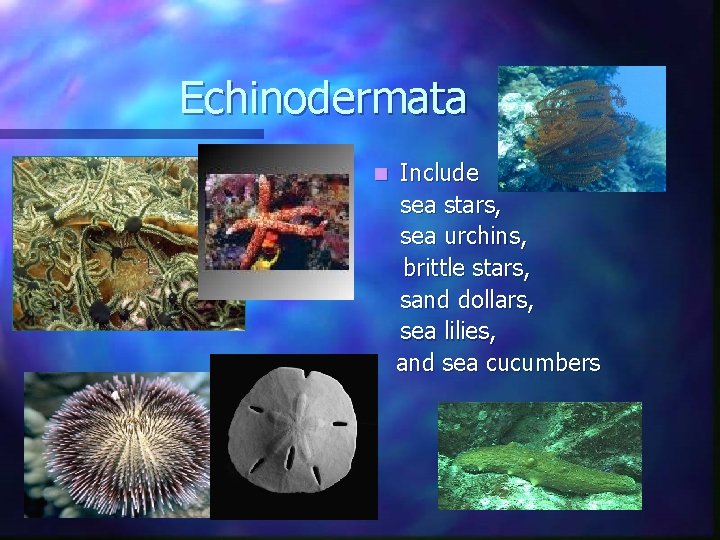
Echinodermata n Include sea stars, sea urchins, brittle stars, sand dollars, sea lilies, and sea cucumbers
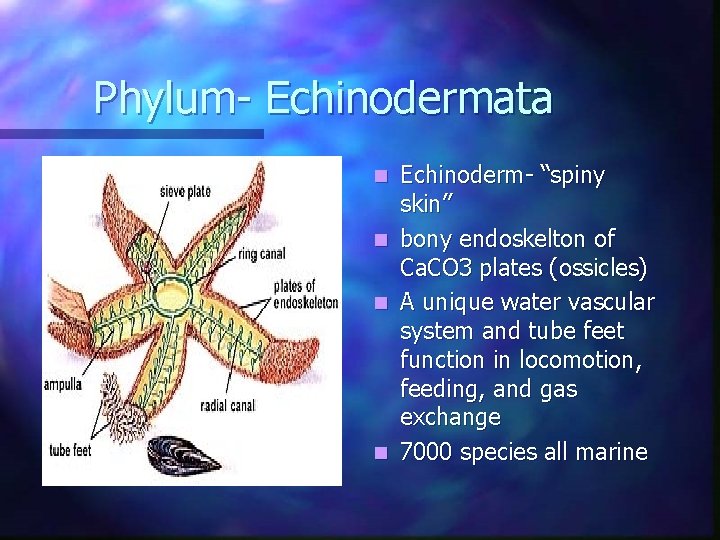
Phylum- Echinodermata n n Echinoderm- “spiny skin” bony endoskelton of Ca. CO 3 plates (ossicles) A unique water vascular system and tube feet function in locomotion, feeding, and gas exchange 7000 species all marine
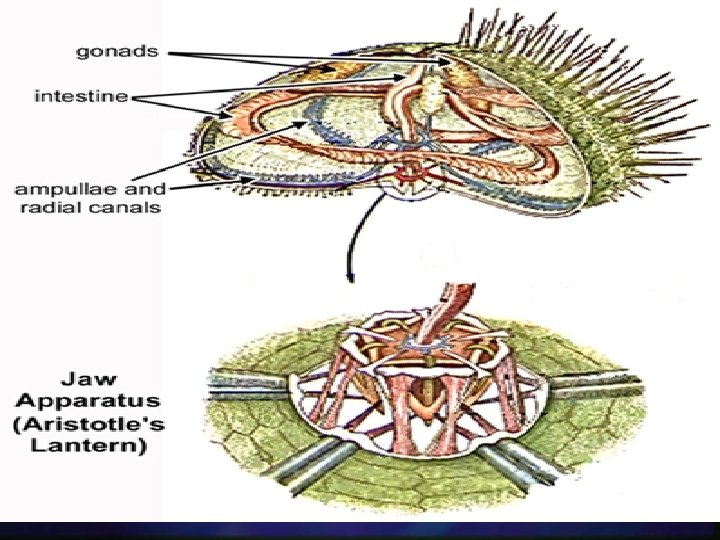
Sea Urchin anatomy
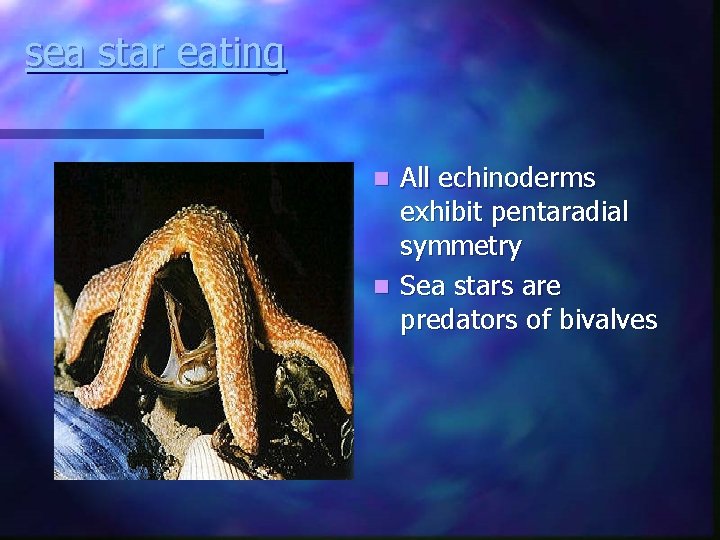
sea star eating All echinoderms exhibit pentaradial symmetry n Sea stars are predators of bivalves n
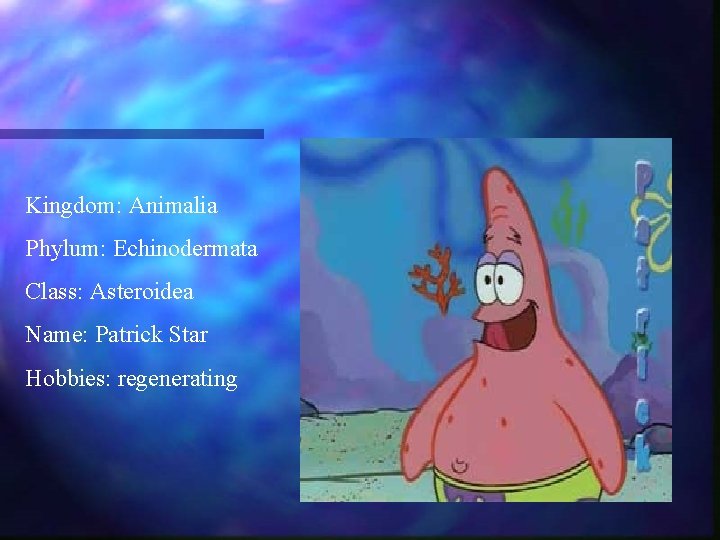
Kingdom: Animalia Phylum: Echinodermata Class: Asteroidea Name: Patrick Star Hobbies: regenerating
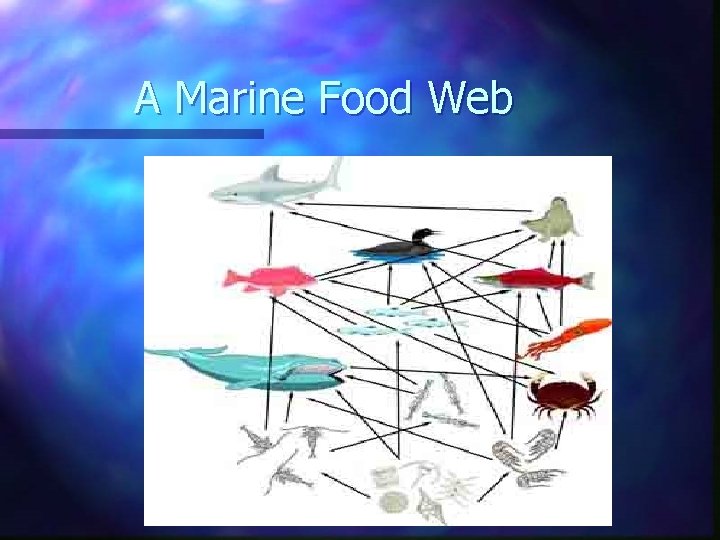
A Marine Food Web
video