
Taxonomy of Life Seventh Grade Science Taxonomy of
- Slides: 11
+ Taxonomy of Life Seventh Grade Science
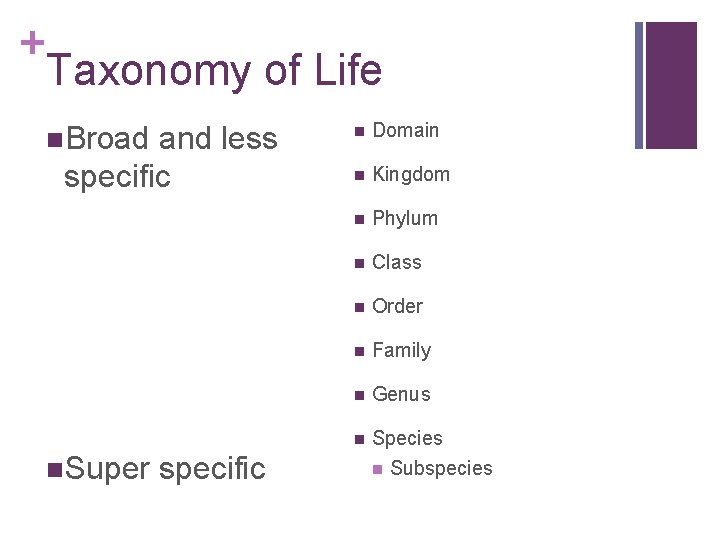
+ Taxonomy of Life n. Broad and less specific n. Super specific n Domain n Kingdom n Phylum n Class n Order n Family n Genus n Species n Subspecies
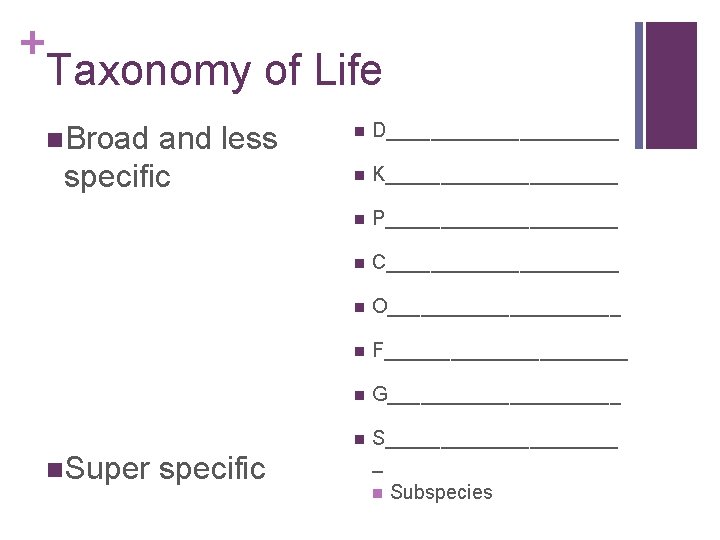
+ Taxonomy of Life n. Broad and less specific n. Super specific n D___________ n K___________ n P___________ n C___________ n O___________ n F___________ n G___________ n S___________ _ n Subspecies
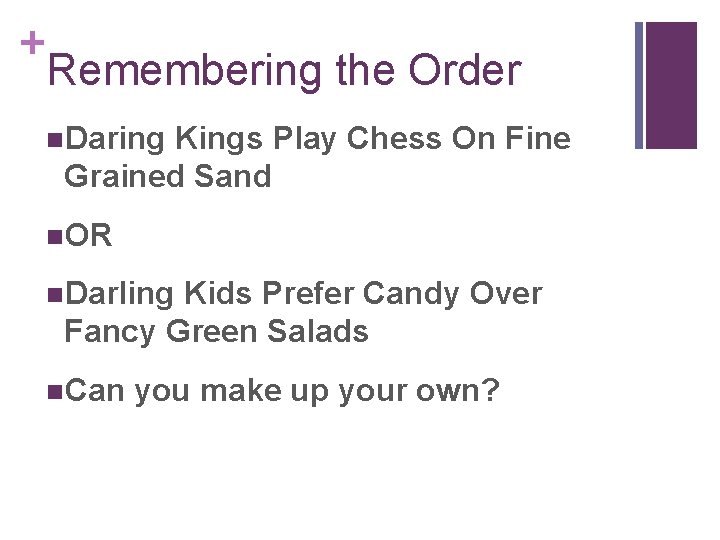
+ Remembering the Order n. Daring Kings Play Chess On Fine Grained Sand n. OR n. Darling Kids Prefer Candy Over Fancy Green Salads n. Can you make up your own?
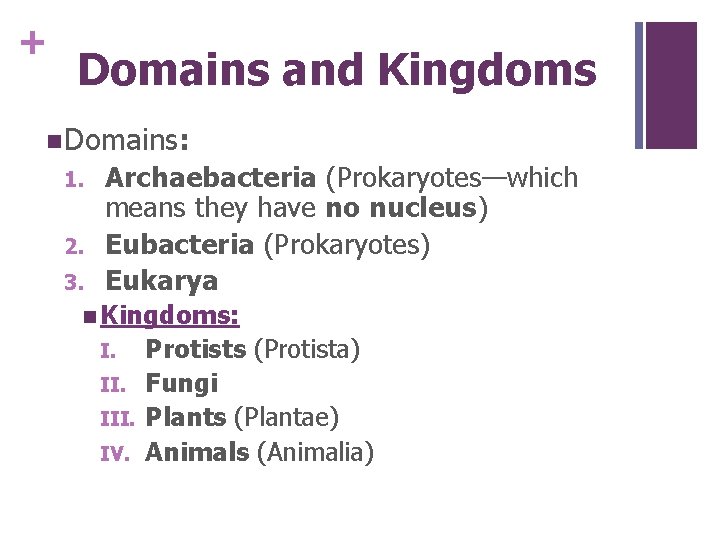
+ Domains and Kingdoms n Domains: 1. 2. 3. Archaebacteria (Prokaryotes—which means they have no nucleus) Eubacteria (Prokaryotes) Eukarya n Kingdoms: I. III. IV. Protists (Protista) Fungi Plants (Plantae) Animals (Animalia)
+ Archaebacteria n. Oldest form of life n. Single cell organism (unicellular) n. Found in extreme environments. n Geysers (Like those found in Yellowstone) n Hot springs n Volcanic ocean vents
+ Eubacteria n. Second n. Single n. Most oldest form of life cell organism (unicellular) familiar bacteria n Streptococcus (Strep throat) n Lactobacillus (Makes yogurt) n Staphylococcus (Infections)
+ Protists n“Odds and Ends” kingdom n. All microscopic organisms that are not plants, not animal, not bacteria, and not fungi. n. Single cell organism (unicellular) n. Protozoa, Amoeba
+ Fungi n. Most are multi-cellular organism n. Examples: Mold, mildew, mushrooms n. Some are very important to ecosystems or as food. n. Some cause diseases – ringworm and athlete’s foot
+ Plants n. Second largest kingdom n. Multi-cellular n. Producers n. Without organisms (make their own food) plants, life as we know it would not exist.
+ Animals n. Largest kingdom n. Multi-cellular n. Consumers organisms – must eat for energy n. At least 2 million known species, but some estimate there are 5 -30 million n. Examples: Mammals, insects, birds, reptiles, amphibians, etc.