
Taxonomy of Computer Security Incidents Yashodhan Fadnavis How

- Slides: 14
Taxonomy of Computer Security Incidents Yashodhan Fadnavis
How does it help? • Taxonomy gives common names to event • Security against a ‘class’ of attacks
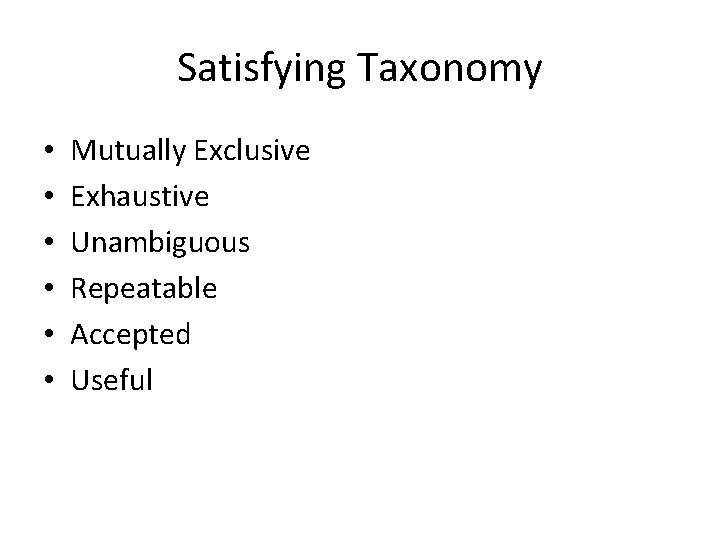
Satisfying Taxonomy • • • Mutually Exclusive Exhaustive Unambiguous Repeatable Accepted Useful
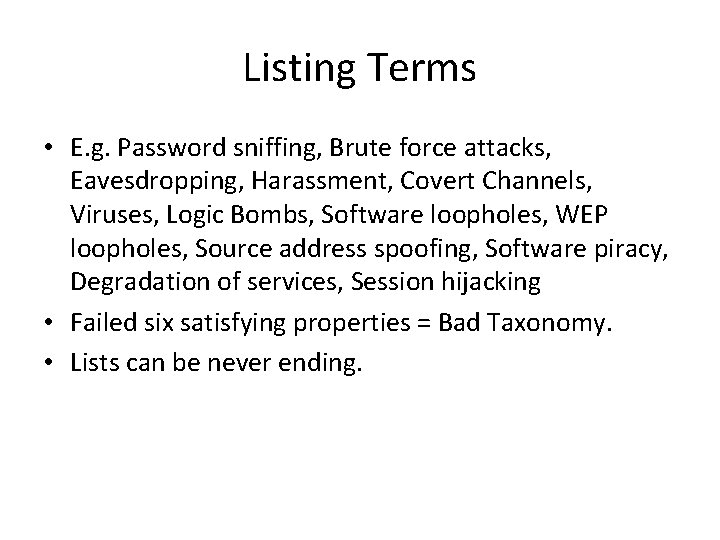
Listing Terms • E. g. Password sniffing, Brute force attacks, Eavesdropping, Harassment, Covert Channels, Viruses, Logic Bombs, Software loopholes, WEP loopholes, Source address spoofing, Software piracy, Degradation of services, Session hijacking • Failed six satisfying properties = Bad Taxonomy. • Lists can be never ending.
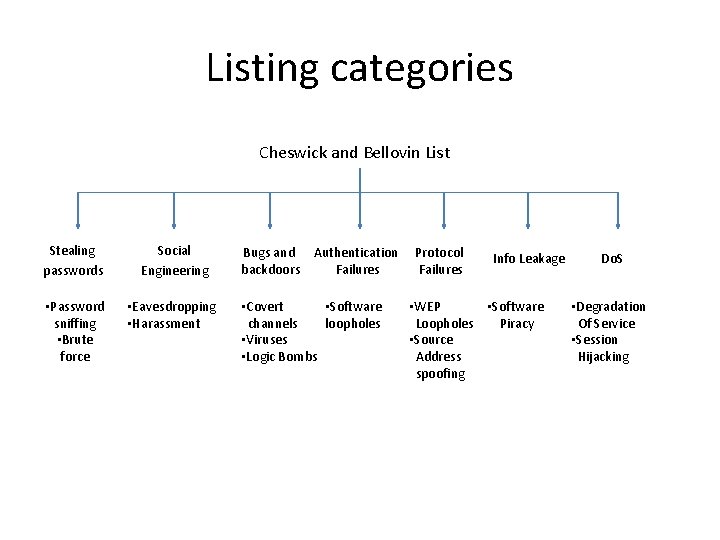
Listing categories Cheswick and Bellovin List Stealing passwords Social Engineering • Password sniffing • Brute force • Eavesdropping • Harassment Bugs and Authentication backdoors Failures • Covert • Software channels loopholes • Viruses • Logic Bombs Protocol Failures Info Leakage • WEP • Software Loopholes Piracy • Source Address spoofing Do. S • Degradation Of Service • Session Hijacking
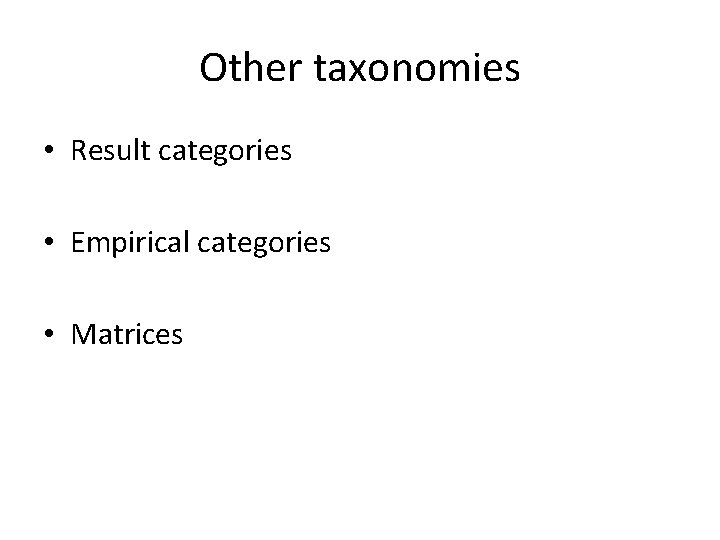
Other taxonomies • Result categories • Empirical categories • Matrices
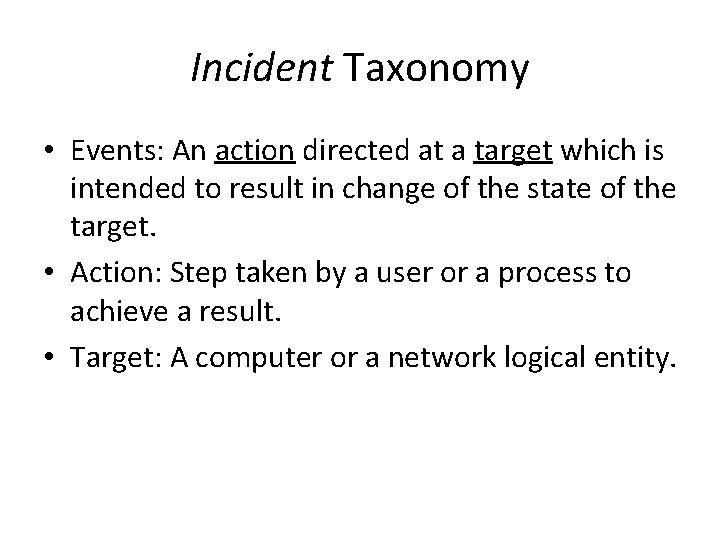
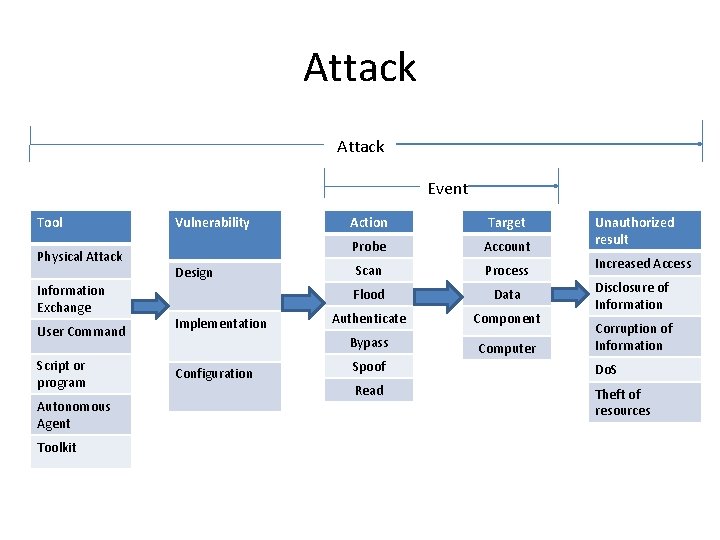
Incident Taxonomy • Events: An action directed at a target which is intended to result in change of the state of the target. • Action: Step taken by a user or a process to achieve a result. • Target: A computer or a network logical entity.
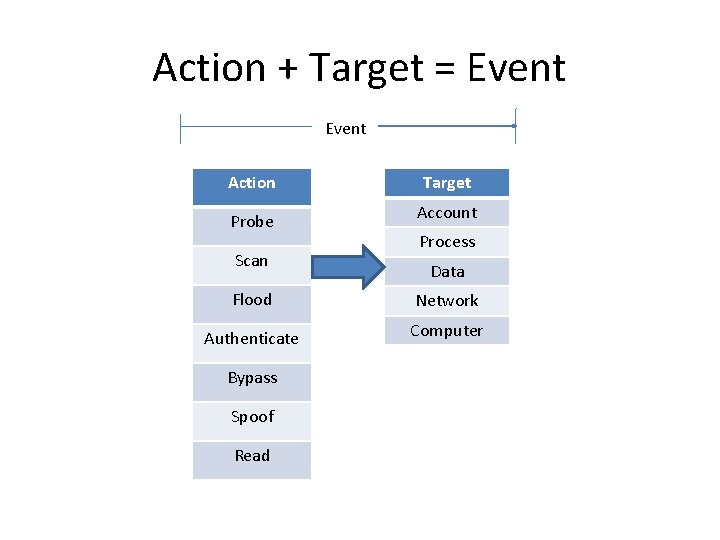
Action + Target = Event Action Probe Scan Target Account Process Data Flood Network Authenticate Computer Bypass Spoof Read
Attack Event Tool Physical Attack Information Exchange User Command Script or program Autonomous Agent Toolkit Vulnerability Design Implementation Configuration Action Target Probe Account Scan Process Flood Data Authenticate Component Bypass Computer Unauthorized result Increased Access Disclosure of Information Corruption of Information Spoof Do. S Read Theft of resources
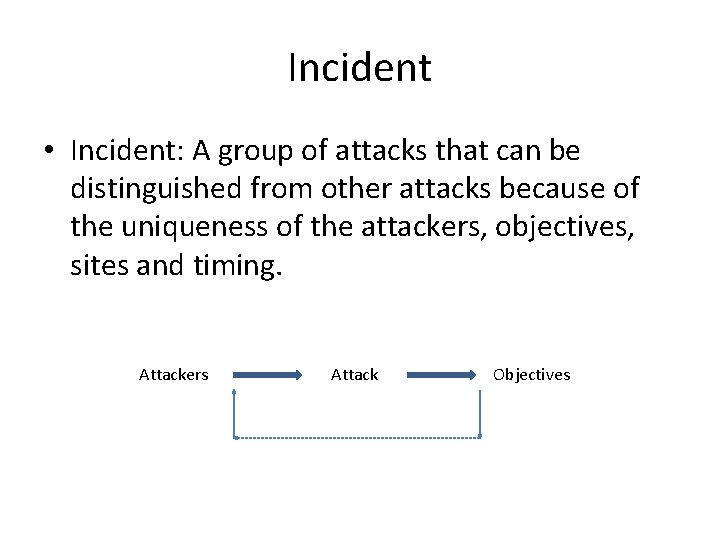
Incident • Incident: A group of attacks that can be distinguished from other attacks because of the uniqueness of the attackers, objectives, sites and timing. Attackers Attack Objectives
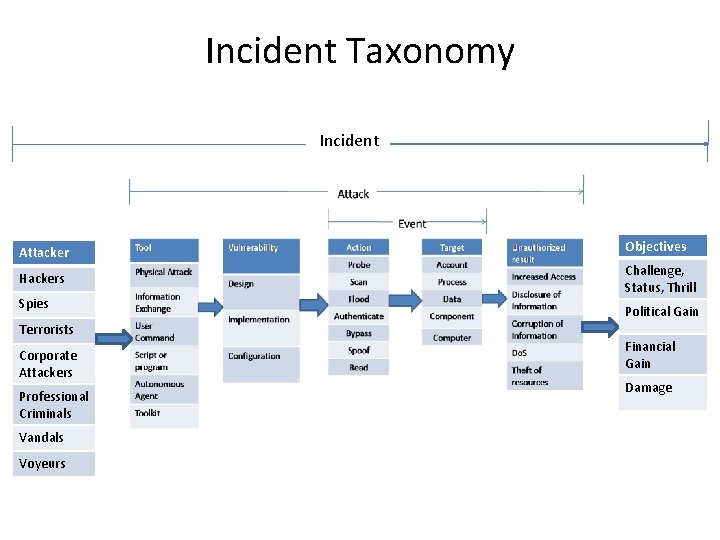
Incident Taxonomy Incident Attacker Objectives Hackers Challenge, Status, Thrill Spies Terrorists Corporate Attackers Professional Criminals Vandals Voyeurs Political Gain Financial Gain Damage
Federal Incident Reporting Guidelines • Agency name • Point of contact information including name, telephone, and email address • Incident Category Type (e. g. , CAT 1, CAT 2, etc. ) • Incident Timestamp • Source IP, Destination IP, port, and protocol • Operating System, including version, patches, etc. • System Function (e. g. , DNS/web server, workstation, etc. ) • Antivirus software installed, including version, and latest updates • Location of the system(s) involved in the incident (e. g. Clemson) • Method used to identify the incident (e. g. , IDS, audit log analysis, system administrator) • Impact to agency • Resolution
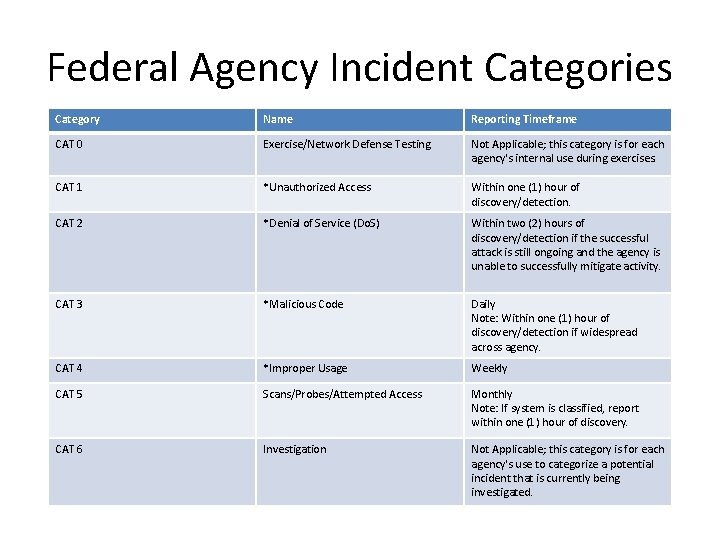
Federal Agency Incident Categories Category Name Reporting Timeframe CAT 0 Exercise/Network Defense Testing Not Applicable; this category is for each agency's internal use during exercises. CAT 1 *Unauthorized Access Within one (1) hour of discovery/detection. CAT 2 *Denial of Service (Do. S) Within two (2) hours of discovery/detection if the successful attack is still ongoing and the agency is unable to successfully mitigate activity. CAT 3 *Malicious Code Daily Note: Within one (1) hour of discovery/detection if widespread across agency. CAT 4 *Improper Usage Weekly CAT 5 Scans/Probes/Attempted Access Monthly Note: If system is classified, report within one (1) hour of discovery. CAT 6 Investigation Not Applicable; this category is for each agency's use to categorize a potential incident that is currently being investigated.
Questions?