
TAXONOMY Kingdoms Domains and Dichotomous Keys Kristen Hayes
- Slides: 14
TAXONOMY Kingdoms, Domains, and Dichotomous Keys Kristen Hayes 100422726 Cameron Yakeley 100429008
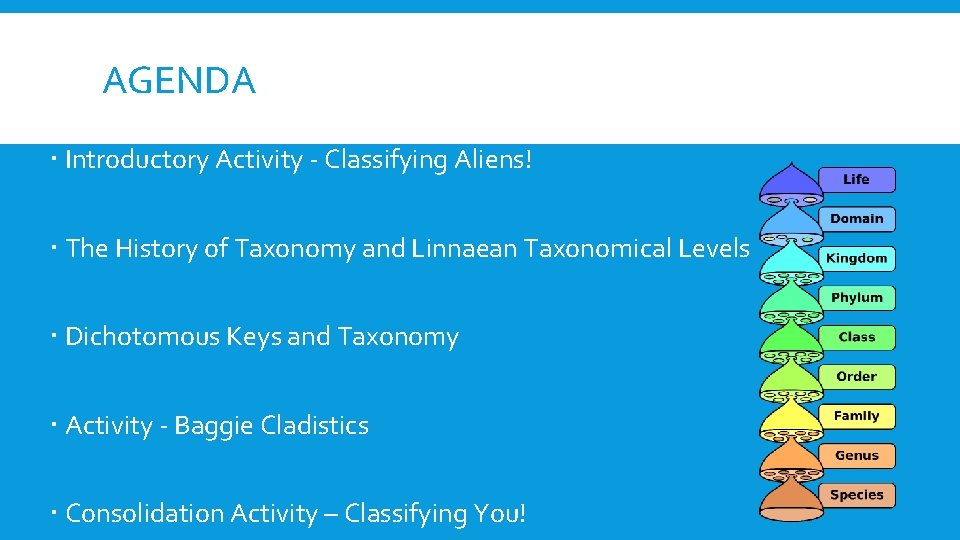
AGENDA Introductory Activity - Classifying Aliens! The History of Taxonomy and Linnaean Taxonomical Levels Dichotomous Keys and Taxonomy Activity - Baggie Cladistics Consolidation Activity – Classifying You!
CURRICULUM EXPECTATIONS B 2. 1 Use appropriate terminology related to biodiversity. B 2. 4 Create and apply a dichotomous key to identify and classify organisms from each of the kingdoms. B 3. 1 Explain the fundamental principles of taxonomy and phylogeny by defining concepts of taxonomic rank and relationship, such as genus, species, and taxon. B 3. 3 Describe unifying and distinguishing anatomical and physiological characteristics of representative organisms from each of the kingdoms.
LEARNING GOALS 1. Using only physical characteristics, create a taxonomic scheme to classify a group of generic organisms. 2. Describe the history of taxonomy and why we came to use the Linnaean system. 3. Describe the principles of taxonomy and be able to describe the various taxonomical levels. 4. Compare and contrast the physical and metabolic characteristics of several organisms and create a dichotomous key/cladogram with this information.
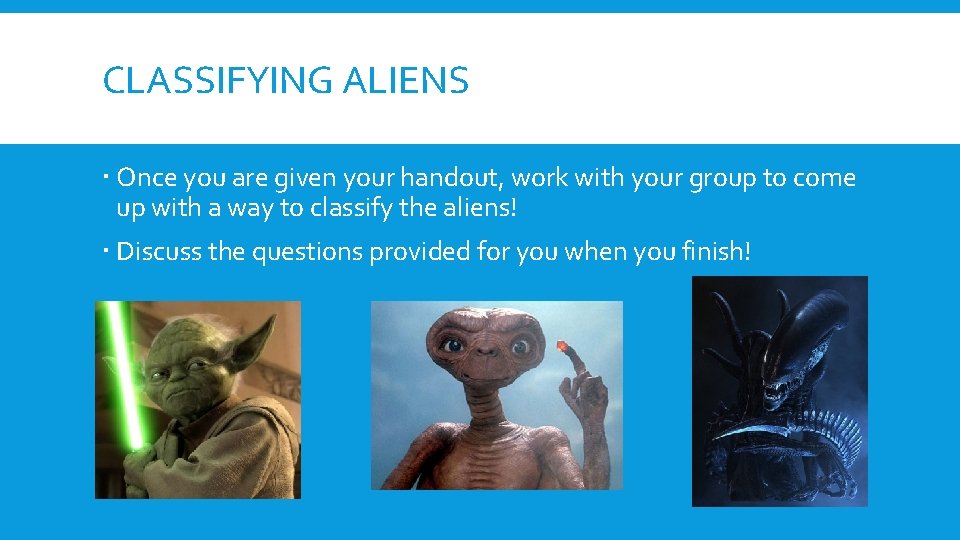
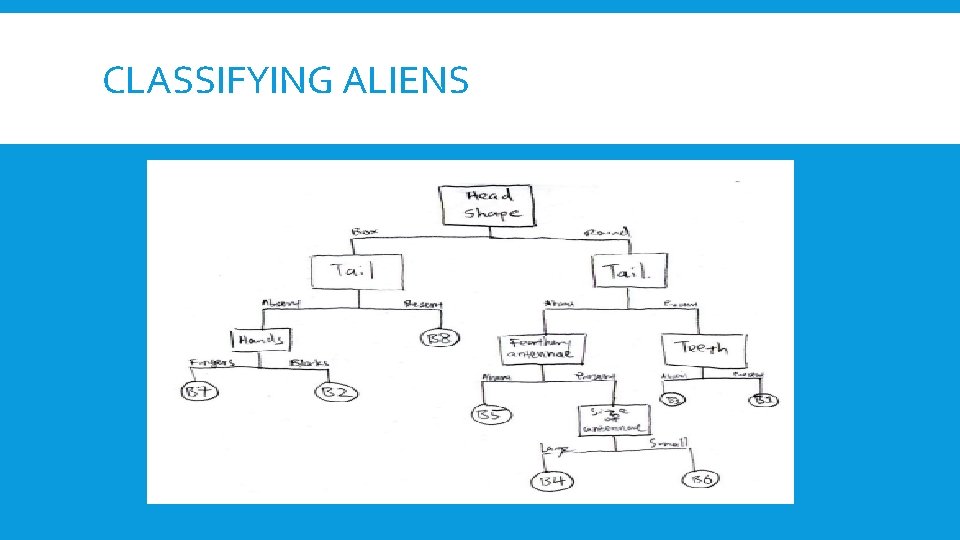
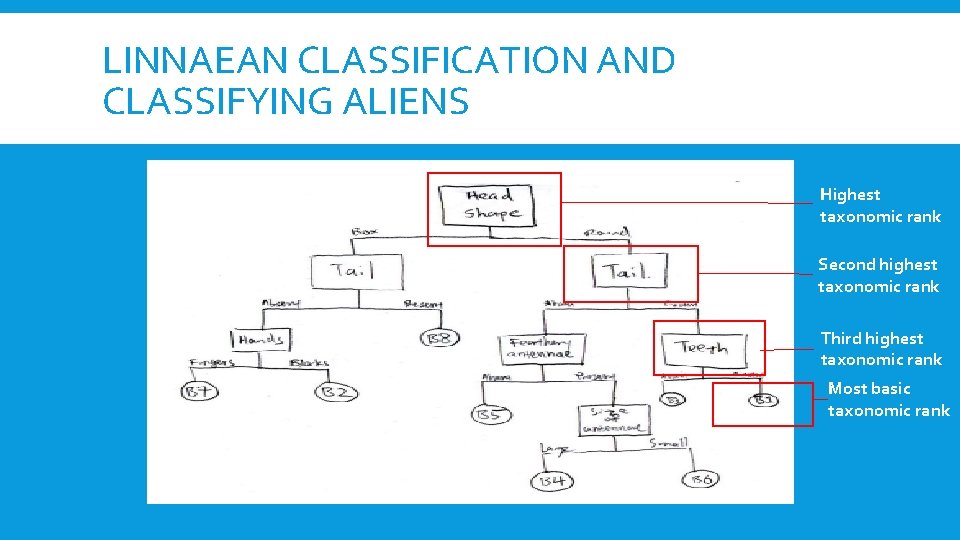
CLASSIFYING ALIENS Once you are given your handout, work with your group to come up with a way to classify the aliens! Discuss the questions provided for you when you finish!
CLASSIFYING ALIENS
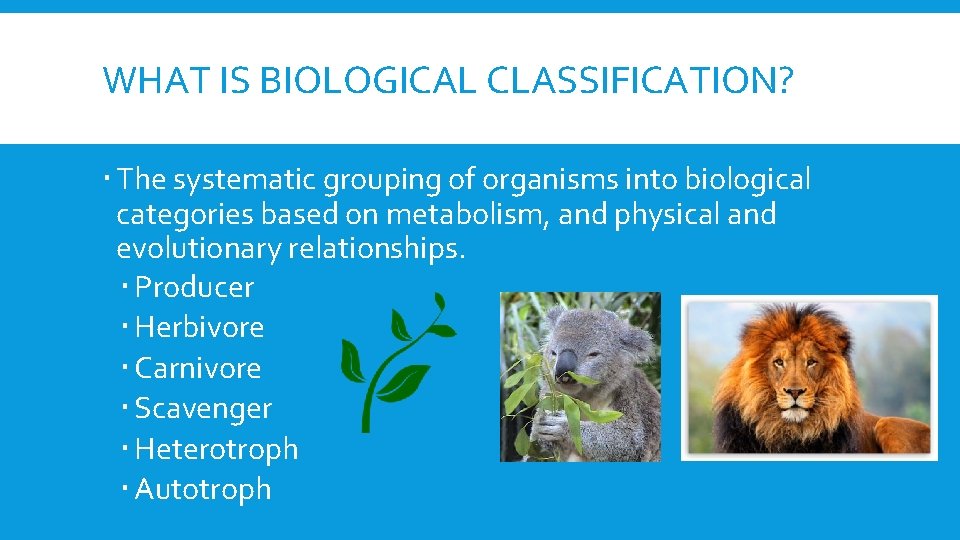
WHAT IS BIOLOGICAL CLASSIFICATION? The systematic grouping of organisms into biological categories based on metabolism, and physical and evolutionary relationships. Producer Herbivore Carnivore Scavenger Heterotroph Autotroph
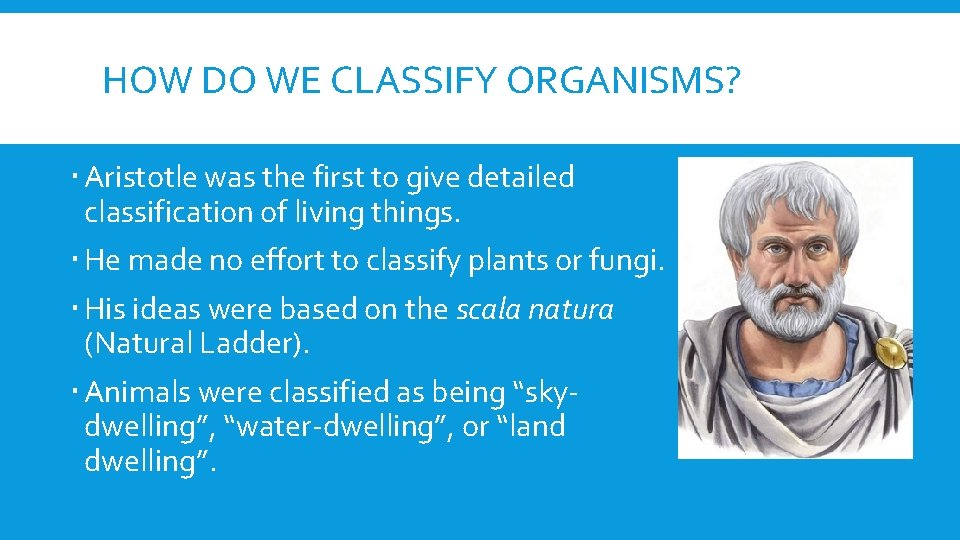
HOW DO WE CLASSIFY ORGANISMS? Aristotle was the first to give detailed classification of living things. He made no effort to classify plants or fungi. His ideas were based on the scala natura (Natural Ladder). Animals were classified as being “skydwelling”, “water-dwelling”, or “land dwelling”.
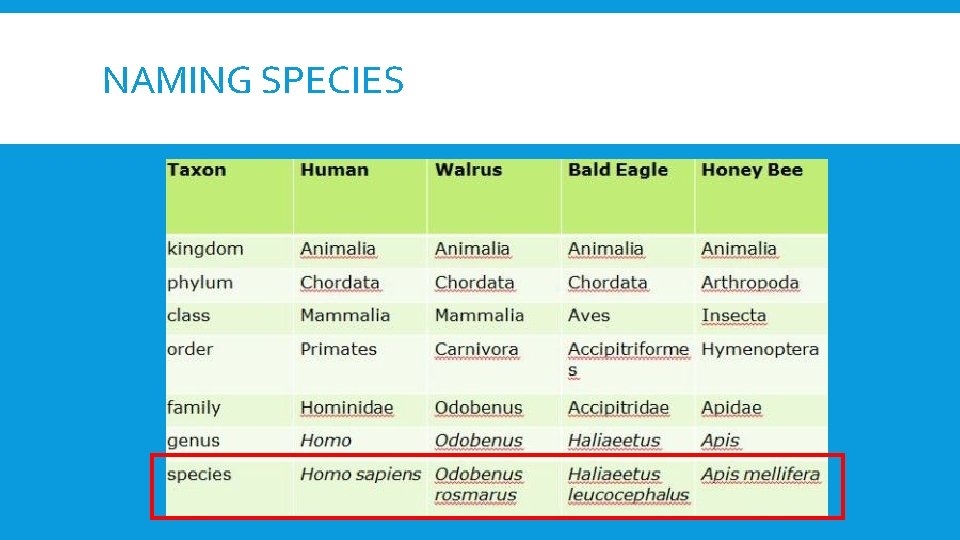
HOW DO WE CLASSIFY ORGANISMS? The father of modern taxonomy is Carulos Linnaeus. Had the idea to distinguish nomenclature from description. Replaced long, traditional names with a simple two-name system (binomial nomenclature). These were later grouped into hierarchies such as class, order, and so on. There have been slight modifications but this system is still used in modern taxonomy.
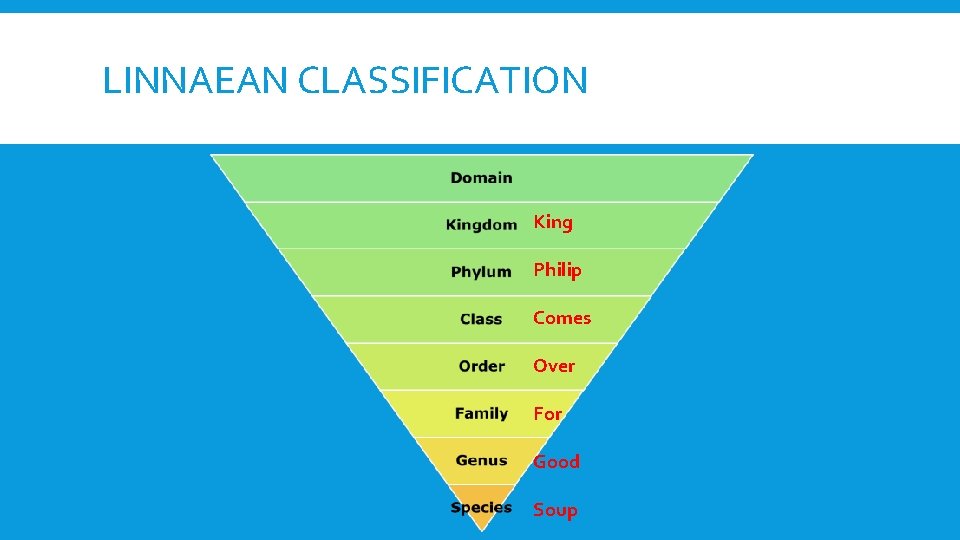
LINNAEAN CLASSIFICATION King Philip Comes Over For Good Soup
LINNAEAN CLASSIFICATION AND CLASSIFYING ALIENS Highest taxonomic rank Second highest taxonomic rank Third highest taxonomic rank Most basic taxonomic rank
NAMING SPECIES
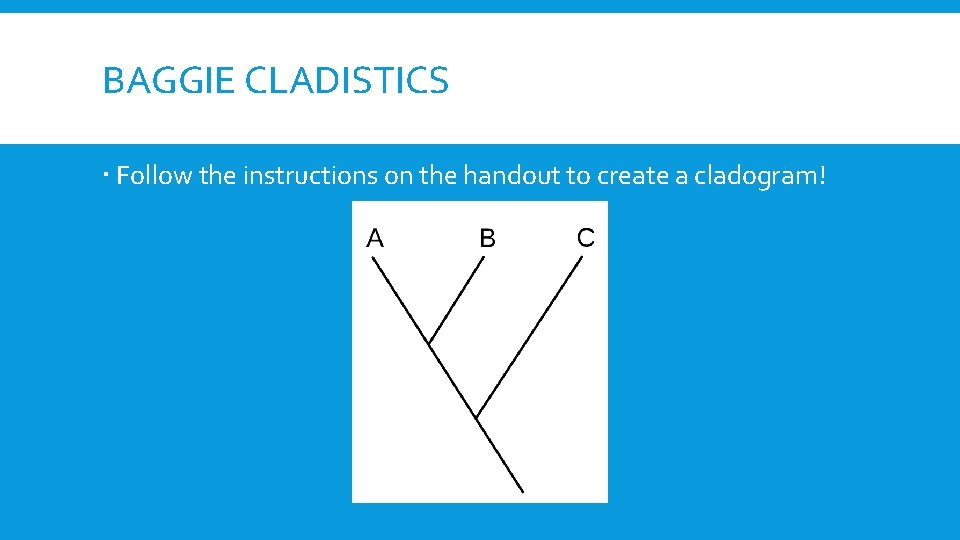
BAGGIE CLADISTICS Follow the instructions on the handout to create a cladogram!
CLASSIFYING YOU! Create a dichotomous key for all the members of your group! Start with the most general characteristics that you all share , and then begin to separate based off of your different characteristics, until each of you are a single species. Come up with a Genus and Species name for the species that is you (i. e Camreus yakeley, Hayesean kristen)