
Taxonomy Classifying Organisms 2 The FiveKingdom System a


- Slides: 18
Taxonomy – Classifying Organisms
2
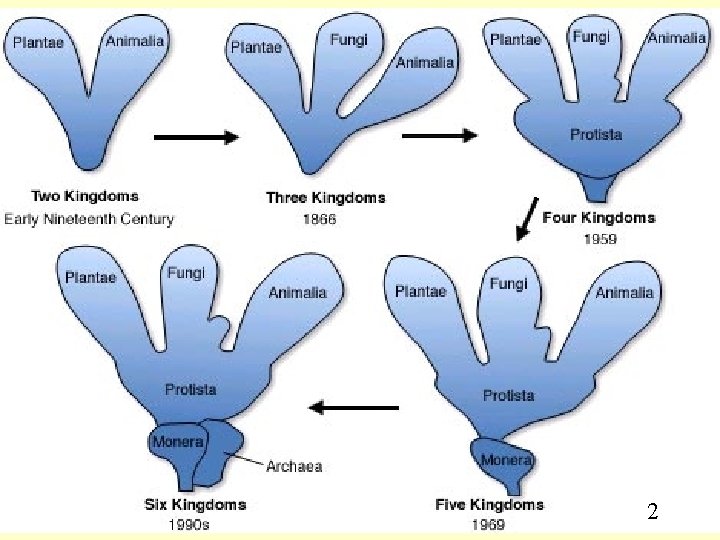
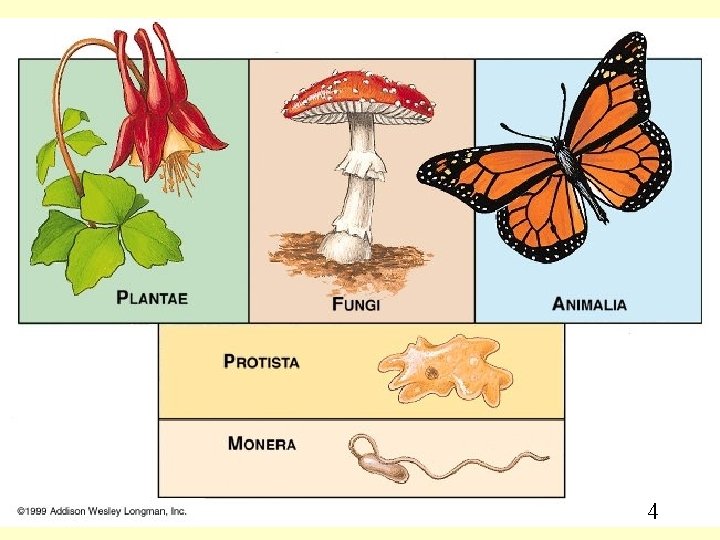
The Five-Kingdom System a. k. a. - prokaryotes 3
4
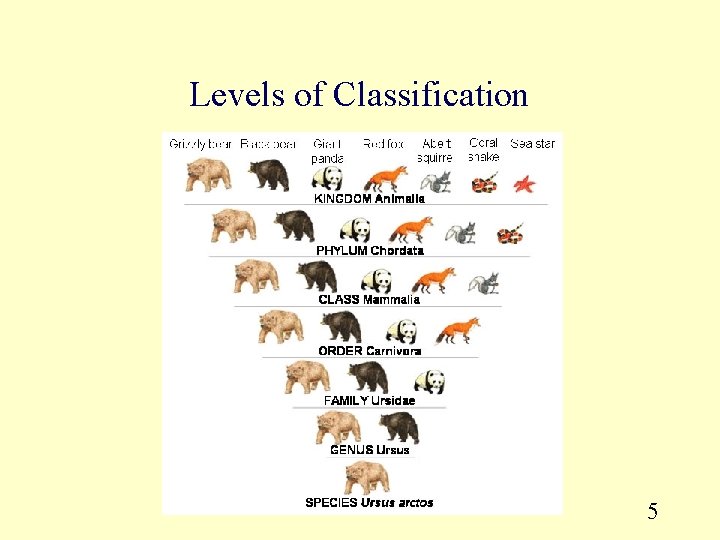
Levels of Classification 5
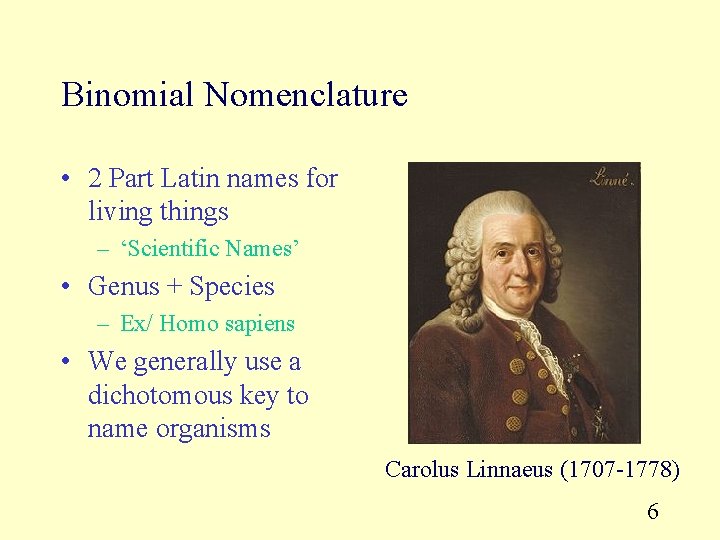
Binomial Nomenclature • 2 Part Latin names for living things – ‘Scientific Names’ • Genus + Species – Ex/ Homo sapiens • We generally use a dichotomous key to name organisms Carolus Linnaeus (1707 -1778) 6
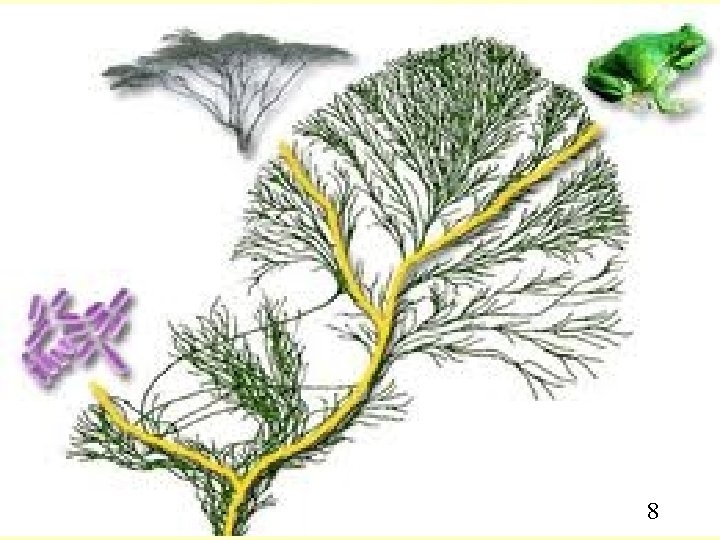
Binomial Nomenclature (cont’d) • Back then the Earth was flat, and living things did not evolve… • Now we use PHYLOGENY in combination with old knowledge to study evolutionary history 7
8
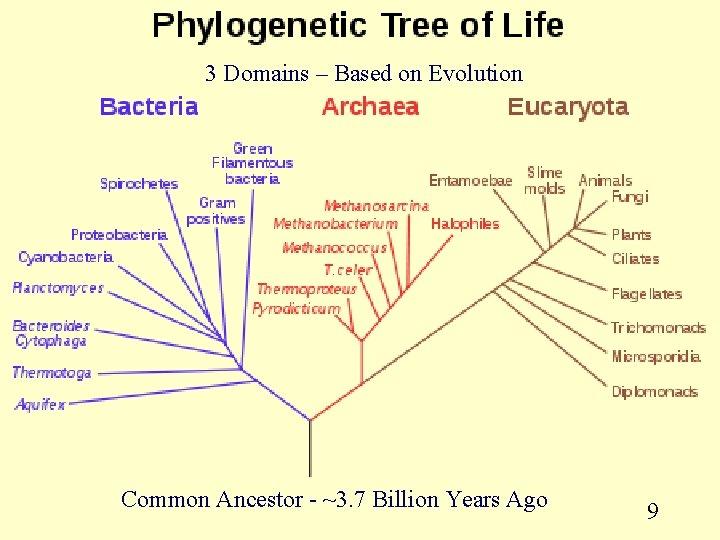
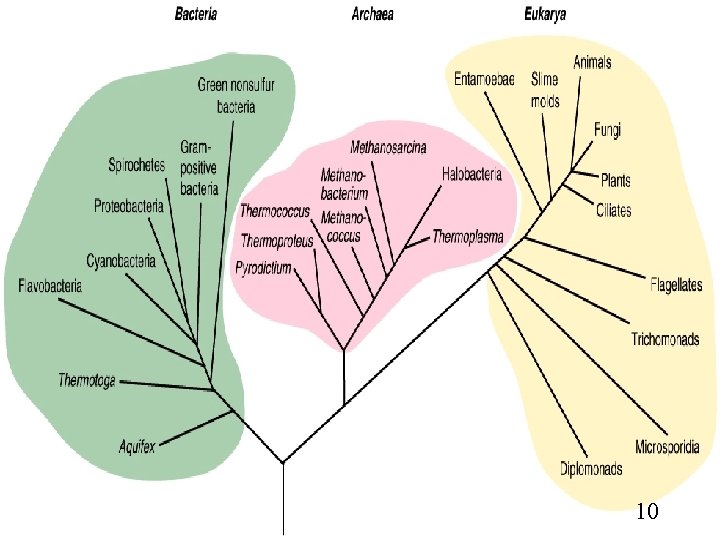
3 Domains – Based on Evolution Common Ancestor - ~3. 7 Billion Years Ago 9
10
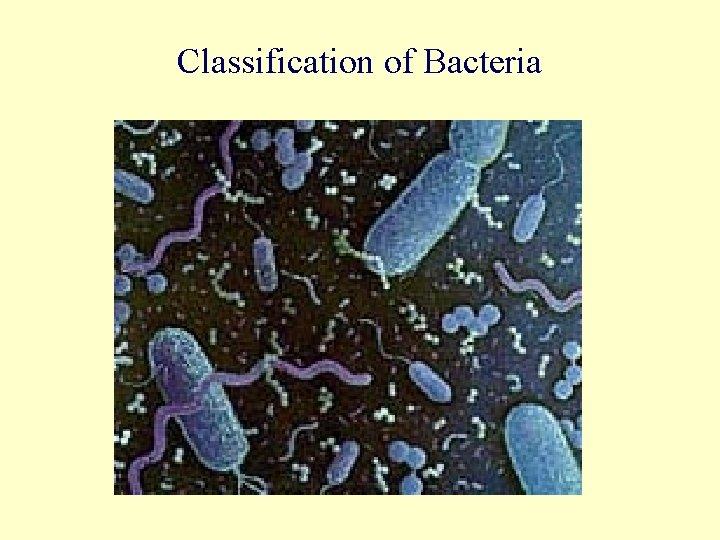
Classification of Bacteria
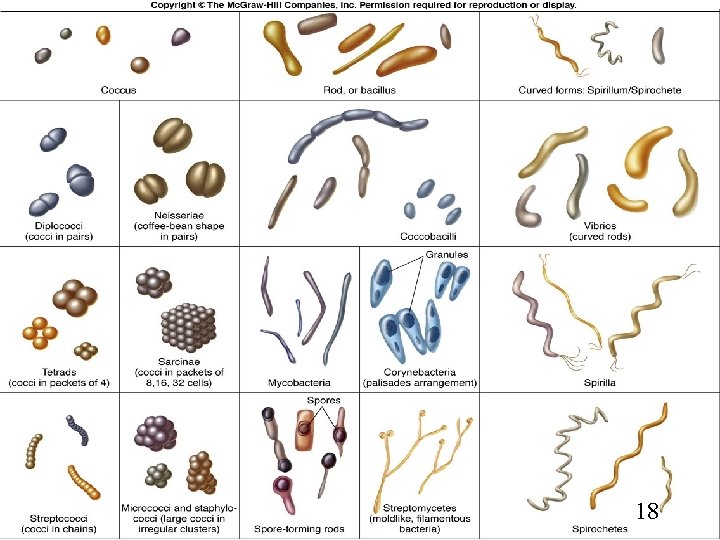
Classification of Bacteria • Light microscope was the original tool • Initial classification was based on of the shape of the bacterial cells – Cocci – Bacilli – Spirilla – Spirochetes 12
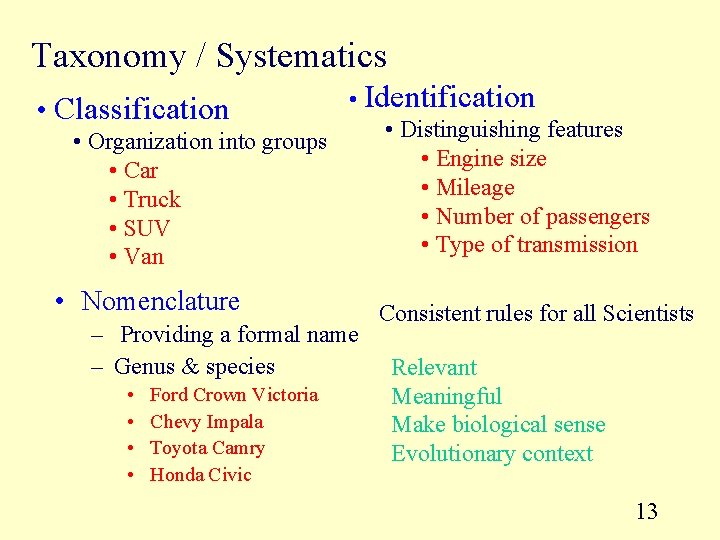
Taxonomy / Systematics • Identification • Distinguishing features • Organization into groups • Engine size • Car • Mileage • Truck • Number of passengers • SUV • Type of transmission • Van • Classification • Nomenclature – Providing a formal name – Genus & species • • Ford Crown Victoria Chevy Impala Toyota Camry Honda Civic Consistent rules for all Scientists Relevant Meaningful Make biological sense Evolutionary context 13
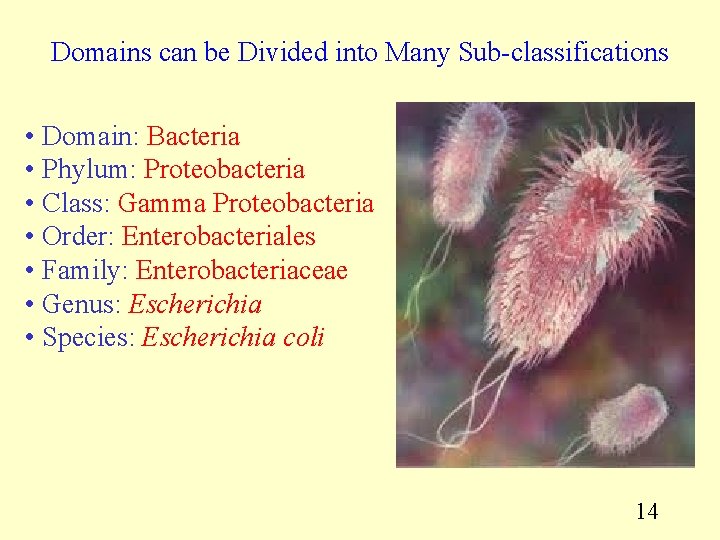
Domains can be Divided into Many Sub-classifications • Domain: Bacteria • Phylum: Proteobacteria • Class: Gamma Proteobacteria • Order: Enterobacteriales • Family: Enterobacteriaceae • Genus: Escherichia • Species: Escherichia coli 14
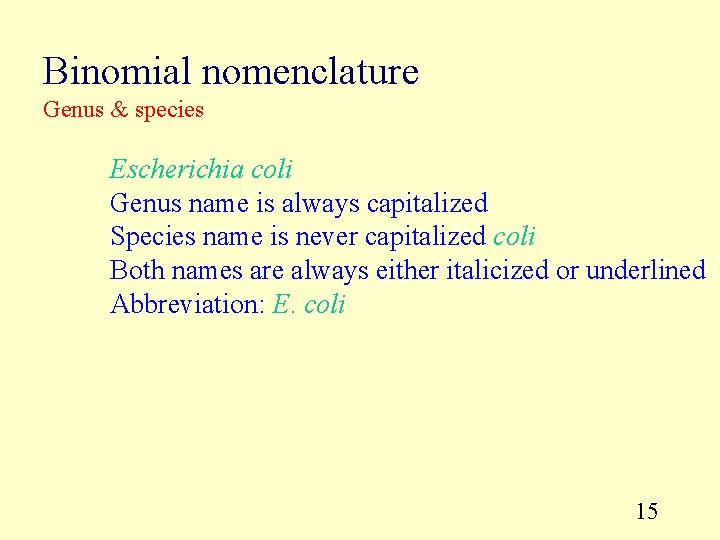
Binomial nomenclature Genus & species Escherichia coli Genus name is always capitalized Species name is never capitalized coli Both names are always either italicized or underlined Abbreviation: E. coli 15
Old School Medical Microbiologists said… • One bacterium = One disease • So to these scientists, bacteria were also classified as to the disease they caused – But there are several types of E. coli… – So the naming system for bacteria evolved 16
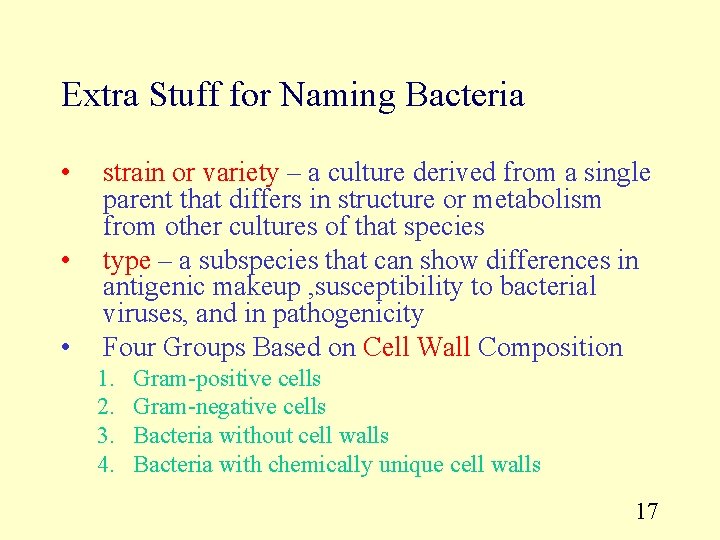
Extra Stuff for Naming Bacteria • • • strain or variety – a culture derived from a single parent that differs in structure or metabolism from other cultures of that species type – a subspecies that can show differences in antigenic makeup , susceptibility to bacterial viruses, and in pathogenicity Four Groups Based on Cell Wall Composition 1. 2. 3. 4. Gram-positive cells Gram-negative cells Bacteria without cell walls Bacteria with chemically unique cell walls 17
18