
Taxonomy and Classification The Six Kingdoms Archaebacteria Prokaryotic

Taxonomy and Classification The Six Kingdoms
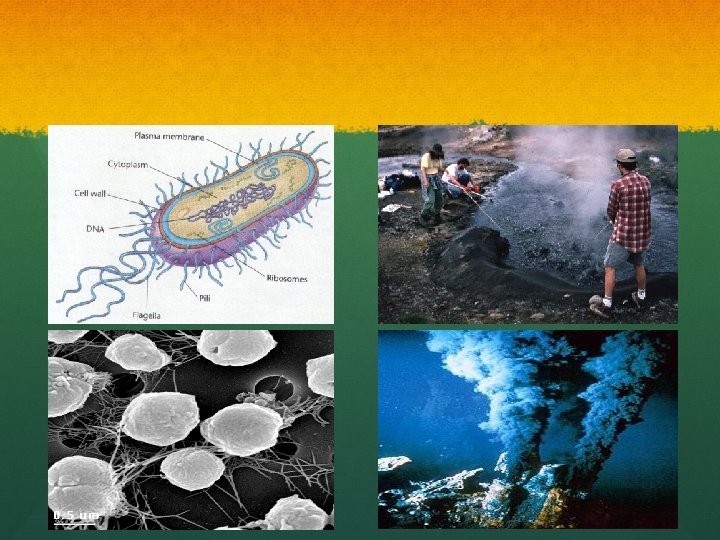
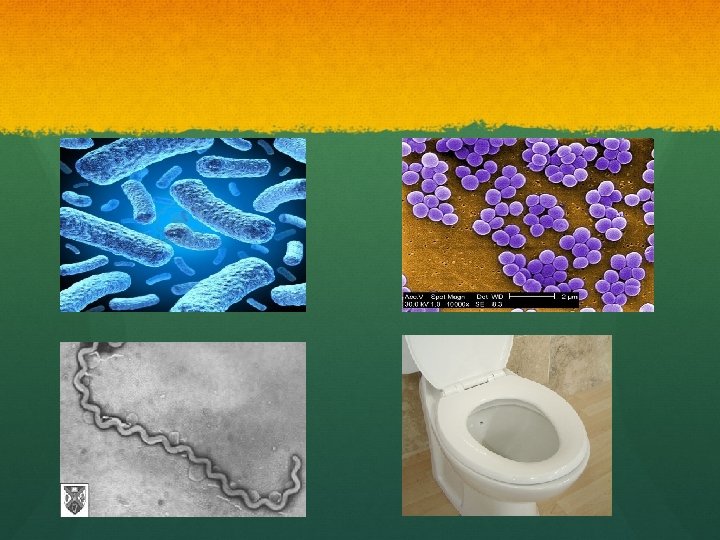
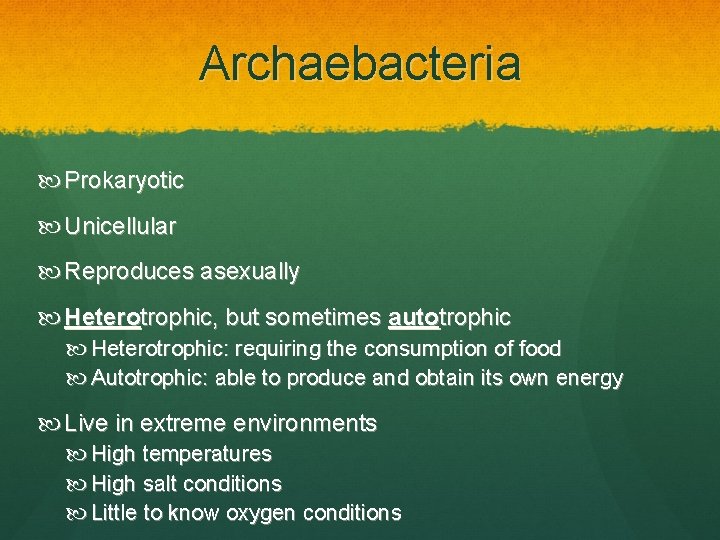
Archaebacteria Prokaryotic Unicellular Reproduces asexually Heterotrophic, but sometimes autotrophic Heterotrophic: requiring the consumption of food Autotrophic: able to produce and obtain its own energy Live in extreme environments High temperatures High salt conditions Little to know oxygen conditions
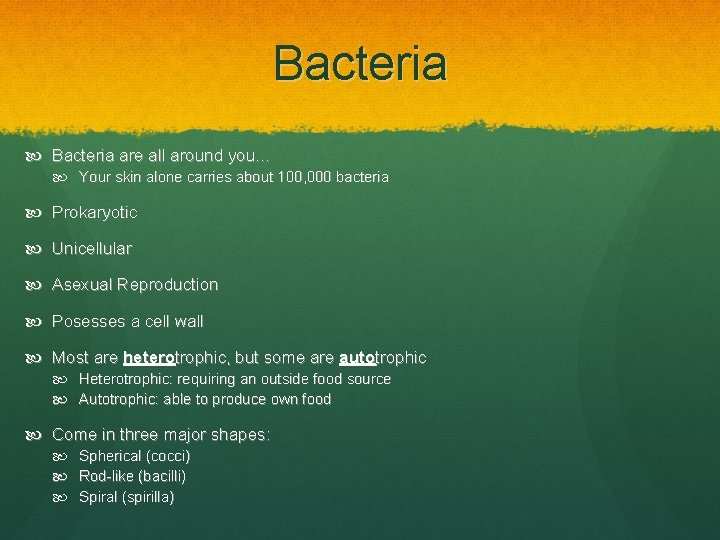
Bacteria are all around you… Your skin alone carries about 100, 000 bacteria Prokaryotic Unicellular Asexual Reproduction Posesses a cell wall Most are heterotrophic, but some are autotrophic Heterotrophic: requiring an outside food source Autotrophic: able to produce own food Come in three major shapes: Spherical (cocci) Rod-like (bacilli) Spiral (spirilla)
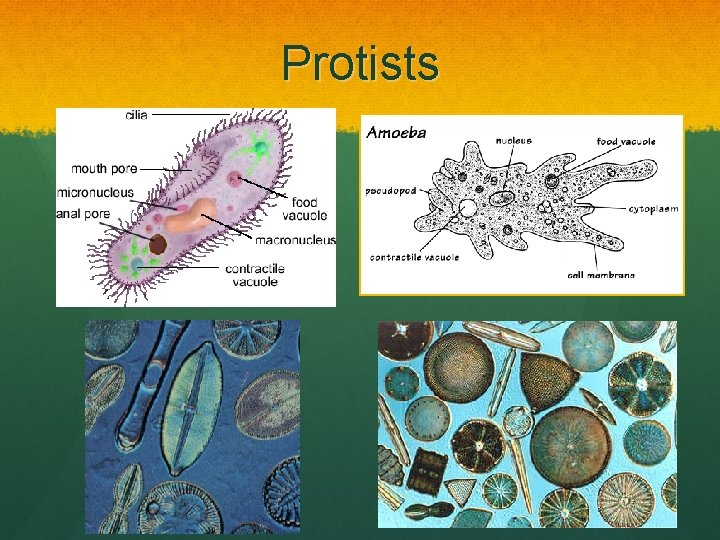
Protists
Protists Most are unicellular, but some are multicellular Sometimes live in colonies All are eukaryotic—having a true nucleus and organelles Live in aquatic or moist environments Reproduces sexually or asexually Three Major Types Fungus-Like Plant-Like Animal-Like

Homework Write two to three complete sentences that describe the organisms that belong in each of the kingdoms discussed today: Kingdom Eubacteria Kingdom Archaebacteria Kingdom Protista
- Slides: 8