
TAV Chapter 22 The Cold War Begins 1945

TAV Chapter 22 The Cold War Begins 1945 -1960
Chapter 22 Section 1 THE ORIGINS OF THE COLD WAR
Yalta Conference • Feb. 1945 – Dispute over what to do with the Polish Govt. • Polish Govt. had fled to GB when Germany took over. • After the Soviets liberated Poland they set a Communist Govt. • Debate over which was the legitimate leaders of Poland
• FDR and Churchill agreed to recognize the Soviet based Govt. after Stalin agreed to place some of the prewar leaders in the Govt. • Also hold free elections as soon as poss.
Declaration of Liberated Europe • People choose their Govt. • Temporary Govts. until elections can take place
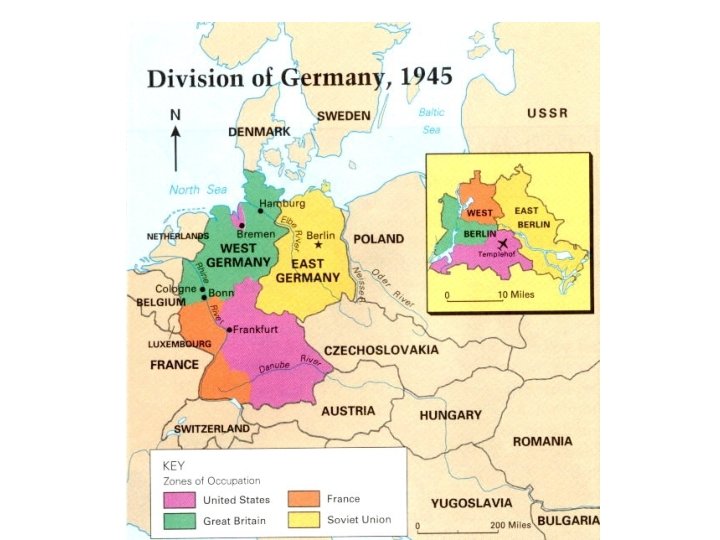
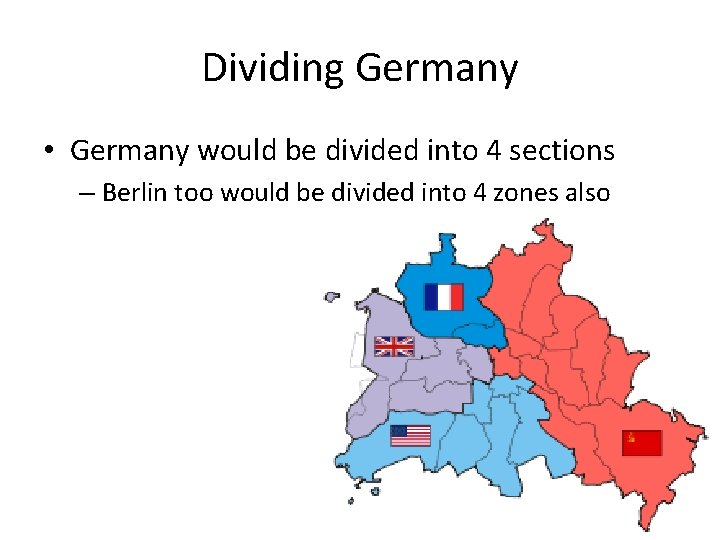
Dividing Germany • Germany would be divided into 4 sections – Berlin too would be divided into 4 zones also
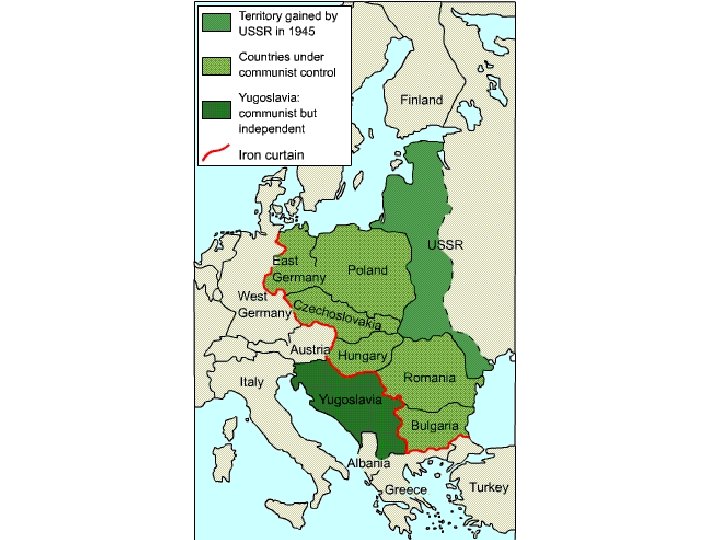
Romania • 2 weeks after Yalta the Soviets forced Romania to set up a Communist Govt. • The Soviets wanted to keep Germany weak and insure that they would have a buffer zone with the countries between the USSR and Germany
FDR Dies • Truman became takes a strong anti. Communist stand • Demands that Poland have free elections
Potsdam Conference • July 1945, Truman and Stalin meet near Berlin • Agreements made on equipment for food shipments as reparations
Iron Curtain • Stalin pronounces that the countries that it occupies will have the economic system that they want. • Satellite nations
Chapter 22 Section 2 EARLY COLD WAR YEARS
The Long Telegram • Sent by George Kennan – Soviet insecurity • Containment
Truman Doctrine • Truman pledged to give support to any country that resisted subjugation from outside forces • March 12, 1947, $400 million to aid Turkey and Greece
The Marshall Plan • George C. Marshall proposed having countries make plans on how they plan to rebuild their infrastructure and the US would pay for it. • Satellite nations were not allowed by the Soviets to take part • 11 billion
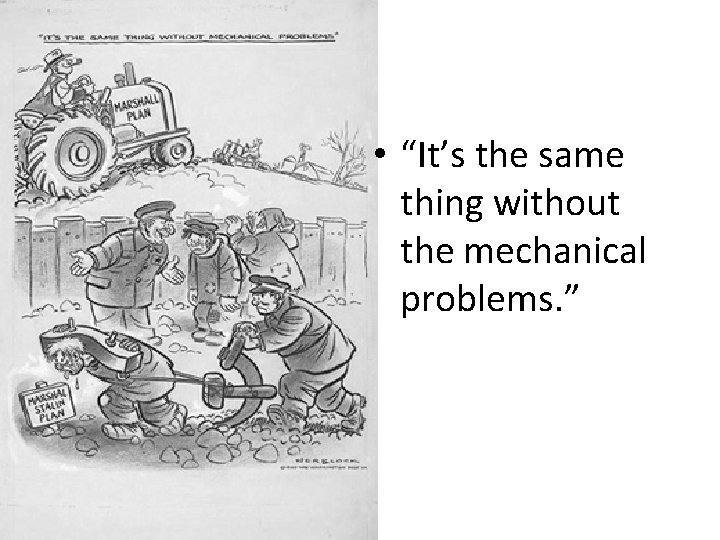
• “It’s the same thing without the mechanical problems. ”
Berlin Airlift • US, GB, & France decide to issue a common currency & merge their zones of Germany and Berlin. • The Soviets decide to block off the routes through the Soviet zone into the western section of Berlin. • From June 1948 to May of 1949 • The US dropped in supplies to Berliners who were in the western zones
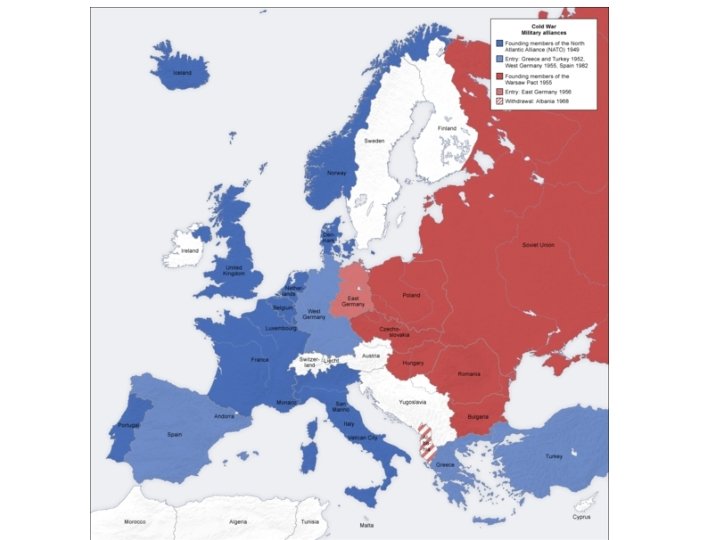
NATO • The North Atlantic Treaty Organization • 12 countries join and pledge protection to one another • 6 years later West Germany was allowed to rearm and join NATO • The Soviets react by forming the Warsaw Pact w. the satellite countries
Nuclear Expansion • Sept. 1949, the Soviet Union announces that they have successfully detonated a nuclear bomb.
Chinese Revolution • Communists led by Mao Zedong overthrew the Nationalists led by Chiang Kai-shek • Oct 1949 • Chiang is forced to the island of Taiwan • US only recognizes Taiwan as China
The Korean War • Following WW II, Korea was divided at the 38 th parallel • Soviets took the north and the US took the south • June 25, 1950, N. Korean troops crossed into the S.
UN Action • UN troops led by the US were sent to stop the N. Koreans • Troops push back from Pusan and Marines invaded behind enemy lines at Inchon. • Pushed back to the Yalu River causing the Chinese to invade to help the N. Koreans
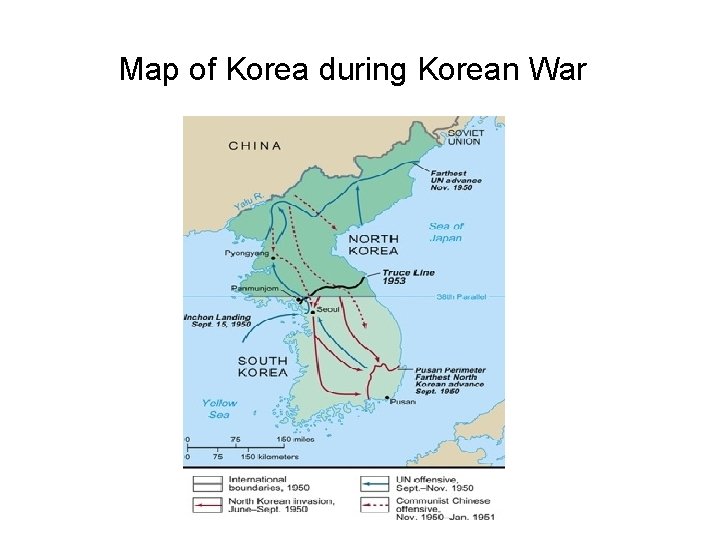
Map of Korea during Korean War
Communist Attack • Communist Chinese & N. Koreans pushed the UN forces back below the 38 th • Mac. Arthur wanted to use nuclear bombs against China for entering the war.
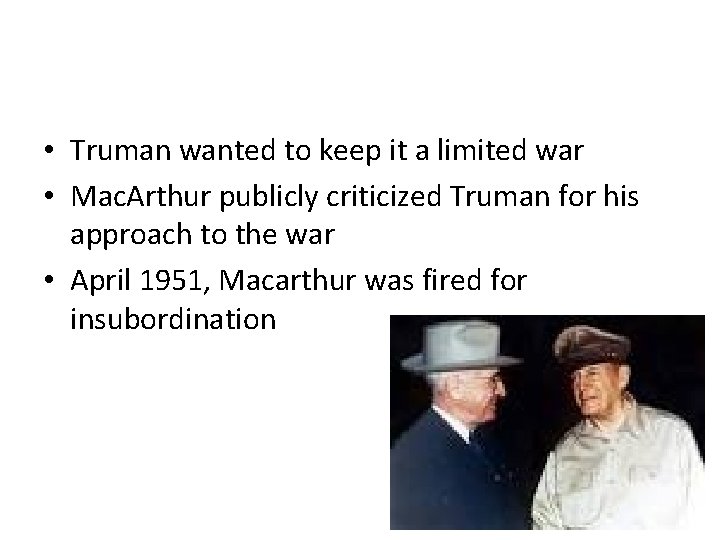
• Truman wanted to keep it a limited war • Mac. Arthur publicly criticized Truman for his approach to the war • April 1951, Macarthur was fired for insubordination
Eisenhower • Eisenhower runs promising to end the war in Korea • July 1953 armistice is signed • 33, 600 American soldiers were killed
SEATO • Southeast Asia Treaty Organization • Defensive treaty w. countries Asia • Led to aid for France fighting Communists in Vietnam
Chapter 22 Section 3 THE COLD WAR & AMERICAN SOCIETY

Second Red Scare • Sept 1945, Igor Gouzenko defected and warned of Soviet plans to gain information through people who were in Govt. agencies. •
Loyalty Program • Govt. employees were screened for loyalty to the US Govt. • 2, 000 employees quit their jobs • 212 people were fired
HUAC • House Un-American Activities Committee • To investigate Communist and Fascist activities
HUAC & Hollywood • 1947 hearings were held to investigate Communists in Hollywood • Pres. Of the Screen Actors Guild, Ronald Reagan testified that there were Communists in Hollywood – Also stated that Hollywood could police itself – US Govt should be strong enough to withstand the internal threat

Alger Hiss • 1948, Whittaker Chambers testified that several Govt officials were communists or spies • Alger Hiss was identified – Denied involvement but evidence was produced proving accusations were true – Charged w. perjury bc statute of limitations had run out for spying.
Rosenbergs • Julius and Ethel were members of the Communist party and helped ferry top secret nuclear information to the Soviets. • Charged w. espionage and sentenced to death • Many thought they were innocent but later the Venona Papers proved they were guilty. • Venona was not revealed to the public until 1995. • Executed in June 1953
Mc. Carthy • Senator from Wisconsin • Feb 1950, announced that he had a list of 205 people who were Communists influencing State Dept policy • Soon anyone who did not agree w Mc. Carthy would be accused of being Communist • Began looking for Communists in the Army • Joseph Welch challenged him & led to his down-fall
Ch 22 Section 4 EISENHOWER’S COLD WAR POLICIES
Eisenhower • Massive retaliation was the threat of using atomic weapons against our enemies. • Brinkmanship was being willing to push an issue to the point of going to war if needed.
Nuclear Threats • Eisenhower’s veiled threat of using nuclear weapons caused the Chinese and N. Koreans to sign an armistice • Taiwan • China threatened that they would take Taiwan & Eisenhower hinted at using nuclear bombs to protect Taiwan
• Sec of State Dulles offered to help Egypt construct a dam on the Nile. – Egypt had bought weapons from Czechoslovakia and congress did not like it. – Offer withdrawn
Suez Crisis • Egypt took over the canal which was operated by a British and French company • Oct. 1956, GB and France invaded Egypt but the US convinced them to stand down by the US. • Egypt began working w the Soviets and soon other Arab nations did so too.
Hungary • Riots began in June of 1956 • By October the riots had grown to an uprising to change the government. • Khrushchev sent in Soviet tanks to stop the uprising.
Sputnik Launched October 4, 1957 Fellow Traveler Signal for 22 days orbited 3 months Began the Space Race between the US and the USSR • Changed education • •
Iranian Affairs • Iran was under the leadership of Mohammed Mossadegh – Nationalized the Anglo-Iranian Oil Company – About to enter into a deal with the Soviets • There was an attempt to get the Shah of Iran in as the leader but it failed. • CIA set up riots which led to the Shah being established as the leader.
Guatemala • 1951, Jacob Arbenz Guzman had communist funding and was elected president. • Govt. took over private land including an American owned company-United Fruit Co. • May 1954, Czechoslovakia sent arms to Guatemala • CIA trained men rose up and caused Guzman to leave office.
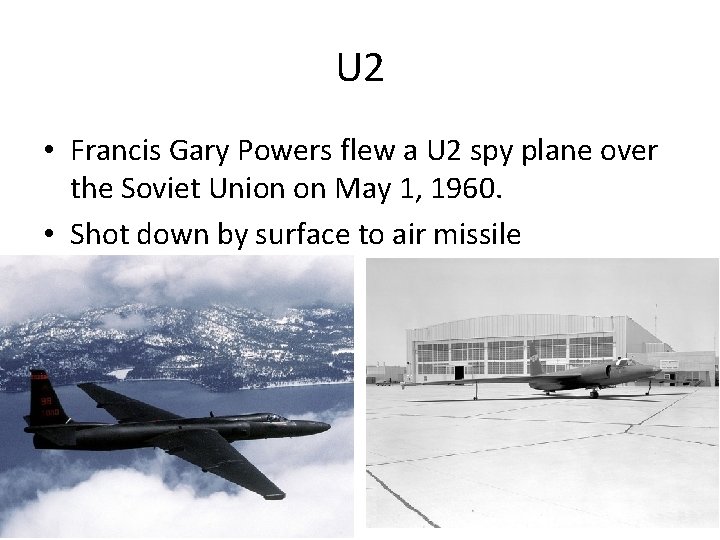
U 2 • Francis Gary Powers flew a U 2 spy plane over the Soviet Union on May 1, 1960. • Shot down by surface to air missile
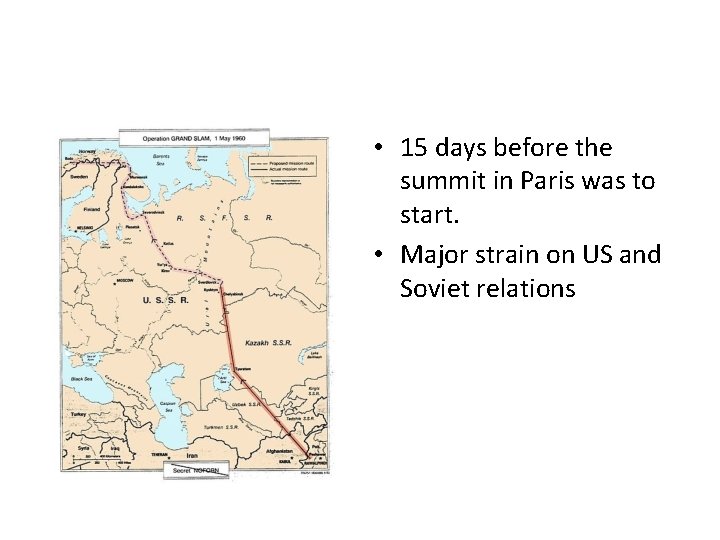
• 15 days before the summit in Paris was to start. • Major strain on US and Soviet relations
- Slides: 50