
Taste Taste bud is specialised receptors in the
Taste
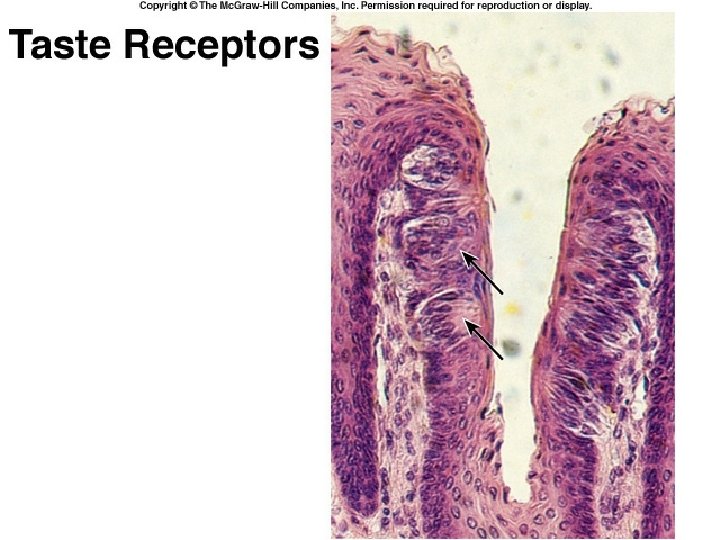
• Taste bud is specialised receptors in the oral cavity but mainly on the tongue, some on the palate
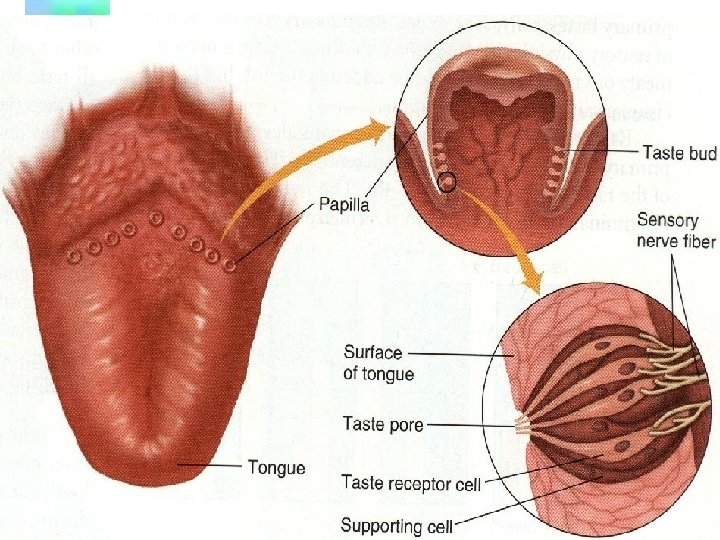
Types of papillae (projection) • • Filiform Fungiform Circumvallate No taste buds on the mid dorsum of the tongue
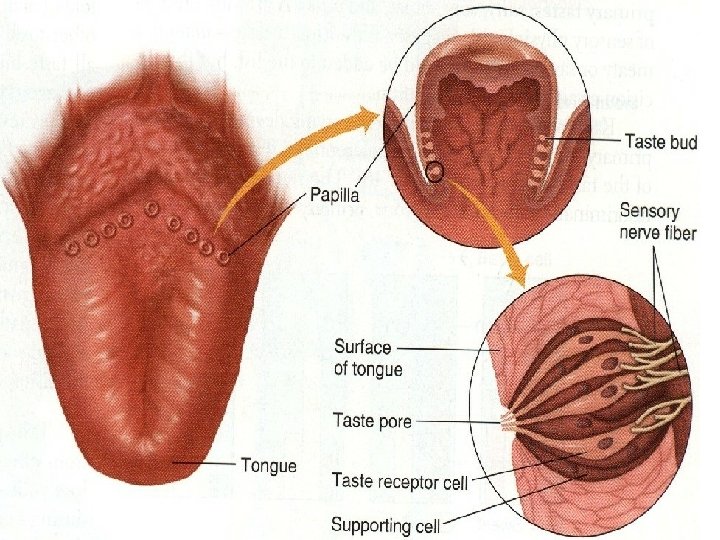
Anatomy • Taste bud : gustatory cells with microvilli (gustatory hair) • They are receptors cells with cilia projected through taste pore in between there are supporting cells
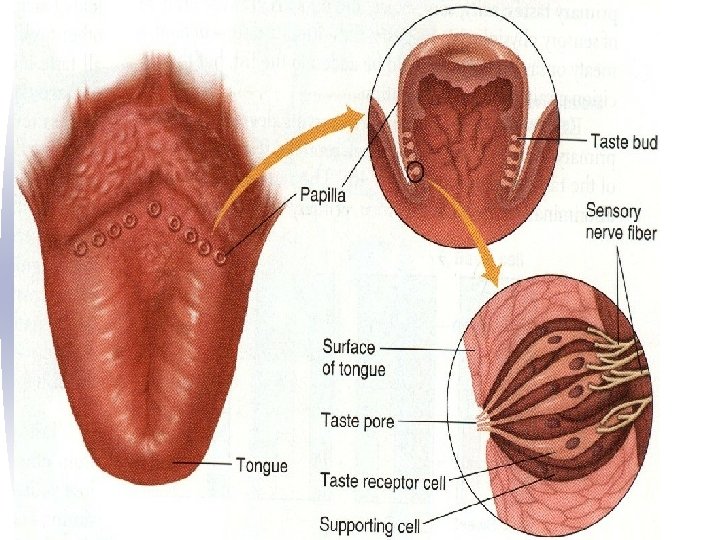
Taste bud: • When stimulated produce nerve impulse to specific brain area through: • Anterior 2/3 of the tongue » » » VII • Posterior 1/3 of the tongue » » » IX • Receptors on the palate, pharynx, epiglottis » » » X
Taste pathway • First order neurone: – Taste fibres from the three cranials nerves form tractus solitarius » » » end in the nucleus of tractus solitarius (medulla) • Second order neurone: – From TS cross the midline to ascend in the medial lemniscus to the thalamus
• Third order neuron: – from thalamus project the cerebral cortex through thalamic radiation –
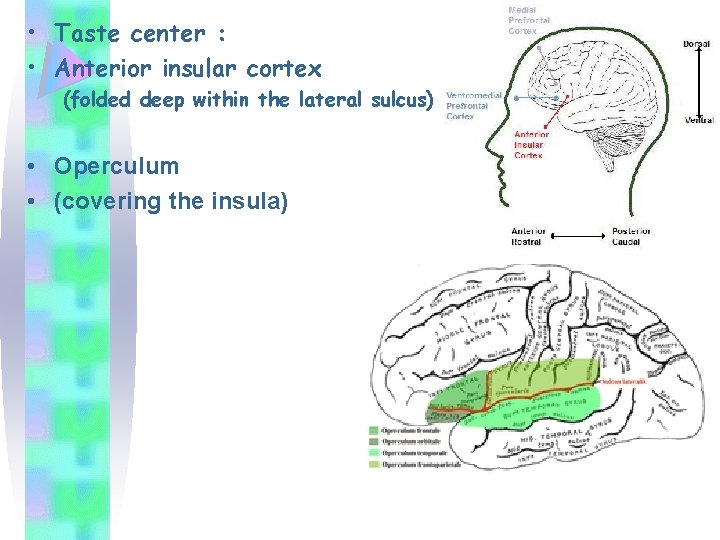
• Taste center : • Anterior insular cortex (folded deep within the lateral sulcus) • Operculum • (covering the insula)

Taste sensation • Molecules dissolve in the saliva » » » attached to receptors on cillia of gustatory cells » » » receptors potential » » » action potential • Combination between molecules and receptors are week (since taste can be easily abolished by washing mouth with water)
• Sweet receptors respond to » » » sugar, saccharine, some amino acids • Sour receptors respond to » » » H ion • Salty receptors respond to » » » salts
• Distribution of taste buds on tongue not uniform – sweet - tongue tip – sour - tongue margins – bitter - back of tongue – salt - widely distributed
Pathophysiology • Ageusia (complete loss of taste)
• Dysgeusia (disturbed taste)
• Hypogeusia
• Hypergeusia • Adrenal insufficiency
- Slides: 20