
Taste and smell The gustatory and olfactory systems

- Slides: 12
Taste and smell The gustatory and olfactory systems
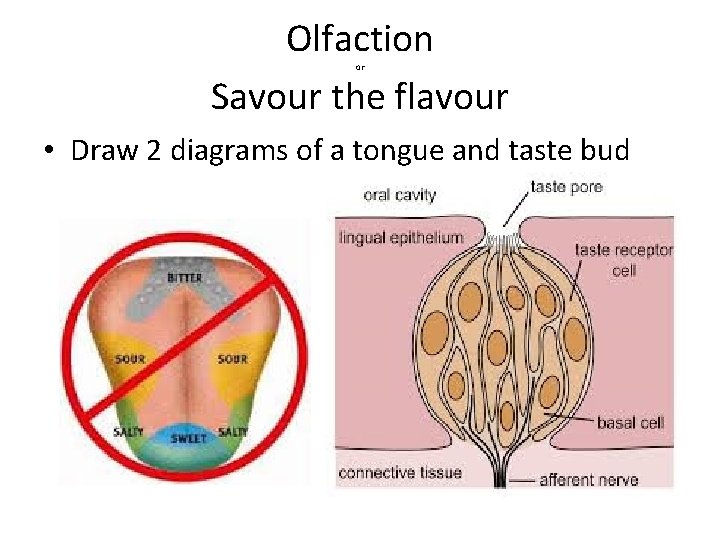
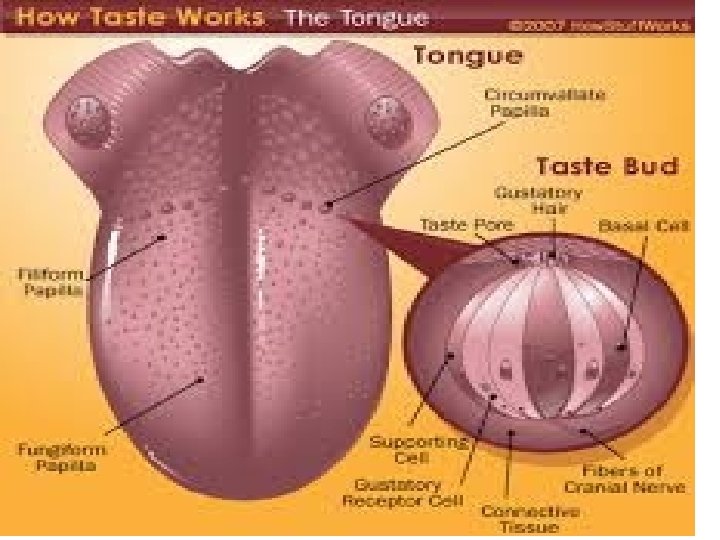
Olfaction Savour the flavour or • Draw 2 diagrams of a tongue and taste bud
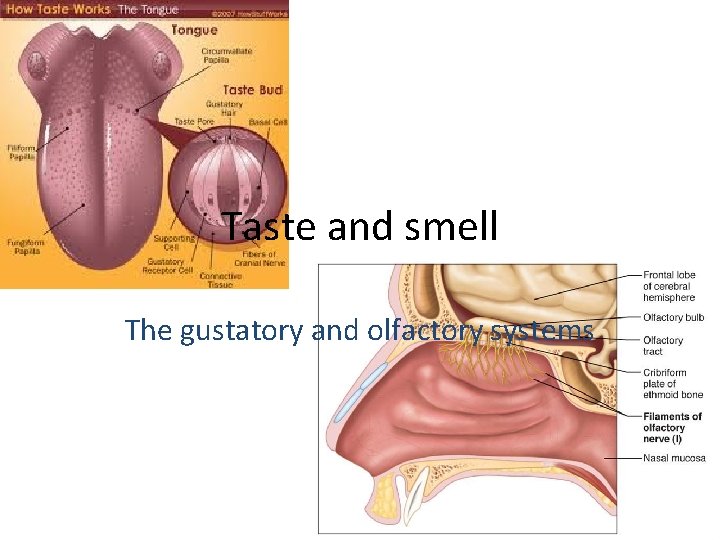
Taste • The tongue is covered with bumps called Papillae • The taste receptors are here they are called Taste buds • Sensory hairs can only detect chemical shapes (Tastes) if they are dissolved in saliva • Taste cells are replaced every ten (10) days
• There are 5 basic tastes: – Sweet – Salty – Sour – Bitter – Umami Each of the taste buds can taste several different tastes but some areas of the tongue may be more sensitive to a certain taste.
• The fifth taste, Umami, was more recently discovered. • It is a richness of taste and • is associated with fish, sushi, algae, glutamates (MSG) • Savory
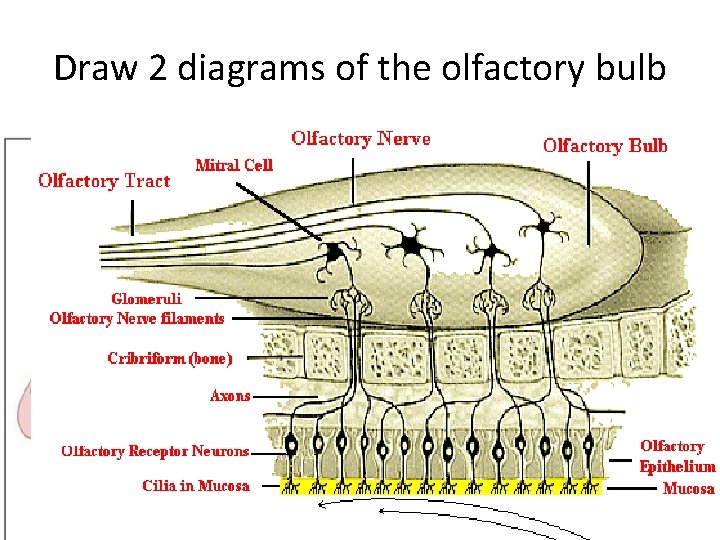
Draw 2 diagrams of the olfactory bulb
Olfaction • Olfaction means sense of smell • Chemicals which we can smell are called odorants. • Smell receptors are found in the olfactory epithelium in the roof of the nasal cavity • These receptor cells must be replaced every 40 to 60 days with new ones
• Odorants must be water soluble and fat soluble to dissolve in the mucus that covers the smell receptors. • Cilia on the receptors can detect up to 10, 000 different odorants. • Nerves from the olfactory epithelium pass upward s through the sieve-like bone in the skull to the olfactory bulb underneath the brain
• The olfactory bulb send the message to the olfactory cortex in the base of the brain. Then onto the centers for : • Memory • Emotion • Odor recognition • Pain is a component of most smells.
Flavour Is a combination of Tastes (5) plus Smells (10, 000). The odorants float up the pharynx to the nasal cavity and greatly enhance the flavour of the food. • When you have a cold the thick Mucus prevents odorants from reaching the receptors. • That’s why you can’t enjoy your food as well as it’s mostly taste.