
Task 3 Introduction To Rivers What are rivers
- Slides: 10
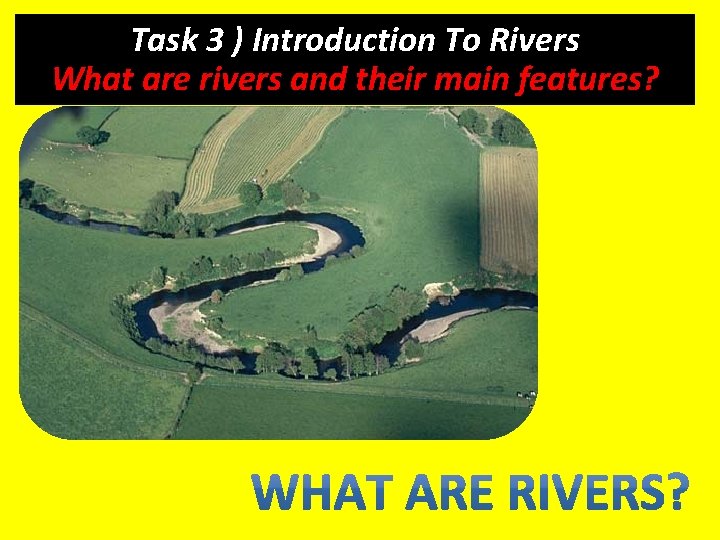
Task 3 ) Introduction To Rivers What are rivers and their main features?
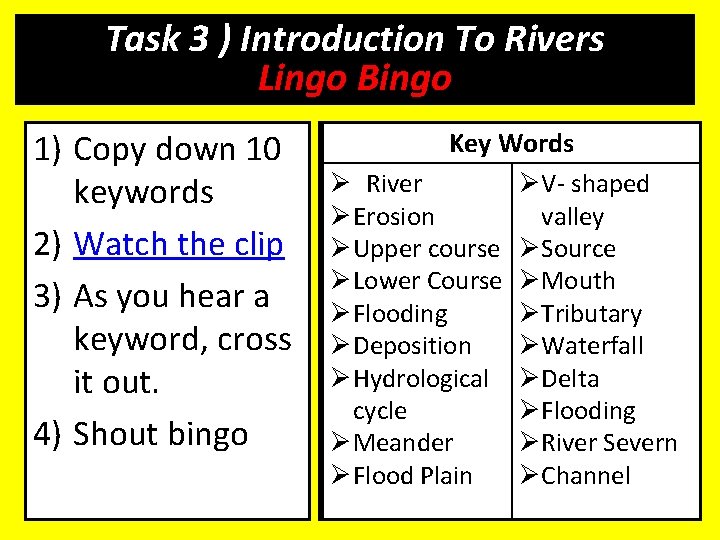
Task 3 ) Introduction To Rivers Lingo Bingo 1) Copy down 10 keywords 2) Watch the clip 3) As you hear a keyword, cross it out. 4) Shout bingo Key Words Ø River ØV- shaped ØErosion valley ØUpper course ØSource ØLower Course ØMouth ØFlooding ØTributary ØDeposition ØWaterfall ØHydrological ØDelta cycle ØFlooding ØMeander ØRiver Severn ØFlood Plain ØChannel
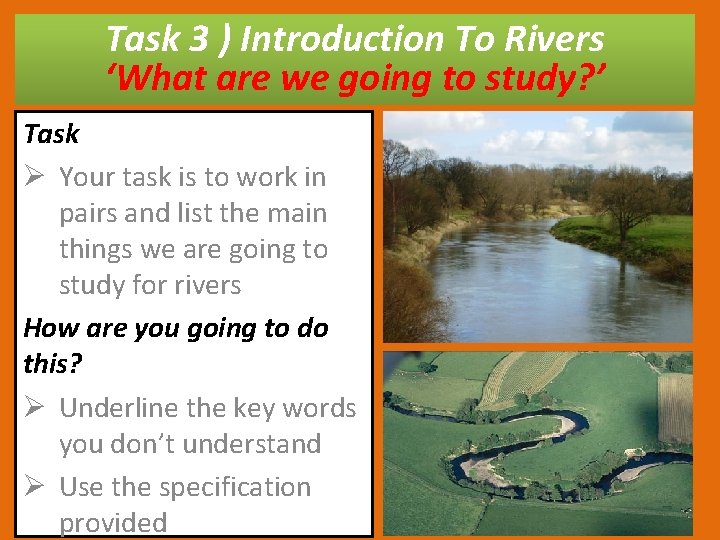
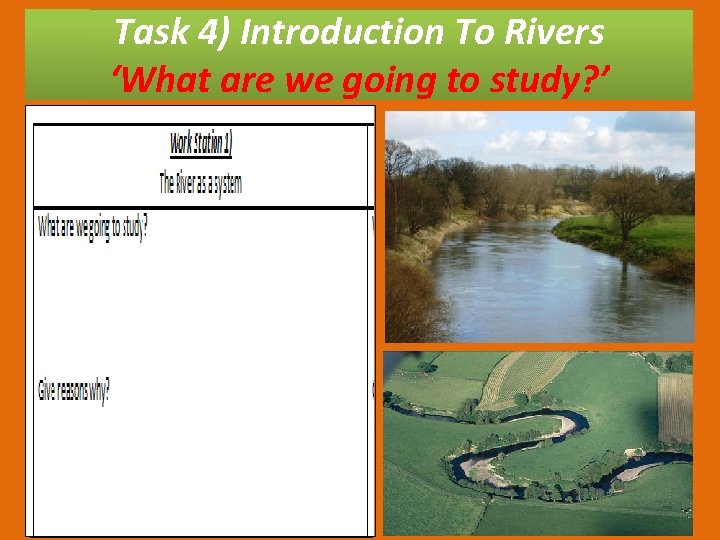
Task 3 ) Introduction To Rivers ‘What are we going to study? ’ Task Ø Your task is to work in pairs and list the main things we are going to study for rivers How are you going to do this? Ø Underline the key words you don’t understand Ø Use the specification provided
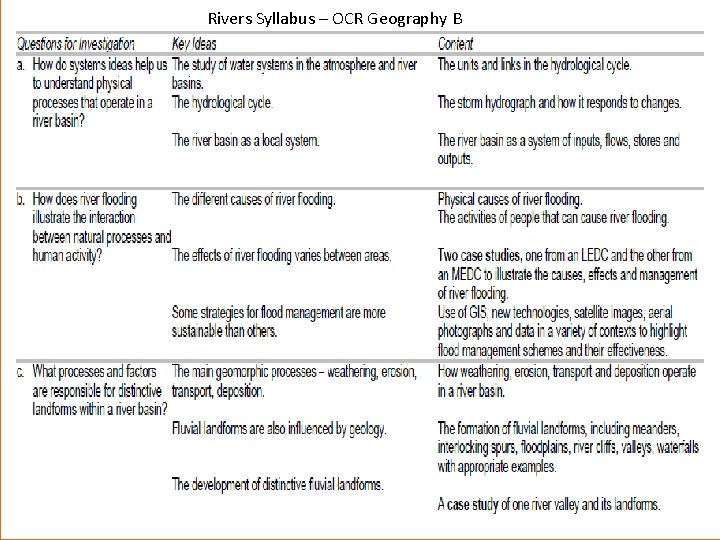
Rivers Syllabus – OCR Geography B
Task 4) Introduction To Rivers ‘What are we going to study? ’ • In groups, visit 5 different workstations: 1. The River as a system 2. Drainage Basins 3. Different stages of a river 4. Erosion / Deposition / Transportation of material 5. Flooding
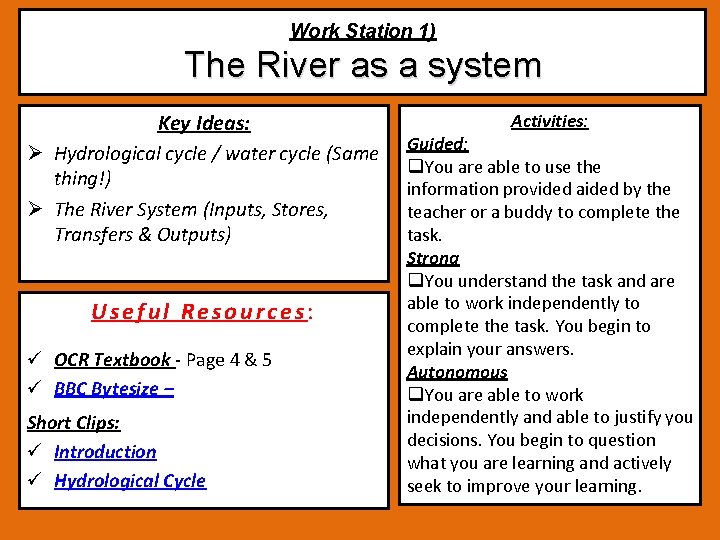
Work Station 1) The River as a system Key Ideas: Ø Hydrological cycle / water cycle (Same thing!) Ø The River System (Inputs, Stores, Transfers & Outputs) Useful Resources: ü OCR Textbook - Page 4 & 5 ü BBC Bytesize – Short Clips: ü Introduction ü Hydrological Cycle Activities: Guided: q. You are able to use the information provided aided by the teacher or a buddy to complete the task. Strong q. You understand the task and are able to work independently to complete the task. You begin to explain your answers. Autonomous q. You are able to work independently and able to justify you decisions. You begin to question what you are learning and actively seek to improve your learning.
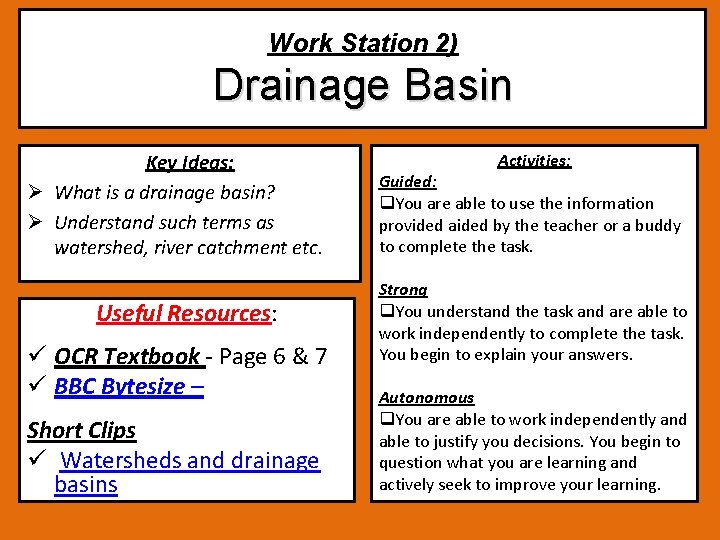
Work Station 2) Drainage Basin Key Ideas: Ø What is a drainage basin? Ø Understand such terms as watershed, river catchment etc. Useful Resources: ü OCR Textbook - Page 6 & 7 ü BBC Bytesize – Short Clips ü Watersheds and drainage basins Activities: Guided: q. You are able to use the information provided aided by the teacher or a buddy to complete the task. Strong q. You understand the task and are able to work independently to complete the task. You begin to explain your answers. Autonomous q. You are able to work independently and able to justify you decisions. You begin to question what you are learning and actively seek to improve your learning.
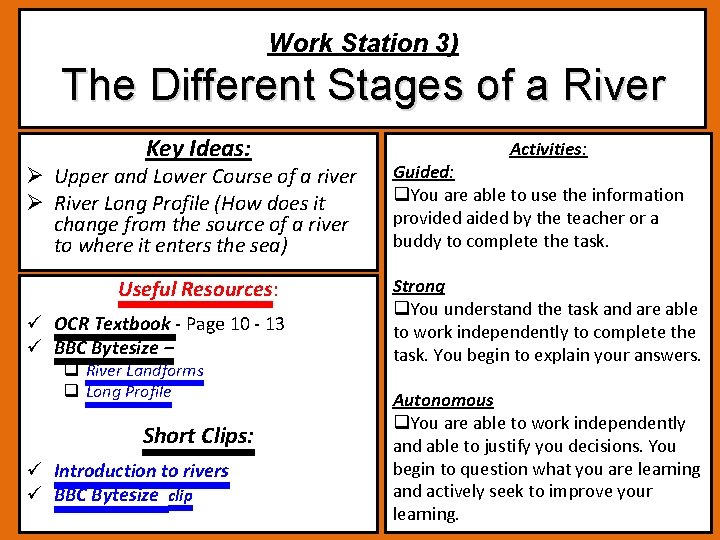
Work Station 3) The Different Stages of a River Key Ideas: Ø Upper and Lower Course of a river Ø River Long Profile (How does it change from the source of a river to where it enters the sea) Useful Resources: ü OCR Textbook - Page 10 - 13 ü BBC Bytesize – q River Landforms q Long Profile Short Clips: ü Introduction to rivers ü BBC Bytesize clip Activities: Guided: q. You are able to use the information provided aided by the teacher or a buddy to complete the task. Strong q. You understand the task and are able to work independently to complete the task. You begin to explain your answers. Autonomous q. You are able to work independently and able to justify you decisions. You begin to question what you are learning and actively seek to improve your learning.
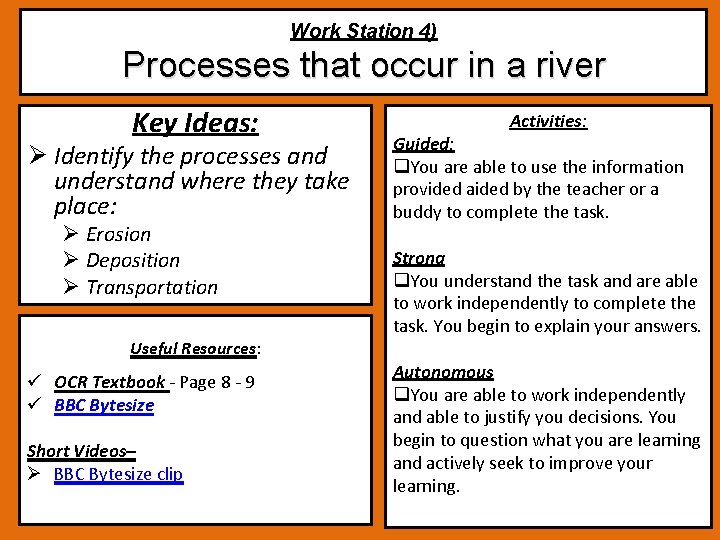
Work Station 4) Processes that occur in a river Key Ideas: Ø Identify the processes and understand where they take place: Ø Erosion Ø Deposition Ø Transportation Useful Resources: ü OCR Textbook - Page 8 - 9 ü BBC Bytesize Short Videos– Ø BBC Bytesize clip Activities: Guided: q. You are able to use the information provided aided by the teacher or a buddy to complete the task. Strong q. You understand the task and are able to work independently to complete the task. You begin to explain your answers. Autonomous q. You are able to work independently and able to justify you decisions. You begin to question what you are learning and actively seek to improve your learning.
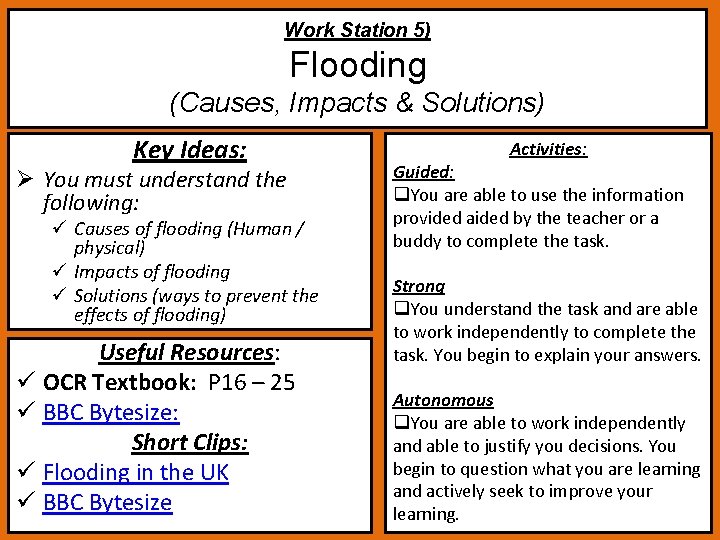
Work Station 5) Flooding (Causes, Impacts & Solutions) Key Ideas: Ø You must understand the following: ü Causes of flooding (Human / physical) ü Impacts of flooding ü Solutions (ways to prevent the effects of flooding) Useful Resources: ü OCR Textbook: P 16 – 25 ü BBC Bytesize: Short Clips: ü Flooding in the UK ü BBC Bytesize Activities: Guided: q. You are able to use the information provided aided by the teacher or a buddy to complete the task. Strong q. You understand the task and are able to work independently to complete the task. You begin to explain your answers. Autonomous q. You are able to work independently and able to justify you decisions. You begin to question what you are learning and actively seek to improve your learning.