
Targets conversion to secondary radiation summary Chris Densham
- Slides: 15
Targets & conversion to secondary radiation summary Chris Densham
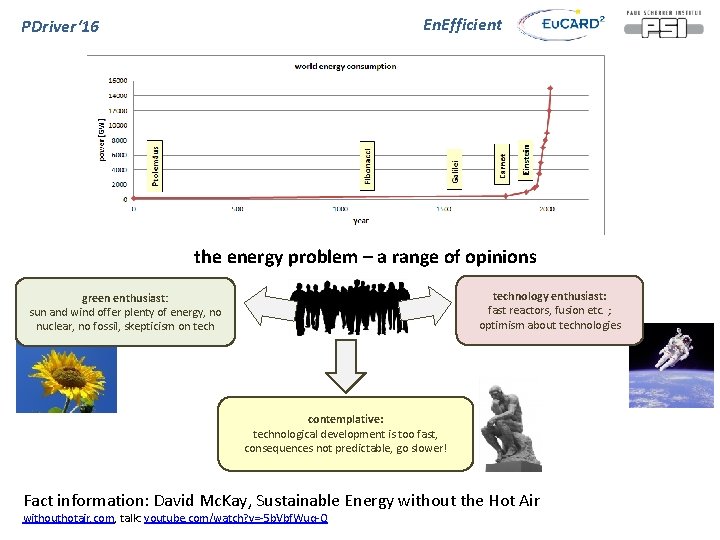
En. Efficient PDriver‘ 16 the energy problem – a range of opinions technology enthusiast: fast reactors, fusion etc. ; optimism about technologies green enthusiast: sun and wind offer plenty of energy, no nuclear, no fossil, skepticism on tech contemplative: technological development is too fast, consequences not predictable, go slower! Fact information: David Mc. Kay, Sustainable Energy without the Hot Air withouthotair. com, talk: youtube. com/watch? v=-5 b. Vbf. Wuq-Q
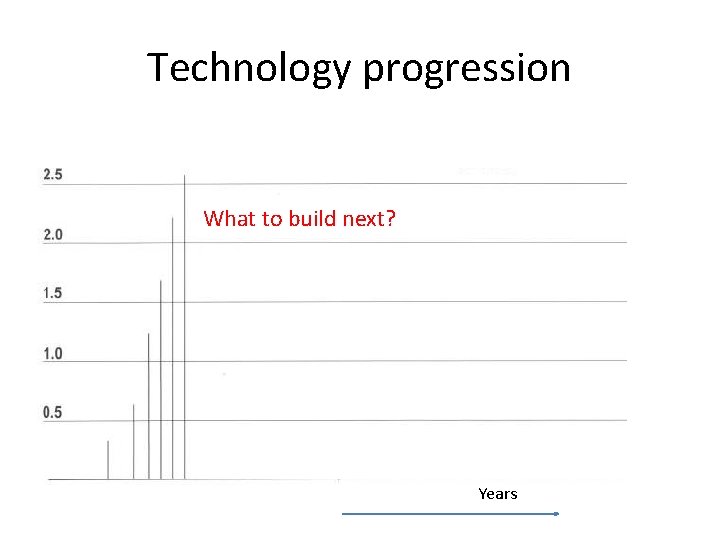
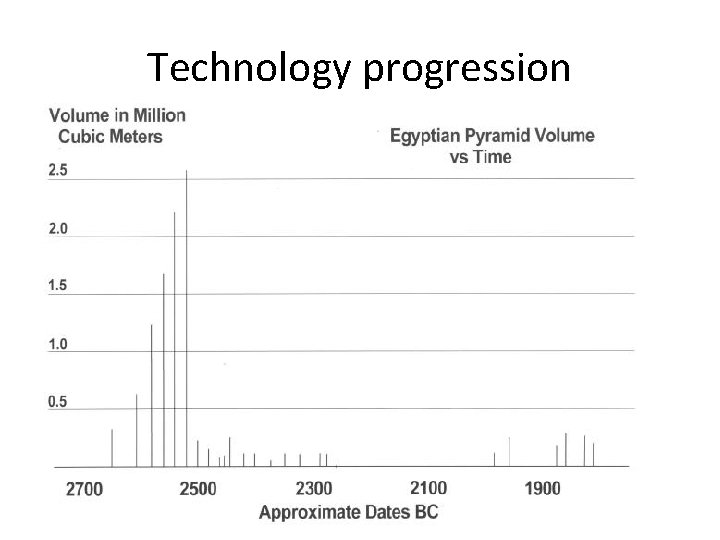
Technology progression What to build next? Years
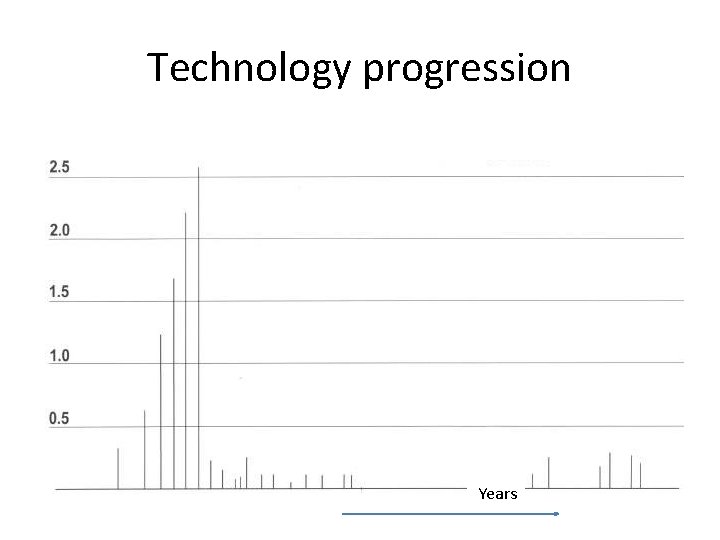
Technology progression Years
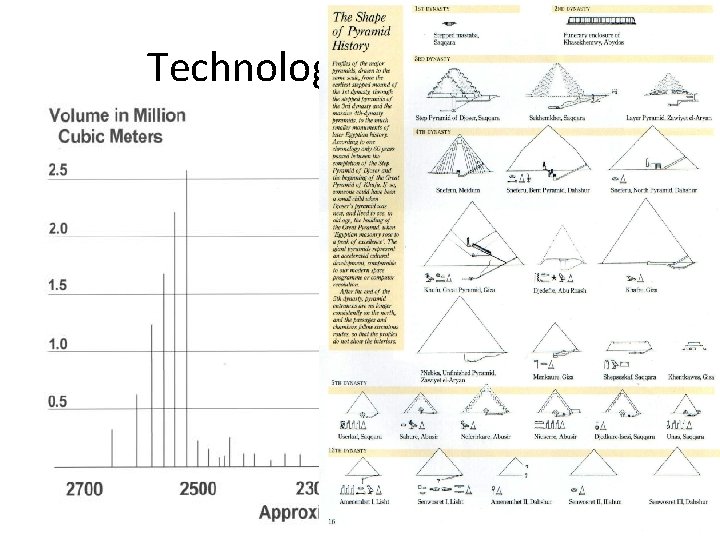
Technology progression
Technology progression
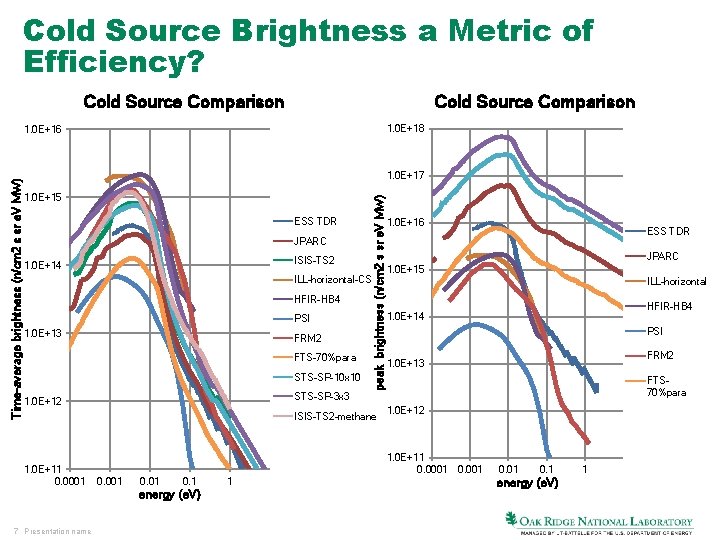
Cold Source Brightness a Metric of Efficiency? Cold Source Comparison 1. 0 E+18 1. 0 E+17 1. 0 E+15 ESS TDR JPARC ISIS-TS 2 1. 0 E+14 ILL-horizontal-CS HFIR-HB 4 PSI 1. 0 E+13 FRM 2 FTS-70%para STS-SP-10 x 10 STS-SP-3 x 3 1. 0 E+12 peak brightness (n/cm 2 s sr e. V MW) Time-average brightness (n/cm 2 s sr e. V MW) 1. 0 E+16 ISIS-TS 2 -methane 1. 0 E+11 0. 0001 0. 1 1 ESS TDR JPARC 1. 0 E+15 ILL-horizontal HFIR-HB 4 1. 0 E+14 PSI FRM 2 1. 0 E+13 FTS 70%para 1. 0 E+12 1. 0 E+11 0. 0001 energy (e. V) 7 Presentation name 1. 0 E+16 0. 001 0. 1 energy (e. V) 1
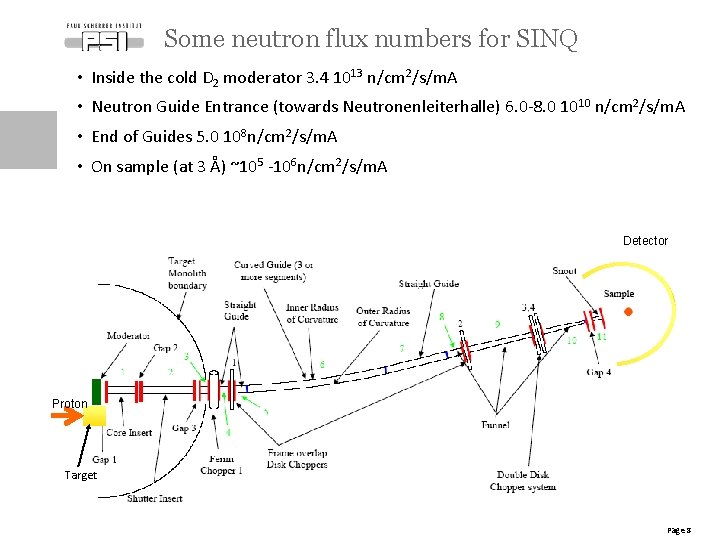
Some neutron flux numbers for SINQ • Inside the cold D 2 moderator 3. 4 1013 n/cm 2/s/m. A • Neutron Guide Entrance (towards Neutronenleiterhalle) 6. 0 -8. 0 10 10 n/cm 2/s/m. A • End of Guides 5. 0 108 n/cm 2/s/m. A • On sample (at 3 Å) ~105 -106 n/cm 2/s/m. A Detector Proton Target Page 8
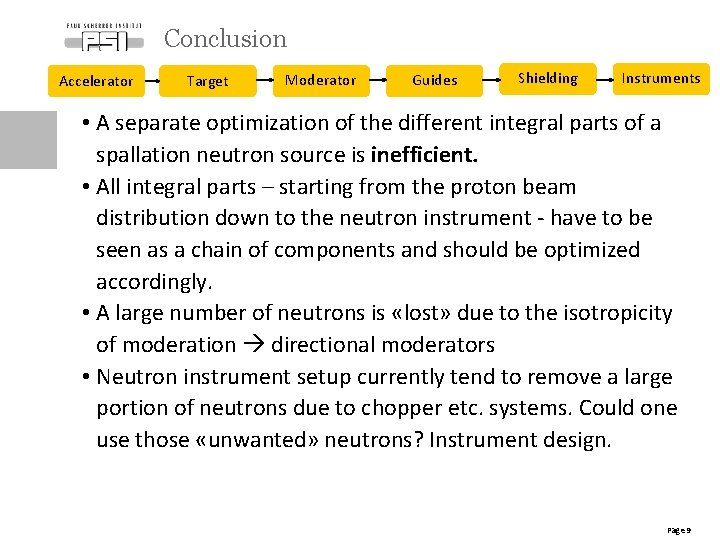
Conclusion Accelerator Target Moderator Guides Shielding Instruments • A separate optimization of the different integral parts of a spallation neutron source is inefficient. • All integral parts – starting from the proton beam distribution down to the neutron instrument - have to be seen as a chain of components and should be optimized accordingly. • A large number of neutrons is «lost» due to the isotropicity of moderation directional moderators • Neutron instrument setup currently tend to remove a large portion of neutrons due to chopper etc. systems. Could one use those «unwanted» neutrons? Instrument design. Page 9
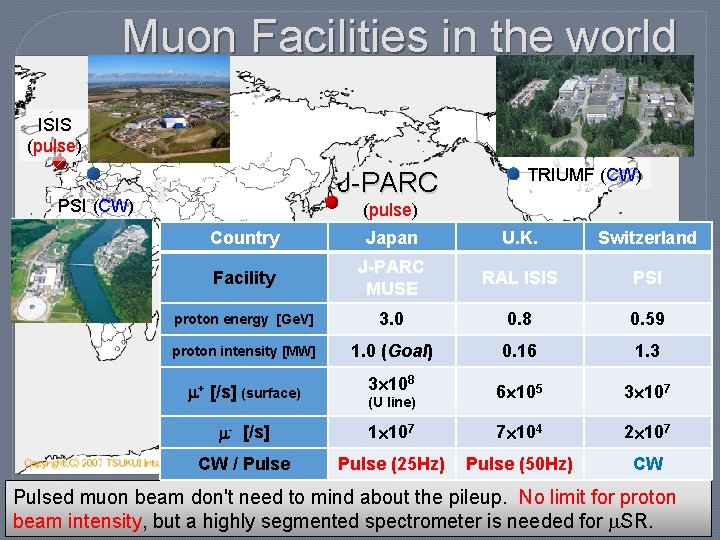
Muon Facilities in the world ISIS (pulse) J-PARC PSI (CW) TRIUMF (CW) (pulse) Country Japan J-PARC 3 Ge. V Synchrotron Facility (25 Hz, 1 MW) MUSE U. K. Switzerland 50 Ge. V Synchrotron (0. 75 MW) RAL ISIS PSI proton energy [Ge. V] 3. 0 0. 8 0. 59 proton intensity [MW] 1. 0 (Goal) 0. 16 1. 3 m+ [/s] (surface) 3 108 6 105 3 107 m- [/s] (U line) 1 107 Linac Me. V) (25 Hz) CW(181 Me. V / Pulse 400 Pulse Materials 4 and Life Science 7 7 10 2 10 Experimental Facility (Muon & Neutron) Pulse (50 Hz) CW Pulsed muon beam don't need to mind about the pileup. No limit for proton beam intensity, but a highly segmented spectrometer is needed for m. SR.
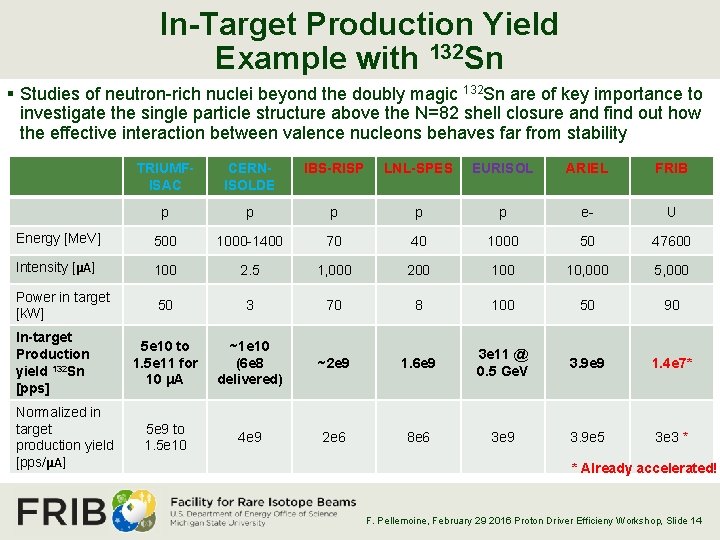
In-Target Production Yield Example with 132 Sn § Studies of neutron-rich nuclei beyond the doubly magic 132 Sn are of key importance to investigate the single particle structure above the N=82 shell closure and find out how the effective interaction between valence nucleons behaves far from stability TRIUMFISAC CERNISOLDE IBS-RISP LNL-SPES EURISOL ARIEL FRIB p p p e- U Energy [Me. V] 500 1000 -1400 70 40 1000 50 47600 Intensity [µA] 100 2. 5 1, 000 200 10, 000 5, 000 Power in target [k. W] 50 3 70 8 100 50 90 5 e 10 to 1. 5 e 11 for 10 μA ~1 e 10 (6 e 8 delivered) ~2 e 9 1. 6 e 9 3 e 11 @ 0. 5 Ge. V 3. 9 e 9 1. 4 e 7* 5 e 9 to 1. 5 e 10 4 e 9 2 e 6 8 e 6 3 e 9 3. 9 e 5 3 e 3 * In-target Production yield 132 Sn [pps] Normalized in target production yield [pps/µA] * Already accelerated! F. Pellemoine, February 29 2016 Proton Driver Efficieny Workshop, Slide 14
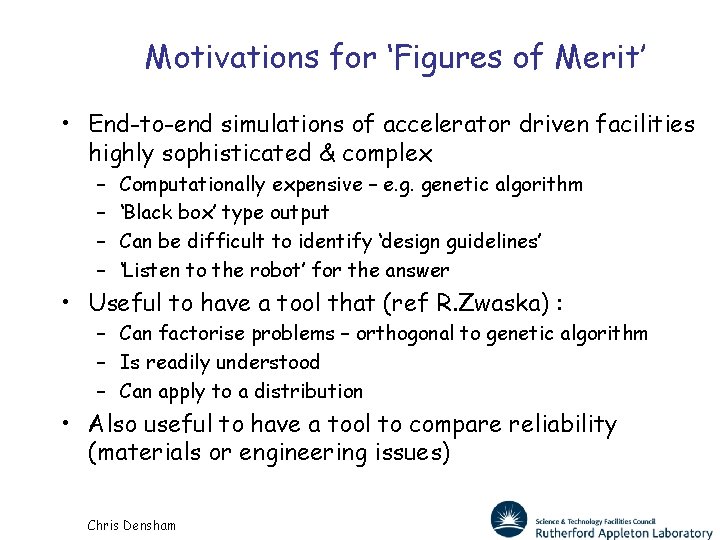
Motivations for ‘Figures of Merit’ • End-to-end simulations of accelerator driven facilities highly sophisticated & complex – – Computationally expensive – e. g. genetic algorithm ‘Black box’ type output Can be difficult to identify ‘design guidelines’ ‘Listen to the robot’ for the answer • Useful to have a tool that (ref R. Zwaska) : – Can factorise problems – orthogonal to genetic algorithm – Is readily understood – Can apply to a distribution • Also useful to have a tool to compare reliability (materials or engineering issues) Chris Densham