
Targeting the causes of biodiversity loss Overpopulation Targeting
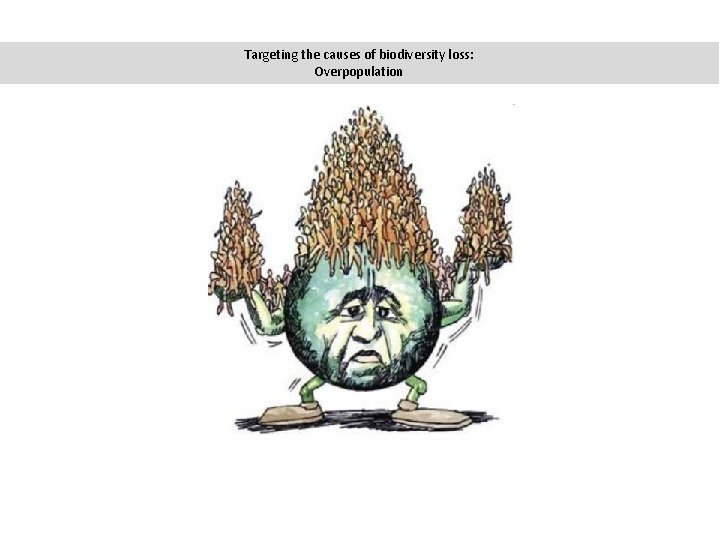
Targeting the causes of biodiversity loss: Overpopulation
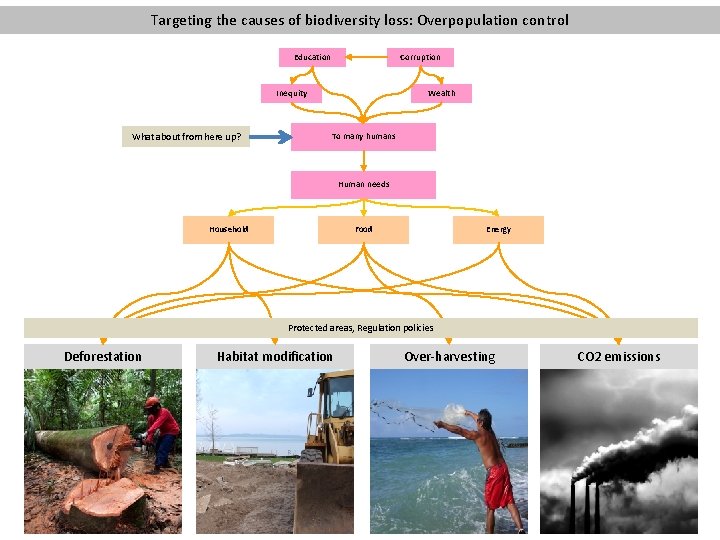
Targeting the causes of biodiversity loss: Overpopulation control Education Corruption Inequity What about from here up? Wealth To many humans Human needs Household Food Energy Protected areas, Regulation policies Deforestation Habitat modification Over-harvesting CO 2 emissions
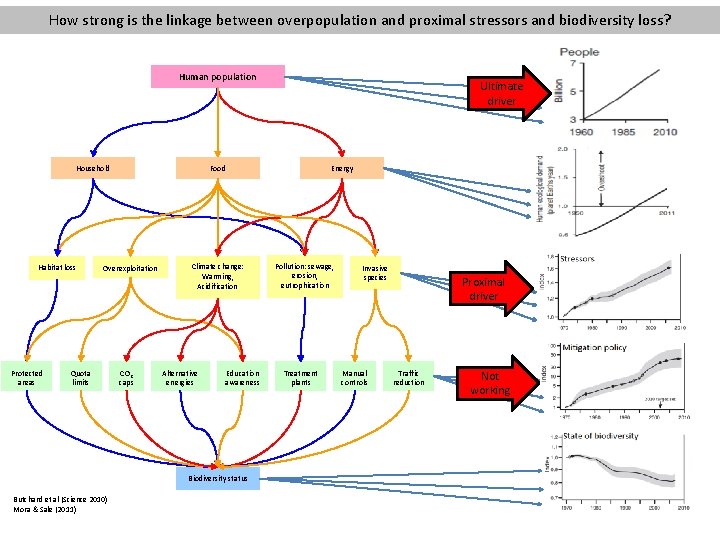
How strong is the linkage between overpopulation and proximal stressors and biodiversity loss? Human population Protected areas Overexploitation Quota limits CO 2 caps Climate change: Warming, Acidification Alternative energies Education awareness Biodiversity status Butchard et al (Science 2010) Mora & Sale (2011) Energy Food Household Habitat loss Ultimate driver Pollution: sewage, erosion, eutrophication Treatment plants Invasive species Manual controls Proximal driver Traffic reduction Not working
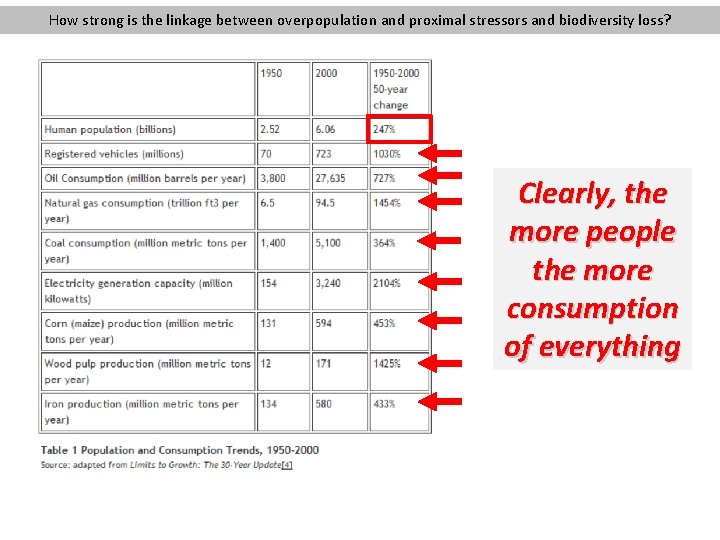
How strong is the linkage between overpopulation and proximal stressors and biodiversity loss? Clearly, the more people the more consumption of everything
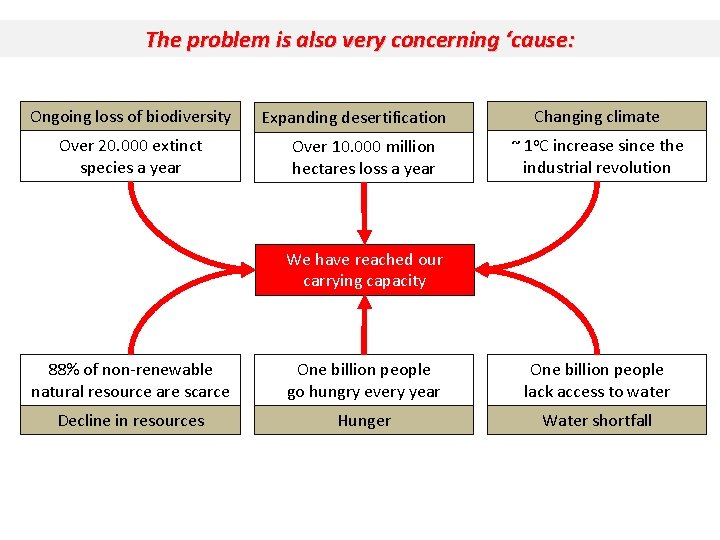
The problem is also very concerning ‘cause: Ongoing loss of biodiversity Over 20. 000 extinct species a year Expanding desertification Over 10. 000 million hectares loss a year Changing climate ~ 1 o. C increase since the industrial revolution We have reached our carrying capacity 88% of non-renewable natural resource are scarce One billion people go hungry every year One billion people lack access to water Decline in resources Hunger Water shortfall
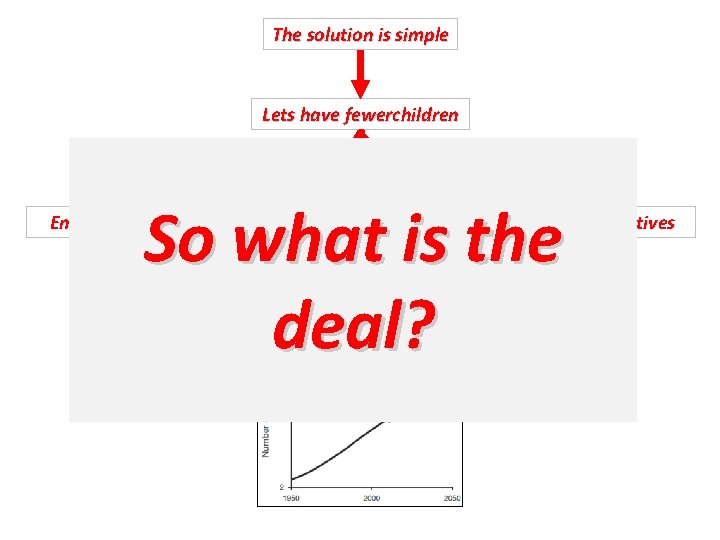
The solution is simple Lets have fewerchildren So what is the deal? Empowering women Sex education The problem is still on Cheap contraceptives
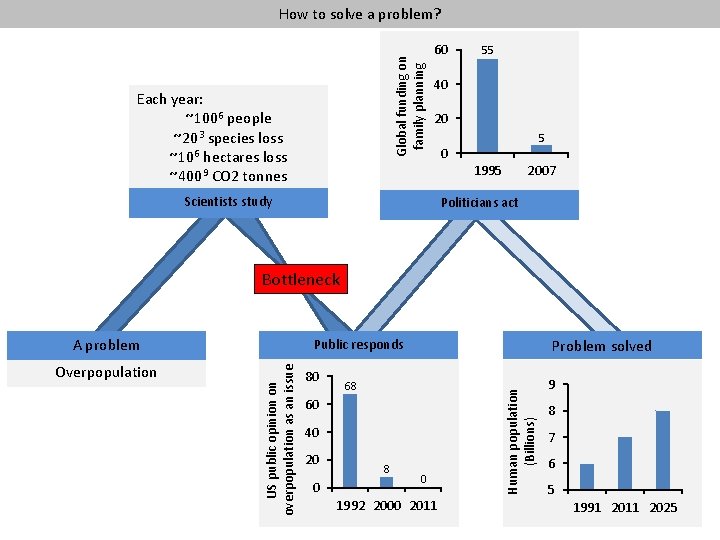
Global funding on family planning How to solve a problem? Each year: ~1006 people ~203 species loss ~106 hectares loss ~4009 CO 2 tonnes 60 55 40 20 5 0 1995 Scientists study 2007 Politicians act Bottleneck A problem 80 68 60 40 20 0 8 0 1992 2000 2011 Human population (Billions) US public opinion on overpopulation as an issue Overpopulation Problem solved Public responds 9 8 7 6 5 1991 2011 2025
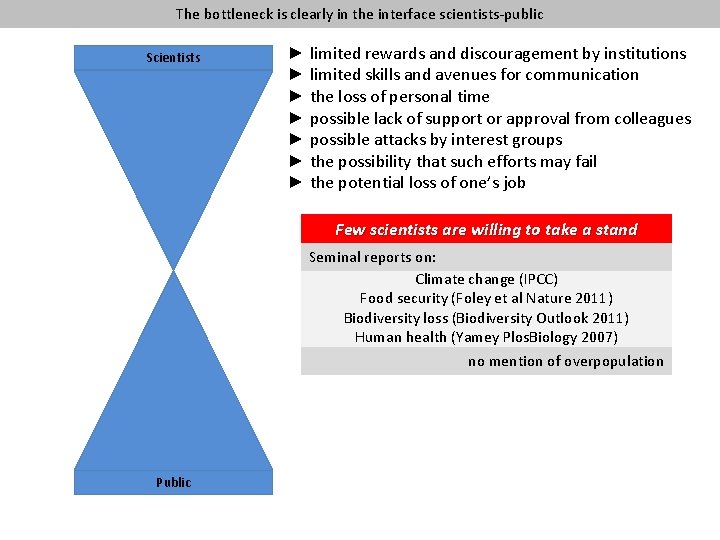
The bottleneck is clearly in the interface scientists-public Scientists ► limited rewards and discouragement by institutions ► limited skills and avenues for communication ► the loss of personal time ► possible lack of support or approval from colleagues ► possible attacks by interest groups ► the possibility that such efforts may fail ► the potential loss of one’s job Few scientists are willing to take a stand Seminal reports on: Climate change (IPCC) Food security (Foley et al Nature 2011) Biodiversity loss (Biodiversity Outlook 2011) Human health (Yamey Plos. Biology 2007) no mention of overpopulation Public
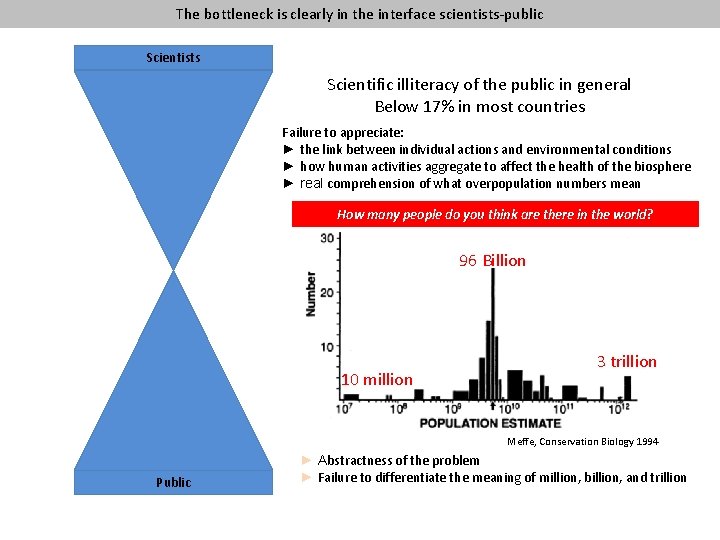
The bottleneck is clearly in the interface scientists-public Scientists Scientific illiteracy of the public in general Below 17% in most countries Failure to appreciate: ► the link between individual actions and environmental conditions ► how human activities aggregate to affect the health of the biosphere ► real comprehension of what overpopulation numbers mean How many people do you think are there in the world? 96 Billion 10 million 3 trillion Meffe, Conservation Biology 1994 Public ► Abstractness of the problem ► Failure to differentiate the meaning of million, billion, and trillion
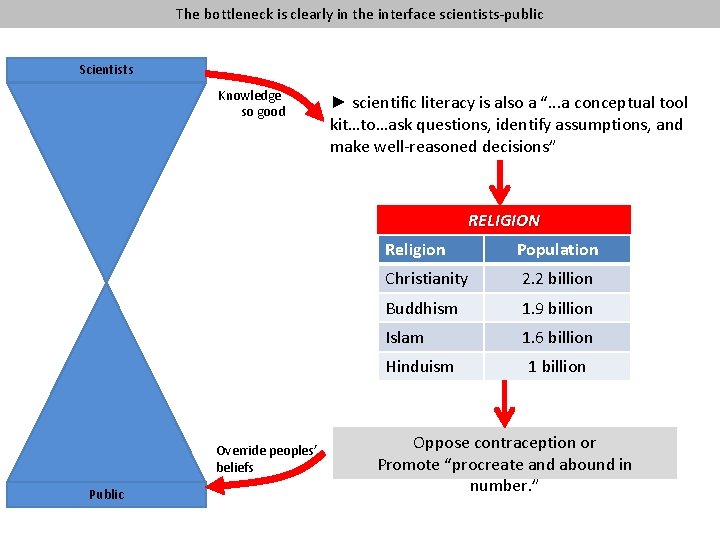
The bottleneck is clearly in the interface scientists-public Scientists Knowledge so good ► scientific literacy is also a “. . . a conceptual tool kit…to…ask questions, identify assumptions, and make well-reasoned decisions” RELIGION Religion Population Christianity 2. 2 billion Buddhism 1. 9 billion Islam 1. 6 billion Hinduism Override peoples’ beliefs Public 1 billion Oppose contraception or Promote “procreate and abound in number. ”
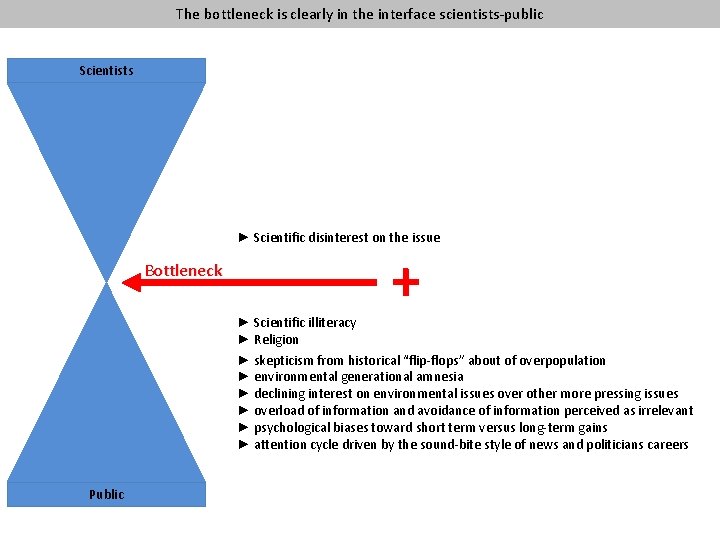
The bottleneck is clearly in the interface scientists-public Scientists ► Scientific disinterest on the issue Bottleneck ► Scientific illiteracy ► Religion + ► skepticism from historical “flip-flops” about of overpopulation ► environmental generational amnesia ► declining interest on environmental issues over other more pressing issues ► overload of information and avoidance of information perceived as irrelevant ► psychological biases toward short term versus long-term gains ► attention cycle driven by the sound-bite style of news and politicians careers Public
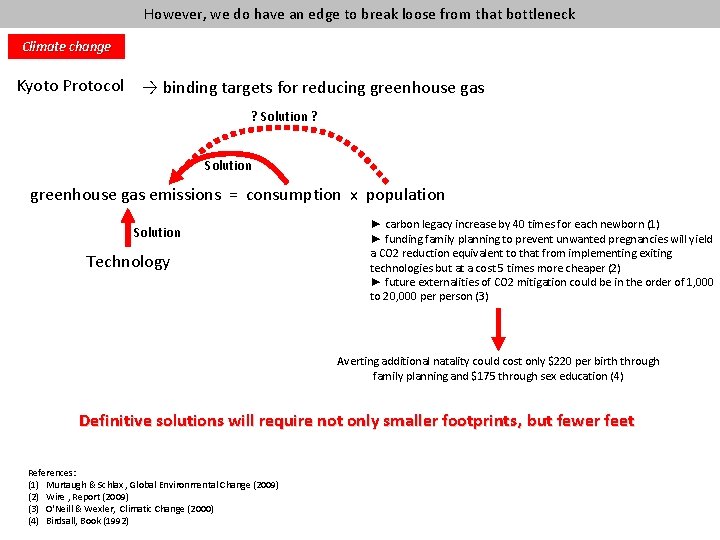
However, we do have an edge to break loose from that bottleneck Climate change Kyoto Protocol → binding targets for reducing greenhouse gas ? Solution greenhouse gas emissions = consumption x population Solution Technology ► carbon legacy increase by 40 times for each newborn (1) ► funding family planning to prevent unwanted pregnancies will yield a CO 2 reduction equivalent to that from implementing exiting technologies but at a cost 5 times more cheaper (2) ► future externalities of CO 2 mitigation could be in the order of 1, 000 to 20, 000 person (3) Averting additional natality could cost only $220 per birth through family planning and $175 through sex education (4) Definitive solutions will require not only smaller footprints , but fewer feet References: (1) Murtaugh & Schlax , Global Environmental Change (2009) (2) Wire , Report (2009) (3) O'Neill & Wexler, Climatic Change (2000) (4) Birdsall, Book (1992)
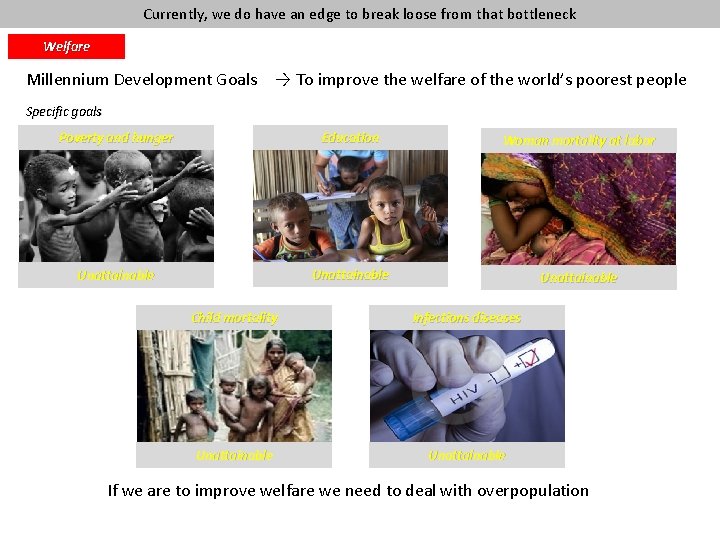
Currently, we do have an edge to break loose from that bottleneck Welfare Millennium Development Goals → To improve the welfare of the world’s poorest people Specific goals Poverty and hunger Education Woman mortality at labor Unattainable Child mortality Infections diseases Unattainable If we are to improve welfare we need to deal with overpopulation
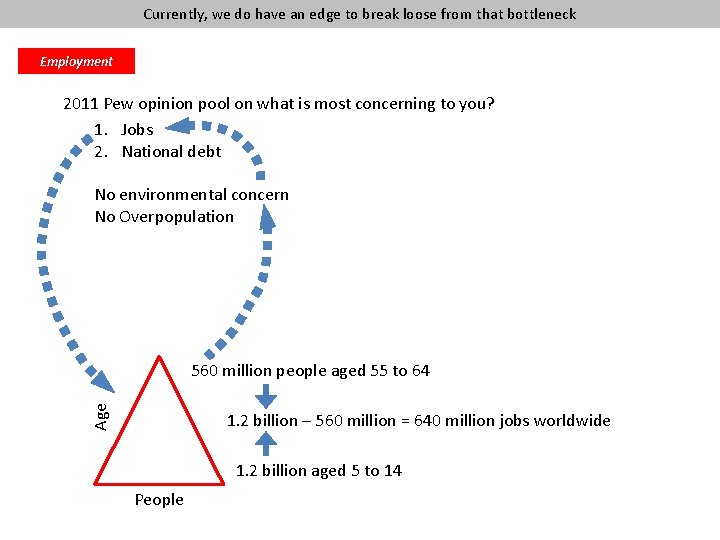
Currently, we do have an edge to break loose from that bottleneck Employment 2011 Pew opinion pool on what is most concerning to you? 1. Jobs 2. National debt No environmental concern No Overpopulation Age 560 million people aged 55 to 64 1. 2 billion – 560 million = 640 million jobs worldwide 1. 2 billion aged 5 to 14 People
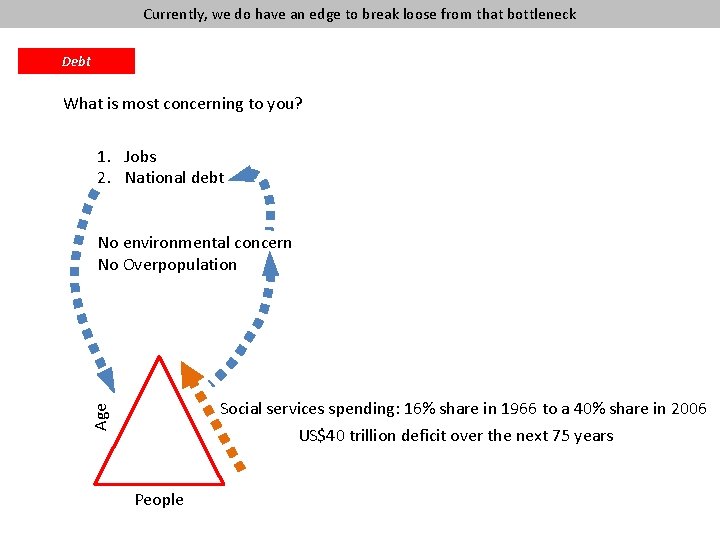
Currently, we do have an edge to break loose from that bottleneck Debt What is most concerning to you? 1. Jobs 2. National debt No environmental concern No Overpopulation Age Social services spending: 16% share in 1966 to a 40% share in 2006 US$40 trillion deficit over the next 75 years People
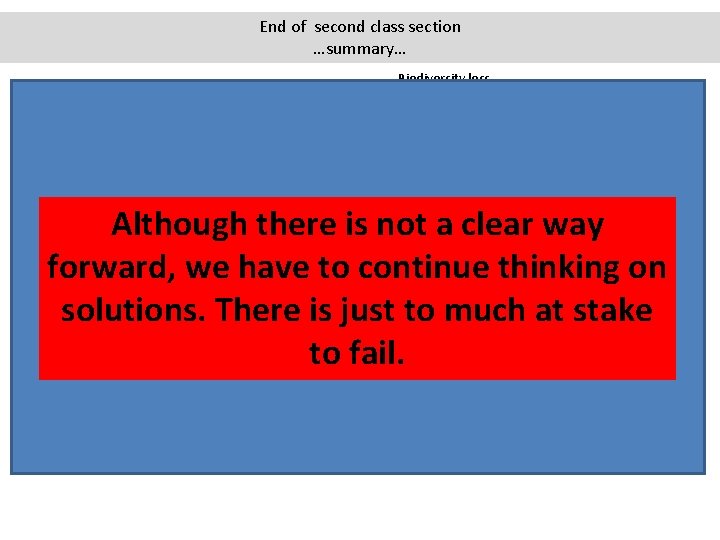
End of second class section …summary… Biodiversity is a unique and striking feature of Earth Biodiversity is in a declining trend Biodiversity loss can deter many different goods and services Human wellbeing is at stake Although there is not a clear way forward, we have to continue thinking on solutions. There is just to much at stake to fail. Overexploitation Climate change Habitat loss Human population Overconsumption Proposed solutions all have several and serious shortfalls
- Slides: 16