
Targeting Text Structure More Improving Challenging Reading Skills

- Slides: 76
Targeting Text Structure & More: Improving Challenging Reading Skills Kristi Orcutt Literacy Specialist kristio@essdack. org 620 -663 -9566 Nov 29 -30, 2007
Housekeeping Welcome!! • • • Schedule Breaks Restrooms Snacks College credit ©Kristi Orcutt, kristio@essdack. org
Introduce yourself & share one thing you want to learn today! ©Kristi Orcutt, kristio@essdack. org
Topics • Reading Standards & Assessed Indicators • Strategies to Teach Challenging Reading Skills • Text Structures • Text Features • Vocabulary • Making Inferences & Drawing Conclusions • Retelling & Summarizing • ALL the tested reading indicators!
“The Notebook” ©Kristi Orcutt, kristio@essdack. org
©Kristi Orcutt, kristio@essdack. org, 2007
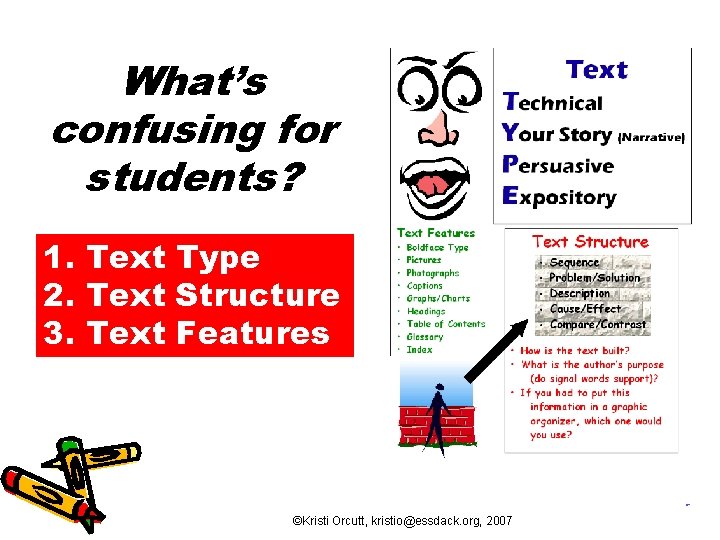
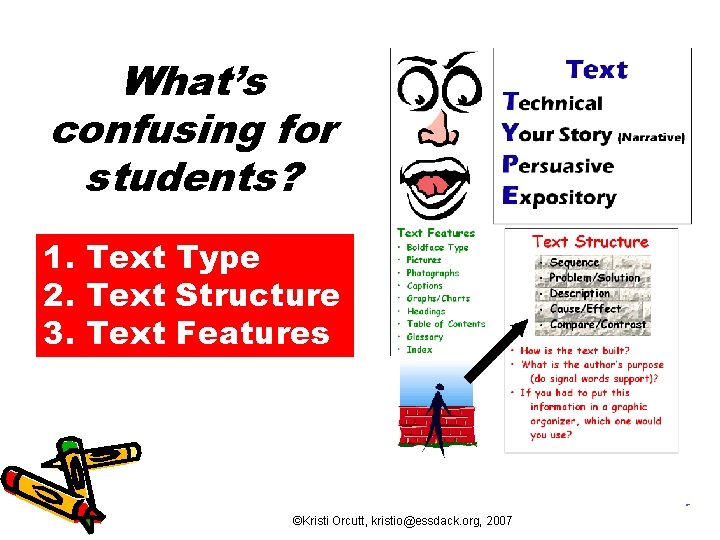
What’s confusing for students? 1. Text Type 2. Text Structure 3. Text Features ©Kristi Orcutt, kristio@essdack. org, 2007
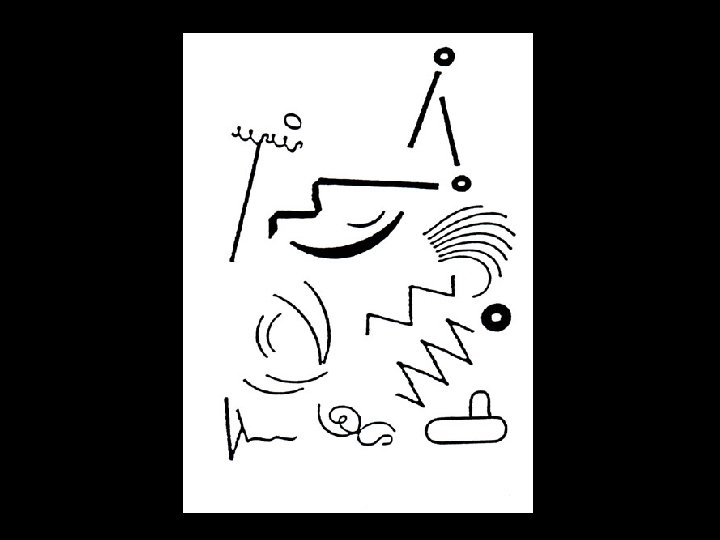
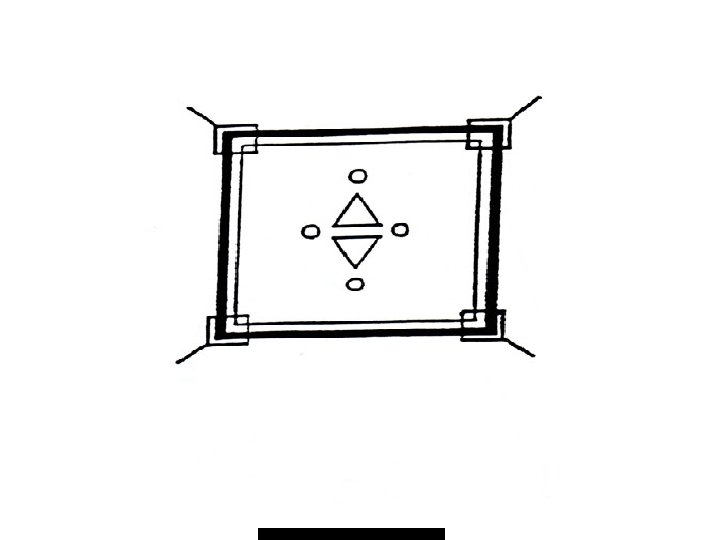
Pencils Down! Analyze the following image. You will be asked to reproduce this in a moment…
You have one minute to draw! ©Kristi Orcutt, kristio@essdack. org, 2007
You have one minute to draw! ©Kristi Orcutt, kristio@essdack. org, 2007
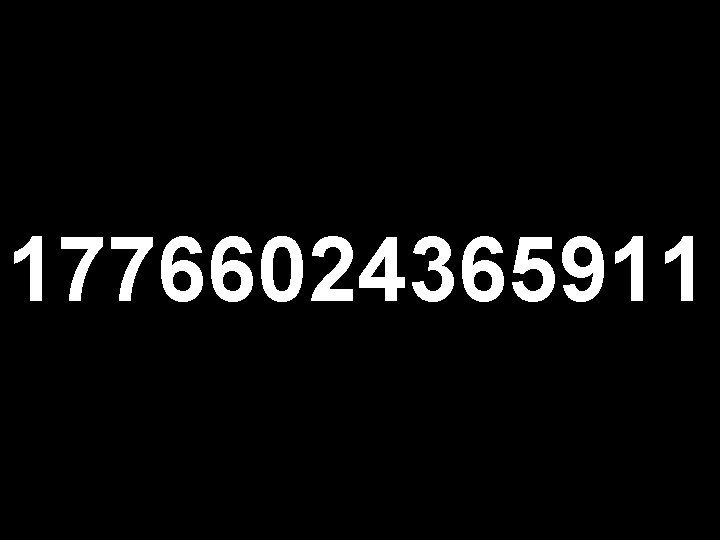
17766024365911
Write the number from memory! ©Kristi Orcutt, kristio@essdack. org, 2007
Let’s try again but think. . . American Revolution / Declaration of Independence Minutes / hours / days Emergency
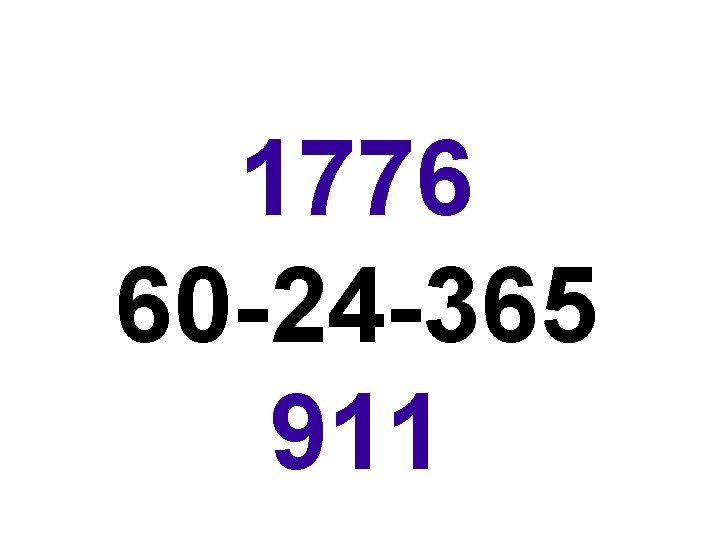
1776 60 -24 -365 911
What does this have to do with reading? af
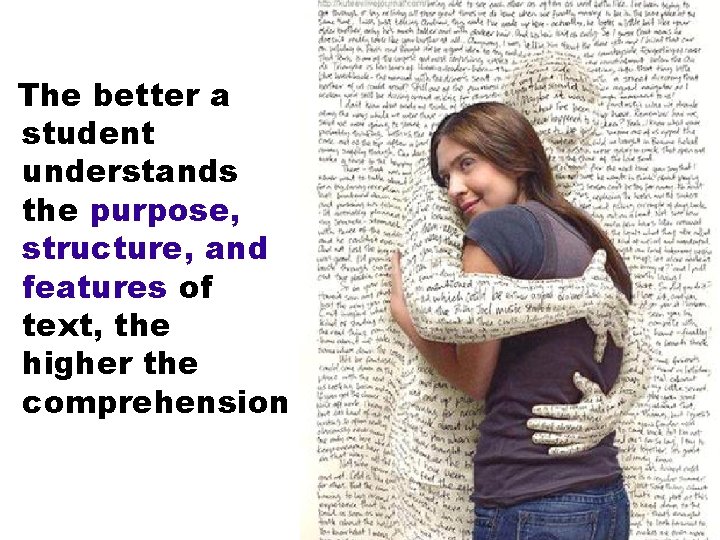
The better a student understands the purpose, structure, and features of text, the higher the comprehension
What’s confusing for students? 1. Text Type 2. Text Structure 3. Text Features ©Kristi Orcutt, kristio@essdack. org, 2007
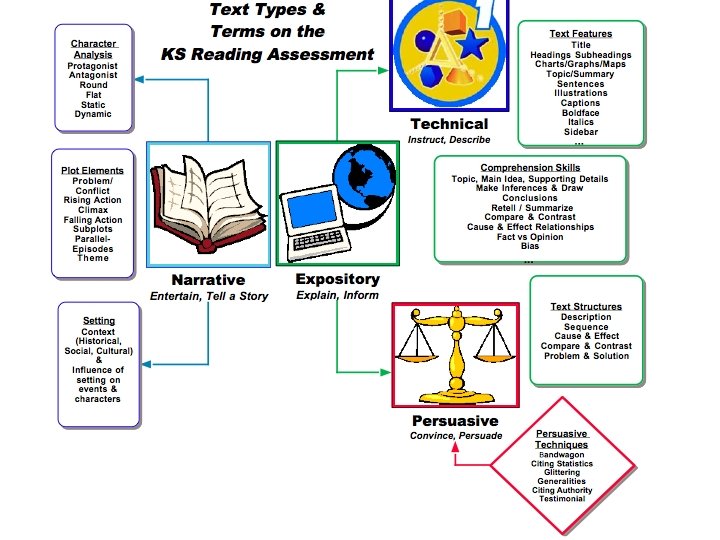
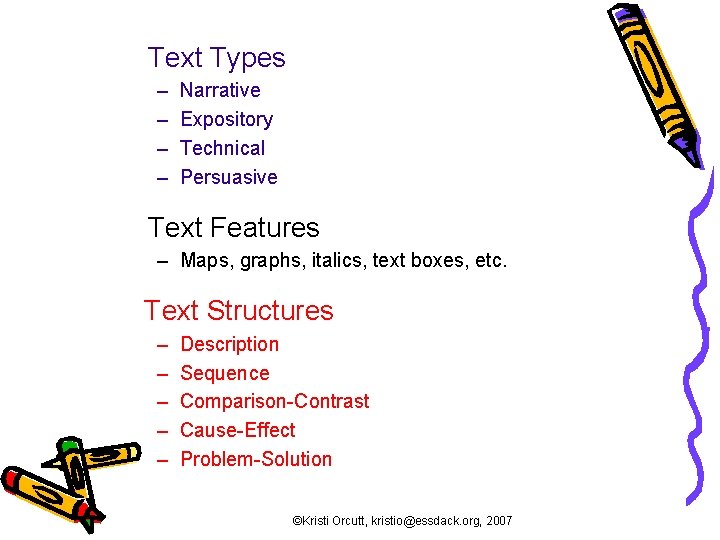
Text Types – – Narrative Expository Technical Persuasive Text Features – Maps, graphs, italics, text boxes, etc. Text Structures – – – Description Sequence Comparison-Contrast Cause-Effect Problem-Solution ©Kristi Orcutt, kristio@essdack. org, 2007
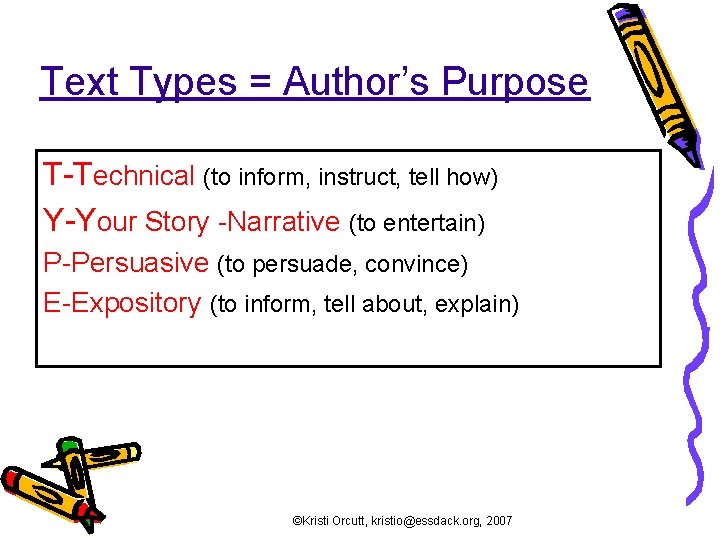
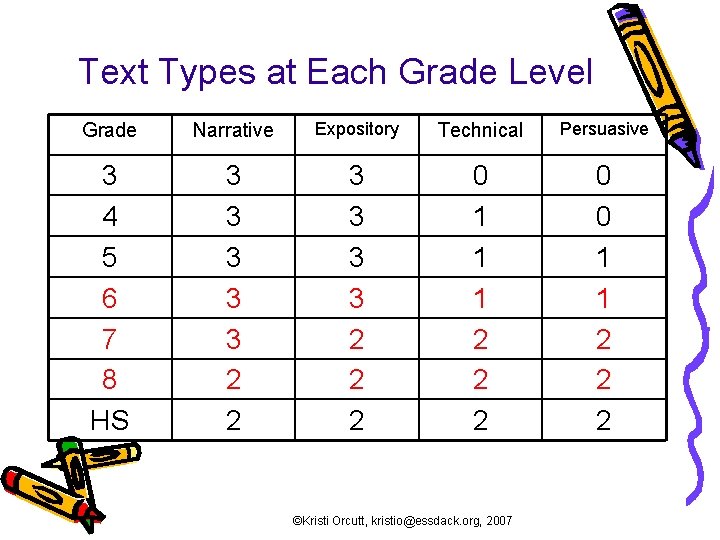
Text Types = Author’s Purpose T-Technical (to inform, instruct, tell how) Y-Your Story -Narrative (to entertain) P-Persuasive (to persuade, convince) E-Expository (to inform, tell about, explain) ©Kristi Orcutt, kristio@essdack. org, 2007
Text Types at Each Grade Level Grade Narrative Expository Technical Persuasive 3 4 5 6 7 8 HS 3 3 3 2 2 2 0 1 1 1 2 2 2 0 0 1 1 2 2 2 ©Kristi Orcutt, kristio@essdack. org, 2007
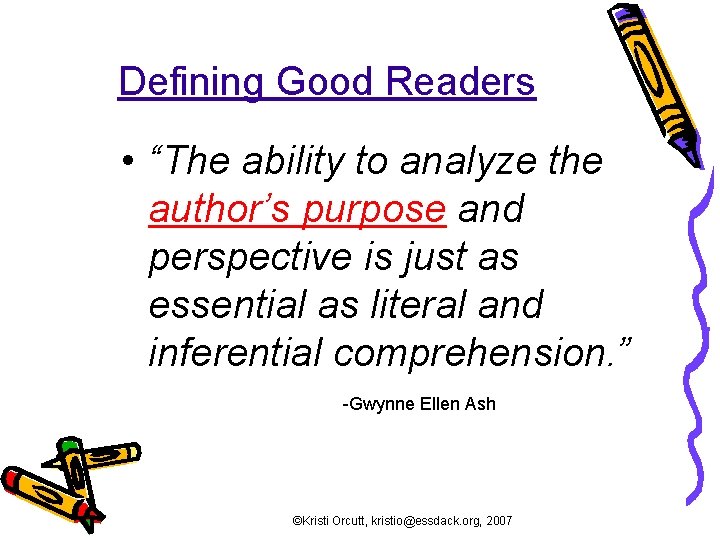
Defining Good Readers • “The ability to analyze the author’s purpose and perspective is just as essential as literal and inferential comprehension. ” -Gwynne Ellen Ash ©Kristi Orcutt, kristio@essdack. org, 2007
Why might this be confusing for students? ©Kristi Orcutt, kristio@essdack. org
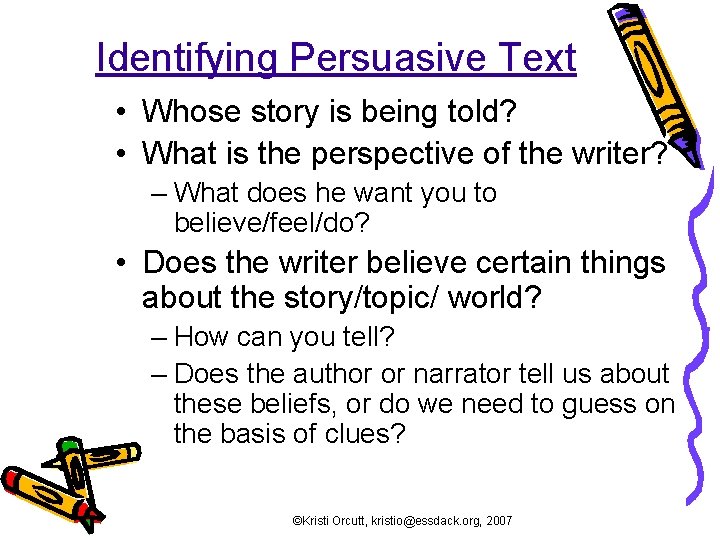
Identifying Persuasive Text • Whose story is being told? • What is the perspective of the writer? – What does he want you to believe/feel/do? • Does the writer believe certain things about the story/topic/ world? – How can you tell? – Does the author or narrator tell us about these beliefs, or do we need to guess on the basis of clues? ©Kristi Orcutt, kristio@essdack. org, 2007
Identifying Persuasive Text • Whose story is NOT being told? – Why? Would some people disagree with the writer’s beliefs or arguments? – What might they believe or argue instead? • Do you agree or disagree with the things the writer would like you to believe? Why? ©Kristi Orcutt, kristio@essdack. org, 2007
Author’s Purpose Green Tab • Pages 265 -275 ©Kristi Orcutt, kristio@essdack. org, 2007
Expository Text “Informational text is the most complicated type of nonfiction because the purposes are so varied. The purpose of informational text dictates the structure. Not all informational texts have the same structure. ” - Buss & Karnowski, Reading & Writing Nonfiction Genres ©Kristi Orcutt, kristio@essdack. org, 2007
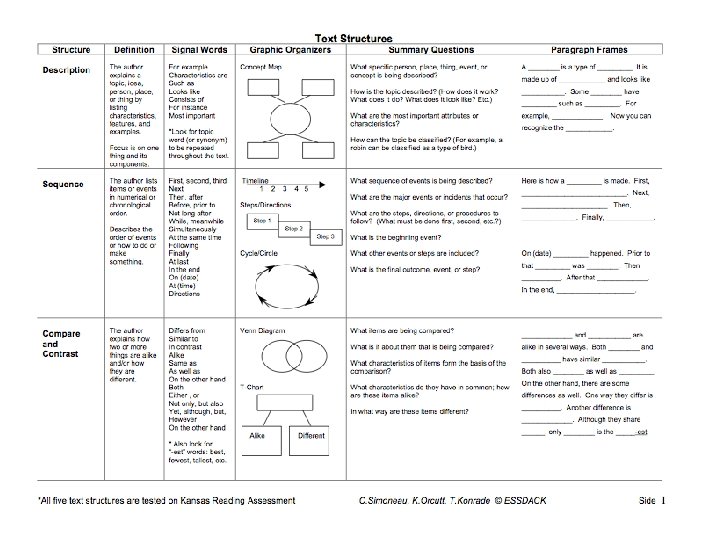
What are Text Structures? Organizational patterns used in writing • • • Description Sequence* Problem and Solution* Cause and Effect Comparison and Contrast *3 rd grade only these two ©Kristi Orcutt, kristio@essdack. org, 2007
Why is it important that readers can recognize and understand text structures? (Besides that it’s on the state assessment!) ©Kristi Orcutt, kristio@essdack. org
Understanding text structure is the KEY to comprehending expository text!! ©Kristi Orcutt, kristio@essdack. org
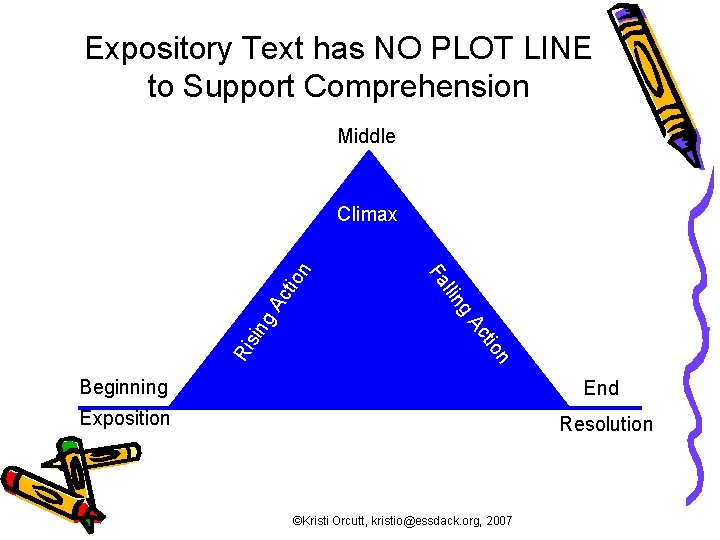
Expository Text has NO PLOT LINE to Support Comprehension Middle sin g. A cti n tio Ac Ri g llin Fa on Climax Beginning End Exposition Resolution ©Kristi Orcutt, kristio@essdack. org, 2007
Text Structure Research “Many students experience problems comprehending expository text…. One reason is that they can’t see the basic structure of the text. Some students get lost in the words and can’t see the big picture. ” Dymock, 1998; Dymock & Nicholson, 1999 ©Kristi Orcutt, kristio@essdack. org, 2007
Text Structure Research Teaching students to recognize common text structures can help students monitor their own comprehension. ©Kristi Orcutt, kristio@essdack. org, 2007
Changes to Text Structure. KSDE Aug. 8, 2007 • Remove text structure items (1. 4. 6) from narrative passages on developed forms of the state assessment at grades 3 -6 • Text structure items (1. 4. 6) will remain for narrative passages on developed forms of the state assessment at grades 7 - HS • Text structure items (1. 4. 6) will no longer be developed for narrative passages for the state assessment at any grade level, grades 3 - HS ©Kristi Orcutt, kristio@essdack. org, 2007
• Text structure (1. 4. 6) will be assessed in expository at grade 3, expository and technical at grade 4, and expository, technical, and persuasive at grades 5 – HS on new forms. • Only assess text structure (1. 4. 6) in a paragraph at grade 3 on new forms • Use only “sequence” as an answer choice. Do not use “sequence of events” or “series of steps” on new forms • Do not use “problem-solution” and “cause-effect” as answer choices in the same item on new forms ©Kristi Orcutt, kristio@essdack. org, 2007
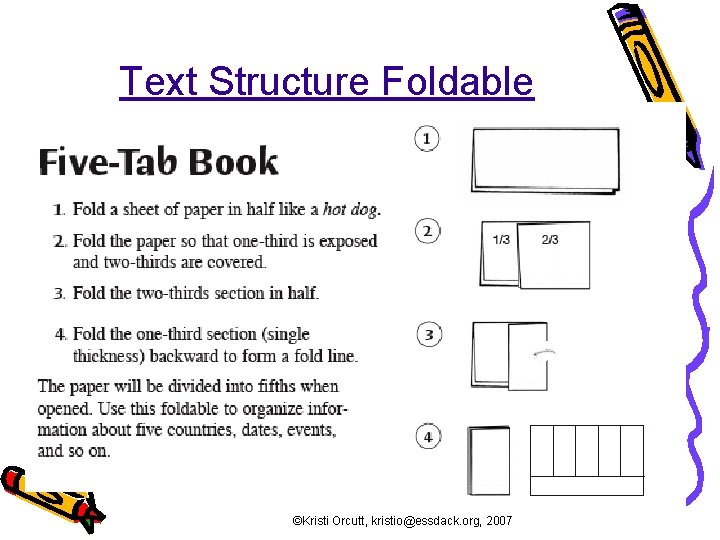
Text Structure Foldable ©Kristi Orcutt, kristio@essdack. org, 2007
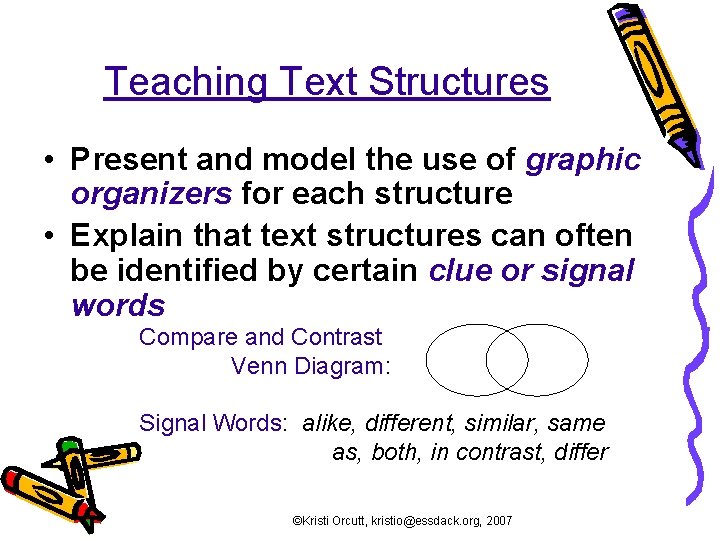
Teaching Text Structures • Present and model the use of graphic organizers for each structure • Explain that text structures can often be identified by certain clue or signal words Compare and Contrast Venn Diagram: Signal Words: alike, different, similar, same as, both, in contrast, differ ©Kristi Orcutt, kristio@essdack. org, 2007
©Kristi Orcutt, kristio@essdack. org
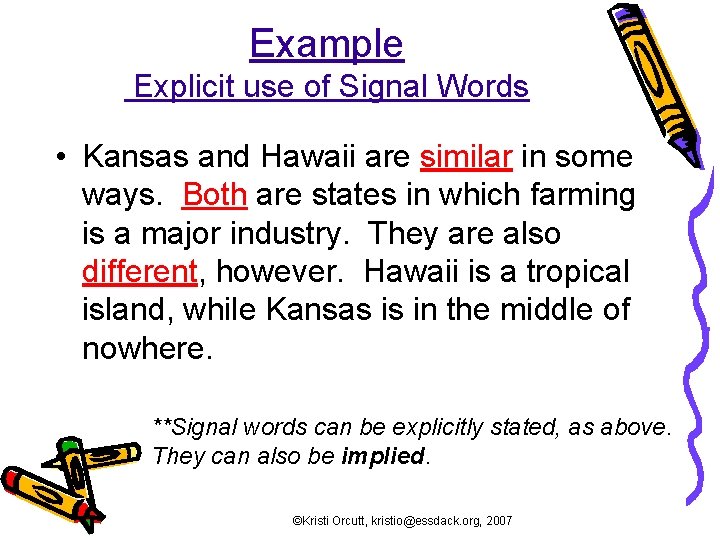
Example Explicit use of Signal Words • Kansas and Hawaii are similar in some ways. Both are states in which farming is a major industry. They are also different, however. Hawaii is a tropical island, while Kansas is in the middle of nowhere. **Signal words can be explicitly stated, as above. They can also be implied. ©Kristi Orcutt, kristio@essdack. org, 2007
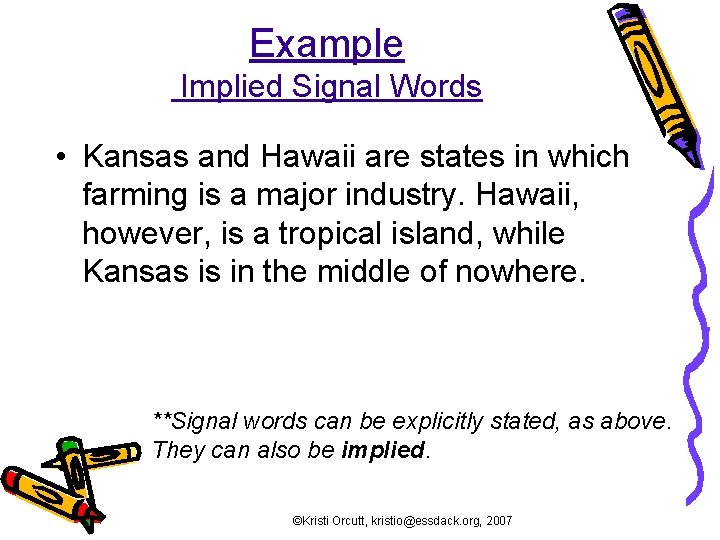
Example Implied Signal Words • Kansas and Hawaii are states in which farming is a major industry. Hawaii, however, is a tropical island, while Kansas is in the middle of nowhere. **Signal words can be explicitly stated, as above. They can also be implied. ©Kristi Orcutt, kristio@essdack. org, 2007
Your Turn - Let’s Practice! • Identify the text structure of your paragraphs – Underline signal words and clues that helped you identify each structure ©Kristi Orcutt, kristio@essdack. org, 2007
©Kristi Orcutt, kristio@essdack. org
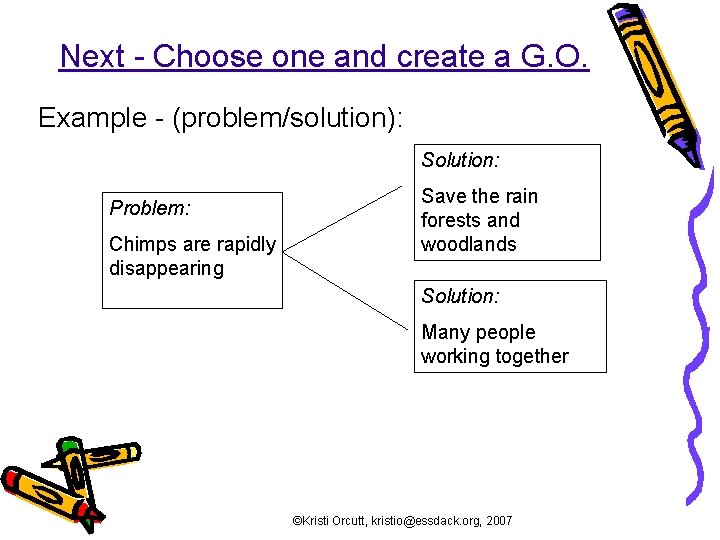
Next - Choose one and create a G. O. Example - (problem/solution): Solution: Problem: Chimps are rapidly disappearing Save the rain forests and woodlands Solution: Many people working together ©Kristi Orcutt, kristio@essdack. org, 2007
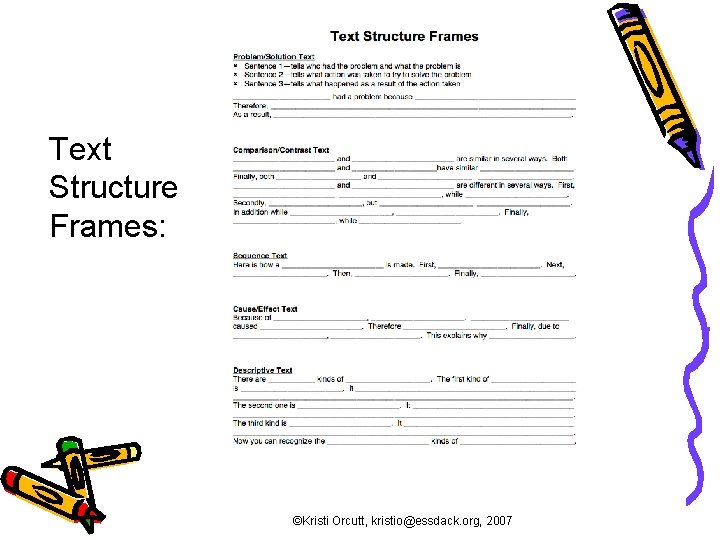
Teaching Text Structure Make the READING-WRITING CONNECTION: Have students write paragraphs, retell, and summarize material using TEXT STRUCTURE FRAMES ©Kristi Orcutt, kristio@essdack. org, 2007
Text Structure Frames: ©Kristi Orcutt, kristio@essdack. org, 2007
Make the Reading-Writing Connection Text Structure Frames • With a partner, write one paragraph on the topic of HOLIDAYS for each of the five text structures. – Use the Text Structure Frames for guidance – Use appropriate signal words and underline them in your paragraphs ©Kristi Orcutt, kristio@essdack. org, 2007
Remember the GOAL! • Identifying text structure is NOT the goal • Goal is for students to internalize knowledge about text structure and use it to enhance their comprehension – Teach students to use text structures to improve their reading comprehension and writing organization ©Kristi Orcutt, kristio@essdack. org, 2007
Before Reading: Predict • Predicting text structures is a prereading strategy – Every time you put a text in front of a student, you have the opportunity to teach text structure ©Kristi Orcutt, kristio@essdack. org, 2007
During Reading: Text Coding / Text Mapping • Marking, highlighting, chunking, etc. -text coding helps students see visually how text is presented • Make predictions and connections to author’s purpose, main idea, etc. • MODEL for students how to do this! ©Kristi Orcutt, kristio@essdack. org, 2007
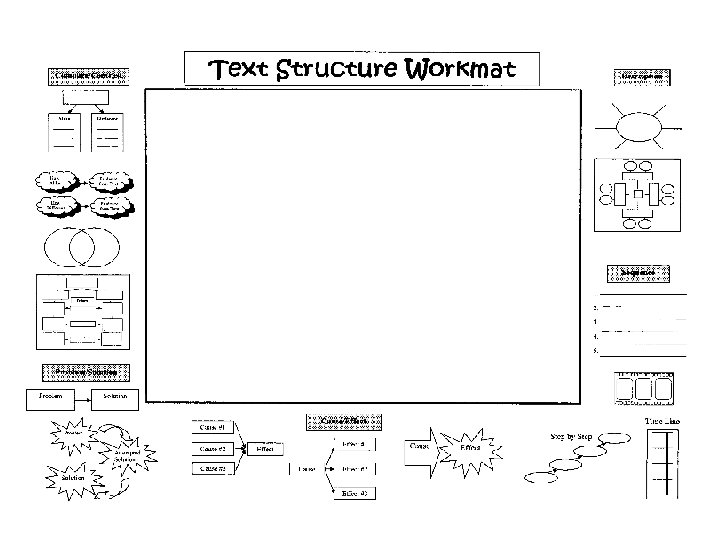
Text Structure Sorts At your table, sort the paragraphs by text structures. Use the goldenrod Text Structure Mats as a guide. ©Kristi Orcutt, kristio@essdack. org, 2007
Text Structure Sorts Review the sorts in your notebook beginning on page 77 ©Kristi Orcutt, kristio@essdack. org, 2007
Teaching Text Structures • Show examples of paragraphs that correspond to each text structure • Model how to identify signal words • Have students sort paragraphs by text structures • Have students create a graphic organizer to correspond with a paragraph ©Kristi Orcutt, kristio@essdack. org, 2007
Text Structures - KEY IDEAS • Predicting text structures is pre-reading strategy a – Every time you put a text in front of a student, you have the opportunity to teach text structure ©Kristi Orcutt, kristio@essdack. org, 2007
Text Structures - KEY IDEAS • Use WRITING to support reading (and reading to support writing) – Text Structure Frames • Make predictions / connections between text structure, author’s purpose, and main ideas – Focus on the BIG IDEAS; don’t get caught up in the details ©Kristi Orcutt, kristio@essdack. org, 2007
Remember the GOAL! • Identifying text structure is NOT goal • Goal is for students to internalize knowledge about text structure and use it to enhance their comprehension • Teach students to use text structures to improve their reading comprehension and writing organization ©Kristi Orcutt, kristio@essdack. org, 2007
Text Features • What are text features? – Typographical clues - boldface print, italic type – Organizational features - headings, subheadings – Graphic aids - maps, graphs, charts, illustrations, pictures ©Kristi Orcutt, kristio@essdack. org, 2007
Why is it important that readers can recognize and understand text features? (Besides that they’re on the state assessment!) ©Kristi Orcutt, kristio@essdack. org
Text Feature Treasure Hunt • Try to find an example of each text feature: Titles, graphs, charts, maps, table of contents, pictures/illustrations, boldface type, italics, glossary, index, headings, subheadings, topic and summary sentences, captions, sidebars, underlining, numbered or bulleted lists, footnotes, annotations ©Kristi Orcutt, kristio@essdack. org, 2007
Retelling, Paraphrasing, Summarizing Orange Tab - Page 193 + • Difference between how it’s taught and how it’s tested • Use text structure frames for retelling and writing summaries • Model, model ©Kristi Orcutt, kristio@essdack. org, 2007
Retelling/Summarizing • What’s the difference? • What does it look like in the classroom? • What does it look like on the state assessment? Read pages 193 -207 Coding Directions: * where you make a connection or agree ? where you have a question or disagree !! beside info you want to remember ©Kristi Orcutt, kristio@essdack. org, 2007
Characteristics of a Good Retelling/Summary 1. Shorter than the original 2. Include the main ideas and important details of the text 3. Reflects the structure and order of the original text ©Kristi Orcutt, kristio@essdack. org, 2007
Some Examples • Individually, read the passages in your handouts and select the BEST summary for each. Behind ORANGE Tab, Page 227 + ©Kristi Orcutt, kristio@essdack. org, 2007
Create Your Own Multiple Choice Summaries • Read the passage. • Write a 3 -5 sentence summary of the passage that is – Shorter than the original text – Includes the main ideas and important details of the text – Reflects the structure and order of the original text ©Kristi Orcutt, kristio@essdack. org, 2007
Create Your Own Multiple Choice Summaries • Next, create one distracter (incorrect answer choice/summary) • What are strategies for creating distracters? – Missing main ideas – Missing entire sections (beginning, middle, or end) – Not presented in same order or structure as original ©Kristi Orcutt, kristio@essdack. org, 2007
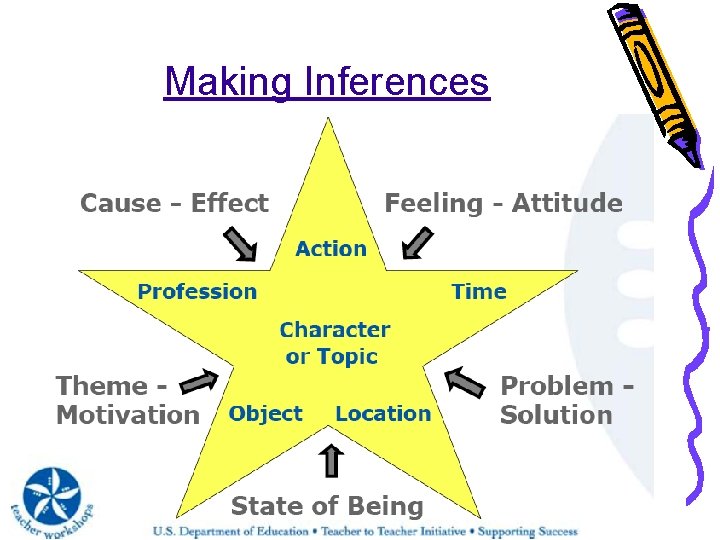
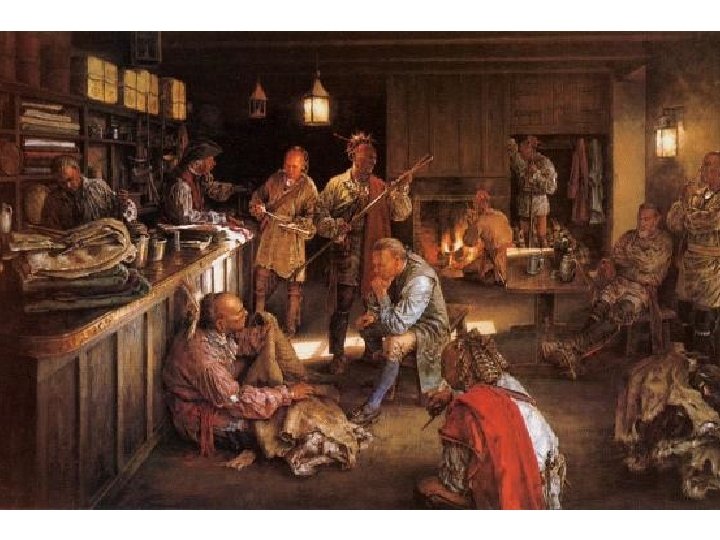
Making Inferences ©Kristi Orcutt, kristio@essdack. org, 2007
©Kristi Orcutt, kristio@essdack. org
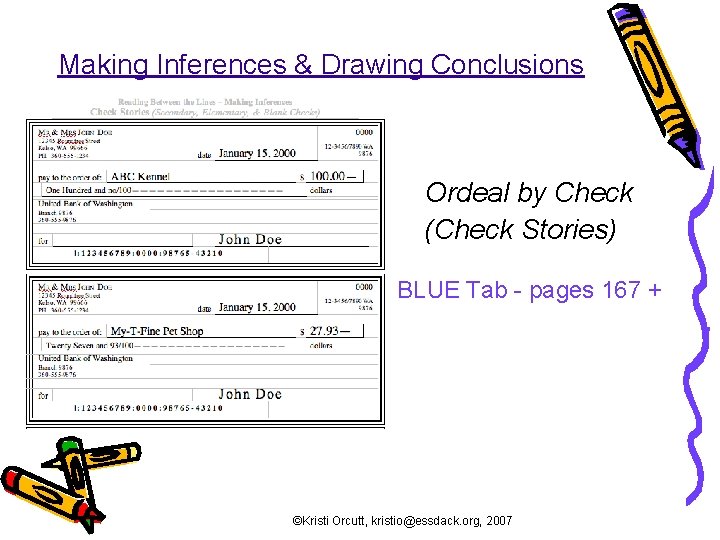
Making Inferences & Drawing Conclusions Ordeal by Check (Check Stories) BLUE Tab - pages 167 + ©Kristi Orcutt, kristio@essdack. org, 2007
Topic, Main Idea, Supporting Details Make Up a Main Idea Activity 1. Take ONE sentence strip each – Supporting details – Topics 2. Form groups by TOPIC 3. Put your sentence strips together to form a paragraph 4. WRITE A MAIN IDEA topic sentence for your paragraph ©Kristi Orcutt, kristio@essdack. org, 2007
Topic, Main Idea, Supporting Details YELLOW Tab - pages 241 + • Worksheets • Graphic Organizers • Resources ©Kristi Orcutt, kristio@essdack. org, 2007
Persuasive Text and Techniques GREEN Tab - pages 276 + • • • Glittering generalities Bandwagon Citing Statistics Citing Authority Testimonials ©Kristi Orcutt, kristio@essdack. org, 2007
Vocabulary PINK Tab - pages 289 + • Context Clues • Structural Analysis - Prefixes, Suffixes, Roots • Figurative Language • Vocabulary Cartoons ©Kristi Orcutt, kristio@essdack. org, 2007
Literature GOLD Tab - pages 317 + • Graphic organizers and teaching resources for NARRATIVE texts ©Kristi Orcutt, kristio@essdack. org, 2007
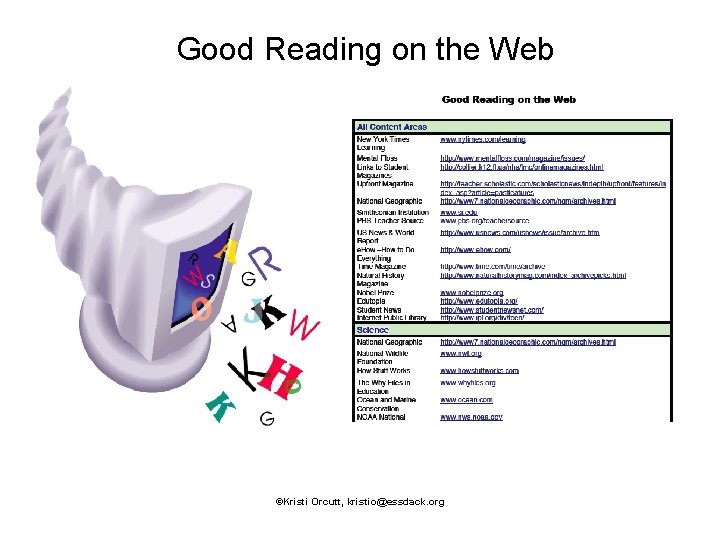
Good Reading on the Web ©Kristi Orcutt, kristio@essdack. org
What’s the #1 Way to Prepare Students for Success as Readers? It’s All About ATTITUDE!! Thanks for attending! ©Kristi Orcutt, kristio@essdack. org, 2007
www. essdack. org “Staff Blogs” • “Kristi Orcutt” – or Search for “Targeting Text Structure & More” üWorkshop Power. Point üGood Reading on the Web üText Structure Posters in color ©Kristi Orcutt, kristio@essdack. org, 2007