
Targeted Tier 2 Interventions CONTINUUM OF SCHOOLWIDE INSTRUCTIONAL


- Slides: 43
Targeted (Tier 2) Interventions
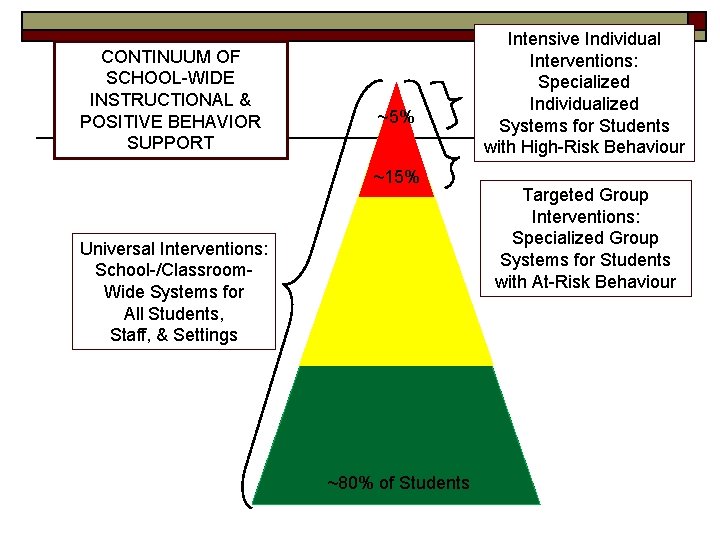
CONTINUUM OF SCHOOL-WIDE INSTRUCTIONAL & POSITIVE BEHAVIOR SUPPORT ~5% ~15% Universal Interventions: School-/Classroom. Wide Systems for All Students, Staff, & Settings ~80% of Students Intensive Individual Interventions: Specialized Individualized Systems for Students with High-Risk Behaviour Targeted Group Interventions: Specialized Group Systems for Students with At-Risk Behaviour
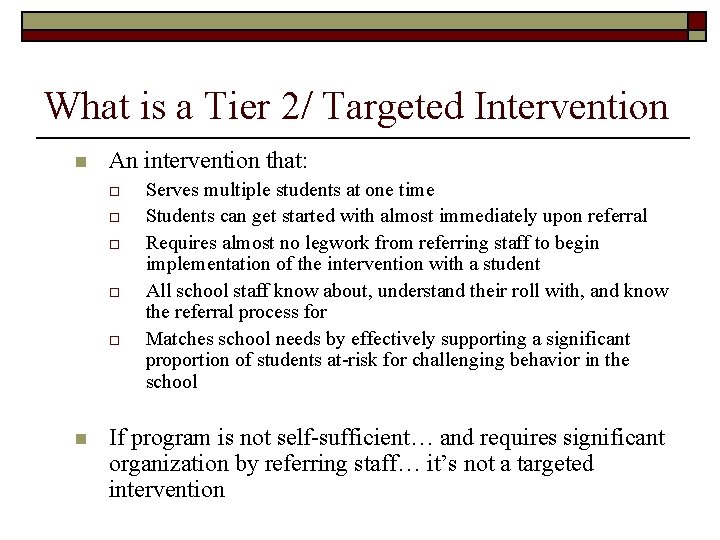
What is a Tier 2/ Targeted Intervention n An intervention that: o o o n Serves multiple students at one time Students can get started with almost immediately upon referral Requires almost no legwork from referring staff to begin implementation of the intervention with a student All school staff know about, understand their roll with, and know the referral process for Matches school needs by effectively supporting a significant proportion of students at-risk for challenging behavior in the school If program is not self-sufficient… and requires significant organization by referring staff… it’s not a targeted intervention
Check In/Check Out AKA Check-n-Connect, HUGs, Behavior Education Program…
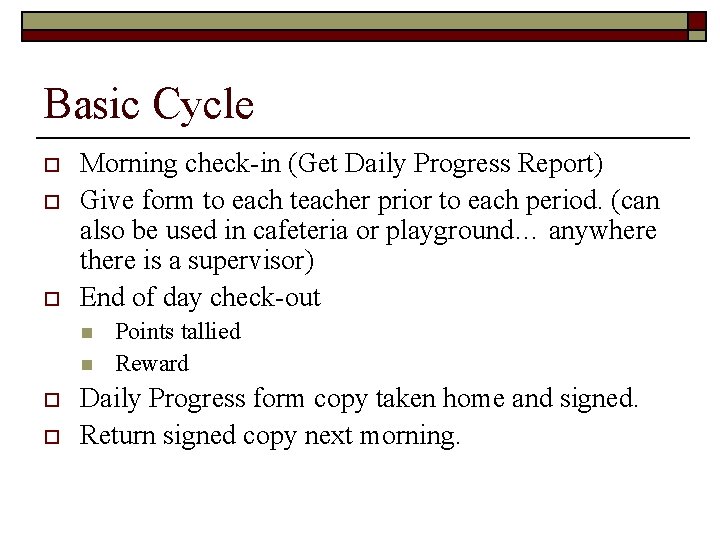
Basic Cycle o o o Morning check-in (Get Daily Progress Report) Give form to each teacher prior to each period. (can also be used in cafeteria or playground… anywhere there is a supervisor) End of day check-out n n o o Points tallied Reward Daily Progress form copy taken home and signed. Return signed copy next morning.
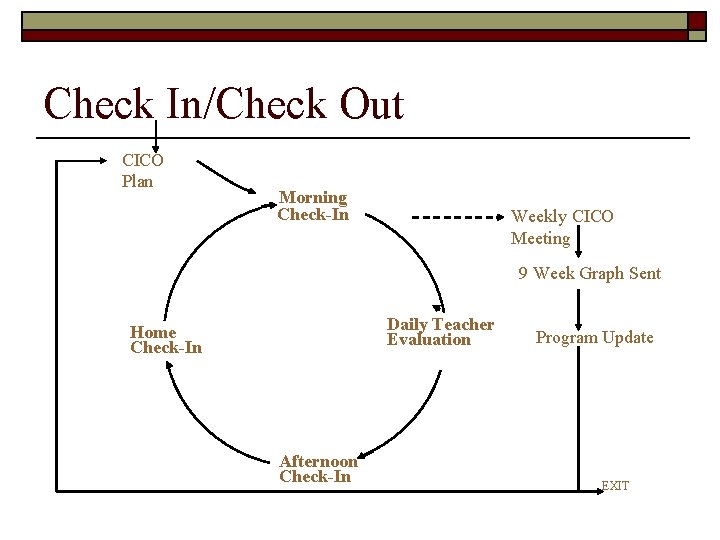
Check In/Check Out CICO Plan Morning Check-In Weekly CICO Meeting 9 Week Graph Sent Daily Teacher Evaluation Home Check-In Afternoon Check-In Program Update EXIT
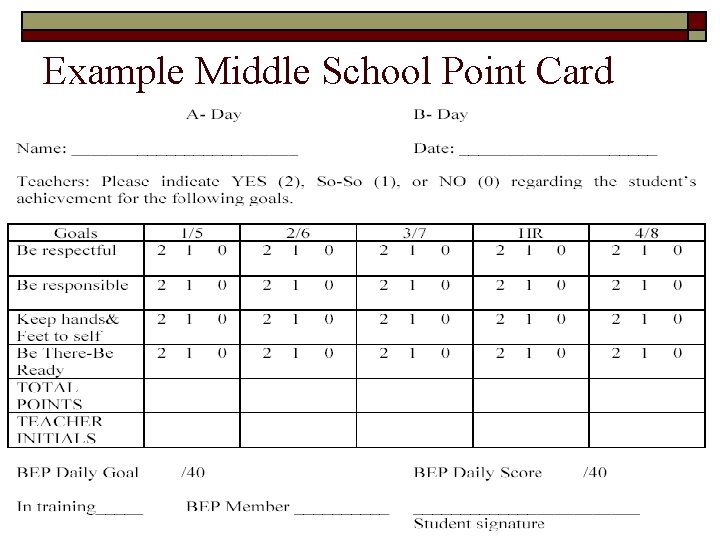
Example Middle School Point Card
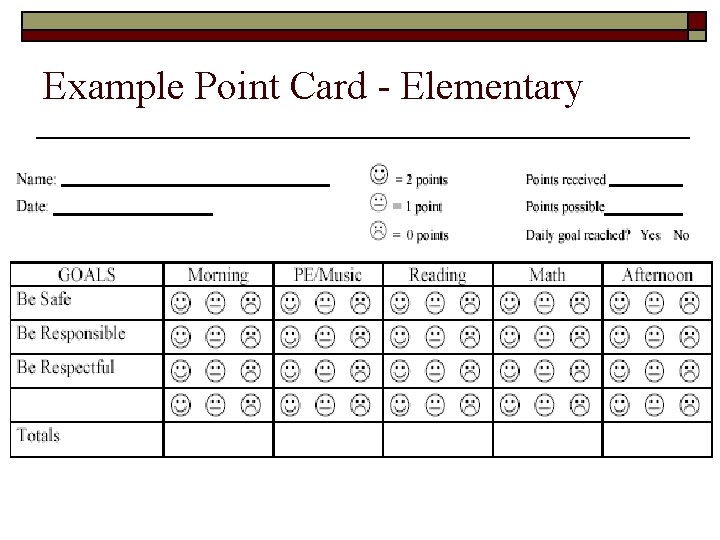
Example Point Card - Elementary
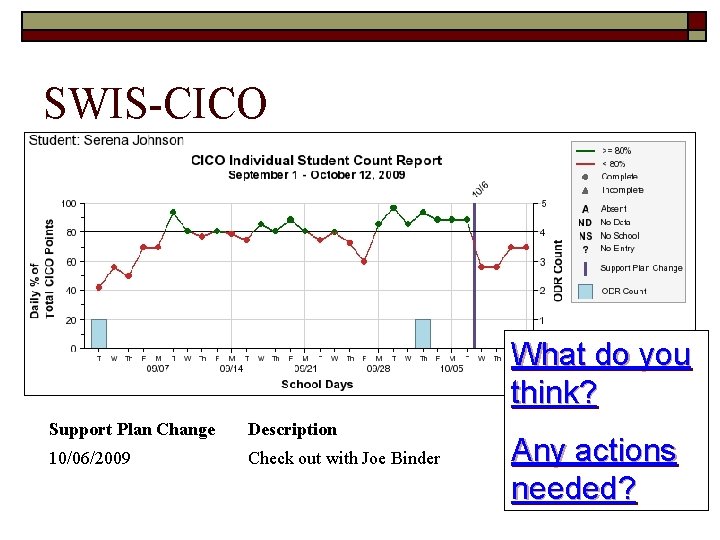
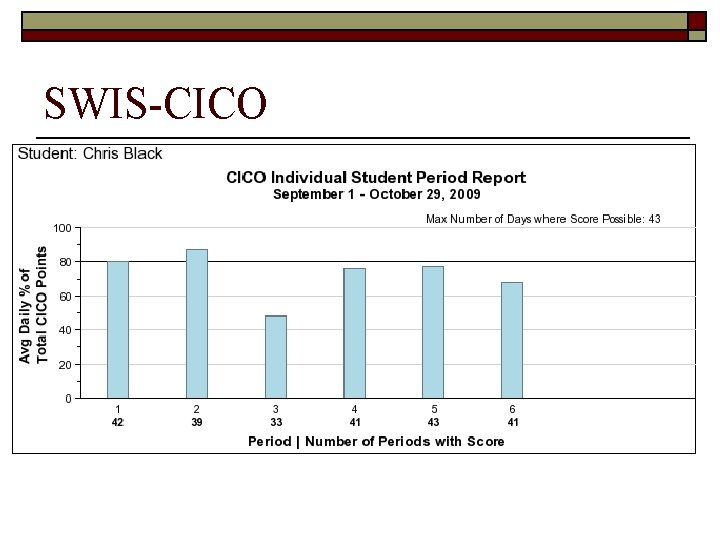
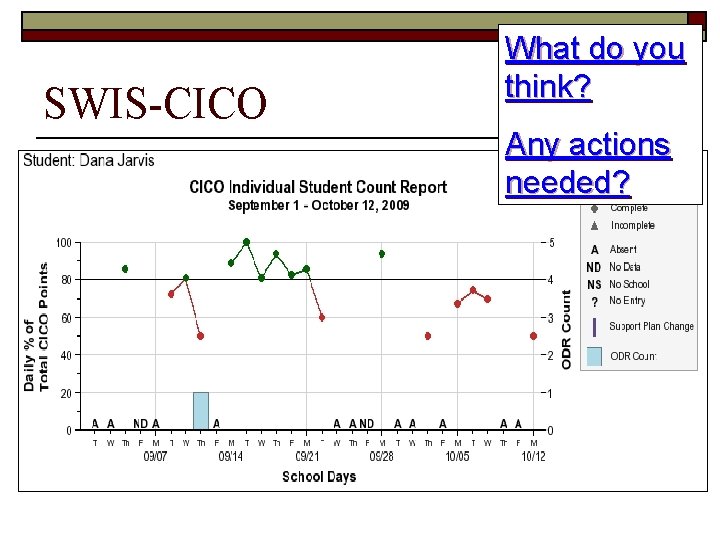
SWIS-CICO What do you think? Support Plan Change Description 10/06/2009 Check out with Joe Binder Any actions needed?
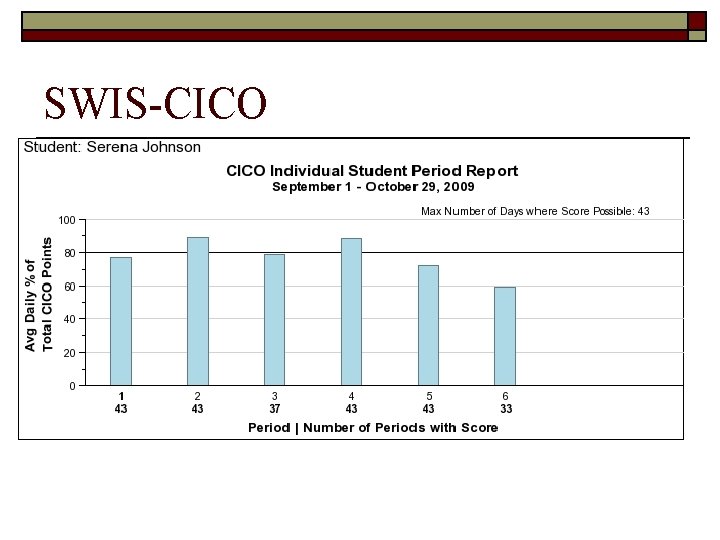
SWIS-CICO
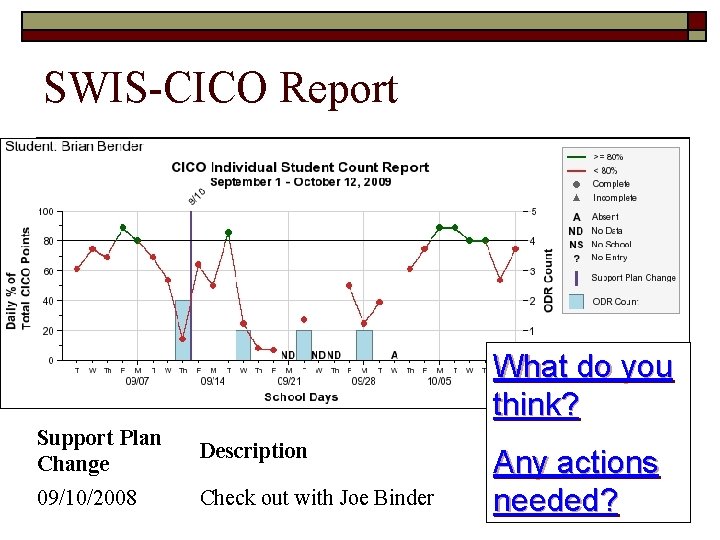
SWIS-CICO Report What do you think? Support Plan Change Description 09/10/2008 Check out with Joe Binder Any actions needed?
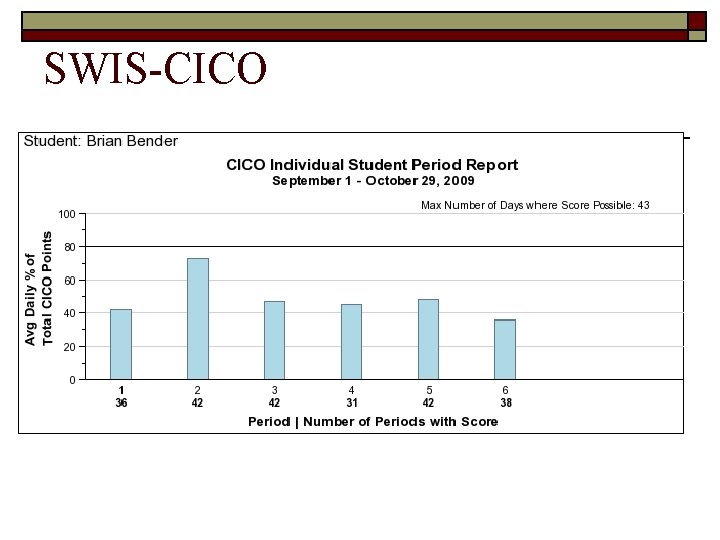
SWIS-CICO
SWIS-CICO What do you think? Support Plan Change Description 09/16/2009 Can earn get out of class early time Any actions needed?
SWIS-CICO
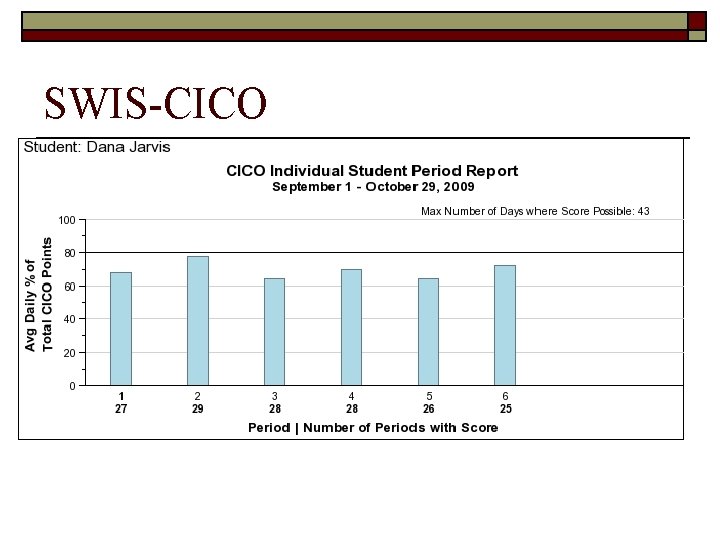
SWIS-CICO What do you think? Any actions needed?
SWIS-CICO
Tier 3 PBIS
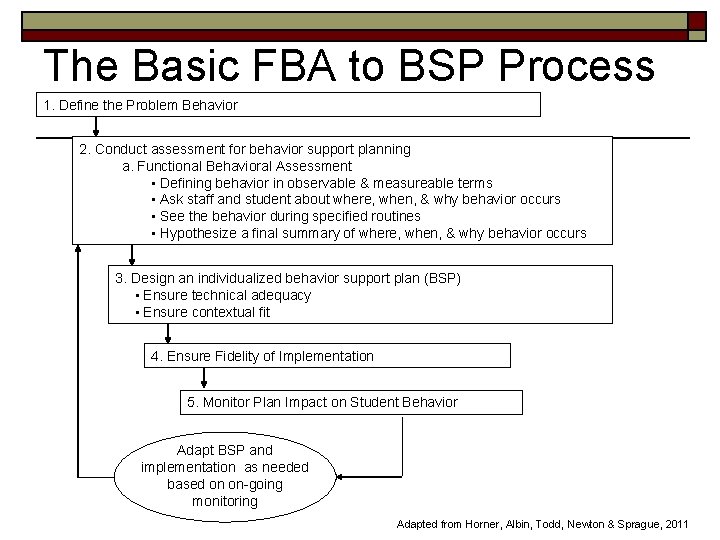
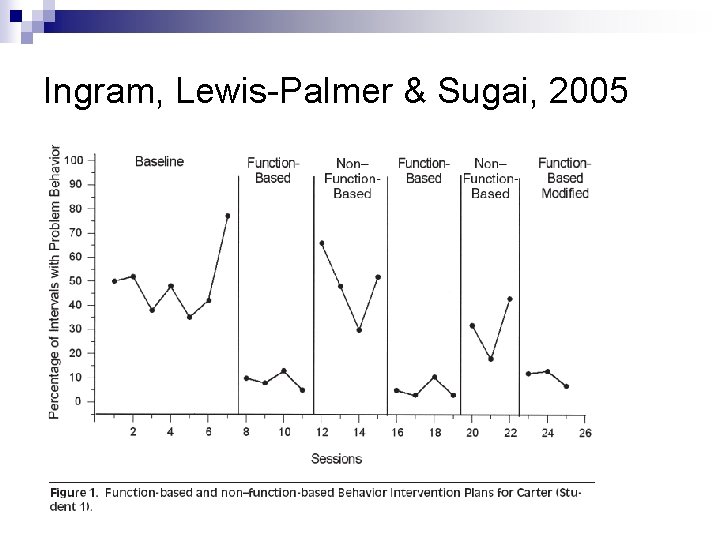
The Basic FBA to BSP Process 1. Define the Problem Behavior 2. Conduct assessment for behavior support planning a. Functional Behavioral Assessment • Defining behavior in observable & measureable terms • Ask staff and student about where, when, & why behavior occurs • See the behavior during specified routines • Hypothesize a final summary of where, when, & why behavior occurs 3. Design an individualized behavior support plan (BSP) • Ensure technical adequacy • Ensure contextual fit 4. Ensure Fidelity of Implementation 5. Monitor Plan Impact on Student Behavior Adapt BSP and implementation as needed based on on-going monitoring Adapted from Horner, Albin, Todd, Newton & Sprague, 2011
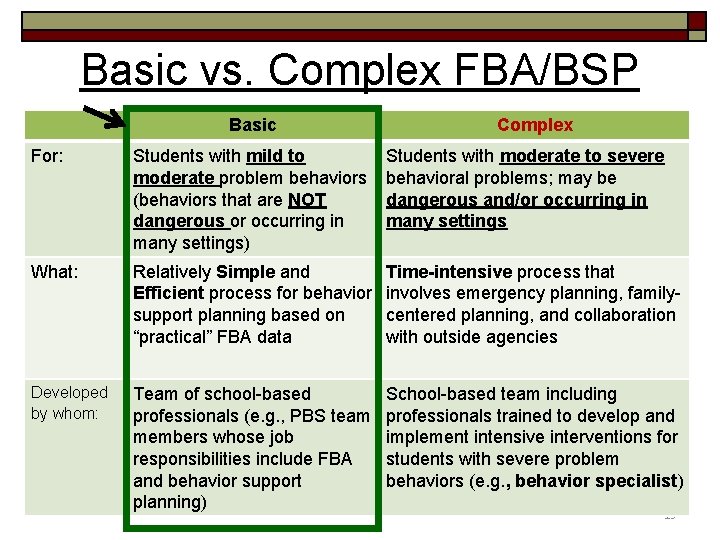
Basic vs. Complex FBA/BSP Basic Complex For: Students with mild to moderate problem behaviors (behaviors that are NOT dangerous or occurring in many settings) Students with moderate to severe behavioral problems; may be dangerous and/or occurring in many settings What: Relatively Simple and Efficient process for behavior support planning based on “practical” FBA data Time-intensive process that involves emergency planning, familycentered planning, and collaboration with outside agencies Developed by whom: Team of school-based professionals (e. g. , PBS team members whose job responsibilities include FBA and behavior support planning) School-based team including professionals trained to develop and implement intensive interventions for students with severe problem behaviors (e. g. , behavior specialist) 19
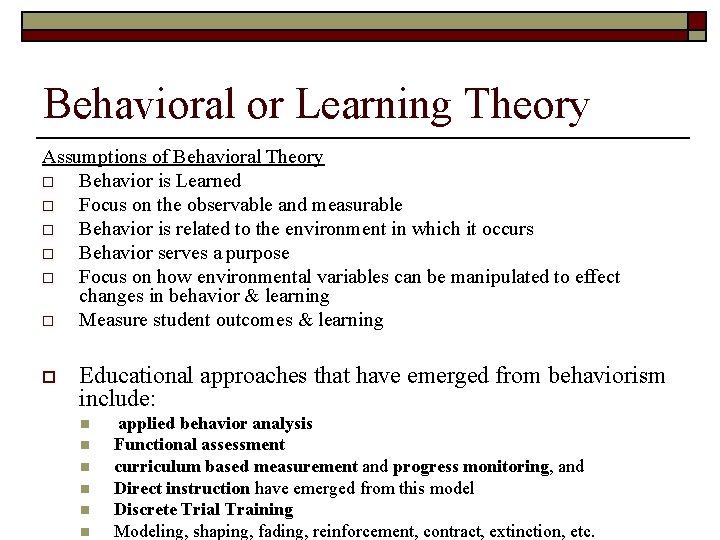
Behavioral or Learning Theory Assumptions of Behavioral Theory o Behavior is Learned o Focus on the observable and measurable o Behavior is related to the environment in which it occurs o Behavior serves a purpose o Focus on how environmental variables can be manipulated to effect changes in behavior & learning o Measure student outcomes & learning o Educational approaches that have emerged from behaviorism include: n n n applied behavior analysis Functional assessment curriculum based measurement and progress monitoring, and Direct instruction have emerged from this model Discrete Trial Training Modeling, shaping, fading, reinforcement, contract, extinction, etc.
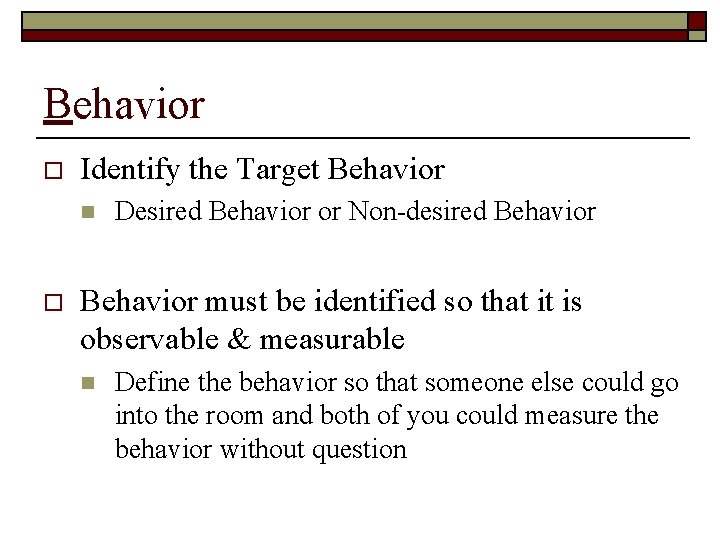
Behavior o Identify the Target Behavior n o Desired Behavior or Non-desired Behavior must be identified so that it is observable & measurable n Define the behavior so that someone else could go into the room and both of you could measure the behavior without question
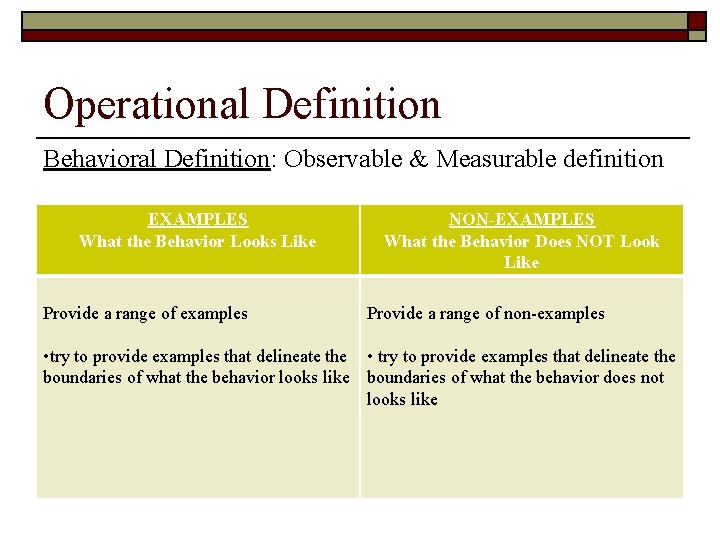
Operational Definition Behavioral Definition: Observable & Measurable definition EXAMPLES What the Behavior Looks Like Provide a range of examples NON-EXAMPLES What the Behavior Does NOT Look Like Provide a range of non-examples • try to provide examples that delineate the boundaries of what the behavior looks like boundaries of what the behavior does not looks like
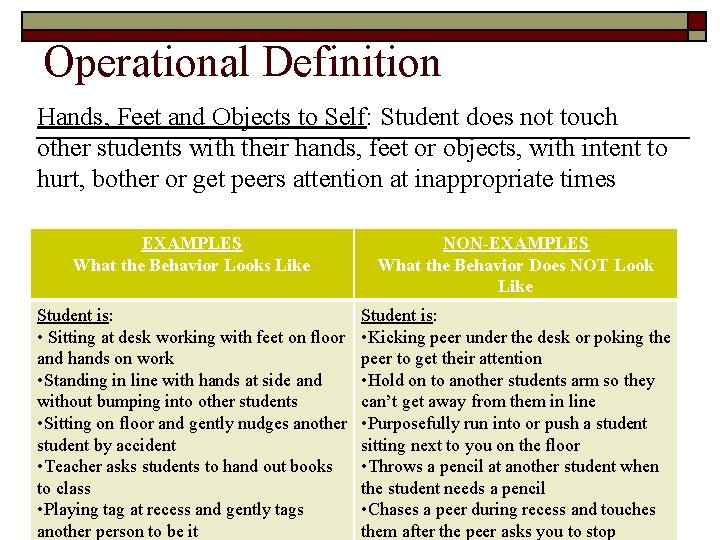
Operational Definition Hands, Feet and Objects to Self: Student does not touch other students with their hands, feet or objects, with intent to hurt, bother or get peers attention at inappropriate times EXAMPLES What the Behavior Looks Like NON-EXAMPLES What the Behavior Does NOT Look Like Student is: • Sitting at desk working with feet on floor and hands on work • Standing in line with hands at side and without bumping into other students • Sitting on floor and gently nudges another student by accident • Teacher asks students to hand out books to class • Playing tag at recess and gently tags another person to be it Student is: • Kicking peer under the desk or poking the peer to get their attention • Hold on to another students arm so they can’t get away from them in line • Purposefully run into or push a student sitting next to you on the floor • Throws a pencil at another student when the student needs a pencil • Chases a peer during recess and touches them after the peer asks you to stop
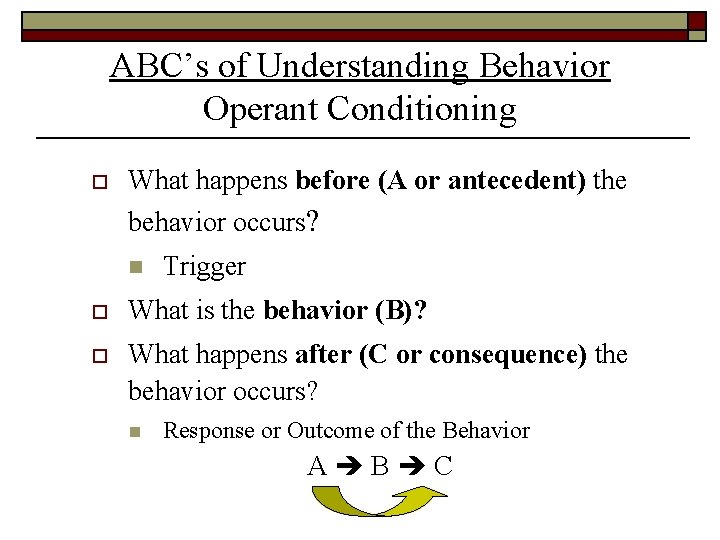
ABC’s of Understanding Behavior Operant Conditioning o What happens before (A or antecedent) the behavior occurs? n Trigger o What is the behavior (B)? o What happens after (C or consequence) the behavior occurs? n Response or Outcome of the Behavior A B C
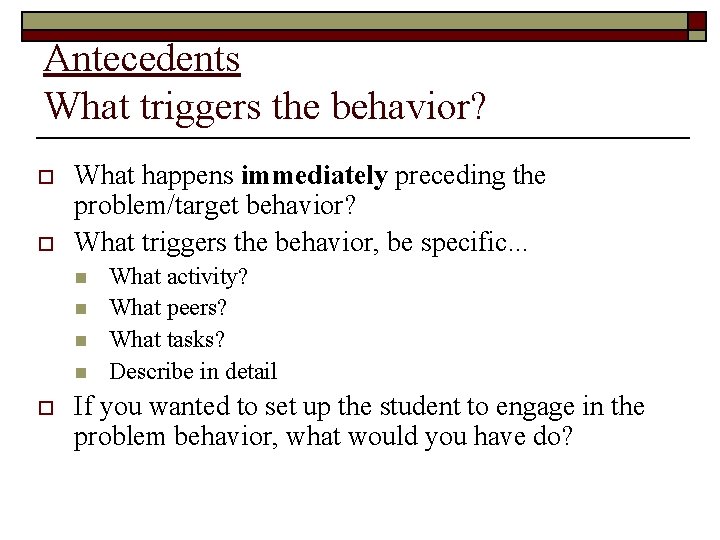
Antecedents What triggers the behavior? o o What happens immediately preceding the problem/target behavior? What triggers the behavior, be specific. . . n n o What activity? What peers? What tasks? Describe in detail If you wanted to set up the student to engage in the problem behavior, what would you have do?
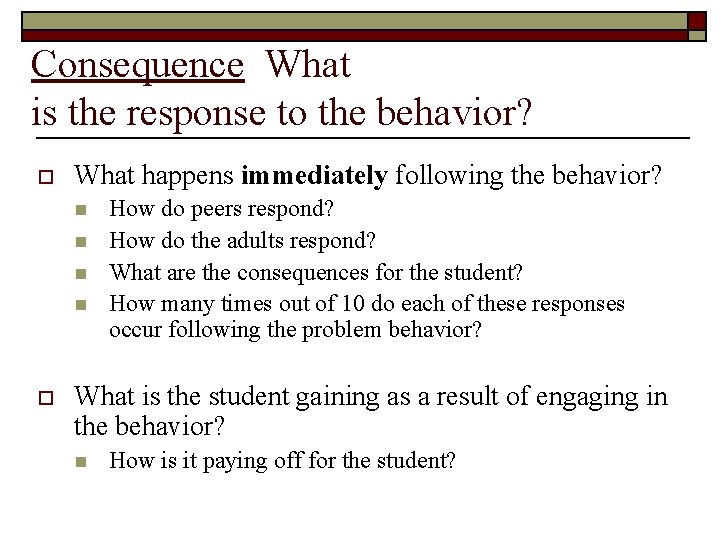
Consequence What is the response to the behavior? o What happens immediately following the behavior? n n o How do peers respond? How do the adults respond? What are the consequences for the student? How many times out of 10 do each of these responses occur following the problem behavior? What is the student gaining as a result of engaging in the behavior? n How is it paying off for the student?
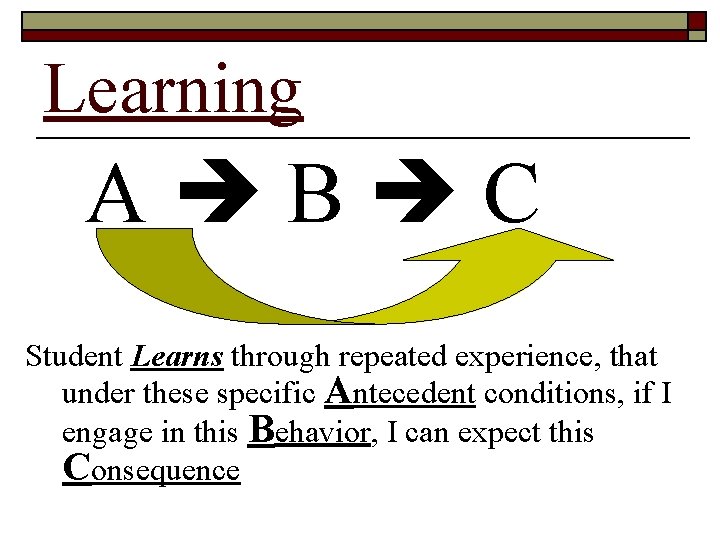
Learning A B C Student Learns through repeated experience, that under these specific Antecedent conditions, if I engage in this Behavior, I can expect this Consequence
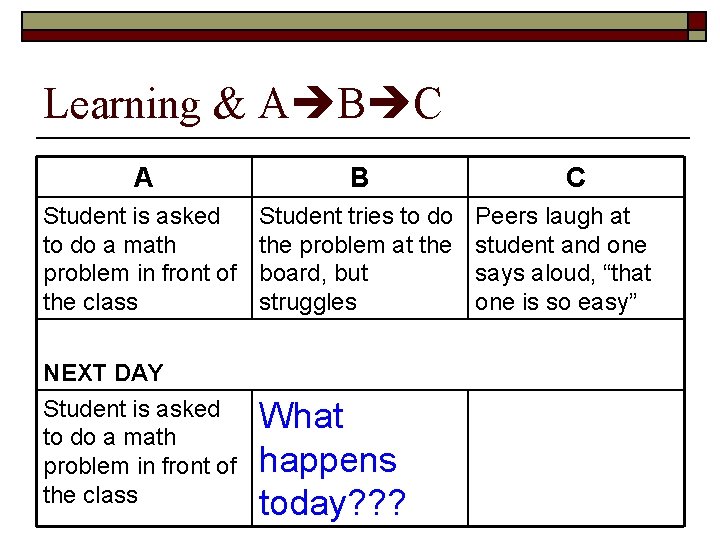
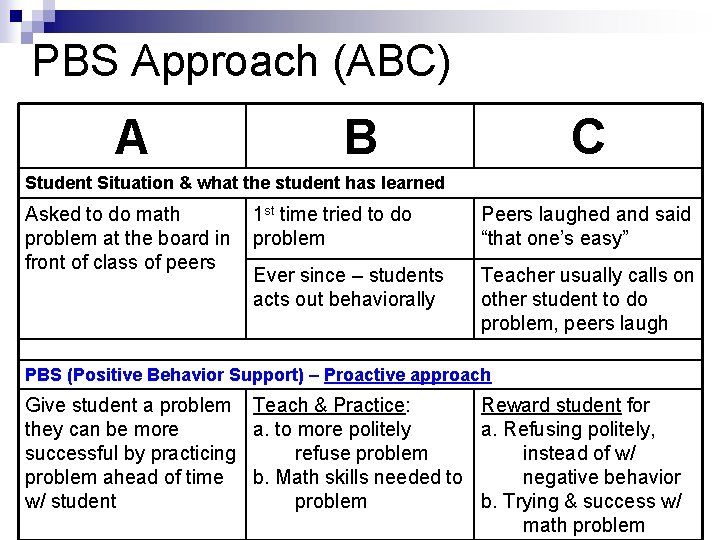
Learning & A B C A B Student is asked to do a math problem in front of the class Student tries to do the problem at the board, but struggles NEXT DAY Student is asked to do a math problem in front of the class What happens today? ? ? C Peers laugh at student and one says aloud, “that one is so easy”
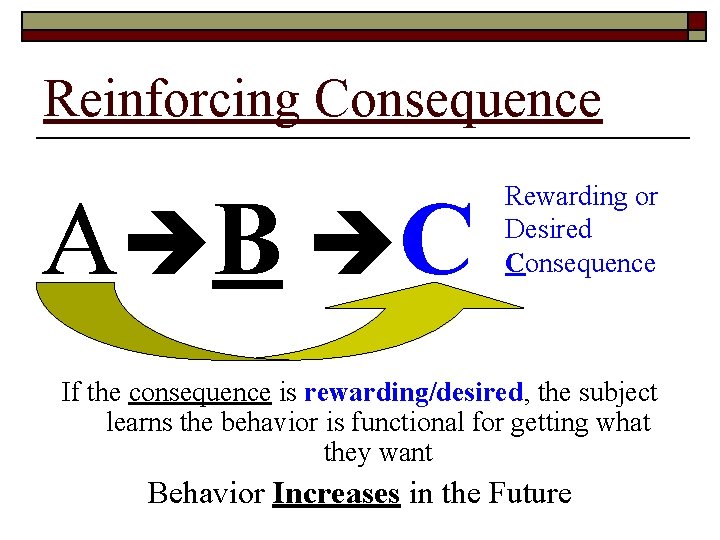
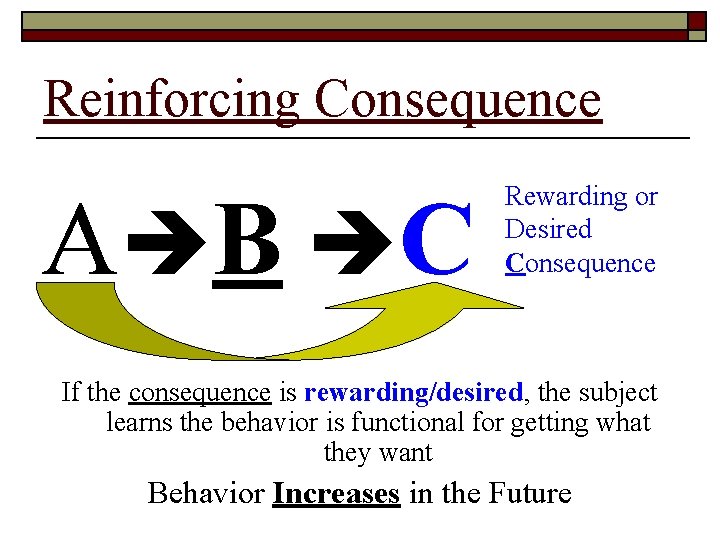
Reinforcing Consequence A B C Rewarding or Desired Consequence If the consequence is rewarding/desired, the subject learns the behavior is functional for getting what they want Behavior Increases in the Future
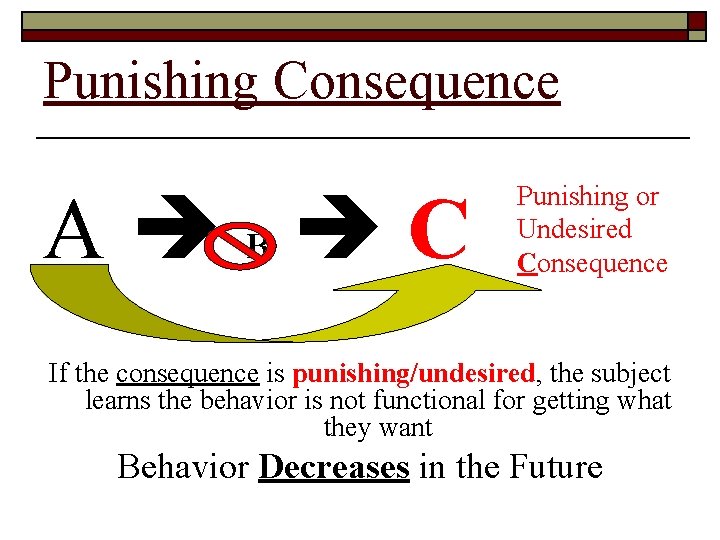
Punishing Consequence A B C Punishing or Undesired Consequence If the consequence is punishing/undesired, the subject learns the behavior is not functional for getting what they want Behavior Decreases in the Future
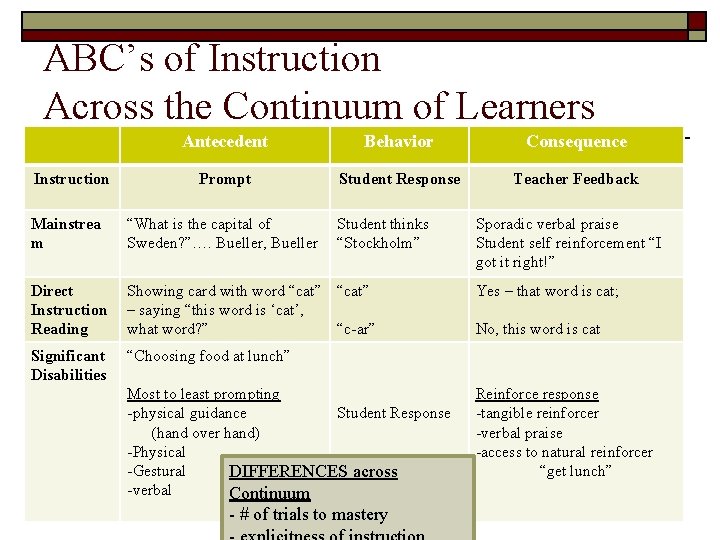
ABC’s of Instruction Across the Continuum of Learners Instruction Antecedent Behavior Consequence Prompt Student Response Teacher Feedback Mainstrea m “What is the capital of Sweden? ”…. Bueller, Bueller Student thinks “Stockholm” Direct Instruction Reading Showing card with word “cat” – saying “this word is ‘cat’, what word? ” “c-ar” Significant Disabilities “Choosing food at lunch” Most to least prompting -physical guidance Student Response (hand over hand) -Physical -Gestural DIFFERENCES across -verbal Continuum - # of trials to mastery Sporadic verbal praise Student self reinforcement “I got it right!” Yes – that word is cat; No, this word is cat Reinforce response -tangible reinforcer -verbal praise -access to natural reinforcer “get lunch”
Reinforcing Consequence A B C Rewarding or Desired Consequence If the consequence is rewarding/desired, the subject learns the behavior is functional for getting what they want Behavior Increases in the Future
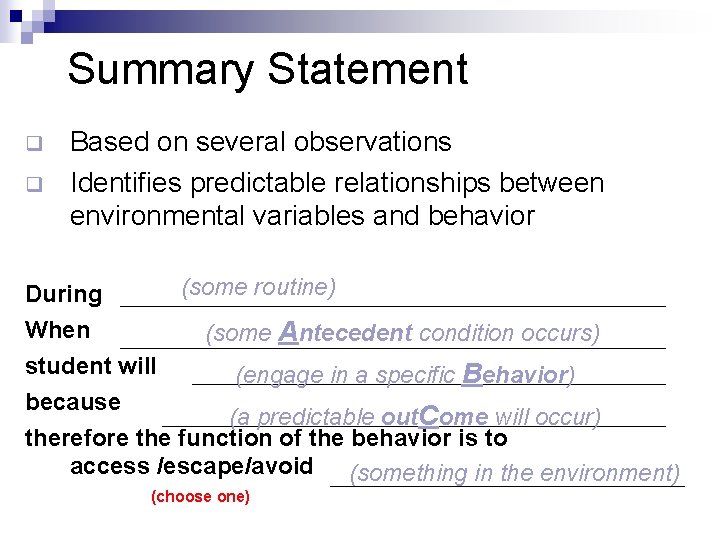
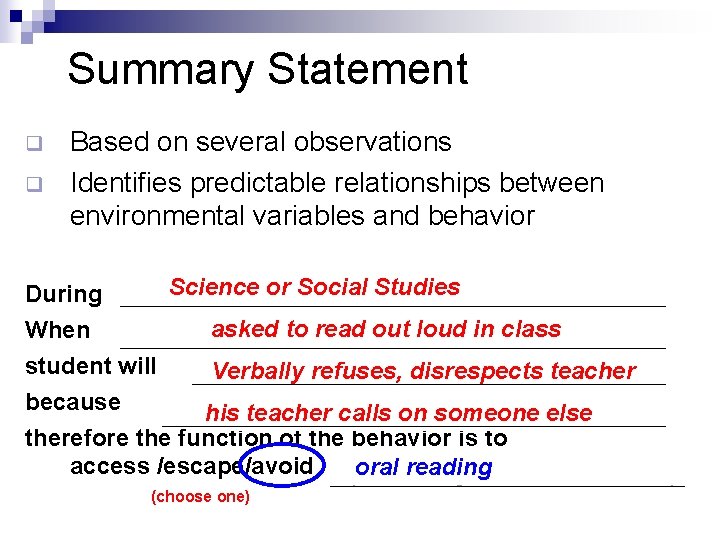
Summary Statement Based on several observations Identifies predictable relationships between environmental variables and behavior (some routine) During When (some Antecedent condition occurs) student will (engage in a specific Behavior) because (a predictable out. Come will occur) therefore the function of the behavior is to access /escape/avoid (something in the environment) (choose one)
Summary Statement Based on several observations Identifies predictable relationships between environmental variables and behavior Science (some routine) or Social Studies During asked. A tontecedent read out loud in class When (some condition occurs) student will Verbally refuses, disrespects teacher (engage in a specific Behavior) because his(ateacher callsout on. Csomeone else predictable ome will occur) therefore the function of the behavior is to access /escape/avoid (something oral reading in the environment) (choose one)
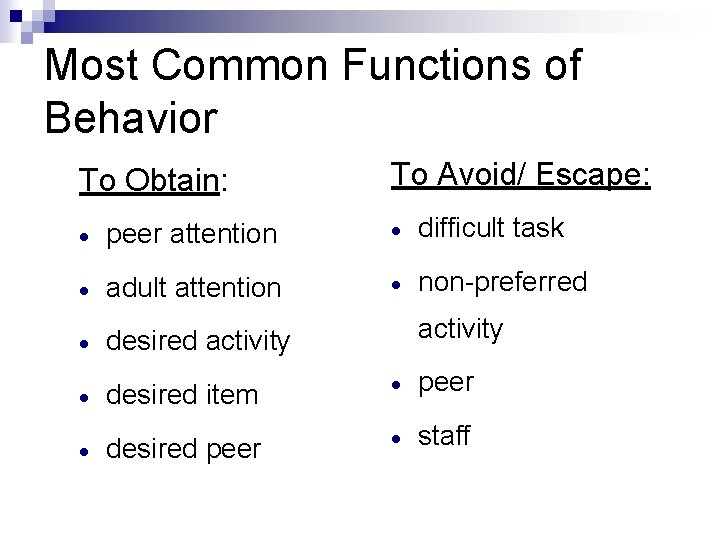
Most Common Functions of Behavior To Obtain: To Avoid/ Escape: · peer attention · difficult task · adult attention · non-preferred · desired activity · desired item · · desired peer · peer staff
Why is Function so Important?
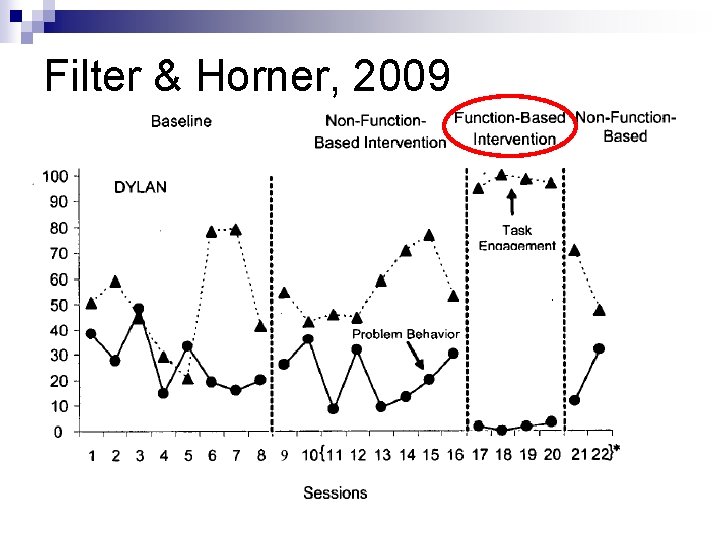
Filter & Horner, 2009
Ingram, Lewis-Palmer & Sugai, 2005
Newcomer & Lewis, 2004
Proactive v. Reactive PBS v. Aversive approach
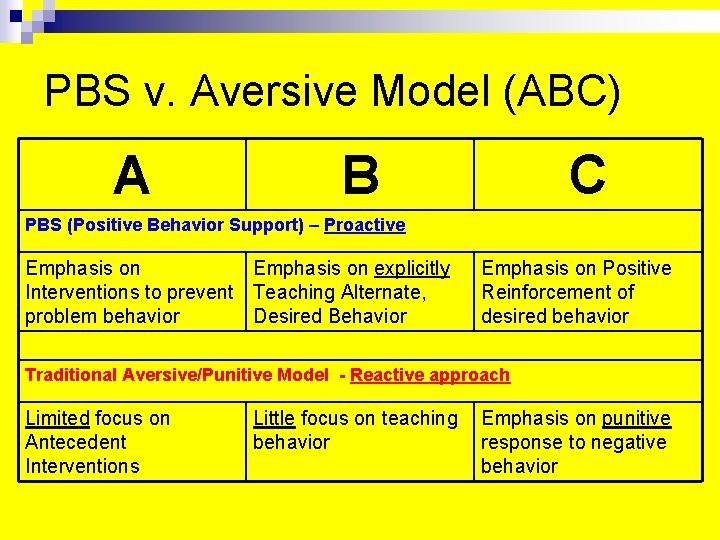
PBS v. Aversive Model (ABC) A B C PBS (Positive Behavior Support) – Proactive Emphasis on explicitly Interventions to prevent Teaching Alternate, problem behavior Desired Behavior Emphasis on Positive Reinforcement of desired behavior Traditional Aversive/Punitive Model - Reactive approach Limited focus on Antecedent Interventions Little focus on teaching behavior Emphasis on punitive response to negative behavior
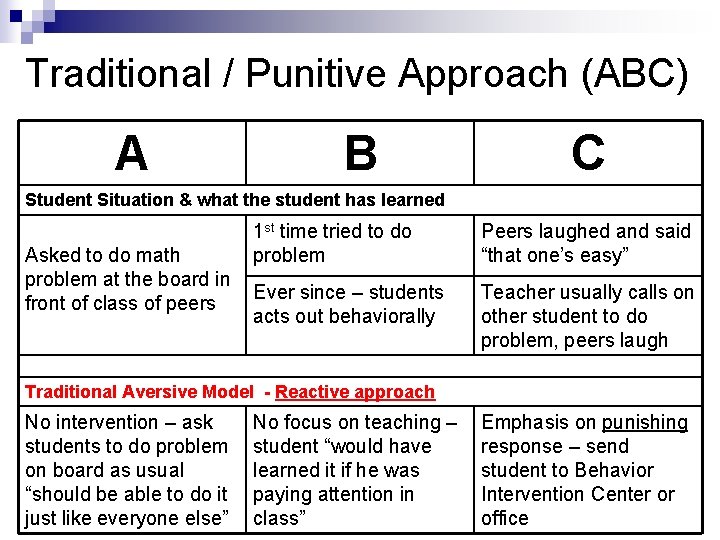
Traditional / Punitive Approach (ABC) A B C Student Situation & what the student has learned Asked to do math problem at the board in front of class of peers 1 st time tried to do problem Peers laughed and said “that one’s easy” Ever since – students acts out behaviorally Teacher usually calls on other student to do problem, peers laugh Traditional Aversive Model - Reactive approach No intervention – ask students to do problem on board as usual “should be able to do it just like everyone else” No focus on teaching – student “would have learned it if he was paying attention in class” Emphasis on punishing response – send student to Behavior Intervention Center or office
PBS Approach (ABC) A B C Student Situation & what the student has learned Asked to do math problem at the board in front of class of peers 1 st time tried to do problem Peers laughed and said “that one’s easy” Ever since – students acts out behaviorally Teacher usually calls on other student to do problem, peers laugh PBS (Positive Behavior Support) – Proactive approach Give student a problem Teach & Practice: Reward student for they can be more a. to more politely a. Refusing politely, successful by practicing refuse problem instead of w/ problem ahead of time b. Math skills needed to negative behavior w/ student problem b. Trying & success w/ math problem