
Target Stroke Improving door to needle times at
- Slides: 48
Target Stroke: Improving door to needle times at your hospital, your network, your region Shyam Prabhakaran, MD, MS Professor of Neurology Northwestern Feinberg School of Medicine
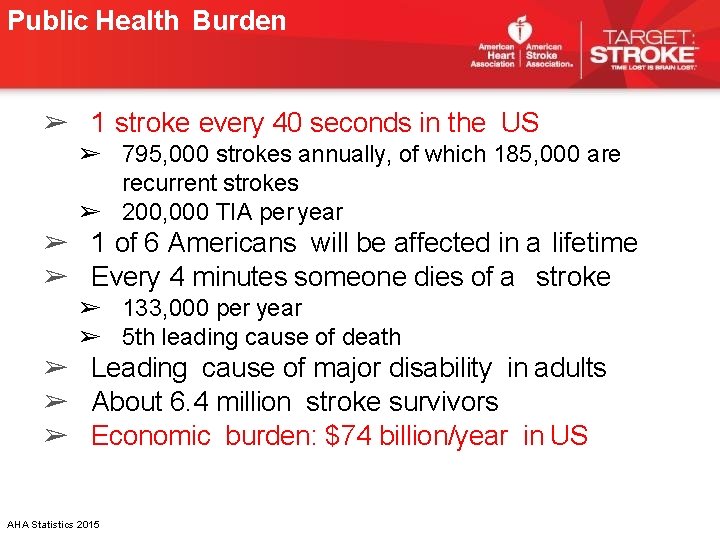
Public Health Burden ➢ 1 stroke every 40 seconds in the US ➢ 795, 000 strokes annually, of which 185, 000 are recurrent strokes ➢ 200, 000 TIA per year ➢ 1 of 6 Americans will be affected in a lifetime ➢ Every 4 minutes someone dies of a stroke ➢ 133, 000 per year ➢ 5 th leading cause of death ➢ Leading cause of major disability in adults ➢ About 6. 4 million stroke survivors ➢ Economic burden: $74 billion/year in US AHA Statistics 2015
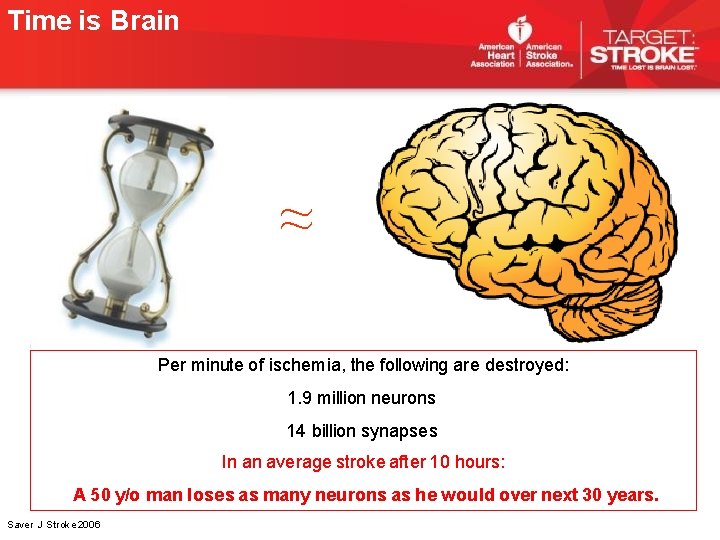
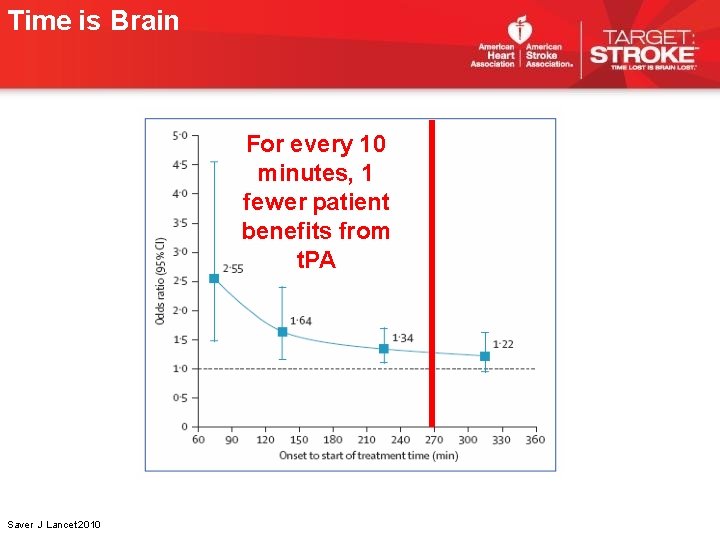
Time is Brain ≈ Per minute of ischemia, the following are destroyed: 1. 9 million neurons 14 billion synapses In an average stroke after 10 hours: A 50 y/o man loses as many neurons as he would over next 30 years. Saver J Stroke 2006
Time is Brain For every 10 minutes, 1 fewer patient benefits from t. PA Saver J Lancet 2010
Efforts to Reduce DTN Times • The benefits of intravenous t. PA in acute ischemic stroke are highly timedependent • Because of the importance of rapid treatment, AHA/ASA guidelines recommend a door-to-needle (DTN) of < 60 minutes • Yet, prior study suggested fewer than 30% of intravenous t. PA treated acute ischemic stroke patients in the United States were meeting this goal • To address this shortfall, Target: Stroke, a national initiative organized by the AHA/ASA, was launched in January 2010 to increase the proportion of stroke patients with DTN <60 minutes Fonarow GC et al. Circulation 2011; 123: 750 -758 © 2010, American Heart Association 6
Target: Stroke • Target: Stroke was initiated by the AHA/ASA together with other partner organizations as a collaborative national initiative comprising a multidisciplinary group of clinicians and broad alliance of hospitals. • The primary goal of Target: Stroke was for GWTG-Stroke participating hospitals in aggregate to treat at least 50% of acute ischemic stroke patients within 60 minutes or less of hospital arrival. • An expert working group performed a systematic review of the published data on improving DTN times and identified 10 key evidence-based strategies associated with timely stroke reperfusion that could be most rapidly, feasibly, and cost effectively adopted by participating hospitals. • Comprehensive implementation manual, clinical decision support tools, education, sharing of best practices, performance feedback, and national recognition opportunities Fonarow GC et al. Stroke. 2011; 42: 2983 -2989 © 2010, American Heart Association 7
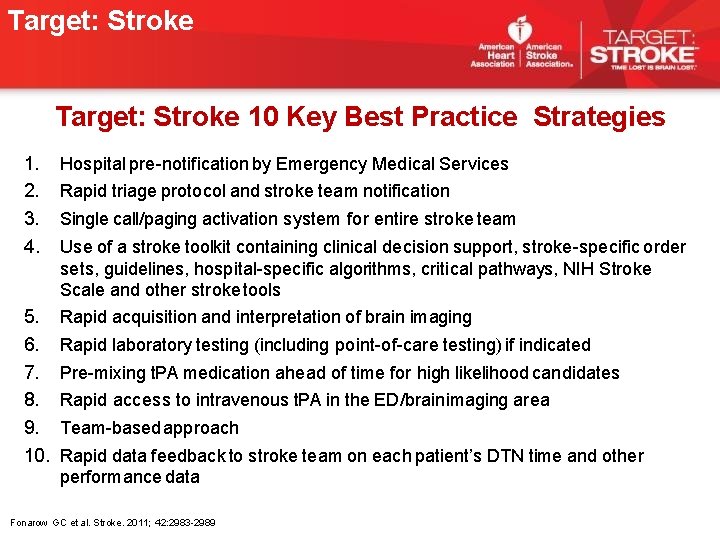
Target: Stroke 10 Key Best Practice Strategies 1. 2. 3. 4. 5. 6. 7. 8. 9. 10. Hospital pre-notification by Emergency Medical Services Rapid triage protocol and stroke team notification Single call/paging activation system for entire stroke team Use of a stroke toolkit containing clinical decision support, stroke-specific order sets, guidelines, hospital-specific algorithms, critical pathways, NIH Stroke Scale and other stroke tools Rapid acquisition and interpretation of brain imaging Rapid laboratory testing (including point-of-care testing) if indicated Pre-mixing t. PA medication ahead of time for high likelihood candidates Rapid access to intravenous t. PA in the ED/brain imaging area Team-based approach Rapid data feedback to stroke team on each patient’s DTN time and other performance data Fonarow GC et al. Stroke. 2011; 42: 2983 -2989
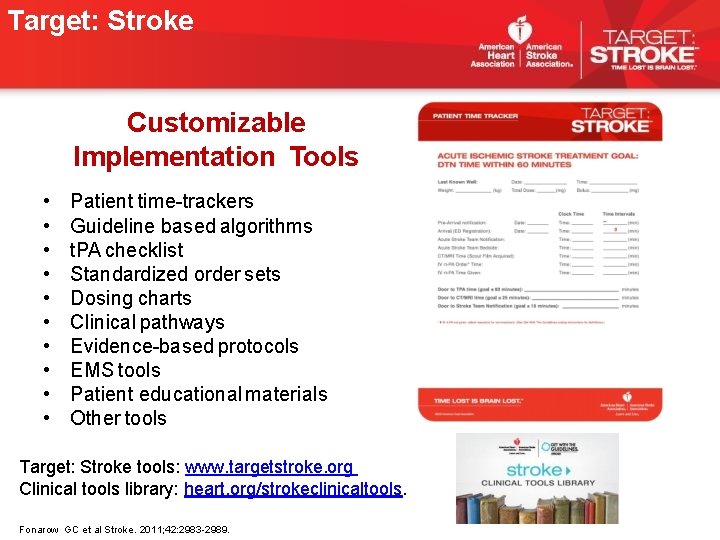
Target: Stroke Customizable Implementation Tools • • • Patient time-trackers Guideline based algorithms t. PA checklist Standardized order sets Dosing charts Clinical pathways Evidence-based protocols EMS tools Patient educational materials Other tools Target: Stroke tools: www. targetstroke. org Clinical tools library: heart. org/strokeclinicaltools. Fonarow GC et al Stroke. 2011; 42: 2983 -2989.
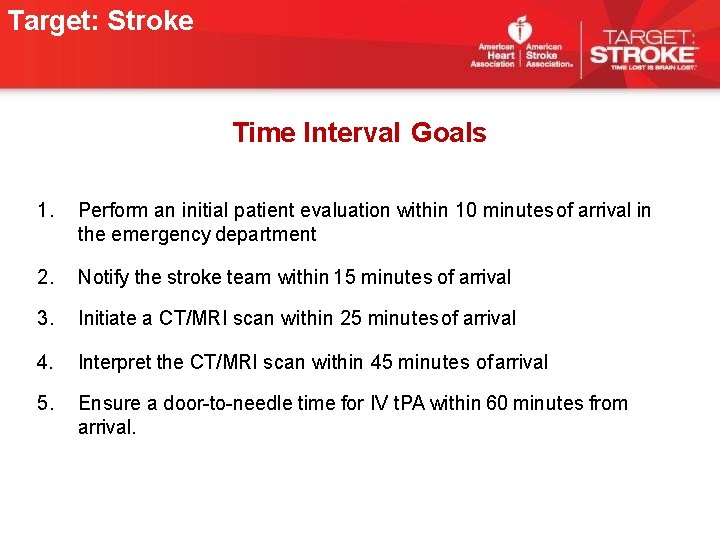
Target: Stroke Time Interval Goals 1. Perform an initial patient evaluation within 10 minutes of arrival in the emergency department 2. Notify the stroke team within 15 minutes of arrival 3. Initiate a CT/MRI scan within 25 minutes of arrival 4. Interpret the CT/MRI scan within 45 minutes of arrival 5. Ensure a door-to-needle time for IV t. PA within 60 minutes from arrival.
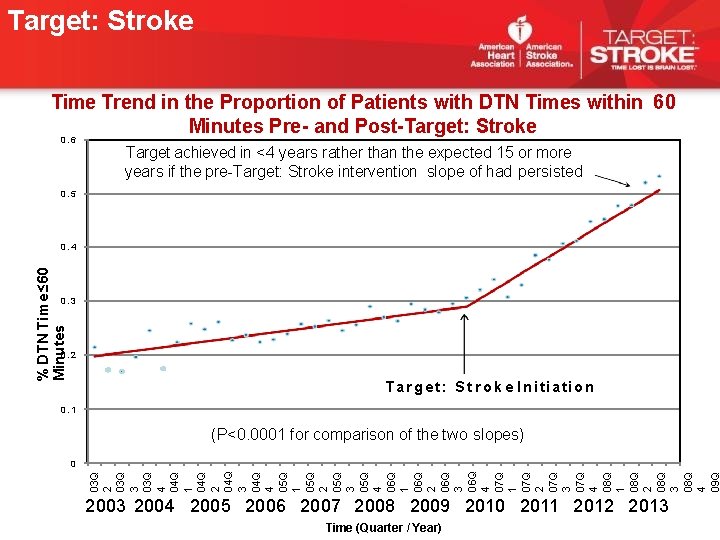
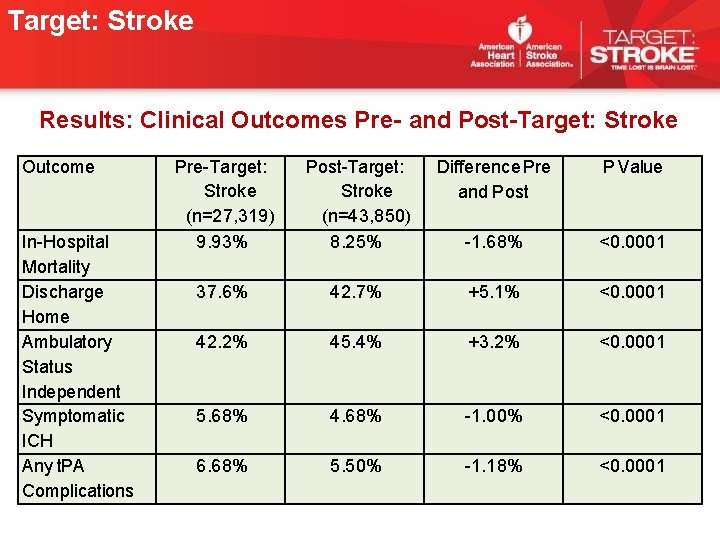
Target: Stroke Phase I Results • Temporal trends in door to needle (DTN) times before/after initiation in Jan 2010. • Change in clinical outcomes—including in-hospital mortality, discharge destination, ambulatory status, symptomatic intracranial hemorrhage ≤ 36 hours after t. PA, and overall t. PA complications—before/after initiation in Jan 2010.
Target: Stroke Methods • 71, 169 stroke patients treated with t. PA (27, 319 pre-intervention, 43, 850 post-intervention) from 1, 030 GW TG-Stroke participating hospitals. • Quarterly rates of DTN times ≤ 60 minutes and clinical outcomes pre. Target: Stroke (2003 -2009) were compared to post-Target Stroke (20102013). • Adjustment for patient and hospital characteristics. Fonarow GC et al. JAMA. 2014; 311(16): 1632 -1640.
Target: Stroke Time Trend in the Proportion of Patients with DTN Times within 60 Minutes Pre- and Post-Target: Stroke 0. 6 Target achieved in <4 years rather than the expected 15 or more years if the pre-Target: Stroke intervention slope of had persisted 0. 5 % DTN Time ≤ 60 Minutes 0. 4 0. 3 0. 2 T a r g e t : S t r o k e Initiation 0. 1 (P<0. 0001 for comparison of the two slopes) 03 Q 2 03 Q 3 03 Q 4 04 Q 1 04 Q 2 04 Q 3 04 Q 4 05 Q 1 05 Q 2 05 Q 3 05 Q 4 06 Q 1 06 Q 2 06 Q 3 06 Q 4 07 Q 1 07 Q 2 07 Q 3 07 Q 4 08 Q 1 08 Q 2 08 Q 3 08 Q 4 09 Q 0 2003 2004 2005 2006 2007 2008 2009 2010 2011 2012 2013 Time (Quarter / Year)
Target: Stroke Results: Clinical Outcomes Pre- and Post-Target: Stroke Outcome In-Hospital Mortality Discharge Home Ambulatory Status Independent Symptomatic ICH Any t. PA Complications Pre-Target: Stroke (n=27, 319) 9. 93% Post-Target: Stroke (n=43, 850) 8. 25% Difference Pre and Post P Value -1. 68% <0. 0001 37. 6% 42. 7% +5. 1% <0. 0001 42. 2% 45. 4% +3. 2% <0. 0001 5. 68% 4. 68% -1. 00% <0. 0001 6. 68% 5. 50% -1. 18% <0. 0001
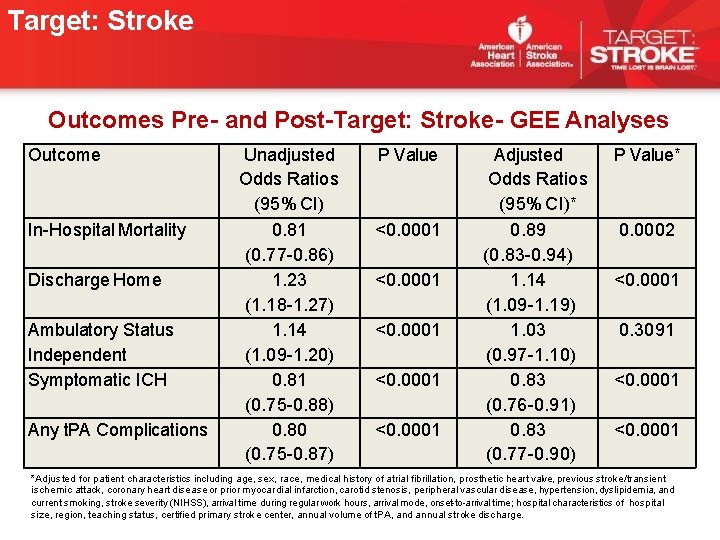
Target: Stroke Outcomes Pre- and Post-Target: Stroke- GEE Analyses Outcome In-Hospital Mortality Discharge Home Ambulatory Status Independent Symptomatic ICH Any t. PA Complications Unadjusted Odds Ratios (95% CI) 0. 81 (0. 77 -0. 86) 1. 23 (1. 18 -1. 27) 1. 14 (1. 09 -1. 20) 0. 81 (0. 75 -0. 88) 0. 80 (0. 75 -0. 87) P Value <0. 0001 Adjusted Odds Ratios (95% CI)* 0. 89 (0. 83 -0. 94) 1. 14 (1. 09 -1. 19) 1. 03 (0. 97 -1. 10) 0. 83 (0. 76 -0. 91) 0. 83 (0. 77 -0. 90) P Value* 0. 0002 <0. 0001 0. 3091 <0. 0001 *Adjusted for patient characteristics including age, sex, race, medical history of atrial fibrillation, prosthetic heart valve, previous stroke/transient ischemic attack, coronary heart disease or prior myocardial infarction, carotid stenosis, peripheral vascular disease, hypertension, dyslipidemia, and current smoking, stroke severity (NIHSS), arrival time during regular work hours, arrival mode, onset-to-arrival time; hospital characteristics of hospital size, region, teaching status, certified primary stroke center, annual volume of t. PA, and annual stroke discharge.
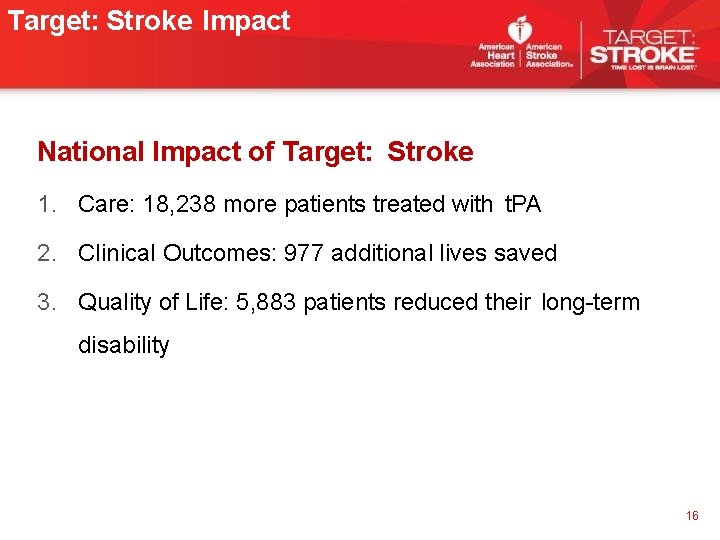
Target: Stroke Impact National Impact of Target: Stroke 1. Care: 18, 238 more patients treated with t. PA 2. Clinical Outcomes: 977 additional lives saved 3. Quality of Life: 5, 883 patients reduced their long-term disability 16
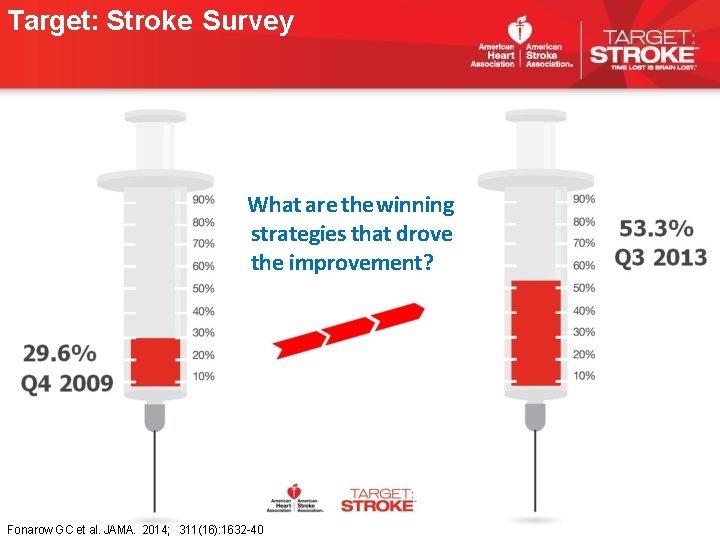
Target: Stroke Survey What are the winning strategies that drove the improvement? Fonarow GC et al. JAMA. 2014; 311(16): 1632 -40
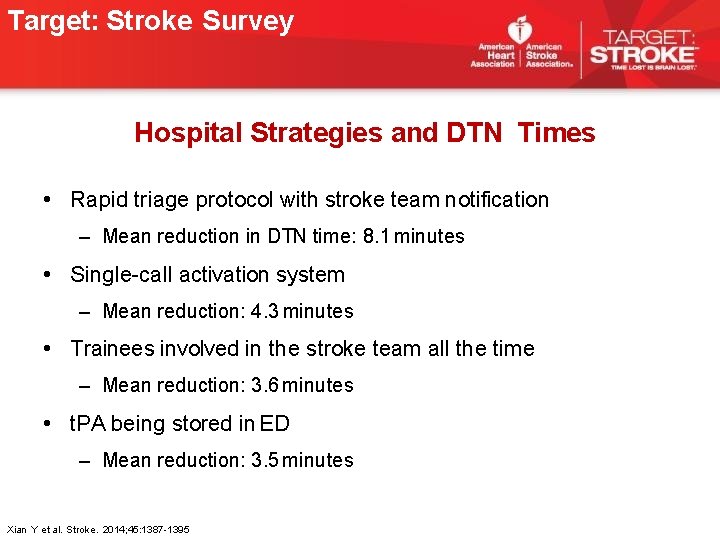
Target: Stroke Survey Hospital Strategies and DTN Times • Rapid triage protocol with stroke team notification – Mean reduction in DTN time: 8. 1 minutes • Single-call activation system – Mean reduction: 4. 3 minutes • Trainees involved in the stroke team all the time – Mean reduction: 3. 6 minutes • t. PA being stored in ED – Mean reduction: 3. 5 minutes Xian Y et al. Stroke. 2014; 45: 1387 -1395
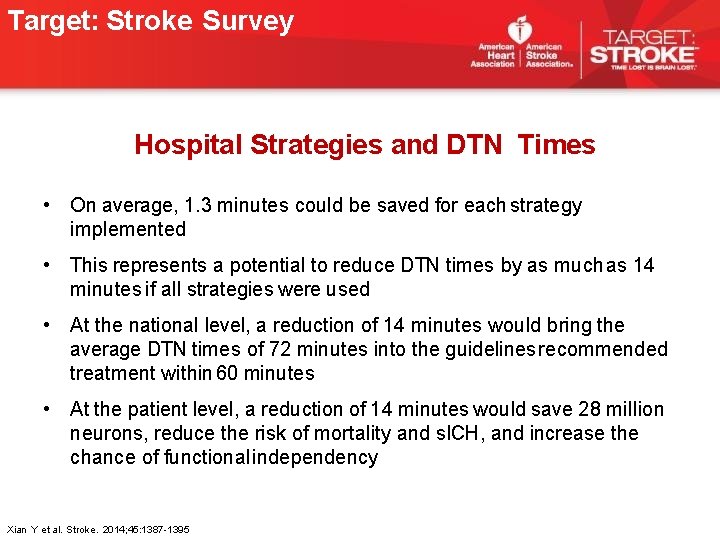
Target: Stroke Survey Hospital Strategies and DTN Times • On average, 1. 3 minutes could be saved for each strategy implemented • This represents a potential to reduce DTN times by as much as 14 minutes if all strategies were used • At the national level, a reduction of 14 minutes would bring the average DTN times of 72 minutes into the guidelines recommended treatment within 60 minutes • At the patient level, a reduction of 14 minutes would save 28 million neurons, reduce the risk of mortality and s. ICH, and increase the chance of functional independency Xian Y et al. Stroke. 2014; 45: 1387 -1395
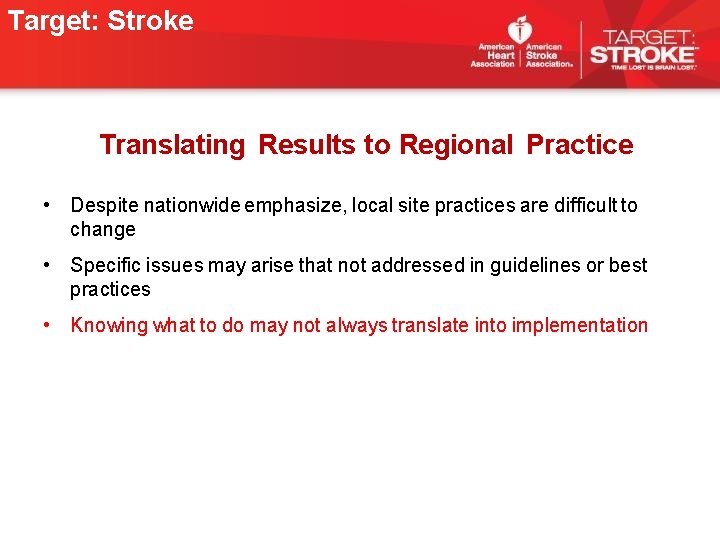
Target: Stroke Translating Results to Regional Practice • Despite nationwide emphasize, local site practices are difficult to change • Specific issues may arise that not addressed in guidelines or best practices • Knowing what to do may not always translate into implementation
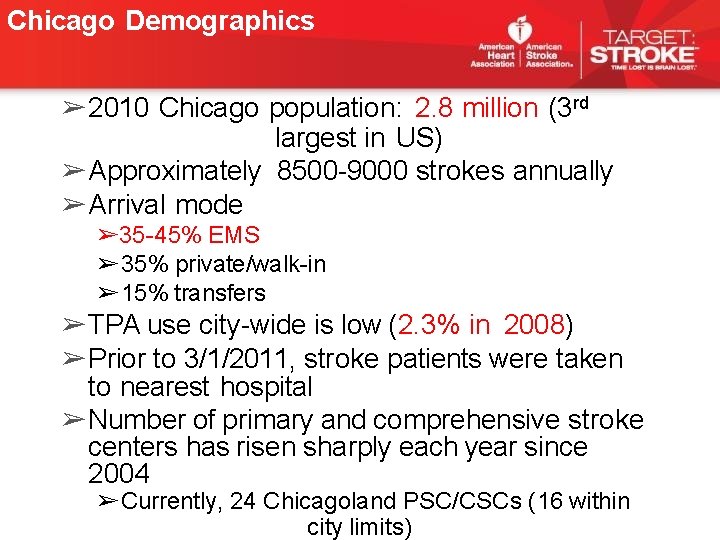
Chicago Demographics ➢ 2010 Chicago population: 2. 8 million (3 rd largest in US) ➢Approximately 8500 -9000 strokes annually ➢Arrival mode ➢ 35 -45% EMS ➢ 35% private/walk-in ➢ 15% transfers ➢TPA use city-wide is low (2. 3% in 2008) ➢Prior to 3/1/2011, stroke patients were taken to nearest hospital ➢Number of primary and comprehensive stroke centers has risen sharply each year since 2004 ➢Currently, 24 Chicagoland PSC/CSCs (16 within city limits)
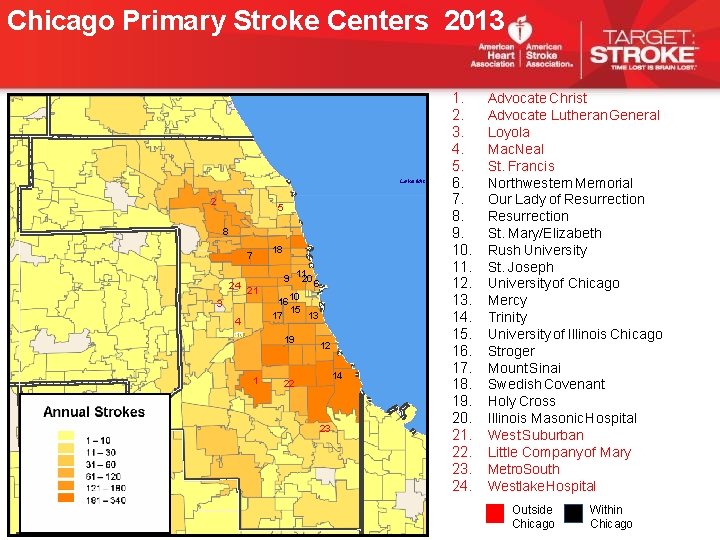
Chicago Primary Stroke Centers 2013 Lake Mic 2 5 8 18 7 24 21 3 IL 4 CC OO OO KK 9 11 20 6 1610 15 17 13 19 1 12 14 22 23 1. 2. 3. 4. 5. 6. 7. 8. 9. 10. 11. 12. 13. 14. 15. 16. 17. 18. 19. 20. 21. 22. 23. 24. Advocate Christ Advocate Lutheran General Loyola Mac. Neal St. Francis Northwestern Memorial Our Lady of Resurrection St. Mary/Elizabeth Rush University St. Joseph University of Chicago Mercy Trinity University of Illinois Chicago Stroger Mount Sinai Swedish Covenant Holy Cross Illinois Masonic Hospital West Suburban Little Company of Mary Metro. South Westlake Hospital Outside Chicago Within Chicago
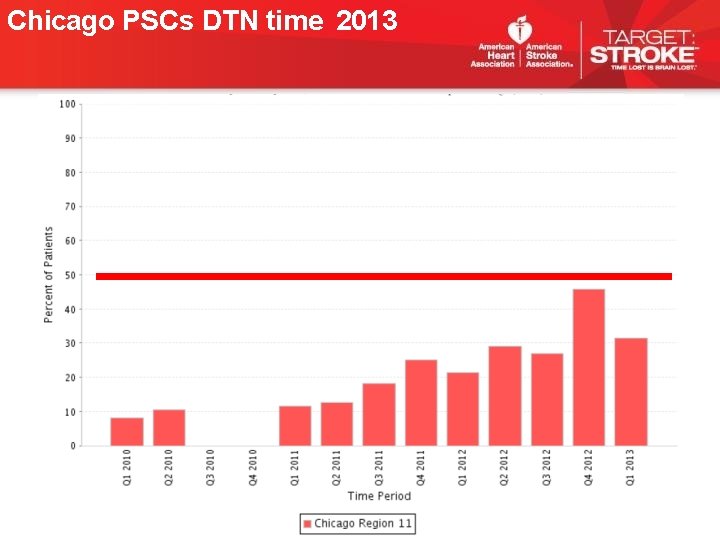
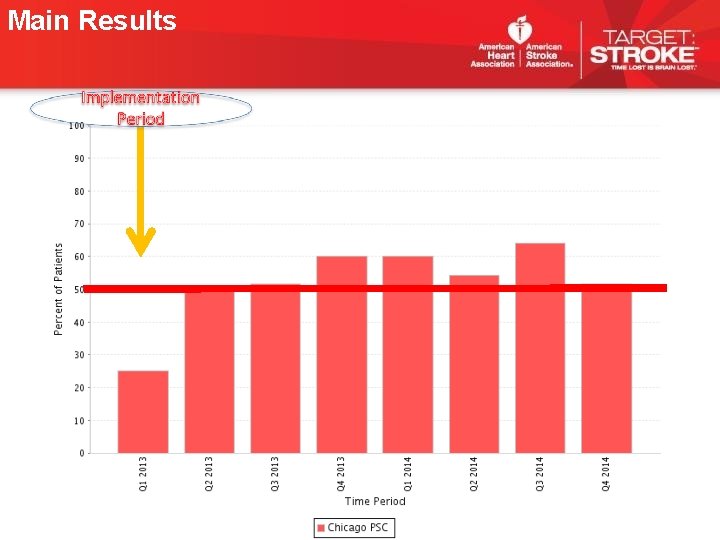
Chicago PSCs DTN time 2013
AHA/ASA’s Chicago QUESTS Initiative • QUality Enhancement for Speedy Thrombolysis in Stroke (QUESTS) had 3 main goals: 1. Provide professional education using the AHA’s Target: Stroke Initiative for physicians at PSCs to improve use of thrombolysis and improve its timely delivery in ischemic stroke patients ➢ > 50% achieve DTN < 60 min 2. Provide EMS education to improve field diagnosis and increase pre-notification of suspected stroke patients being transported to Chicago PSCs ➢ > 95% EMS pre-notification 3. Mount a comprehensive multi-lingual education program on stroke awareness for Chicago’s residents, targeting at-risk and minority groups specifically, that will result in a greater understanding of stroke symptoms and lead to an increase in 911 calls for stroke ➢ > 50% of strokes call 911 (EMS)
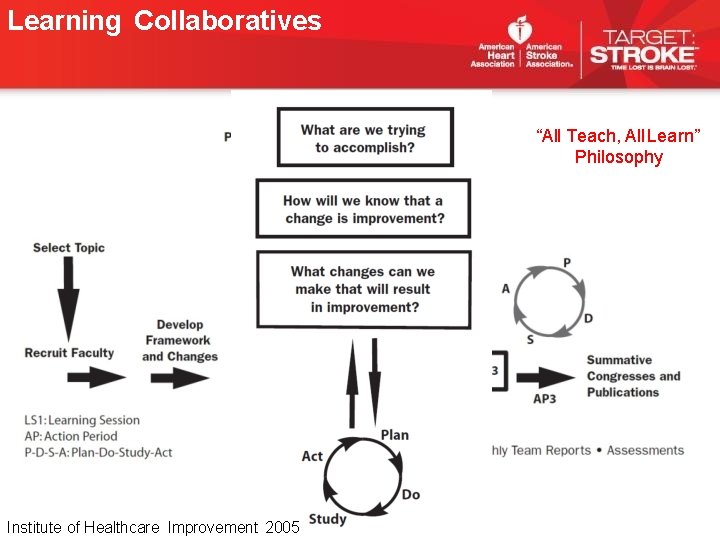
Learning Collaboratives “All Teach, All Learn” Philosophy Institute of Healthcare Improvement 2005
Learning Collaboratives have 5 key components 1. A consensus-driven goal for the program ➢ DTN < 60 minutes in > 50% of patients treated with t. PA 2. A quality improvement leader ➢ Kathleen O’Neil 3. Content expert ➢ Shyam Prabhakaran 4. Multidisciplinary teams from each site ➢ Stroke program coordinators, nurses, pharmacists, radiology technologists, physicians from Neurology and Emergency Medicine 5. Face-to-face collaboration ➢ On-site visits to each PSC and quarterly group meetings with data and best practice sharing and experiential learning
AHA/ASA’s Chicago QUESTS Initiative ➢Funding for Hospitals ➢~$5000 per site for GWTG-S ➢ Pre & post-project measurement ➢ Super-user participation ➢ EMS pre-hospital data elements ➢~$1500 Target Stroke Honor Roll Incentive ➢ 4 of 15 hospitals were given a stipend for GWTG-Stroke
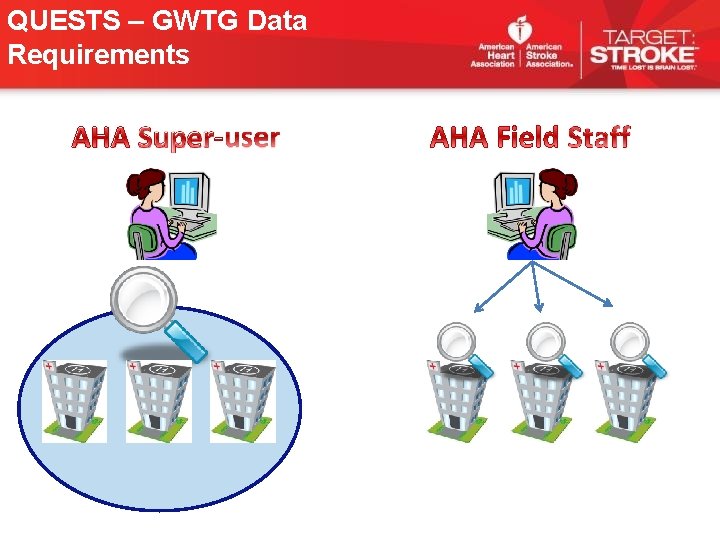
QUESTS – GWTG Data Requirements ➢All funded hospitals were required to enter data on all acute ischemic stroke patient records including EMS special initiatives tab data for 1 year (2013) ➢We provided GWTG-Stroke (covered costs) and data entry assistance to several PSCs ➢Super-user account activated for aggregate analysis
QUESTS – GWTG Data Requirements
Learning Sessions ➢Kick-off meeting: December 7, 2012 at AHA offices ➢Attended by representatives from each of the 15 PSCs ➢Covered background data from the Chicago region, Target Stroke and best practices, and the QUESTS initiative ➢ 15 site visits conducted January 2013 to March 2013 ➢The content expert and quality improvement leader ➢Stroke team members including coordinators, nurses, technologists, EM and Neurology physicians ➢A baseline survey was conducted ➢Site-specific strategies and solutions to consider for implementation were generated and proposed at each PSC
Action Periods ➢Between Learning Sessions ➢Stroke program leaders were asked to: ➢Implement strategies and monitor DTN times as part of routine monthly QI activities at each PSC ➢Innovate and implement new practices as well ➢Regional Stroke Advisory Sub-committee (RSAS) ➢Monthly phone conference (quarterly in person) ➢Data review of DTN times ➢Discussed related progress and successes and failures at each site in open, non-threatening environment ➢All QUESTS hospitals were required to be present
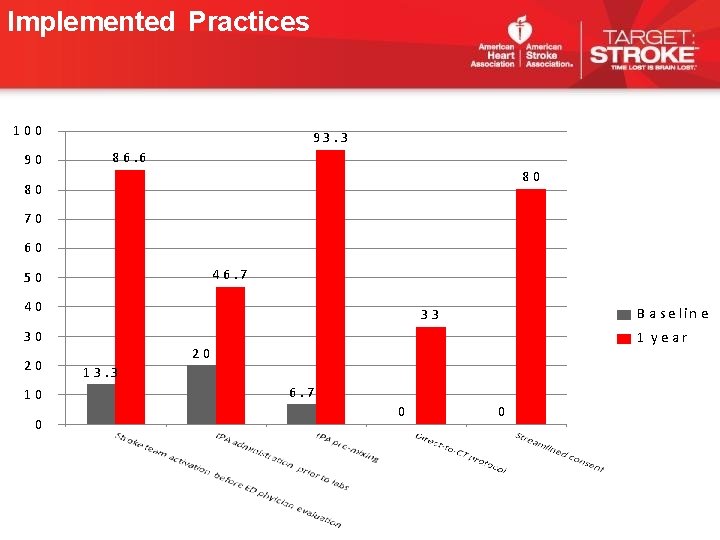
Learning Sessions ➢Quarterly LC sessions ➢March, June, and September of 2013 ➢ 2 nd and 3 rd collaborative focused on unique best practices ➢Direct-to-CT protocols ➢Structured guide to informed consent ➢Pharmacy procedure for pre-mixing and administering t. PA ➢Template for providing team-based feedback ➢Final webinar on December 2, 2013 ➢Invited speakers from Washington University to discuss Lean method for reducing DTN time ➢ 1 -year survey of implemented best practices
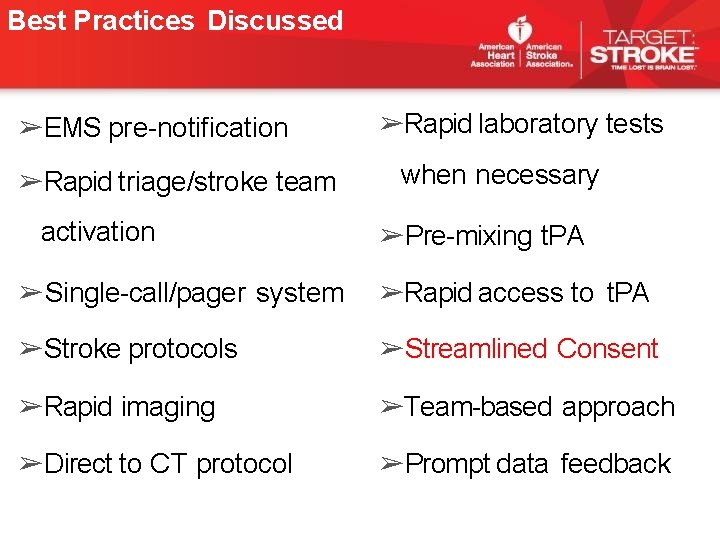
Best Practices Discussed ➢EMS pre-notification ➢Rapid triage/stroke team activation ➢Rapid laboratory tests when necessary ➢Pre-mixing t. PA ➢Single-call/pager system ➢Rapid access to t. PA ➢Stroke protocols ➢Streamlined Consent ➢Rapid imaging ➢Team-based approach ➢Direct to CT protocol ➢Prompt data feedback
Implemented Practices 100 90 93. 3 8 6. 6 80 80 70 60 4 6. 7 50 40 30 20 10 0 B a se lin e 33 1 year 20 1 3. 3 6. 7 0 0
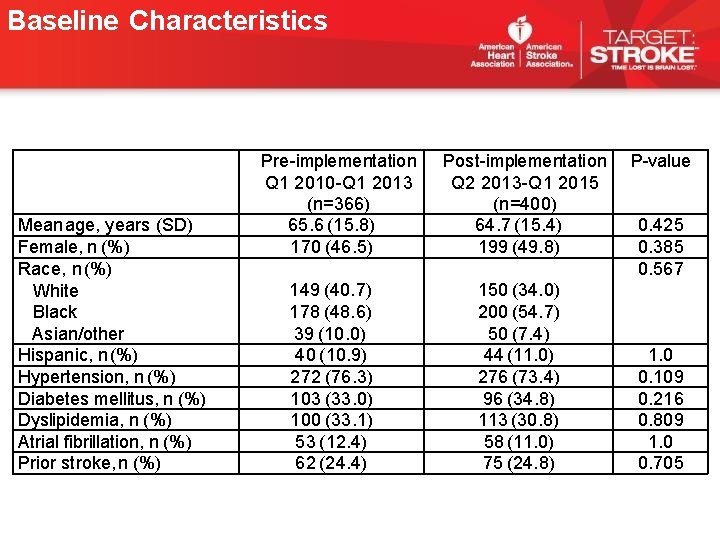
Baseline Characteristics Mean age, years (SD) Female, n (%) Race, n (%) White Black Asian/other Hispanic, n (%) Hypertension, n (%) Diabetes mellitus, n (%) Dyslipidemia, n (%) Atrial fibrillation, n (%) Prior stroke, n (%) Pre-implementation Q 1 2010 -Q 1 2013 (n=366) 65. 6 (15. 8) 170 (46. 5) 149 (40. 7) 178 (48. 6) 39 (10. 0) 40 (10. 9) 272 (76. 3) 103 (33. 0) 100 (33. 1) 53 (12. 4) 62 (24. 4) Post-implementation Q 2 2013 -Q 1 2015 (n=400) 64. 7 (15. 4) 199 (49. 8) 150 (34. 0) 200 (54. 7) 50 (7. 4) 44 (11. 0) 276 (73. 4) 96 (34. 8) 113 (30. 8) 58 (11. 0) 75 (24. 8) P-value 0. 425 0. 385 0. 567 1. 0 0. 109 0. 216 0. 809 1. 0 0. 705
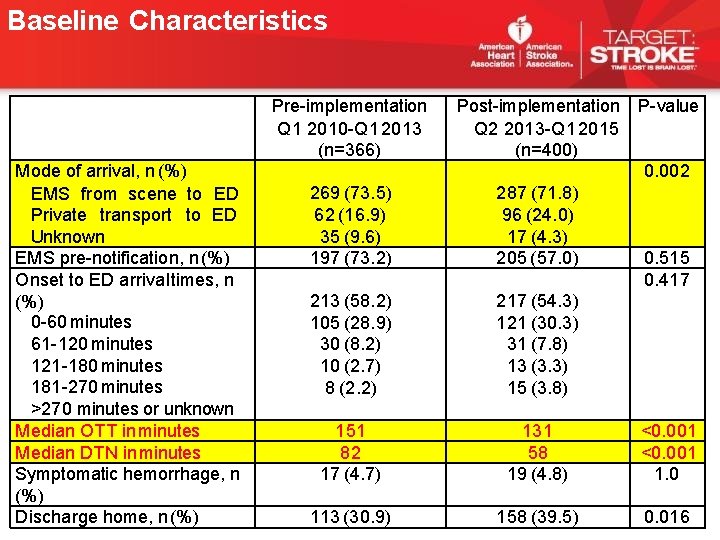
Baseline Characteristics Pre-implementation Q 1 2010 -Q 1 2013 (n=366) Mode of arrival, n (%) EMS from scene to ED Private transport to ED Unknown EMS pre-notification, n (%) Onset to ED arrival times, n (%) 0 -60 minutes 61 -120 minutes 121 -180 minutes 181 -270 minutes >270 minutes or unknown Median OTT in minutes Median DTN in minutes Symptomatic hemorrhage, n (%) Discharge home, n (%) 269 (73. 5) 62 (16. 9) 35 (9. 6) 197 (73. 2) 213 (58. 2) 105 (28. 9) 30 (8. 2) 10 (2. 7) 8 (2. 2) Post-implementation P-value Q 2 2013 -Q 1 2015 (n=400) 0. 002 287 (71. 8) 96 (24. 0) 17 (4. 3) 205 (57. 0) 0. 515 0. 417 217 (54. 3) 121 (30. 3) 31 (7. 8) 13 (3. 3) 15 (3. 8) 151 82 17 (4. 7) 131 58 19 (4. 8) <0. 001 1. 0 113 (30. 9) 158 (39. 5) 0. 016
Main Results
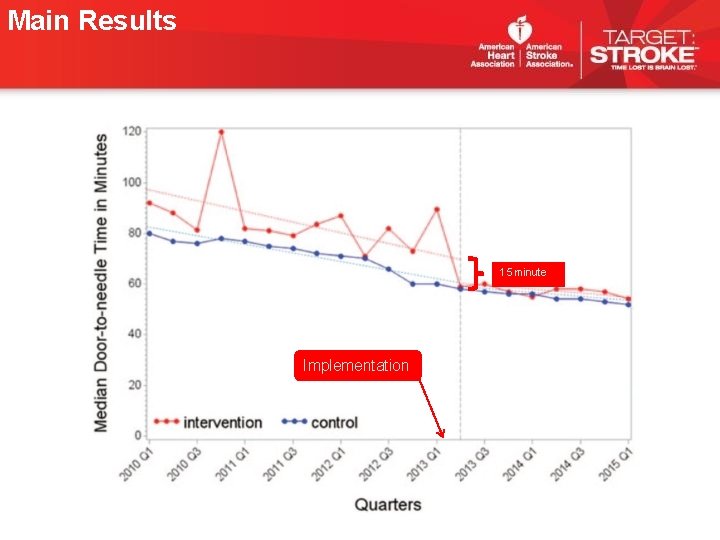
Main Results 15 minute Implementation
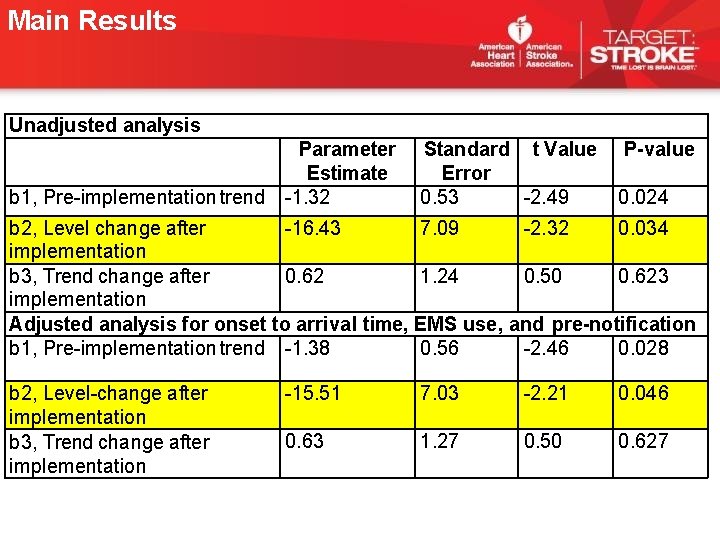
Main Results Unadjusted analysis Parameter Estimate b 1, Pre-implementation trend -1. 32 Standard t Value Error 0. 53 -2. 49 P-value 0. 024 b 2, Level change after -16. 43 7. 09 -2. 32 0. 034 implementation b 3, Trend change after 0. 62 1. 24 0. 50 0. 623 implementation Adjusted analysis for onset to arrival time, EMS use, and pre-notification b 1, Pre-implementation trend -1. 38 0. 56 -2. 46 0. 028 b 2, Level-change after implementation b 3, Trend change after implementation -15. 51 7. 03 -2. 21 0. 046 0. 63 1. 27 0. 50 0. 627
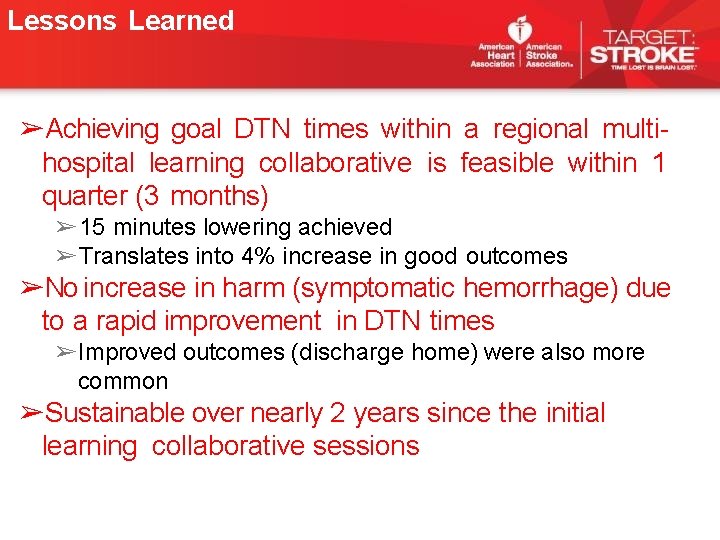
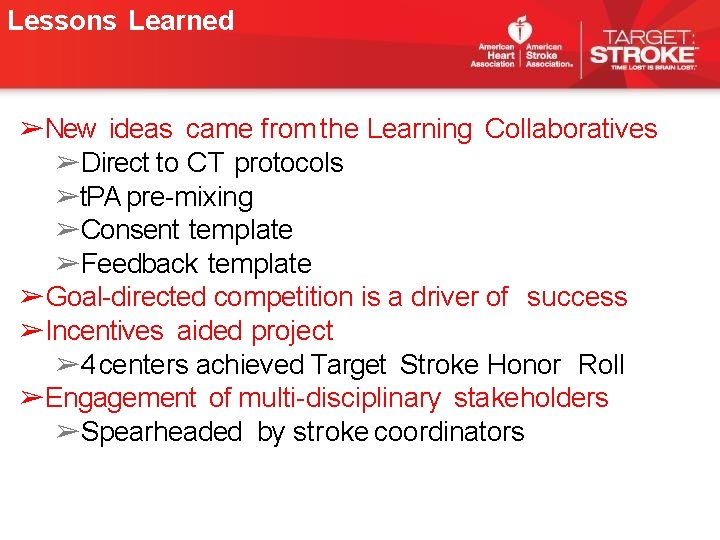
Lessons Learned ➢Achieving goal DTN times within a regional multihospital learning collaborative is feasible within 1 quarter (3 months) ➢ 15 minutes lowering achieved ➢Translates into 4% increase in good outcomes ➢No increase in harm (symptomatic hemorrhage) due to a rapid improvement in DTN times ➢Improved outcomes (discharge home) were also more common ➢Sustainable over nearly 2 years since the initial learning collaborative sessions
Lessons Learned ➢New ideas came from the Learning Collaboratives ➢Direct to CT protocols ➢t. PA pre-mixing ➢Consent template ➢Feedback template ➢Goal-directed competition is a driver of success ➢Incentives aided project ➢ 4 centers achieved Target Stroke Honor Roll ➢Engagement of multi-disciplinary stakeholders ➢Spearheaded by stroke coordinators
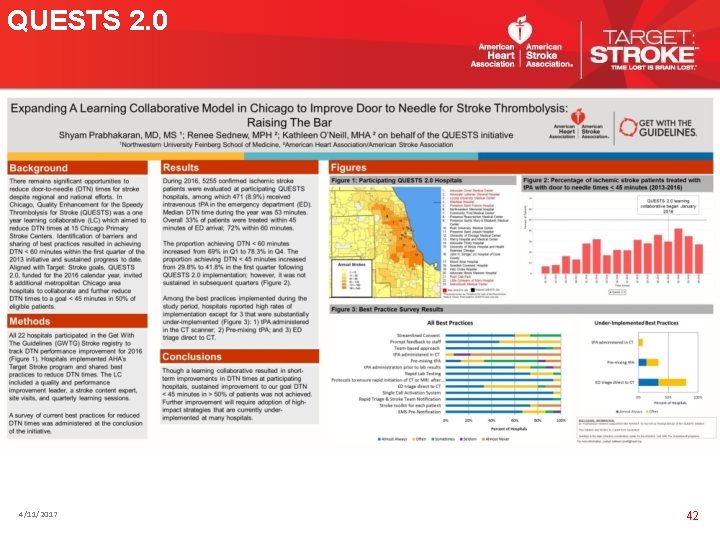
QUESTS 2. 0 4/11/2017 42
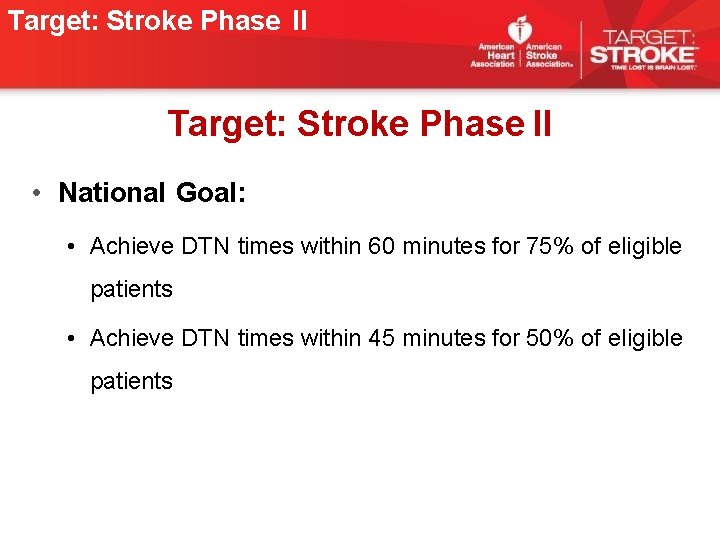
Target: Stroke Phase II • National Goal: • Achieve DTN times within 60 minutes for 75% of eligible patients • Achieve DTN times within 45 minutes for 50% of eligible patients
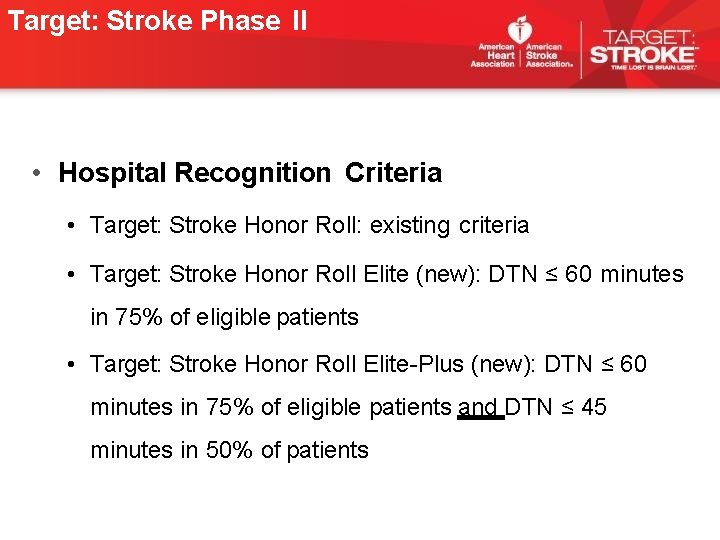
Target: Stroke Phase II • Hospital Recognition Criteria • Target: Stroke Honor Roll: existing criteria • Target: Stroke Honor Roll Elite (new): DTN ≤ 60 minutes in 75% of eligible patients • Target: Stroke Honor Roll Elite-Plus (new): DTN ≤ 60 minutes in 75% of eligible patients and DTN ≤ 45 minutes in 50% of patients
Target: Stroke Phase II • Additional Target: Stroke Results • Identified 16 best practices • High impact, low-frequency implemented strategies – Transfer patient directly to brain imaging scanner – Pre-mix t. PA – t. PA treatment in the CT scanner • Could further lower DTN times by 20 minutes • Importance of competition, incentives, and collaboration cannot be under-stated Xian Y et al. Circ Cardiovasc Qual Outcomes. 2016: 10: e 003227.
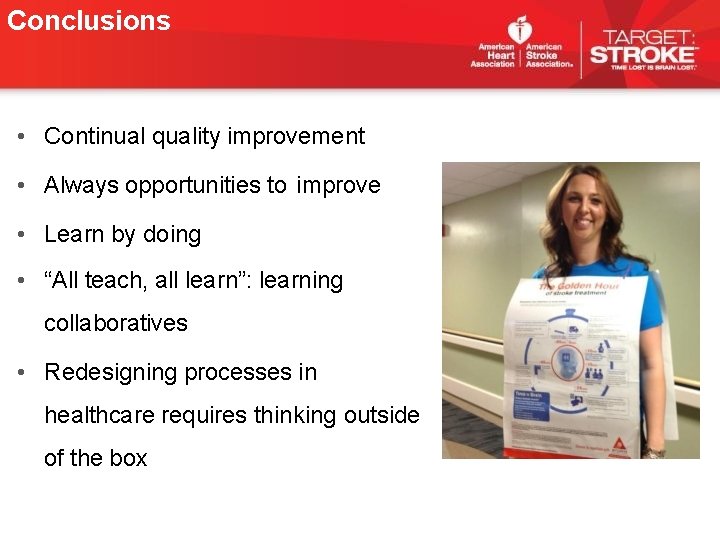
Conclusions • Continual quality improvement • Always opportunities to improve • Learn by doing • “All teach, all learn”: learning collaboratives • Redesigning processes in healthcare requires thinking outside of the box
American Heart Association Stroke Resources • Target Stroke Clinical Resources and Tools • Best practices, Time tracker, Feedback Report and more • QUESTS Door-to-Needle Initiative • Illinois Stroke Systems of Care Website • Legislative updates and links • Clinical Education handouts, webinars, continuing education opportunities • Stroke-related articles, fact sheets, toolkits • EMS Resources • Patient and Community Resources • Acute Ischemic Stroke Resources • Cryptogenic Stroke Resources For more information on all AHA Quality Initiatives, please visit www. heart. org/quality Illinois Stroke - Get With The Guidelines contact – Renee Sednew, renee. sednew@heart. org © 2010, American Heart Association 47
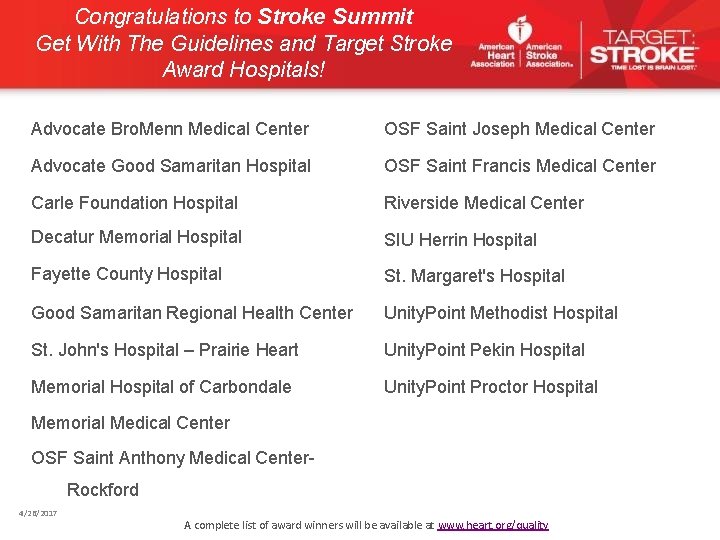
Congratulations to Stroke Summit Get With The Guidelines and Target Stroke Award Hospitals! Advocate Bro. Menn Medical Center OSF Saint Joseph Medical Center Advocate Good Samaritan Hospital OSF Saint Francis Medical Center Carle Foundation Hospital Riverside Medical Center Decatur Memorial Hospital SIU Herrin Hospital Fayette County Hospital St. Margaret's Hospital Good Samaritan Regional Health Center Unity. Point Methodist Hospital St. John's Hospital – Prairie Heart Unity. Point Pekin Hospital Memorial Hospital of Carbondale Unity. Point Proctor Hospital Memorial Medical Center OSF Saint Anthony Medical Center. Rockford 4/26/2017 A complete list of award winners will be available at www. heart. org/quality