
TARGET STOCK LEVELS Cont of setting the right
![FORMULA: TSL = [Usage Rate x (Lead Time + Review Period ] + Safety](https://slidetodoc.com/presentation_image_h2/0660574d10b90ff29aa8e5d0e20e1d5e/image-6.jpg "FORMULA: TSL = [Usage Rate x (Lead Time + Review Period ] + Safety")
- Slides: 12
TARGET STOCK LEVELS Cont’ of setting the right stock levels.
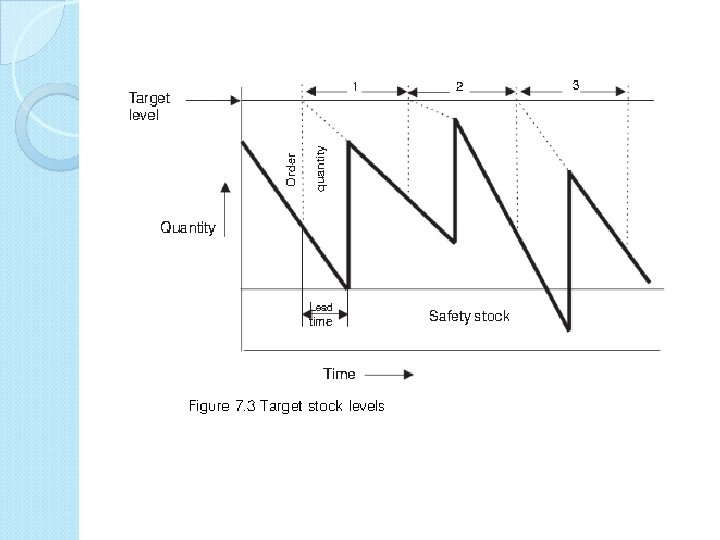
APPLICATION OF TARGET STOCK LEVELS It fix the order frequency and vary the order quantities. TSL approach is good to use in regular demand items, and is recommended for A class products. Target stock level support efficient purchasing.
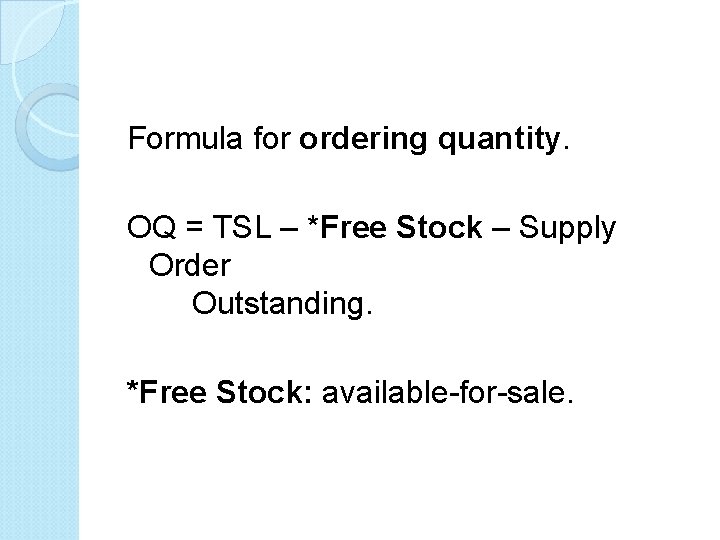
Formula for ordering quantity. OQ = TSL – *Free Stock – Supply Order Outstanding. *Free Stock: available-for-sale.
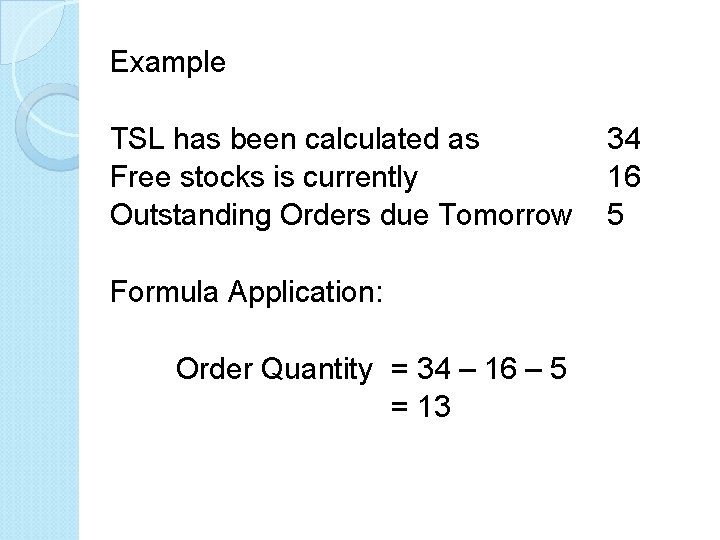
Example TSL has been calculated as Free stocks is currently Outstanding Orders due Tomorrow Formula Application: Order Quantity = 34 – 16 – 5 = 13 34 16 5
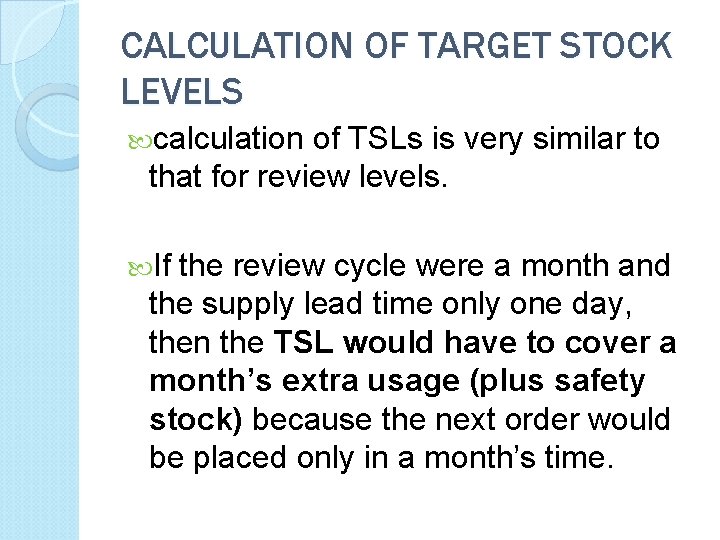
CALCULATION OF TARGET STOCK LEVELS calculation of TSLs is very similar to that for review levels. If the review cycle were a month and the supply lead time only one day, then the TSL would have to cover a month’s extra usage (plus safety stock) because the next order would be placed only in a month’s time.
FORMULA: TSL = [Usage Rate x (Lead Time + Review Period ] + Safety Stocks Safety stock=Customer service factor × MAD × √(Lead time +Review period)
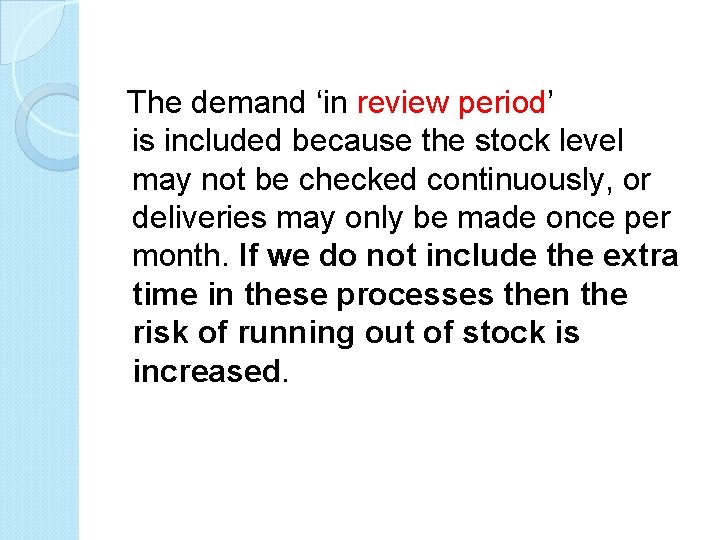
The demand ‘in review period’ is included because the stock level may not be checked continuously, or deliveries may only be made once per month. If we do not include the extra time in these processes then the risk of running out of stock is increased.
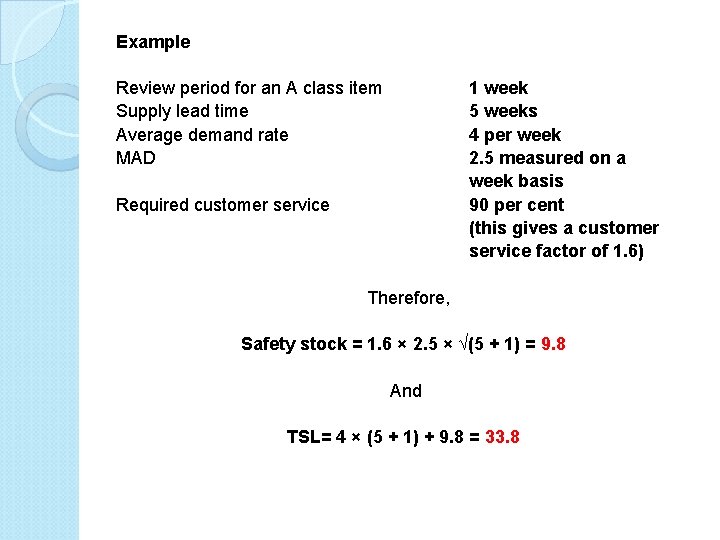
Example Review period for an A class item Supply lead time Average demand rate MAD 1 week 5 weeks 4 per week 2. 5 measured on a week basis 90 per cent (this gives a customer service factor of 1. 6) Required customer service Therefore, Safety stock = 1. 6 × 2. 5 × √(5 + 1) = 9. 8 And TSL= 4 × (5 + 1) + 9. 8 = 33. 8
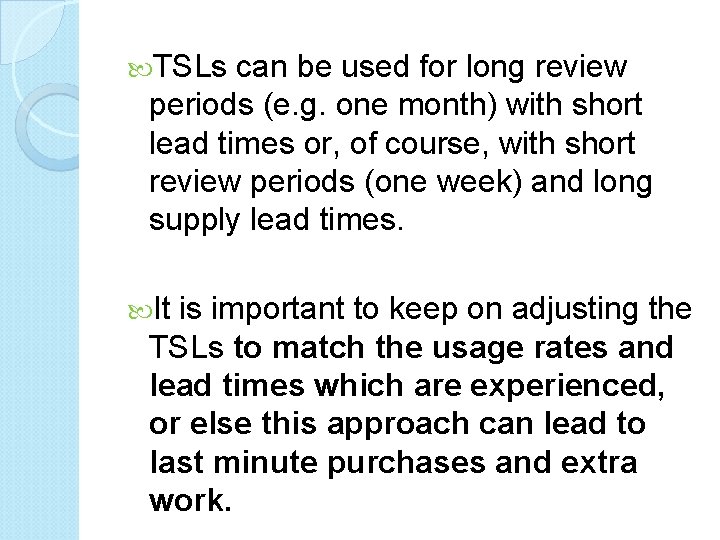
TSLs can be used for long review periods (e. g. one month) with short lead times or, of course, with short review periods (one week) and long supply lead times. It is important to keep on adjusting the TSLs to match the usage rates and lead times which are experienced, or else this approach can lead to last minute purchases and extra work.
It is also important to ensure that the stock does not run out without warning during the order cycle. This is why it is essential to monitor continuously to find those items where the stock is falling below the safety stock level
KEY POINTS Review levels should be continuously updated in line with demand. Review levels do not avoid stock outs; to do this requires expediting when physical stocks get low. Batch sizes are more important than lead time in keeping stock slow. Using target stock levels is good when buying many items from one supplier.