
TARDIGRADES Bears of the Moss n Dr William
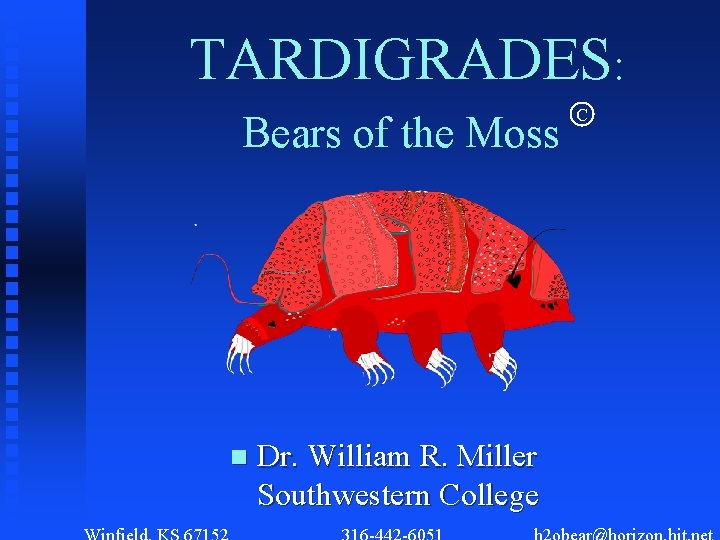
TARDIGRADES: Bears of the Moss n Dr. William R. Miller Southwestern College C
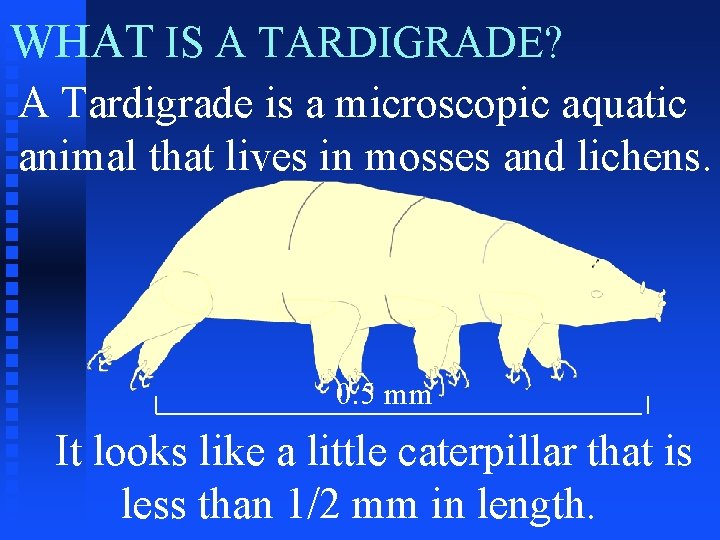
WHAT IS A TARDIGRADE? A Tardigrade is a microscopic aquatic animal that lives in mosses and lichens. 0. 5 mm It looks like a little caterpillar that is less than 1/2 mm in length.
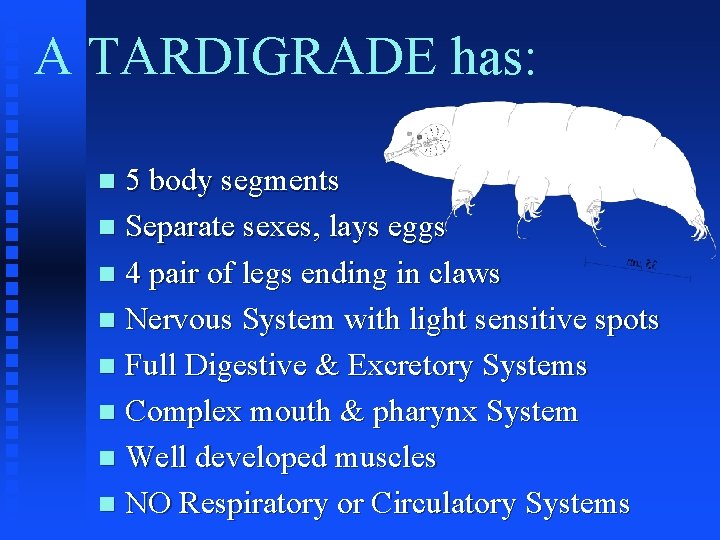
A TARDIGRADE has: 5 body segments n Separate sexes, lays eggs n 4 pair of legs ending in claws n Nervous System with light sensitive spots n Full Digestive & Excretory Systems n Complex mouth & pharynx System n Well developed muscles n NO Respiratory or Circulatory Systems n
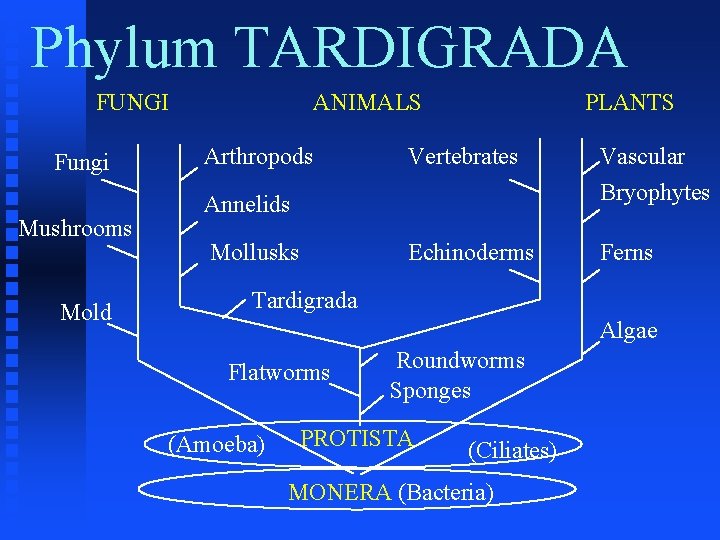
Phylum TARDIGRADA FUNGI Fungi Mushrooms Mold ANIMALS Arthropods PLANTS Vertebrates Vascular Bryophytes Echinoderms Ferns Annelids Mollusks Tardigrada Algae Flatworms (Amoeba) Roundworms Sponges PROTISTA (Ciliates) MONERA (Bacteria)
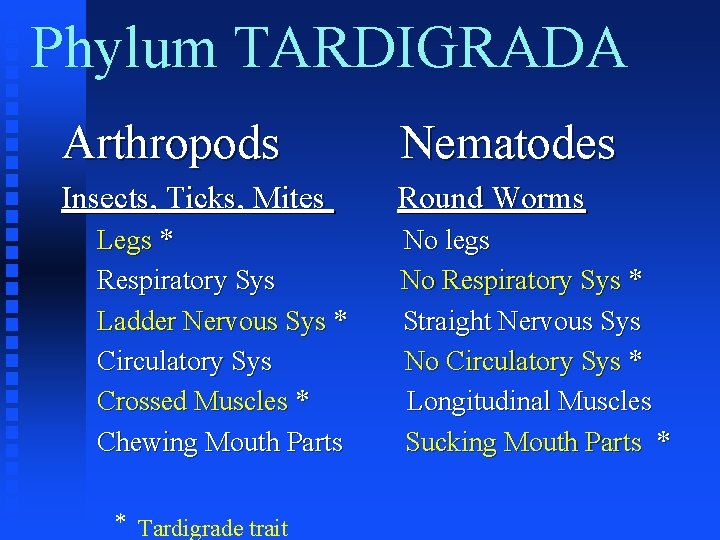
Phylum TARDIGRADA Arthropods Nematodes Insects, Ticks, Mites Round Worms Legs * Respiratory Sys Ladder Nervous Sys * Circulatory Sys Crossed Muscles * Chewing Mouth Parts * Tardigrade trait No legs No Respiratory Sys * Straight Nervous Sys No Circulatory Sys * Longitudinal Muscles Sucking Mouth Parts *

TARDIGRADE Structures: lateral view
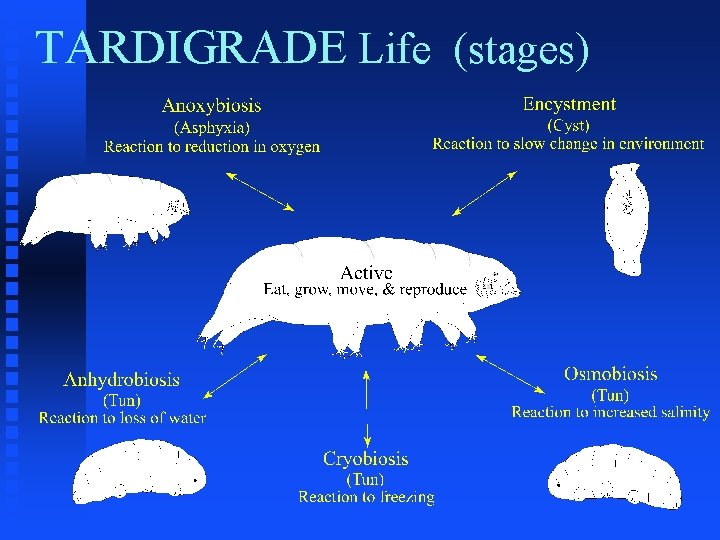
TARDIGRADE Life (stages)
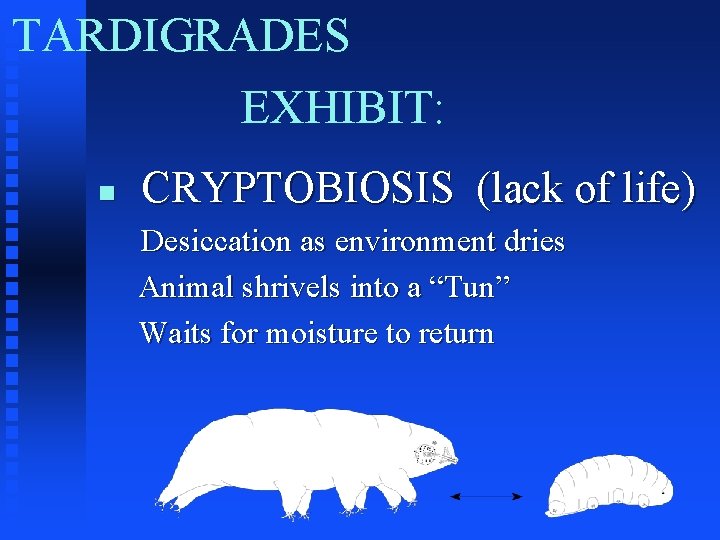
TARDIGRADES EXHIBIT: n CRYPTOBIOSIS (lack of life) Desiccation as environment dries Animal shrivels into a “Tun” Waits for moisture to return
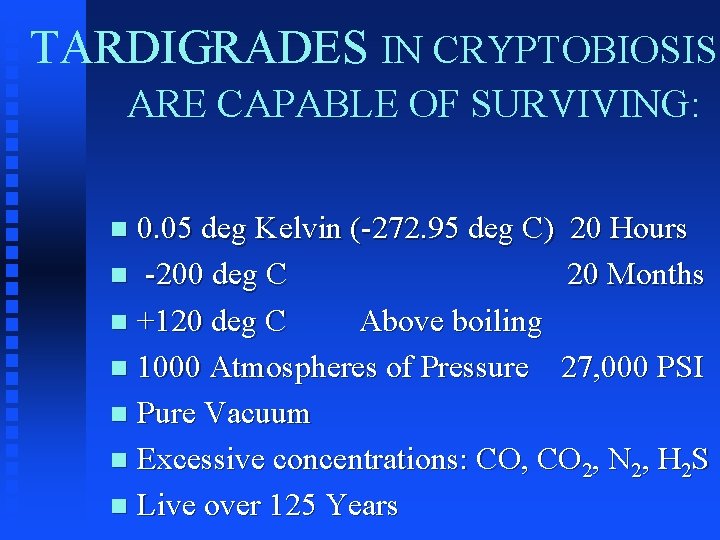
TARDIGRADES IN CRYPTOBIOSIS ARE CAPABLE OF SURVIVING: 0. 05 deg Kelvin (-272. 95 deg C) 20 Hours n -200 deg C 20 Months n +120 deg C Above boiling n 1000 Atmospheres of Pressure 27, 000 PSI n Pure Vacuum n Excessive concentrations: CO, CO 2, N 2, H 2 S n Live over 125 Years n
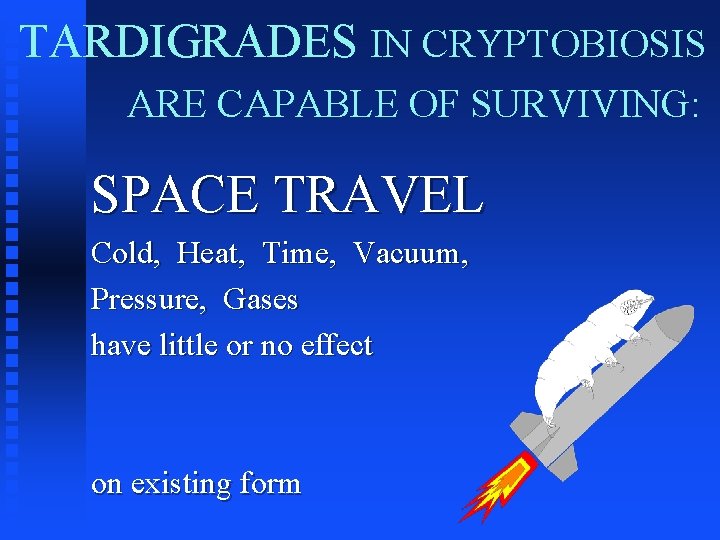
TARDIGRADES IN CRYPTOBIOSIS ARE CAPABLE OF SURVIVING: SPACE TRAVEL Cold, Heat, Time, Vacuum, Pressure, Gases have little or no effect on existing form
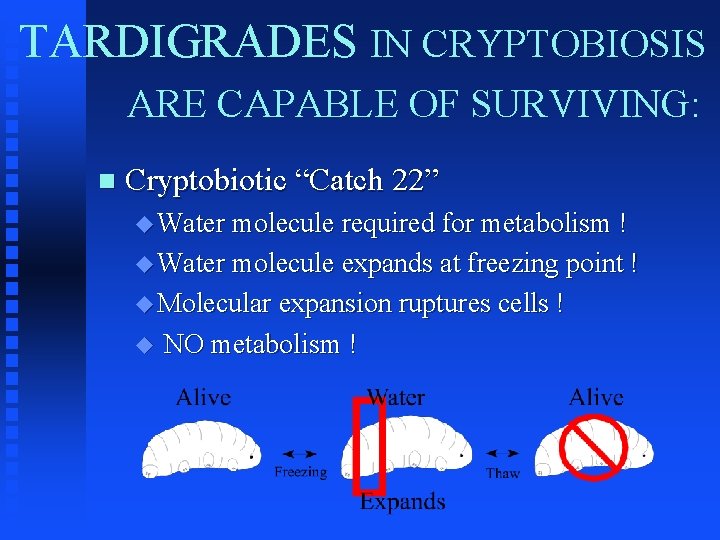
TARDIGRADES IN CRYPTOBIOSIS ARE CAPABLE OF SURVIVING: n Cryptobiotic “Catch 22” u Water molecule required for metabolism ! u Water molecule expands at freezing point ! u Molecular expansion ruptures cells ! u NO metabolism !
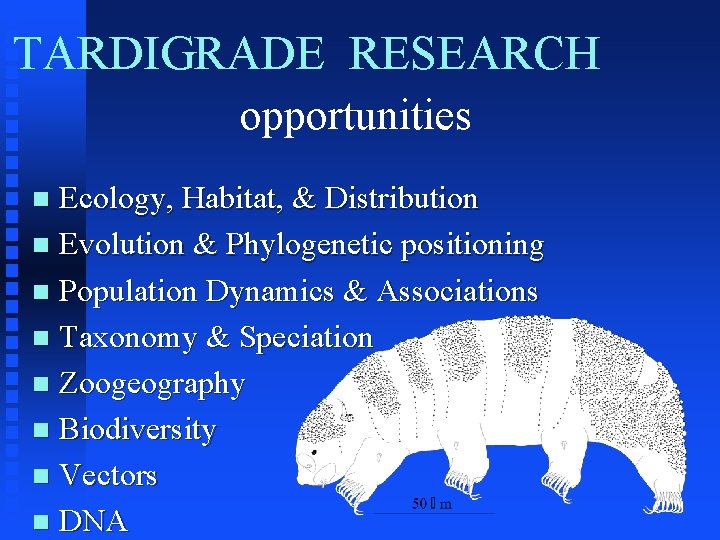
TARDIGRADE RESEARCH opportunities Ecology, Habitat, & Distribution n Evolution & Phylogenetic positioning n Population Dynamics & Associations n Taxonomy & Speciation n Zoogeography n Biodiversity n Vectors n DNA n
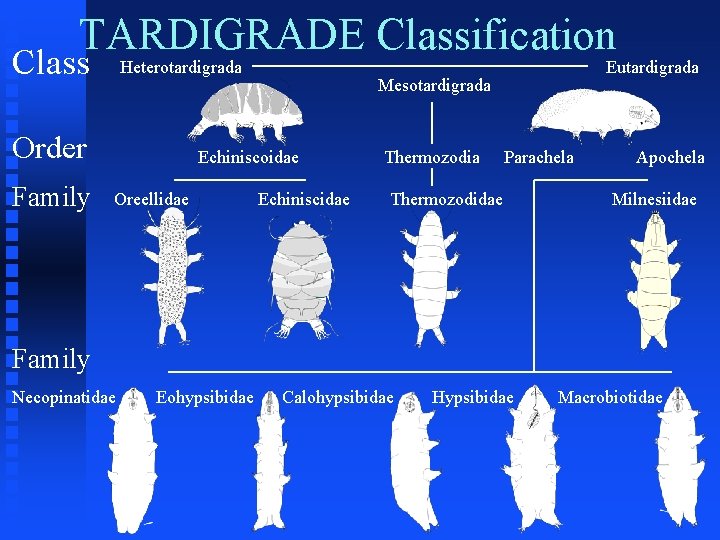
TARDIGRADE Classification Class Heterotardigrada Order Family Mesotardigrada Echiniscoidae Oreellidae Eutardigrada Echiniscidae Thermozodia Parachela Thermozodidae Apochela Milnesiidae Family Necopinatidae Eohypsibidae Calohypsibidae Hypsibidae Macrobiotidae
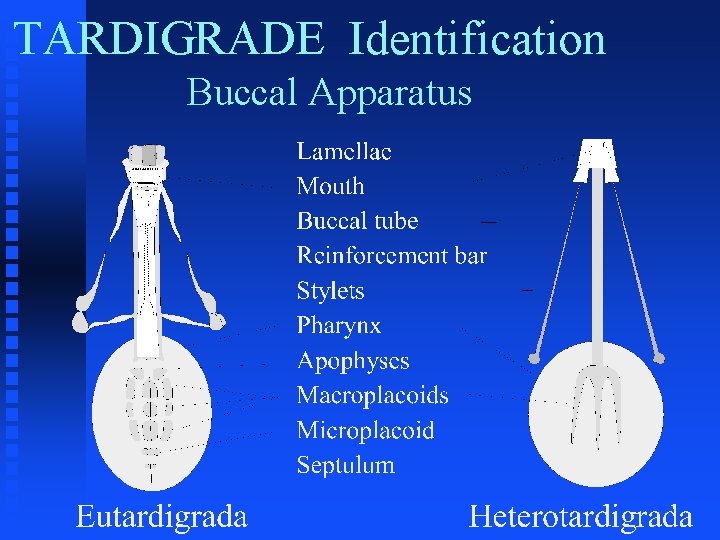
TARDIGRADE Identification Buccal Apparatus
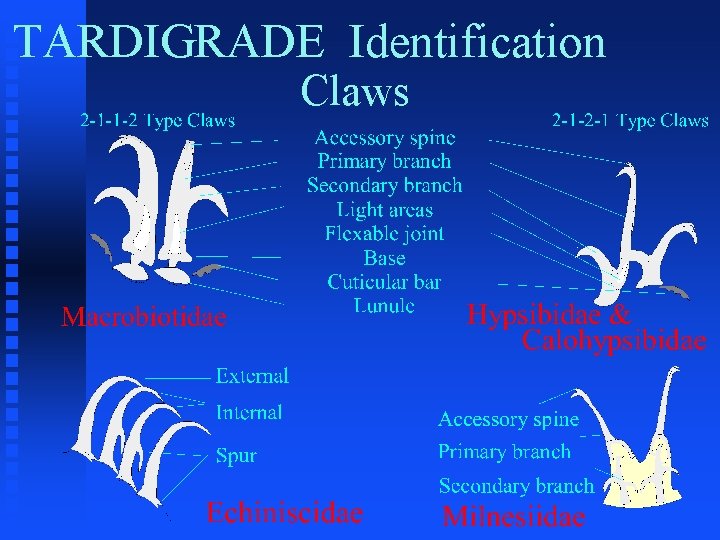
TARDIGRADE Identification Claws
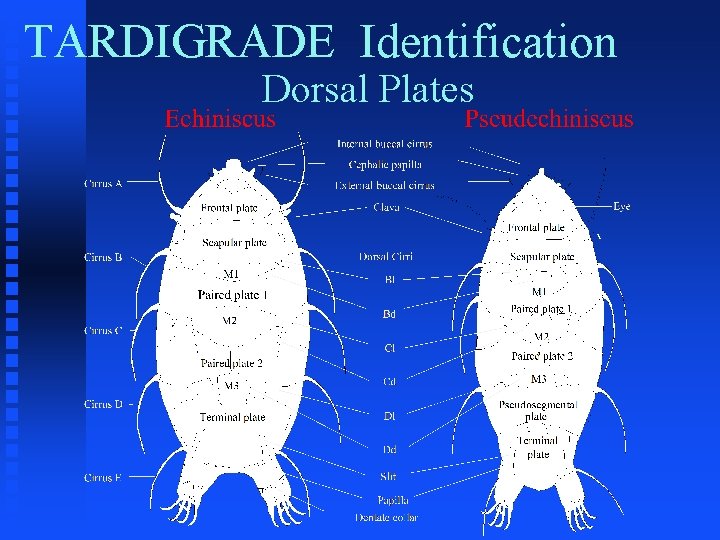
TARDIGRADE Identification Dorsal Plates
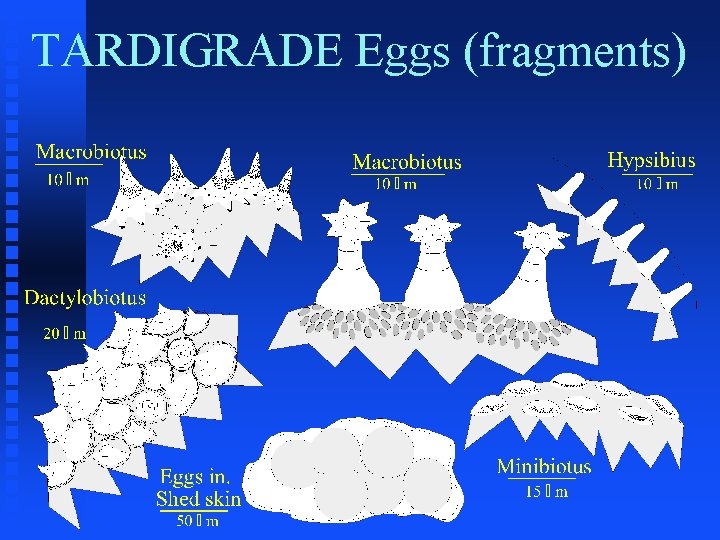
TARDIGRADE Eggs (fragments)
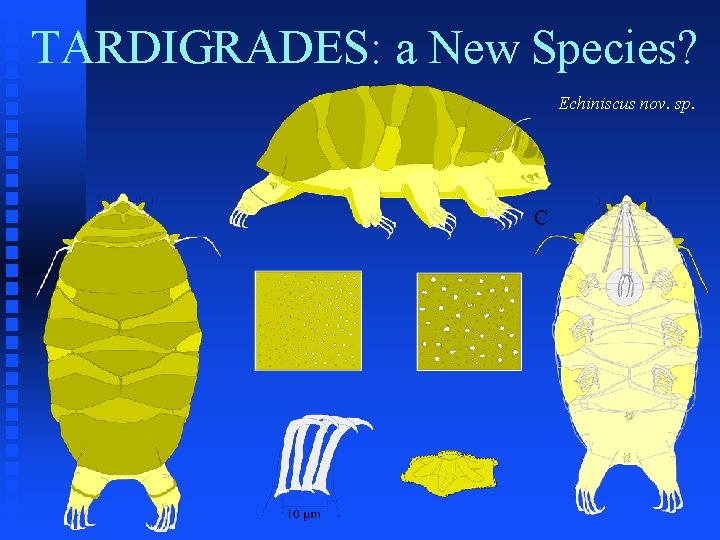
TARDIGRADES: a New Species? Echiniscus nov. sp.

TARDIGRADES live in: n Moss n Lichen n Soil n Leaf Litter n Beach Sand n Marine Sediment n Fresh Water Algae On ALL Continents
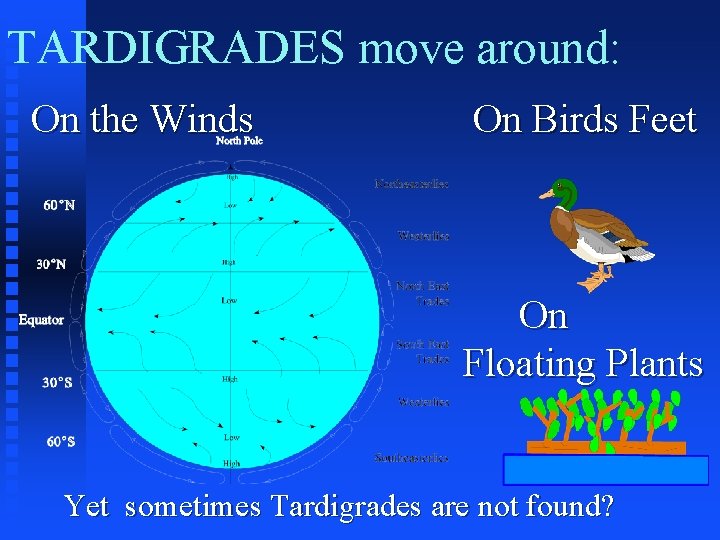
TARDIGRADES move around: On the Winds On Birds Feet On Floating Plants Yet sometimes Tardigrades are not found?
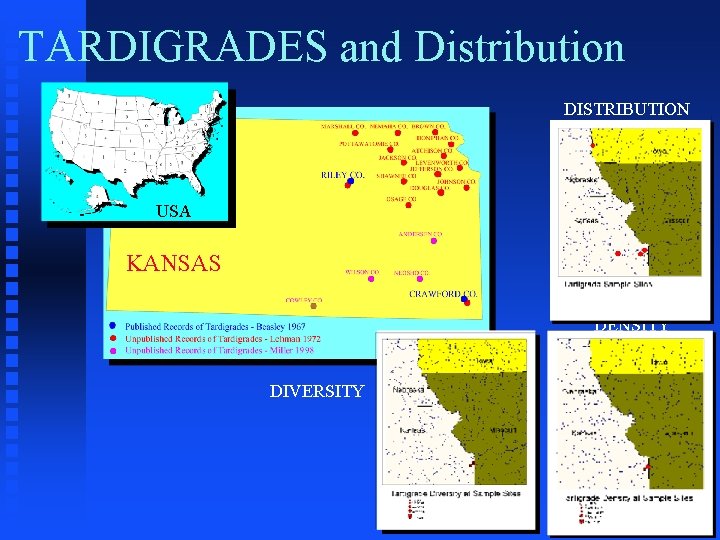
TARDIGRADES and Distribution DISTRIBUTION USA KANSAS DENSITY DIVERSITY
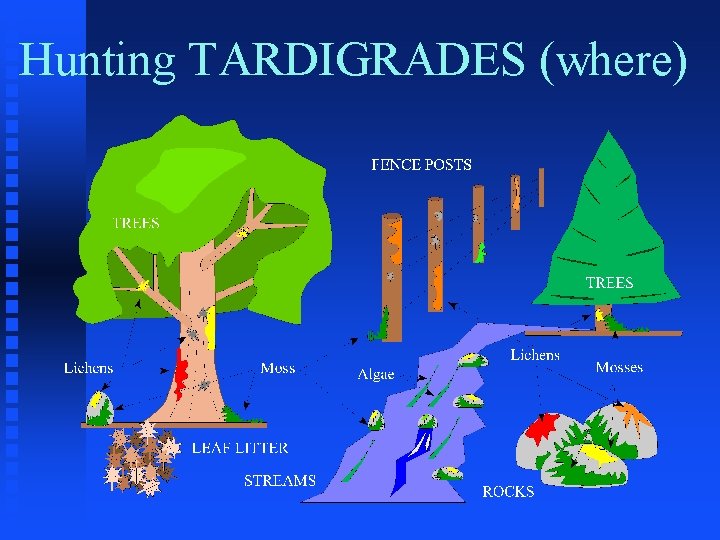
Hunting TARDIGRADES (where)
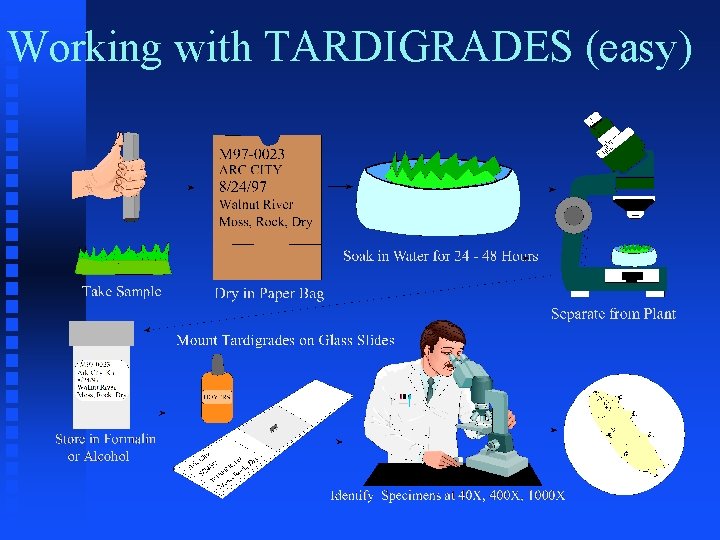
Working with TARDIGRADES (easy)
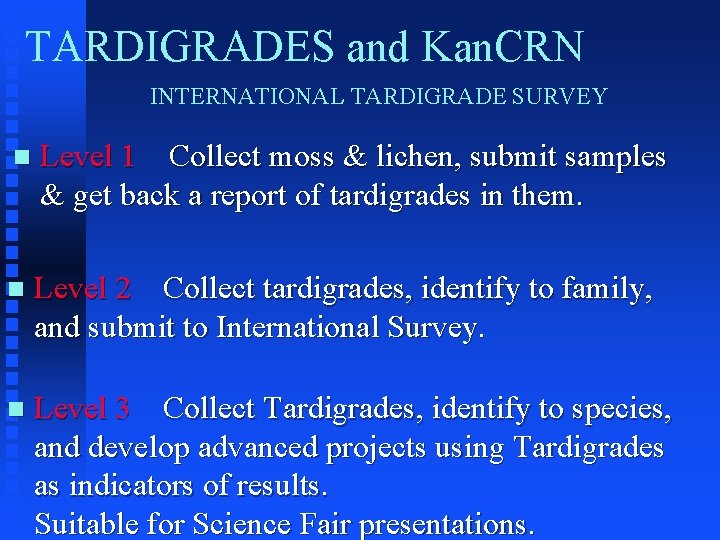
TARDIGRADES and Kan. CRN INTERNATIONAL TARDIGRADE SURVEY n Level 1 Collect moss & lichen, submit samples & get back a report of tardigrades in them. n Level 2 Collect tardigrades, identify to family, and submit to International Survey. n Level 3 Collect Tardigrades, identify to species, and develop advanced projects using Tardigrades as indicators of results. Suitable for Science Fair presentations.
TARDIGRADE References n Miller, W. R. , 1997, Bears of the Moss, The Kansas School Naturalist, Vol. 43, No. 3. pp. 16. n Kinchin, I. M. , 1994, The Biology of Tardigrades, Portland Press, pp 186. n Ramazzotti, G. & Maucci, W. , 1983, Il Phylum Tardigrada (3 rd ed. ), Memorie dell’Istuto italiano di Idrobiologia Marco Marchi, Vol. 41, pp. 1 -1012. n Nelson, D. R. 1982, Proceedings of the third International Symposium on Tardigrades. August 3 -6, 1980. Johnson City, Tennessee, USA. East Tennessee State University Press, pp. 1 -236.
- Slides: 25