
TANGO CONTROLS CONCEPTS A brief introduction to the
TANGO CONTROLS CONCEPTS A brief introduction to the Tango Controls Concepts by Andy Götz (vocals) + Reynald Bourtembourg (keyboards) 1 Tango Controls Concepts – 5 October Tango Workshop @ ICALEPCS 2019
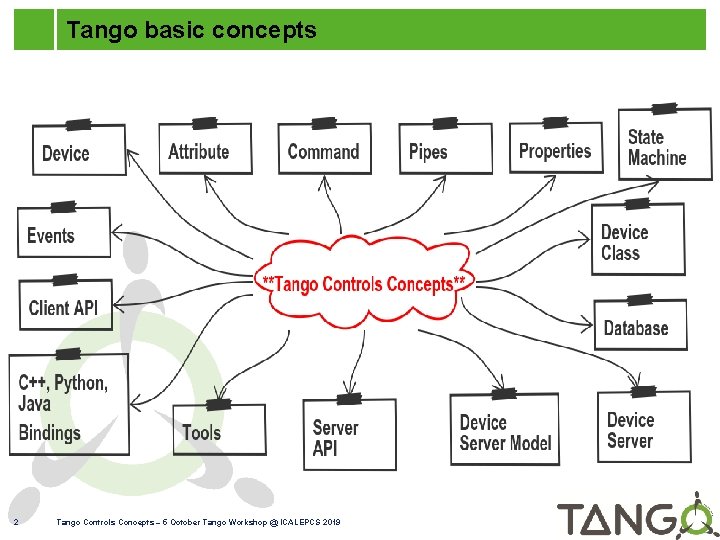
Tango basic concepts 2 Tango Controls Concepts – 5 October Tango Workshop @ ICALEPCS 2019
Tango = actors + microservices Tango is based on the concept of Distributed Devices This is an implementation of the Actor Model Device servers implement Microservices Tango = Actors + Microservices are in fashion today TANGO is based on MODERN concepts ! Tango Controls Concepts – 5 October Tango Workshop @ ICALEPCS 2019
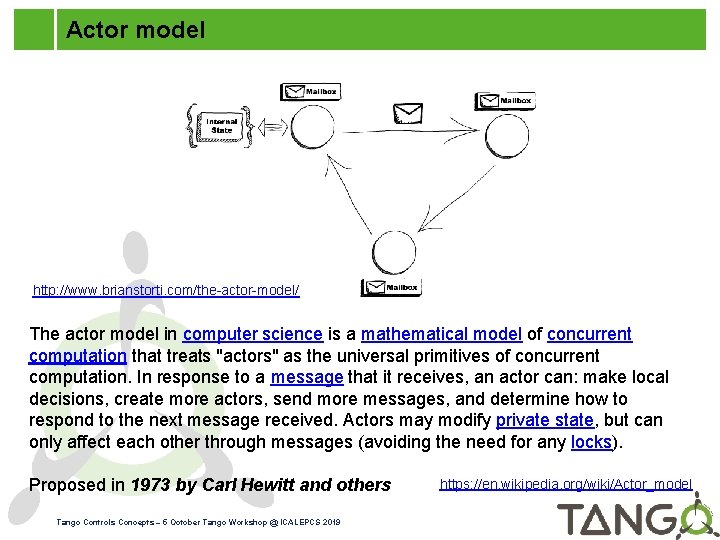
Actor model http: //www. brianstorti. com/the-actor-model/ The actor model in computer science is a mathematical model of concurrent computation that treats "actors" as the universal primitives of concurrent computation. In response to a message that it receives, an actor can: make local decisions, create more actors, send more messages, and determine how to respond to the next message received. Actors may modify private state, but can only affect each other through messages (avoiding the need for any locks). Proposed in 1973 by Carl Hewitt and others Tango Controls Concepts – 5 October Tango Workshop @ ICALEPCS 2019 https: //en. wikipedia. org/wiki/Actor_model
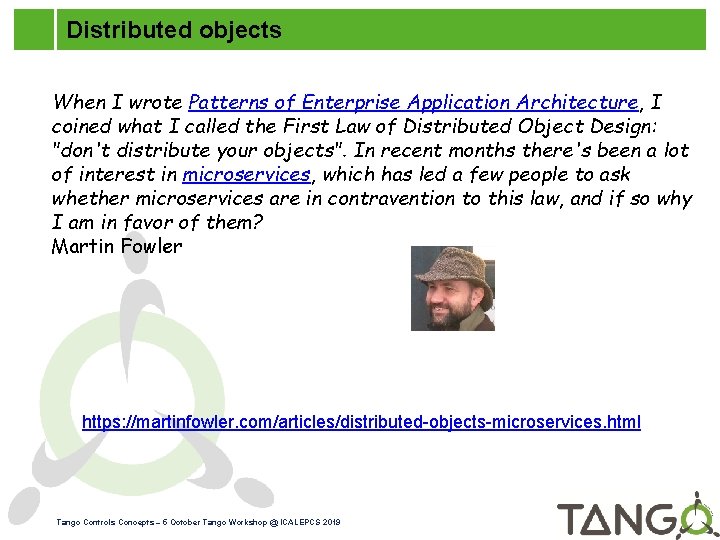
Distributed objects When I wrote Patterns of Enterprise Application Architecture, I coined what I called the First Law of Distributed Object Design: "don't distribute your objects". In recent months there's been a lot of interest in microservices, which has led a few people to ask whether microservices are in contravention to this law, and if so why I am in favor of them? Martin Fowler https: //martinfowler. com/articles/distributed-objects-microservices. html Tango Controls Concepts – 5 October Tango Workshop @ ICALEPCS 2019
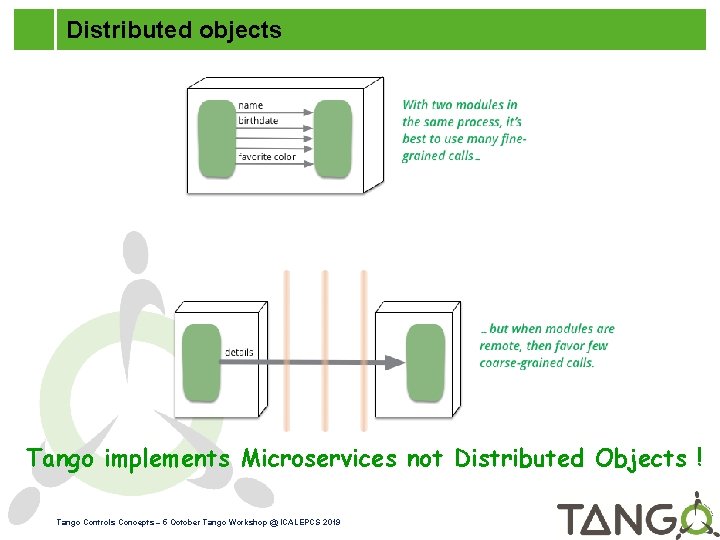
Distributed objects Tango implements Microservices not Distributed Objects ! Tango Controls Concepts – 5 October Tango Workshop @ ICALEPCS 2019
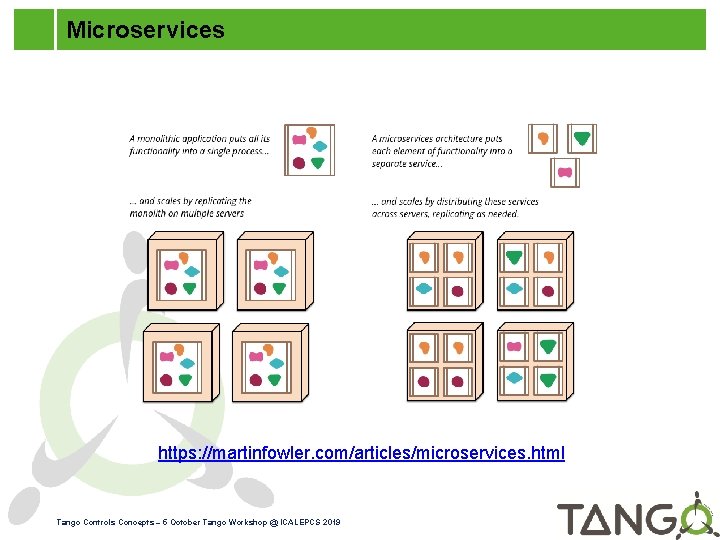
Microservices https: //martinfowler. com/articles/microservices. html Tango Controls Concepts – 5 October Tango Workshop @ ICALEPCS 2019
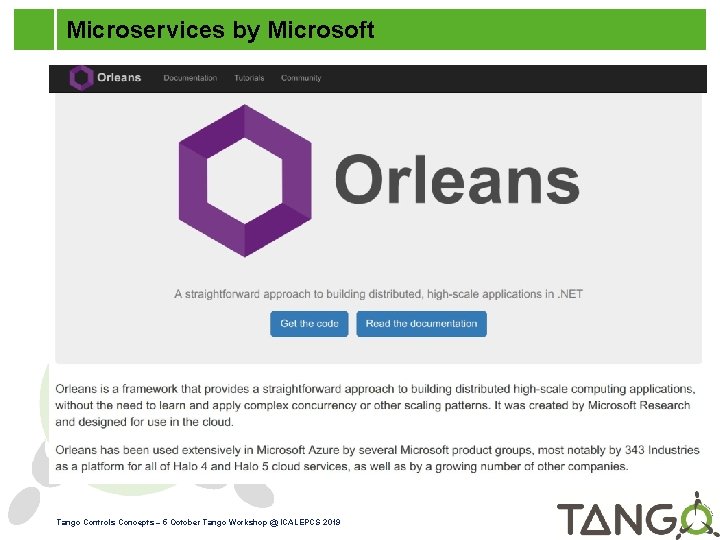
Microservices by Microsoft Tango Controls Concepts – 5 October Tango Workshop @ ICALEPCS 2019
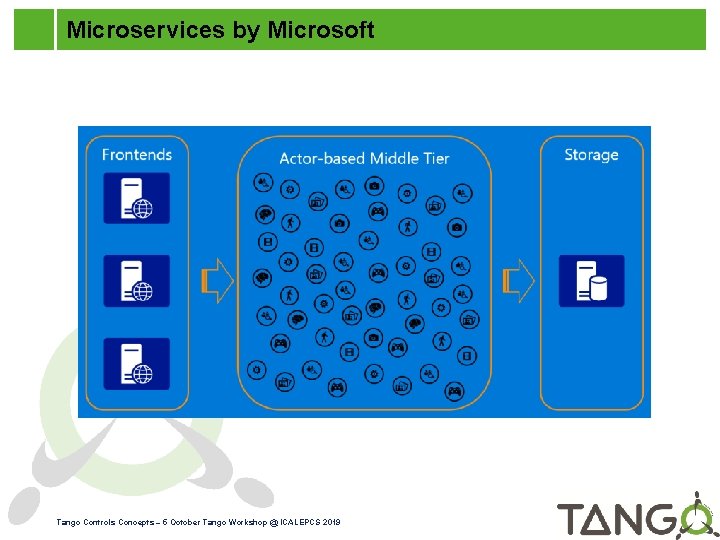
Microservices by Microsoft Tango Controls Concepts – 5 October Tango Workshop @ ICALEPCS 2019
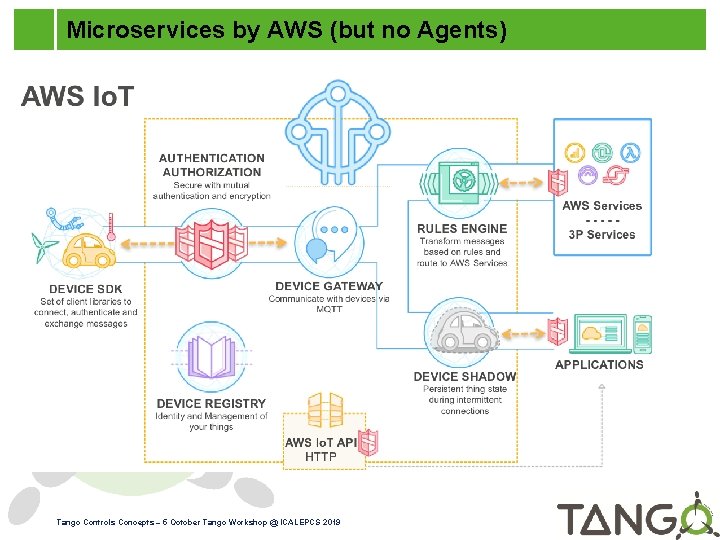
Microservices by AWS (but no Agents) Tango Controls Concepts – 5 October Tango Workshop @ ICALEPCS 2019
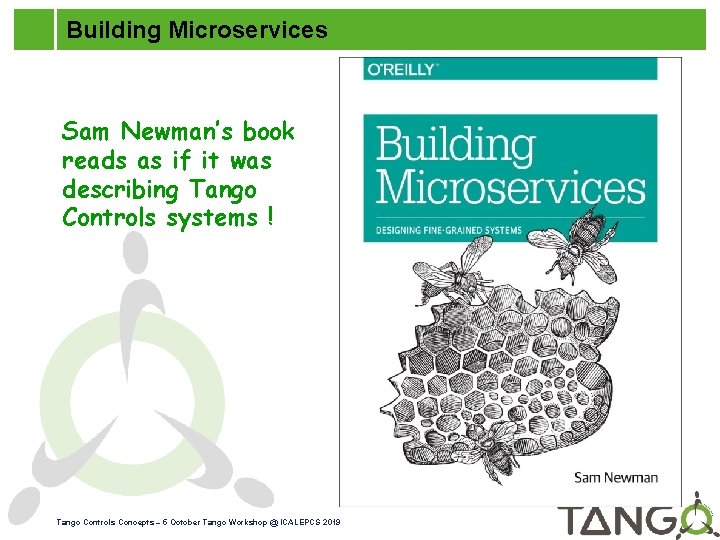
Building Microservices Sam Newman’s book reads as if it was describing Tango Controls systems ! Tango Controls Concepts – 5 October Tango Workshop @ ICALEPCS 2019
Tango Turing test 12 Tango Controls Concepts – 5 October Tango Workshop @ ICALEPCS 2019
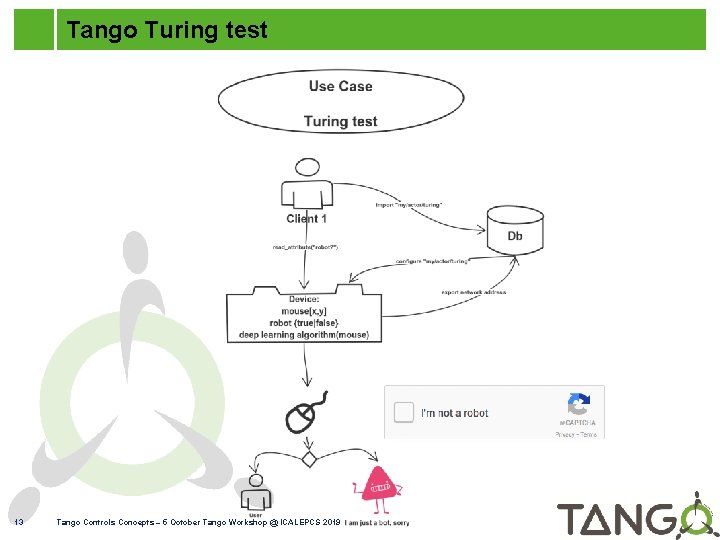
Tango Turing test 13 Tango Controls Concepts – 5 October Tango Workshop @ ICALEPCS 2019
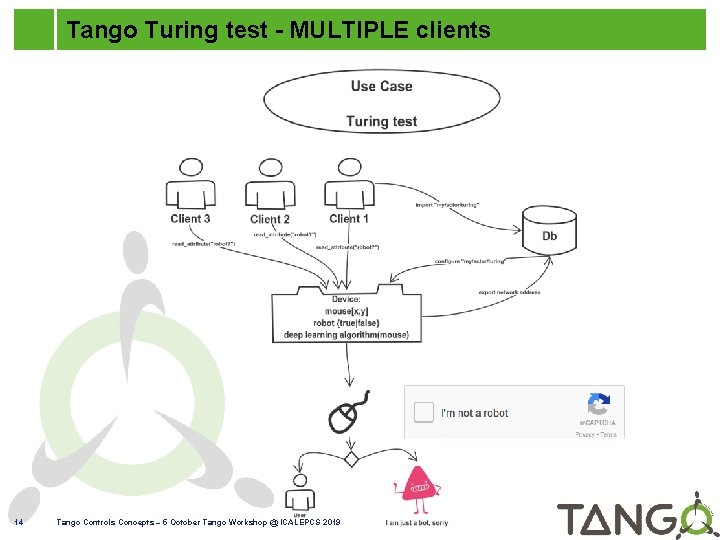
Tango Turing test - MULTIPLE clients 14 Tango Controls Concepts – 5 October Tango Workshop @ ICALEPCS 2019
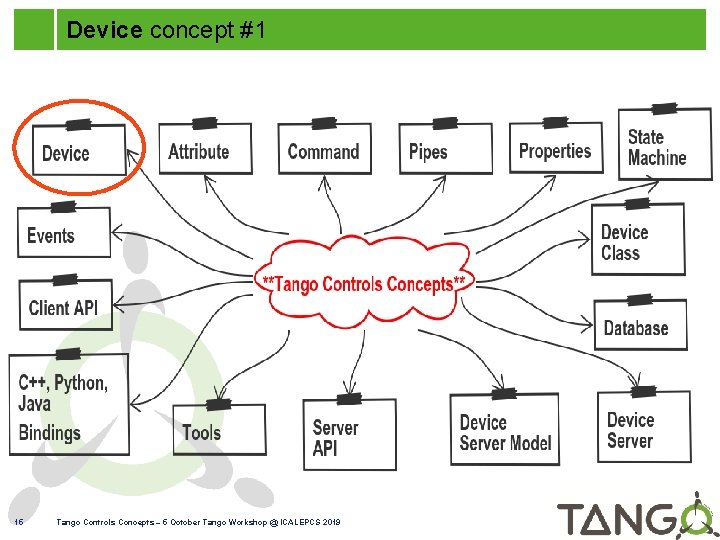
Device concept #1 15 Tango Controls Concepts – 5 October Tango Workshop @ ICALEPCS 2019
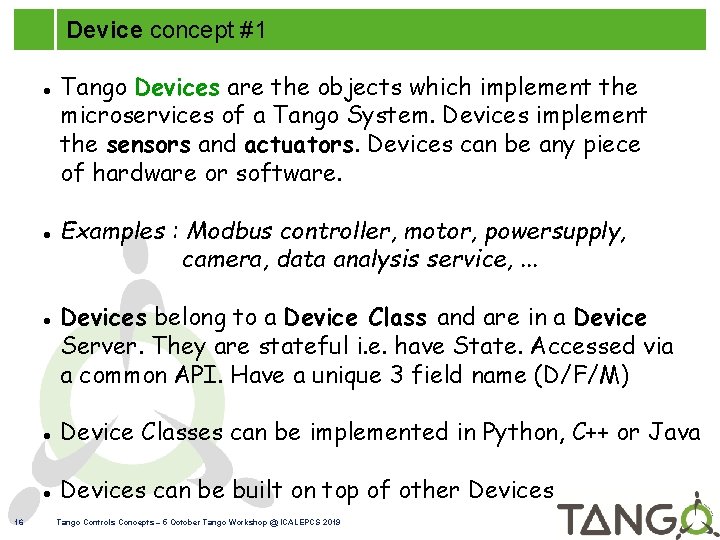
Device concept #1 16 Tango Devices are the objects which implement the microservices of a Tango System. Devices implement the sensors and actuators. Devices can be any piece of hardware or software. Examples : Modbus controller, motor, powersupply, camera, data analysis service, . . . Devices belong to a Device Class and are in a Device Server. They are stateful i. e. have State. Accessed via a common API. Have a unique 3 field name (D/F/M) Device Classes can be implemented in Python, C++ or Java Devices can be built on top of other Devices Tango Controls Concepts – 5 October Tango Workshop @ ICALEPCS 2019
Device thought experiment How would you decompose your system into Devices? What naming convention to use? How many hierarchies of Devices? Is there a limit? 17 What are the equivalent of Devices in other systems e. g. EPICS, Spring Boot, your system ? How would you run a control system in the cloud? QUESTIONS? Tango Controls Concepts – 5 October Tango Workshop @ ICALEPCS 2019
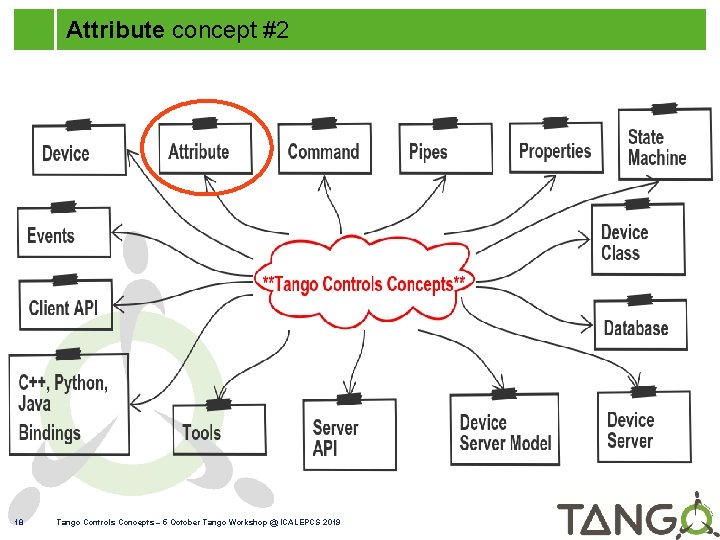
Attribute concept #2 18 Tango Controls Concepts – 5 October Tango Workshop @ ICALEPCS 2019
Attribute concept #2 19 Tango Attributes represents the data fields a Device wants clients to Read or Write or receive Events. Examples : modbus register, interlock bit, read/set value, spectrum, image, … Attributes can be scalar, spectrum (1 D) or images (2 D) and are self describing (units, min, max, alarms, display, . . . ) All Device data should be provided as attributes (well almost all!). Attributes can be read one by one or many. Device developers have hooks for optimising attributes. Attributes read/write check the State Machine. Tango Controls Concepts – 5 October Tango Workshop @ ICALEPCS 2019
Attribute thought experiment What Attributes would you implement? Number? Size? What are the limitations of attributes? How would you name your Attributes? 20 Would it be useful to have serverless Attributes? QUESTIONS? Tango Controls Concepts – 5 October Tango Workshop @ ICALEPCS 2019
Command concept #3 21 Tango Controls Concepts – 5 October Tango Workshop @ ICALEPCS 2019
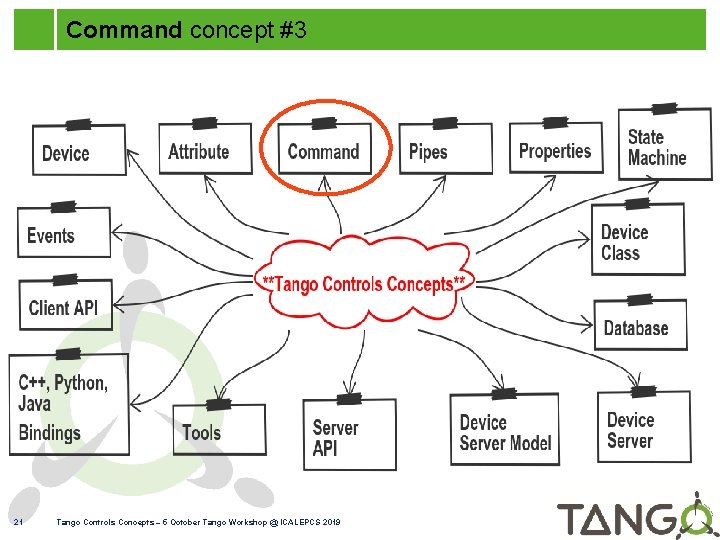
Command concept #3 22 Tango Commands are the actions of a Device the clients needs to execute. Commands can change the State of a Device (Attributes don’t) Examples : On, Off, Calibrate, Move, . . . Commands take one input and one output parameter. Parameters can be of any of the 20+ Tango data types. Commands always check the State Machine before and after execution (Attributes only before). Tango Controls Concepts – 5 October Tango Workshop @ ICALEPCS 2019
Command thought experiment 23 What Commands would you implement? Are you sure your command should not be an attribute (get/set)? Are there any Tango Data Types missing for your case? QUESTIONS? Tango Controls Concepts – 5 October Tango Workshop @ ICALEPCS 2019
Pipe concept #4 24 Tango Controls Concepts – 5 October Tango Workshop @ ICALEPCS 2019
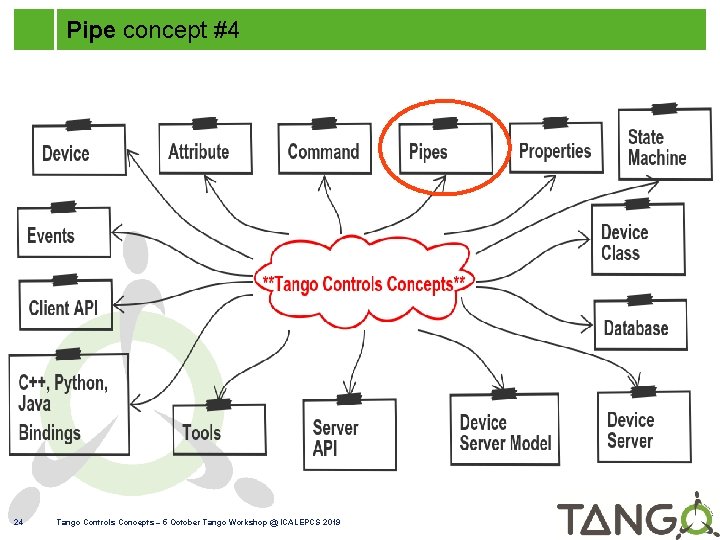
Pipe concept #4 25 Tango Pipes are data streams or channels for exchanging a stream of any Tango data type. Data types can be sent individually or grouped together in a Blob. Examples : scanning data stream of mixed data types Also used to circumvent the fixed data type set of Tango by sending mixed data types or a JSON blob. DO NOT only use Pipes (except in special cases)! Pipes were added to Tango in V 9. x DO use Attributes! Tango Controls Concepts – 5 October Tango Workshop @ ICALEPCS 2019
Pipe thought experiment 26 Where do you need Pipes in your system? What will you put in your Pipe(s)? Do you need JSON data types? Connect Pipes to Kafka? QUESTIONS? Tango Controls Concepts – 5 October Tango Workshop @ ICALEPCS 2019
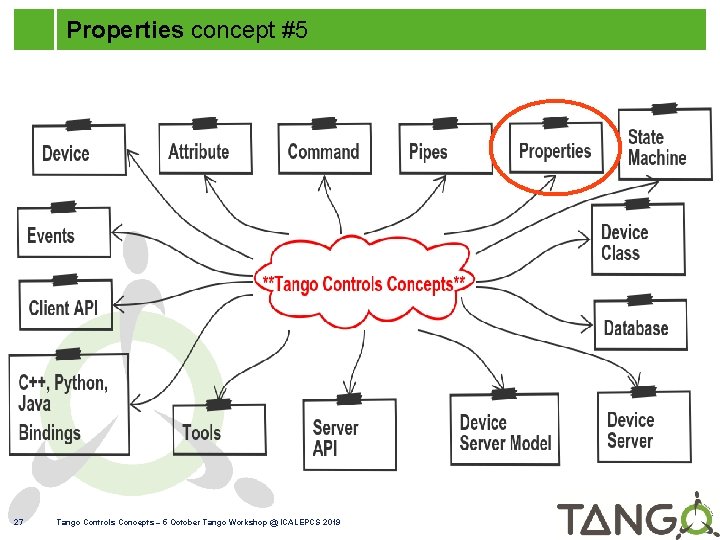
Properties concept #5 27 Tango Controls Concepts – 5 October Tango Workshop @ ICALEPCS 2019
Properties concept #5 28 Tango Properties are data stored in the database and used to configure Devices at startup. Properties can be any Tango Data types. Properties enable Device Classes to be generic. Properties are edited with Jive usually. Examples : channel address, initial or current settings, sub-device names, . . . Changes to Properties can be persisted in the Database. DO NOT exit if Properties are wrong! DO use sensible default Properties! Tango Controls Concepts – 5 October Tango Workshop @ ICALEPCS 2019
Properties thought experiment 29 What Properties will you implement for your Devices? Properties can be for Device Classes, Devices, free. Complex properties are not easy to edit with Jive QUESTIONS? Tango Controls Concepts – 5 October Tango Workshop @ ICALEPCS 2019
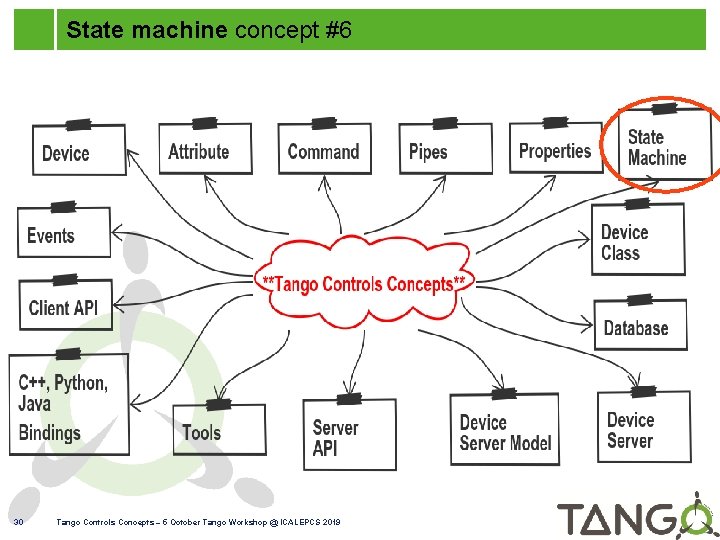
State machine concept #6 30 Tango Controls Concepts – 5 October Tango Workshop @ ICALEPCS 2019
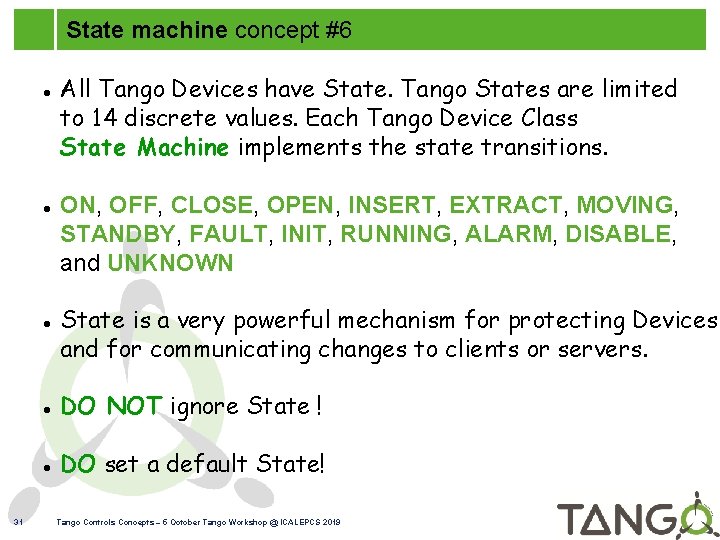
State machine concept #6 31 All Tango Devices have State. Tango States are limited to 14 discrete values. Each Tango Device Class State Machine implements the state transitions. ON, OFF, CLOSE, OPEN, INSERT, EXTRACT, MOVING, STANDBY, FAULT, INIT, RUNNING, ALARM, DISABLE, and UNKNOWN State is a very powerful mechanism for protecting Devices and for communicating changes to clients or servers. DO NOT ignore State ! DO set a default State! Tango Controls Concepts – 5 October Tango Workshop @ ICALEPCS 2019
State machine thought experiment 32 How will you map your States to Tango States? Do you really need more States or can they be implemented as attributes of enum type? QUESTIONS? Tango Controls Concepts – 5 October Tango Workshop @ ICALEPCS 2019
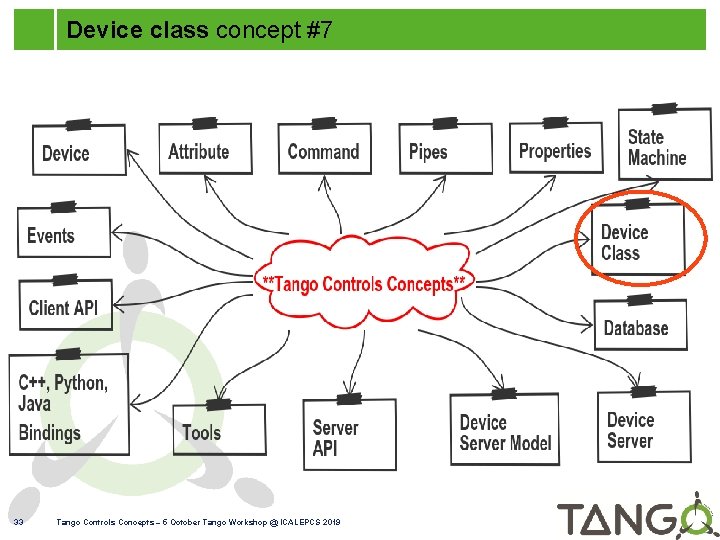
Device class concept #7 33 Tango Controls Concepts – 5 October Tango Workshop @ ICALEPCS 2019
Device class concept #7 34 All Tango Devices are implement by a Device Class. The Device Class implements a generic Device behaviour. Properties are used to configure the specific Device Examples : Power. Supply, Serial. Line, Polly Device Server developers are in fact developing Device Classes C++ developers have an extra class to develop – the so-called Device. Class e. g. My. Power. Supply. Class. This is uses one of the Gang of Four patterns. Python and Java have only the Device. Class. Tango Controls Concepts – 5 October Tango Workshop @ ICALEPCS 2019
Device class thought experiments How many Tango Device Classes do you need? Share your classes on Git. Hub / Git. Lab! To POGO or not to POGO that is the question? Find classes in the Device classes catalogue 35 There is not too much sharing of classes – too easy to write your own? How to package Device classes – Debian, Docker, Conda, … QUESTIONS? Tango Controls Concepts – 5 October Tango Workshop @ ICALEPCS 2019
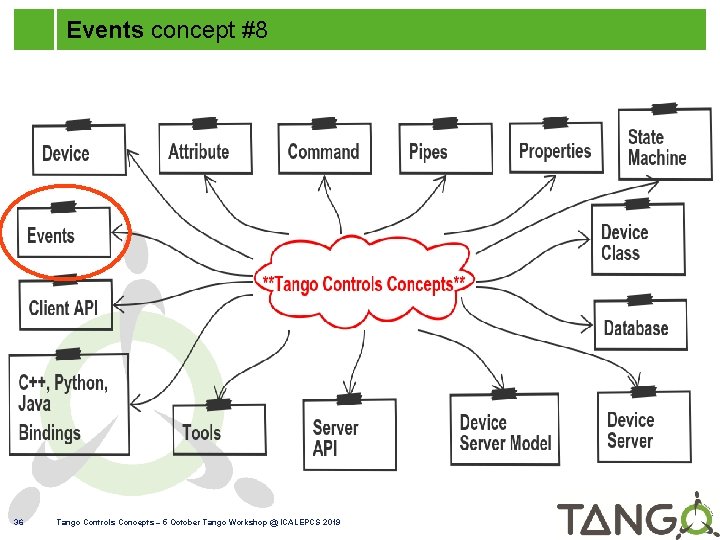
Events concept #8 36 Tango Controls Concepts – 5 October Tango Workshop @ ICALEPCS 2019
Events concept #8 37 Tango Events are a Pub-Sub communication between clients and servers. Events are only supported for Attributes and Pipes. Multiple Event types are supported – Change, Periodic, Archive, User, . . . Examples : Send Event if Attribute changes by x% Events use Zero. MQ + are the most efficient way to communicate. Events rely on Polling to be triggered. Events are configured in the database or code Tango implements a Polling algorithm to trigger events. DO NOT only read Attributes, use Events Tango Controls Concepts – 5 October Tango Workshop @ ICALEPCS 2019
Events thought experiments 38 Have you understood how Polling triggers Events? Multiple polling threading models – per Device, Poll single or multiple attributes Understandard Events vs. User Events. Documentation describes multicast Events. No-one is using multicast! Events performance scale per device server and inversely per client (see paper by Michal + Piotr) QUESTIONS ? Tango Controls Concepts – 5 October Tango Workshop @ ICALEPCS 2019
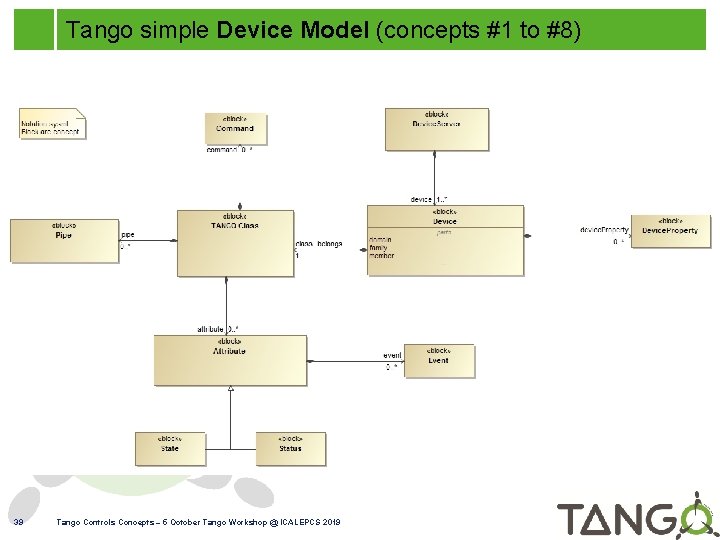
Tango simple Device Model (concepts #1 to #8) 39 Tango Controls Concepts – 5 October Tango Workshop @ ICALEPCS 2019
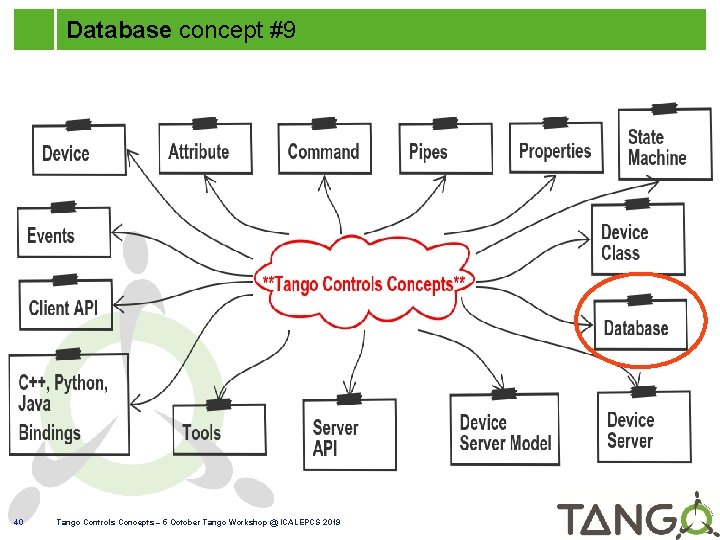
Database concept #9 40 Tango Controls Concepts – 5 October Tango Workshop @ ICALEPCS 2019
Database concept #9 41 Tango Database implements the Configuration and Naming Service for Tango. It can also persists settings values. Examples : configuration properties, export/import Tango Database is implemented as a Device Server. Clients use the Tango Client API and Data Types to access the Database. Only My. SQL is supported. A (nonofficial) version exists for SQLite + yaml. Database is only fixed address TANGO_HOST=host: port or /etc/tango. rc environment variable. Multiple Databases supported. Tango Controls Concepts – 5 October Tango Workshop @ ICALEPCS 2019
Database thought experiment 42 Have you understood how multiple Database support systems of systems? Is the Database a Single Point of Failure? Multiple schemes to reduce the single point of failure (see Tango RTD) Who needs in a non-My. SQL version of the Database? QUESTIONS? Tango Controls Concepts – 5 October Tango Workshop @ ICALEPCS 2019
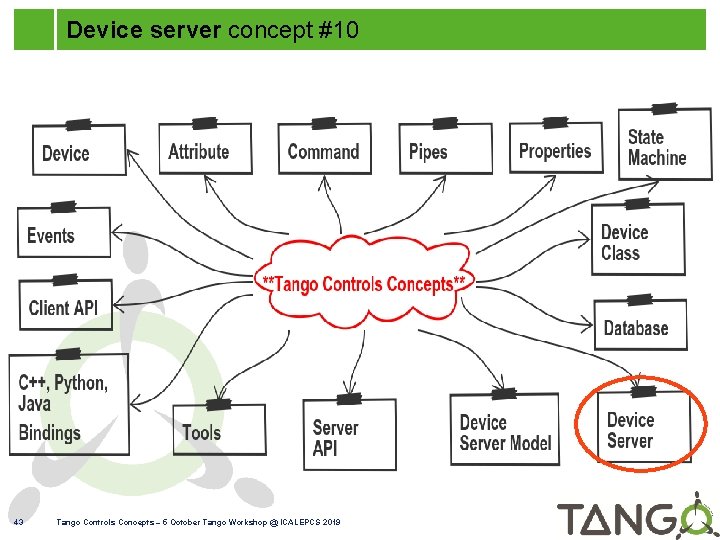
Device server concept #10 43 Tango Controls Concepts – 5 October Tango Workshop @ ICALEPCS 2019
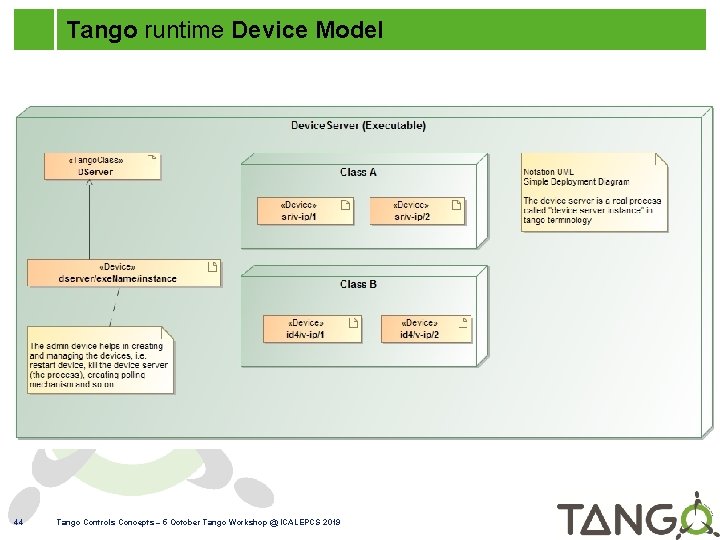
Tango runtime Device Model 44 Tango Controls Concepts – 5 October Tango Workshop @ ICALEPCS 2019
Device Server thought experiment 45 Important to understand difference between Device vs. Device Server Instance Name vs. Device Server process? Probably the most difficult concept but which gives Tango its flexibility to adapt to large numbers of Devices Is this similar to an IOC ? QUESTIONS? Tango Controls Concepts – 5 October Tango Workshop @ ICALEPCS 2019
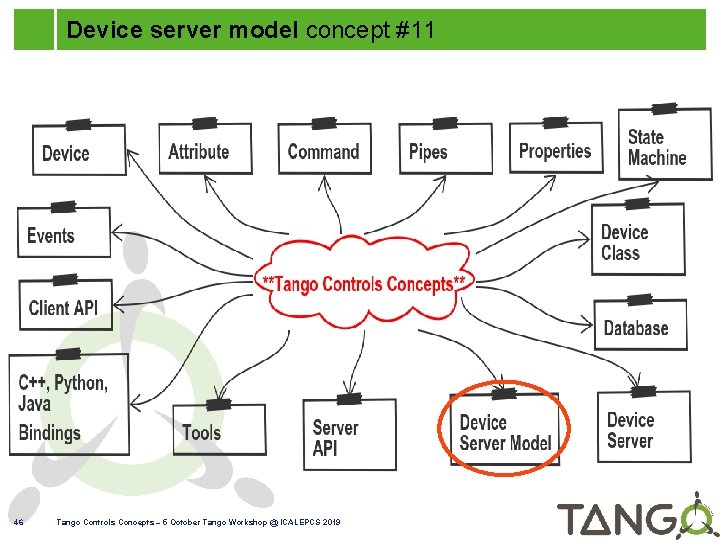
Device server model concept #11 46 Tango Controls Concepts – 5 October Tango Workshop @ ICALEPCS 2019
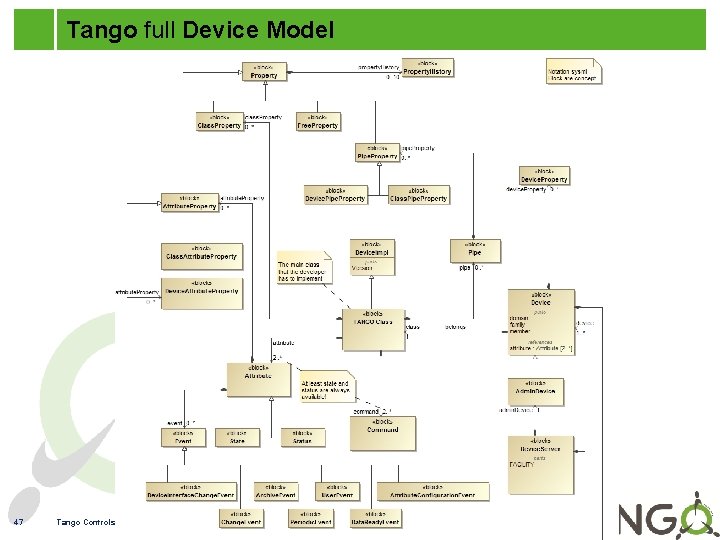
Tango full Device Model 47 Tango Controls Concepts – 5 October Tango Workshop @ ICALEPCS 2019
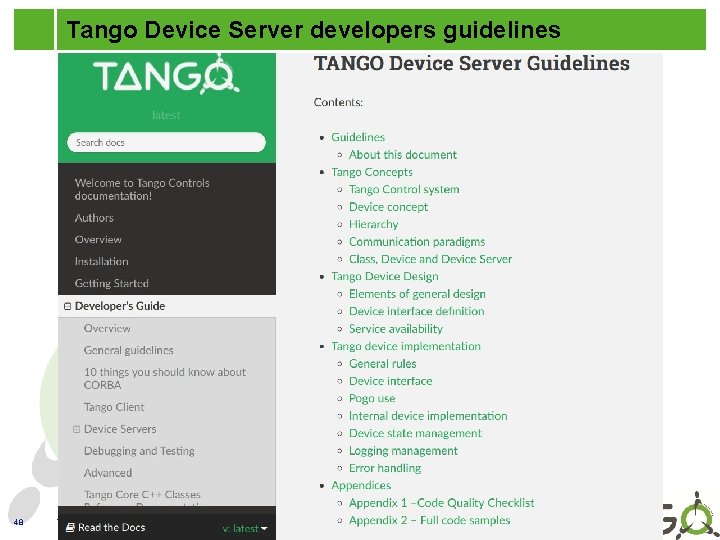
Tango Device Server developers guidelines 48 Tango Controls Concepts – 7 October Tango Workshop @ ICALEPCS 2017
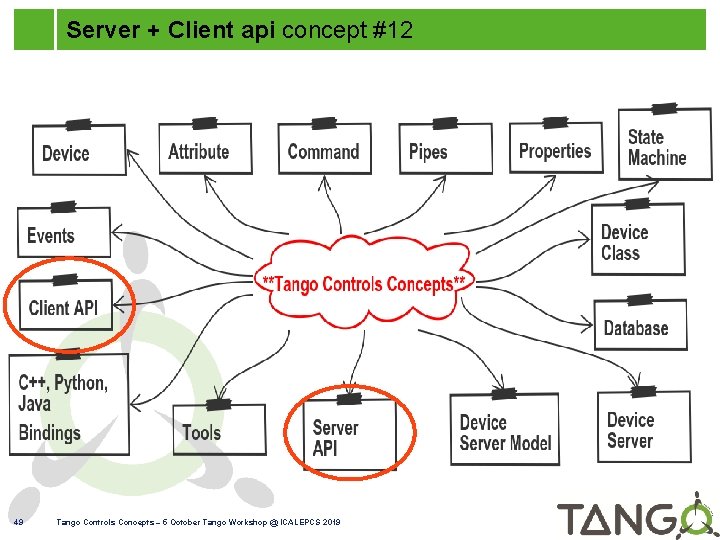
Server + Client api concept #12 49 Tango Controls Concepts – 5 October Tango Workshop @ ICALEPCS 2019
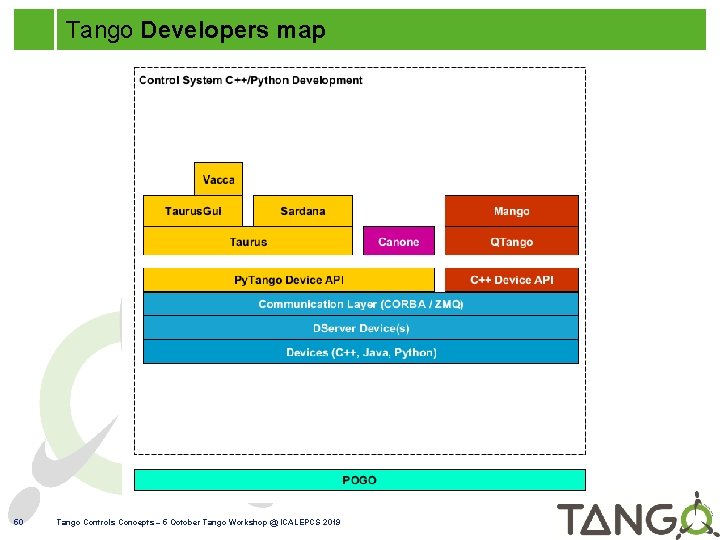
Tango Developers map 50 Tango Controls Concepts – 5 October Tango Workshop @ ICALEPCS 2019
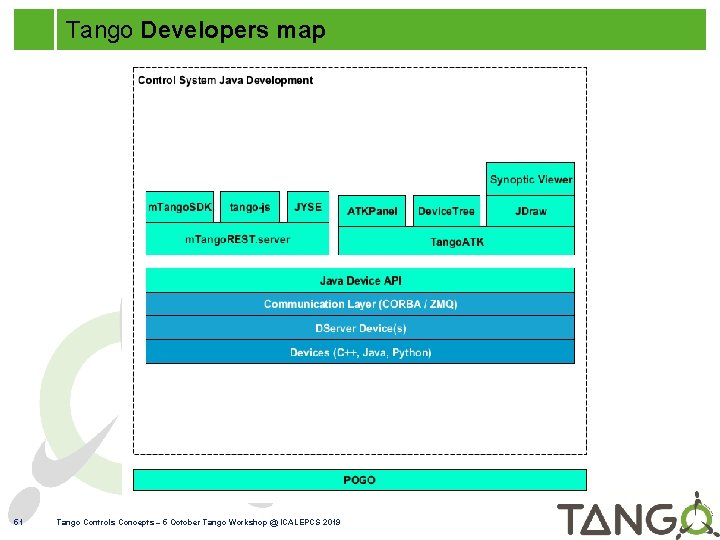
Tango Developers map 51 Tango Controls Concepts – 5 October Tango Workshop @ ICALEPCS 2019
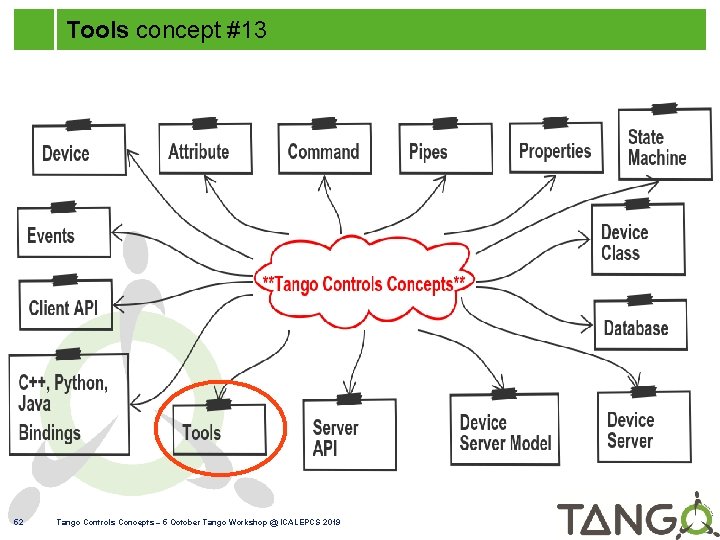
Tools concept #13 52 Tango Controls Concepts – 5 October Tango Workshop @ ICALEPCS 2019
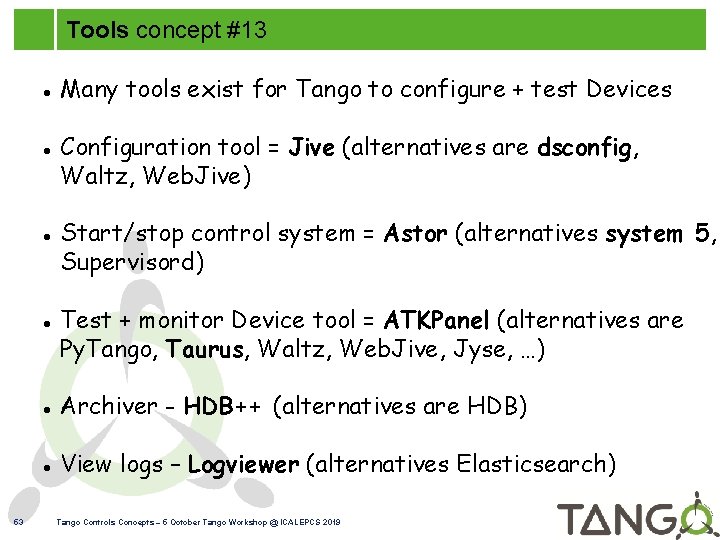
Tools concept #13 53 Many tools exist for Tango to configure + test Devices Configuration tool = Jive (alternatives are dsconfig, Waltz, Web. Jive) Start/stop control system = Astor (alternatives system 5, Supervisord) Test + monitor Device tool = ATKPanel (alternatives are Py. Tango, Taurus, Waltz, Web. Jive, Jyse, …) Archiver - HDB++ (alternatives are HDB) View logs – Logviewer (alternatives Elasticsearch) Tango Controls Concepts – 5 October Tango Workshop @ ICALEPCS 2019
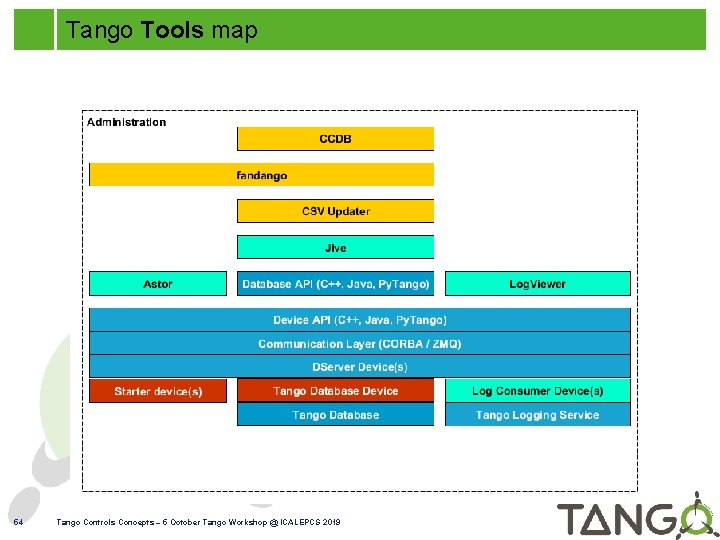
Tango Tools map 54 Tango Controls Concepts – 5 October Tango Workshop @ ICALEPCS 2019
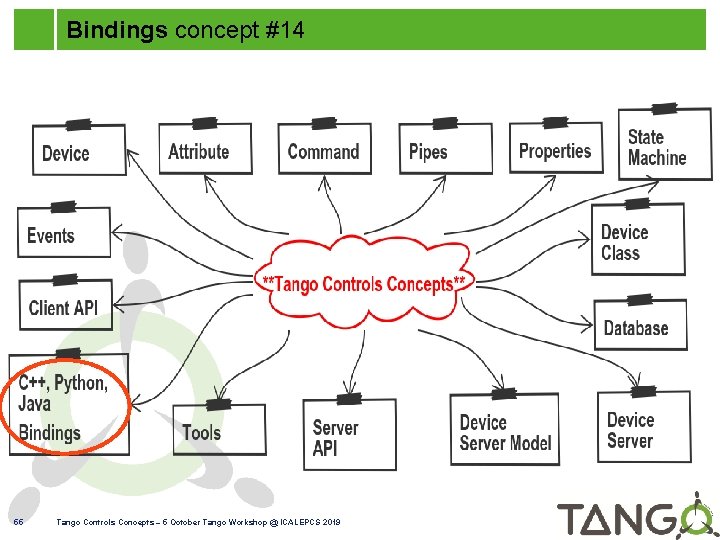
Bindings concept #14 55 Tango Controls Concepts – 5 October Tango Workshop @ ICALEPCS 2019
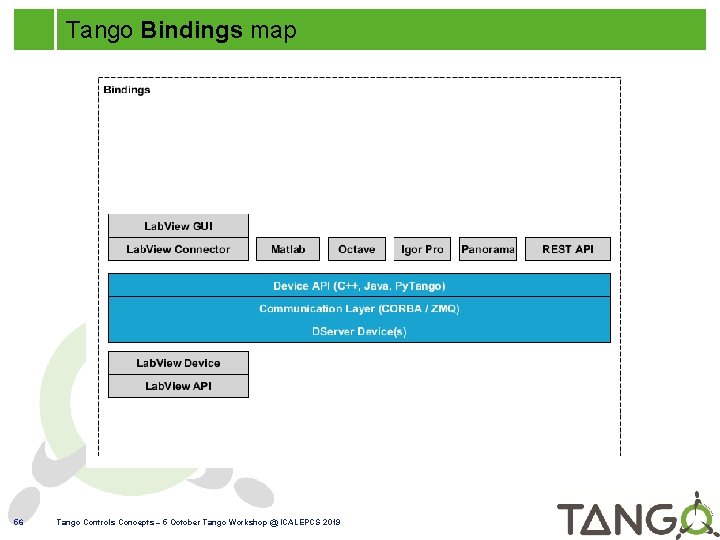
Tango Bindings map 56 Tango Controls Concepts – 5 October Tango Workshop @ ICALEPCS 2019
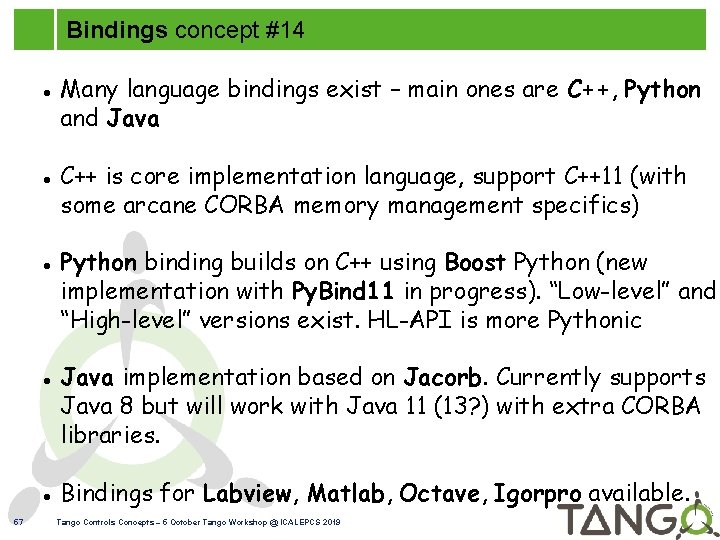
Bindings concept #14 57 Many language bindings exist – main ones are C++, Python and Java C++ is core implementation language, support C++11 (with some arcane CORBA memory management specifics) Python binding builds on C++ using Boost Python (new implementation with Py. Bind 11 in progress). “Low-level” and “High-level” versions exist. HL-API is more Pythonic Java implementation based on Jacorb. Currently supports Java 8 but will work with Java 11 (13? ) with extra CORBA libraries. Bindings for Labview, Matlab, Octave, Igorpro available. Tango Controls Concepts – 5 October Tango Workshop @ ICALEPCS 2019
Bindings thought experiment 58 Py. Tango is the most used language binding by newcomers to Tango. The High Level API has made it extremely simple to use. Python can be used from Jupyter notebooks + web easily. Which language do you plan to use? QUESTIONS? Tango Controls Concepts – 5 October Tango Workshop @ ICALEPCS 2019 I should TRY Py. Tango !
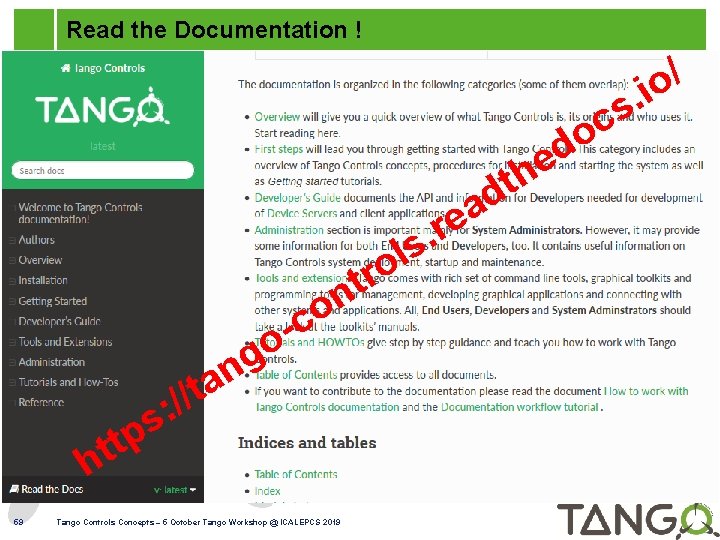
Read the Documentation ! s c o d e h t ad e r. s l o r t n o c go n ta / / : s tp t h 59 Tango Controls Concepts – 5 October Tango Workshop @ ICALEPCS 2019 / o. i
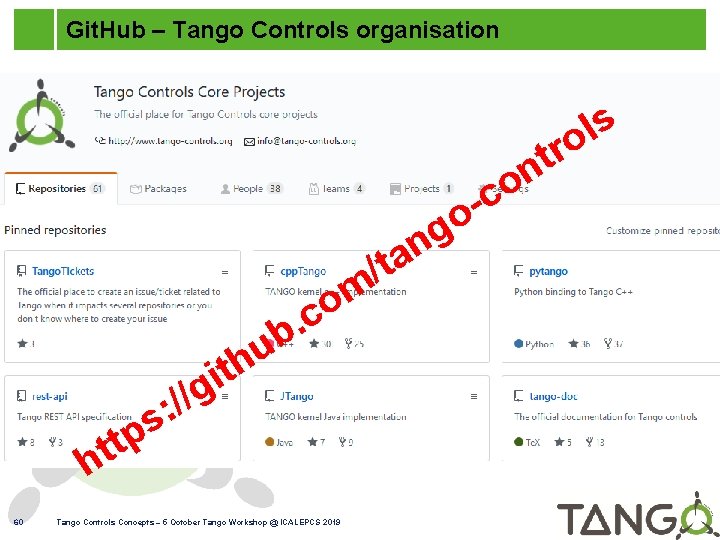
Git. Hub – Tango Controls organisation s l o r t n o -c o ng a t / m o c. ub h t i /g / : s tp t h 60 Tango Controls Concepts – 5 October Tango Workshop @ ICALEPCS 2019
Discussion 61 QUESTIONS REACTIONS REQUESTS Tango Controls Concepts – 5 October Tango Workshop @ ICALEPCS 2019
Thank you for your interest ! I think I will try Tango Controls 62 Tango Controls Concepts – 5 October Tango Workshop @ ICALEPCS 2019
- Slides: 62