
Tangible User Interfaces A Brief Walkthrough By Dominic
Tangible User Interfaces, A Brief Walkthrough By Dominic Amato
What’s a TUI? Physically interactible interfaces that are tied directly to some form of computation According to Hiroshi Ishii, TUIs are: Input and Output, control and representation of data Objects act as they do in the real world Seamless Domain Specific Space-Multiplexed Input
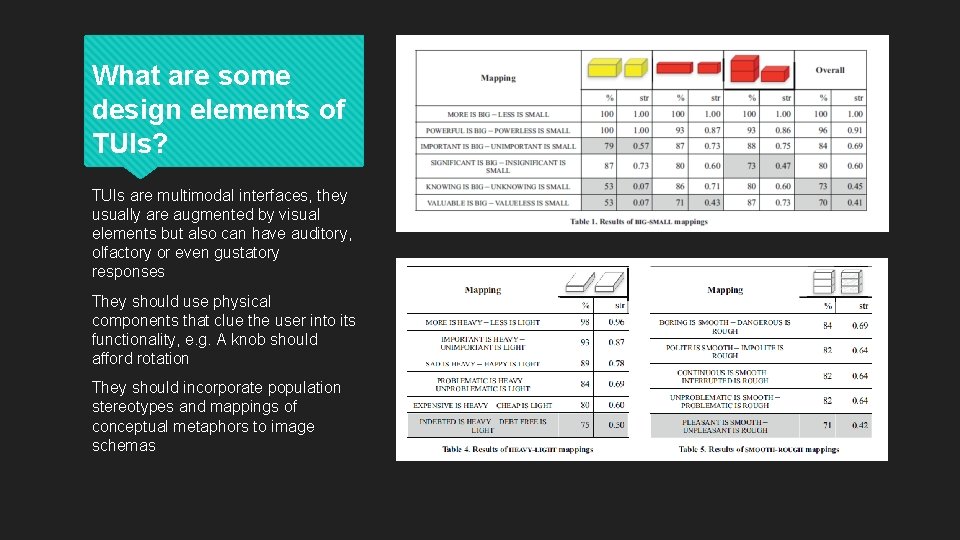
What are some design elements of TUIs? TUIs are multimodal interfaces, they usually are augmented by visual elements but also can have auditory, olfactory or even gustatory responses They should use physical components that clue the user into its functionality, e. g. A knob should afford rotation They should incorporate population stereotypes and mappings of conceptual metaphors to image schemas
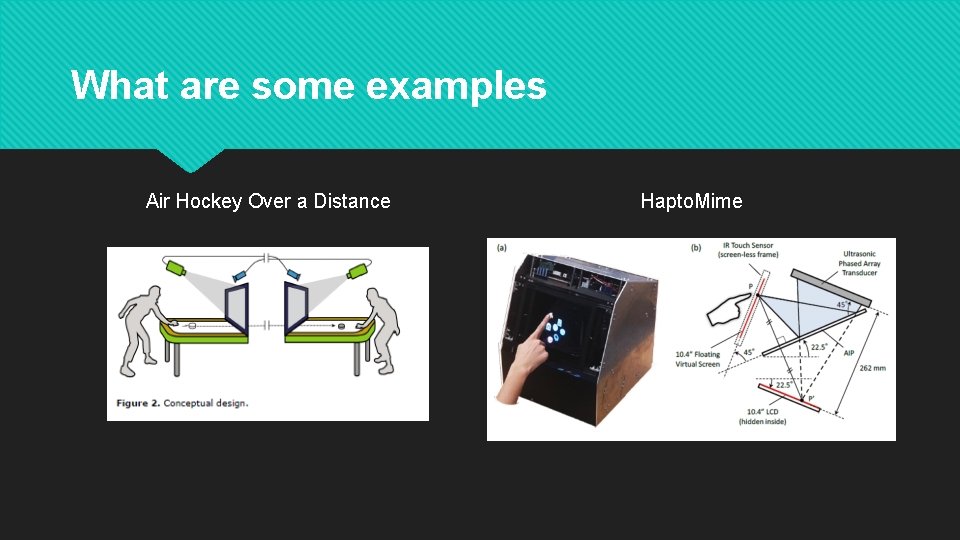
What are some examples Air Hockey Over a Distance Hapto. Mime
Are they educational Maybe… it depends In 2007 Paul Marshall contested most assertions about TUIs were essentially untested assumptions that physical interaction encouraged learning Created a framework of 6 components in order to create legitimate discussions about the effectiveness of TUIs as an educational component Agreed that they were effective when spatial abstractness was a predominant issue like molecular chemistry Studies needed empirical evidence and should be considered against other elements Froebel-inspired Manipulatives (Fi. Ms) building blocks for constructing concrete physical structures, for example Lego™ Montessori-inspired Manipulatives (Mi. Ms) used to construct more abstract conceptual structures
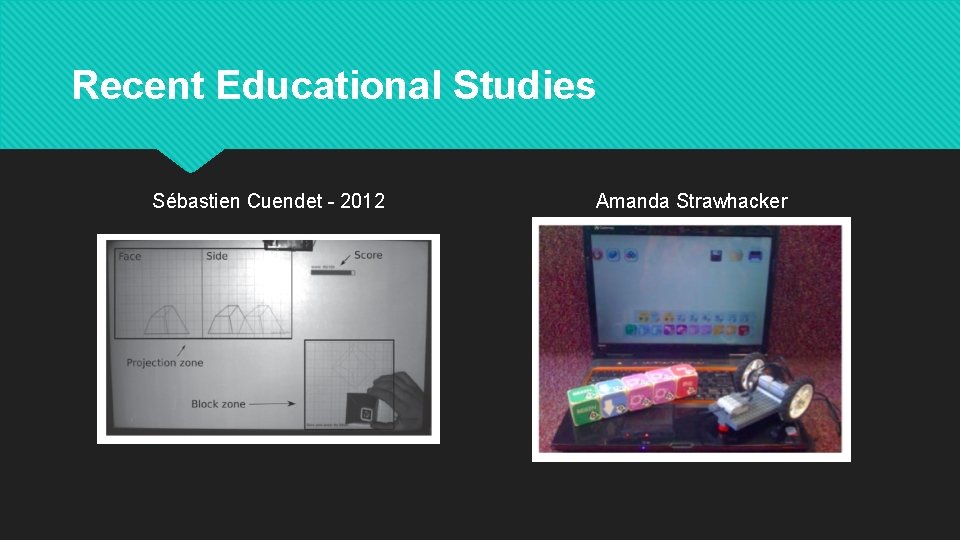
Recent Educational Studies Sébastien Cuendet - 2012 Amanda Strawhacker
Future Implications Internet of Things Ubiquitous Computing/Ambient Intelligence Holography and VR Advertising Collaborative Design Remote Play/Interaction

Questions? The End
- Slides: 8