
Tampere and Tredu On the banks of the
Tampere and Tredu
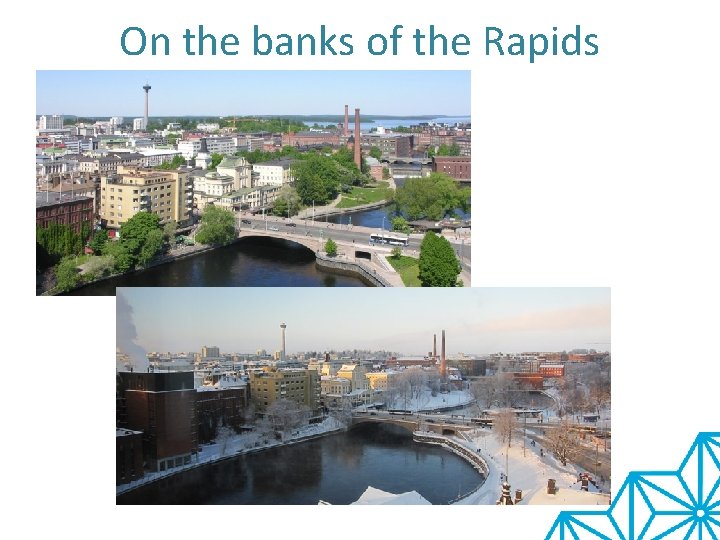
On the banks of the Rapids
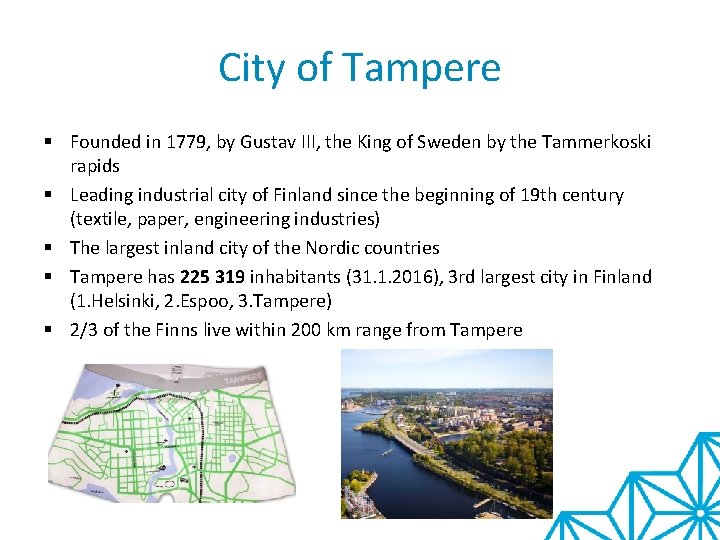
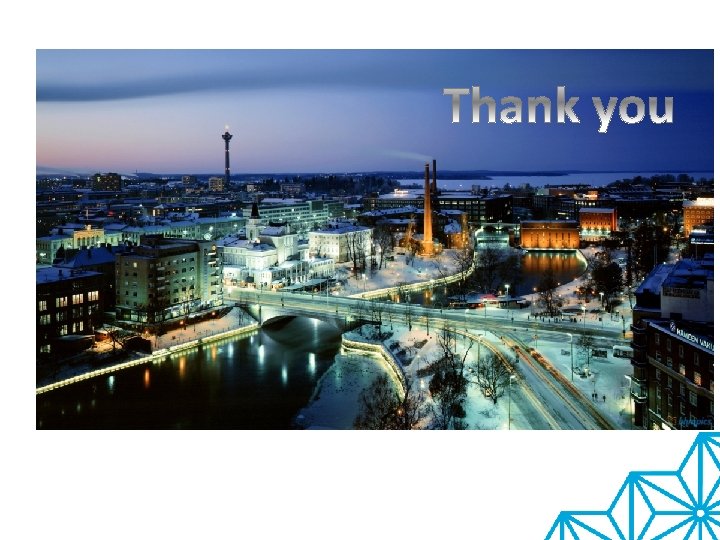
City of Tampere § Founded in 1779, by Gustav III, the King of Sweden by the Tammerkoski rapids § Leading industrial city of Finland since the beginning of 19 th century (textile, paper, engineering industries) § The largest inland city of the Nordic countries § Tampere has 225 319 inhabitants (31. 1. 2016), 3 rd largest city in Finland (1. Helsinki, 2. Espoo, 3. Tampere) § 2/3 of the Finns live within 200 km range from Tampere
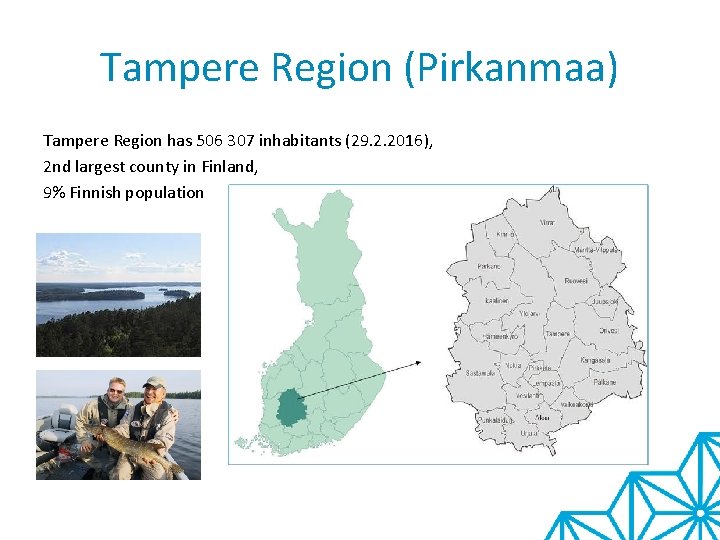
Tampere Region (Pirkanmaa) Tampere Region has 506 307 inhabitants (29. 2. 2016), 2 nd largest county in Finland, 9% Finnish population
Vocational Education and Training in Finland • In Finland VET is mostly provided by educational institutions, but apprenticeship training is also available. • In total there are 116 study programmes leading to 52 different qualifications. • The qualifications have been developed in co-operation with working life representatives. • Young people apply for VET in the national joint application system (www. haenyt. fi) • National steering and guidelines for the quality management
Three levels of vocational education and training • Vocational qualifications indicate competence to enter employment in the field. • Further vocational qualifications indicate the vocational skills required of skilled workers in the field (usually several years of work experience after vocational qualification). • Specialist vocational qualifications indicate a command of the most demanding tasks in the field.
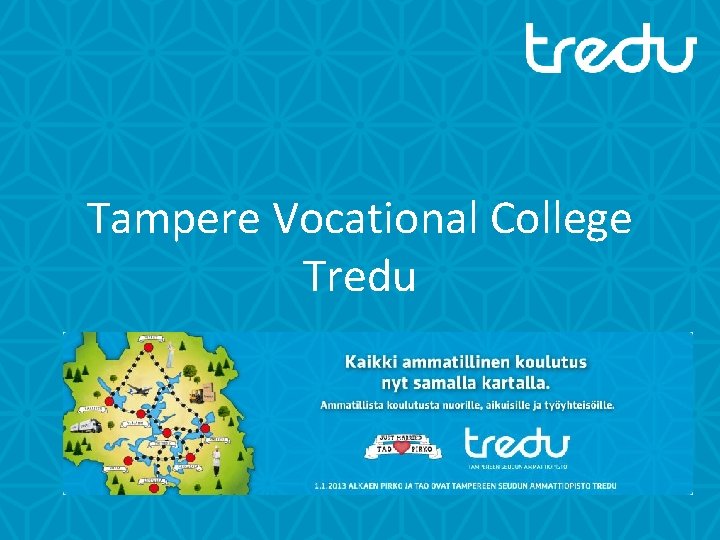
Tampere Vocational College Tredu
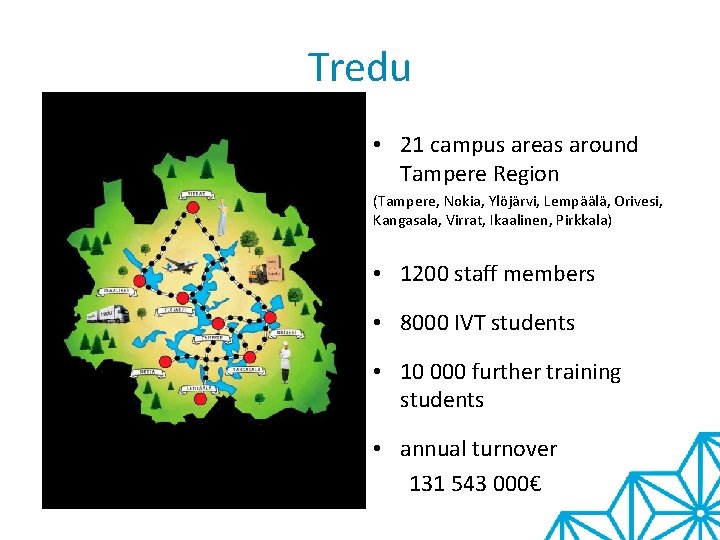
Tredu • 21 campus areas around Tampere Region (Tampere, Nokia, Ylöjärvi, Lempäälä, Orivesi, Kangasala, Virrat, Ikaalinen, Pirkkala) • 1200 staff members • 8000 IVT students • 10 000 further training students • annual turnover 131 543 000€
International activities • Tredu is actively taking part in International projects and other activities – Erasmus+ (KA 1, KA 2) – Nordplus – Network projects financed by National Board of Education (e. g. China, India, Russia, Japan…) • ”Internationalization at Home” – cooperation with twin schools and cities (e. Twinning), international visitors and exchange students, cooperation with the students in preparatory training for immigrants
• The Erasmus+ programme aims to boost skills and employability, as well as modernising Education, Training, and Youth work. • The programme covers the whole spectrum of education, targeting pupils and students; teachers, trainers and other teaching staff; as well as organisations and other bodies involved in education and training. • Key Action 1 (KA 1) = Mobility projects • Key Action 2 (KA 2) = Strategic partnerships, development
International cooperation in Tredu since 1980’s • In the 1980’s the campuses were individual units and they had their own projects and ideas of international cooperation • Mainly development projects funded by the Finnish Board of Education
• By the beginning of the 21 st century the volume had grown significantly - Development projects (language teaching and cultural themes) - Mobility projects - Development projects for developing countries
• Central themes through the entire 21 st century have been; – quality management in vocational education – virtual learning and teaching – vocational skills competitions – cooperation with working life
Current Erasmus+ projects • KA 1 and KA 2 • KA 1 2015 -2017 over 200 mobilities covering all units, students, staff and working life representatives • KA 2 2015 -2018 aiming to develop the practices of international workshop learning in modern business environments
What is the benefit of international partnership to the pupils achievements? • • • ”I experienced so much during my mobility. I feel I have now a realistic idea about the differences between these two countries in everyday life, travel, child care, culture, customs…” ”I learned so much of the local language that I could manage in shops, traveling and in short conversations. After 2, 5 weeks I did not have to refer to English. It all depends naturally on my own interest and motivation” ”I was surprised how I fell in love with Portugal. I would never have thought I would become fond of any southern countries – I’ve never worshipped palm trees! This mobility has made me think of returning to Portugal and Coimbra, which out of all the cities I visited woke the most positive feelings in me”. I started off my trip with an open mind. I expected I would learn to manage on my own and improve my English skills. I’m very happy to say that all my expectations came true. The place was really nice and I really liked the work placement, too. Work was actually the best thing for me during my stay; I made new friends, I learned new skills and, most importantly, I learned a lot about myself. I am now a more confident and courageous language speaker, too. I’m really happy that I chose to do this!
Contact information Tampere Vocational College Tredu (Tampereen seudun ammattiopisto Tredu) P. O. Box 217 FI-33101 Tampere, FINLAND Tel. +358 3 565 617 (switch board) Emails: name. surname@tampere. fi anne. patana@tampere. fi Internet: www. tredu. fi International Relations Office Ritva Haveri ( +358 50 572 8707) Thomas Scherrer (+358 40 806 4199) Anna-Maija Siirtonen ( +358 40 800 4018)
- Slides: 17