
Talking to Strangers Personalizing the Reference Interview Rita


- Slides: 49
Talking to Strangers Personalizing the Reference Interview Rita Vine University of Toronto Libraries February 2 2008 Ontario Library Association
The 55% Answer Rate l Dervin, 1970’s l l l Dervin, 1986 l l Neutral questioning Hernon & Mc. Clure, 1986 l l Information or communication? Study groups – urban poor, libraries 55% answer rate Dewdney & Ross, 1994 l l 55% accept initial question @ face value 60% “willing to return”
Why is reference failure (still) so high?
The Dual Disconnect l Early-stage interview quickly streams users to our silos l l l Catalogue (books) Databases (journal articles) Post-interview disengagement from user to focus on information-retrieval activities
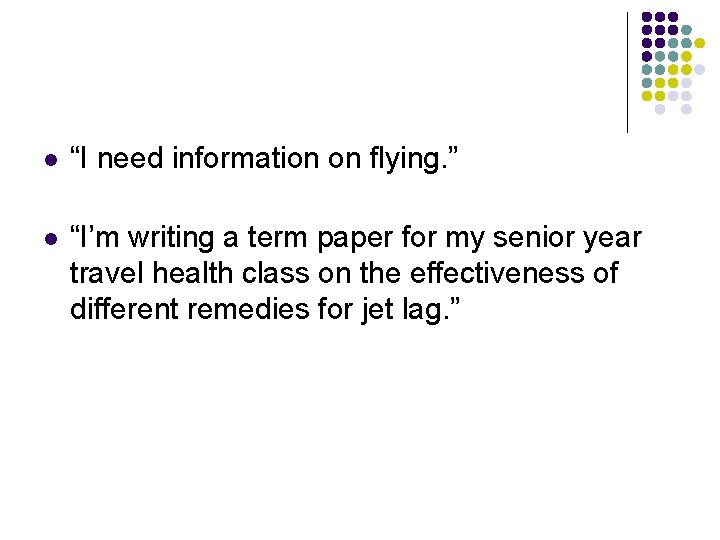
l “I need information on flying. ” l “I’m writing a term paper for my senior year travel health class on the effectiveness of different remedies for jet lag. ”
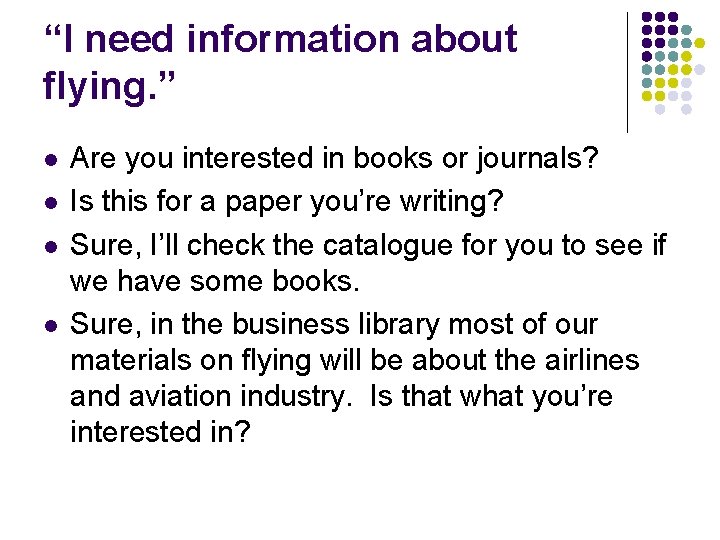
“I need information about flying. ” l l Are you interested in books or journals? Is this for a paper you’re writing? Sure, I’ll check the catalogue for you to see if we have some books. Sure, in the business library most of our materials on flying will be about the airlines and aviation industry. Is that what you’re interested in?
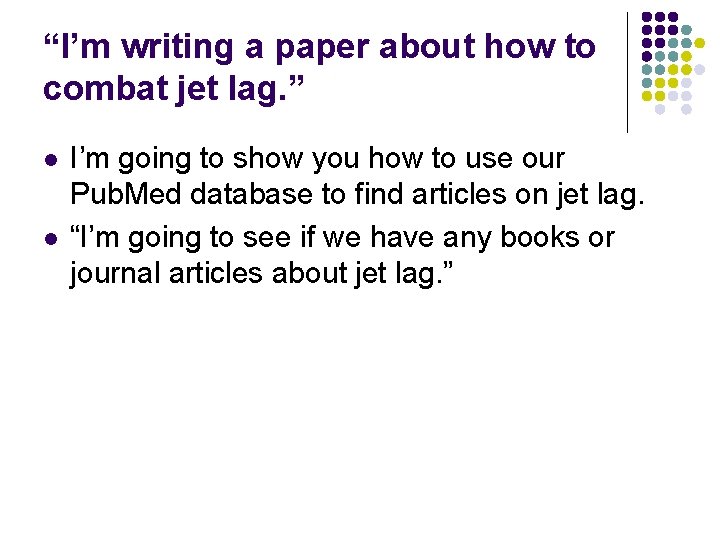
“I’m writing a paper about how to combat jet lag. ” l l I’m going to show you how to use our Pub. Med database to find articles on jet lag. “I’m going to see if we have any books or journal articles about jet lag. ”
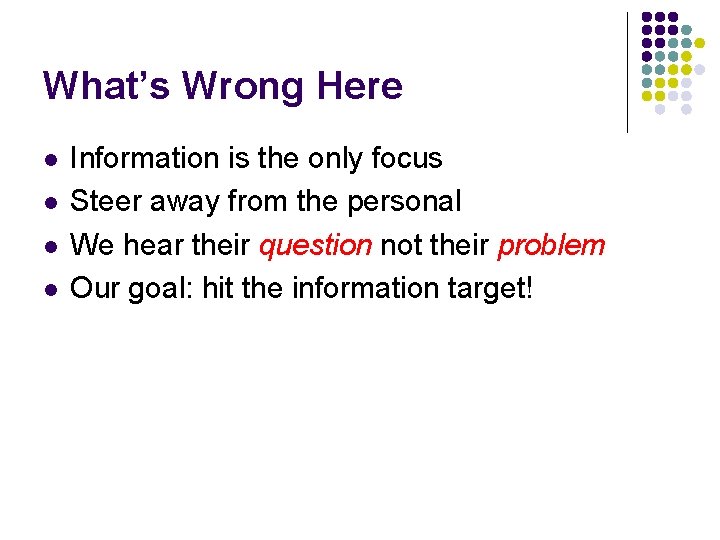
What’s Wrong Here l l Information is the only focus Steer away from the personal We hear their question not their problem Our goal: hit the information target!
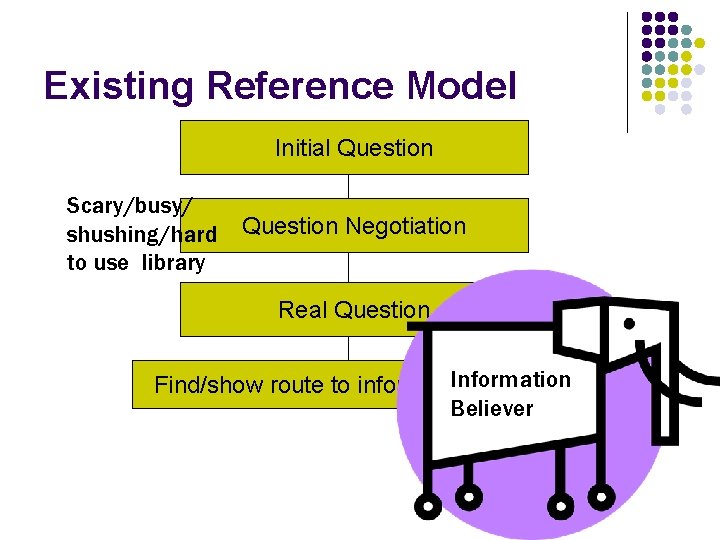
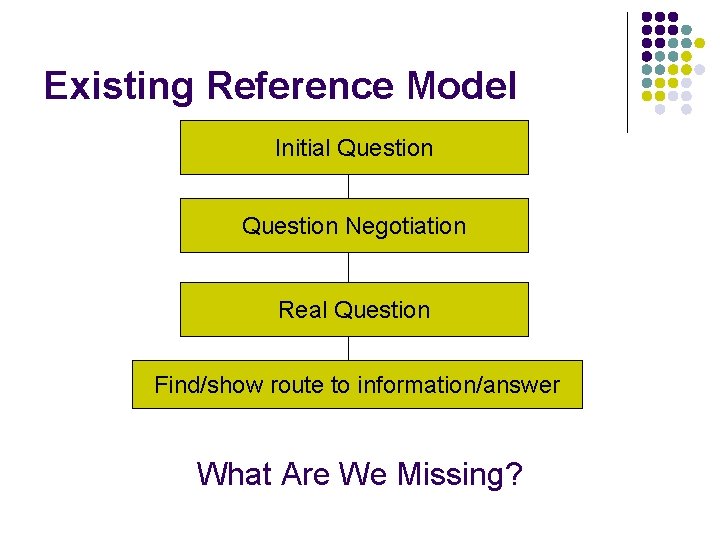
Existing Reference Model Initial Question Scary/busy/ shushing/hard to use library Question Negotiation Real Question Information Find/show route to information/answer Believer
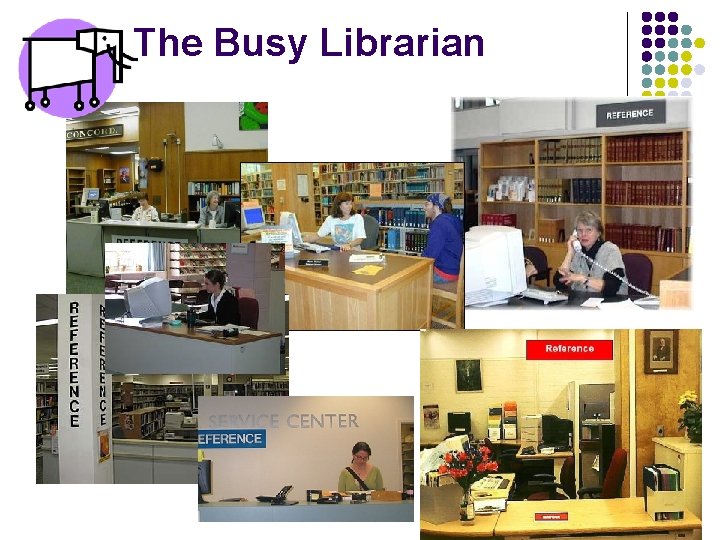
The Busy Librarian
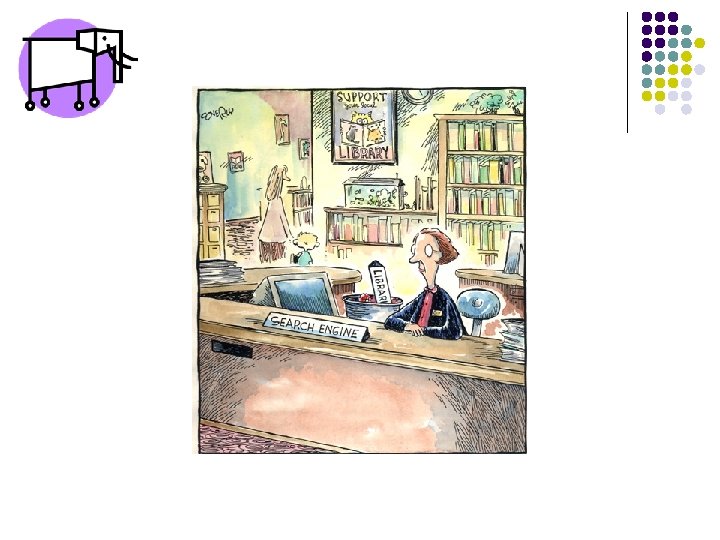
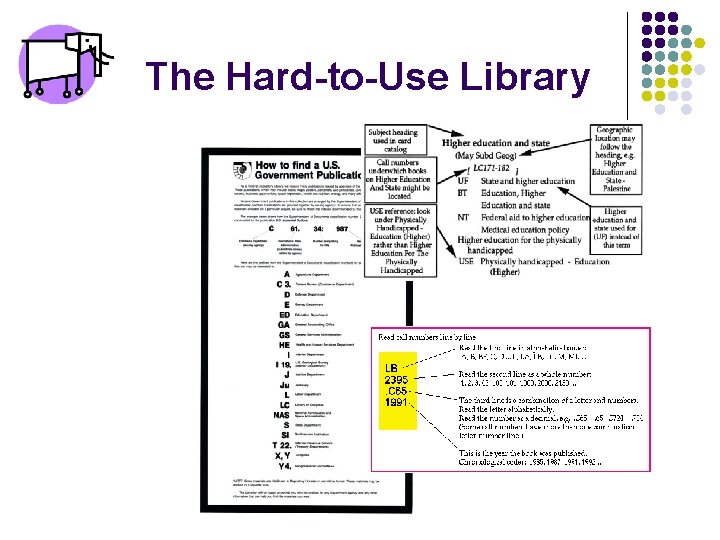
The Hard-to-Use Library
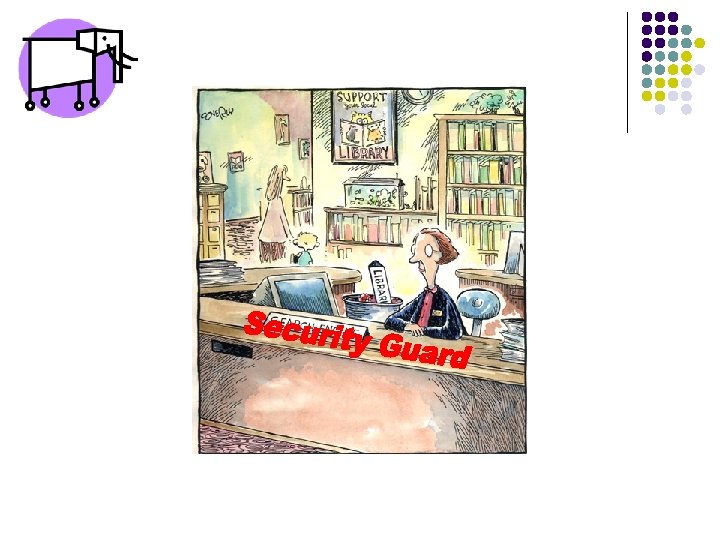
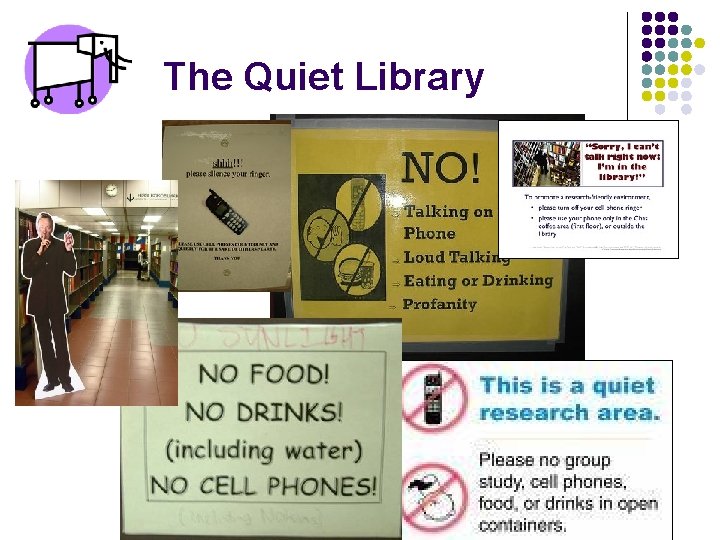
The Quiet Library
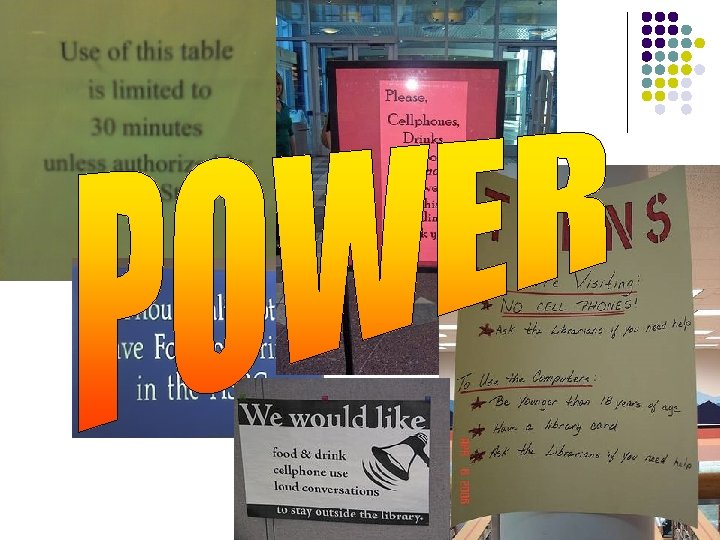
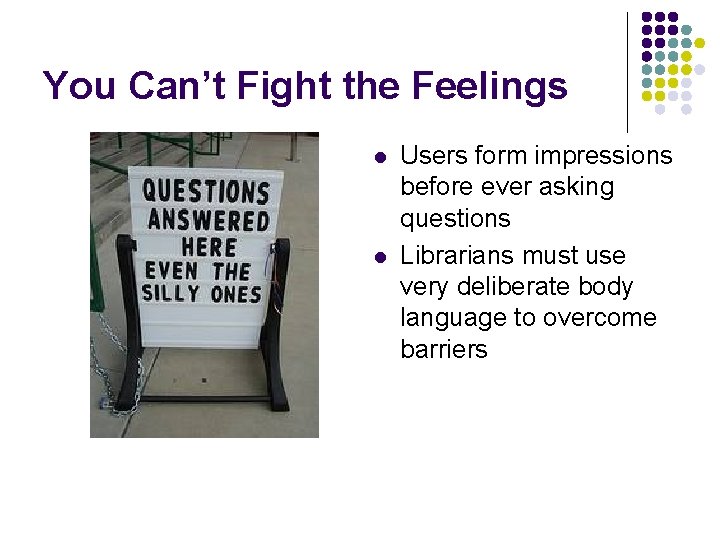
You Can’t Fight the Feelings l l Users form impressions before ever asking questions Librarians must use very deliberate body language to overcome barriers
The Body Language Thing l l l With strangers, first impressions last Nonverbals mean more Dewdney & Ross, 1994 l subtle nonverbal cues made huge differences
What Helped l l l Looked up and smiled Moved out from behind the desk Really listened Seemed genuinely interested in me and my question Seemed interested in my suggestions Didn’t overwhelm me
What Did Not Help l l l Did not look up Made me feel as if I wasting her time Didn’t seem to listen Cut me off during my explanation Made assumptions about what I wanted Didn’t tell me what he was doing so I didn’t know if I should follow him or what
Research tells us… l l l We learn the most from friends not experts We learn more from people we like “Folks like us, use us” People cannot receive information if they are not ready. 2 -way dialogue/conversation is the best predictor of user readiness
Research tells us… l Same question, same (right) answer l l l Totally different evaluations Experts make users feel more vulnerable “Readiness to receive” l Helping users in the way that they want to be helped
It Takes Courage to Ask A Question! l l Mindful of emotions, feelings, “whole human” Meaningful l Personal Respectful Interested
Being an Information Believer l Often marginalize information seeking through sources like: l l Personal contacts Stack browsing Web searching Unpublished sources
Being an Information Believer l l Only objective information is valuable If a little is good, a lot is better Information is acquired only through formal information systems Every need has an information solution.
Existing Reference Model Initial Question Negotiation Real Question Find/show route to information/answer What Are We Missing?
What Are We Missing? l l Whole human approach Understanding their problem l l l What brought them to us What they want to do with the information What they think they are missing
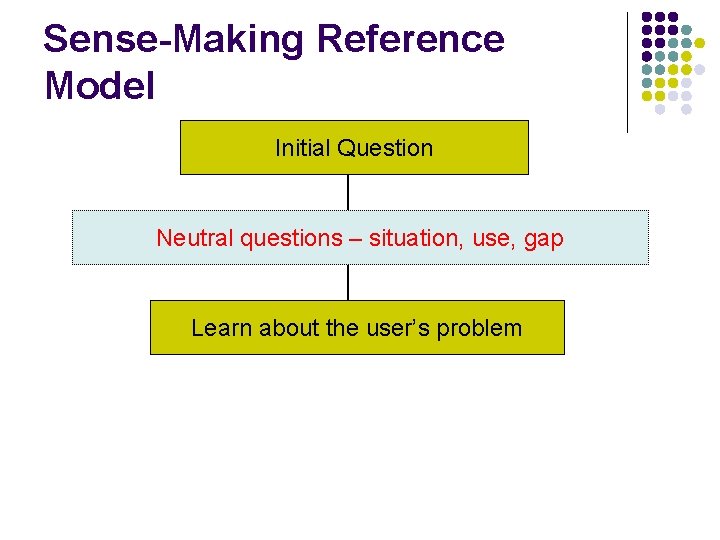
Sense-Making Reference Model Initial Question Neutral questions – situation, use, gap Learn about the user’s problem
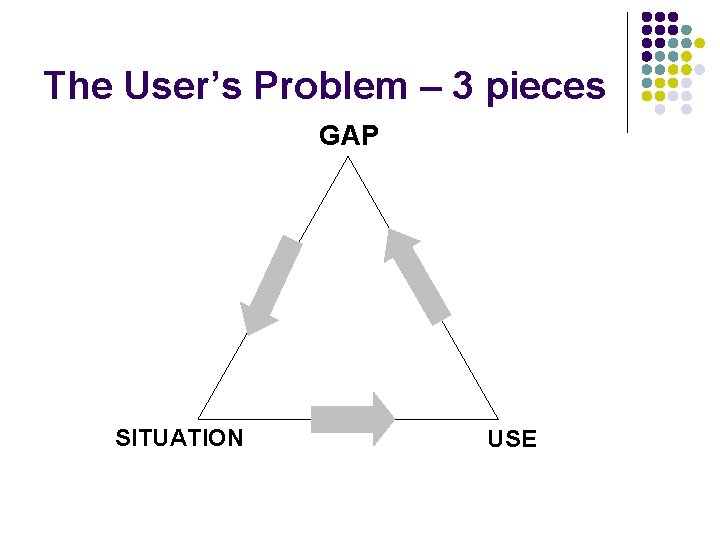
The User’s Problem – 3 pieces GAP SITUATION USE
When Real People Ask Questions l l They already have an idea of a solution Not just libraries, it’s everywhere l l l Retail Banking On the street We need to understand the problem.
They Ask the Initial Question l l that might help them solve their problem that might fill a gap that might get them closer to a solution that they think the respondent is interested in answering that they think the respondent is capable of answering
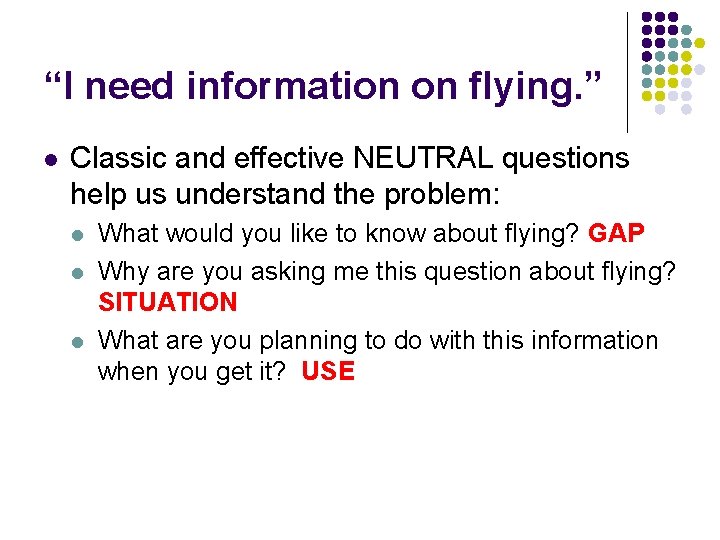
“I need information on flying. ” l Classic and effective NEUTRAL questions help us understand the problem: l l l What would you like to know about flying? GAP Why are you asking me this question about flying? SITUATION What are you planning to do with this information when you get it? USE
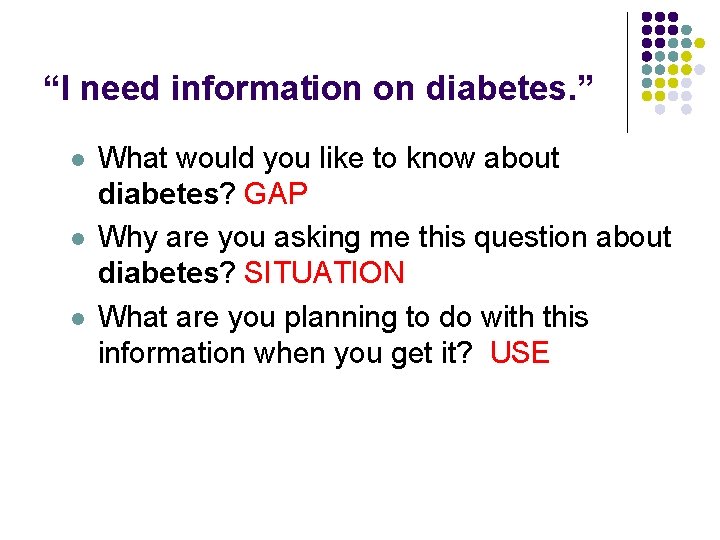
“I need information on diabetes. ” l l l What would you like to know about diabetes? GAP Why are you asking me this question about diabetes? SITUATION What are you planning to do with this information when you get it? USE
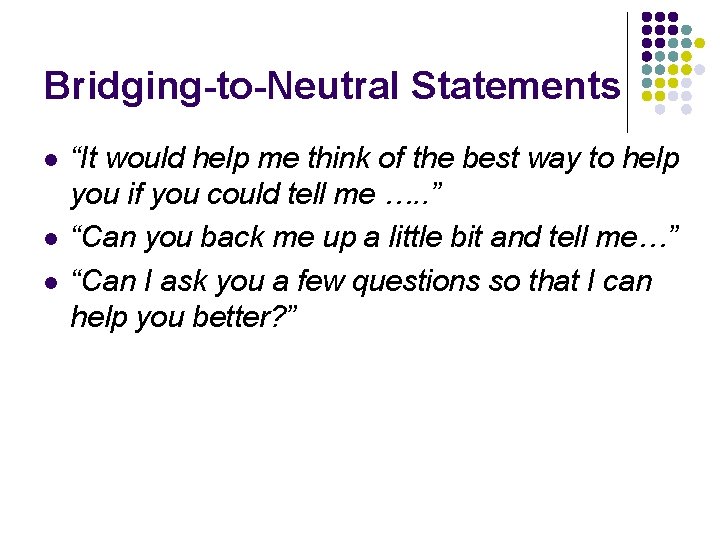
Bridging-to-Neutral Statements l l l “It would help me think of the best way to help you if you could tell me …. . ” “Can you back me up a little bit and tell me…” “Can I ask you a few questions so that I can help you better? ”
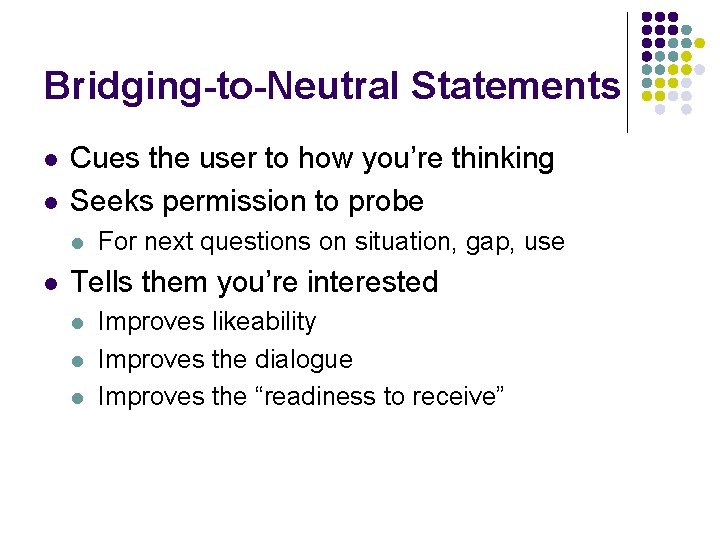
Bridging-to-Neutral Statements l l Cues the user to how you’re thinking Seeks permission to probe l l For next questions on situation, gap, use Tells them you’re interested l l l Improves likeability Improves the dialogue Improves the “readiness to receive”
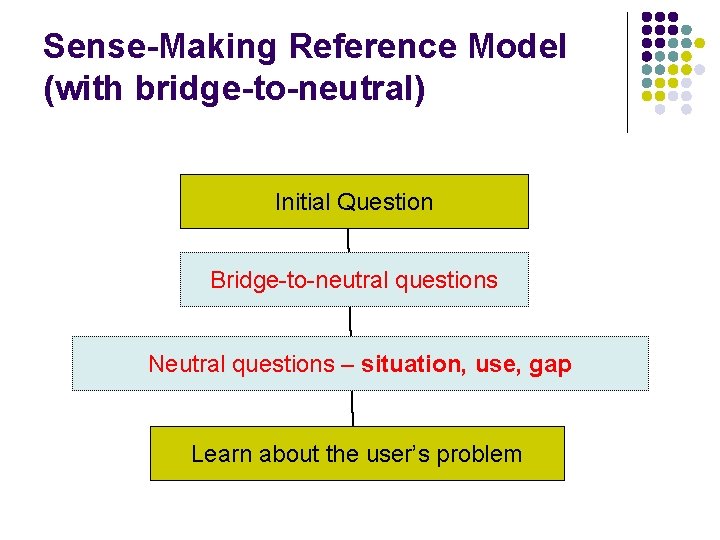
Sense-Making Reference Model (with bridge-to-neutral) Initial Question Bridge-to-neutral questions Neutral questions – situation, use, gap Learn about the user’s problem
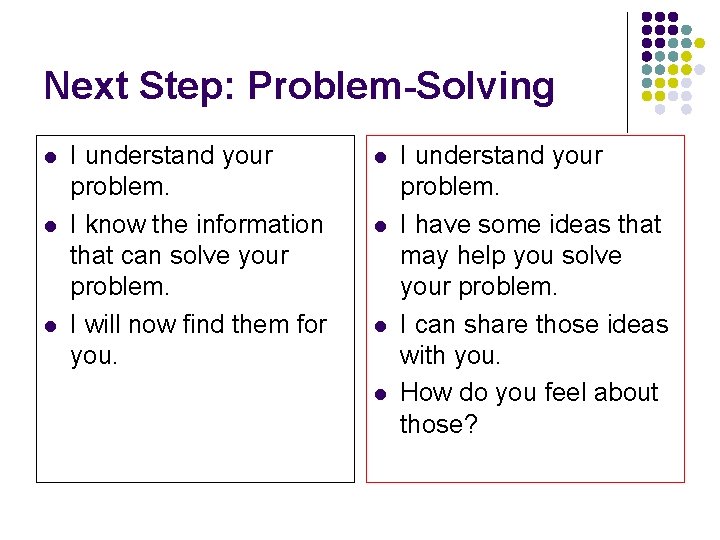
Next Step: Problem-Solving l l l I understand your problem. I know the information that can solve your problem. I will now find them for you. l l I understand your problem. I have some ideas that may help you solve your problem. I can share those ideas with you. How do you feel about those?
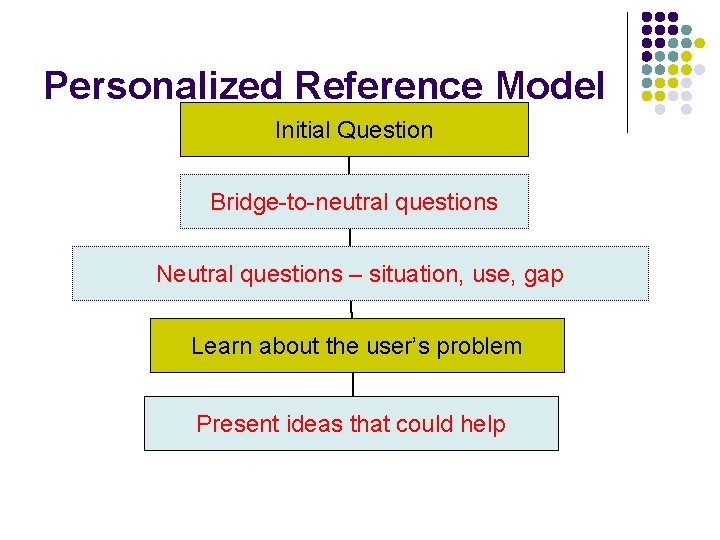
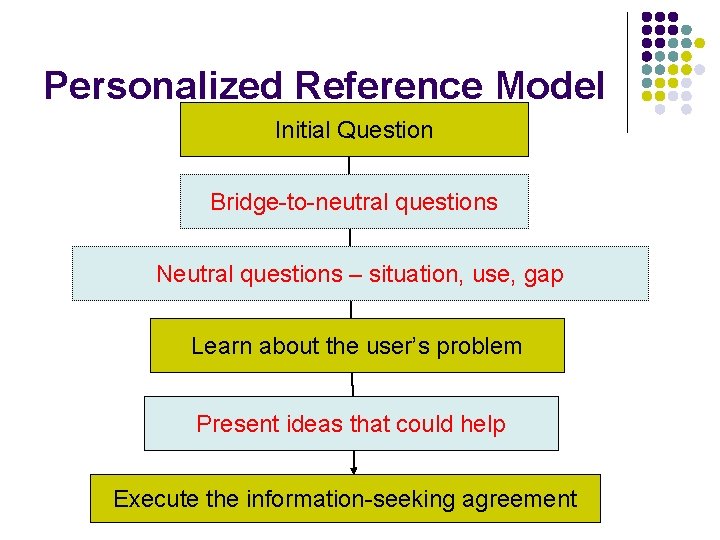
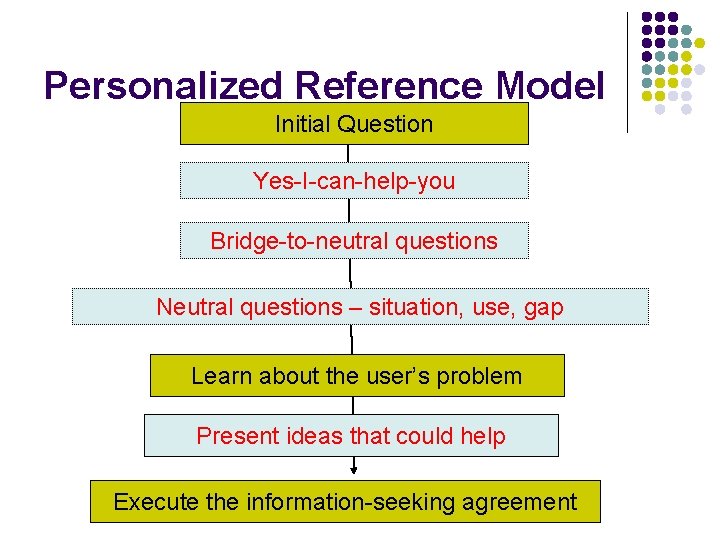
Personalized Reference Model Initial Question Bridge-to-neutral questions Neutral questions – situation, use, gap Learn about the user’s problem Present ideas that could help
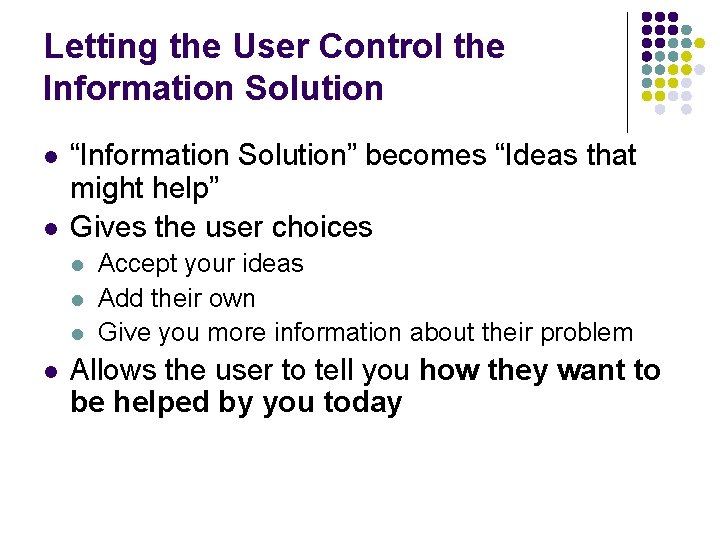
Letting the User Control the Information Solution l l “Information Solution” becomes “Ideas that might help” Gives the user choices l l Accept your ideas Add their own Give you more information about their problem Allows the user to tell you how they want to be helped by you today
Personalized Reference Model Initial Question Bridge-to-neutral questions Neutral questions – situation, use, gap Learn about the user’s problem Present ideas that could help Execute the information-seeking agreement
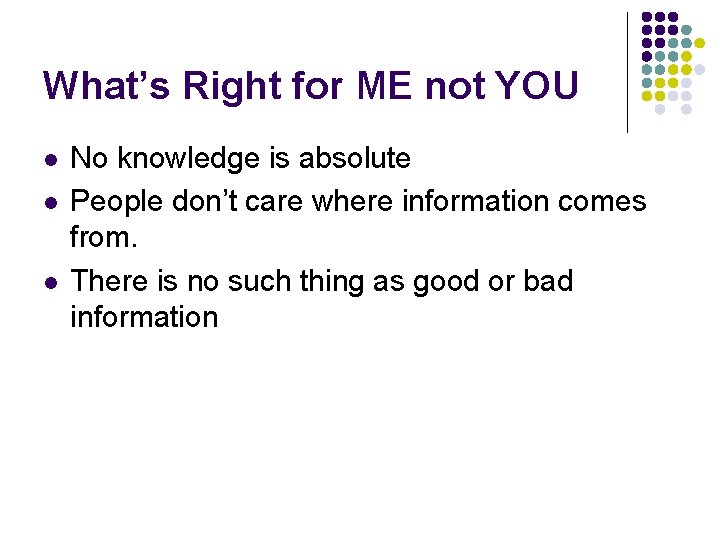
What’s Right for ME not YOU l l l No knowledge is absolute People don’t care where information comes from. There is no such thing as good or bad information
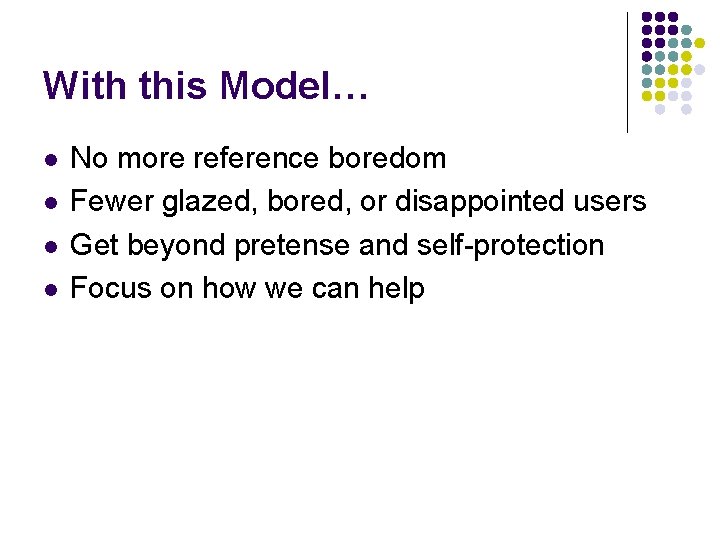
With this Model… l l No more reference boredom Fewer glazed, bored, or disappointed users Get beyond pretense and self-protection Focus on how we can help
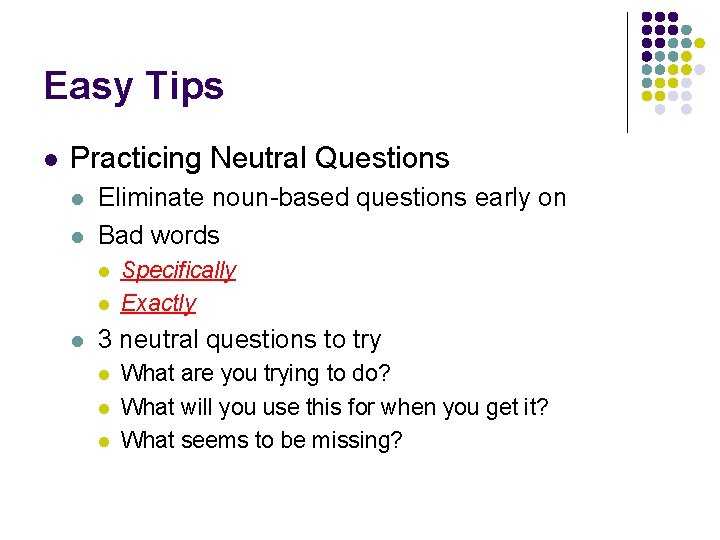
Easy Tips l Practicing Neutral Questions l l Eliminate noun-based questions early on Bad words l l l Specifically Exactly 3 neutral questions to try l l l What are you trying to do? What will you use this for when you get it? What seems to be missing?
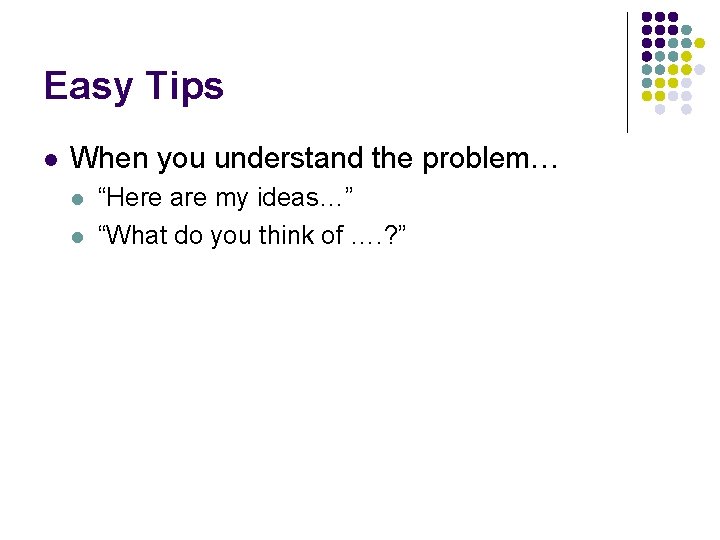
Easy Tips l When you understand the problem… l l “Here are my ideas…” “What do you think of …. ? ”
Real Reference Questions Illustrating the Techniques
Personalized Reference Model Initial Question Bridge-to-neutral questions Neutral questions – situation, use, gap Learn about the user’s problem Present ideas that could help Execute the information-seeking agreement
Do you have videos of marriage ceremonies of different religions? Mid-20’s woman, college library reference desk
Personalized Reference Model Initial Question Yes-I-can-help-you Bridge-to-neutral questions Neutral questions – situation, use, gap Learn about the user’s problem Present ideas that could help Execute the information-seeking agreement
Rita Vine l l rita. vine@utoronto. ca Course – Did I Answer Your Question? l l www. thepartnership. ca – online – 6 weeks Instructor-led programs – 1 day - contact Rita