
Talking the Talk Effective Oral Presentations An Outline
- Slides: 10
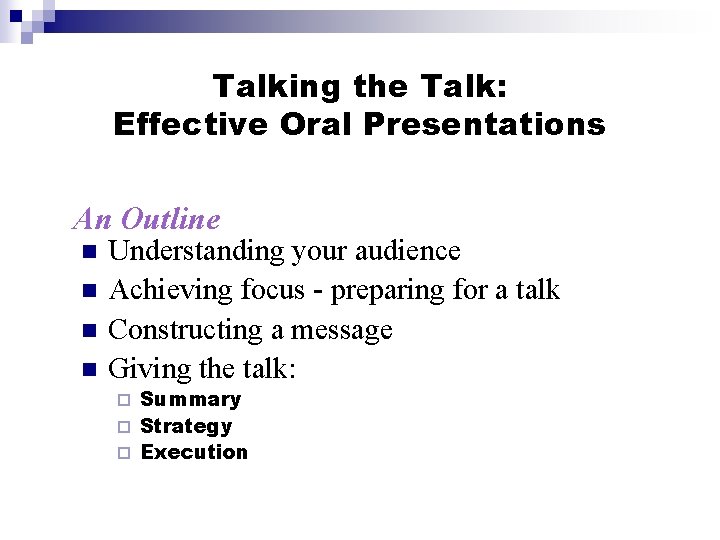
Talking the Talk: Effective Oral Presentations An Outline n n Understanding your audience Achieving focus - preparing for a talk Constructing a message Giving the talk: Summary ¨ Strategy ¨ Execution ¨
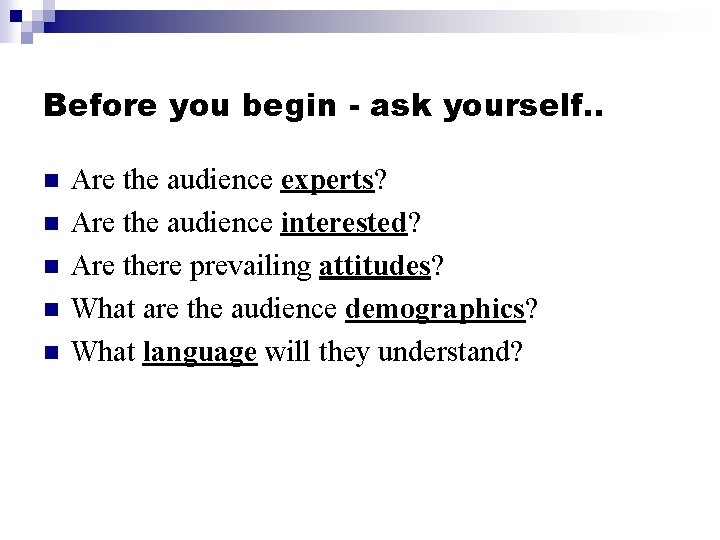
Before you begin - ask yourself. . n n n Are the audience experts? Are the audience interested? Are there prevailing attitudes? What are the audience demographics? What language will they understand?
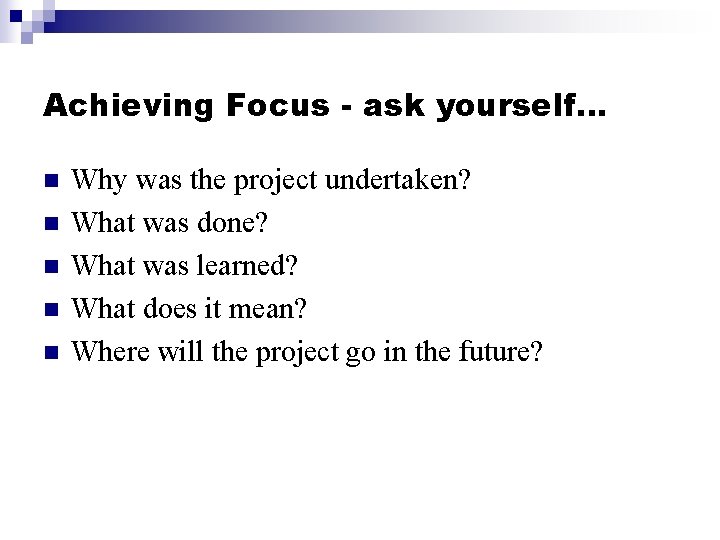
Achieving Focus - ask yourself… n n n Why was the project undertaken? What was done? What was learned? What does it mean? Where will the project go in the future?
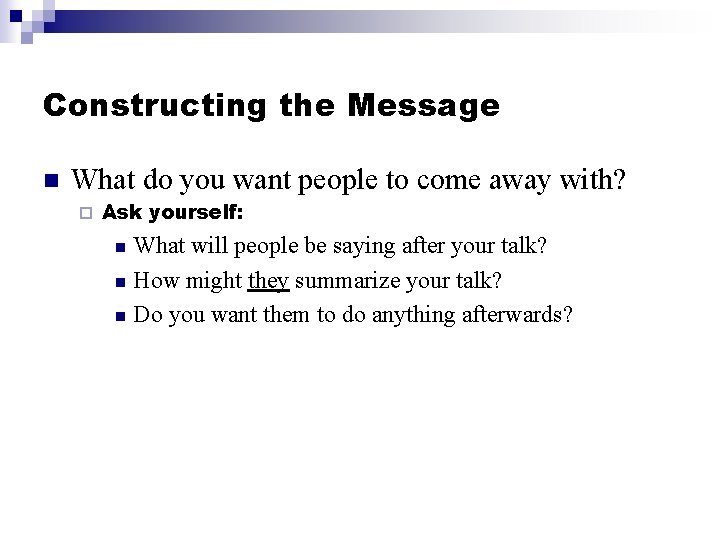
Constructing the Message n What do you want people to come away with? ¨ Ask yourself: What will people be saying after your talk? n How might they summarize your talk? n Do you want them to do anything afterwards? n
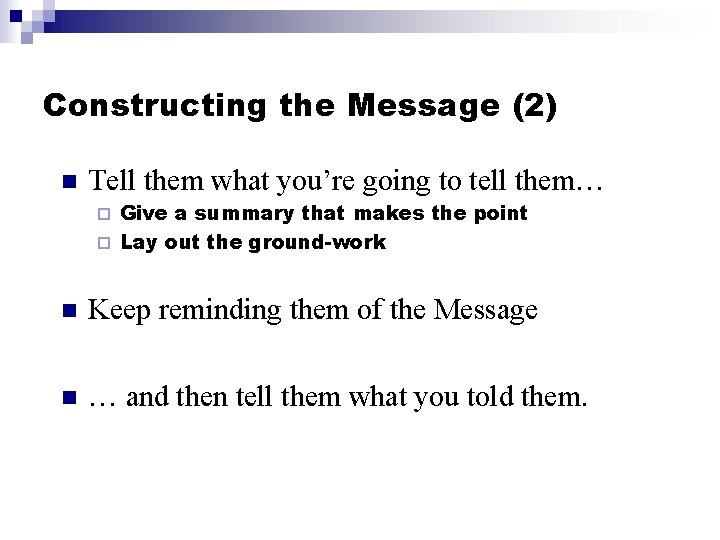
Constructing the Message (2) n Tell them what you’re going to tell them… Give a summary that makes the point ¨ Lay out the ground-work ¨ n Keep reminding them of the Message n … and then tell them what you told them.
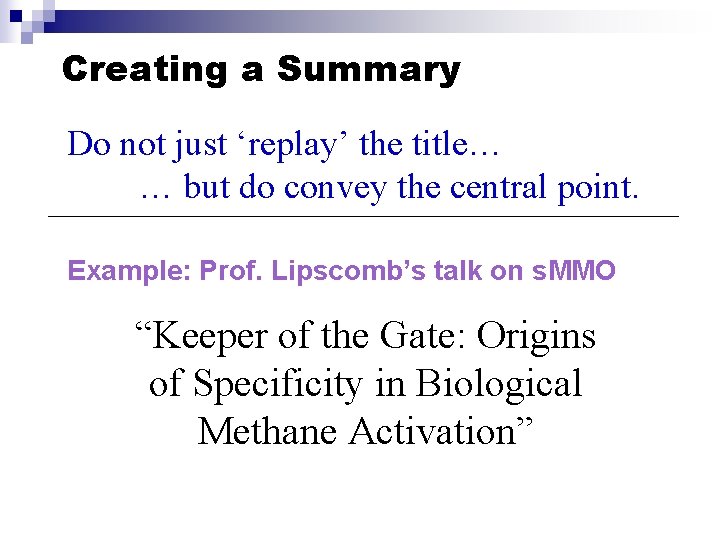
Creating a Summary Do not just ‘replay’ the title… … but do convey the central point. Example: Prof. Lipscomb’s talk on s. MMO “Keeper of the Gate: Origins of Specificity in Biological Methane Activation”
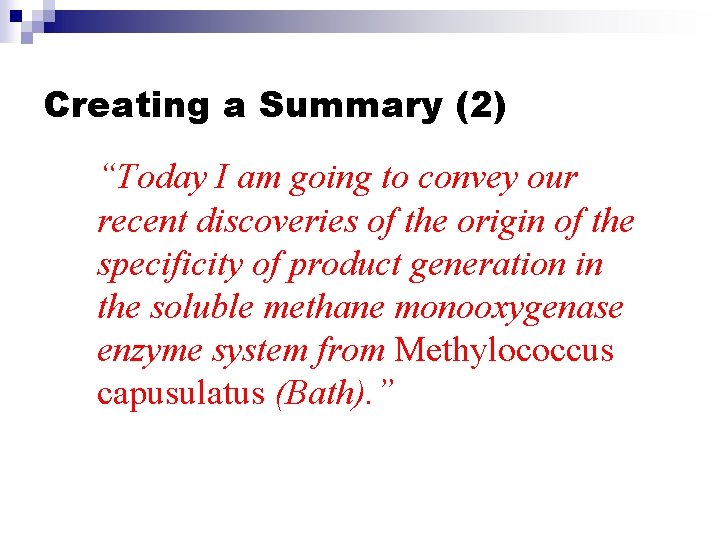
Creating a Summary (2) “Today I am going to convey our A unhelpful summary: recent discoveries of the origin of the specificity of product generation in the soluble methane monooxygenase enzyme system from Methylococcus capusulatus (Bath). ”
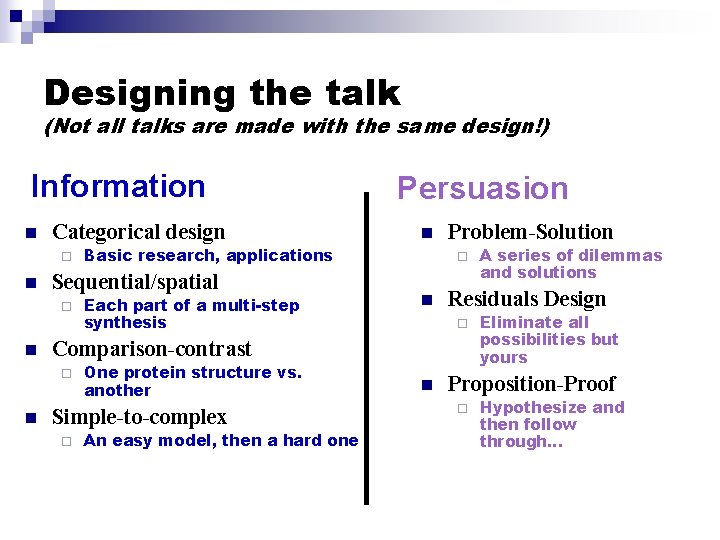
Designing the talk (Not all talks are made with the same design!) Information n Categorical design ¨ n n Each part of a multi-step synthesis Problem-Solution ¨ n One protein structure vs. another ¨ Simple-to-complex ¨ An easy model, then a hard one n A series of dilemmas and solutions Residuals Design Comparison-contrast ¨ n n Basic research, applications Sequential/spatial ¨ Persuasion Eliminate all possibilities but yours Proposition-Proof ¨ Hypothesize and then follow through…
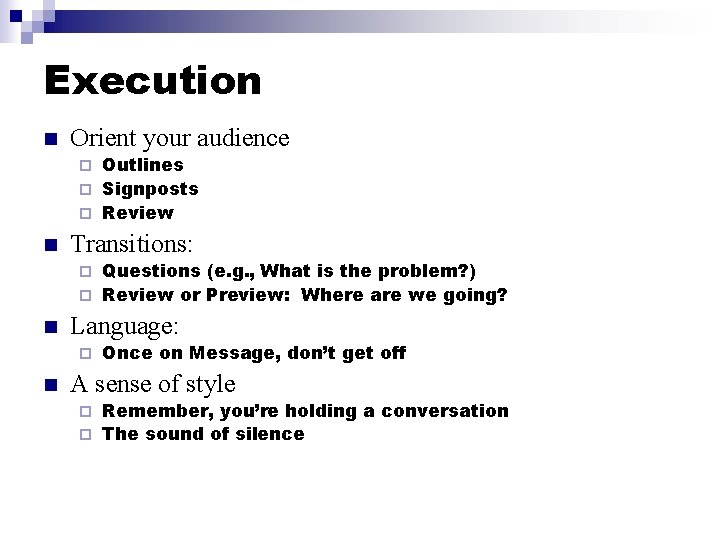
Execution n Orient your audience Outlines ¨ Signposts ¨ Review ¨ n Transitions: Questions (e. g. , What is the problem? ) ¨ Review or Preview: Where are we going? ¨ n Language: ¨ n Once on Message, don’t get off A sense of style Remember, you’re holding a conversation ¨ The sound of silence ¨
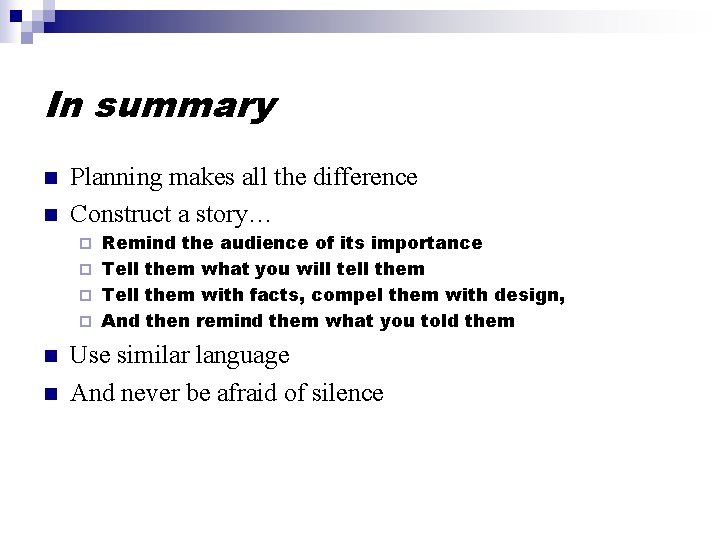
In summary n n Planning makes all the difference Construct a story… Remind the audience of its importance ¨ Tell them what you will tell them ¨ Tell them with facts, compel them with design, ¨ And then remind them what you told them ¨ n n Use similar language And never be afraid of silence