
Talking and Listening The Basic Interpersonal Skills Chapter
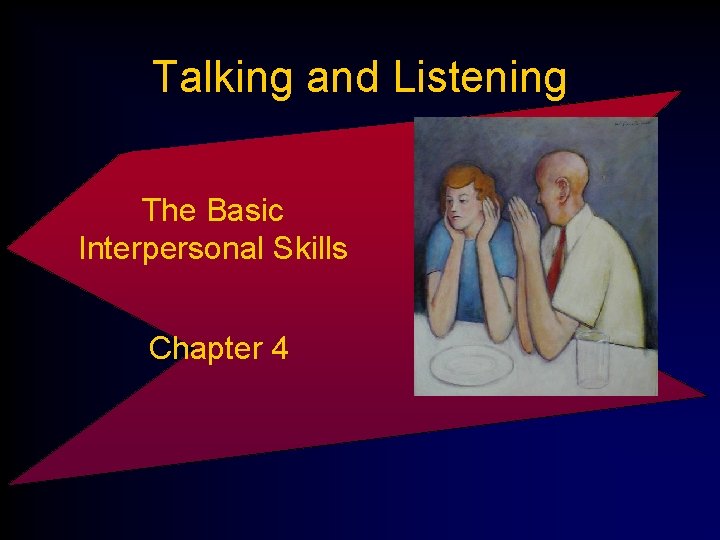
Talking and Listening The Basic Interpersonal Skills Chapter 4
Learning Objectives • Discusses the purposes and functions of the basic interpersonal skills of talking and listening • Identify and discuss the talking, listening, and active listening skills • Discuss the significance of culturally competent communications for effective talking and listening • Communicate interest and empathy through nonverbal communications and body language • Describe and perform the talking skills • Describe and perform the listening skills • Describe and perform the active listening skills
Culturally Competent Communication
List the Common Ways we Communicate
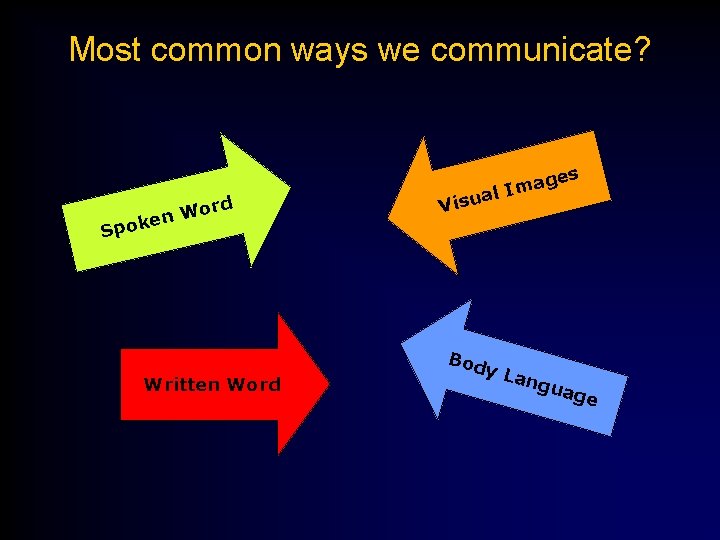
Most common ways we communicate? d Wor n e Spok Written Word ag m I l a Visu Bod es y La ngu age
All communication methods are important in social work but emphasis usually falls on the spoken word. . . And research shows that such communication is heavily prone to be: misunderstood, misinterpreted, rejected, disliked, distorted, or not heard!
This is especially true when the communication is between… People of different language People of different gender People of different class And especially between… People of different culture
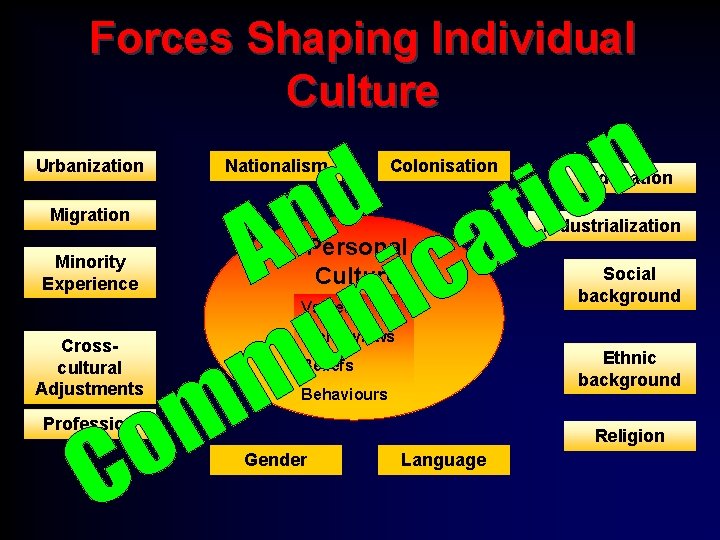
Forces Shaping Individual Culture Urbanization Nationalism Colonisation Migration Minority Experience Personal Culture Values Crosscultural Adjustments Education Industrialization Social background World-views Ethnic background Beliefs Behaviours Profession Religion Gender Language
Canada …is a multicultural country
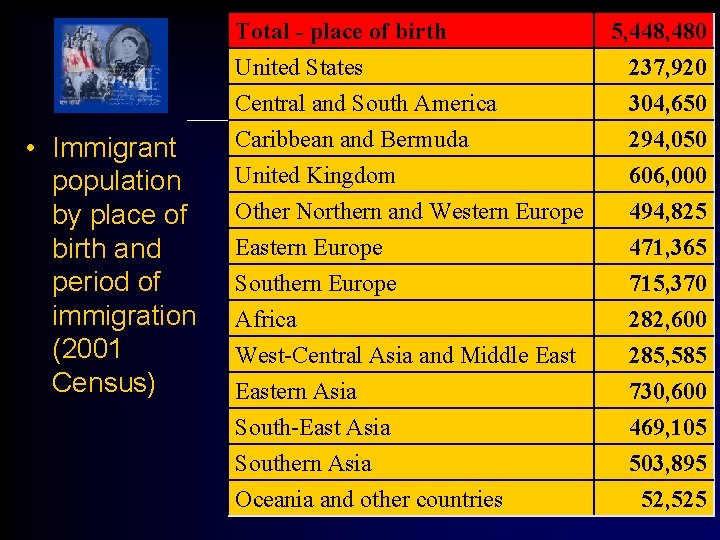
Total - place of birth United States • Immigrant population by place of birth and period of immigration (2001 Census) 5, 448, 480 237, 920 Central and South America Caribbean and Bermuda 304, 650 294, 050 United Kingdom Other Northern and Western Europe Eastern Europe 606, 000 494, 825 471, 365 Southern Europe Africa West-Central Asia and Middle Eastern Asia South-East Asia Southern Asia Oceania and other countries 715, 370 282, 600 285, 585 730, 600 469, 105 503, 895 52, 525

Population by Ethnic Origin, 2001
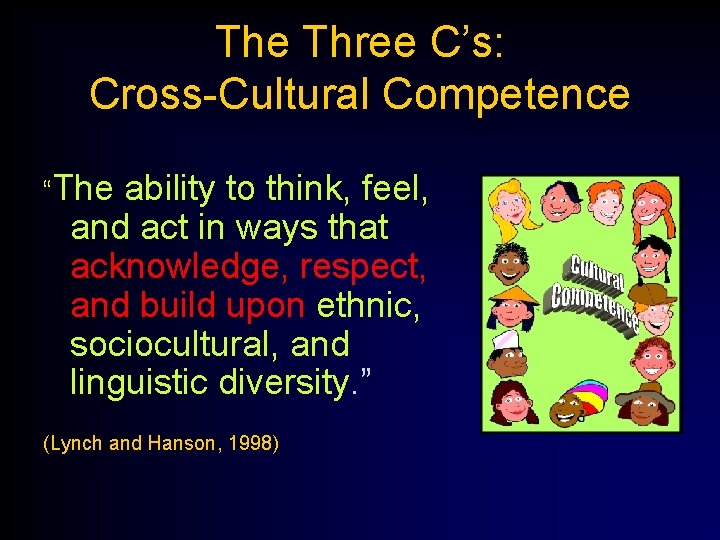
The Three C’s: Cross-Cultural Competence “The ability to think, feel, and act in ways that acknowledge, respect, and build upon ethnic, sociocultural, and linguistic diversity. ” (Lynch and Hanson, 1998)
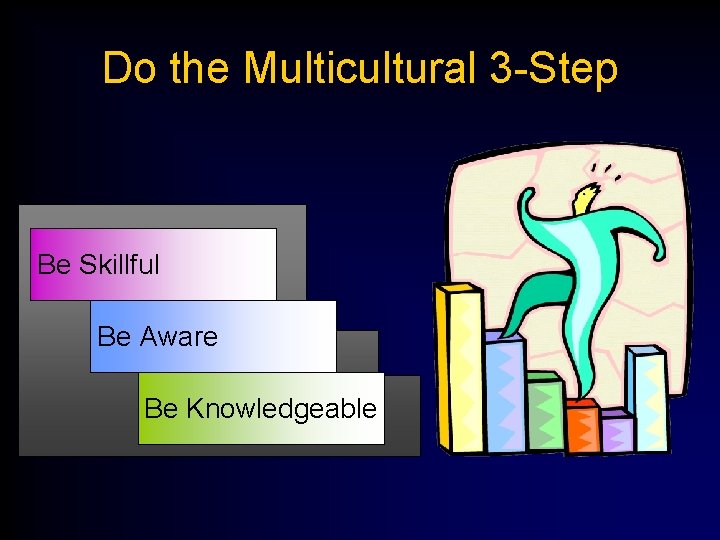
Do the Multicultural 3 -Step Be Skillful Be Aware Be Knowledgeable
Multicultural 3 -step • Steps you can take to become a competent counselor: – Awareness • Recognize your own and others – Knowledge • Educate yourself and Understand clients’ cultures – Skill • Develop and enhance your intercultural communication abilities
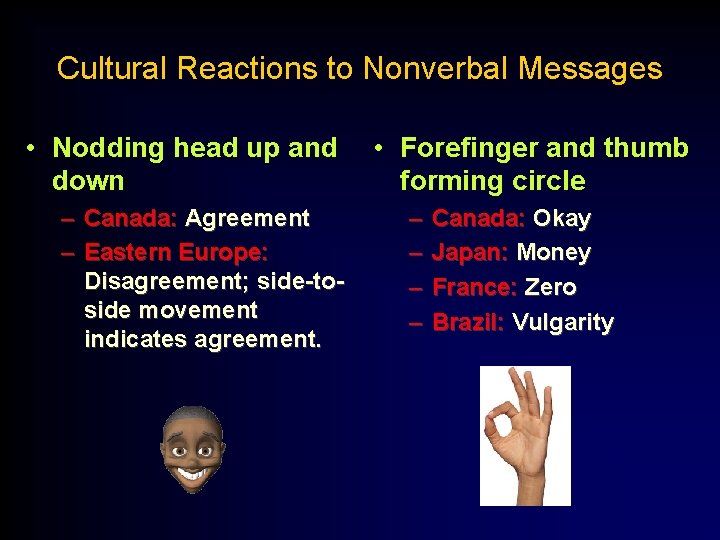
Cultural Reactions to Nonverbal Messages • Nodding head up and • Forefinger and thumb down forming circle – Canada: Agreement – Eastern Europe: Disagreement; side-toside movement indicates agreement. – – Canada: Okay Japan: Money France: Zero Brazil: Vulgarity
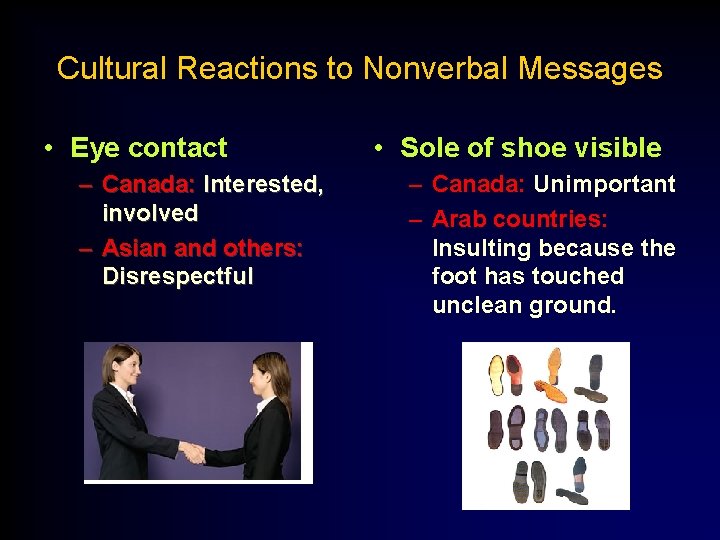
Cultural Reactions to Nonverbal Messages • Eye contact – Canada: Interested, involved – Asian and others: Disrespectful • Sole of shoe visible – Canada: Unimportant – Arab countries: Insulting because the foot has touched unclean ground.
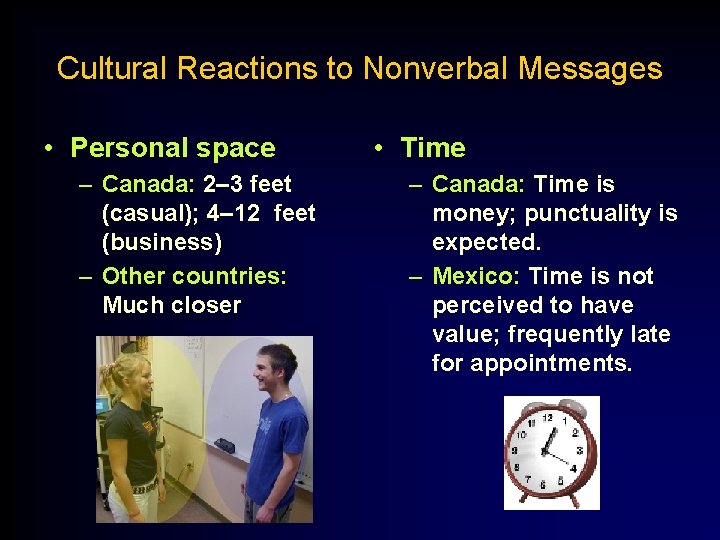
Cultural Reactions to Nonverbal Messages • Personal space – Canada: 2– 3 feet (casual); 4– 12 feet (business) – Other countries: Much closer • Time – Canada: Time is money; punctuality is expected. – Mexico: Time is not perceived to have value; frequently late for appointments.
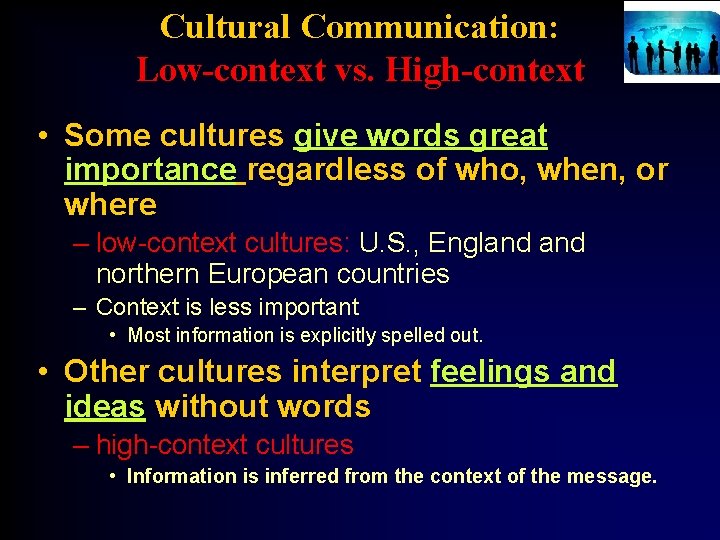
Cultural Communication: Low-context vs. High-context • Some cultures give words great importance regardless of who, when, or where – low-context cultures: U. S. , England northern European countries – Context is less important • Most information is explicitly spelled out. • Other cultures interpret feelings and ideas without words – high-context cultures • Information is inferred from the context of the message.
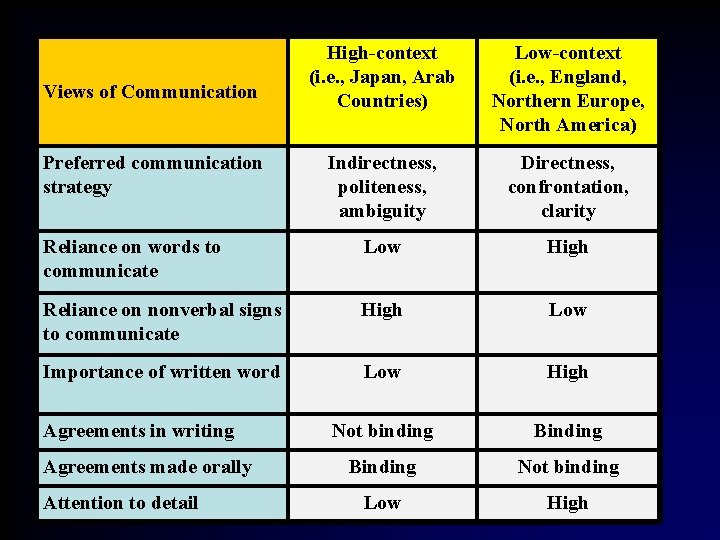
High-context (i. e. , Japan, Arab Countries) Low-context (i. e. , England, Northern Europe, North America) Indirectness, politeness, ambiguity Directness, confrontation, clarity Reliance on words to communicate Low High Reliance on nonverbal signs to communicate High Low Importance of written word Low High Not binding Binding Not binding Low High Views of Communication Preferred communication strategy Agreements in writing Agreements made orally Attention to detail
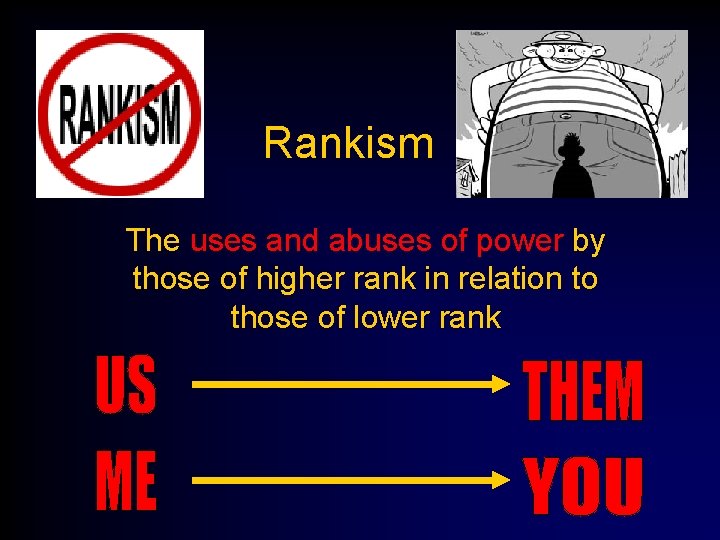
Rankism The uses and abuses of power by those of higher rank in relation to those of lower rank
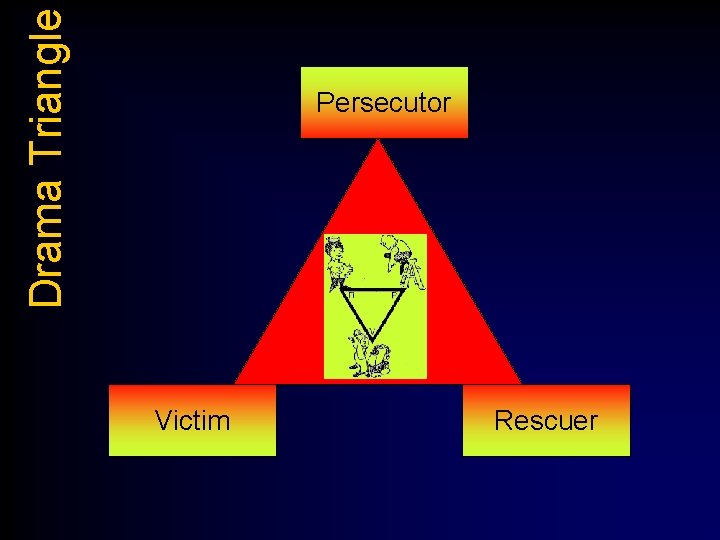
Drama Triangle Persecutor Victim Rescuer
Drama in the Multicultural Family In Groups read and discuss the scenario presented How could you assess the situation using a culturally competent approach?
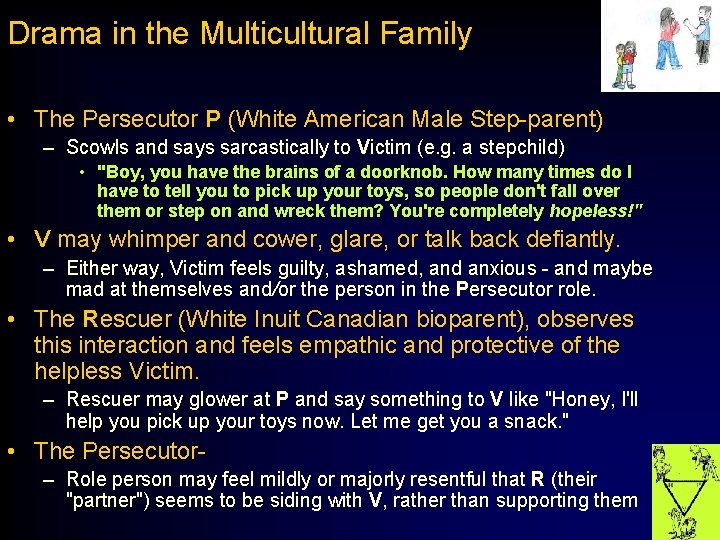
Drama in the Multicultural Family • The Persecutor P (White American Male Step-parent) – Scowls and says sarcastically to Victim (e. g. a stepchild) • "Boy, you have the brains of a doorknob. How many times do I have to tell you to pick up your toys, so people don't fall over them or step on and wreck them? You're completely hopeless!" • V may whimper and cower, glare, or talk back defiantly. – Either way, Victim feels guilty, ashamed, and anxious - and maybe mad at themselves and/or the person in the Persecutor role. • The Rescuer (White Inuit Canadian bioparent), observes this interaction and feels empathic and protective of the helpless Victim. – Rescuer may glower at P and say something to V like "Honey, I'll help you pick up your toys now. Let me get you a snack. " • The Persecutor– Role person may feel mildly or majorly resentful that R (their "partner") seems to be siding with V, rather than supporting them
The art of communication… is often a difficult one to cultivate
Common Communication Errors • Patronizing • Interrogating • Focusing on your own thoughts and agenda in relation to the client • Attending to a single dimension • Frequently interrupting • Failing to listen or remember • Neglecting, mispronouncing, or changing client’s name • Neglecting consideration of cultural meanings • Failing to demonstrate understanding through active listening • Using stereotypical terms
Common Communication Errors • Offering suggesting or solutions too early in the process • Making absolute statements • Disclosing personal feelings, opinions or experiences too early • Confronting or challenging before securing relationship • Pushing for action or progress too early • Using cliches and jargon • Being critical, judgemental and pejorative of other people or groups • Displaying inappropriate or disproportionate emotions

Nonverbal Communications and Body Language

Can you guess the meaning of these gestures? See if you can decipher the meaning of the three gestures presented Good Luck!
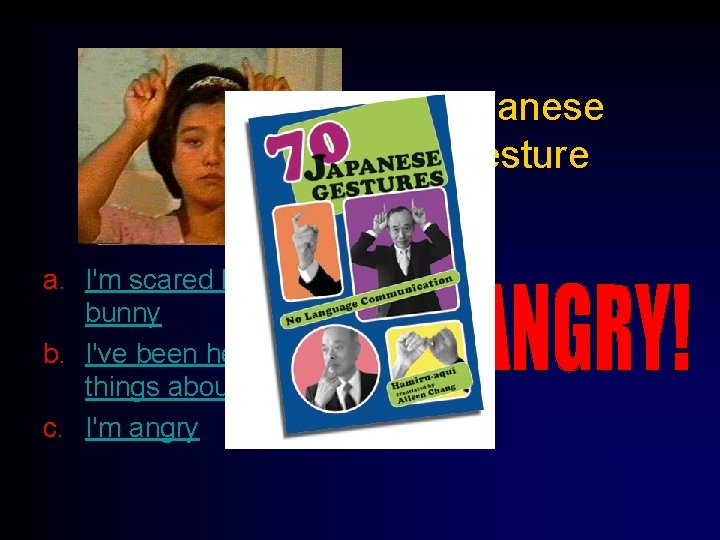
Japanese Gesture a. I'm scared like a bunny b. I've been hearing things about you c. I'm angry

French Gesture a. I don't believe you b. I wish I hadn't seen that c. I am looking at a very handsome man
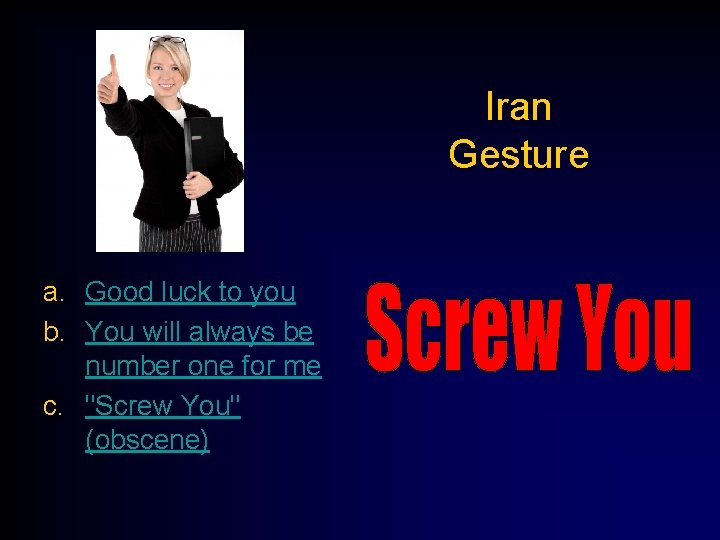
Iran Gesture a. Good luck to you b. You will always be number one for me c. "Screw You" (obscene)
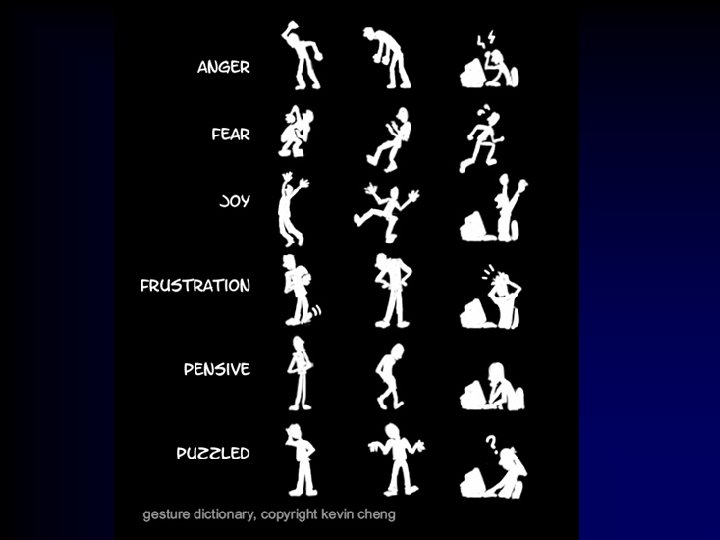
Attending is key… • Process of nonverbally communicating to others that you are: – Open – Nonjudgmental – Accepting of people – Interested in what they say
Common Problems With Attending Skills • Persons in the helping profession are eager to help. • The desire to help can trigger premature responses. • With inexperienced workers, and in early interviews, there is a tendency for premature: – Suggestions, assessments and judgements.
Silence is… • Silence is often wrongly perceived as a negative. • Allow for periods of silence and pauses without turning the situation into a contest. • Allow for therapeutic use of silence in your interviews.
Class Exercise Divide into groups of two and experiment with alternative seating arrangements. Decide how you would arrange chairs for an interview and what factors are important to consider.
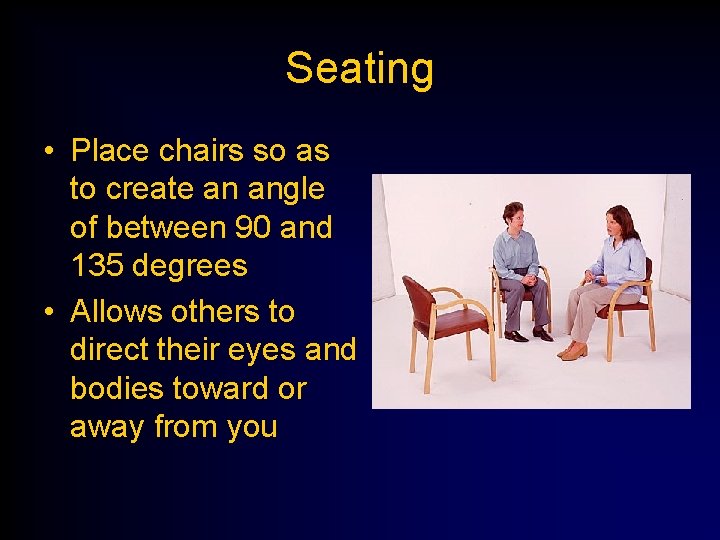
Seating • Place chairs so as to create an angle of between 90 and 135 degrees • Allows others to direct their eyes and bodies toward or away from you
Where Should I Sit? • Unless it is clinically contraindicated provide the client with different seating options that they can choose from. • Most clients, and workers, find that setting at an angle is preferred. Such an arrangement invites eye contact, but does not force it. • The environment should be free from distractions.
How important is listening in your life? • How often do you listen in your role as a student? • When do you use listening in your social life? • When do you use listening in your family life? • In what areas would you like to improve your listening? – Why?
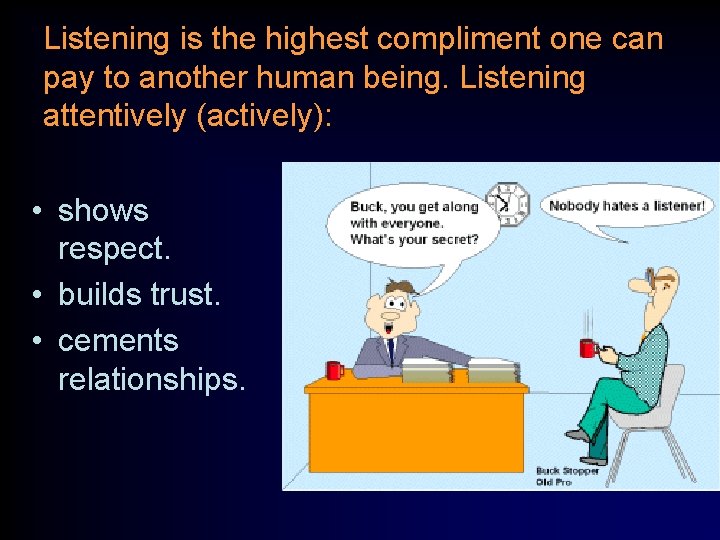
Listening is the highest compliment one can pay to another human being. Listening attentively (actively): • shows respect. • builds trust. • cements relationships.
Listening and hearing: Is there a difference? • Listening – The International Listening Association defines listening as “the process of receiving, constructing meaning from, and responding to spoken or nonverbal messages. ” – Listening is active. • Hearing – Hearing is passive. – Hearing occurs with little or no effort and involves sounds (stimuli) reaching our ears. – Hearing is one component of listening
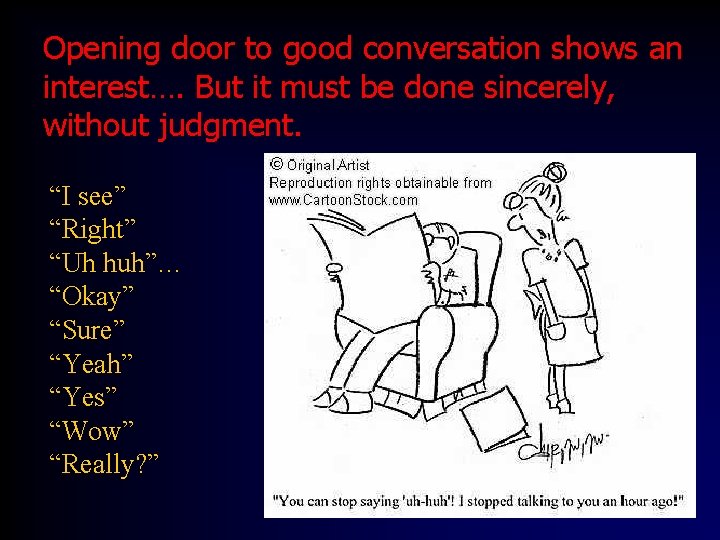
Opening door to good conversation shows an interest…. But it must be done sincerely, without judgment. “I see” “Right” “Uh huh”… “Okay” “Sure” “Yeah” “Yes” “Wow” “Really? ”
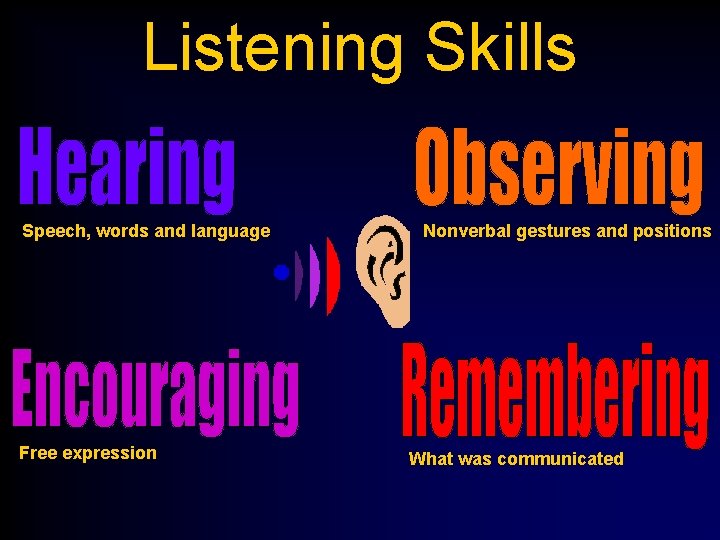
Listening Skills Speech, words and language Free expression Nonverbal gestures and positions What was communicated
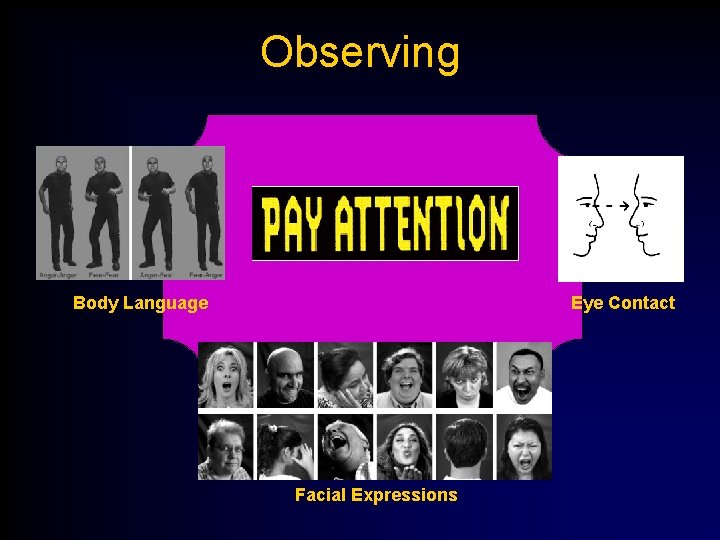
Observing Body Language Eye Contact Facial Expressions
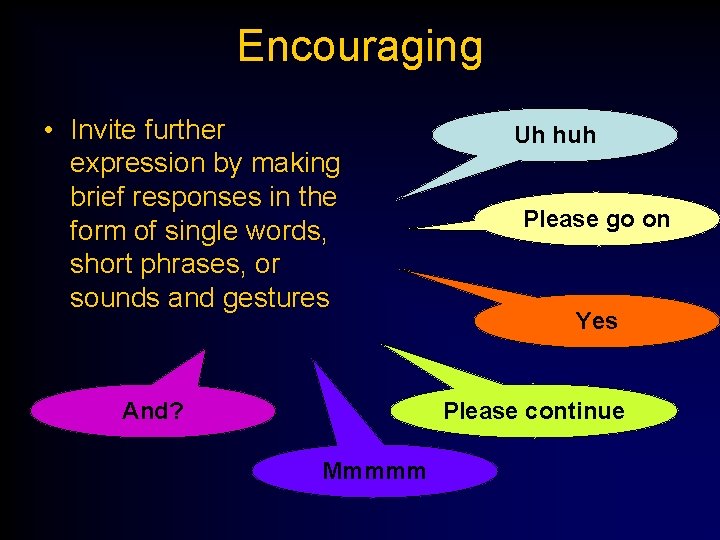
Encouraging • Invite further expression by making brief responses in the form of single words, short phrases, or sounds and gestures And? Uh huh Please go on Yes Please continue Mmmmm
• Remembering what the client reveals • Temporary storage of information for later retrieval • Aided by: – Take Notes – Taping Sessions • Remember though: – Memory is not Reproductive – Memory is Reconstructed
What Active Listening Does • Encourages the client to express themselves. • Promotes greater client self-understanding. • Promotes accurate assessment. • Conveys your attempt to understand as fully as possible the situation.
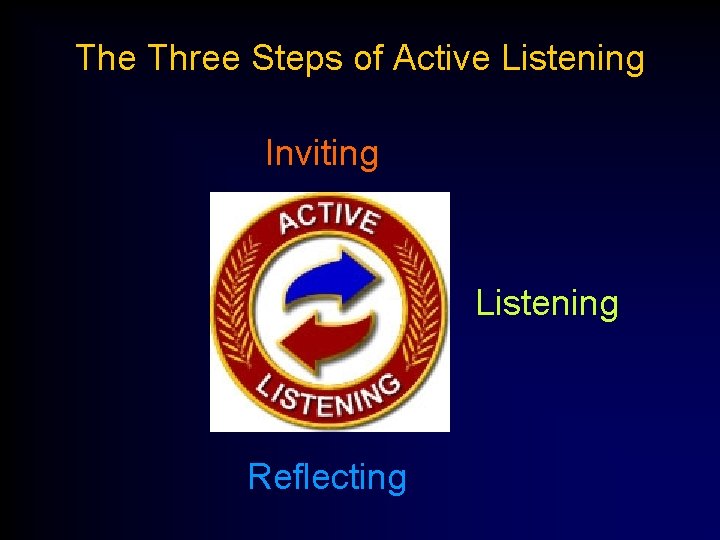
The Three Steps of Active Listening Inviting Listening Reflecting
Step 1: Inviting • Your body language, speech and choice of language invite the client to share and enhances trust. • Inviting allows the client to express themselves without having to screen content for your consumption. – This is particularly important for younger or vulnerable populations.
Step 2: Listening • After the client has responded to your invitation to speak you listen carefully to – – hear observe encourage remember • the entirety of the message the client needs to convey.
Step 3: Reflecting • Periodically when the client is talking paraphrase what has been said. Do this during natural pauses in the process. – Your paraphrase is a restatement of what the client has said. . . as you understand it. • The paraphrase, or reflection, serves two purposes – clears up possible misunderstandings – demonstrates you are attending to what is being said
The Power of Active Listening In and of itself active listening is a powerful clinical tool. Most clients will not have experienced a time when they were able to expound their message without interruption, judgement or misinterpretation.
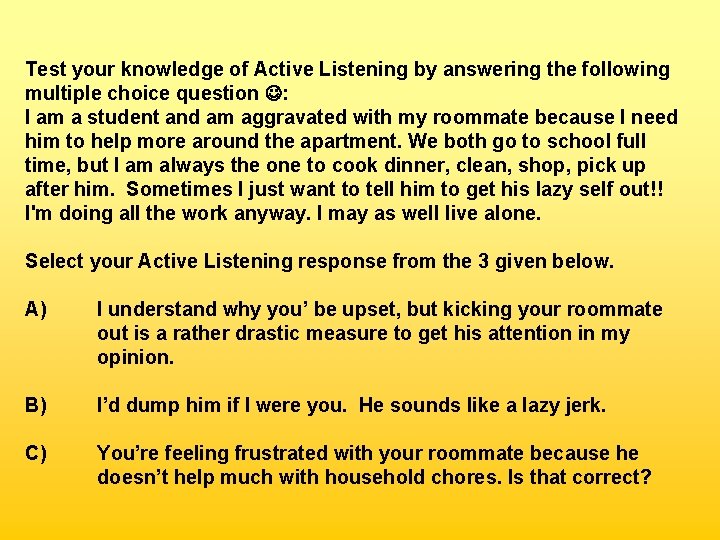
Test your knowledge of Active Listening by answering the following multiple choice question : I am a student and am aggravated with my roommate because I need him to help more around the apartment. We both go to school full time, but I am always the one to cook dinner, clean, shop, pick up after him. Sometimes I just want to tell him to get his lazy self out!! I'm doing all the work anyway. I may as well live alone. Select your Active Listening response from the 3 given below. A) I understand why you’ be upset, but kicking your roommate out is a rather drastic measure to get his attention in my opinion. B) I’d dump him if I were you. He sounds like a lazy jerk. C) You’re feeling frustrated with your roommate because he doesn’t help much with household chores. Is that correct?
Thanks for your time and attention Questions?
- Slides: 55