
TALKING ABOUT THE DSM ITS INFLUENCE AND OUR
TALKING ABOUT THE DSM – ITS INFLUENCE AND OUR RESPONSES TO IT Presentation to the Therapeutic Conversations X Conference Vancouver, May 12, 2012 Tom Strong, University of Calgary
AMERICAN PSYCHIATRIC ASSOCIATION DSM-5 DEVELOPMENT � DSM-5: The Future of Psychiatric Diagnosis � Publication of the fifth edition of Diagnostic and Statistical Manual of Mental Disorders (DSM-5) in May 2013 will mark one the most anticipated events in the mental health field. As part of the development process, the preliminary draft revisions to the current diagnostic criteria for psychiatric diagnoses are now available for public review. We thank you for your interest in DSM-5 and hope that you use this opportunity not only to learn more about the proposed changes in DSM-5, but also about its history, its impact, and its developers. Please continue to check this site for updates to criteria and for more information about the development process. � From the DSM-5 website http: //www. dsm 5. org/Pages/Default. aspx
WHAT’S GOES IN/INTO A LABEL?
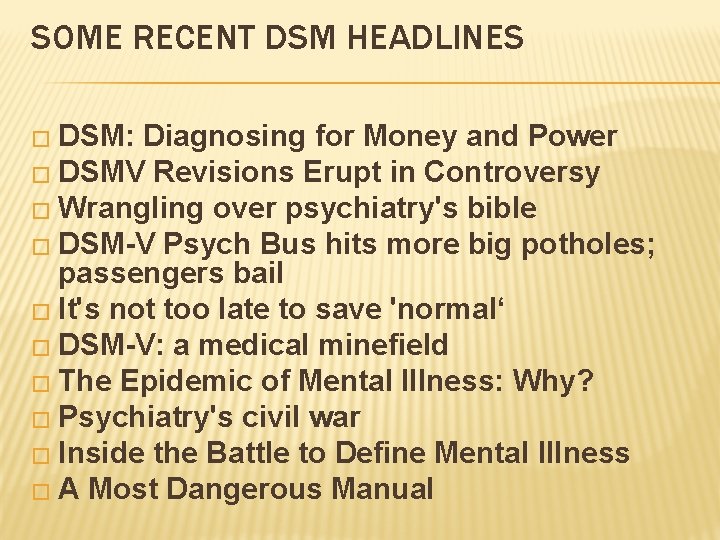
SOME RECENT DSM HEADLINES � DSM: Diagnosing for Money and Power � DSMV Revisions Erupt in Controversy � Wrangling over psychiatry's bible � DSM-V Psych Bus hits more big potholes; passengers bail � It's not too late to save 'normal‘ � DSM-V: a medical minefield � The Epidemic of Mental Illness: Why? � Psychiatry's civil war � Inside the Battle to Define Mental Illness � A Most Dangerous Manual
WHY CAN’T THERE BE LOCAL DX? � DSM and its parasitic discourses of administration, Pharma, professionalism, etc. � The DSM’s logic to those embracing it � Language as an elusive means of ‘getting a handle’ on the emotional and inchoate.
WHY THE DSM-V MIGHT MATTER TO YOU It is increasingly used to administer, ration and regulate therapeutic practice
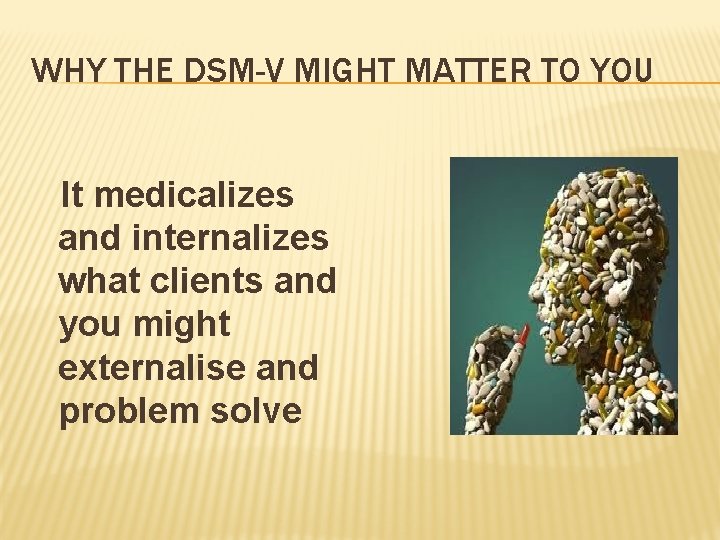
WHY THE DSM-V MIGHT MATTER TO YOU It medicalizes and internalizes what clients and you might externalise and problem solve

WHY THE DSM-V MIGHT MATTER TO YOU � People increasingly self-identify using DSM labels, while fighting the stigma associated
WHY THE DSM-V MIGHT MATTER TO YOU � There are more discourses of helpseeking and helpoffering than brain and symptom-based ones
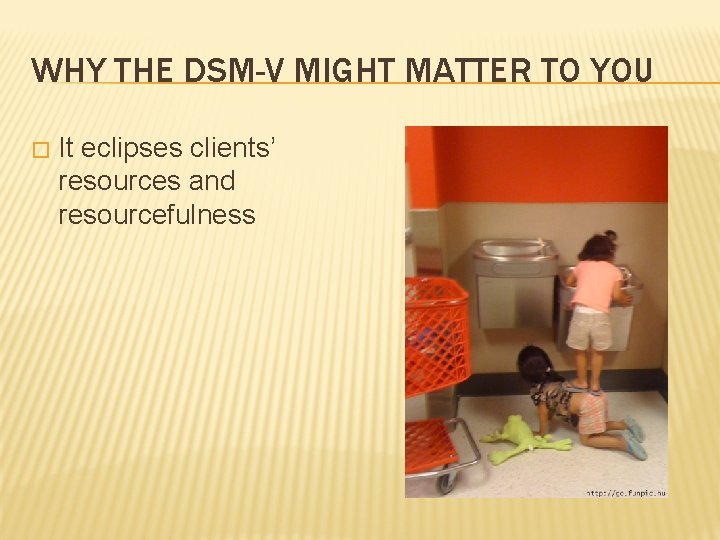
WHY THE DSM-V MIGHT MATTER TO YOU � It eclipses clients’ resources and resourcefulness
SCIENCE & THE IMPULSE TO NAME & CLASSIFY � � � Descriptions as prescriptions? � Vico on common sense, linguistic poverty & poetic wisdom � Deleuze on repetition & discursive capture Promises of modern science Human science as different from studying rocks & trees
WITTGENSTEIN ON ‘CORRECT’ AND MULTIPLE LANGUAGES � � Single idealized & systematized logical language Abstract concepts to guide actual interaction � Everyday languages � ‘Language games’
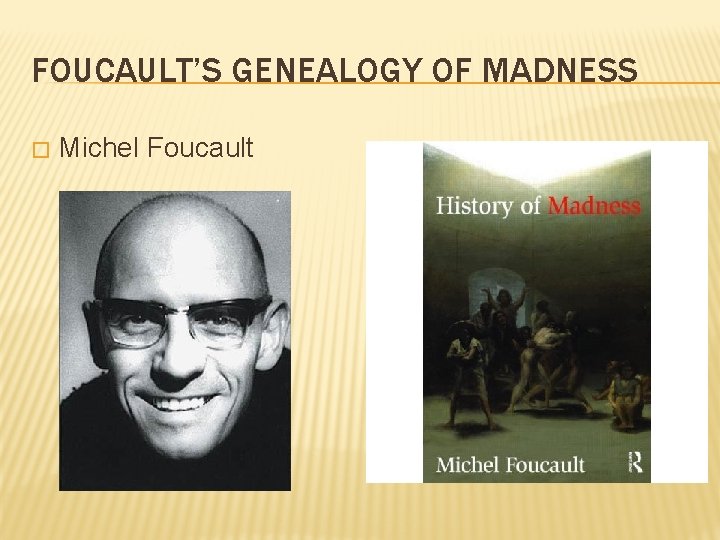
FOUCAULT’S GENEALOGY OF MADNESS � Michel Foucault
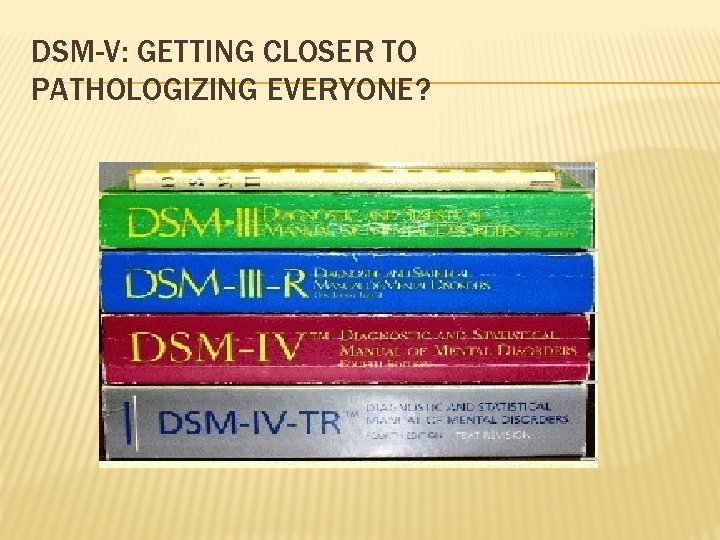
DSM-V: GETTING CLOSER TO PATHOLOGIZING EVERYONE?
THE DSM & EBP COUPLING? � Diagnoses research � Studying & Intervention Evaluation therapeutic interventions as drugs? � Questions and responses as interventions? � ‘Algorithms’ � What of practice? about PBE (Practice-based evidence)?
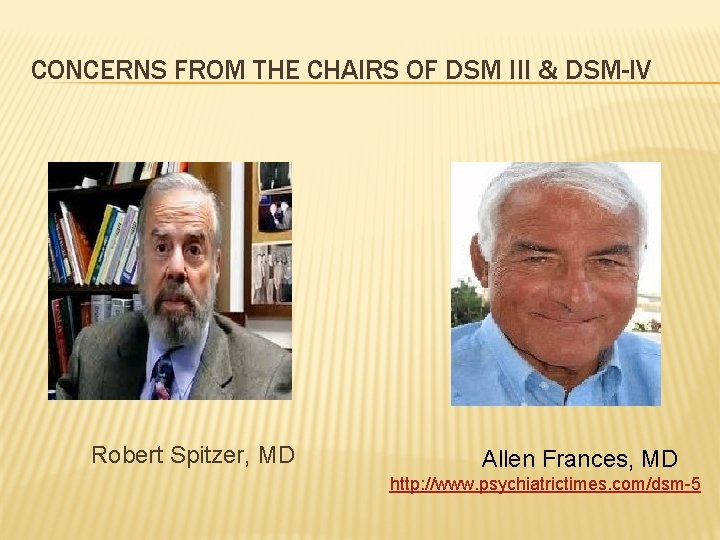
CONCERNS FROM THE CHAIRS OF DSM III & DSM-IV Robert Spitzer, MD Allen Frances, MD http: //www. psychiatrictimes. com/dsm-5
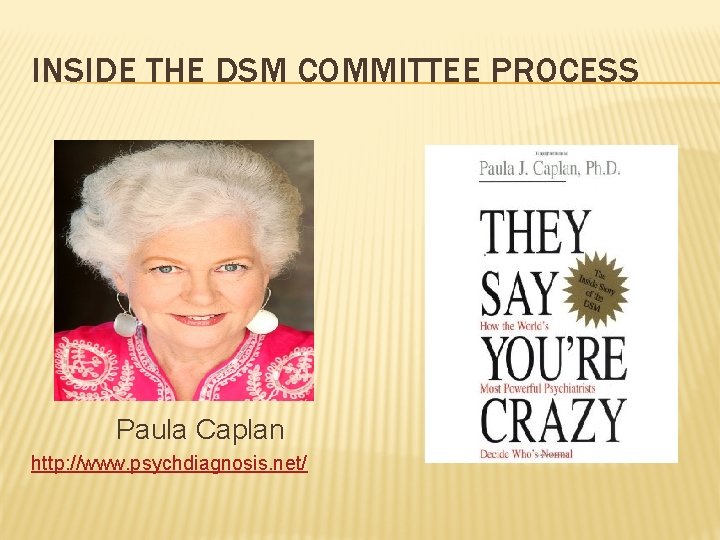
INSIDE THE DSM COMMITTEE PROCESS Paula Caplan http: //www. psychdiagnosis. net/
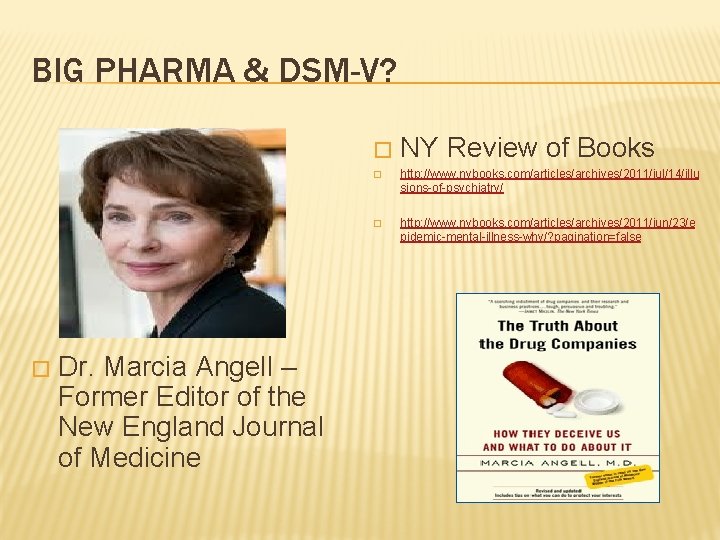
BIG PHARMA & DSM-V? � � Dr. Marcia Angell – Former Editor of the New England Journal of Medicine NY Review of Books � http: //www. nybooks. com/articles/archives/2011/jul/14/illu sions-of-psychiatry/ � http: //www. nybooks. com/articles/archives/2011/jun/23/e pidemic-mental-illness-why/? pagination=false
DSM STUDY (STRONG, GAETE SILVA, SAMETBAND, FRENCH & EESON, 2012) � Online survey of over 100 therapists on how they are influenced by DSM & how they respond to DSM. � 11 in-depth interviews � Online blog � Analysing for multiplicity � Discursive positions and tensions between them � e. g. , the up and downsides of DSM diagnoses.
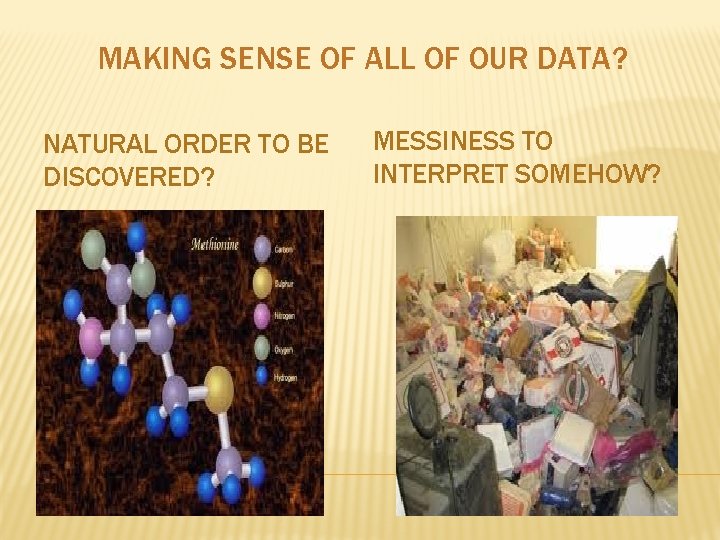
MAKING SENSE OF ALL OF OUR DATA? NATURAL ORDER TO BE DISCOVERED? MESSINESS TO INTERPRET SOMEHOW?
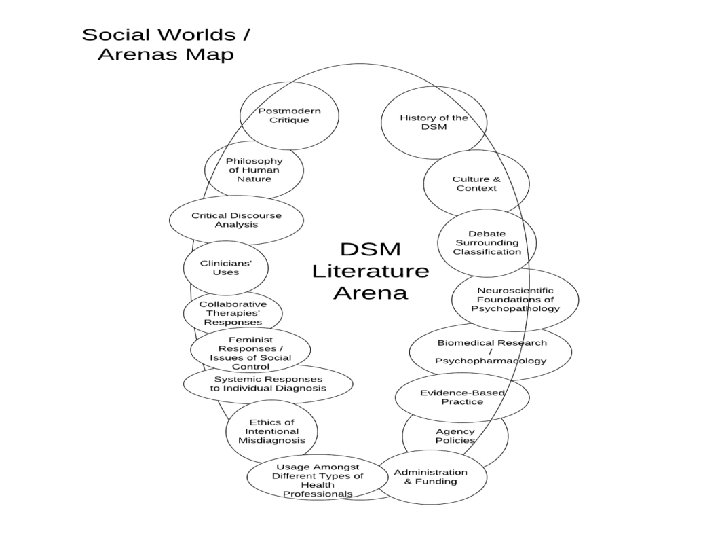
SOCIAL ARENA: DISCURSIVE COMMUNITIES & ACTORS
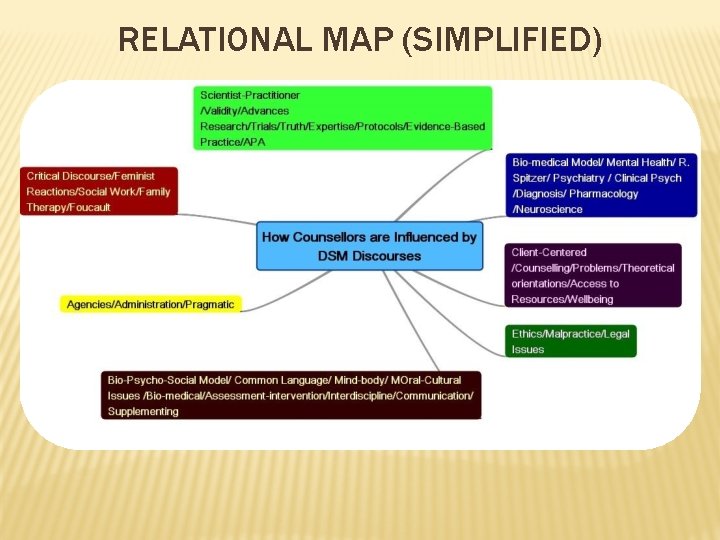
RELATIONAL MAP (SIMPLIFIED)
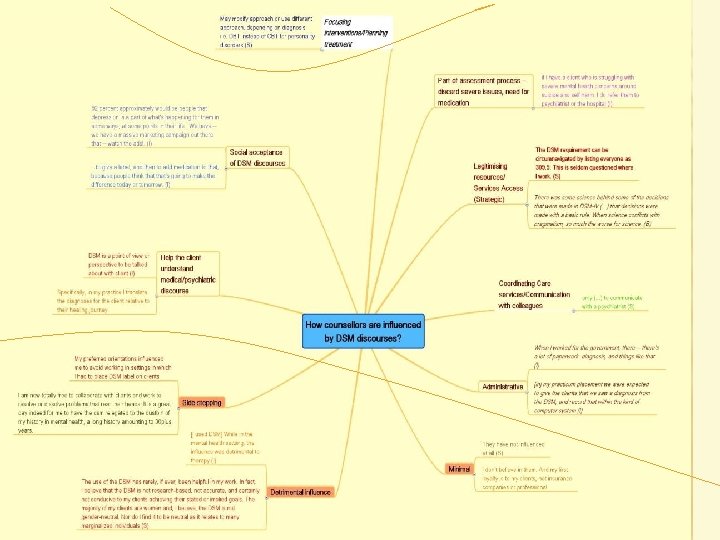
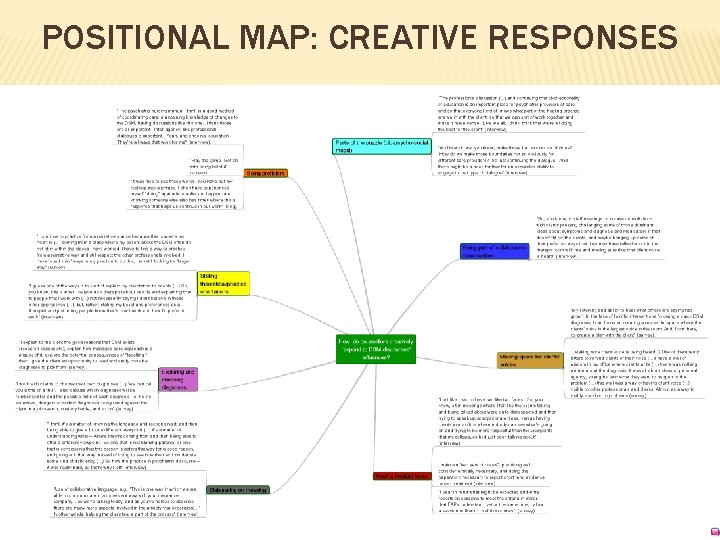
POSITIONAL MAP: CREATIVE RESPONSES
MOVING BETWEEN MANY DSM POSITIONS? � Discursive positioning and positioning calls. � Negotiating � Strategic � Keeping the acceptably famliar uses of the DSM things discursively flexible.
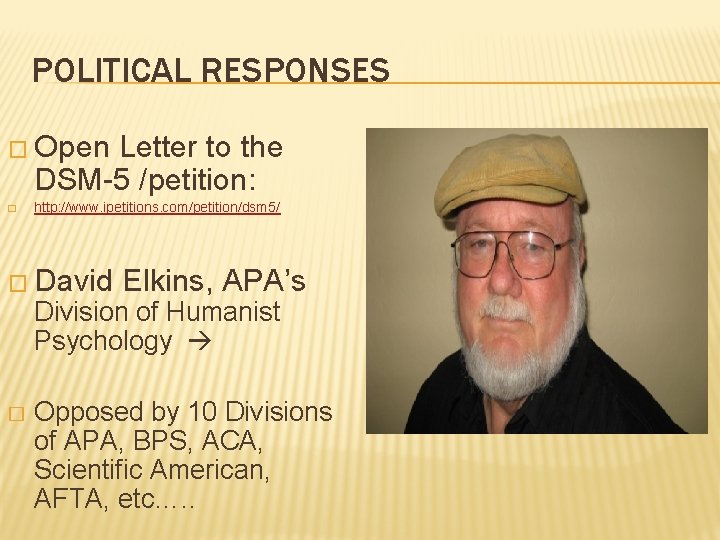
POLITICAL RESPONSES � Open Letter to the DSM-5 /petition: � http: //www. ipetitions. com/petition/dsm 5/ � David Elkins, APA’s Division of Humanist Psychology � Opposed by 10 Divisions of APA, BPS, ACA, Scientific American, AFTA, etc…. .
CONVERSATIONAL RESPONSES Go inside the dx and discuss its adequacy as a total description Supplement the dx discourse with at least 1 non-symptom discourse Externalize & contextualize what is internalized by the dx � Strengths & resourcefulness dx – identify symptoms of solution (Miller, 1992) � Share the professional & scientific controversies about the DSMV � Partnering with one’s medications?
THANK YOU Tom Strong Inés Sametband Joaquín Gaete Silva For further information: strongt@ucalgary. ca Website: Jared French Jen Eeson http: //www. ucalgary. ca/stron gt

YOUR TURN TO TALK
FURTHER READING American Psychiatric Association (nd) DSM 5 website: http: //www. dsm 5. org/Pages/Default. aspx Angell, M. (2011, July 14). The illusions of psychiatry. The New York Review of Books. Retrieved from: http: //www. nybooks. com/articles/archives/2011/jul/14/illusions-of-psychiatry/? pagination=false Caplan, P. J. (1996). They say you’re crazy: How the world’s most powerful psychiatrists decide who’s normal. New York, NY: Da Capo Press. . Cooper, M. , & Mc. Leod, J. (2010). Pluralistic counselling and psychotherapy. London: Sage. Cushman, P. (1995). Constructing the self, constructing America: A cultural history of psychotherapy. New York, NY: Perseus. Danziger, K. (1997). Naming the mind: How psychology found its language. London: Sage. Eriksen, K. , & Kress, V. E. (2005). Beyond the DSM story: Ethical quandaries, challenges, and best practices. Thousand Oaks, CA: Sage Publications, Inc. Frances, A. (2012, February 21) DSM 5 freezes out its stakeholders. The Huffington Post. Blog commentary retrieved online from: http: //www. huffingtonpost. com/allen-frances/dsm-5 -freezes-out-itssta_b_1269838. html Gergen, K. J. (1990). Therapeutic professions and the diffusion of deficit. Journal of Mind and Behavior, 11, 353 -368. Greenberg, G. (2010). Manufacturing depression: The secret history of a modern disease. New York: Simon & Schuster. Grob, G. N. (1991). Origins of DSM-I: A study in appearance and reality. American Journal of Psychiatry, 148, 421 -431. Hacking, I. (1998). Mad travelers: Reflections on the reality of transient mental illness. Cambridge, MA: Harvard University Press. House, R. (2005). Therapy beyond modernity: Deconstructing and transcending profession-centred therapy. London: Karnac. Miller, S. (1992). The symptoms of solution. Journal of Strategic & Systemic Therapies, 11, 1– 11. Rapley, M. , Moncrieff, J. , & Dillon, J. (Eds. ) (2012). De-medicalizing misery: Psychiatry, psychology, and the human condition. New York, NY: Palgrave Macmillan. Strong, T. , Gaete Silva, J. , Sametband, I, French, J. , & Eeson, J. (2012). Counsellors respond to the DSM-IVTR. Canadian Journal of Counselling and Psychotherapy, 46(2), 85 -106.
- Slides: 30