
Talking About Photos Simplicity this is a simple

Talking About Photos
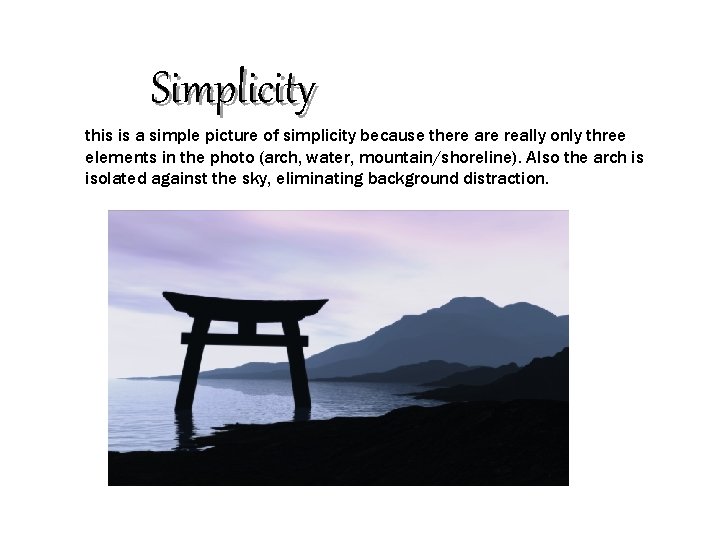
Simplicity this is a simple picture of simplicity because there are really only three elements in the photo (arch, water, mountain/shoreline). Also the arch is isolated against the sky, eliminating background distraction.
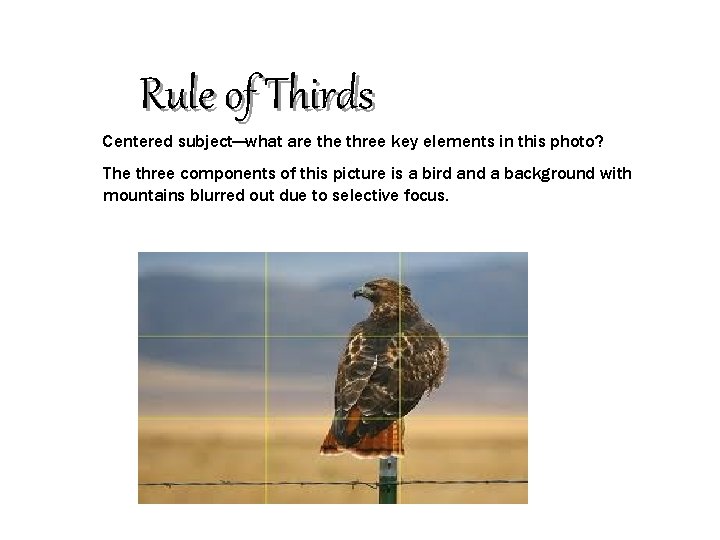
Rule of Thirds Centered subject—what are three key elements in this photo? The three components of this picture is a bird and a background with mountains blurred out due to selective focus.
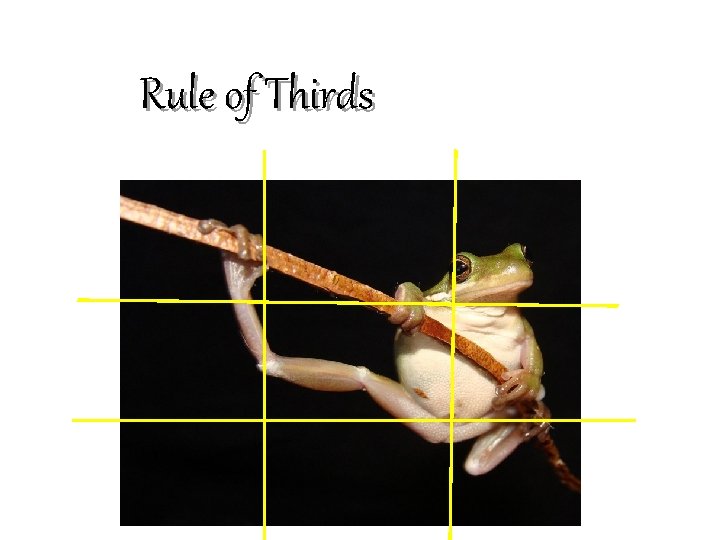
Rule of Thirds
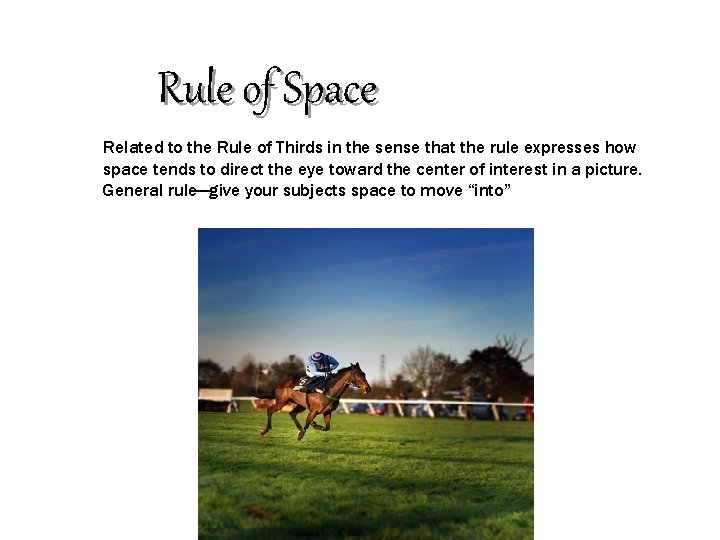
Rule of Space Related to the Rule of Thirds in the sense that the rule expresses how space tends to direct the eye toward the center of interest in a picture. General rule—give your subjects space to move “into”

Rule of Space Or room to “look into”
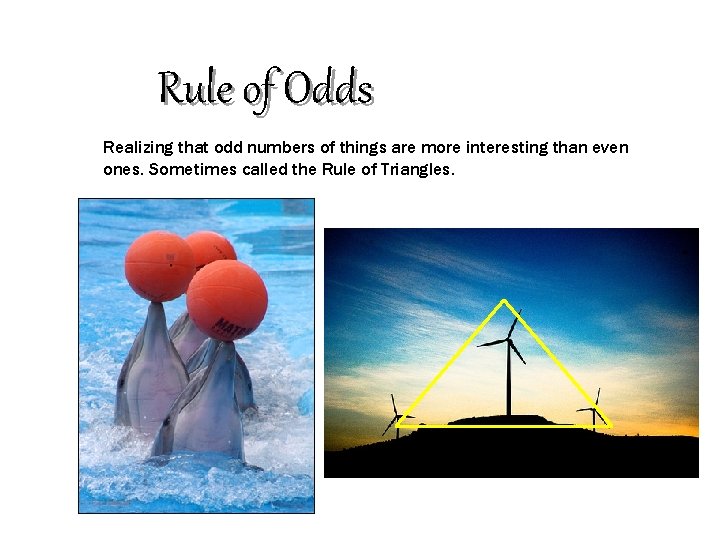
Rule of Odds Realizing that odd numbers of things are more interesting than even ones. Sometimes called the Rule of Triangles.
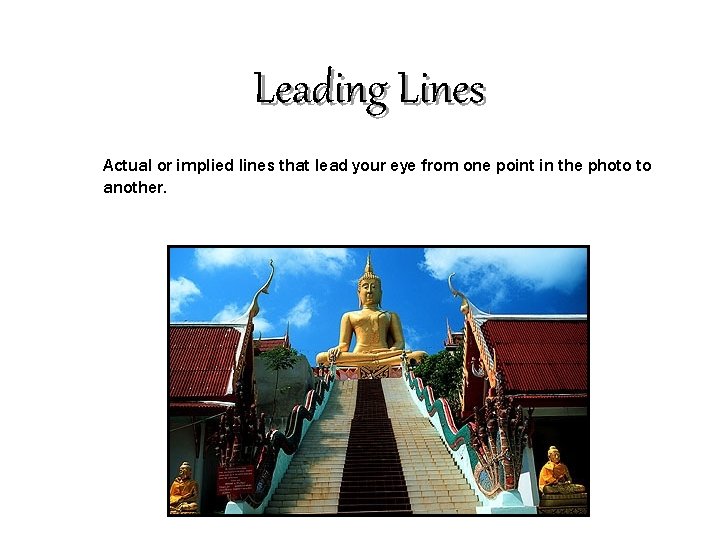
Leading Lines Actual or implied lines that lead your eye from one point in the photo to another.

Curvilinear Composition that relies primarily on curved shapes. Curved lines create a flow and a sense of serenity.
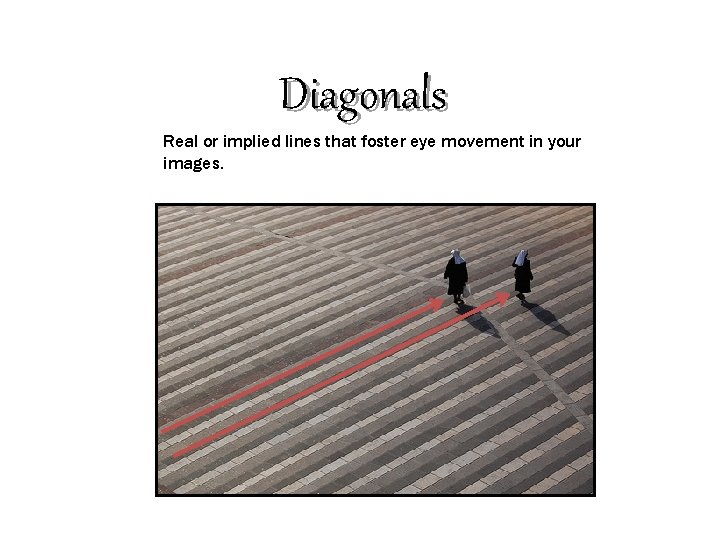
Diagonals Real or implied lines that foster eye movement in your images.
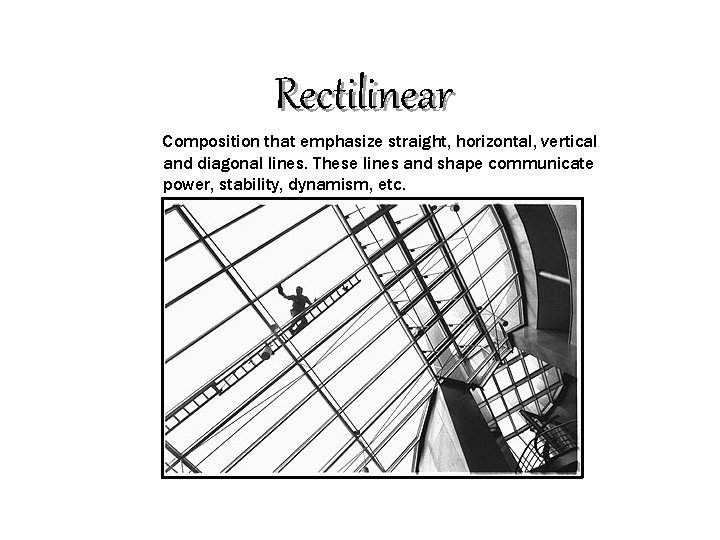
Rectilinear Composition that emphasize straight, horizontal, vertical and diagonal lines. These lines and shape communicate power, stability, dynamism, etc.
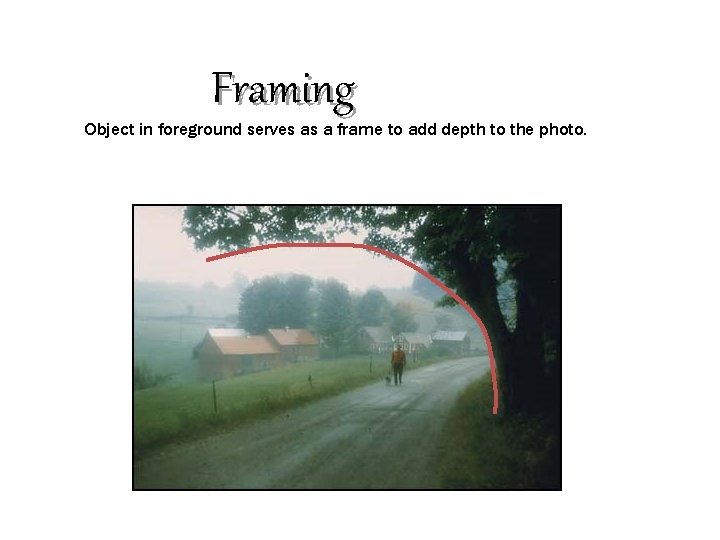
Framing Object in foreground serves as a frame to add depth to the photo.
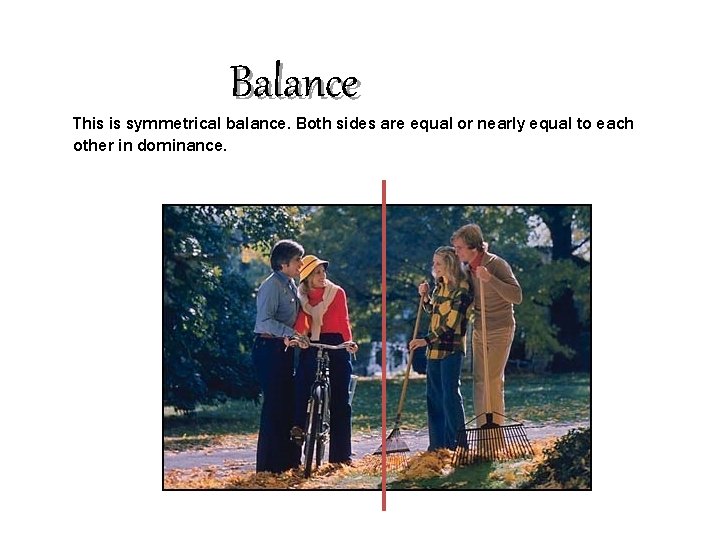
Balance This is symmetrical balance. Both sides are equal or nearly equal to each other in dominance.
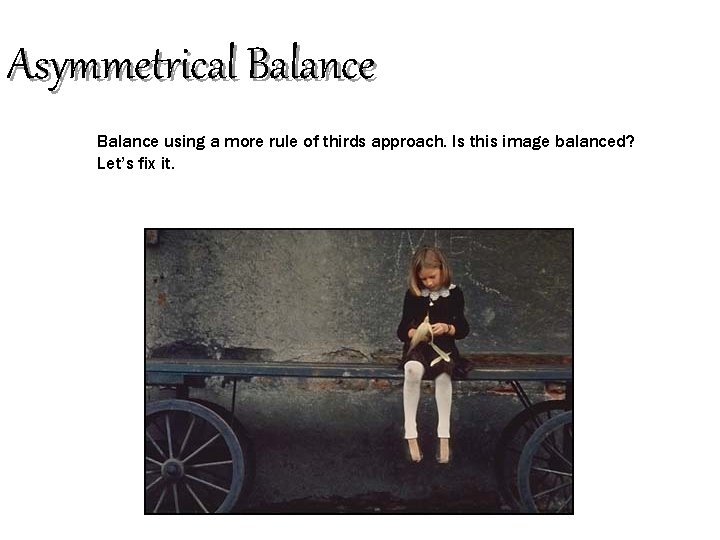
Asymmetrical Balance using a more rule of thirds approach. Is this image balanced? Let’s fix it.
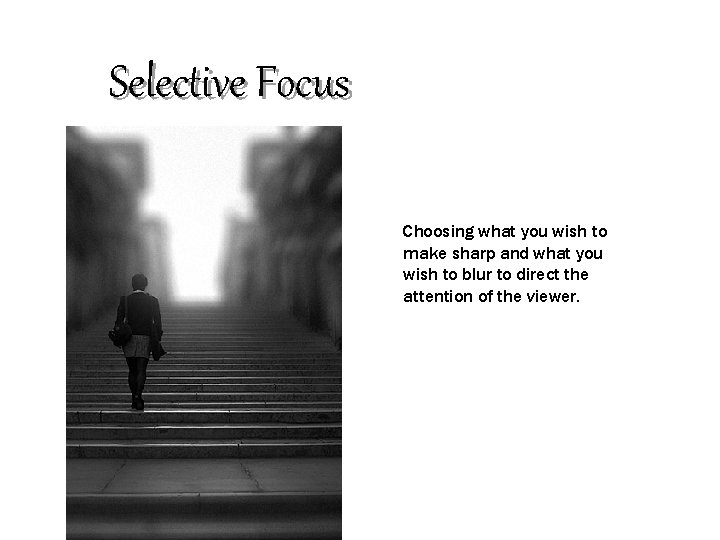
Selective Focus Choosing what you wish to make sharp and what you wish to blur to direct the attention of the viewer.
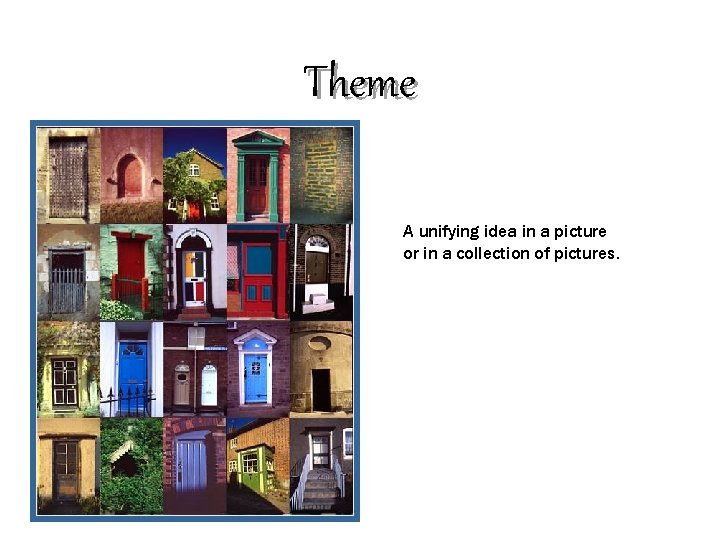
Theme A unifying idea in a picture or in a collection of pictures.
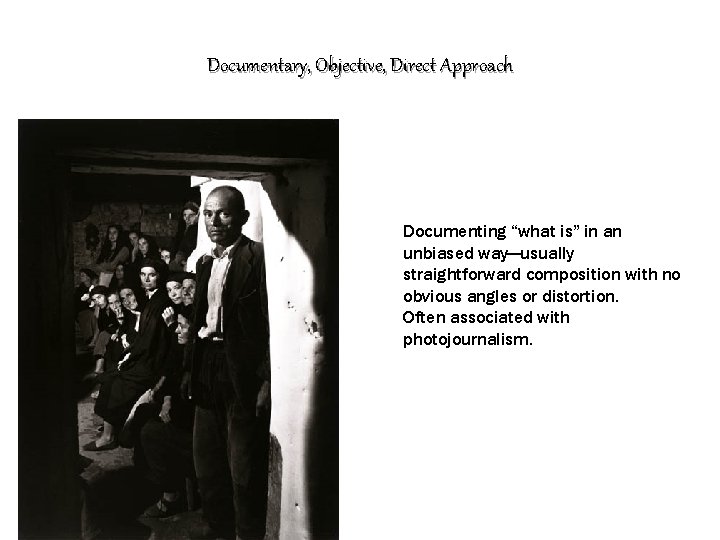
Documentary, Objective, Direct Approach Documenting “what is” in an unbiased way—usually straightforward composition with no obvious angles or distortion. Often associated with photojournalism.
Documentary, Objective, Direct Approach Documenting “what is” in an unbiased way—usually straightforward composition with no obvious angles or distortion. Often associated with photojournalism.
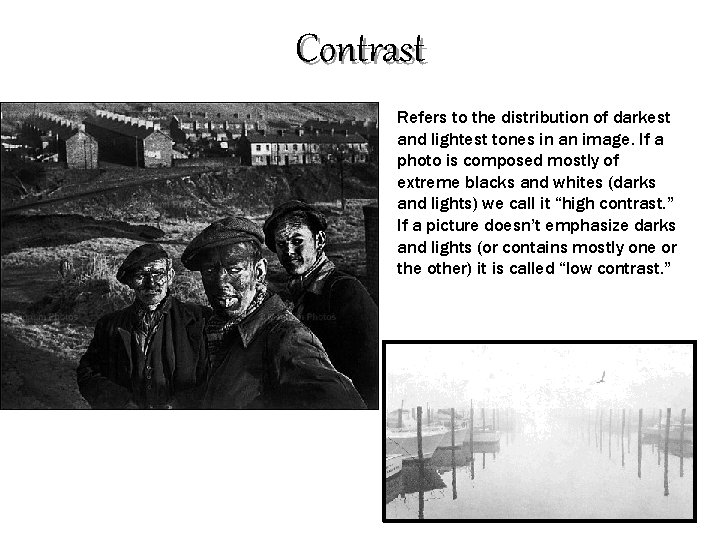
Contrast Refers to the distribution of darkest and lightest tones in an image. If a photo is composed mostly of extreme blacks and whites (darks and lights) we call it “high contrast. ” If a picture doesn’t emphasize darks and lights (or contains mostly one or the other) it is called “low contrast. ”
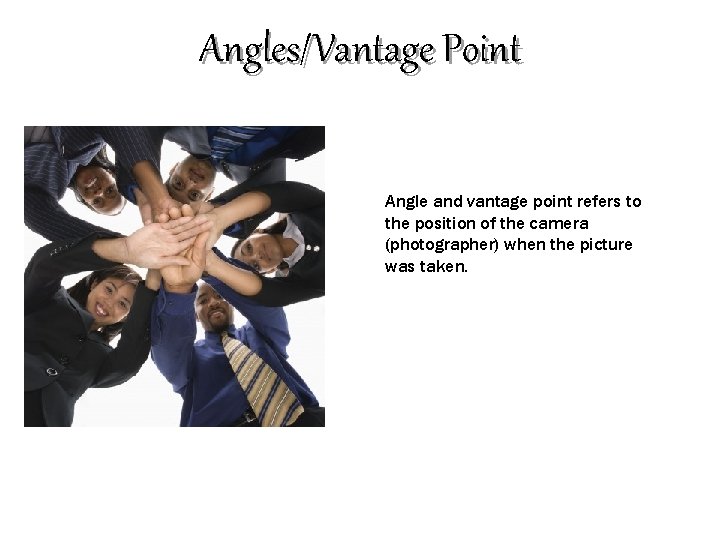
Angles/Vantage Point Angle and vantage point refers to the position of the camera (photographer) when the picture was taken.
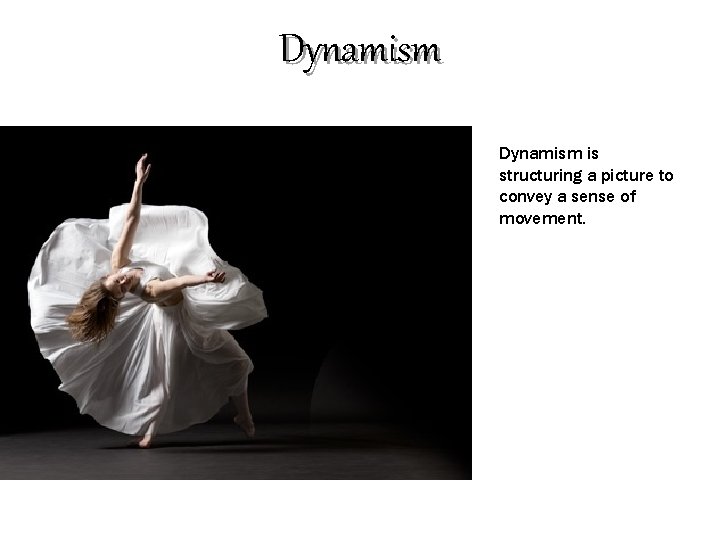
Dynamism is structuring a picture to convey a sense of movement.
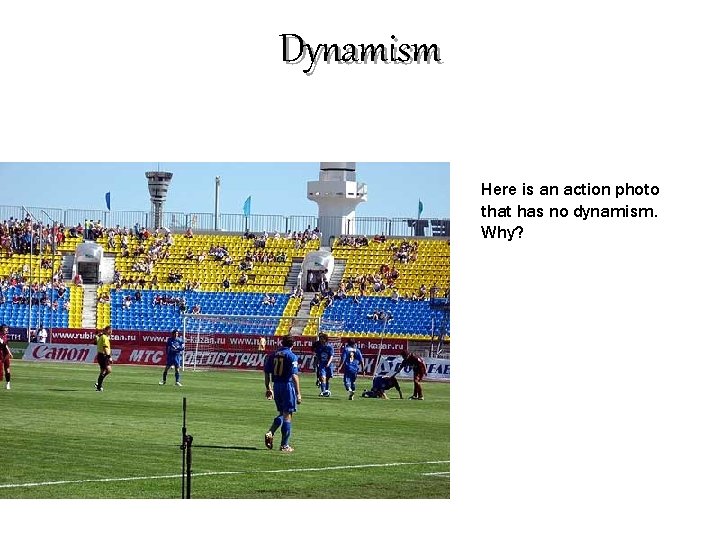
Dynamism Here is an action photo that has no dynamism. Why?
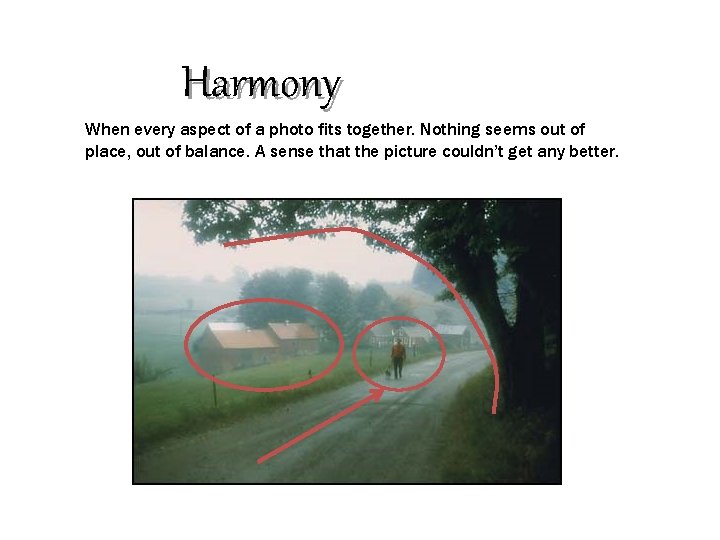
Harmony When every aspect of a photo fits together. Nothing seems out of place, out of balance. A sense that the picture couldn’t get any better.
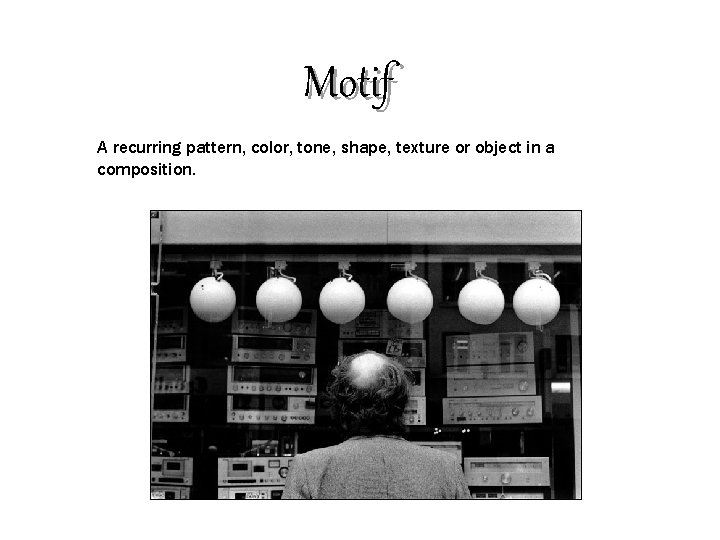
Motif A recurring pattern, color, tone, shape, texture or object in a composition.
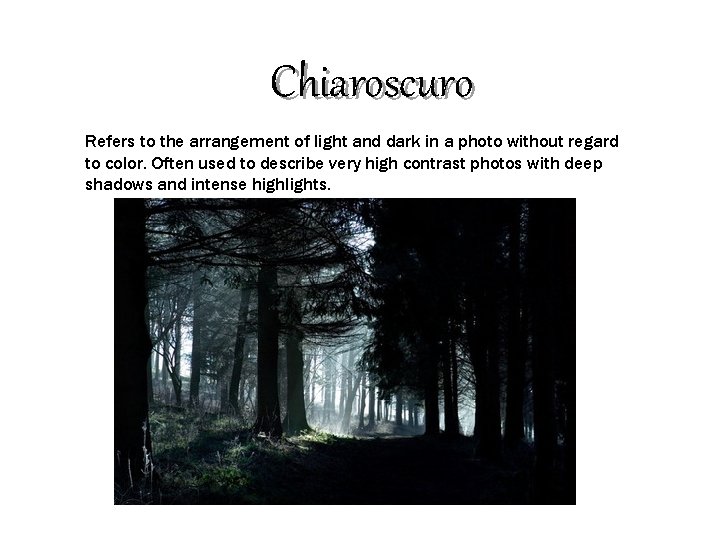
Chiaroscuro Refers to the arrangement of light and dark in a photo without regard to color. Often used to describe very high contrast photos with deep shadows and intense highlights.
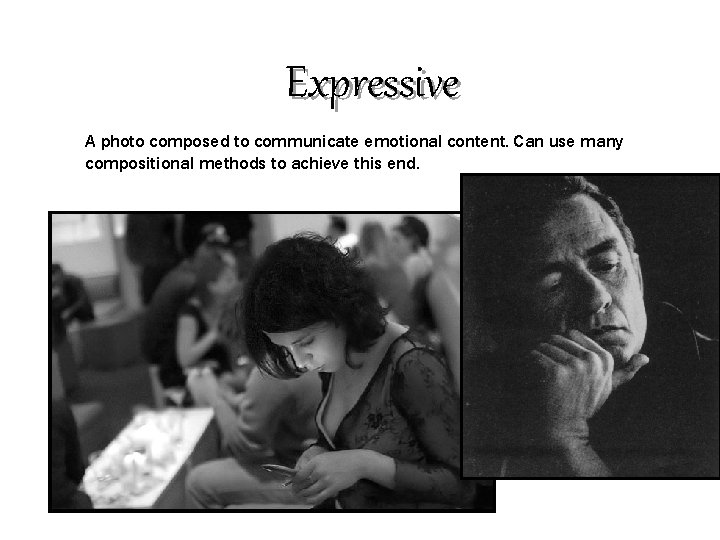
Expressive A photo composed to communicate emotional content. Can use many compositional methods to achieve this end.
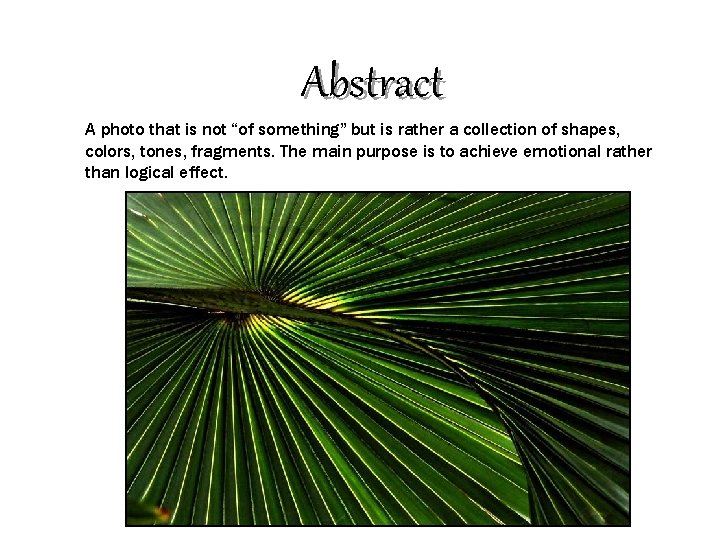
Abstract A photo that is not “of something” but is rather a collection of shapes, colors, tones, fragments. The main purpose is to achieve emotional rather than logical effect.
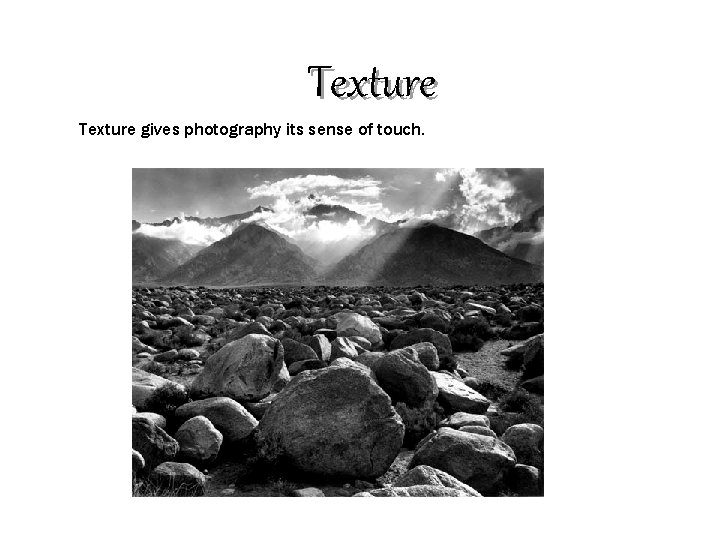
Texture gives photography its sense of touch.
- Slides: 28