
Talent Identification and Development Steve Gunn Start Manager


- Slides: 44
Talent Identification and Development Steve Gunn Start Manager GB ROWING TEAM
Historical Background: The Recruitment and Development of Rowers in Great Britain A multi-strand approach n n School / Junior: GB has a great tradition of rowing in its private schools > historically > most of the JM sweep team. Most of GBs success at this level. Some girls schools also row.
n n Clubs: GB has always had a large and widespread club structure – increasing numbers have Junior programmes. Historically where most of the scullers and women rowers have come from. Universities: Strong tradition in some GB universities developing juniors and also recruiting (at 18+). Expanding quite rapidly and widening the number of disciplines developed. (best and worst example is the Boat Race).
n n n No year-round National Age-Group Squads National Teams formed for Junior, Under 23, FISU Championships (only for 2 – 6 weeks). Supported by professional GB Rowing Team head coaches.
Additional Talent Stream n n 12 years ago, it was felt that GB needed an outside source of extra athletes, both to supplement the traditional routes and to strengthen the disciplines where we were not so strong. After a pilot scheme, Peter Shakespear (Aus) was recruited to develop this. Start was started (begun? ) 9 years ago.
n Originally 3 centres (with a coach each) 10 -20 athletes …………………. . has now developed to. .
10 full time coaches in 10 centres around the country n n Some (currently 12) Satellites: (trusted volunteer coaches work with athletes who cannot be relocated) Approx 120 athletes aged 14 -24
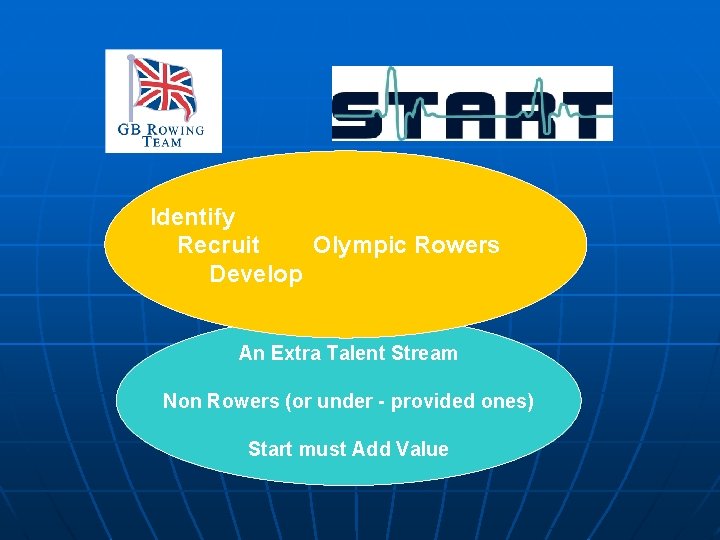
Identify Recruit Olympic Rowers Develop An Extra Talent Stream Non Rowers (or under - provided ones) Start must Add Value
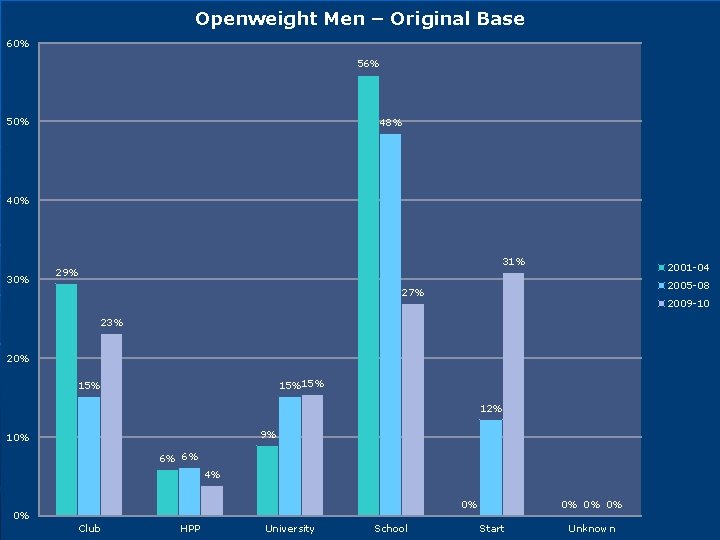
Openweight Men – Original Base 60% 56% 50% 48% 40% 31% 29% 2001 -04 2005 -08 27% 2009 -10 23% 20% 15%15% 12% 9% 10% 6% 6% 4% 0% 0% Club HPP University School 0% 0% 0% Start Unknown
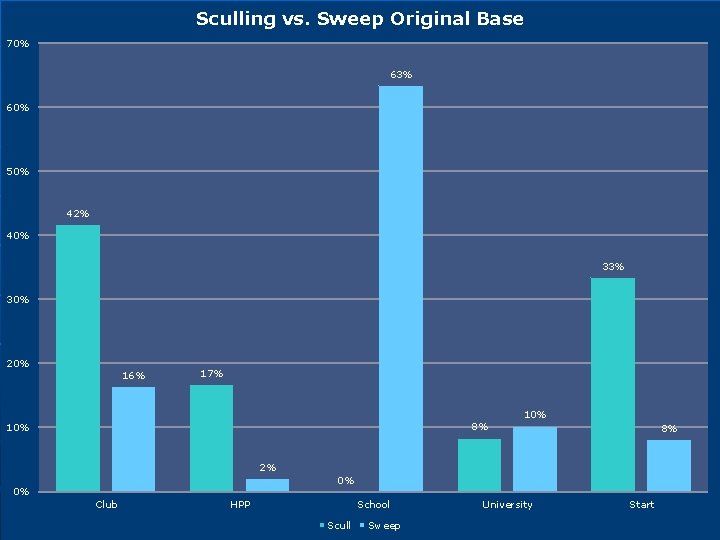
Sculling vs. Sweep Original Base 70% 63% 60% 50% 42% 40% 33% 30% 20% 16% 17% 8% 10% 8% 2% 0% 0% Club HPP School Scull Sweep University Start
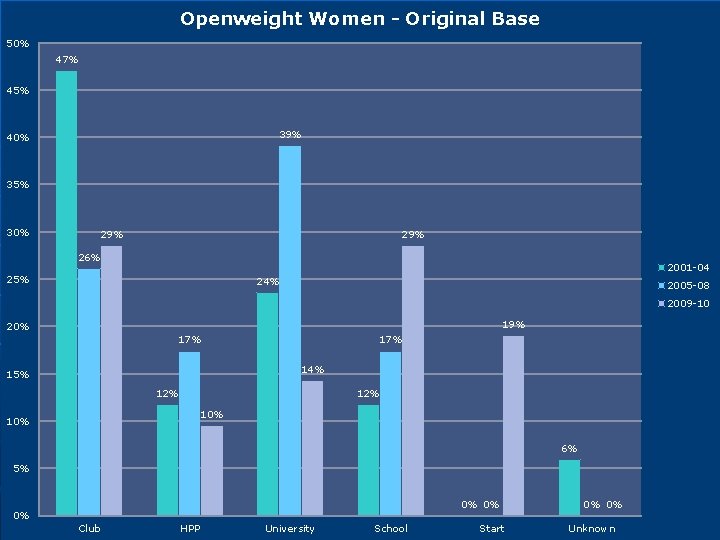
Openweight Women - Original Base 50% 47% 45% 39% 40% 35% 30% 29% 26% 2001 -04 25% 24% 2005 -08 2009 -10 19% 20% 17% 14% 15% 12% 10% 6% 5% 0% 0% 0% Club HPP University School Start 0% 0% Unknown
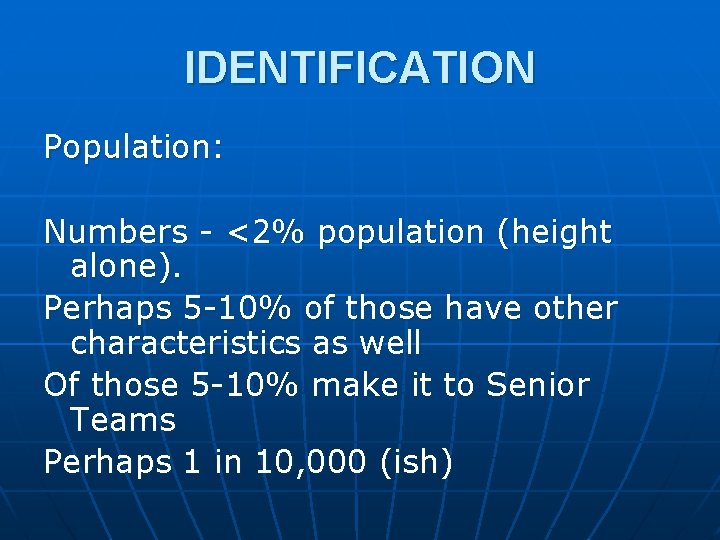
IDENTIFICATION Population: Numbers - <2% population (height alone). Perhaps 5 -10% of those have other characteristics as well Of those 5 -10% make it to Senior Teams Perhaps 1 in 10, 000 (ish)
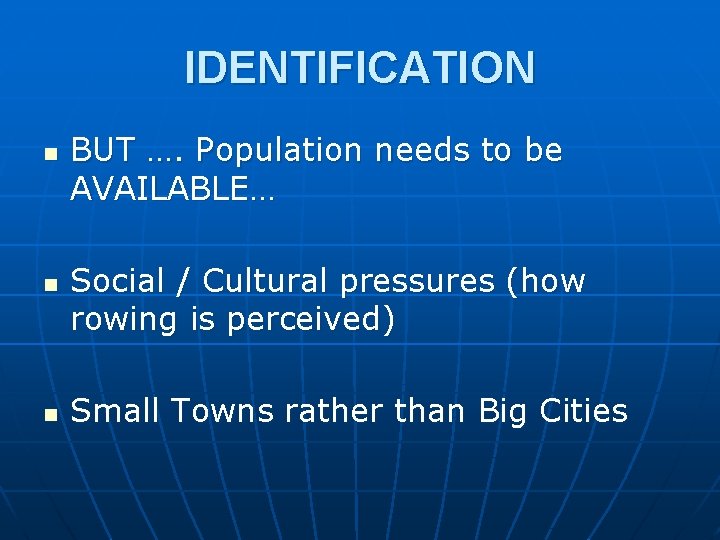
IDENTIFICATION n n n BUT …. Population needs to be AVAILABLE… Social / Cultural pressures (how rowing is perceived) Small Towns rather than Big Cities
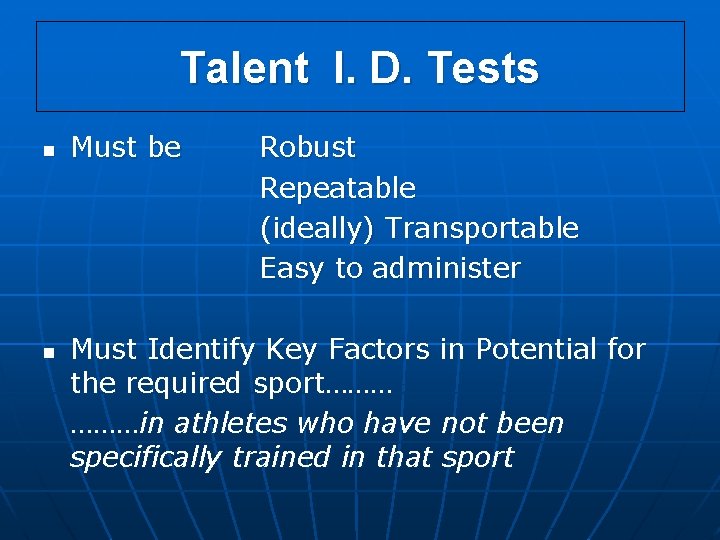
Talent I. D. Tests n n Must be Robust Repeatable (ideally) Transportable Easy to administer Must Identify Key Factors in Potential for the required sport……… ………in athletes who have not been specifically trained in that sport
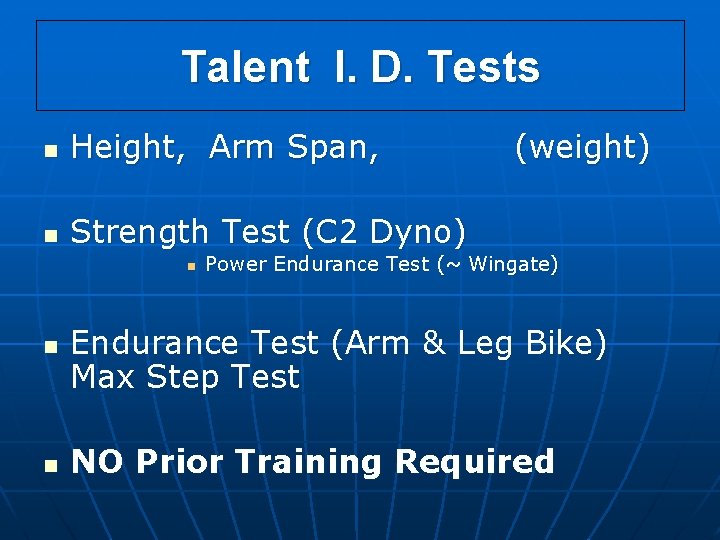
Talent I. D. Tests n Height, Arm Span, n Strength Test (C 2 Dyno) n n n (weight) Power Endurance Test (~ Wingate) Endurance Test (Arm & Leg Bike) Max Step Test NO Prior Training Required
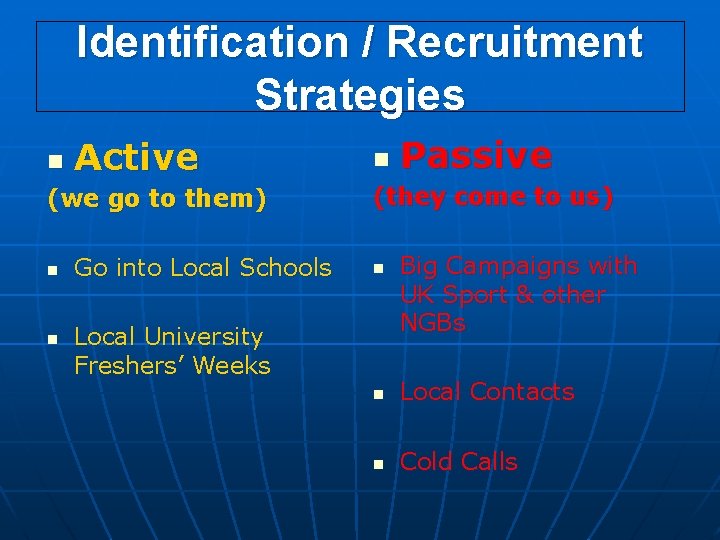
Identification / Recruitment Strategies n Active (we go to them) n n Go into Local Schools n Passive (they come to us) n Local University Freshers’ Weeks Big Campaigns with UK Sport & other NGBs n Local Contacts n Cold Calls
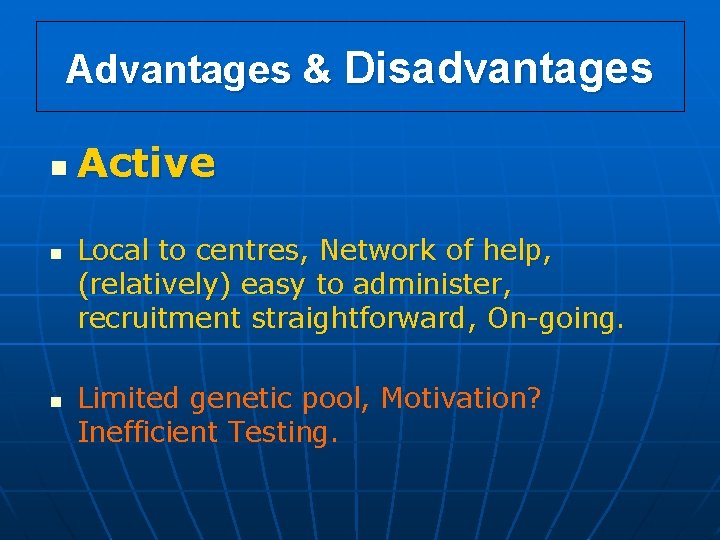
Advantages & Disadvantages n n n Active Local to centres, Network of help, (relatively) easy to administer, recruitment straightforward, On-going. Limited genetic pool, Motivation? Inefficient Testing.
Advantages & Disadvantages n n n Passive Much larger genetic pool (but getting the word out!), High levels of motivation, Concentrated testing resources. Recruitment may not be easy (relocation & timing), Stress on testers, Only once in (4? ) years.
Example n Tall & Talented – Talent 2016 n Run with UK Sport and British Basketball. n Launched Oct 2009 n Publicity……. n 1500+ sign ups
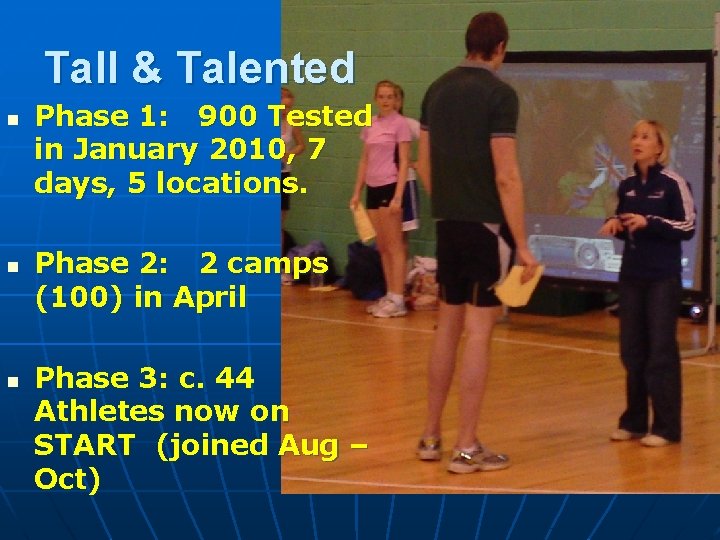
Tall & Talented n n n Phase 1: 900 Tested in January 2010, 7 days, 5 locations. Phase 2: 2 camps (100) in April Phase 3: c. 44 Athletes now on START (joined Aug – Oct)
What we’d like to know…. . n Trainability n Skill Learning ability n Mental Stuff n Injury History / Vulnerability
“CONFIRMATION” n Are we right for them? Are they right for us? n Probation period n Care with Juniors
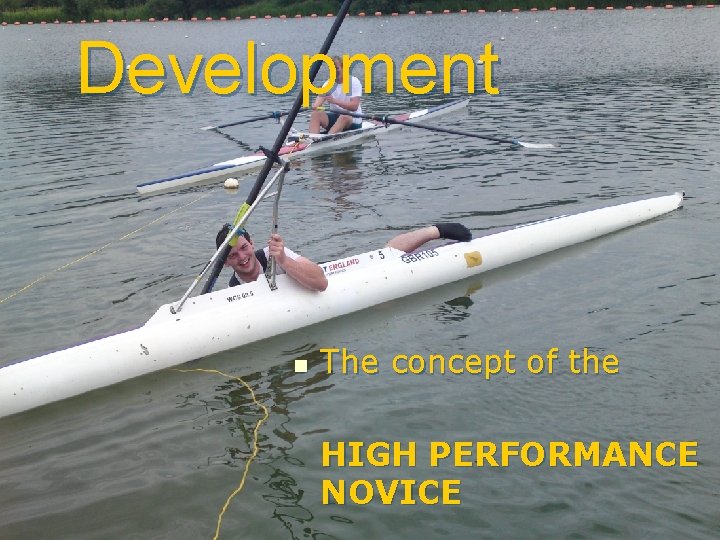
Development n The concept of the HIGH PERFORMANCE NOVICE
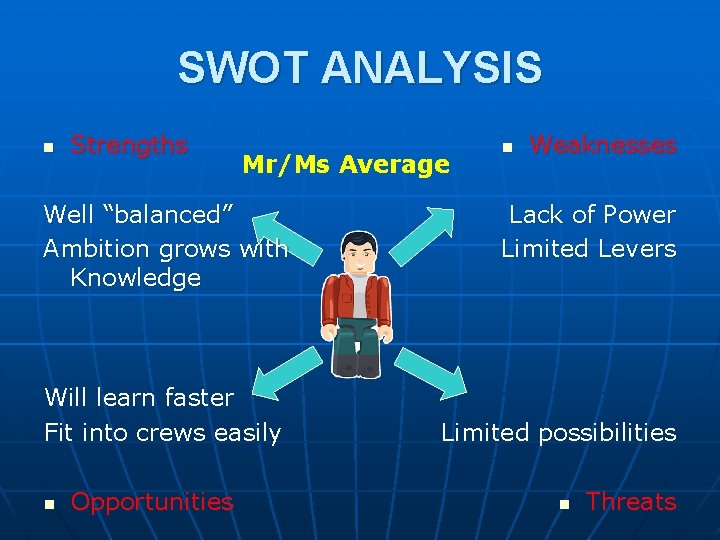
SWOT ANALYSIS n Strengths Mr/Ms Average Well “balanced” Ambition grows with Knowledge Will learn faster Fit into crews easily n Opportunities n Weaknesses Lack of Power Limited Levers Limited possibilities n Threats
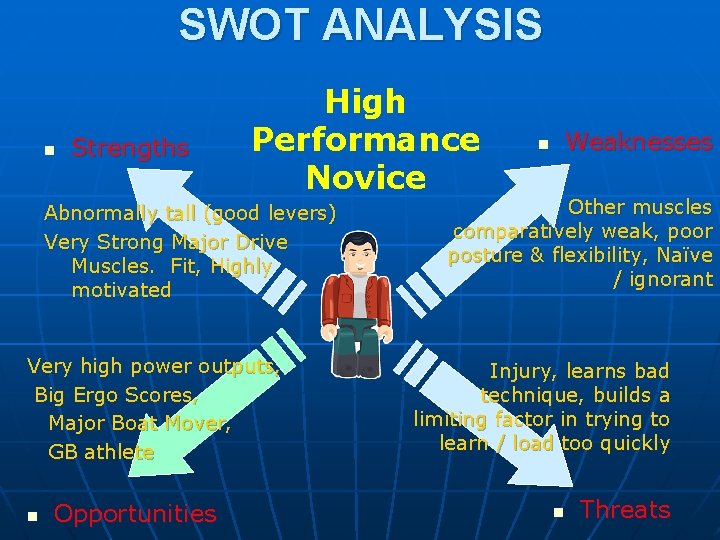
SWOT ANALYSIS n Strengths High Performance Novice Abnormally tall (good levers) Very Strong Major Drive Muscles. Fit, Highly motivated Very high power outputs, Big Ergo Scores, Major Boat Mover, GB athlete n Opportunities Weaknesses n Other muscles comparatively weak, poor posture & flexibility, Naïve / ignorant Injury, learns bad technique, builds a limiting factor in trying to learn / load too quickly n Threats
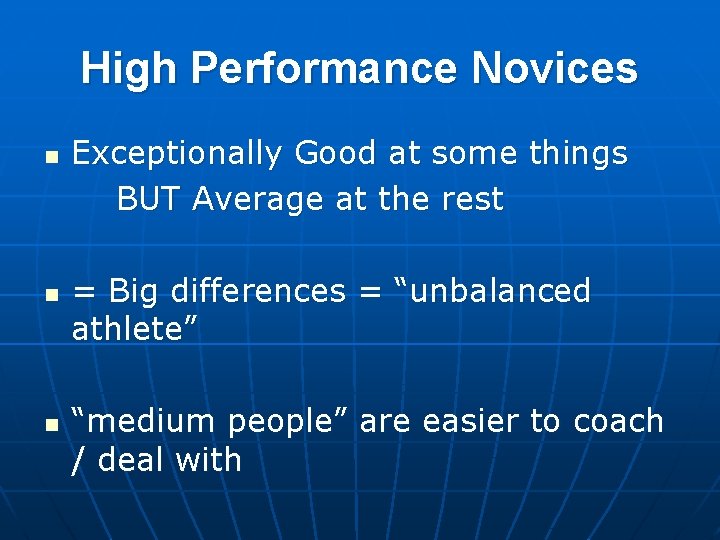
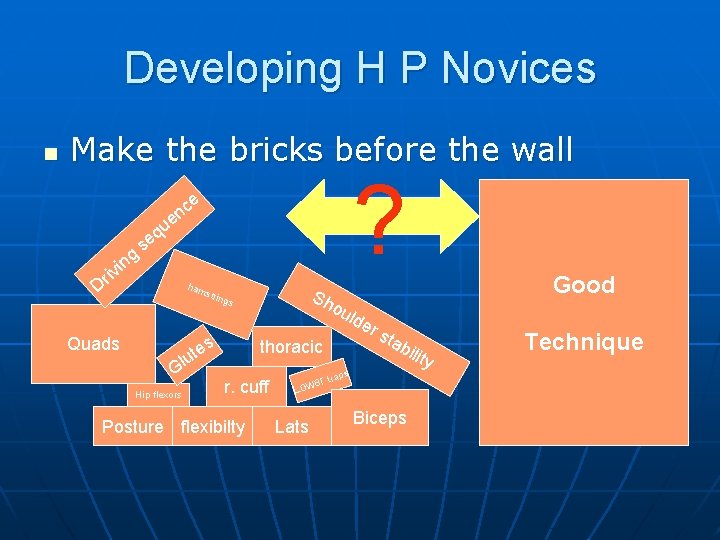
High Performance Novices n n n Exceptionally Good at some things BUT Average at the rest = Big differences = “unbalanced athlete” “medium people” are easier to coach / deal with
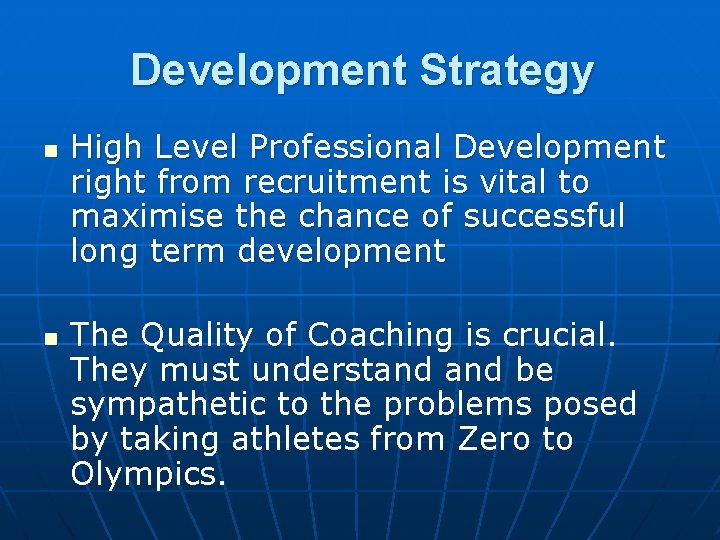
Development Strategy n n High Level Professional Development right from recruitment is vital to maximise the chance of successful long term development The Quality of Coaching is crucial. They must understand be sympathetic to the problems posed by taking athletes from Zero to Olympics.
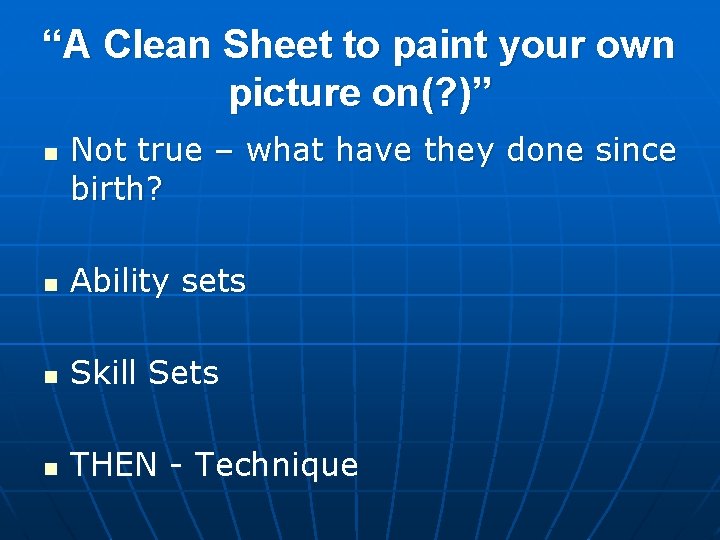
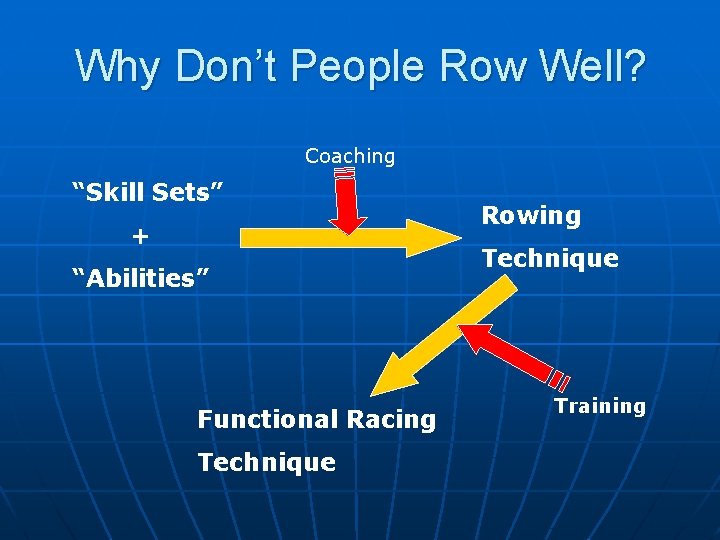
“A Clean Sheet to paint your own picture on(? )” n Not true – what have they done since birth? n Ability sets n Skill Sets n THEN - Technique
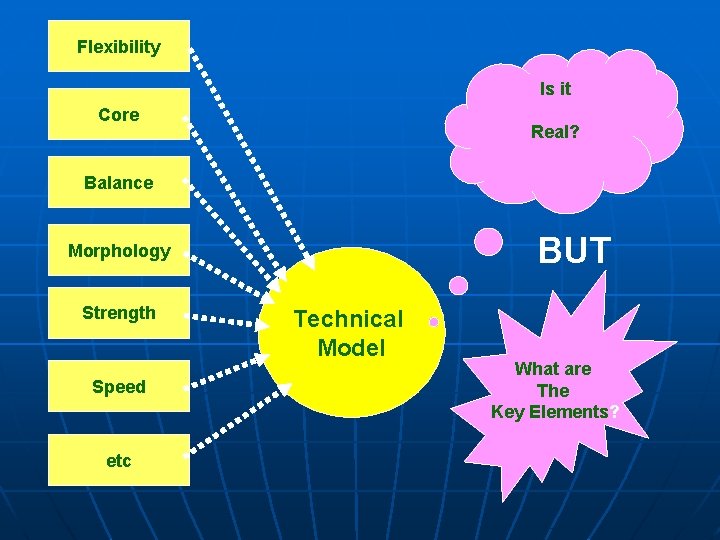
Flexibility Is it Core Real? Balance BUT Morphology Strength Speed etc Technical Model What are The Key Elements?
Developing H P Novices n Make the bricks before the wall ng ir vi D Quads ? ce n ue q se ham strin s e t u Gl Hip flexors thoracic r. cuff Posture flexibilty Good Sh gs ou lde rs tab aps er tr Low Lats Biceps ility Technique
Why Don’t People Row Well? Coaching “Skill Sets” + “Abilities” Functional Racing Technique Rowing Technique Training
n n n It is important to try to deal with each threat or imbalance. And to develop good technique before poor movement patterns cause limited performance or injury (Resulting in loss of motivation and failure)
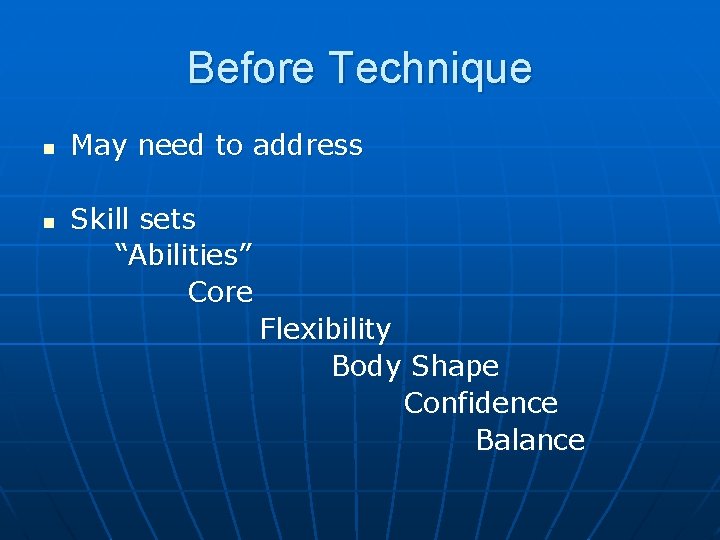
Before Technique n n May need to address Skill sets “Abilities” Core Flexibility Body Shape Confidence Balance
How? n Confidence drills n Core / Flexibility & Weights etc Programme n Limited Sculling (don’t take bad strokes) n Cross Training until rowing training can be done technically well.
Challenges n n n Motivation Enough rowing/racing to make it interesting Individualised pace of learning – high coach / athlete ratio required
Fast Track? n n n Beware of training sport specific movement until it can be done correctly. Avoid the temptation to accelerate rowing performance too early. Paradoxically slow and careful development leads to the fastest results
Monitoring n n n Start athletes brought together 7 times per year for testing and education camps. Performance, skill attainment and various physical factors are measured and published. Camp Results help to drive the programme in between the camps
Support n n Investment is via Coaching Athletes are not paid or given grants (until performance eg. WC junior or U 23 medal) Support services minimal – generally as education and consultancy for coaches Allows Maximum numbers of coaches
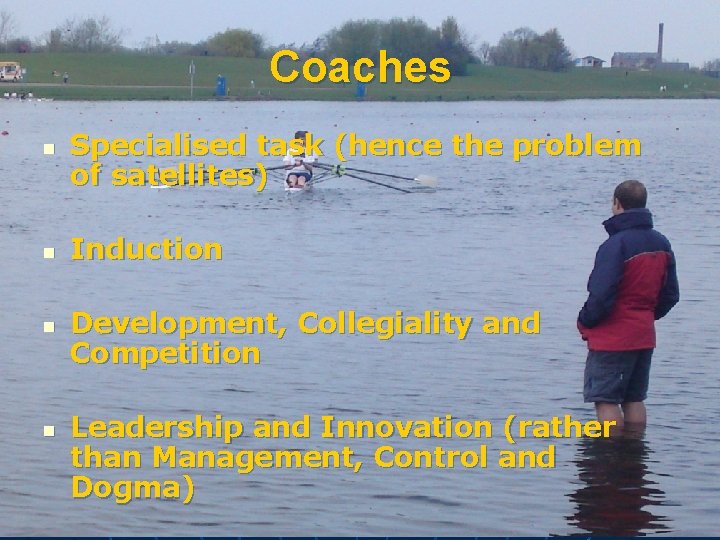
Coaches n n Specialised task (hence the problem of satellites) Induction Development, Collegiality and Competition Leadership and Innovation (rather than Management, Control and Dogma)
End Point n n Ideally when athletes “graduate” by joining the senior national squads. Athletes who fail to progress are helped and counselled. Very few are “sacked” most withdraw themselves (due to transparency? ). Encouraged to continue rowing or coaching whenever possible.
Success? n n 2008 Olympics: 3 (female) athletes (2 medals) 2009 14 World Champs athletes (2 medals) 6 athletes at World Under 23’s 2 athletes at World Juniors
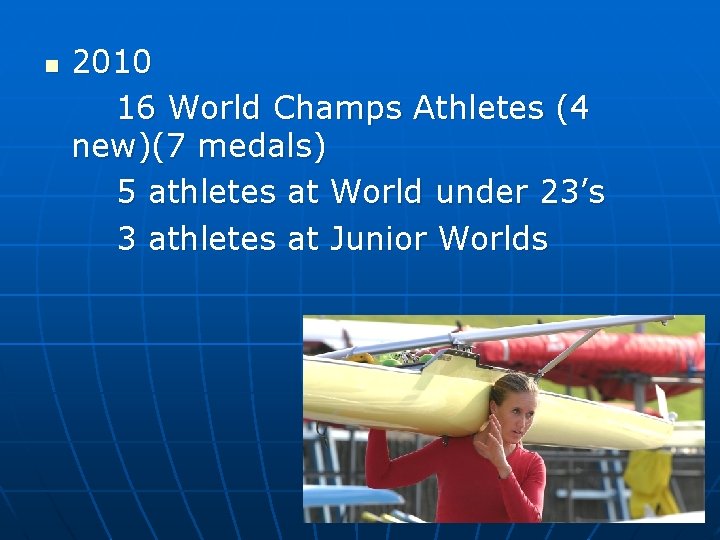
n 2010 16 World Champs Athletes (4 new)(7 medals) 5 athletes at World under 23’s 3 athletes at Junior Worlds
Future Questions n Age for recruitment? n Recruitment of Females n Central resourced academy vs Widespread club-based system
Questions? Thanks for Listening