
Taking the Pulse of our Members Creating a
Taking the Pulse of our Members: Creating a Healthy Data Services Environment Wendy Watkins Carleton University Michel Seguin Statistics Canada May, 2009 IASSIST 2009, Tampere, Finland
Outline • Structure of DLI • Survey objectives • Highlights – National – Regional differences • Comforts and discomforts – Comfort levels – Discomfort levels • Rx for future development
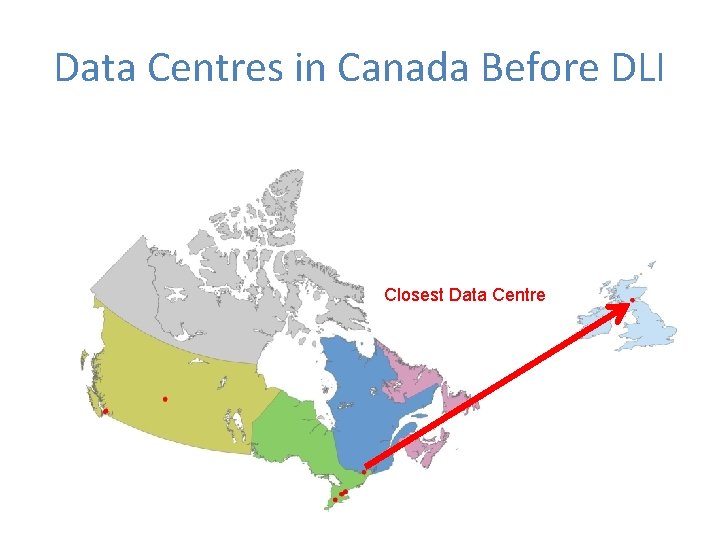
Data Centres in Canada Before DLI Closest Data Centre
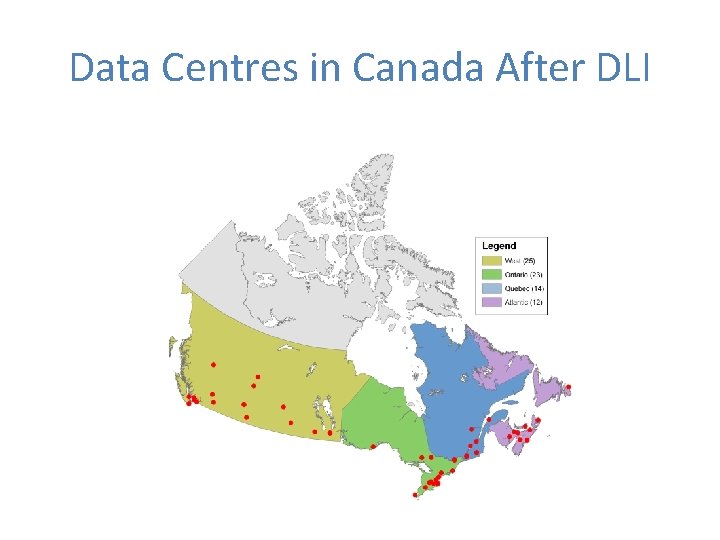
Data Centres in Canada After DLI
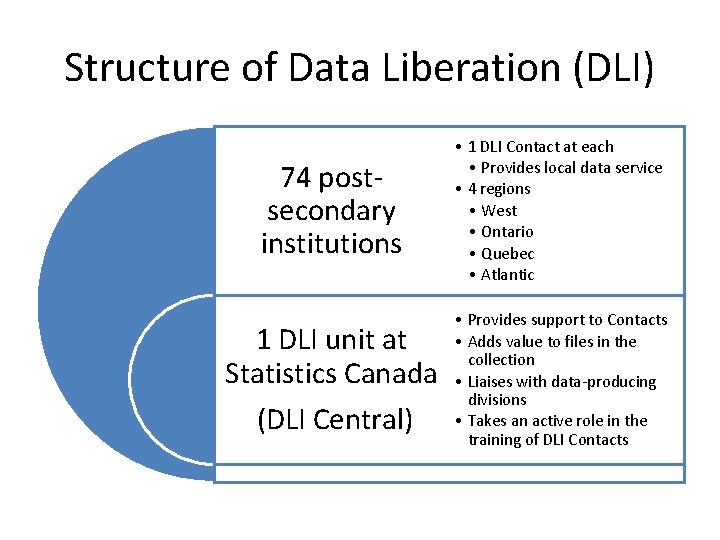
Structure of Data Liberation (DLI) 74 postsecondary institutions 1 DLI unit at Statistics Canada (DLI Central) • 1 DLI Contact at each • Provides local data service • 4 regions • West • Ontario • Quebec • Atlantic • Provides support to Contacts • Adds value to files in the collection • Liaises with data-producing divisions • Takes an active role in the training of DLI Contacts
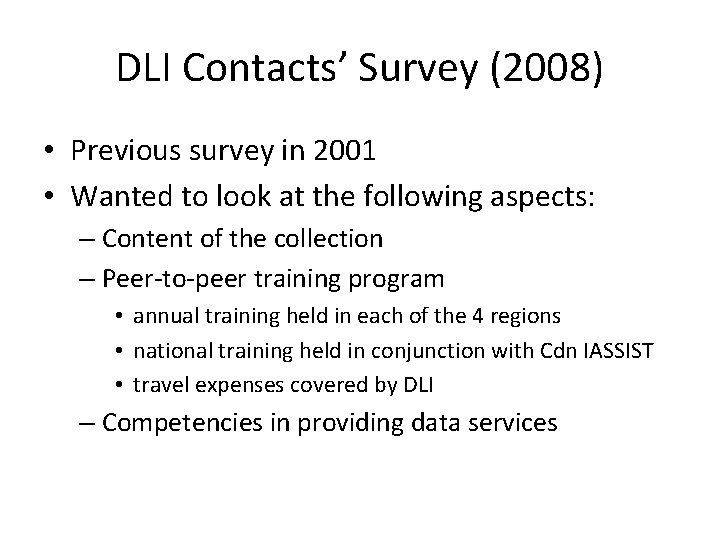
DLI Contacts’ Survey (2008) • Previous survey in 2001 • Wanted to look at the following aspects: – Content of the collection – Peer-to-peer training program • annual training held in each of the 4 regions • national training held in conjunction with Cdn IASSIST • travel expenses covered by DLI – Competencies in providing data services
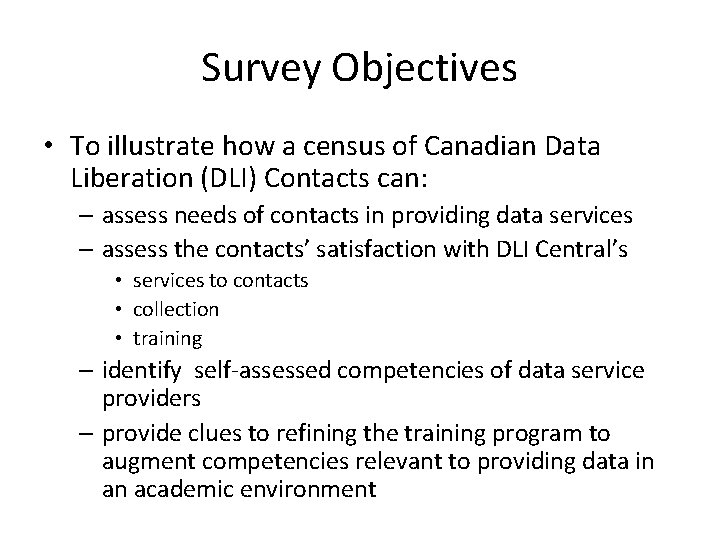
Survey Objectives • To illustrate how a census of Canadian Data Liberation (DLI) Contacts can: – assess needs of contacts in providing data services – assess the contacts’ satisfaction with DLI Central’s • services to contacts • collection • training – identify self-assessed competencies of data service providers – provide clues to refining the training program to augment competencies relevant to providing data in an academic environment
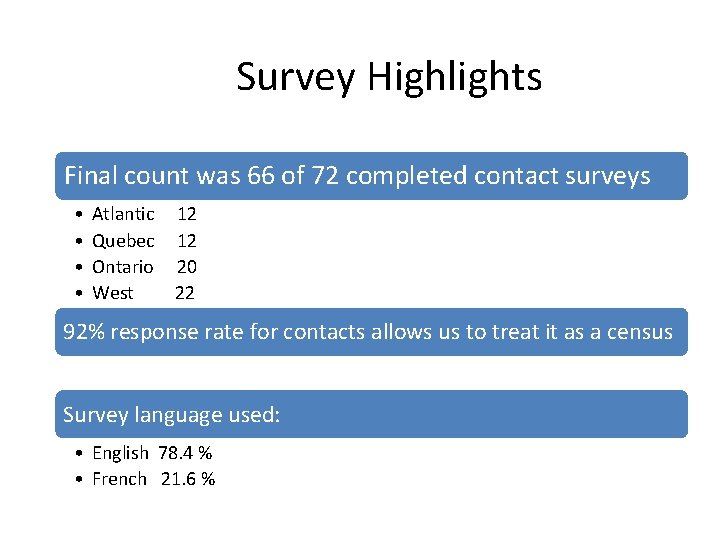
Survey Highlights Final count was 66 of 72 completed contact surveys • • Atlantic Quebec Ontario West 12 12 20 22 92% response rate for contacts allows us to treat it as a census Survey language used: • English 78. 4 % • French 21. 6 %
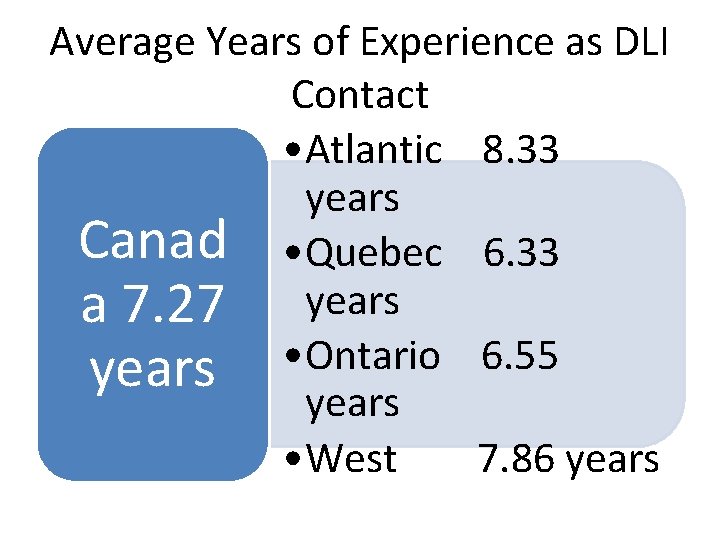
Average Years of Experience as DLI Contact • Atlantic 8. 33 years Canad • Quebec 6. 33 a 7. 27 years • Ontario 6. 55 years • West 7. 86 years
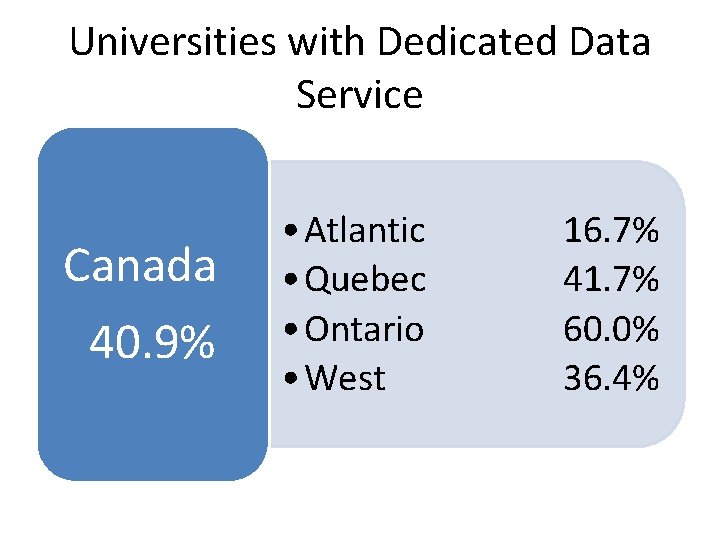
Universities with Dedicated Data Service Canada 40. 9% • Atlantic • Quebec • Ontario • West 16. 7% 41. 7% 60. 0% 36. 4%
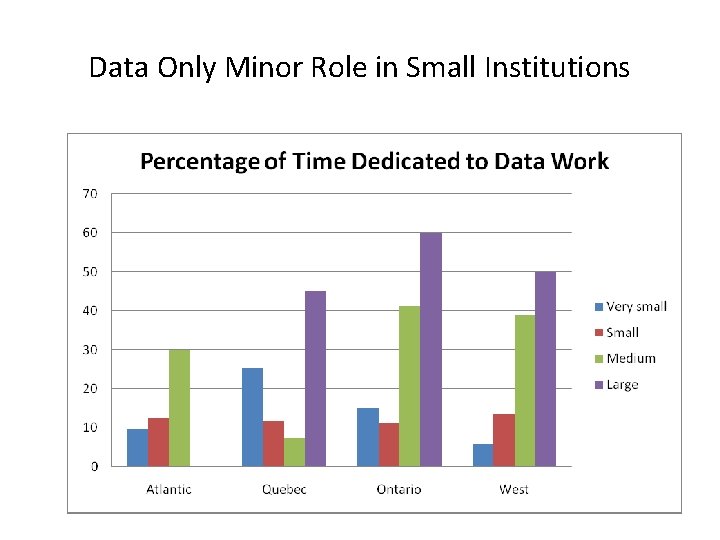
Data Only Minor Role in Small Institutions
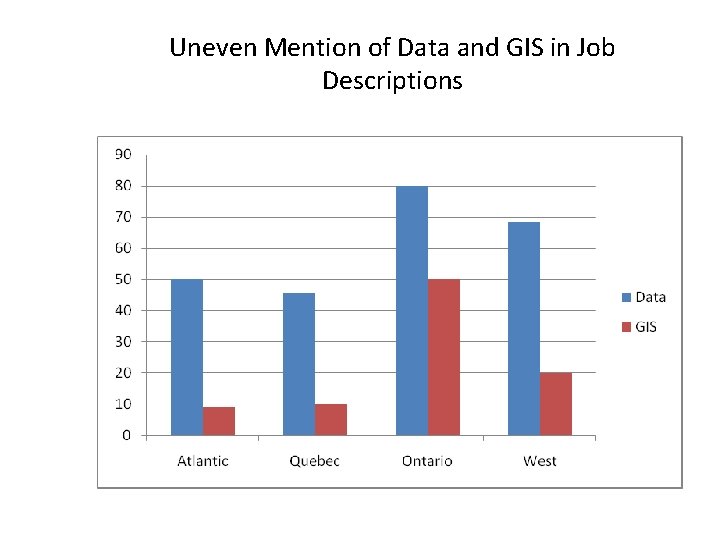
Uneven Mention of Data and GIS in Job Descriptions
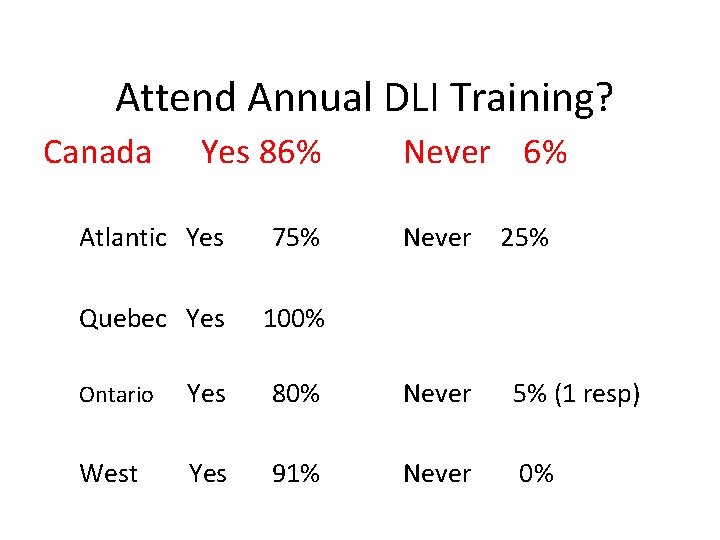
Attend Annual DLI Training? Canada Yes 86% Never 6% Atlantic Yes 75% Never 25% Quebec Yes 100% Ontario Yes 80% Never 5% (1 resp) West Yes 91% Never 0%
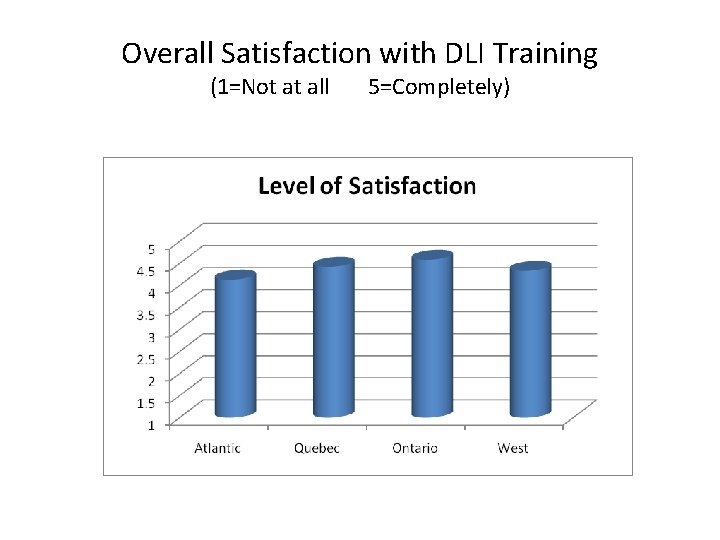
Overall Satisfaction with DLI Training (1=Not at all 5=Completely)
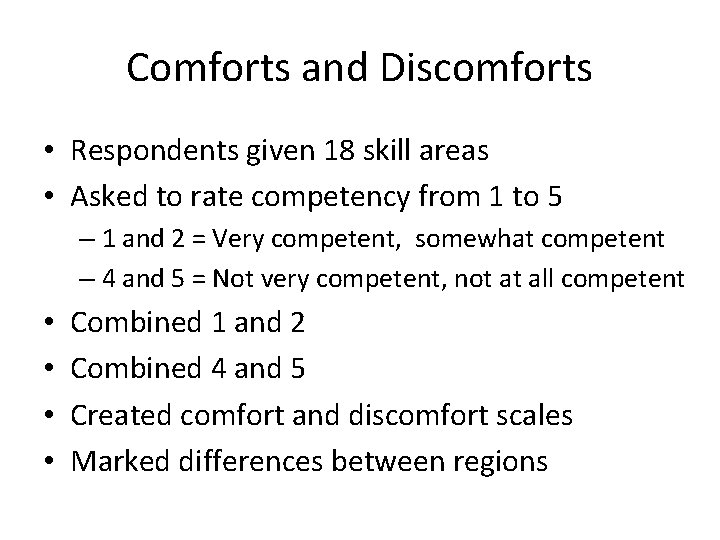
Comforts and Discomforts • Respondents given 18 skill areas • Asked to rate competency from 1 to 5 – 1 and 2 = Very competent, somewhat competent – 4 and 5 = Not very competent, not at all competent • • Combined 1 and 2 Combined 4 and 5 Created comfort and discomfort scales Marked differences between regions
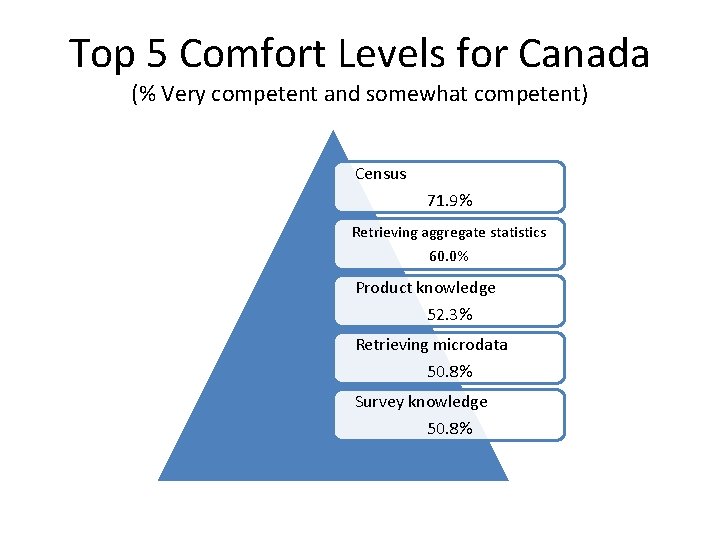
Top 5 Comfort Levels for Canada (% Very competent and somewhat competent) Census 71. 9% Retrieving aggregate statistics 60. 0% Product knowledge 52. 3% Retrieving microdata 50. 8% Survey knowledge 50. 8%
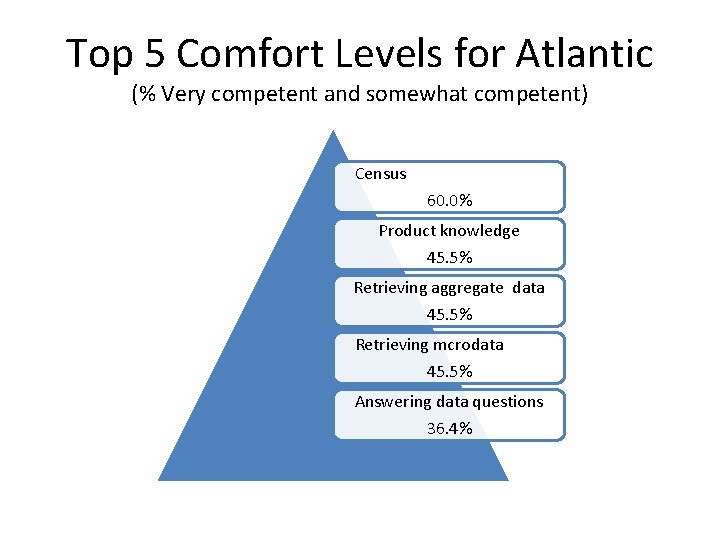
Top 5 Comfort Levels for Atlantic (% Very competent and somewhat competent) Census 60. 0% Product knowledge 45. 5% Retrieving aggregate data 45. 5% Retrieving mcrodata 45. 5% Answering data questions 36. 4%
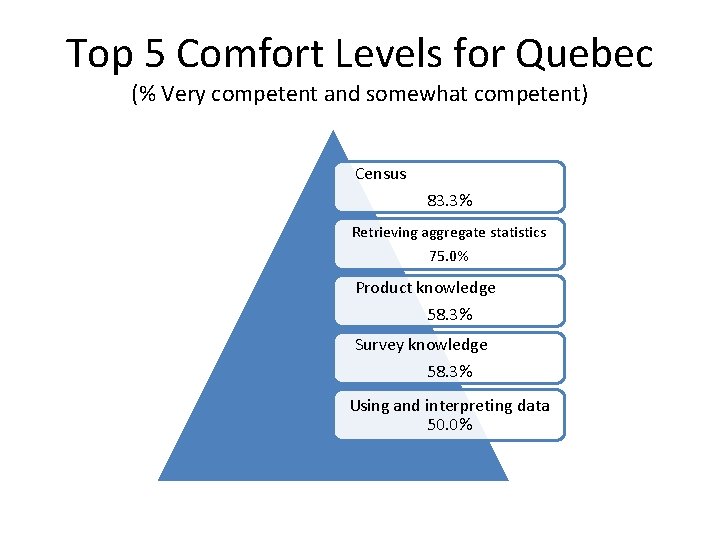
Top 5 Comfort Levels for Quebec (% Very competent and somewhat competent) Census 83. 3% Retrieving aggregate statistics 75. 0% Product knowledge 58. 3% Survey knowledge 58. 3% Using and interpreting data 50. 0%
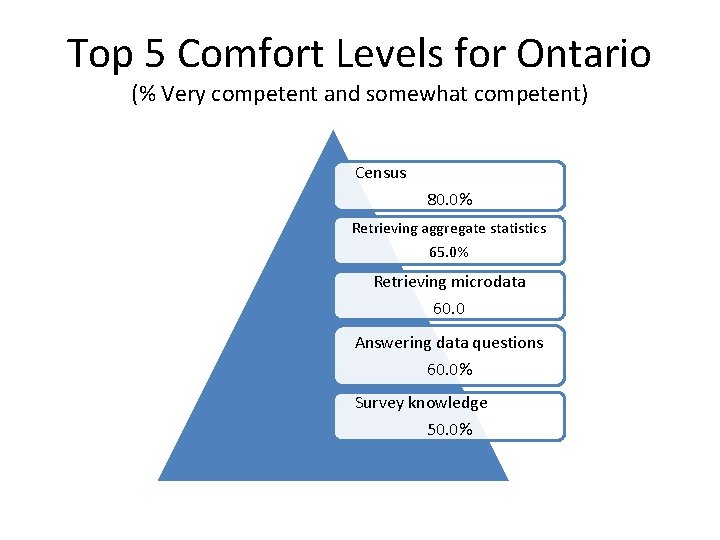
Top 5 Comfort Levels for Ontario (% Very competent and somewhat competent) Census 80. 0% Retrieving aggregate statistics 65. 0% Retrieving microdata 60. 0 Answering data questions 60. 0% Survey knowledge 50. 0%
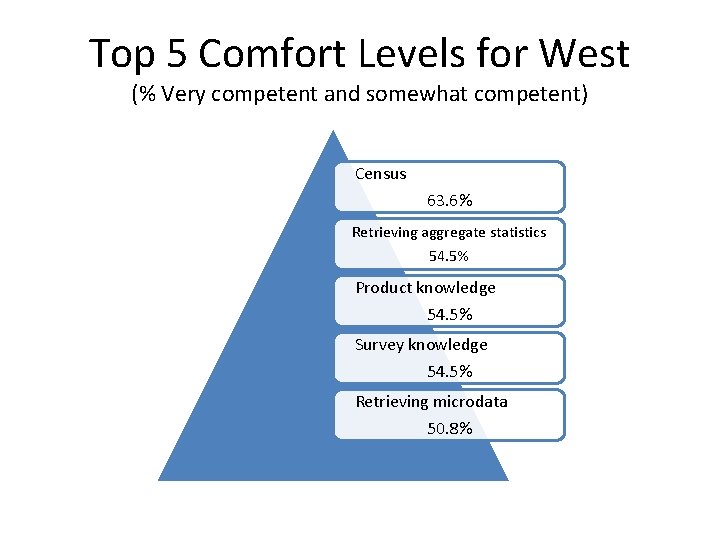
Top 5 Comfort Levels for West (% Very competent and somewhat competent) Census 63. 6% Retrieving aggregate statistics 54. 5% Product knowledge 54. 5% Survey knowledge 54. 5% Retrieving microdata 50. 8%
Relative comforts
Summary of Comforts • All regions fairly comfortable with the Census • Comfort levels decrease with the complexity of the data (more comfortable with aggregate data than microdata) • Atlantic contacts less comfortable than counterparts in other regions – Fewer than half feel competent outside the Census • Quebeckers most confident of abilities regarding aggregate statistics
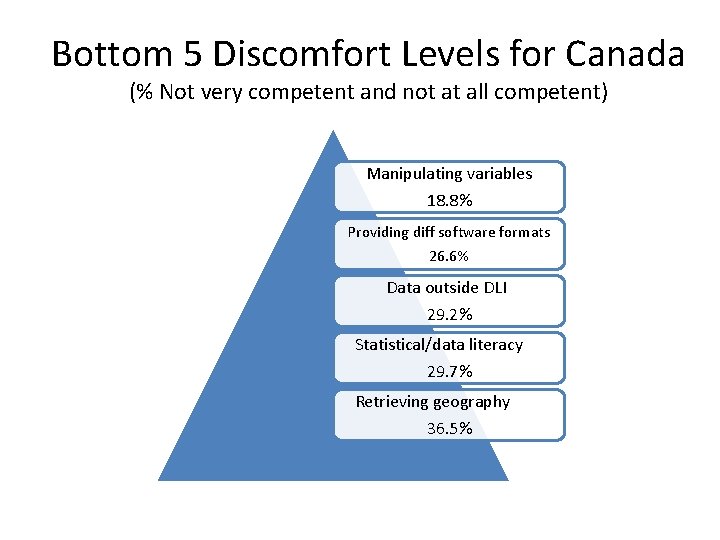
Bottom 5 Discomfort Levels for Canada (% Not very competent and not at all competent) Manipulating variables 18. 8% Providing diff software formats 26. 6% Data outside DLI 29. 2% Statistical/data literacy 29. 7% Retrieving geography 36. 5%
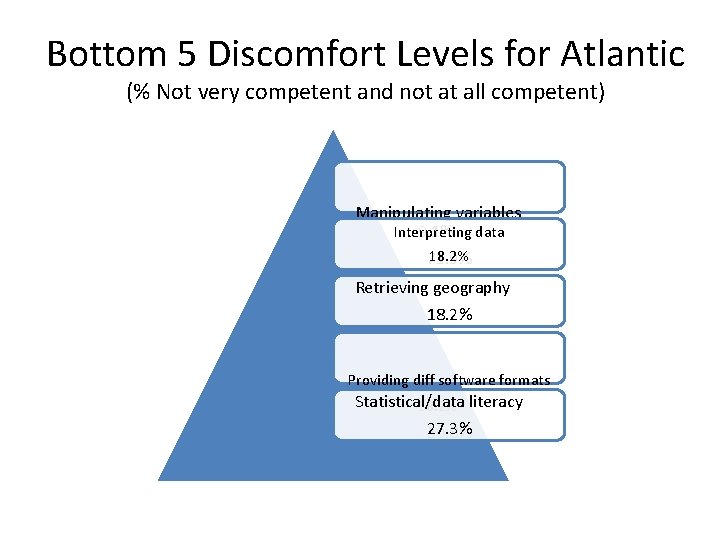
Bottom 5 Discomfort Levels for Atlantic (% Not very competent and not at all competent) Manipulating variables Interpreting 9. 1% data 18. 2% 71. 9% Retrieving geography 18. 2% Providing diff software formats Statistical/data 18. 2% literacy 27. 3% 50. 8%
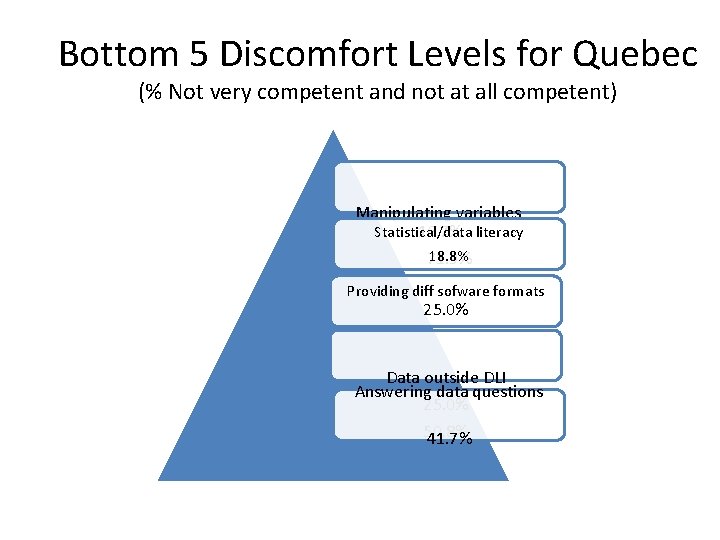
Bottom 5 Discomfort Levels for Quebec (% Not very competent and not at all competent) Manipulating variables Statistical/data 16. 7% literacy 18. 8% 71. 9% Providing diff sofware formats 25. 0% Data outside DLI Answering data questions 25. 0% 50. 8% 41. 7%
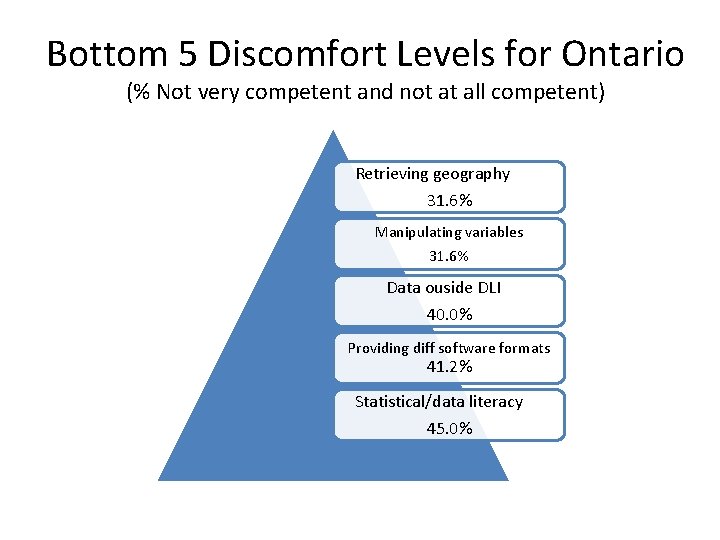
Bottom 5 Discomfort Levels for Ontario (% Not very competent and not at all competent) Retrieving geography 31. 6% Manipulating variables 31. 6% Data ouside DLI 40. 0% Providing diff software formats 41. 2% Statistical/data literacy 45. 0%
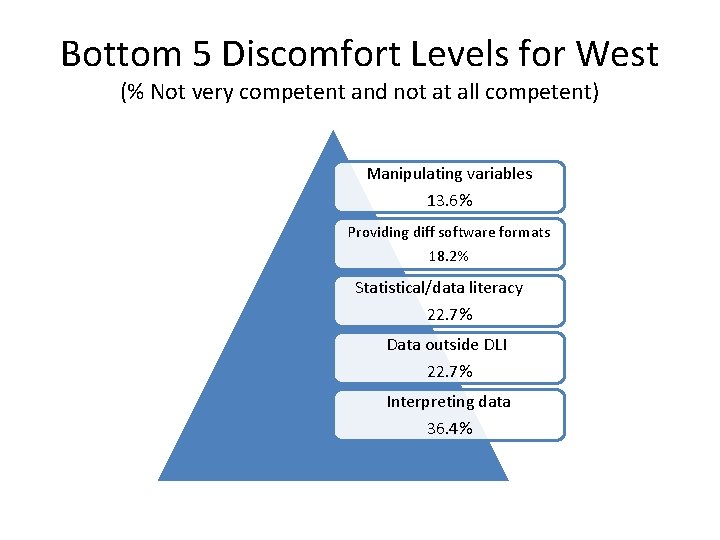
Bottom 5 Discomfort Levels for West (% Not very competent and not at all competent) Manipulating variables 13. 6% Providing diff software formats 18. 2% Statistical/data literacy 22. 7% Data outside DLI 22. 7% Interpreting data 36. 4%
Relative Discomforts “I don’t know my PUMF from my dummy variables and I’m feeling a bit synthetic”
Summary of Discomforts • All regions not comfortable with – data manipulation – providing different software formats • The more complex the data, the greater the level of discomfort • DLI contacts have limited knowledge of data outside the program • Problems with statistical/data literacy appear to be because of fuzzy definitions
Healthy Choices
Training Implications • Different levels of service require different competencies • Develop skills in increasing levels of complexity – Provide growth opportunities for everyone • Make sure there adequate community supports for smaller institutions • Tailor the training program so that everyone grows • Involve new people and ideas from outside regions in regional training – Explore internships, mentors, lists of experts • Work with IASSIST and CAPDU to develop national training
Next Steps • DLI Education Committee meets next month (June 2009) – Review on-line resource materials • Survival Guide, Training Repository, <odesi> , etc. – Initiate new Regional Training Coordinators – Review results of competency workshop – Develop curriculum plan to address gaps, build on strengths – Plan the next ‘Train the Trainers’ workshop for Nov. 2009

Questions?
- Slides: 33