
Taking the gastrointestinal history Dr J A Coetser









- Slides: 43
Taking the gastrointestinal history Dr. J. A. Coetser Department of Internal Medicine Coetser. JA@ufs. ac. za
SOCRATES � Site � Onset � Character � Radiation � Alleviating factors � Timing � Exacerbating � Severity factors
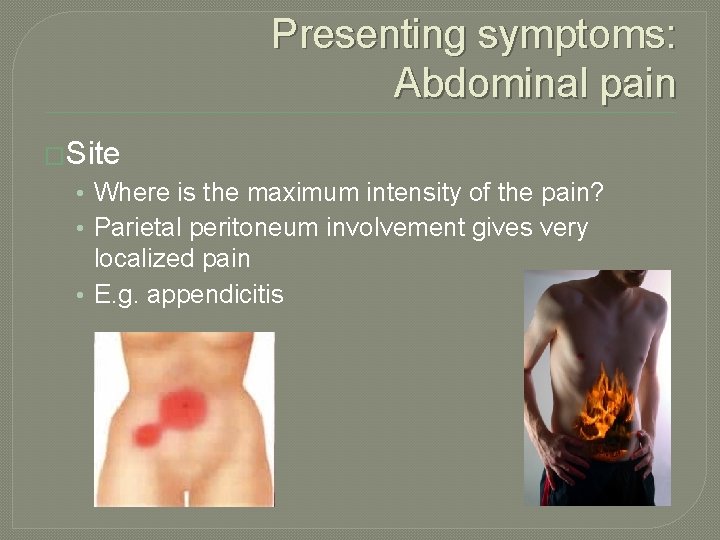
Presenting symptoms: Abdominal pain �Site • Where is the maximum intensity of the pain? • Parietal peritoneum involvement gives very localized pain • E. g. appendicitis
Presenting symptoms: Abdominal pain �Onset • Is pain acute or chronic? • When did it begin? • How often does it occur?
Presenting symptoms: Abdominal pain �Character and pattern • Colicky or steady? • Colicky pain due to peristaltic movements �Bowel obstruction �Urethers
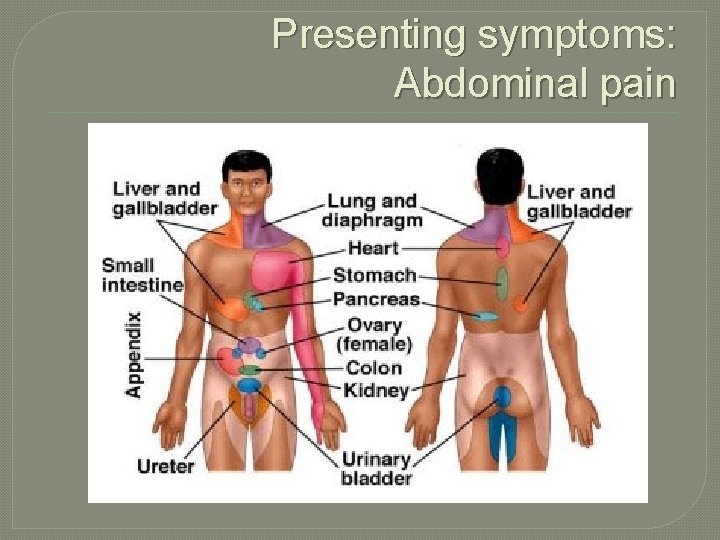
Presenting symptoms: Abdominal pain
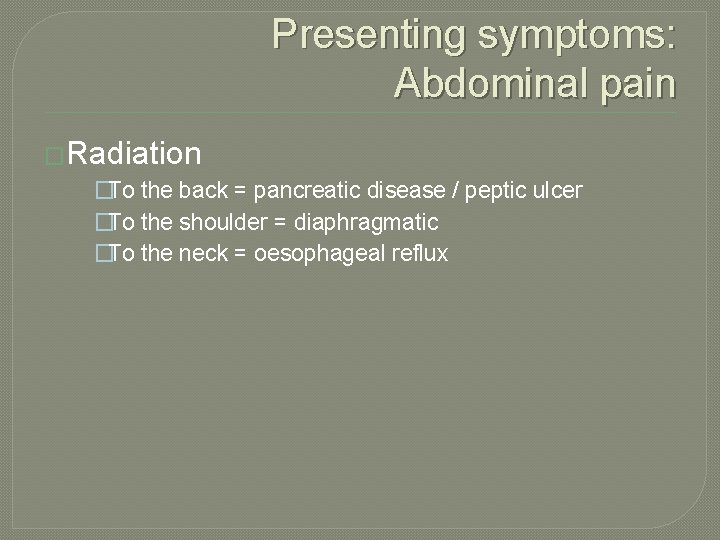
Presenting symptoms: Abdominal pain �Radiation �To the back = pancreatic disease / peptic ulcer �To the shoulder = diaphragmatic �To the neck = oesophageal reflux
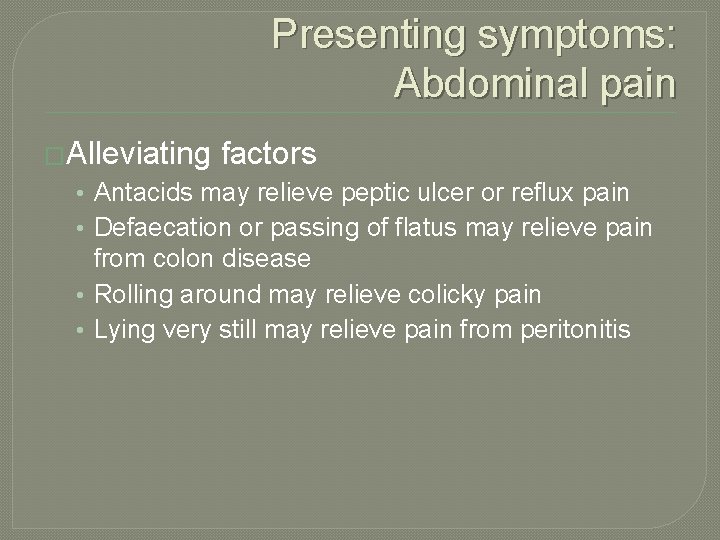
Presenting symptoms: Abdominal pain �Alleviating factors • Antacids may relieve peptic ulcer or reflux pain • Defaecation or passing of flatus may relieve pain from colon disease • Rolling around may relieve colicky pain • Lying very still may relieve pain from peritonitis
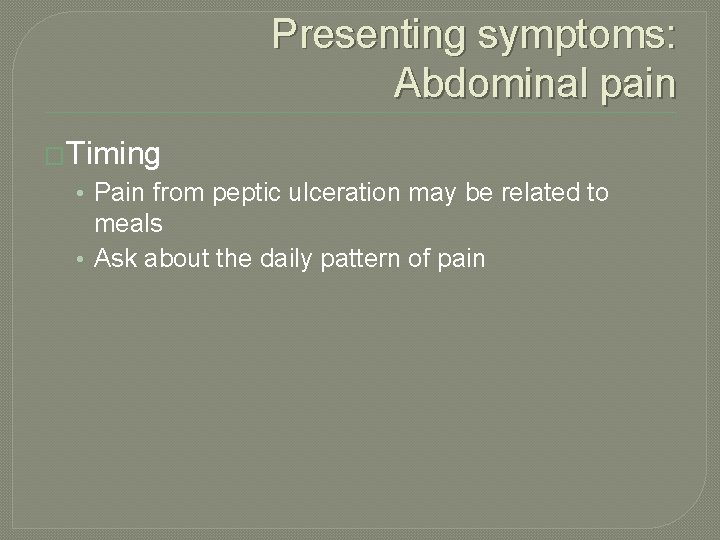
Presenting symptoms: Abdominal pain �Timing • Pain from peptic ulceration may be related to meals • Ask about the daily pattern of pain
Presenting symptoms: Abdominal pain �Exacerbating factors • Eating may precipitate ischaemic pain or pancreatic pain • Coffee, alcohol, spicy food may exacerbate reflux
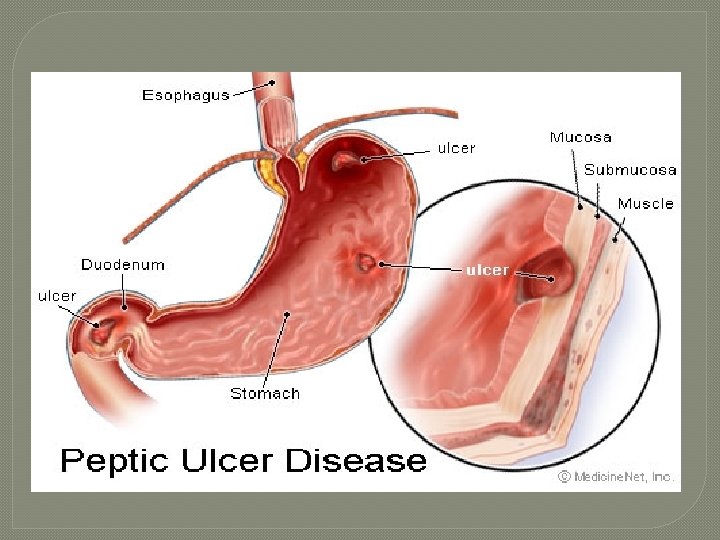
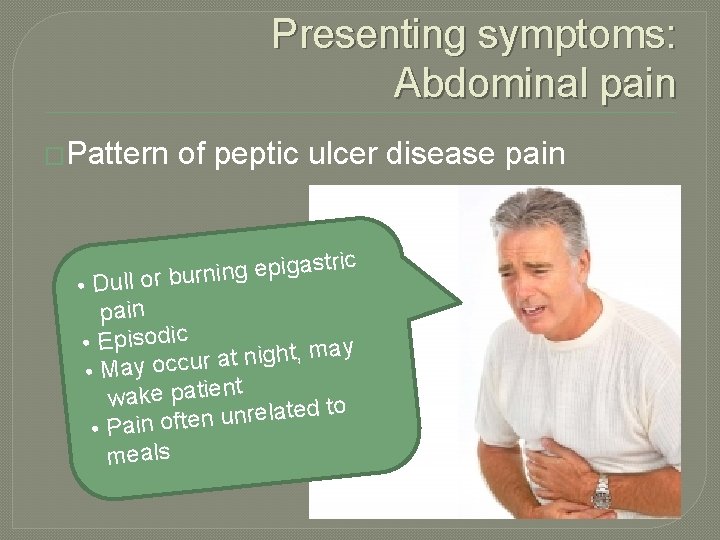
Presenting symptoms: Abdominal pain �Pattern of peptic ulcer disease pain astric g i p e g n i n r u • Dull or b pain • Episodic ay m , t h g i n t a • May occur t wake patien d to e t a l e r n u n e • Pain oft meals
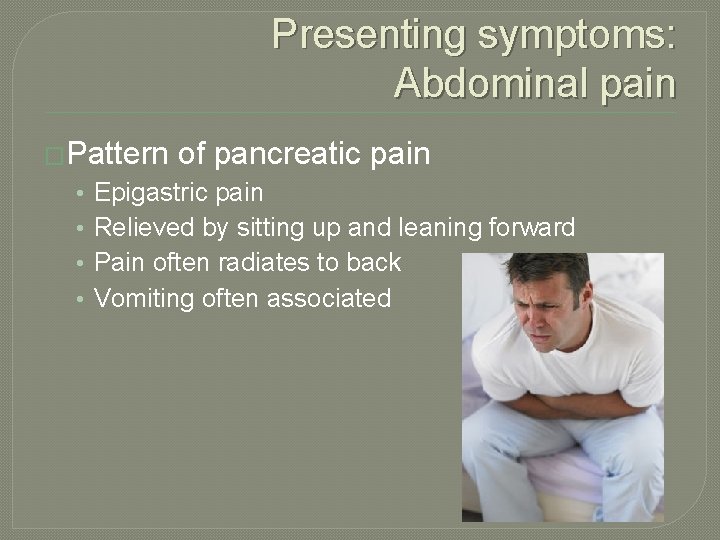
Presenting symptoms: Abdominal pain �Pattern • • of pancreatic pain Epigastric pain Relieved by sitting up and leaning forward Pain often radiates to back Vomiting often associated
Presenting symptoms: Abdominal pain �Pattern of biliary pain • Rarely colicky • Epigastric pain with cystic duct obstruction • Usually severe, constant for hours • History of similar episodes in past • If cholecystitis develops, pain can shift to right hypochondrium
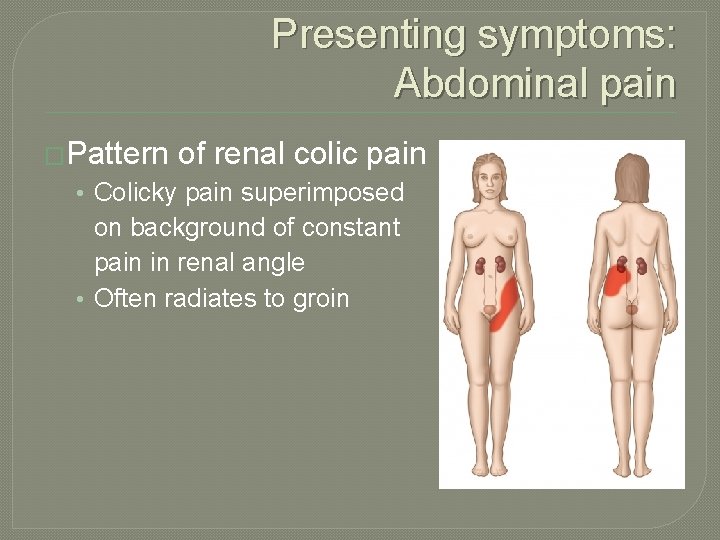
Presenting symptoms: Abdominal pain �Pattern of renal colic pain • Colicky pain superimposed on background of constant pain in renal angle • Often radiates to groin
Presenting symptoms: Abdominal pain �Pattern of bowel obstruction pain • Colicky pain • If obstruction is in small bowel, pain often • • periumbilical Colonic pain can occur anywhere Small bowel obstruction colic cycles every 2 -3 minutes Large bowel obstruction colic cycles every 10 -15 minutes Obstruction often associated with vomiting, constipation, and abdominal distension
Presenting symptoms: Appetite and weight change �Anorexia + weight loss • Consider malignancy • Depression could also be a cause �Increased appetite + weight loss • Malabsorption of nutrients • Thyrotoxicosis �Liver taste disease may cause disturbance of
Presenting symptoms: Early satiation and postprandial fullness �Early satiation can be due to gastric diseases • Gastric cancer • Peptic ulcer
Presenting symptoms: Nausea and vomiting � Causes • GIT infections, e. g. S. aureus • Small bowel obstruction • Pregnancy • Drugs (digoxin, opiates, dopamine agonists, chemotherapy) • Peptic ulcer disease with gastric outlet obstruction • Gastroparesis from e. g. diabetes mellitus • Acute hepatobiliary disease • Alcoholism • Psychogenic vomiting • Eating disorders e. g. bulimia • Raised intracranial pressure
Presenting symptoms: Nausea and vomiting �Timing of vomiting • Delayed >1 h after meal = gastric outlet obstruction • Early morning vomiting = pregnancy, raised intracranial pressure, alcoholism �Contents of vomitus • Bile = connection between stomach and duodenum • Old food = gastric outlet obstruction • Blood = ulceration
Presenting symptoms: Heartburn and acid regurgitation �Heartburn • Retrosternal burning pain or discomfort, due to inappropriate relaxation of lower oesophageal sphincter • Aggravated by bending or lying down • Relieved by antacids �Acid regurgitation • Sour or bitter tasting fluid coming up into mouth �Waterbrash • Excessive secretion of saliva into mouth, associated with peptic ulcer disease or oesophagitis
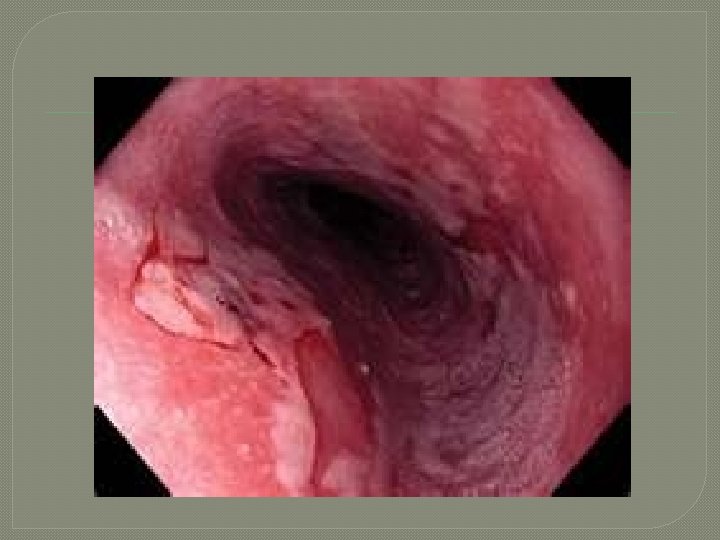
Presenting symptoms: Dysphagia �Dysphagia = difficulty in swallowing • Can occur with solids or liquids �Odynophagia = painful swallowing • Causes �Infectious oesophagitis �Peptic ulceration �Caustic damage to oesophagus �Ask patient to point to site where food gets stuck
Presenting symptoms: Dysphagia �Dysphagia + heartburn = possible stricture formation �Dysphagia only with 1 st few swallows = lower oesophageal ring / oesophageal spasm �Progressive dysphagia for solids = stricture / carcinoma / achalasia �Dysphagia for both solids and liquids = motor disorders, e. g. achalasia
Presenting symptoms: Diarrhoea �Increased frequency of stools (>3 per day) �Change in consistency, loose and watery �Distinguish between acute and chronic diarrhoea
Presenting symptoms: Diarrhoea �Secretory �Osmotic �Abnormal intestinal motility �Exudative �Malabsorption
Presenting symptoms: Diarrhoea � Secretory diarrhoea • High volume • Persists when patient fasts • Occurs when secretion in GIT exceeds absorption, e. g. cholera � Osmotic diarrhoea • Large volume stools • Disappears with fasting • Occurs due to excessive solute drag, e. g. lactose intolerance � Abnormal intestinal motility • E. g. thyrotoxicosis, irritable bowel syndrome
Presenting symptoms: Diarrhoea �Exudative diarrhoea • Small volume stools, but frequent • Associated blood or mucus • E. g. inflammatory bowel disease �Malabsorption • Can result in steatorrhoea = fatty, pale colored, extremely smelly, floating, difficult to flush away • >7 g fat in 24 h stool
Presenting symptoms: Constipation � May refer to: • Frequency <3/week • Hard consistency • Straining to evacuate stools � Causes: • Drugs • Metabolic • Endocrine • Neurological • Malignancy • Pregnancy • Perineal problems
Presenting symptoms: Constipation �Irritable bowel syndrome • Can present with alternating constipation and diarrhoea • No structural or biochemical abnormality • Abdominal pain plus 2 or more: �Pain relieved by defecation �Looser or more frequent stools with onset of abdominal pain �Mucus per rectum �Feeling of incomplete emptying of rectum �Visible abdominal distension
Presenting symptoms: Mucus �Solitary rectal ulcer �Fistula �Villous adenoma �Irritable bowel syndrome
Presenting symptoms: Bleeding �Haematemesis • Vomiting of blood (coffee-ground vomitus) • Ensure this is not from a nose bleed, bleeding tooth socket or coughing up of blood • Usually from source proximal to or at duodenum • E. g. peptic ulcer disease • Mallory-Weiss tear due to repeated vomiting
Presenting symptoms: Bleeding �Haematochezia • Bright red blood per rectum • Blood usually not mixed with stool, found in toilet bowl • E. g. haemorrhoids, local anorectal diseases
Presenting symptoms: Bleeding �Melaena stools • Black, offensive, tarry stools • Bleeding from upper GIT �Massive rectal bleeding • From distal colon or rectum • Angiodysplasia • Diverticular disease
� Angiodysplasia � Diverticular disease
Presenting symptoms: Jaundice �Excess bilirubin deposited in skin and sclerae �Ask about colour of urine and stools • If pale stools and dark urine = obstructive or cholestatic jaundice • Stercobilinogen unable to reach intestine �Ask about abdominal pain • Gallstones can cause biliary pain
Presenting symptoms � Pruritis • Itching of skin • Cholestatic liver disease often causes pruritis, worse over limbs � Abdominal bloating and swelling • Bloating due to excess gas or irritable bowel syndrome • Persistent swelling due to ascites � Lethargy • Chronic liver disease • Anaemia
Treatment history �Drugs indicated in GIT disease: NSAIDs = peptic ulcer disease Anticholinergic drugs = constipation Isoniazid = drug hepatitis Rifampicin = drug cholestasis Anabolic steroids or contraceptives = cholestasis / peliosis hepatis • Paracetamol = liver necrosis • • •
Past history �Surgical procedures can result in jaundice • Anaesthesia e. g. halothane • Hypoxaemia of liver cells causing ischaemic hepatitis • Damage to bile duct during surgery �History of relapsing and remitting epigastric pain, now with acute abdomen = perforated peptic ulcer �Past history of inflammatory bowel disease
Social history �Occupation, e. g. exposure to hepatitis �Toxin exposure, e. g. vinyl chloride �Travel history �Alcohol history �Contact with someone who had jaundice �Sexual history �Injections, e. g. intravenous drugs, transfusions, dental treatment, tattooing
Family history �Colon cancer and familial polyps �Inflammatory bowel disease �Coeliac disease
Questions?