
Taking Lecture Notes Presented by Moorpark College Writing
Taking Lecture Notes Presented by Moorpark College Writing Center
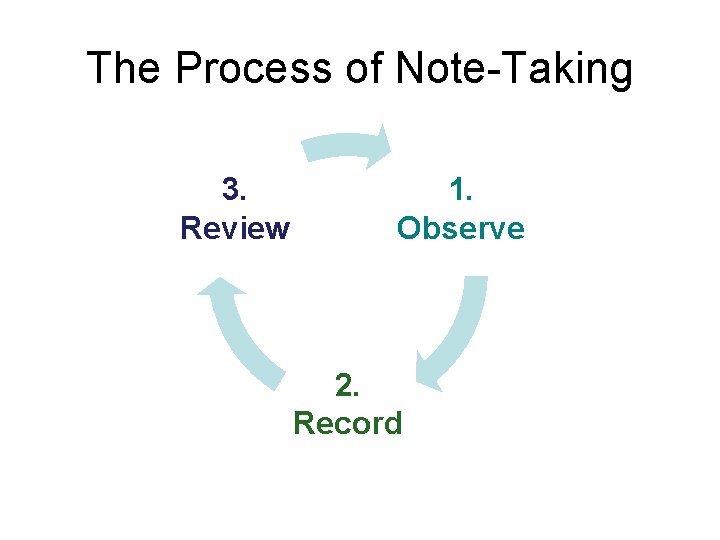
The Process of Note-Taking 3. Review 1. Observe 2. Record
Observe Instructor: Ø Tone of voice Ø Leading words Ø Pauses Ø Body language Ø Teaching Style Self: Ø Energy level Ø Attention Ø Prior knowledge Ø Emotional reactions Ø Learning Style
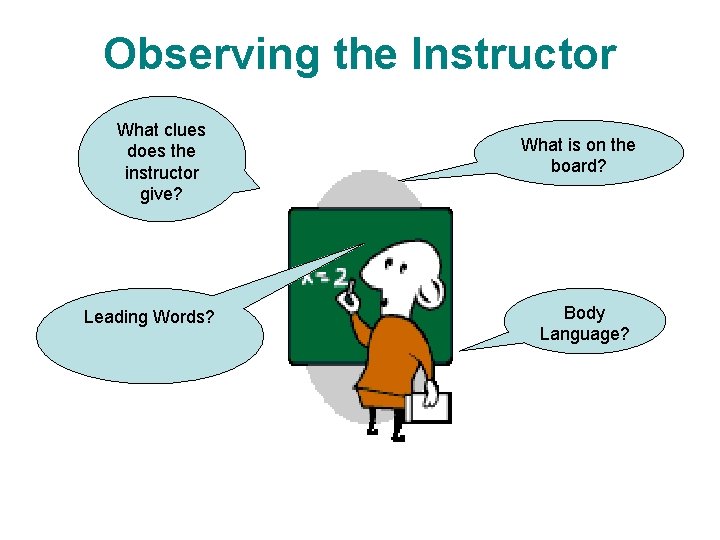
Observing the Instructor What clues does the instructor give? Leading Words? What is on the board? Body Language?
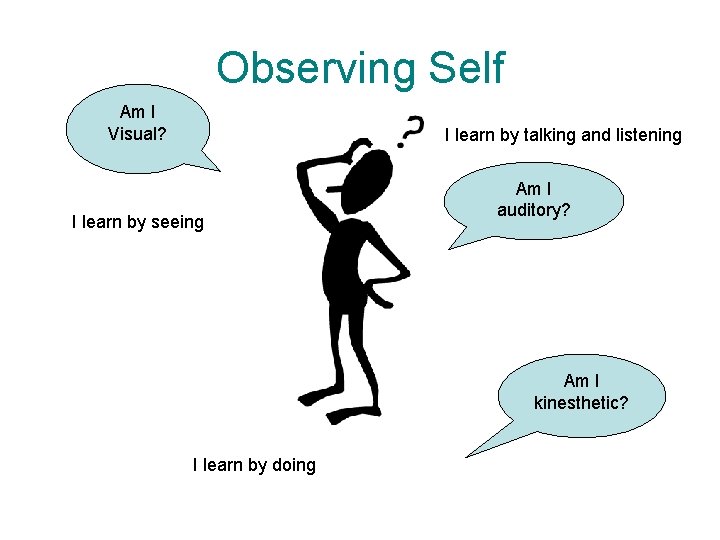
Observing Self Am I Visual? I learn by talking and listening I learn by seeing Am I auditory? Am I kinesthetic? I learn by doing
Record • • • Key Words Image prompting Mapping Cornell Method Summarize/ Paraphrase Outline
Example of Key Words Note-Taking 3 step process Observe Record review
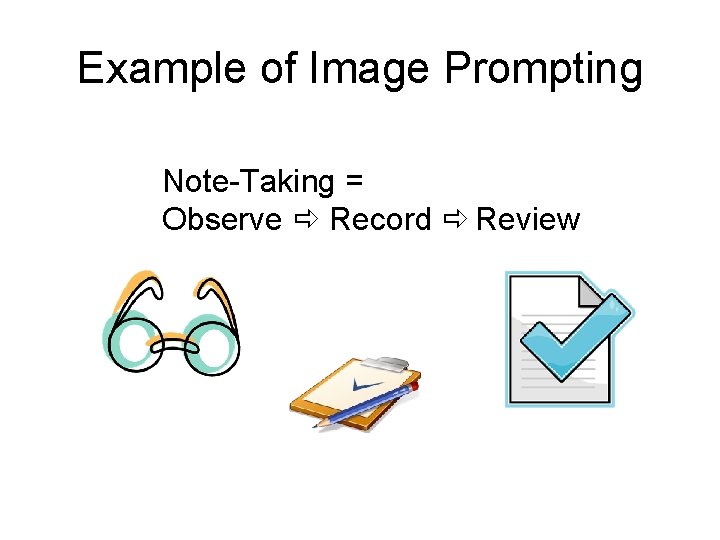
Example of Image Prompting Note-Taking = Observe Record Review
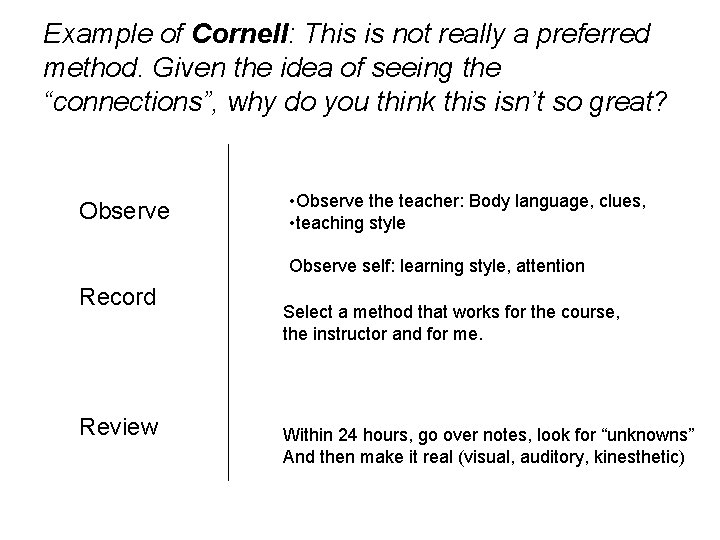
Example of Cornell: This is not really a preferred method. Given the idea of seeing the “connections”, why do you think this isn’t so great? Observe • Observe the teacher: Body language, clues, • teaching style Observe self: learning style, attention Record Review Select a method that works for the course, the instructor and for me. Within 24 hours, go over notes, look for “unknowns” And then make it real (visual, auditory, kinesthetic)
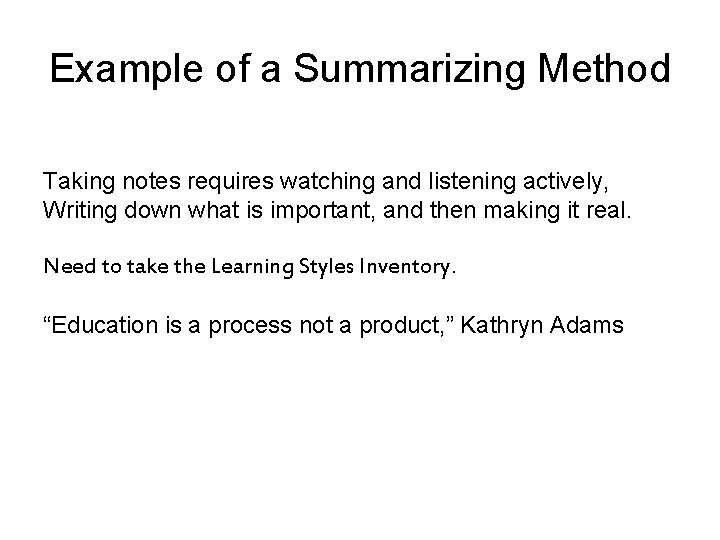
Example of a Summarizing Method Taking notes requires watching and listening actively, Writing down what is important, and then making it real. Need to take the Learning Styles Inventory. “Education is a process not a product, ” Kathryn Adams
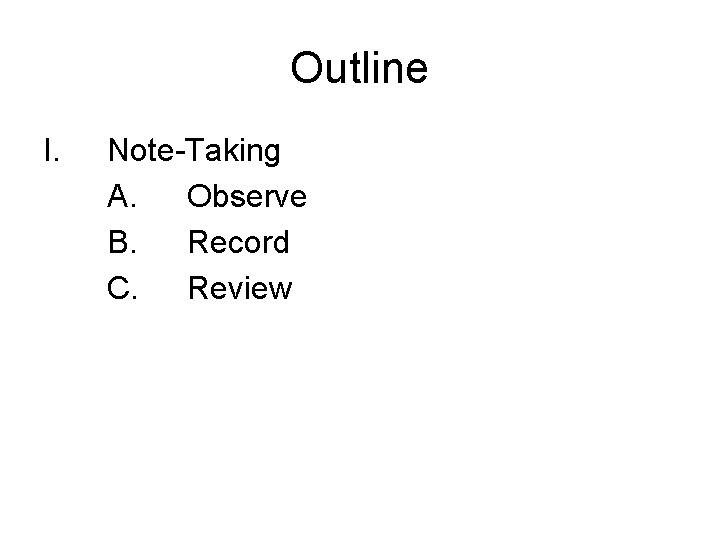
Outline I. Note-Taking A. Observe B. Record C. Review
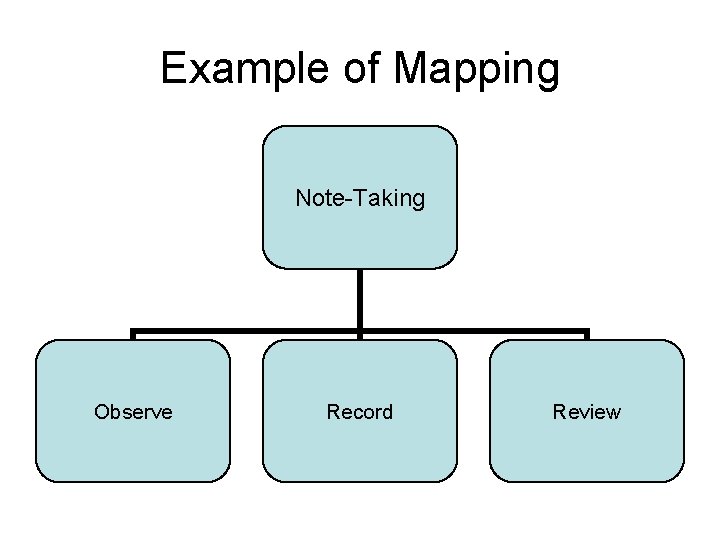
Example of Mapping Note-Taking Observe Record Review
Review ü Check for Accuracy: Compare notes with other students; compare notes to text; ask questions at office hours ü Organize: Fill in missing links; create a map of associated topics ü Synthesize: Look at the context of the class (the Big Picture) ü Make it Real: Talk about it. Act upon it. Apply it to experience. See it in your world.
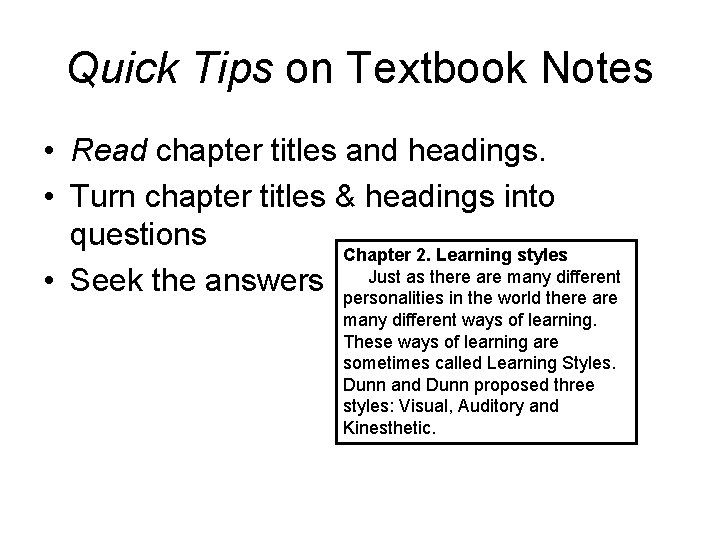
Quick Tips on Textbook Notes • Read chapter titles and headings. • Turn chapter titles & headings into questions Chapter 2. Learning styles Just as there are many different • Seek the answers personalities in the world there are many different ways of learning. These ways of learning are sometimes called Learning Styles. Dunn and Dunn proposed three styles: Visual, Auditory and Kinesthetic.
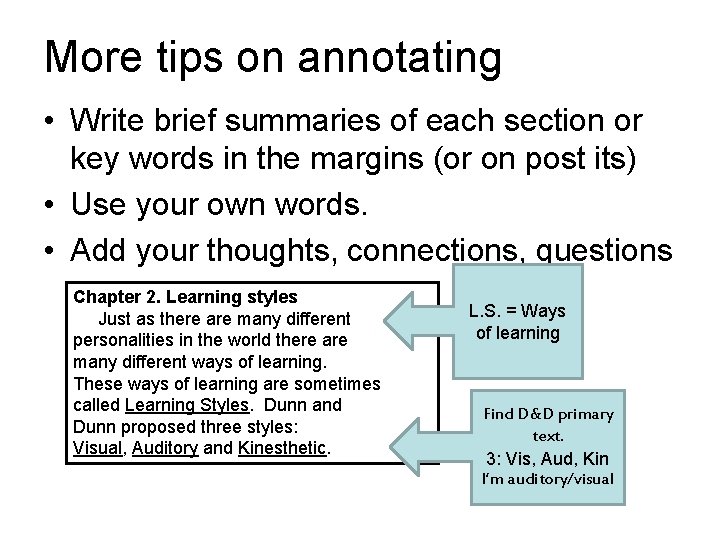
More tips on annotating • Write brief summaries of each section or key words in the margins (or on post its) • Use your own words. • Add your thoughts, connections, questions Chapter 2. Learning styles Just as there are many different personalities in the world there are many different ways of learning. These ways of learning are sometimes called Learning Styles. Dunn and Dunn proposed three styles: Visual, Auditory and Kinesthetic. L. S. = Ways of learning Find D&D primary text. 3: Vis, Aud, Kin I’m auditory/visual
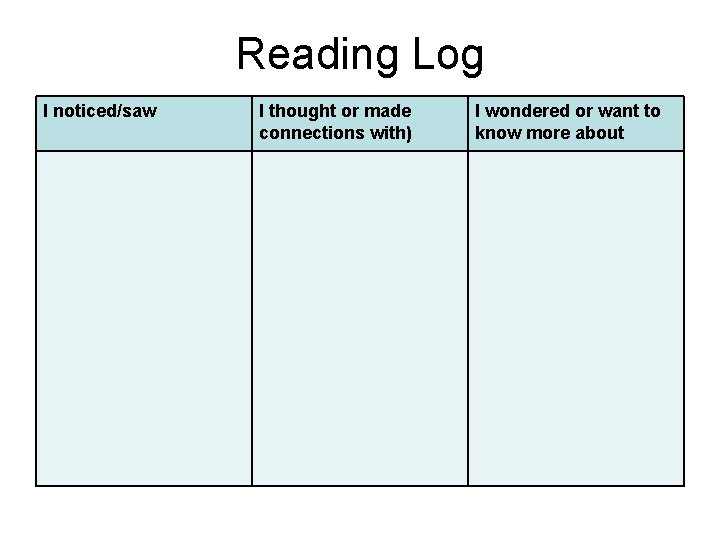
Reading Log I noticed/saw I thought or made connections with) I wondered or want to know more about
Prepare Think as a teacher • Turn your notes (answers) into questions • Add questions that force you to go further • Reword the questions so that your mind must see them another way. Study Smart • Create a routine of study • Take breaks • Review and then APPLY
- Slides: 17