
Taking Effective Notes What is note taking writing
- Slides: 26
Taking Effective Notes
What is note taking? – writing down ideas from lectures and readings in our own words.
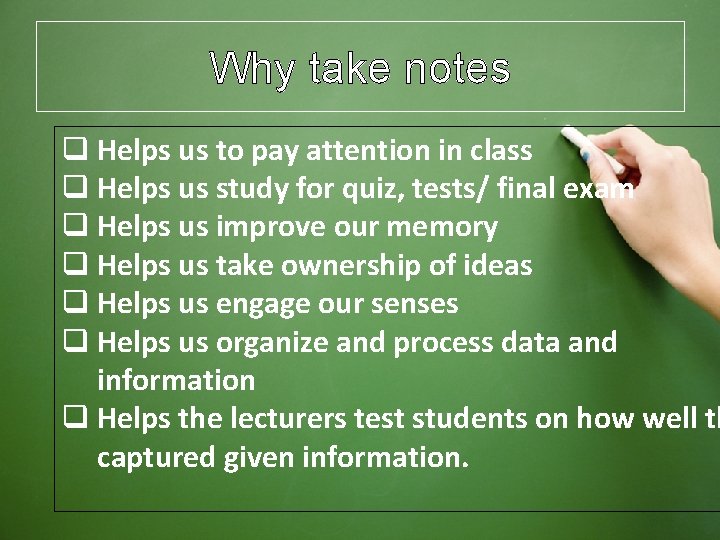
Why take notes q Helps us to pay attention in class q Helps us study for quiz, tests/ final exam q Helps us improve our memory q Helps us take ownership of ideas q Helps us engage our senses q Helps us organize and process data and information q Helps the lecturers test students on how well th captured given information.
Why review notes? • We lose 80% of what we hear if it is not reviewed within a few hours • Identify any questions for peers, the next class, or ask the professor • There is not enough time to absorb all the information given in class if it’s not reviewed on a regular basis • Think: “If I were tested on this lecture tomorrow, would I ace it? ” Make it so! TAKE TIME EVERY DAY TO REVIEW NOTES
Why “recapture” notes after class? Frees you up to write in quick, shorthand during class An excellent test-prep strategy for reinforcing information Better than re-copying, this time you’re digesting & rephrasing Great for Kinesthetic learners Can catch ? ? s, gaps, look-up words Prompts higher-level questions Saves hours of studying and review the days before test
Introductory Questions • What materials do we need? – Loose-leaf paper – Binder – Folders with pockets – Pens, pencils, erasers , etc
Before class • Review the notes from the day before • Review your reading assignment • Make sure you have paper, text, pens/pencils, handout • Write the date at the top of your paper for notes. • Leave spaces between the lines so that you can add information later.
Physical Factors • Seating – Near the front and center • Better vision • Better hearing – Avoid distraction • Doorways, window glare, etc. • Peers
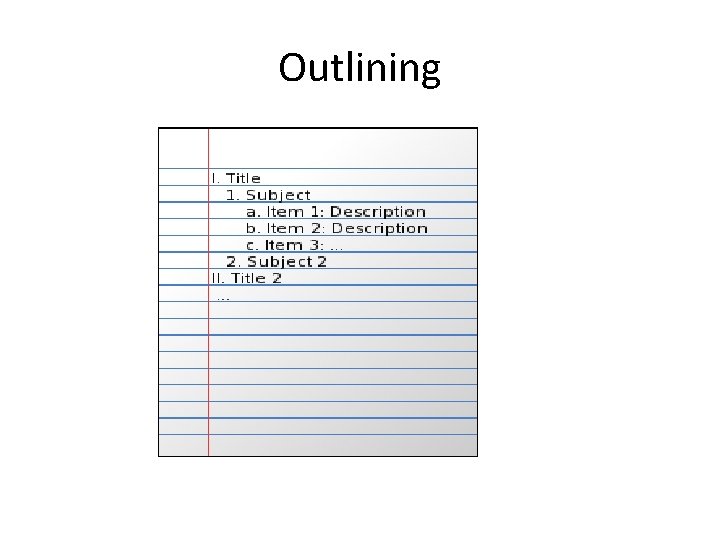
How do we take notes? • • • Date and label notes Give ourselves space to write Use abbreviations and symbols – What are some examples of symbols and abbreviations? • Use an outline to show: – Main ideas – Supports – Examples • Use our own language
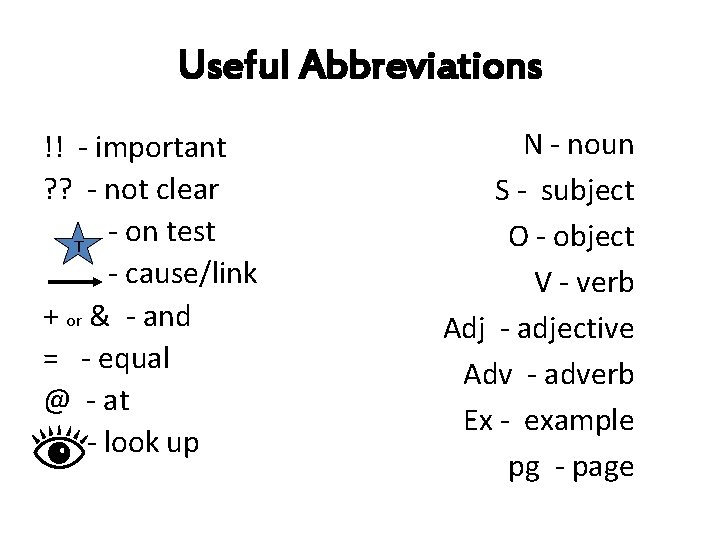
Useful Abbreviations !! - important ? ? - not clear - on test T - cause/link + or & - and = - equal @ - at - look up N - noun S - subject O - object V - verb Adj - adjective Adv - adverb Ex - example pg - page
How do we prepare for class? Do pre-reading and homework Review syllabus Preview previous notes Look up key words prior to class Plan on listening 80% of the time and 20% of the time • Write the date at the top of your paper for notes. • Leave spaces between the lines so that you can add information later. • • •
While taking notes • Be an aggressive, not a passive, listener – Ask questions and discuss if its permitted • If not, jot questions in your notes • Seek out meaning
Mood of Lecturer • Observation is key
Conts. , Keen observers focus their attention on the details and make the most of their time during lectures by preparing and reviewing BEFORE THE LECTURE EVEN STARTS! – Complete outside assignments - The more familiar you are with a subject, the easier it will be to understand in class – Bring the right materials to the lecture
Key actions to note as you OBSERVE your instructor • Be alert to repetition When an instructor repeats a specific point, make a note of it • Watch the board or overhead projector If an instructor writes something down, the material is important • Notice the instructor's interest level If the instructor is excited about something, it is likely to be on an exam • Let go of judgments about lecture styles Don't let your attitude about an instructor's style get in the way of your education
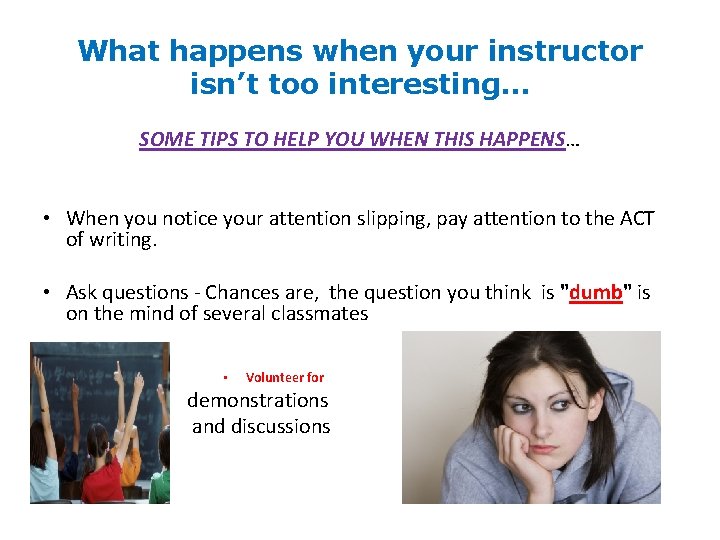
What happens when your instructor isn’t too interesting… SOME TIPS TO HELP YOU WHEN THIS HAPPENS… • When you notice your attention slipping, pay attention to the ACT of writing. • Ask questions - Chances are, the question you think is "dumb" is on the mind of several classmates • Volunteer for demonstrations and discussions
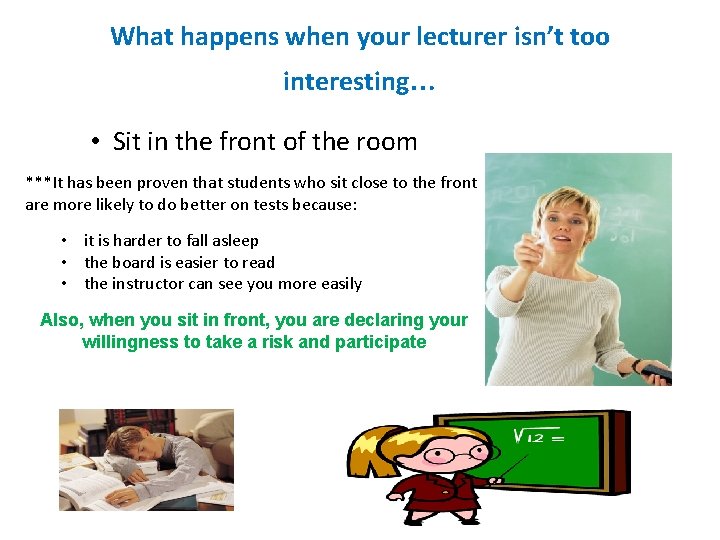
What happens when your lecturer isn’t too interesting… • Sit in the front of the room ***It has been proven that students who sit close to the front are more likely to do better on tests because: • it is harder to fall asleep • the board is easier to read • the instructor can see you more easily Also, when you sit in front, you are declaring your willingness to take a risk and participate
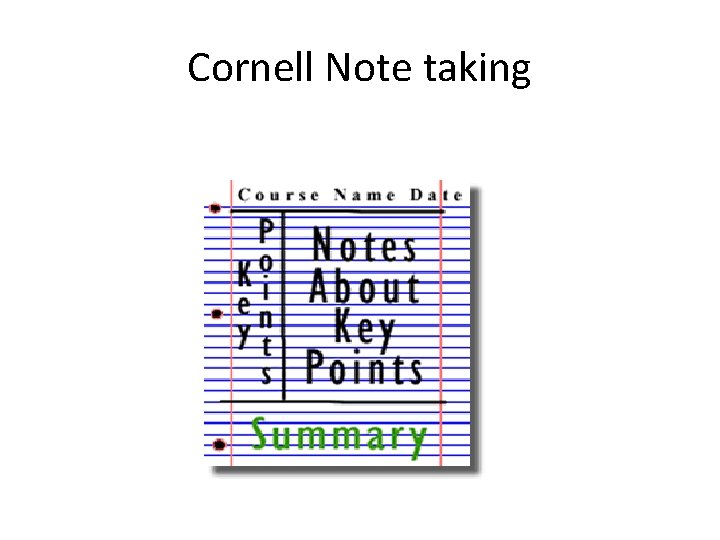
Cornell Note taking
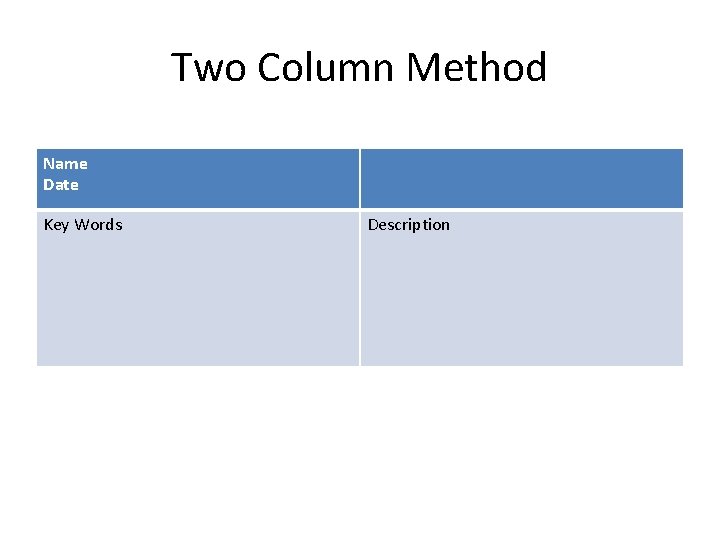
Two Column Method Name Date Key Words Description
Outlining
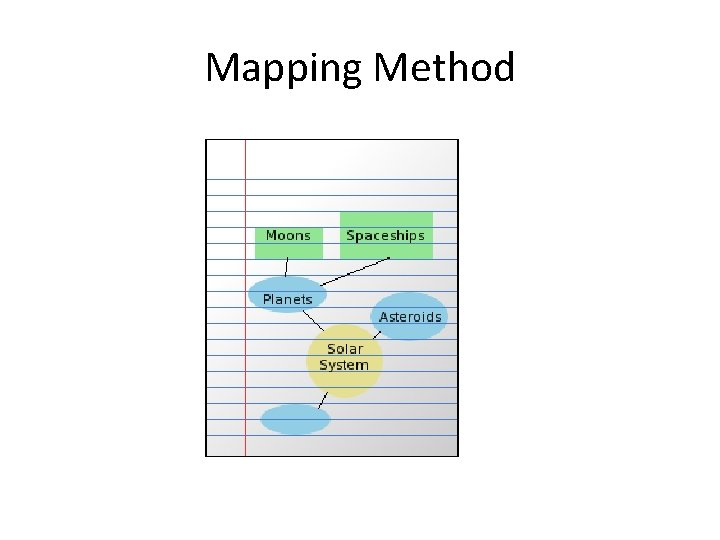
Mapping Method
Sentence Method • Write sentences on every other line.
How do we review after a class? • • • Review notes along with the book Create our own examples Discuss and compare notes with others Re-write notes Practice those skills you wish to develop Ask professor for clarification
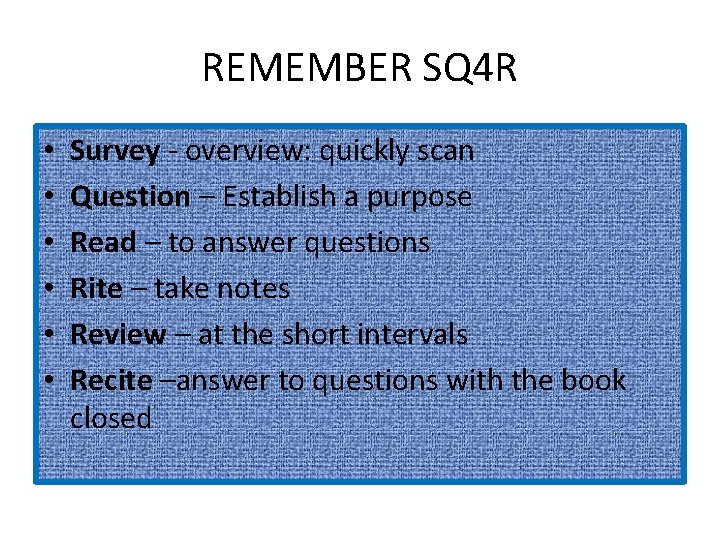
REMEMBER SQ 4 R • • • Survey - overview: quickly scan Question – Establish a purpose Read – to answer questions Rite – take notes Review – at the short intervals Recite –answer to questions with the book closed