
TAKING CHARGE OF YOUR HEALTH Chapter One Wellness
- Slides: 16
TAKING CHARGE OF YOUR HEALTH Chapter One
Wellness: The New Health Goal ■ Health – Usually refers to the condition of a person’s body; the absence of injury or illness ■ Wellness – Multidimensional state of optimal well-being determined by the decisions you make – Not limited to the absence of physical disease ■ Dimensions of Wellness: – Physical – Emotional – Intellectual – Spiritual – Social – Environmental – Occupational – Financial 2
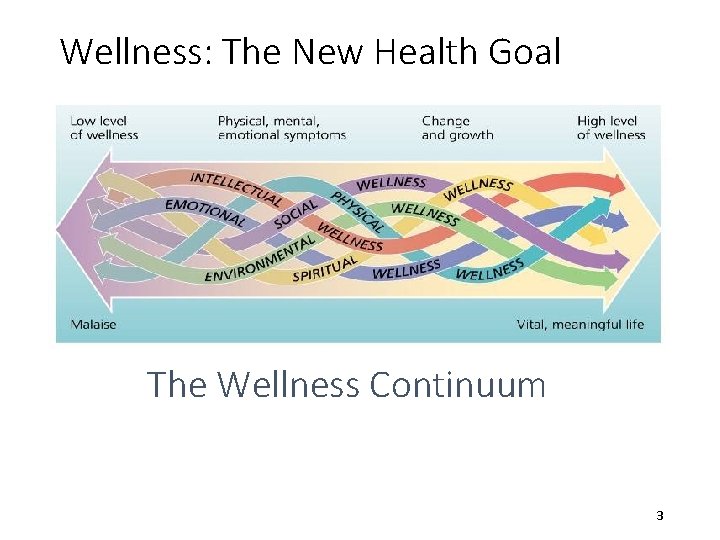
Wellness: The New Health Goal The Wellness Continuum 3
Terms to Know ■ Health vs. Wellness ■ Morbidity rate - the relative incidence of disease among a population ■ Mortality rate - the number of deaths in a population in a given period of time ■ Infectious disease- a disease that can spread from person t person, caused by microorganisms (bacteria, viruses, etc. ) ■ Chronic disease -a disease that develops and continues over a long period of time 4
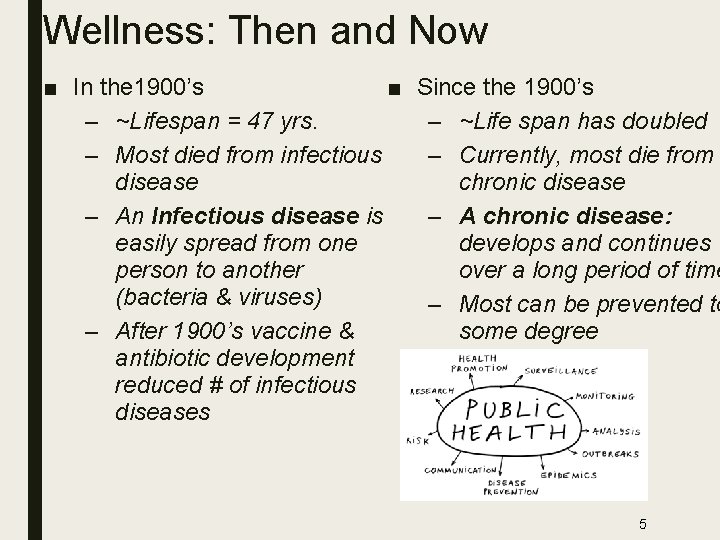
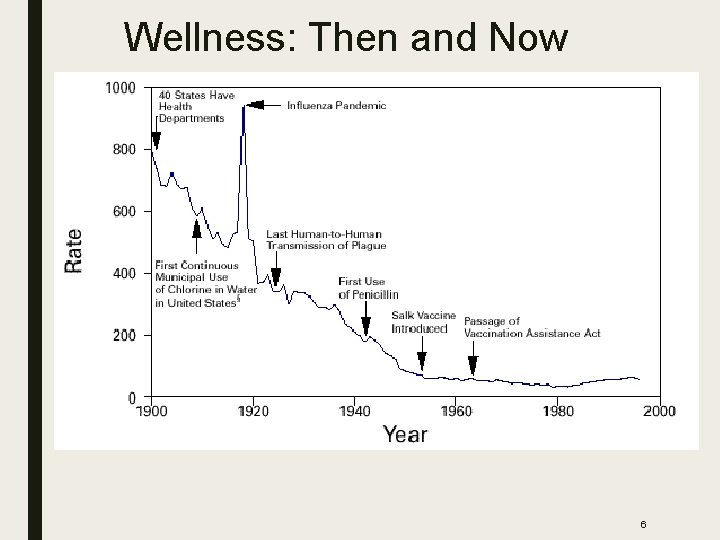
Wellness: Then and Now ■ In the 1900’s ■ Since the 1900’s – ~Lifespan = 47 yrs. – ~Life span has doubled – Most died from infectious – Currently, most die from disease chronic disease – An Infectious disease is – A chronic disease: easily spread from one develops and continues person to another over a long period of time (bacteria & viruses) – Most can be prevented to – After 1900’s vaccine & some degree antibiotic development reduced # of infectious diseases 5
Wellness: Then and Now 6
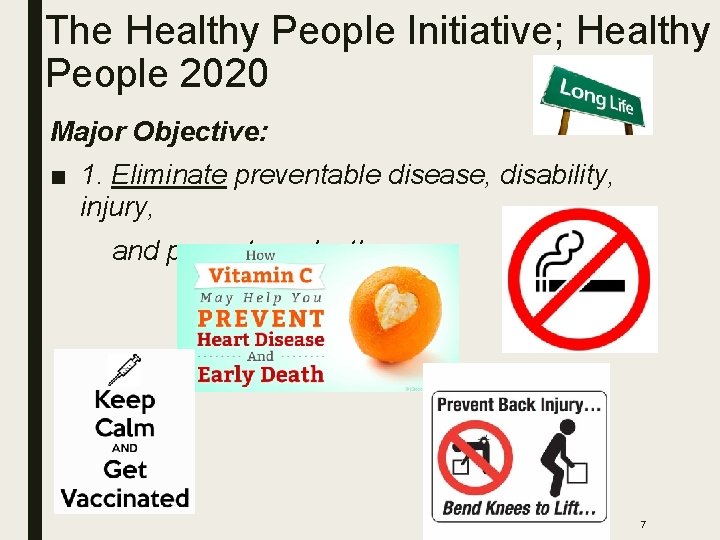
The Healthy People Initiative; Healthy People 2020 Major Objective: ■ 1. Eliminate preventable disease, disability, injury, and premature death 7
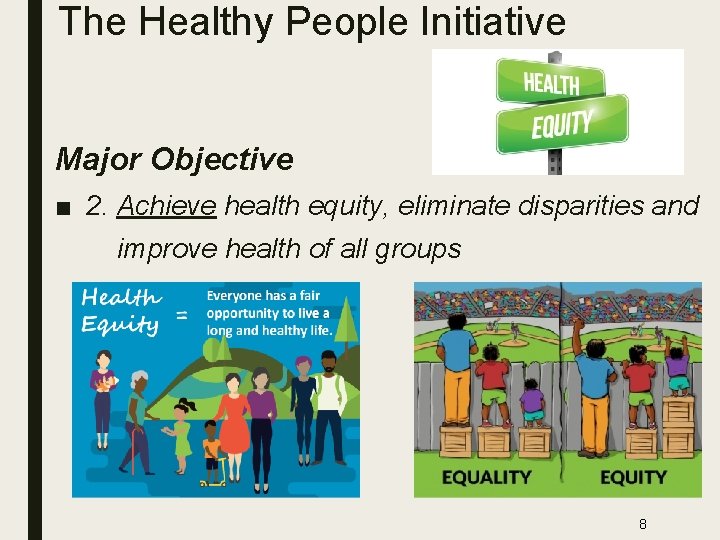
The Healthy People Initiative Major Objective ■ 2. Achieve health equity, eliminate disparities and improve health of all groups 8
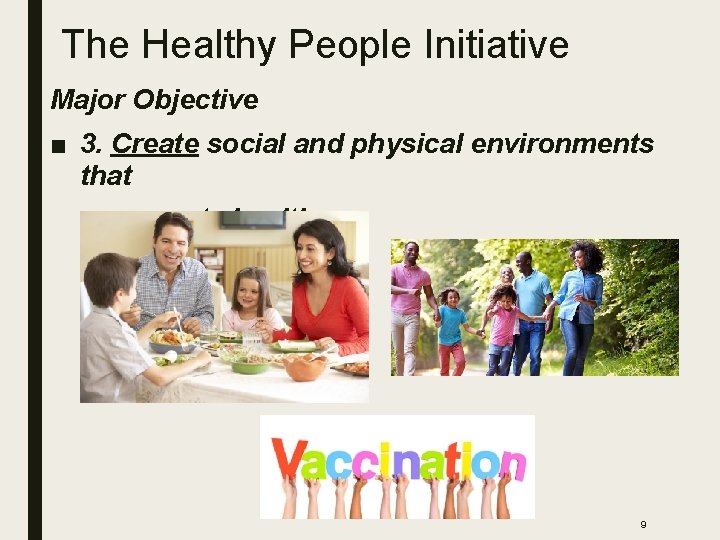
The Healthy People Initiative Major Objective ■ 3. Create social and physical environments that promote health 9
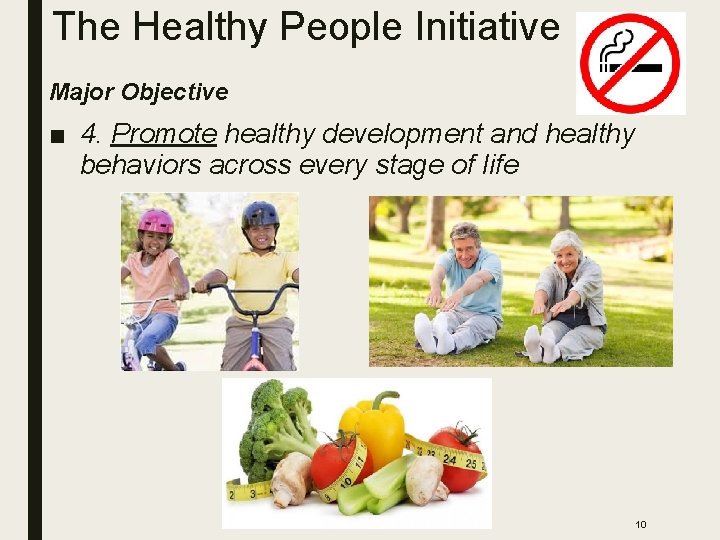
The Healthy People Initiative Major Objective ■ 4. Promote healthy development and healthy behaviors across every stage of life 10
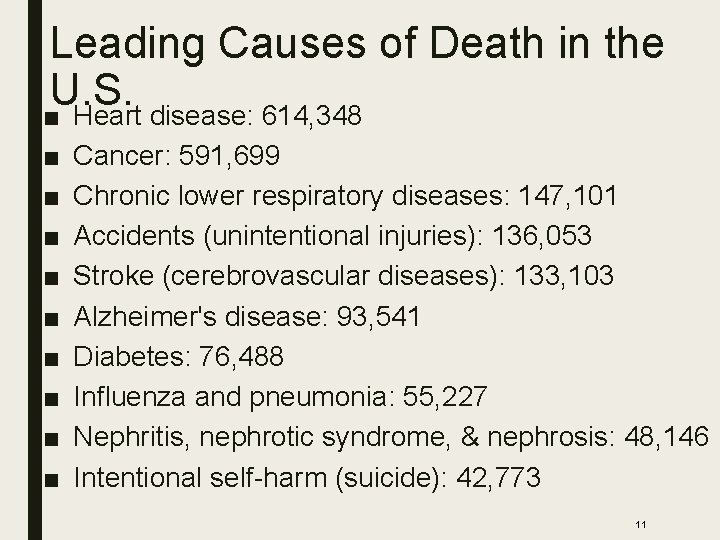
Leading Causes of Death in the U. S. ■ Heart disease: 614, 348 ■ ■ ■ ■ ■ Cancer: 591, 699 Chronic lower respiratory diseases: 147, 101 Accidents (unintentional injuries): 136, 053 Stroke (cerebrovascular diseases): 133, 103 Alzheimer's disease: 93, 541 Diabetes: 76, 488 Influenza and pneumonia: 55, 227 Nephritis, nephrotic syndrome, & nephrosis: 48, 146 Intentional self-harm (suicide): 42, 773 11
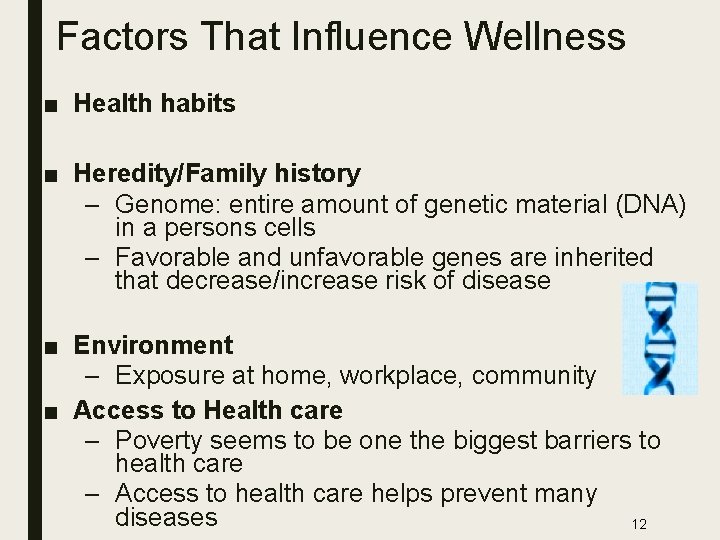
Factors That Influence Wellness ■ Health habits ■ Heredity/Family history – Genome: entire amount of genetic material (DNA) in a persons cells – Favorable and unfavorable genes are inherited that decrease/increase risk of disease ■ Environment – Exposure at home, workplace, community ■ Access to Health care – Poverty seems to be one the biggest barriers to health care – Access to health care helps prevent many diseases 12
Getting Serious About Your Health ■ Examine current health habits ■ Choose a Target Behavior – Defined as: One behavior you want to change; start simple ■ Learn About Your Target Behavior ■ Find Help
Changing Your Behavior ■ Set Realistic Goals – Your behavior change goals should be SMART ■ ■ ■ SPECIFIC MEASURABLE ATTAINABLE REALISTIC TIME-FRAME SPECIFIC
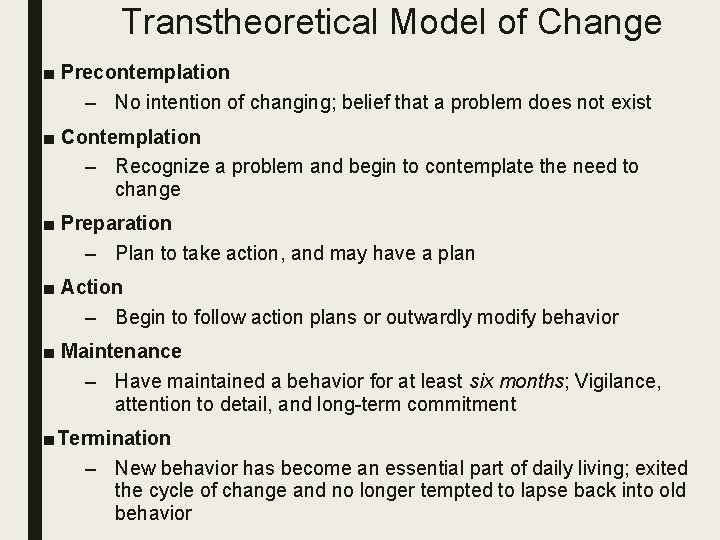
Transtheoretical Model of Change ■ Precontemplation – No intention of changing; belief that a problem does not exist ■ Contemplation – Recognize a problem and begin to contemplate the need to change ■ Preparation – Plan to take action, and may have a plan ■ Action – Begin to follow action plans or outwardly modify behavior ■ Maintenance – Have maintained a behavior for at least six months; Vigilance, attention to detail, and long-term commitment ■ Termination – New behavior has become an essential part of daily living; exited the cycle of change and no longer tempted to lapse back into old behavior
TAKING CHARGE OF YOUR HEALTH Chapter One