
Taking a Second or third Look at Early





- Slides: 26
Taking a Second (or third) Look at Early Alerts All Staff - November 1, 2019
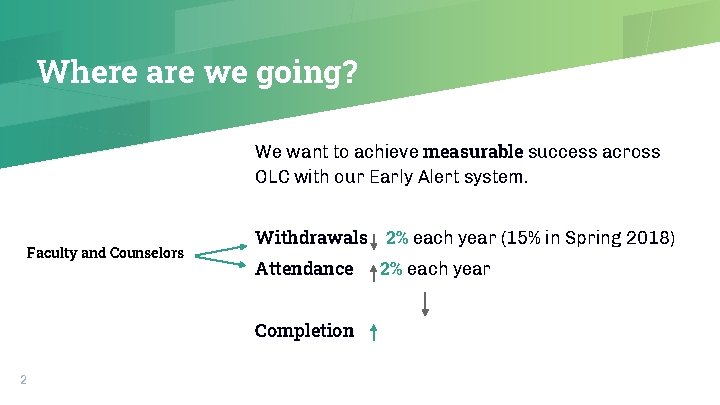
Where are we going? We want to achieve measurable success across OLC with our Early Alert system. Faculty and Counselors Withdrawals 2% each year (15% in Spring 2018) Attendance Completion 2 2% each year
What does success look like?
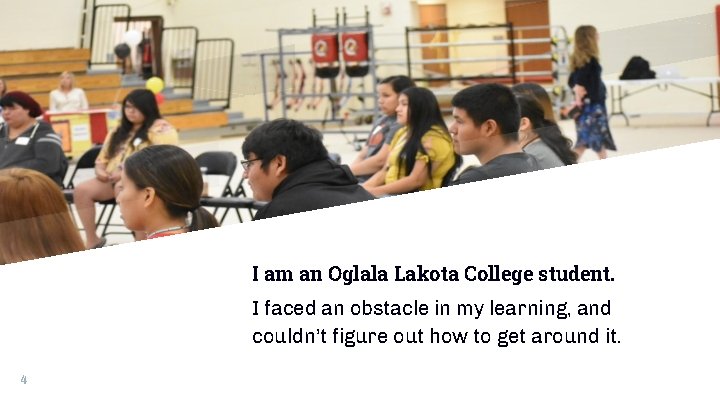
I am an Oglala Lakota College student. I faced an obstacle in my learning, and couldn’t figure out how to get around it. 4
Where does this come from?
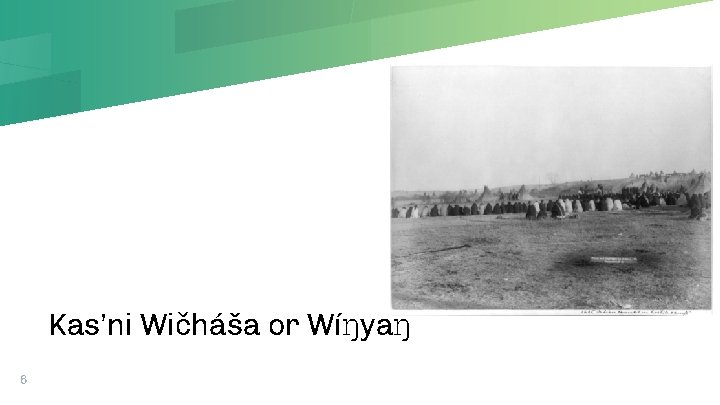
Kas’ni Wičháša or Wíŋyaŋ 6
How do we know it is working?
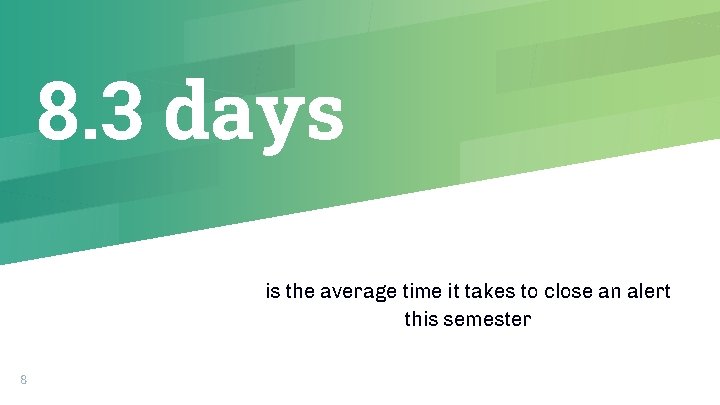
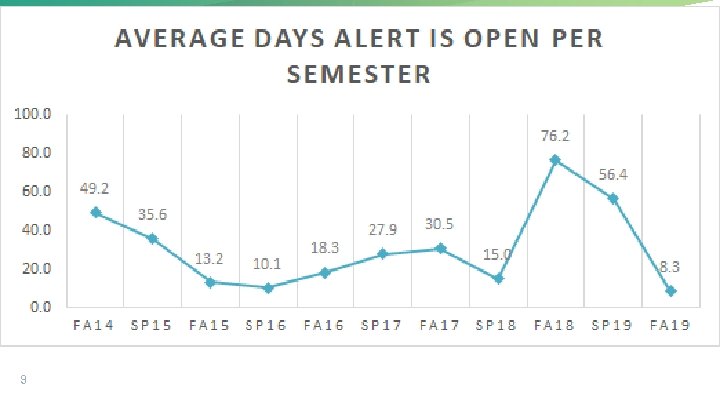
8. 3 days is the average time it takes to close an alert this semester 8
9
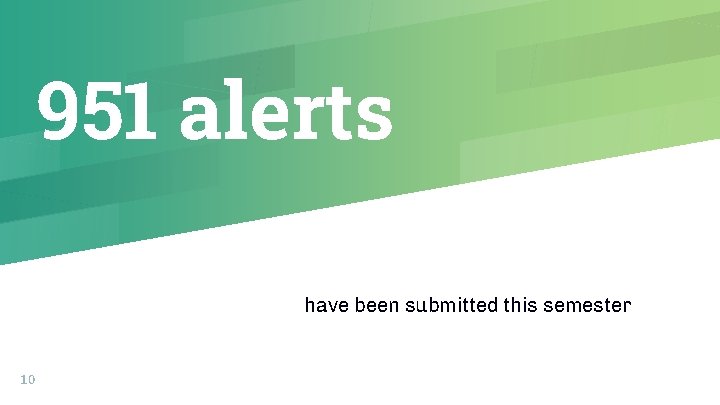
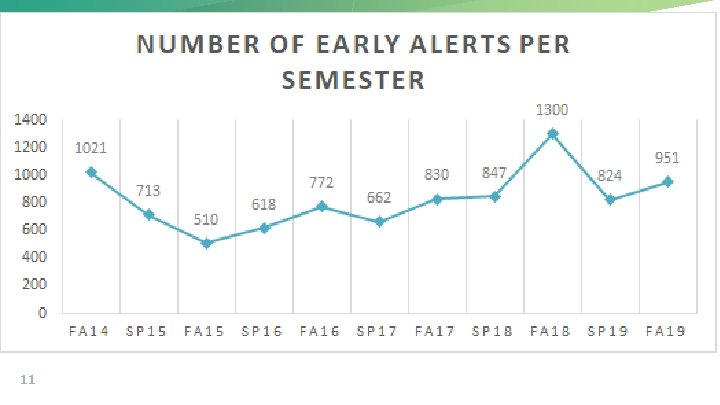
951 alerts have been submitted this semester 10
11
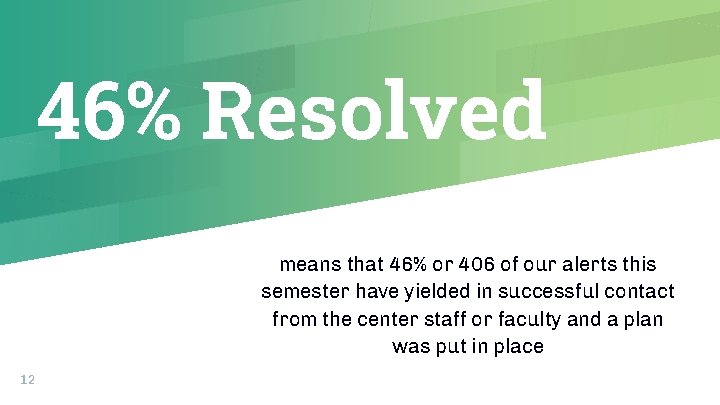
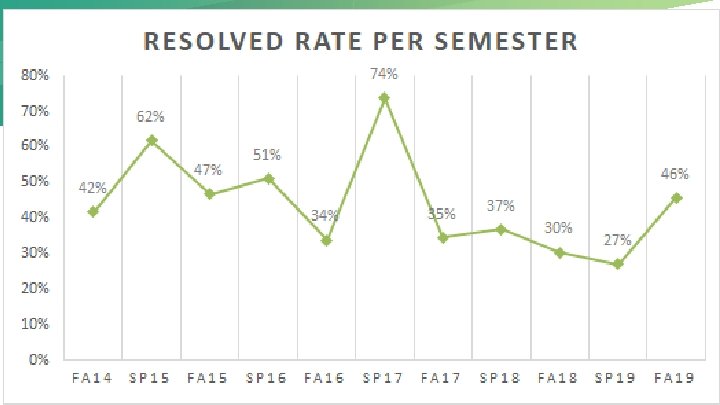
46% Resolved means that 46% or 406 of our alerts this semester have yielded in successful contact from the center staff or faculty and a plan was put in place 12
13
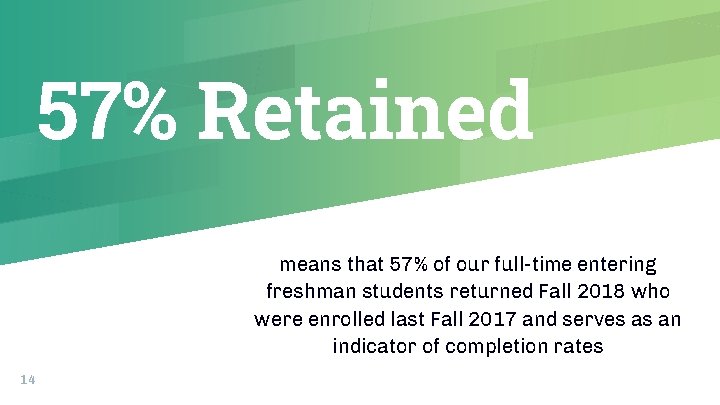
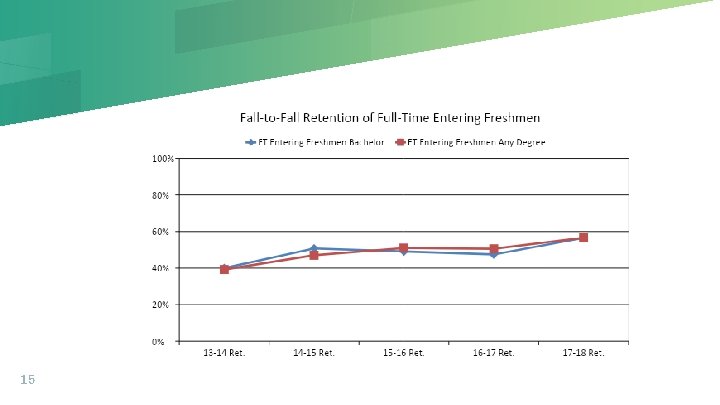
57% Retained means that 57% of our full-time entering freshman students returned Fall 2018 who were enrolled last Fall 2017 and serves as an indicator of completion rates 14
15
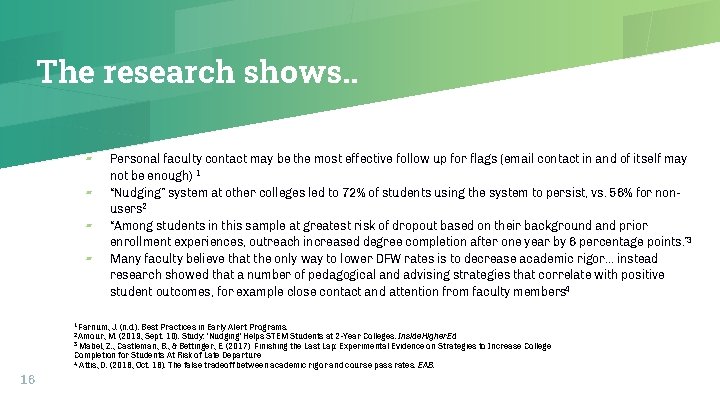
The research shows. . ▰ ▰ Personal faculty contact may be the most effective follow up for flags (email contact in and of itself may not be enough) 1 “Nudging” system at other colleges led to 72% of students using the system to persist, vs. 56% for nonusers 2 “Among students in this sample at greatest risk of dropout based on their background and prior enrollment experiences, outreach increased degree completion after one year by 6 percentage points. ” 3 Many faculty believe that the only way to lower DFW rates is to decrease academic rigor… instead research showed that a number of pedagogical and advising strategies that correlate with positive student outcomes, for example close contact and attention from faculty members 4 1 Farnum, J. (n. d. ). Best Practices in Early Alert Programs. M. (2019, Sept. 10). Study: 'Nudging' Helps STEM Students at 2 -Year Colleges. Inside. Higher. Ed 3 Mabel, Z. , Castleman, B. , & Bettinger, E. (2017) Finishing the Last Lap: Experimental Evidence on Strategies to Increase College Completion for Students At Risk of Late Departure 4 Attis, D. (2016, Oct. 18). The false tradeoff between academic rigor and course pass rates. EAB. 2 Amour, 16
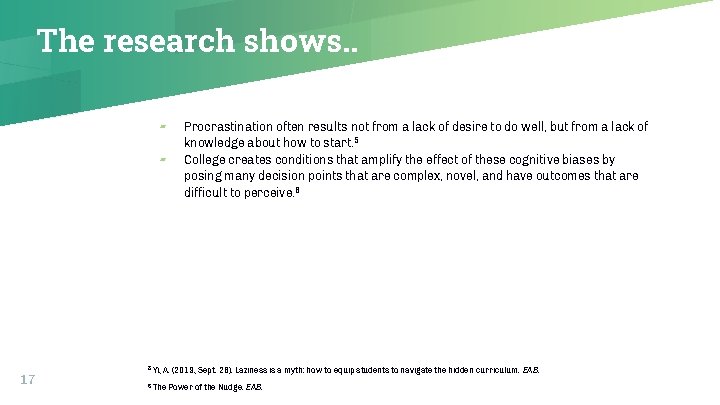
The research shows. . ▰ ▰ 17 5 Yi, Procrastination often results not from a lack of desire to do well, but from a lack of knowledge about how to start. 5 College creates conditions that amplify the effect of these cognitive biases by posing many decision points that are complex, novel, and have outcomes that are difficult to perceive. 6 A. (2019, Sept. 26). Laziness is a myth: how to equip students to navigate the hidden curriculum. EAB. 6 The Power of the Nudge. EAB.
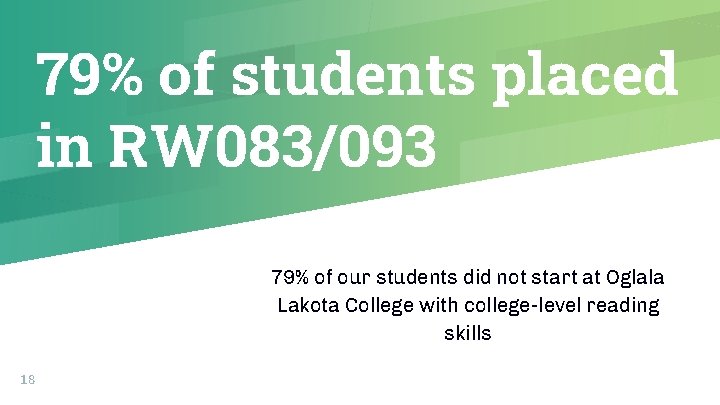
79% of students placed in RW 083/093 79% of our students did not start at Oglala Lakota College with college-level reading skills 18
How do we make it more efficient?
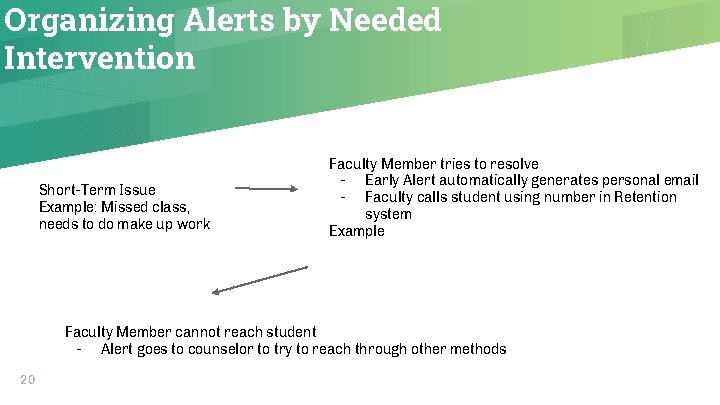
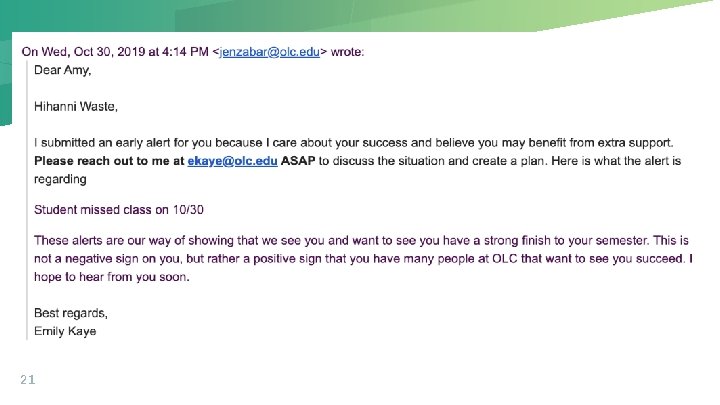
Organizing Alerts by Needed Intervention Short-Term Issue Example: Missed class, needs to do make up work Faculty Member tries to resolve - Early Alert automatically generates personal email - Faculty calls student using number in Retention system Example Faculty Member cannot reach student - Alert goes to counselor to try to reach through other methods 20
21
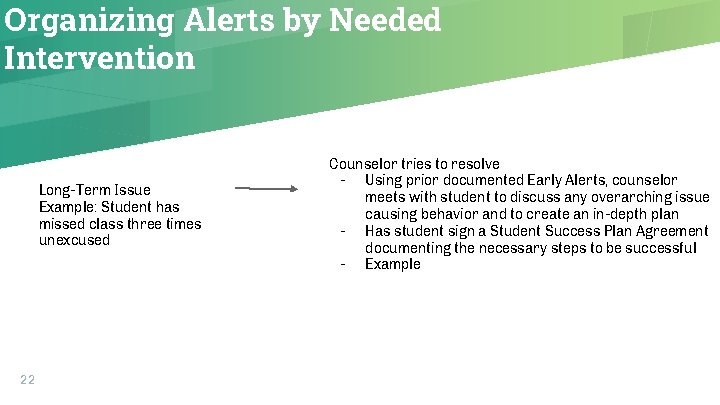
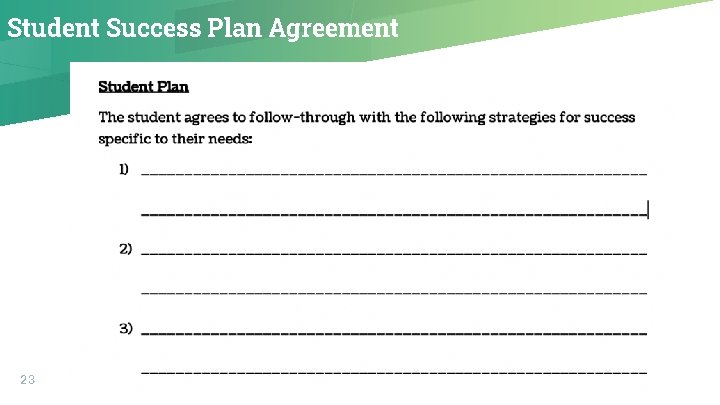
Organizing Alerts by Needed Intervention Long-Term Issue Example: Student has missed class three times unexcused 22 Counselor tries to resolve - Using prior documented Early Alerts, counselor meets with student to discuss any overarching issue causing behavior and to create an in-depth plan - Has student sign a Student Success Plan Agreement documenting the necessary steps to be successful - Example
Student Success Plan Agreement 23
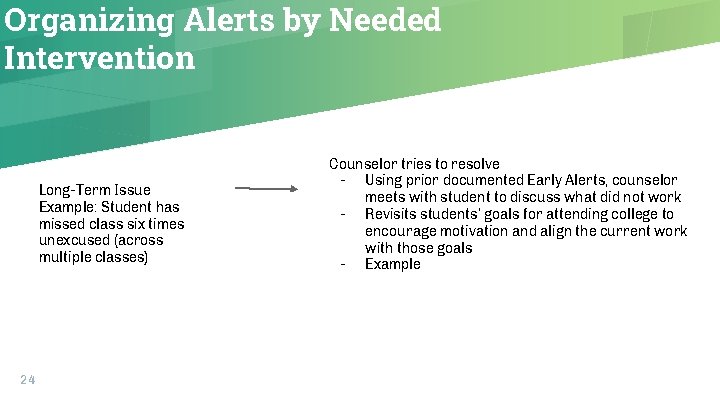
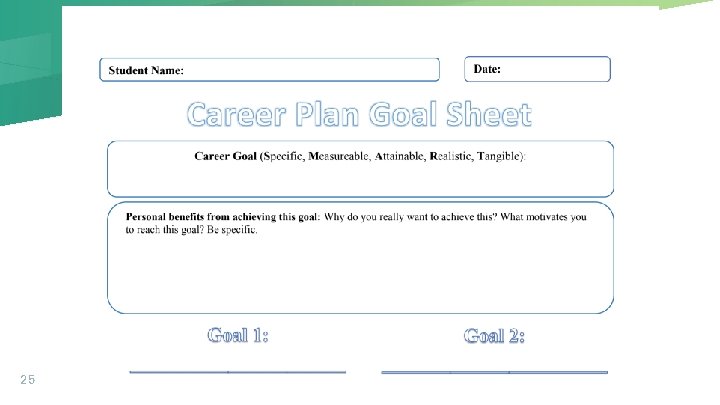
Organizing Alerts by Needed Intervention Long-Term Issue Example: Student has missed class six times unexcused (across multiple classes) 24 Counselor tries to resolve - Using prior documented Early Alerts, counselor meets with student to discuss what did not work - Revisits students’ goals for attending college to encourage motivation and align the current work with those goals - Example
25
I’d love to hear your thoughts! Meet back here after lunch