
Take 5 112911 What was the primitive Earths



- Slides: 44
Take 5: 11/29/11 • What was the primitive Earth’s atmosphere composed of? Hydrogen, methane, ammonia, and water vapor • What is natural selection? What does is drive? “survival of the fittest” to reproduce and live in an environment, it drives evolution • Breeding organisms with specific traits in order to produce offspring with identical traits is called ___________. Artificial selection
Take 5: 11/30/11 • Natural processes such as speciation and gradualism provide the genetic basis for __________. Evolution • Structures that have a similar evolutionary origin and structure but are adapted for different purposes, such as a bat wing and a human arm, are called _____. Homologous Structures • A pattern of evolution that results when two unrelated species begin to appear similar because of environmental conditions is _______. Convergent Evolution
Population Genetics and Evolution Ch 15. 2
• Darwin didn’t know anything about genes, when he developed his theory. • Now we are able to study the complex behavior of genes in a population. This is called Population Genetics
• Population Genetics is based on the idea that populations evolve NOT individuals. • The phenotype of an individual organism cannot evolve in its lifetime. • However, if an organism’s phenotype is poorly suited for the environment, the organism may be unable to survive and reproduce. This is the idea of Natural Selection.
• We know that traits (i. e. hair color) develop based on our genes (i. e. a section of DNA) and genes exist in pairs and different versions of genes are called alleles (red hair, black hair, brown hair, blonde hair, etc…). • All the alleles of a population’s genes can be grouped together into what is called a “gene pool. ”
• You can look at a specific allele (B for black hair) and calculate its percentage in the gene pool • This is called allelic frequency.
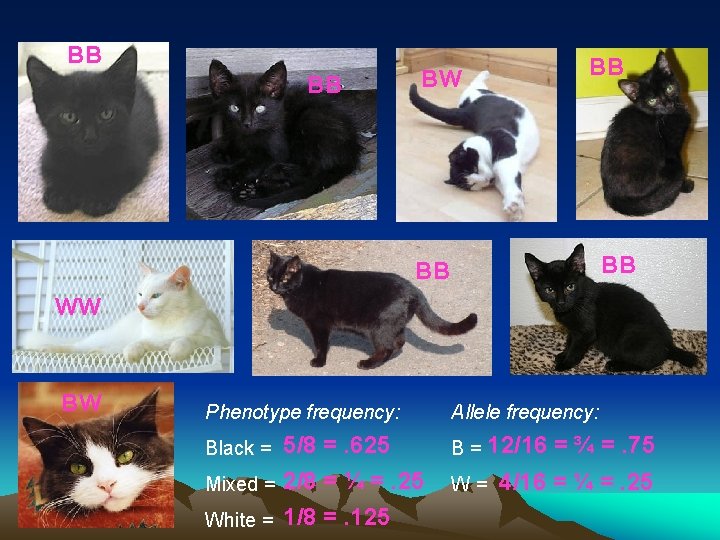
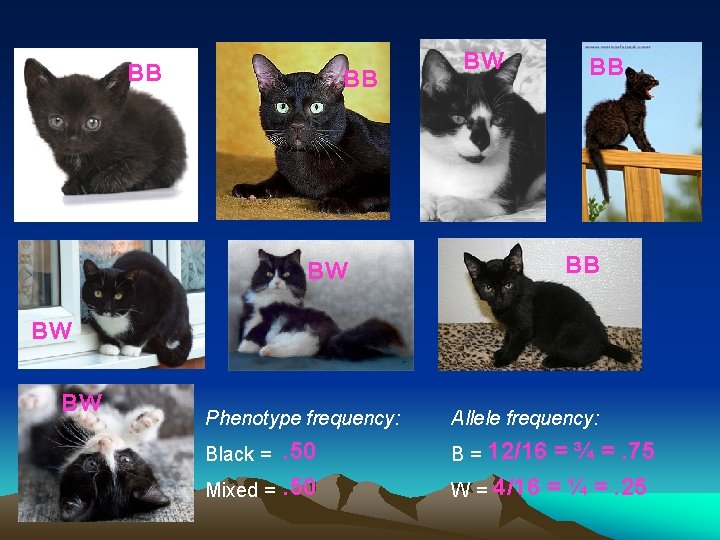
BB BB BB BW BB BB WW BW Phenotype frequency: Allele frequency: 5/8 =. 625 Mixed = 2/8 = ¼ =. 25 White = 1/8 =. 125 B = 12/16 Black = W= = ¾ =. 75 4/16 = ¼ =. 25
BB BB BW BW BW Phenotype frequency: Allele frequency: . 50 Mixed =. 50 B = 12/16 Black = = ¾ =. 75 W = 4/16 = ¼ =. 25
• If the frequency of alleles remains the same over generations it is said that the population is at genetic equilibrium
Changes in Genetic Equilibrium • A population that is in genetic equilibrium is NOT evolving • However, there are factors that can affect the genes in a gene pool and change the allelic frequency which ultimately leads to the process of evolution.
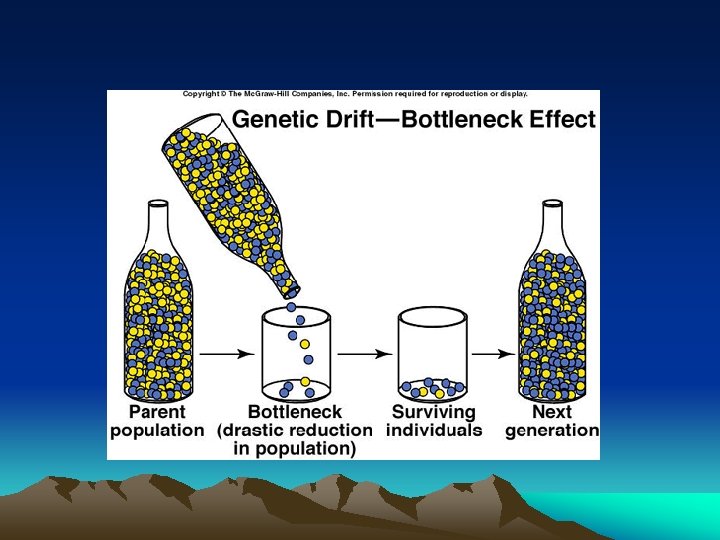
Changes in Genetic Equilibrium • A change in the populations genetic equilibrium can be caused by – Mutations: naturally occurring and ones that resulted from environmental factors (radiation, UV rays) – Genetic drift: the alteration of allelic frequency by chance events – Migration: the movement of individuals in and out of a population. New genes could be added or lost. (aka gene flow)
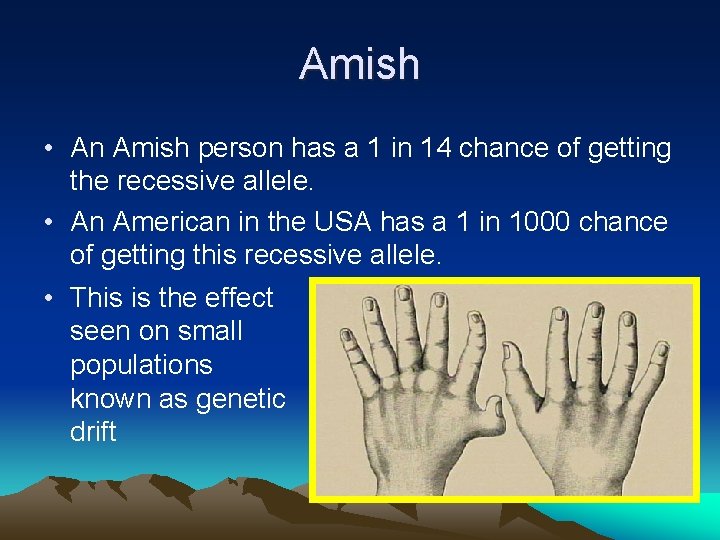
Genetic Drift • Genetic Drift can greatly affect small populations. • For example, the Amish people in PA became isolated originally for religious practices. • One of the original 30 settlers carried a recessive allele that resulted in short arms and legs and extra fingers and toes. • Because of the small gene pool, man individuals inherited the recessive allele over time.
Amish • An Amish person has a 1 in 14 chance of getting the recessive allele. • An American in the USA has a 1 in 1000 chance of getting this recessive allele. • This is the effect seen on small populations known as genetic drift
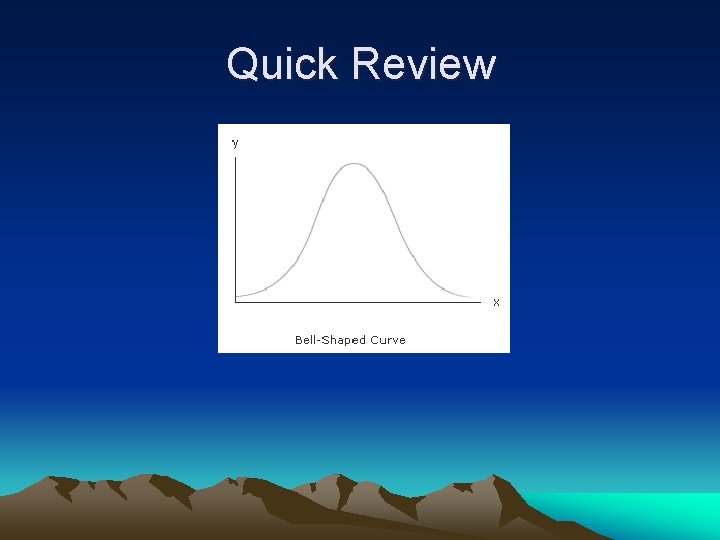
Quick Review
3 types of natural selection that act on variation • Stabilizing selection • Directional selection • Disruptive selection
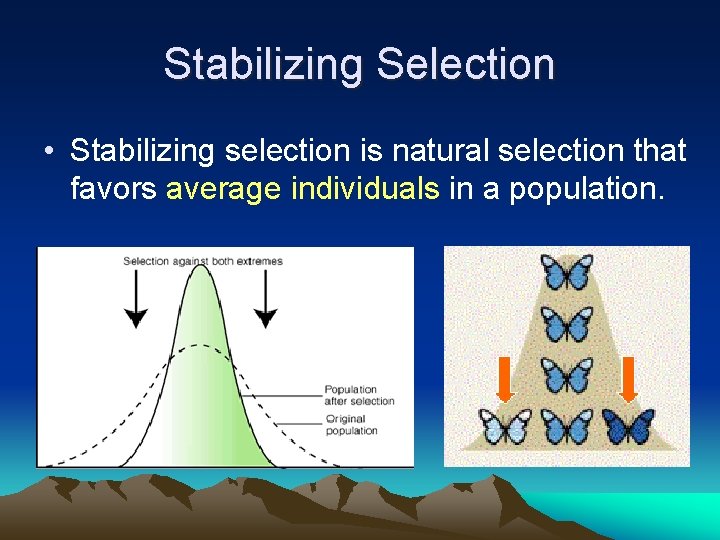
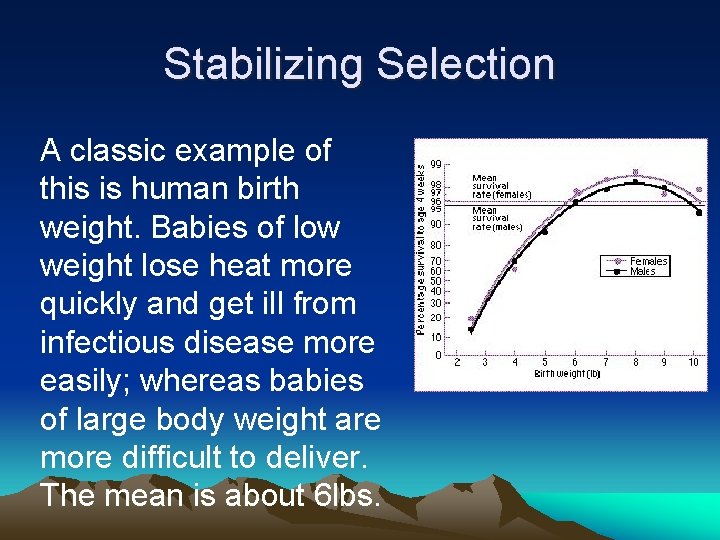
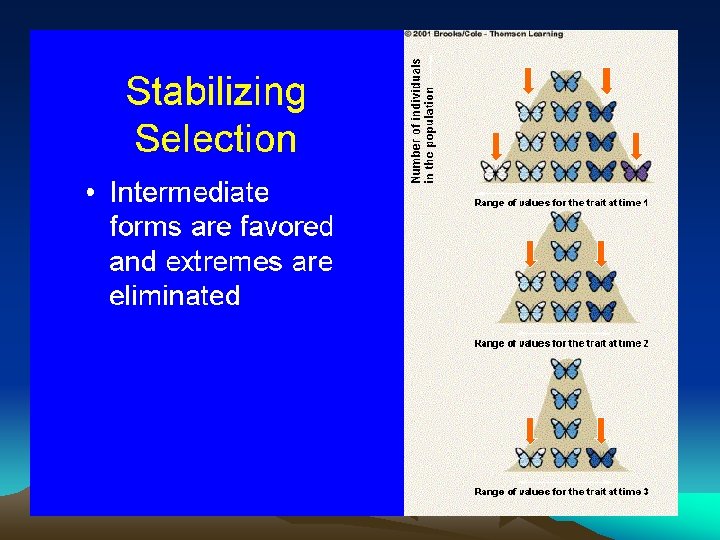
Stabilizing Selection • Stabilizing selection is natural selection that favors average individuals in a population.
Stabilizing Selection A classic example of this is human birth weight. Babies of low weight lose heat more quickly and get ill from infectious disease more easily; whereas babies of large body weight are more difficult to deliver. The mean is about 6 lbs.
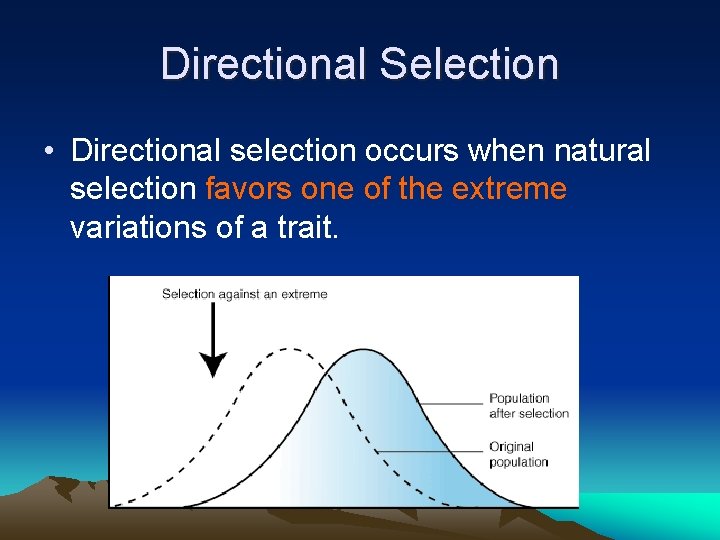
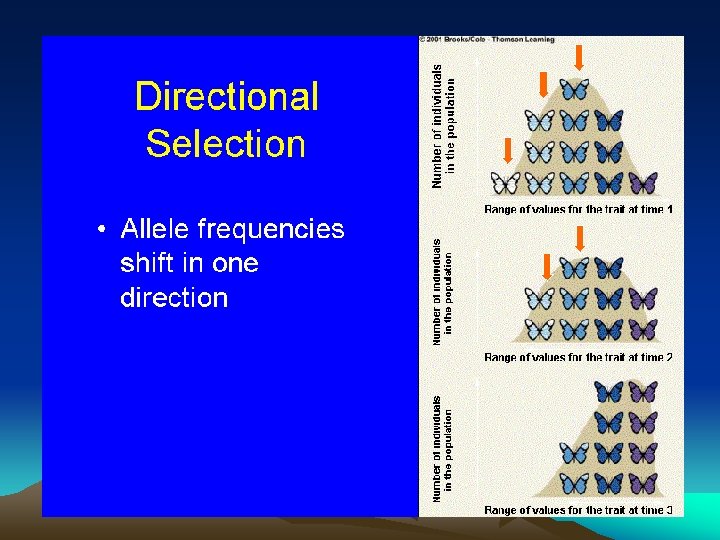
Directional Selection • Directional selection occurs when natural selection favors one of the extreme variations of a trait.
Directional Selection • For example, woodpeckers feed on insects under the bark. Suppose a species of insect invades that burrows deeper in the bark. Only woodpeckers with long beaks could feed on that insect. Therefore, longbeaked woodpeckers would have a selective advantage.
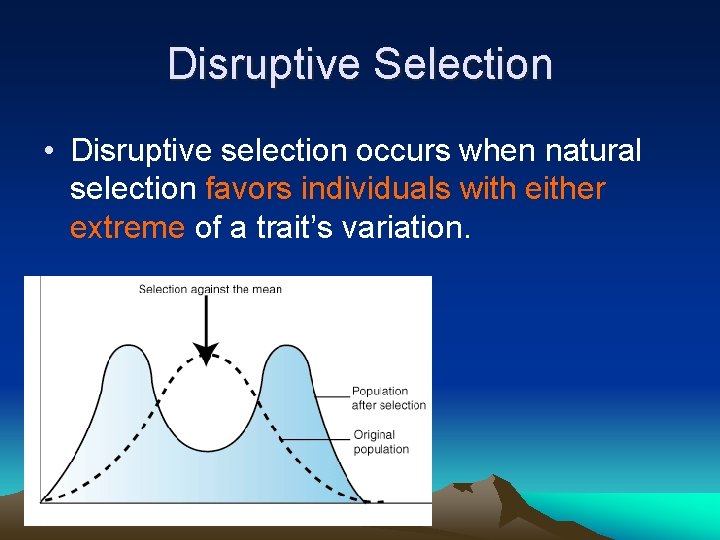
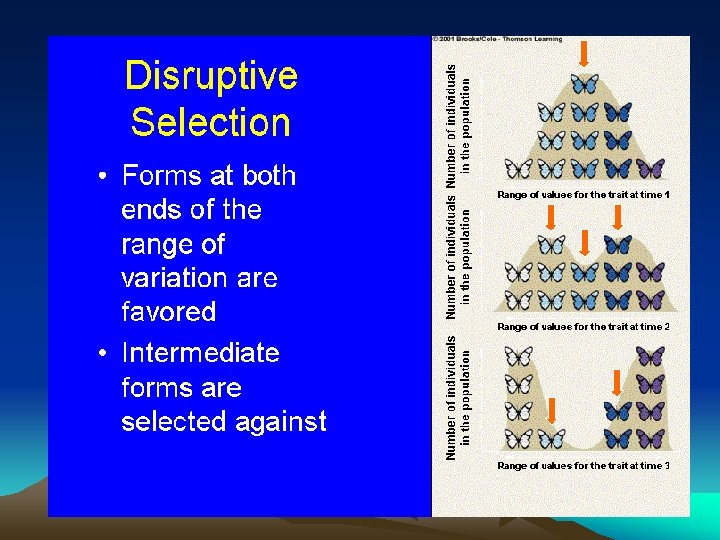
Disruptive Selection • Disruptive selection occurs when natural selection favors individuals with either extreme of a trait’s variation.
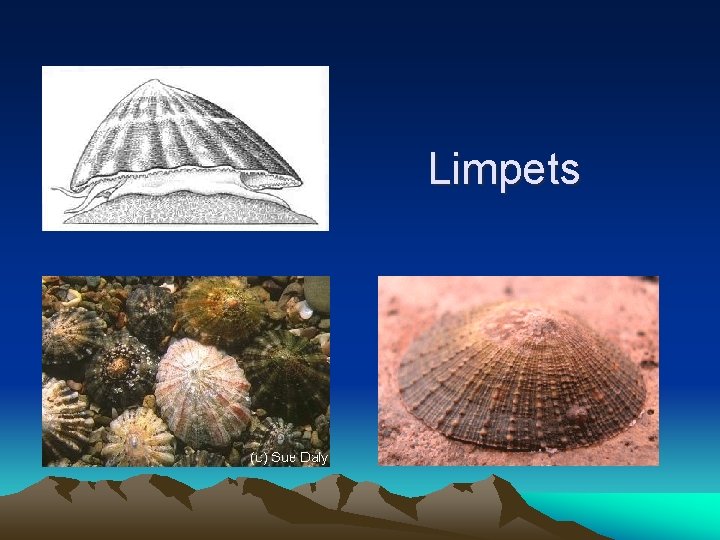
Disruptive Selection Consider a population of limpets. There is a wide variation of shell color (white, tan, dark brown). On light colored rocks, white shelled limpets have an advantage because birds cannot see them so easily. On dark colored rocks, dark-colored limpets are camouflaged. However, if a tan colored limpet is on a light or dark rock, they are spotted immediately. Disruptive selection tends to eliminate the intermediate phenotype.
Limpets
The Evolution of Species
• Species: a group of organisms that can interbreed and produce fertile offspring • Speciation: the process by which a new species evolves. This means that two similar populations can no longer interbreed and produce fertile offspring.
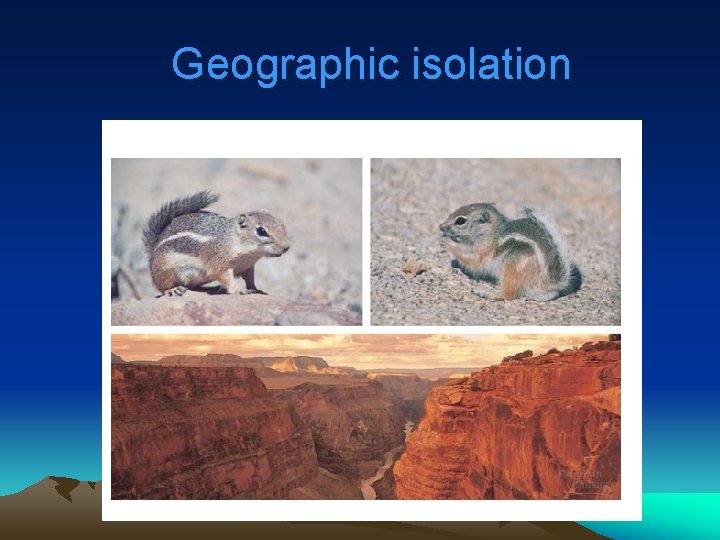
How can new species evolve? • Geographic isolation: when a physical barrier divides a population. i. e. lava, water, earthquakes • Reproductive Isolation: populations become increasingly distinct and formerly interbreeding organisms can no longer mate and produce fertile offspring
Geographic isolation • Over time, each small population might adapt to its environment through natural selection and develop its own gene pool. The gene pools might become so different that they could no longer interbreed.
Geographic isolation
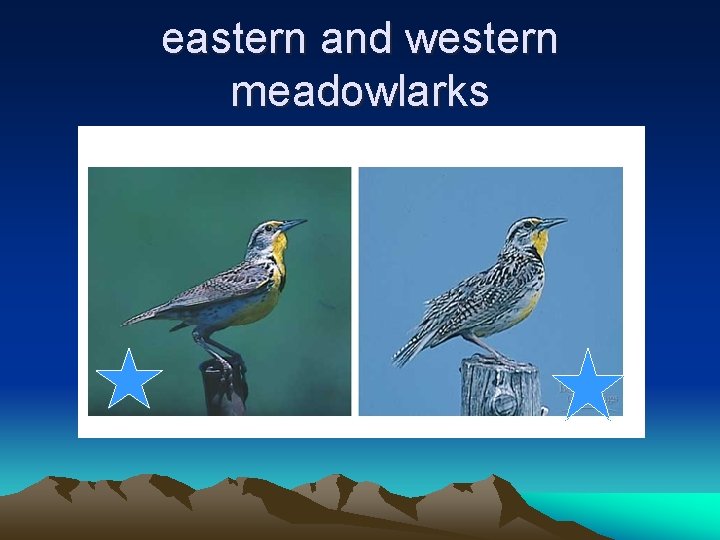
Reproductive isolation • Method 1: When the genetic material of the populations becomes so different that fertilization cannot occur. • Method 2: Also another type is behavioral. One population could mate in the fall while the other population mates in the fall.
eastern and western meadowlarks
How else can new species evolve? • Also, chromosomes could affect the evolution of a new species from an existing population. • An individual organism with multiple sets of chromosomes = “polyploid” • This is commonly seen in plants because they can self-fertilize. If a plant has 4 sets of chromosomes and reproduces with itself and it survives and is successful this could arise into a new species
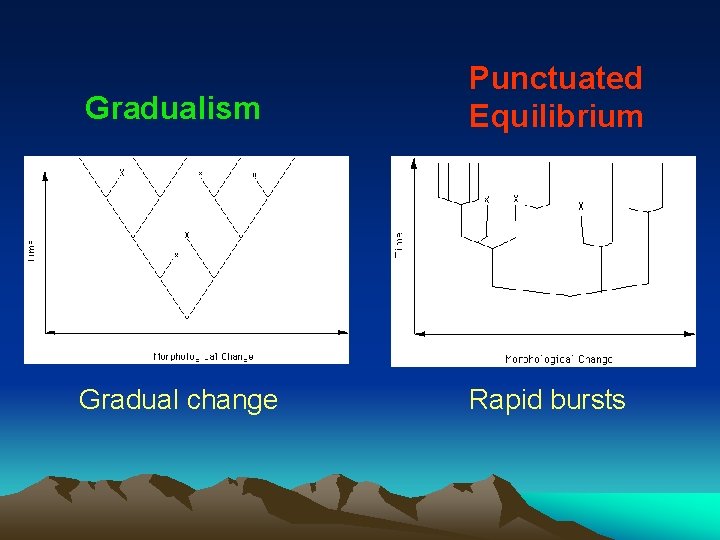
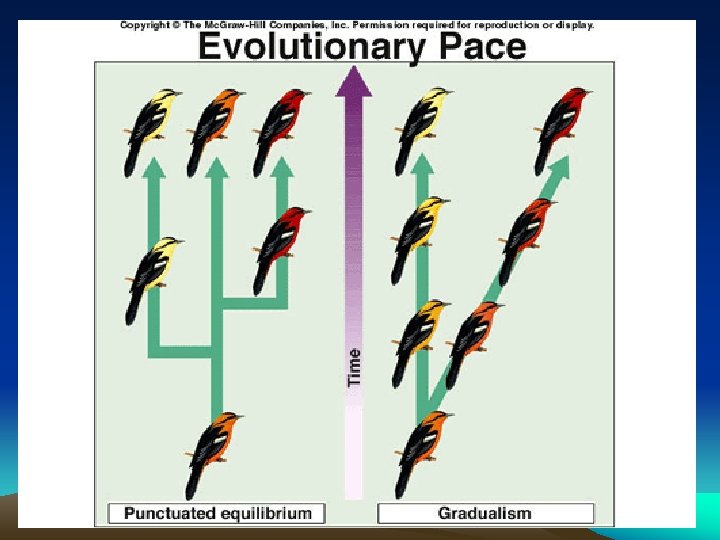
Scientists argue how evolution occurs • Some believe it occurs at a slow steady rate with small, adaptive changes gradually accumulating over time in populations. (Gradualism) • Some believe that speciation occurs relatively quickly, in rapid bursts, with long periods of genetic equilibrium in between. (Punctuated equilibrium) • Both methods feel that fossils provide evidence.
Gradualism Punctuated Equilibrium Gradual change Rapid bursts
Patterns of Evolution • Adaptive radiation: an ancestral species evolves into an array of species to fit a number of diverse habitats • Example: Hawaiian honeycreepers
Hawaiian Honeycreepers
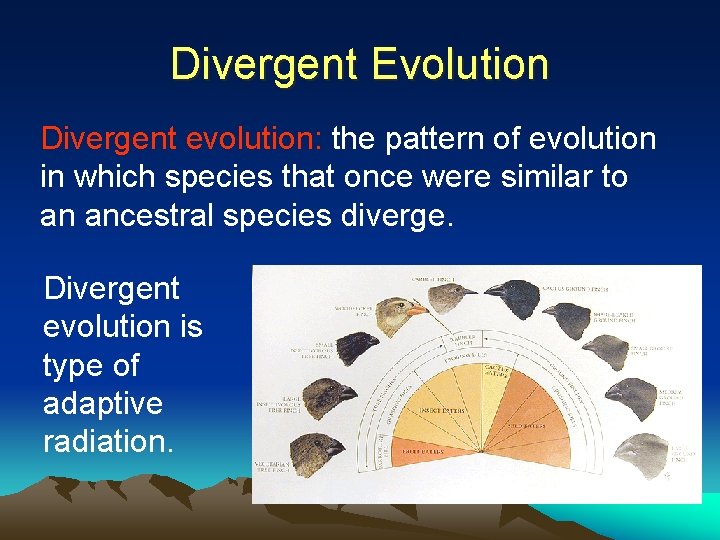
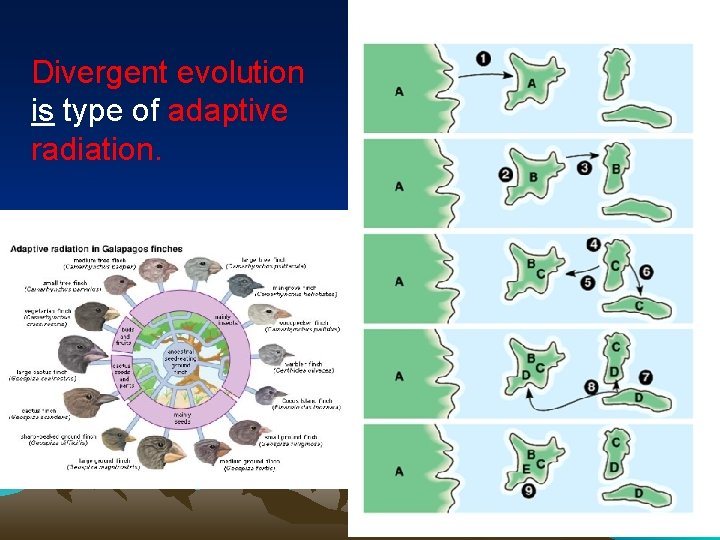
Divergent Evolution Divergent evolution: the pattern of evolution in which species that once were similar to an ancestral species diverge. Divergent evolution is type of adaptive radiation.
Divergent evolution is type of adaptive radiation.
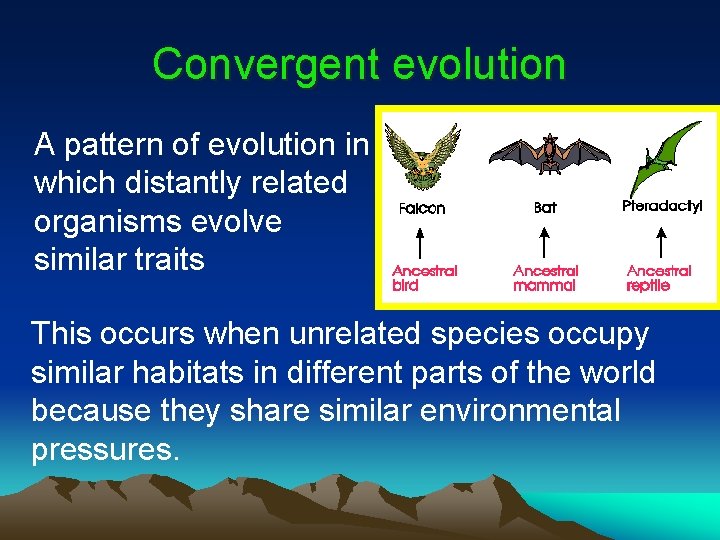
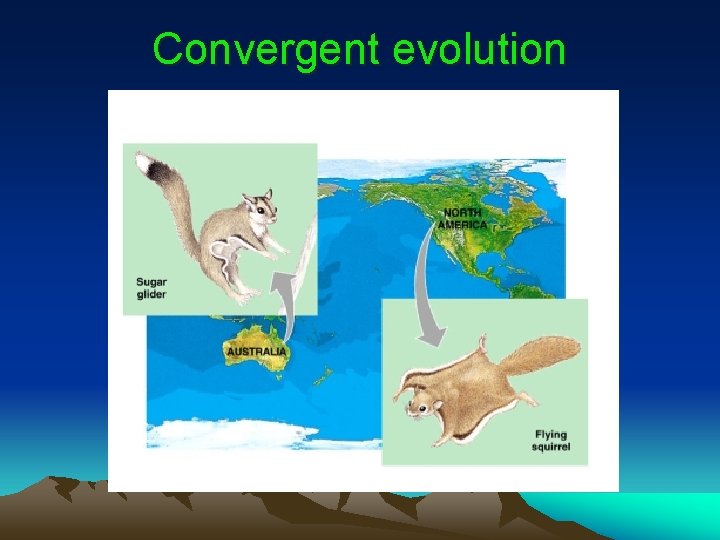
Convergent evolution A pattern of evolution in which distantly related organisms evolve similar traits This occurs when unrelated species occupy similar habitats in different parts of the world because they share similar environmental pressures.
Convergent evolution