
TAJ PALACE NEW DELHI 12 14 SEPTEMBER 2016
TAJ PALACE, NEW DELHI | 12 – 14 SEPTEMBER 2016 Impact of Hydropower Projects and of the Division of Waters Between India and Pakistan on Fish Fauna in the Indus Basin Muhammad Rafique, Vaqar Zakaria and Cate Brown
Hydropower Developments in Indus Basin
River Obstructions Before 1947 • Headworks and canals were constructed for irrigation • Major network was on the rivers of Punjab viz. , Beas, Sutlej, Ravi, Chenab and Jhelum • The network was mainly restricted in the Indus plains
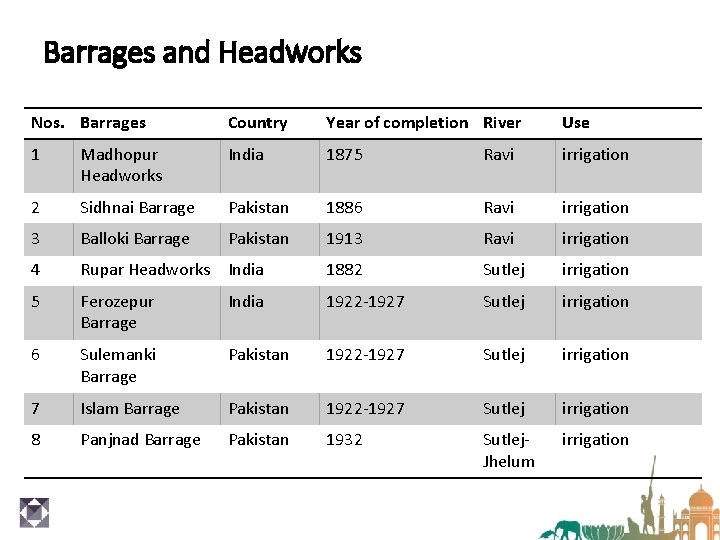
Barrages and Headworks Nos. Barrages Country Year of completion River Use 1 Madhopur Headworks India 1875 Ravi irrigation 2 Sidhnai Barrage Pakistan 1886 Ravi irrigation 3 Balloki Barrage Pakistan 1913 Ravi irrigation 4 Rupar Headworks India 1882 Sutlej irrigation 5 Ferozepur Barrage India 1922 -1927 Sutlej irrigation 6 Sulemanki Barrage Pakistan 1922 -1927 Sutlej irrigation 7 Islam Barrage Pakistan 1922 -1927 Sutlej irrigation 8 Panjnad Barrage Pakistan 1932 Sutlej. Jhelum irrigation
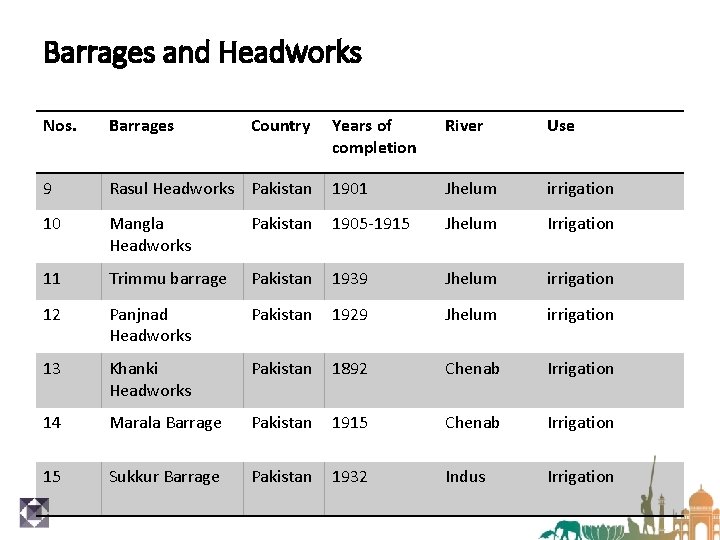
Barrages and Headworks Nos. Barrages 9 Country Years of completion River Use Rasul Headworks Pakistan 1901 Jhelum irrigation 10 Mangla Headworks Pakistan 1905 -1915 Jhelum Irrigation 11 Trimmu barrage Pakistan 1939 Jhelum irrigation 12 Panjnad Headworks Pakistan 1929 Jhelum irrigation 13 Khanki Headworks Pakistan 1892 Chenab Irrigation 14 Marala Barrage Pakistan 1915 Chenab Irrigation 15 Sukkur Barrage Pakistan 1932 Indus Irrigation
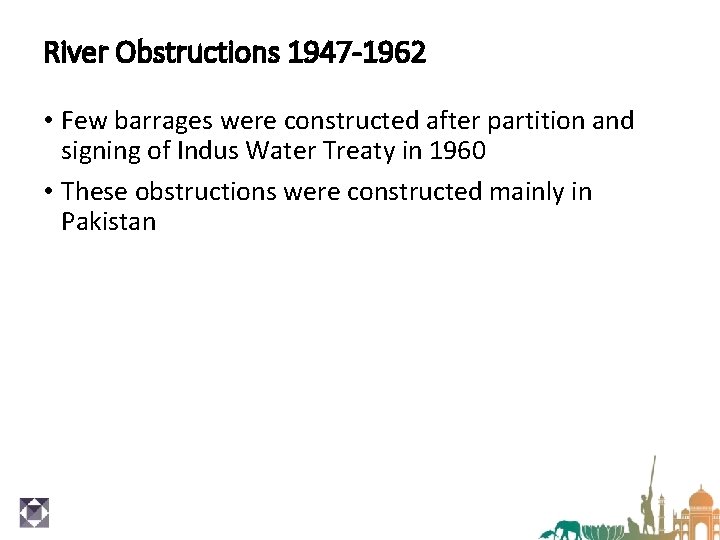
River Obstructions 1947 -1962 • Few barrages were constructed after partition and signing of Indus Water Treaty in 1960 • These obstructions were constructed mainly in Pakistan
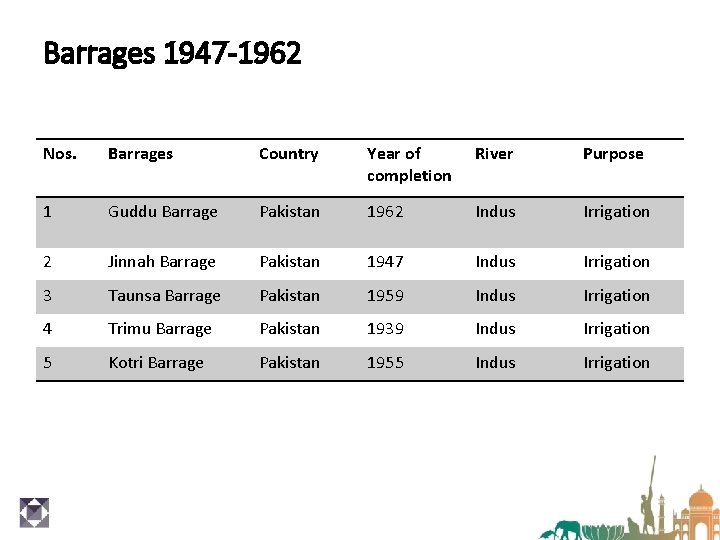
Barrages 1947 -1962 Nos. Barrages Country Year of completion River Purpose 1 Guddu Barrage Pakistan 1962 Indus Irrigation 2 Jinnah Barrage Pakistan 1947 Indus Irrigation 3 Taunsa Barrage Pakistan 1959 Indus Irrigation 4 Trimu Barrage Pakistan 1939 Indus Irrigation 5 Kotri Barrage Pakistan 1955 Indus Irrigation
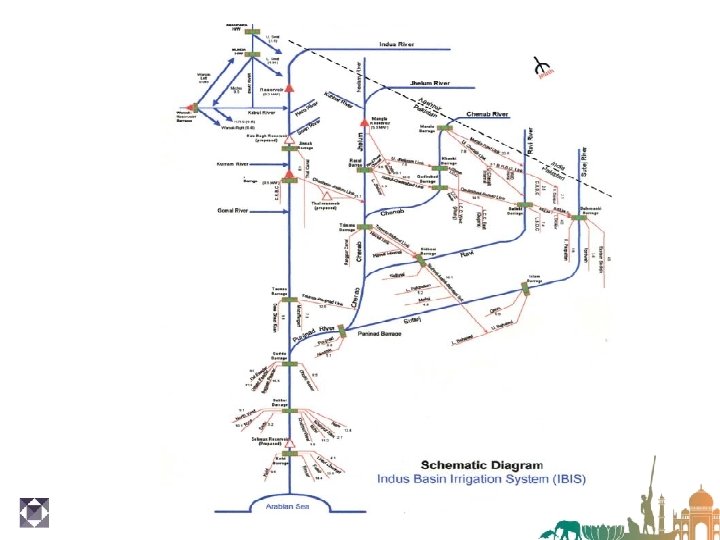
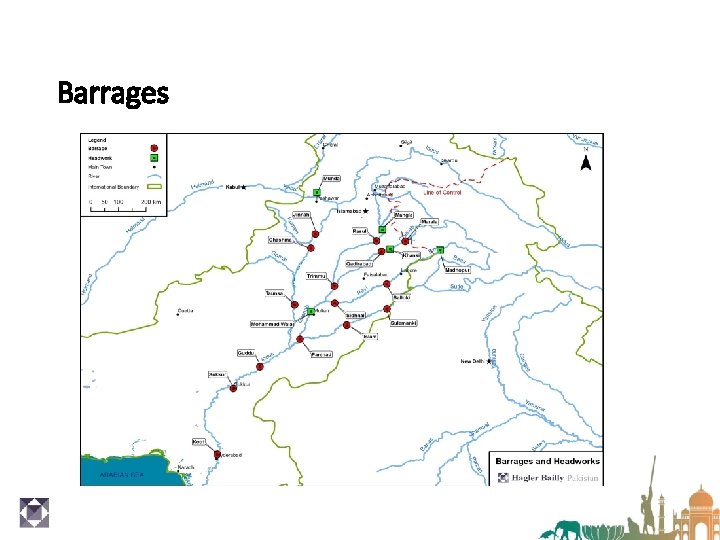
Barrages
Indus Water Treaty • The eastern rivers viz. , Ravi, Beas and Sutlej were allocated for exclusive use by India before they enter Pakistan • Pakistan was given the exclusive rights over the use of the western rivers viz. , Jhelum, Chenab and Indus with some stipulations for development of projects on these rivers in India • Pakistan was to construct a system of works to accomplish the replacement from the western rivers the water supplies for irrigation canals in Pakistan, which on 15 th August, 1947 were dependent on water supplies from the eastern rivers
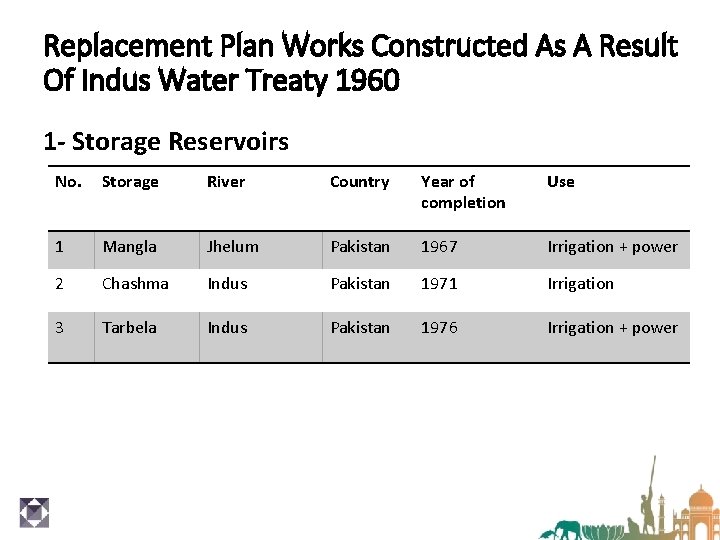
Replacement Plan Works Constructed As A Result Of Indus Water Treaty 1960 1 - Storage Reservoirs No. Storage River Country Year of completion Use 1 Mangla Jhelum Pakistan 1967 Irrigation + power 2 Chashma Indus Pakistan 1971 Irrigation 3 Tarbela Indus Pakistan 1976 Irrigation + power
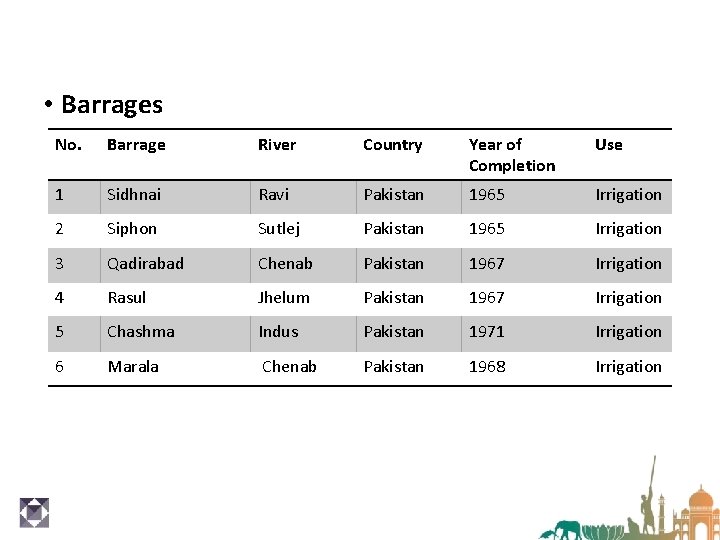
• Barrages No. Barrage River Country Year of Completion Use 1 Sidhnai Ravi Pakistan 1965 Irrigation 2 Siphon Sutlej Pakistan 1965 Irrigation 3 Qadirabad Chenab Pakistan 1967 Irrigation 4 Rasul Jhelum Pakistan 1967 Irrigation 5 Chashma Indus Pakistan 1971 Irrigation 6 Marala Chenab Pakistan 1968 Irrigation
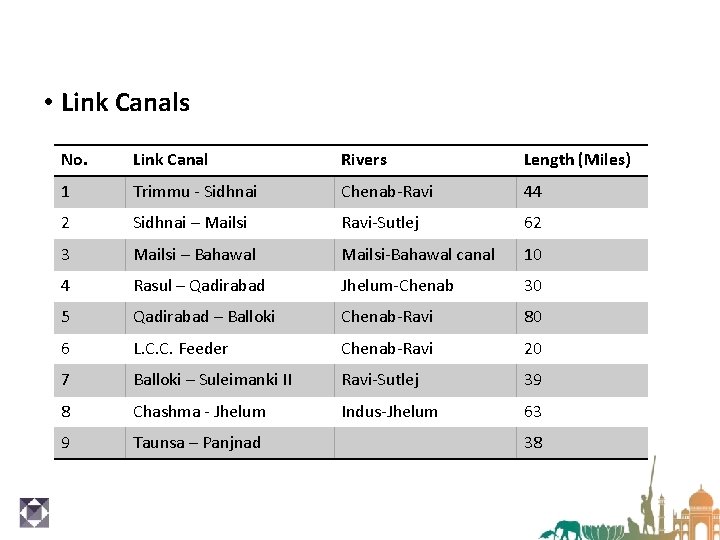
• Link Canals No. Link Canal Rivers Length (Miles) 1 Trimmu - Sidhnai Chenab-Ravi 44 2 Sidhnai – Mailsi Ravi-Sutlej 62 3 Mailsi – Bahawal Mailsi-Bahawal canal 10 4 Rasul – Qadirabad Jhelum-Chenab 30 5 Qadirabad – Balloki Chenab-Ravi 80 6 L. C. C. Feeder Chenab-Ravi 20 7 Balloki – Suleimanki II Ravi-Sutlej 39 8 Chashma - Jhelum Indus-Jhelum 63 9 Taunsa – Panjnad 38
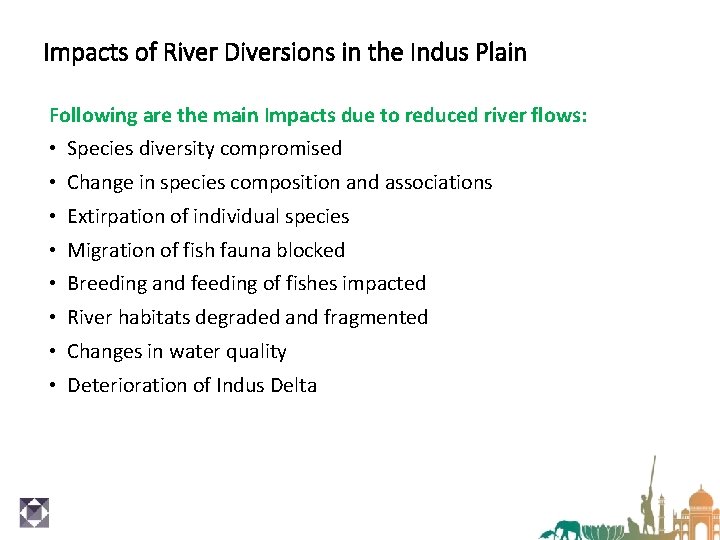
Impacts of River Diversions in the Indus Plain Following are the main Impacts due to reduced river flows: • Species diversity compromised • Change in species composition and associations • Extirpation of individual species • Migration of fish fauna blocked • Breeding and feeding of fishes impacted • River habitats degraded and fragmented • Changes in water quality • Deterioration of Indus Delta
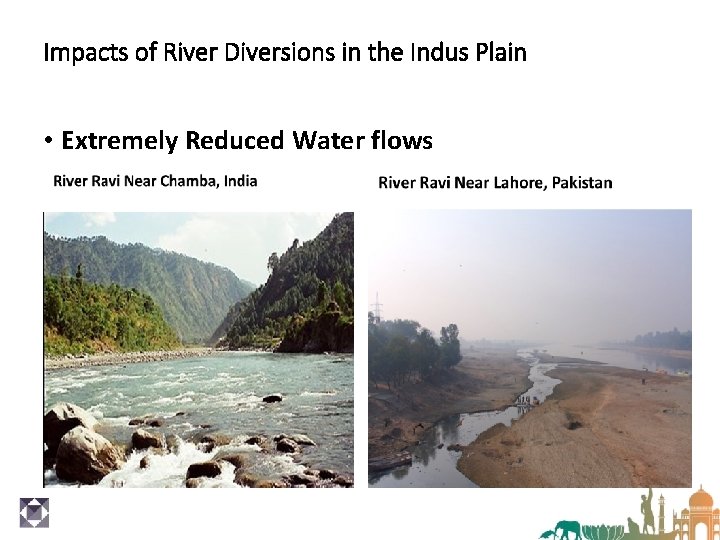
Impacts of River Diversions in the Indus Plain • Extremely Reduced Water flows
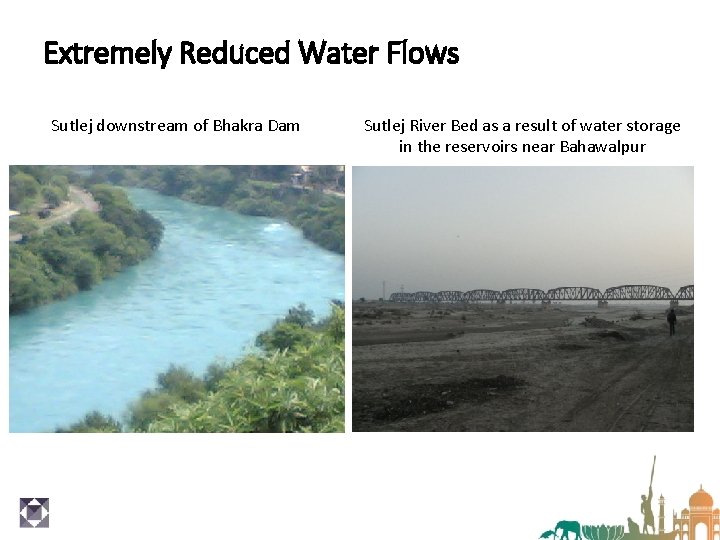
Extremely Reduced Water Flows Sutlej downstream of Bhakra Dam Sutlej River Bed as a result of water storage in the reservoirs near Bahawalpur
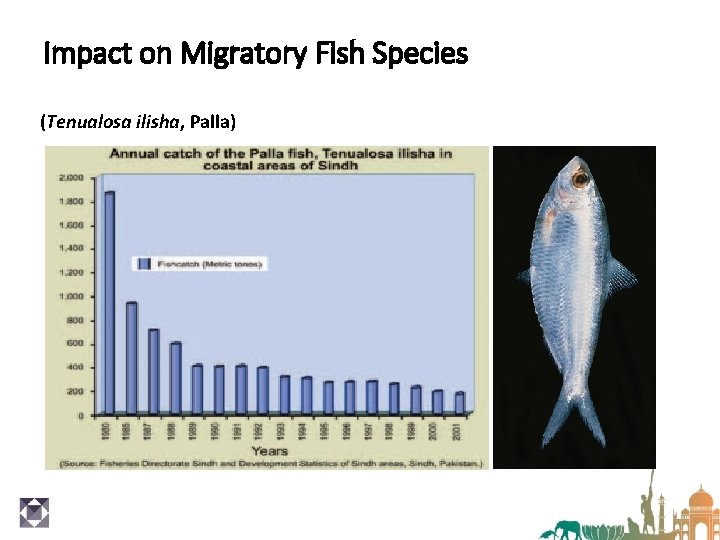
Impact on Migratory Fish Species (Tenualosa ilisha, Palla)
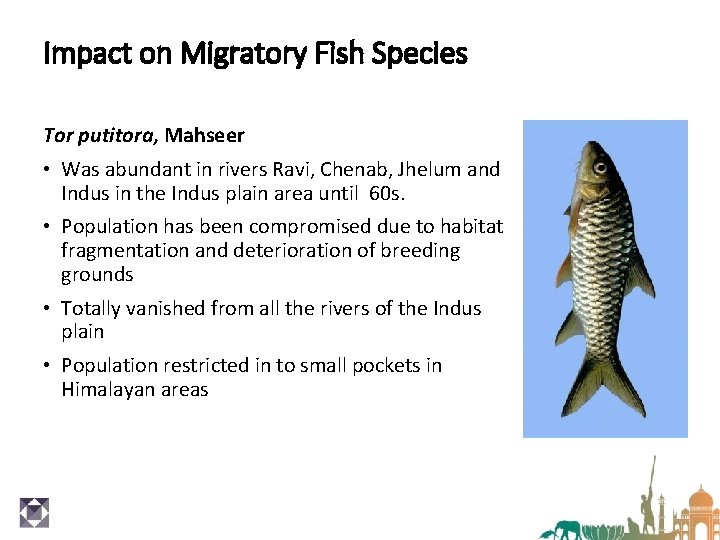
Impact on Migratory Fish Species Tor putitora, Mahseer • Was abundant in rivers Ravi, Chenab, Jhelum and Indus in the Indus plain area until 60 s. • Population has been compromised due to habitat fragmentation and deterioration of breeding grounds • Totally vanished from all the rivers of the Indus plain • Population restricted in to small pockets in Himalayan areas
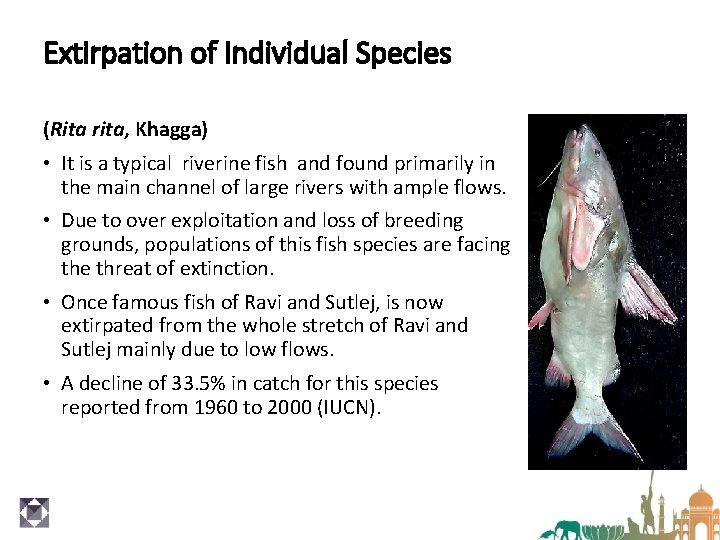
Extirpation of Individual Species (Rita rita, Khagga) • It is a typical riverine fish and found primarily in the main channel of large rivers with ample flows. • Due to over exploitation and loss of breeding grounds, populations of this fish species are facing the threat of extinction. • Once famous fish of Ravi and Sutlej, is now extirpated from the whole stretch of Ravi and Sutlej mainly due to low flows. • A decline of 33. 5% in catch for this species reported from 1960 to 2000 (IUCN).
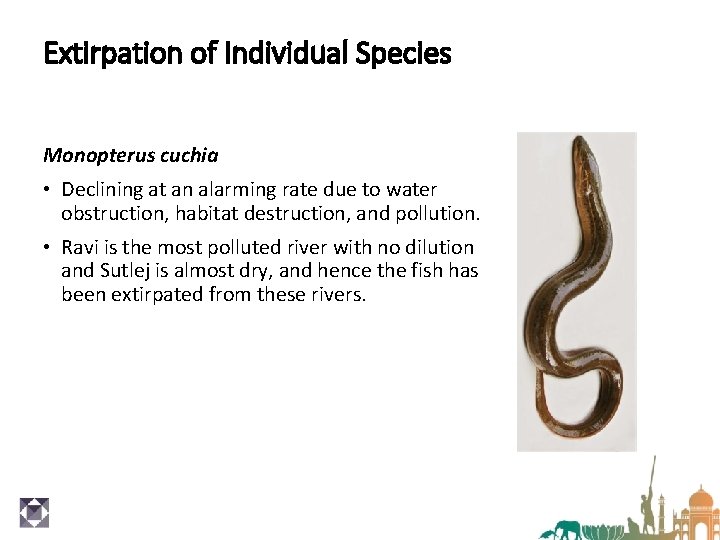
Extirpation of Individual Species Monopterus cuchia • Declining at an alarming rate due to water obstruction, habitat destruction, and pollution. • Ravi is the most polluted river with no dilution and Sutlej is almost dry, and hence the fish has been extirpated from these rivers.
Other Species almost Extirpated • Barilius naseeri • Danio rerio • Megarasbora elonga • Botia lohachata • Amblyceps mangois • Nandus nandus • Badis badis • Colisa lalia • Macrognathus aral • Macrognathus pancalus
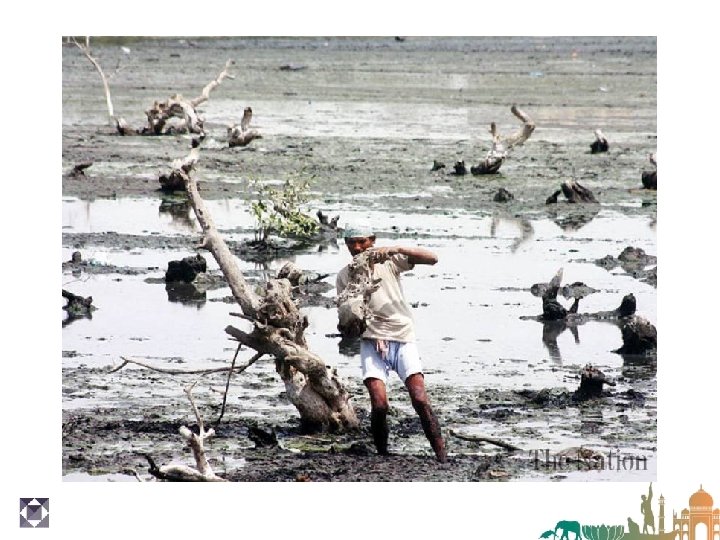
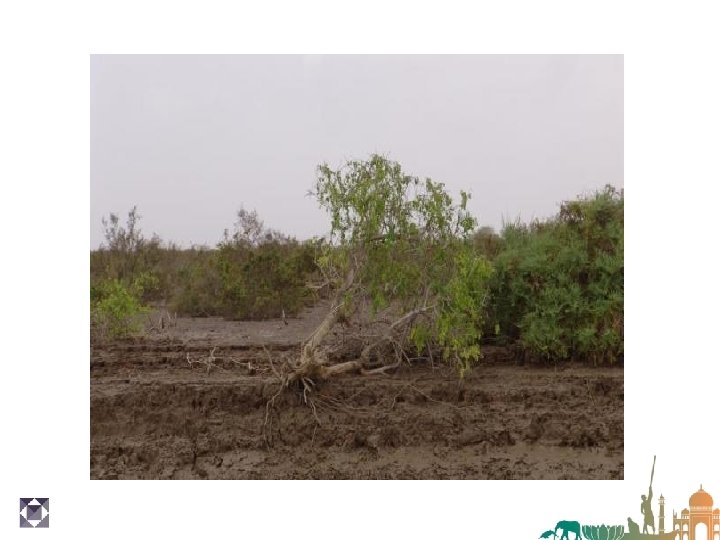
Impacts on Indus Delta A- Mangrove Forest Destruction • Mangrove forests an important ecosystem in in the Indus Delta. • Sixth largest in the world • Source of timber, fuel-wood , fodder, wildlife habitat, migratory waterfowl and breeding/ nursery grounds for fish, shrimps, crabs. • The water, nutrients and silt due to floods sustains the mangroves. • About fifty to sixty years back, 80 -105 MAF of water was discharged to the delta depositing up to 400 million tons of silt. • Due to dams and water diversion upstream, the water outflow has been reduced significantly. • The mangrove forest area has reduced from 263, 000 hectares in 1977, to 158, 500 hectares in 1990, showing reduction of 38%.
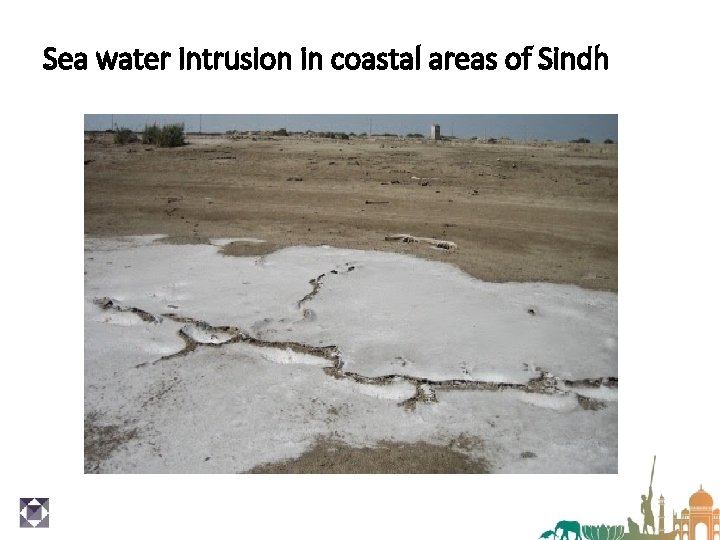
Sea water Intrusion in coastal areas of Sindh
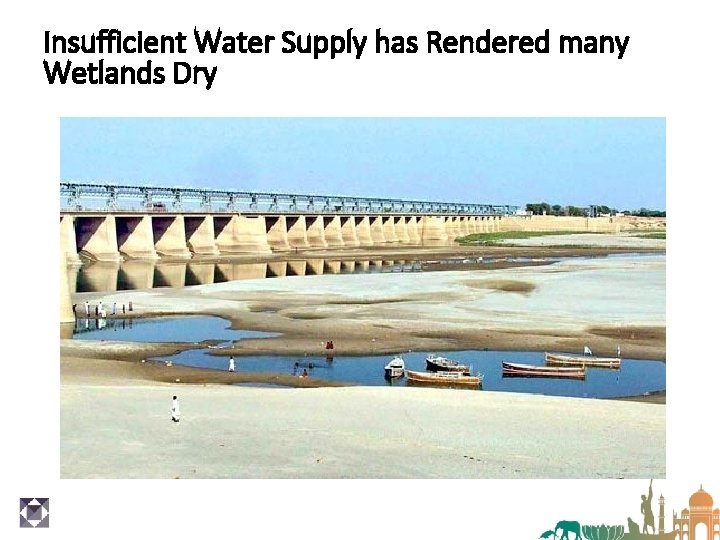
Insufficient Water Supply has Rendered many Wetlands Dry
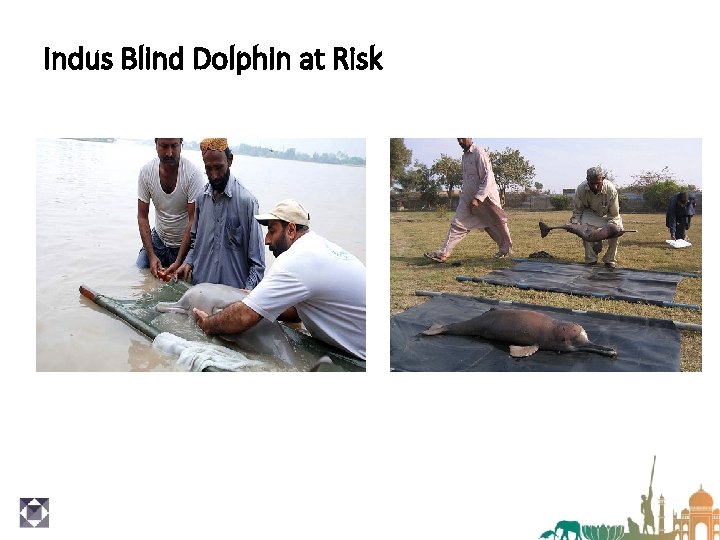
Indus Blind Dolphin at Risk
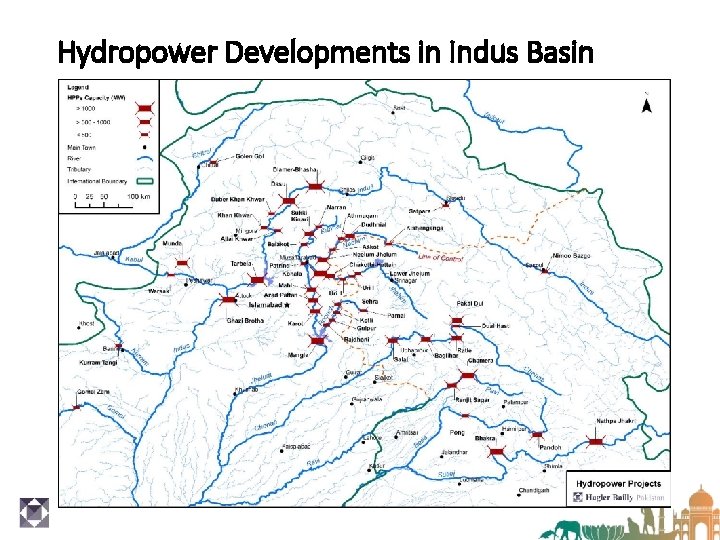
Impacts of Hydropower Projects • Mainly restricted in the Himalayan and Karakoram Region • Endemic fish fauna and fauna of special concern restricted in the Himalayan and Karakoram Region
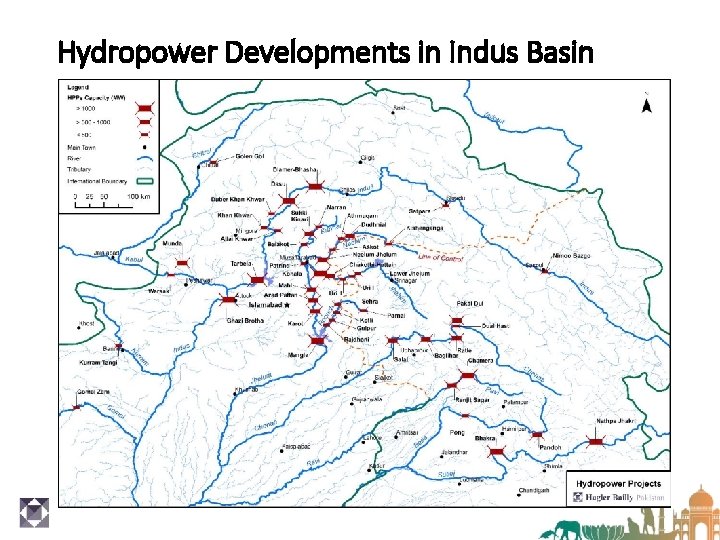
Hydropower Developments in Indus Basin
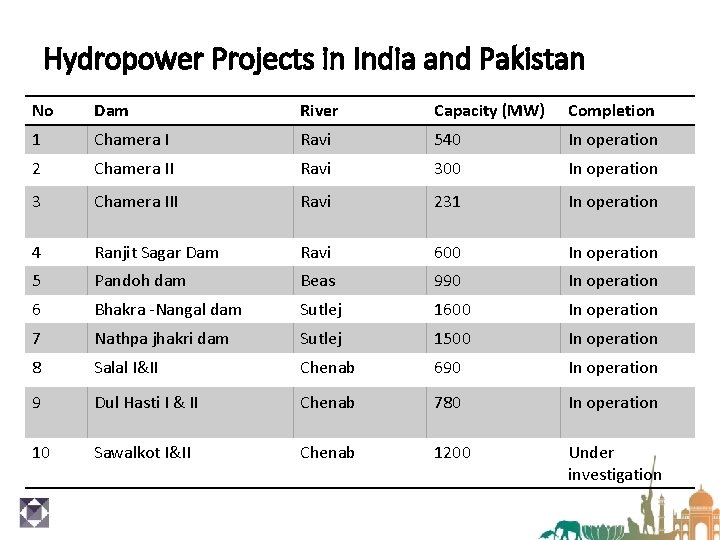
Hydropower Projects in India and Pakistan No Dam River Capacity (MW) Completion 1 Chamera I Ravi 540 In operation 2 Chamera II Ravi 300 In operation 3 Chamera III Ravi 231 In operation 4 Ranjit Sagar Dam Ravi 600 In operation 5 Pandoh dam Beas 990 In operation 6 Bhakra -Nangal dam Sutlej 1600 In operation 7 Nathpa jhakri dam Sutlej 1500 In operation 8 Salal I&II Chenab 690 In operation 9 Dul Hasti I & II Chenab 780 In operation 10 Sawalkot I&II Chenab 1200 Under investigation
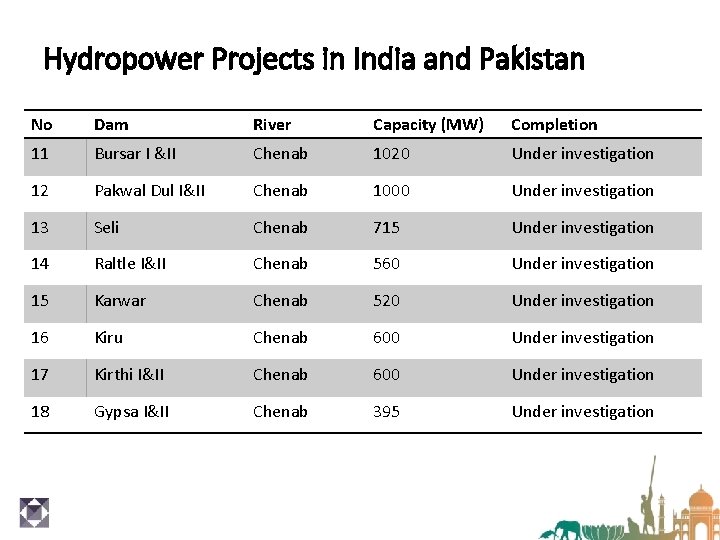
Hydropower Projects in India and Pakistan No Dam River Capacity (MW) Completion 11 Bursar I &II Chenab 1020 Under investigation 12 Pakwal Dul I&II Chenab 1000 Under investigation 13 Seli Chenab 715 Under investigation 14 Raltle I&II Chenab 560 Under investigation 15 Karwar Chenab 520 Under investigation 16 Kiru Chenab 600 Under investigation 17 Kirthi I&II Chenab 600 Under investigation 18 Gypsa I&II Chenab 395 Under investigation
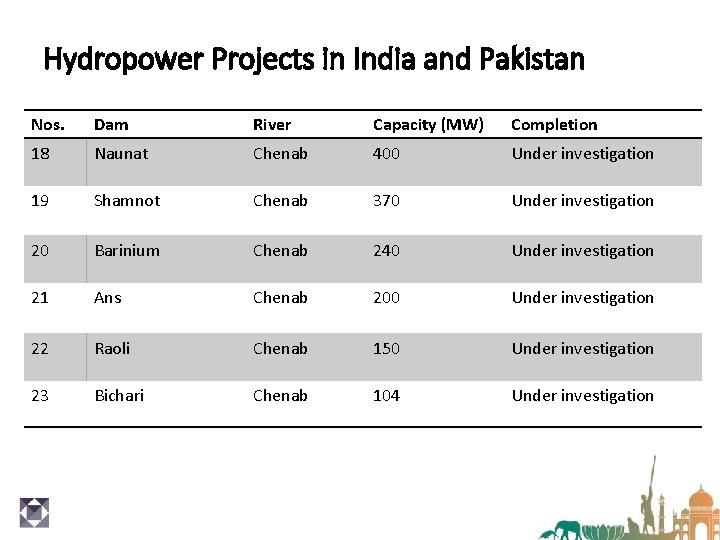
Hydropower Projects in India and Pakistan Nos. Dam River Capacity (MW) Completion 18 Naunat Chenab 400 Under investigation 19 Shamnot Chenab 370 Under investigation 20 Barinium Chenab 240 Under investigation 21 Ans Chenab 200 Under investigation 22 Raoli Chenab 150 Under investigation 23 Bichari Chenab 104 Under investigation
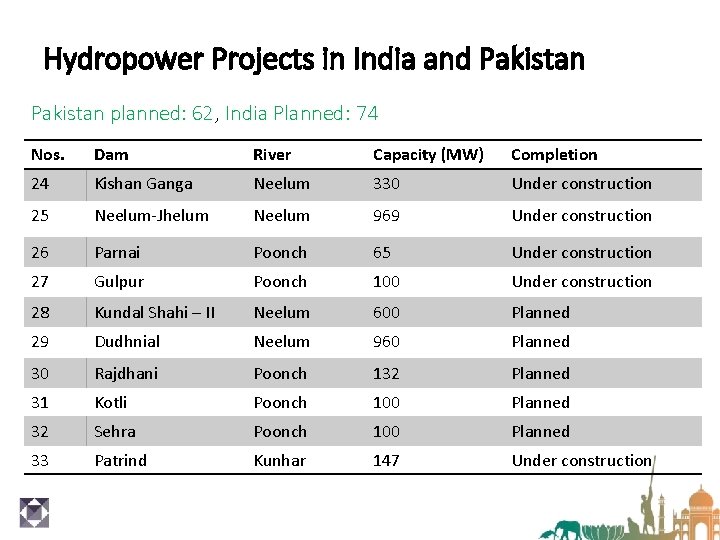
Hydropower Projects in India and Pakistan planned: 62, India Planned: 74 Nos. Dam River Capacity (MW) Completion 24 Kishan Ganga Neelum 330 Under construction 25 Neelum-Jhelum Neelum 969 Under construction 26 Parnai Poonch 65 Under construction 27 Gulpur Poonch 100 Under construction 28 Kundal Shahi – II Neelum 600 Planned 29 Dudhnial Neelum 960 Planned 30 Rajdhani Poonch 132 Planned 31 Kotli Poonch 100 Planned 32 Sehra Poonch 100 Planned 33 Patrind Kunhar 147 Under construction
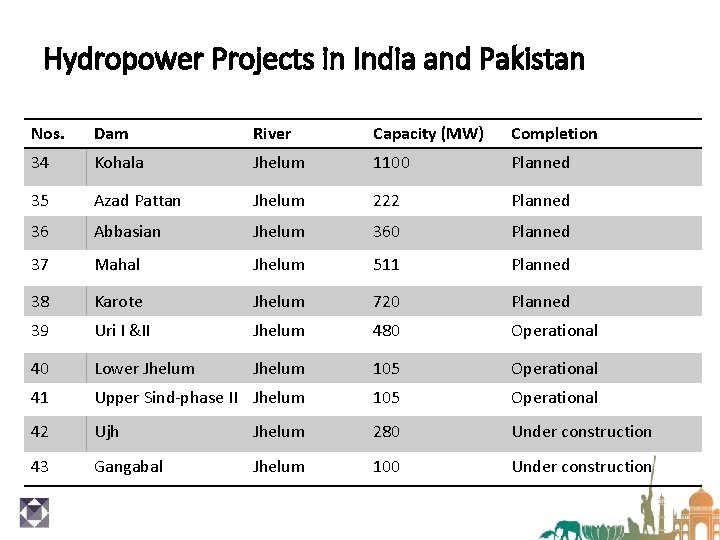
Hydropower Projects in India and Pakistan Nos. Dam River Capacity (MW) Completion 34 Kohala Jhelum 1100 Planned 35 Azad Pattan Jhelum 222 Planned 36 Abbasian Jhelum 360 Planned 37 Mahal Jhelum 511 Planned 38 Karote Jhelum 720 Planned 39 Uri I &II Jhelum 480 Operational 40 Lower Jhelum 105 Operational 41 Upper Sind-phase II Jhelum 105 Operational 42 Ujh Jhelum 280 Under construction 43 Gangabal Jhelum 100 Under construction
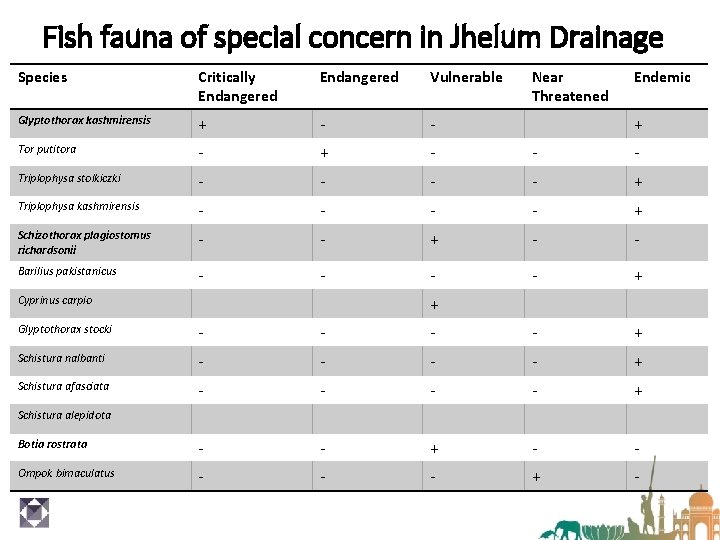
Fish fauna of special concern in Jhelum Drainage Species Critically Endangered Vulnerable Near Threatened Endemic Glyptothorax kashmirensis + - - Tor putitora - + - - - Triplophysa stolkiczki - - + Triplophysa kashmirensis - - + Schizothorax plagiostomus richardsonii - - + - - Barilius pakistanicus - - + + + Cyprinus carpio Glyptothorax stocki - - + Schistura nalbanti - - + Schistura afasciata - - + Botia rostrata - - + - - Ompok bimaculatus - - - + - Schistura alepidota
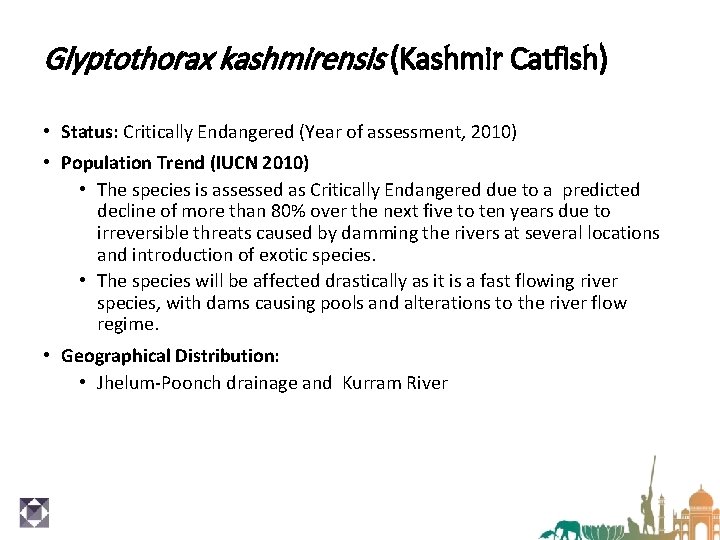
Glyptothorax kashmirensis (Kashmir Catfish) • Status: Critically Endangered (Year of assessment, 2010) • Population Trend (IUCN 2010) • The species is assessed as Critically Endangered due to a predicted decline of more than 80% over the next five to ten years due to irreversible threats caused by damming the rivers at several locations and introduction of exotic species. • The species will be affected drastically as it is a fast flowing river species, with dams causing pools and alterations to the river flow regime. • Geographical Distribution: • Jhelum-Poonch drainage and Kurram River
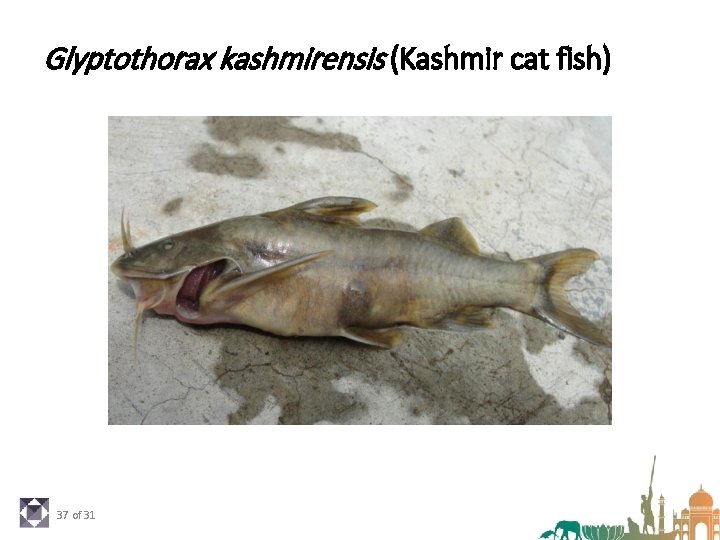
Glyptothorax kashmirensis (Kashmir cat fish) 37 of 31
Tor Putitora (Golden Mahasher) Status: Endangered (Year of assessment, 2010) Justifications (IUCN): • Tor putitora is a widely distributed species in south and Southeast Asia, with a restricted area of occupancy. • The species is under severe threat from overfishing, loss of habitat, decline in quality of habitat resulting in loss of breeding grounds. • With several dams planned for construction in future in the Himalayan region, they could have a more drastic effect on fish populations blocking their migrations and affecting their breeding. Population Trends (IUCN): The species is estimated to have declined by more than 50% in the past and if the current trends continue and with the new dams being built, the population may decline even up to 80% in the future.
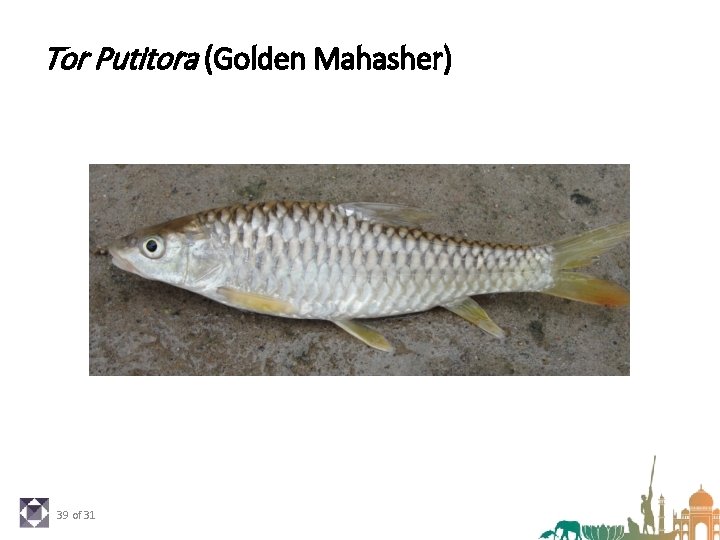
Tor Putitora (Golden Mahasher) 39 of 31
Mitigation Measures • Determination of ecological flows downstream of dams • Basin-wide Cumulative Impact Assessment and Management • Capacity building of the stakeholders • Development and Implementation of Biodiversity Management Plans
41
- Slides: 41