
Taenia saginata tapeworm T Saginata beef It is
Taenia saginata tapeworm T. Saginata( beef ), It is common , where undercooked beef is eaten. The adult worm causes few if any symptoms. Infection is usually discovered when proglottids are found in faeces or on underclothing anxiety. , Ova may also be seen on stool microscopy. cleared with a single dose of praziquantel (10 mg/kg). It can be prevented by careful meat inspection, or by thorough cooking of beef
Taenia solium & cysticercosis T. solium, ( pork ), is smaller than T. S. * acquired by eating uncooked pork. usually asymptomatic R/ praziquantel or niclosamide. a purgative, as was previously believed
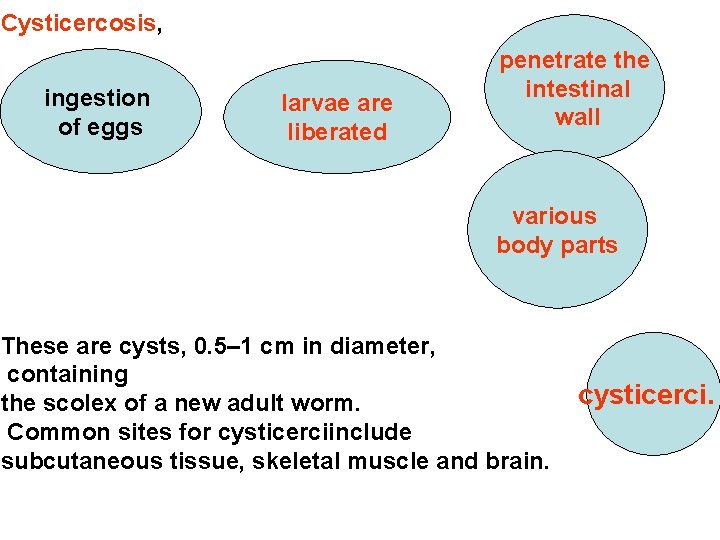
Cysticercosis, ingestion of eggs larvae are liberated penetrate the intestinal wall various body parts These are cysts, 0. 5– 1 cm in diameter, containing the scolex of a new adult worm. Common sites for cysticerciinclude subcutaneous tissue, skeletal muscle and brain. cysticerci.
symptoms Superficial cysts may be felt under the skin, no significant symptoms. Cysts in the brain epilepsy, personality change, hydrocephalus and focal neurological signs These may only appear many years after infection. diagnosis • Muscle cysts tend to calcify, and are often visible on Xrays. Cutaneous cysts can be excised and examined. Brain cysts are less prone to calcification, and are often only seen on CT or MRI scan. Serological tests may support.
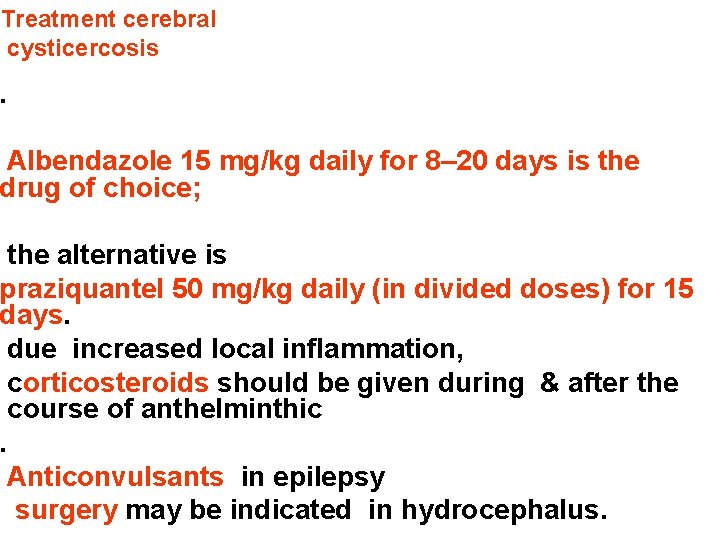
Treatment cerebral cysticercosis . Albendazole 15 mg/kg daily for 8– 20 days is the drug of choice; the alternative is praziquantel 50 mg/kg daily (in divided doses) for 15 days. due increased local inflammation, corticosteroids should be given during & after the course of anthelminthic. Anticonvulsants in epilepsy surgery may be indicated in hydrocephalus.
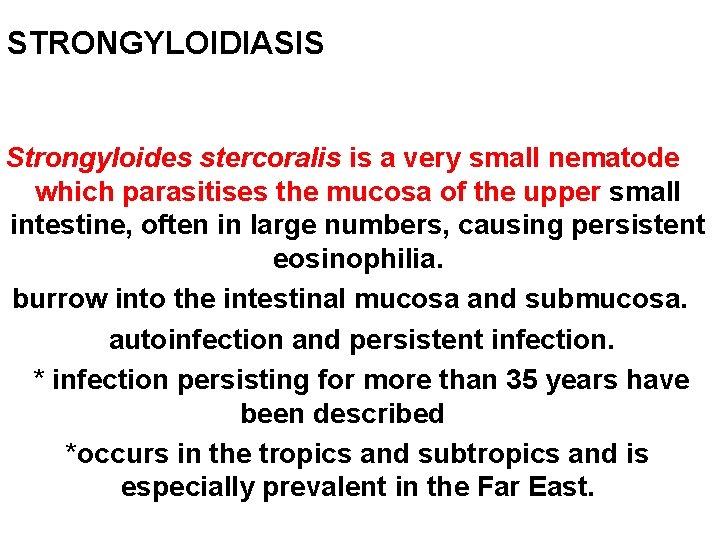
STRONGYLOIDIASIS Strongyloides stercoralis is a very small nematode which parasitises the mucosa of the upper small intestine, often in large numbers, causing persistent eosinophilia. burrow into the intestinal mucosa and submucosa. autoinfection and persistent infection. * infection persisting for more than 35 years have been described *occurs in the tropics and subtropics and is especially prevalent in the Far East.
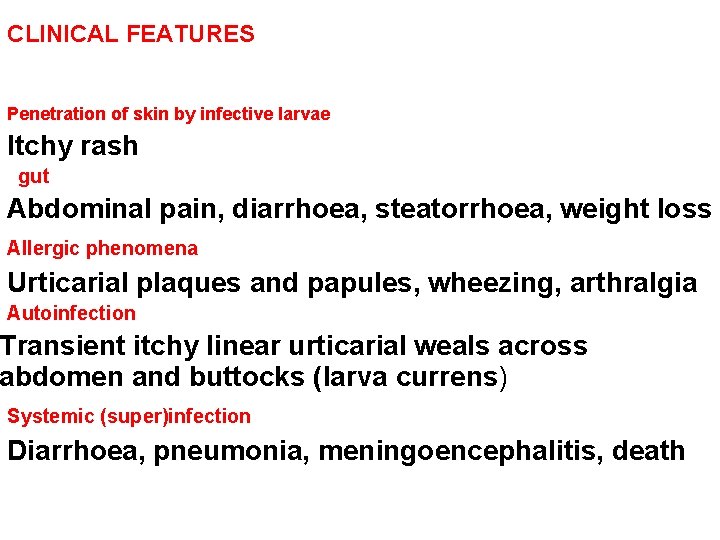
CLINICAL FEATURES Penetration of skin by infective larvae Itchy rash gut Abdominal pain, diarrhoea, steatorrhoea, weight loss Allergic phenomena Urticarial plaques and papules, wheezing, arthralgia Autoinfection Transient itchy linear urticarial weals across abdomen and buttocks (larva currens) Systemic (super)infection Diarrhoea, pneumonia, meningoencephalitis, death
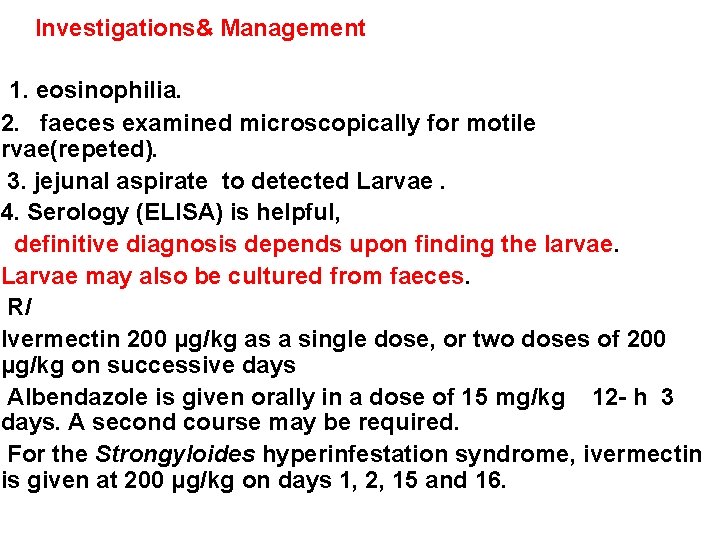
Investigations& Management 1. eosinophilia. 2. faeces examined microscopically for motile arvae(repeted). 3. jejunal aspirate to detected Larvae. 4. Serology (ELISA) is helpful, definitive diagnosis depends upon finding the larvae. Larvae may also be cultured from faeces. R/ Ivermectin 200 μg/kg as a single dose, or two doses of 200 μg/kg on successive days Albendazole is given orally in a dose of 15 mg/kg 12 - h 3 days. A second course may be required. For the Strongyloides hyperinfestation syndrome, ivermectin is given at 200 μg/kg on days 1, 2, 15 and 16.
ASCARIS LUMBRICOIDES (ROUNDWORM) nematode is 20 -35 cm long. eating food contaminated with mature ova. Ascaris larvae hatch in the duodenum, • migrate through the lungs, ascend the bronchial tree, are swallowed and mature in the small intestine. This tissue migration can provoke both local • and general hypersensitivity reactions with pneumonitis, eosinophilic granulomas, bronchial asthma and urticaria.
Clinical features Intestinal ascariasis occasional vague abdominal pain through to malnutrition. obstructive complications. In endemic areas ascariasis causes up to 35% of all intestinal obstructions, most commonly in the terminal ileum. Obstruction can be complicated further by intussusception, volvulus, haemorrhagic infarction and perforation. * Other blockage of the; 1. bile 2. pancreatic duct 3. obstruction of the appendix by adult worms.
Investigations& Management 1. microscopically by finding ova in the faeces. 2. Adult worms are frequently expelled rectally or orally. radiographically by a barium examination. 3. eosinophilia. R/ Mebendazole 100 mg 12 -hourly for 3 days, albendazole 400 mg or piperazine 4 g as a single dose is effective for intestinal ascariasis. Obstruction due to ascariasis should be treated with nasogastric suction, piperazine and intravenous fluids.
ANCYLOSTOMIASIS (HOOKWORM) Ancylostomiasis is caused by parasitisation of the small intestine with Ancylostoma duodenale or Necator americanus. * main causes of anaemia in the tropics.
anemia The mean daily loss of blood from one • A. duodenale is 0. 15 ml • * N. americanus 0. 03 ml. • The degree of iron and protein deficiency depends not only on the load of worms but also on the nutrition of the patient and especially on the iron stores. In a light infection there may be no anaemia.
Clinical features Dermatitis, usually on the feet (ground itch), at the time of infection. lungs • a paroxysmal cough with blood-stained sputum, patchy pulmonary consolidation. in cx. R small intestine, vomiting and epigastric pain. Sometimes frequent loose stools are passed. Iron deficiency anaemia, protein-losing enteropathy and hypoproteinaemia may develop in the undernourished. High-output cardiac failure The mental and physical development of children may be retarded. A well-nourished person with a light infection may be asymptomatic.
Investigations Management There is eosinophilia. ovum can be recognised in the stool. faecal occult blood testing will be positive R/ Mebendazole 100 mg 12 -hourly for 3 days is preferred, * single-dose albendazole (400 mg) is the best choice. Anaemia ; responds well to oral iron. The management of anaemic heart disease is best accomplished by treatment with anthelmintics and iron.
TRICHIURA (WHIPWORM) TRICHURIS
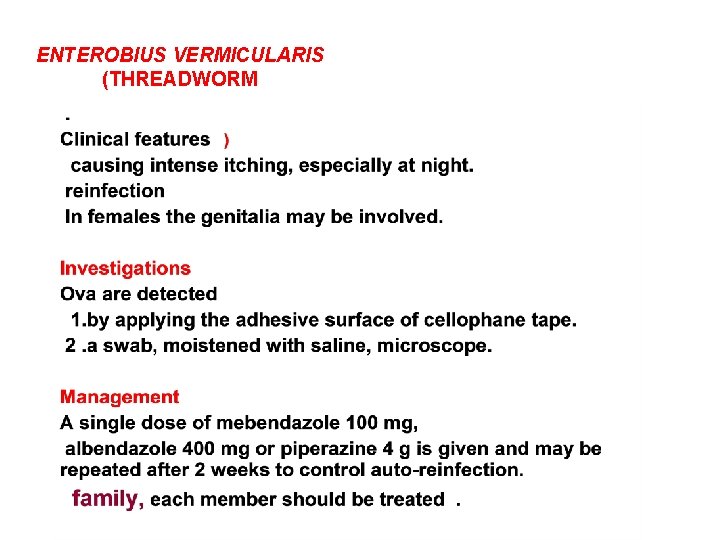
ENTEROBIUS VERMICULARIS (THREADWORM
- Slides: 17