
Tactile Reading 2021 Oslo April 30 Tactual Profile
- Slides: 42
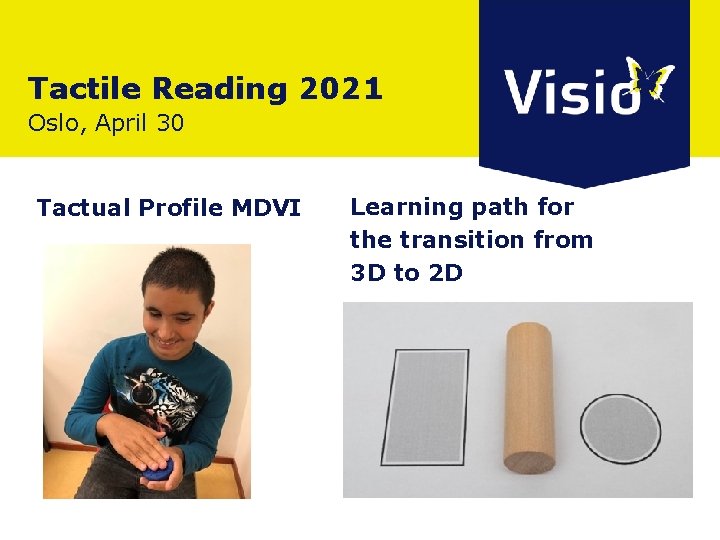
Tactile Reading 2021 Oslo, April 30 Tactual Profile MDVI Learning path for the transition from 3 D to 2 D
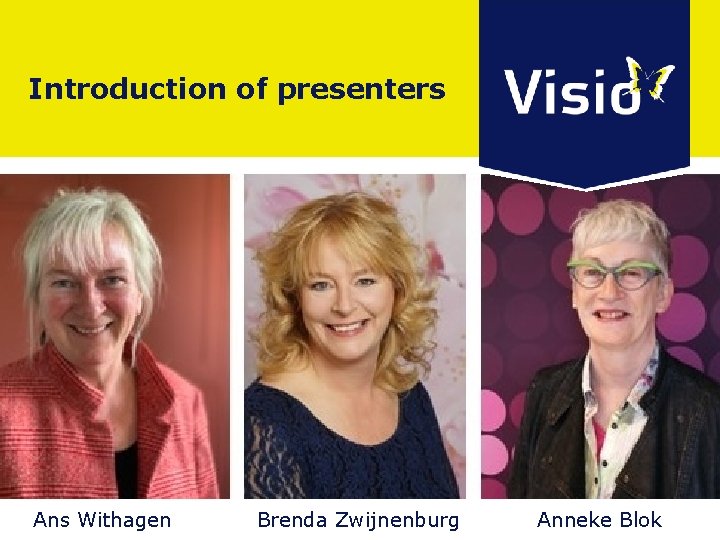
Introduction of presenters Ans Withagen Brenda Zwijnenburg Anneke Blok
Design of presentation • Introduction of the MDVI version of Tactual Profile • Short video fragment of Tactual Profile • Feel Free MDVI • Learning path for the transition from 3 D to 2 D • Some examples of lessons
Tactual Profile MDVI Reason for development: Request for an adjusted instrument of Tactual Profile for people with a severe visual and mental disability, to monitor tactual functioning Projectgroup started to develop this version in 2014 Project group: Behavioral scientist Ph. D in special education, occupational therapists, teacher MDVI, rehabilitation therapist in early intervention, speech therapist Expert group: neuro psychologist and other professionals in the field of MDVI and an expert of the Radboud University Nijmegen
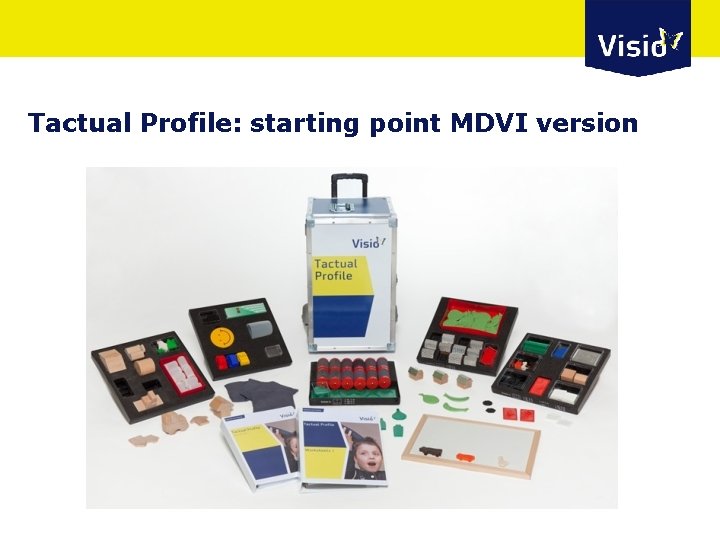
Tactual Profile: starting point MDVI version
Target group Tactual Profile: Children, 0 -16 years of age, who are born blind or who have no more than some residual vision Target group Tactual Profile MDVI: Persons with MDVI, a severe visual and cognitive impairment. Cognitive development from 0 -6 years of age
Differences between Tactual Profile and Tactual Profile MDVI • Extended interview with a parent, teacher or care taker • Instruction is less verbal • Steps are more refined in the items • Observation in daily environment • Practical Skills not included in item-set
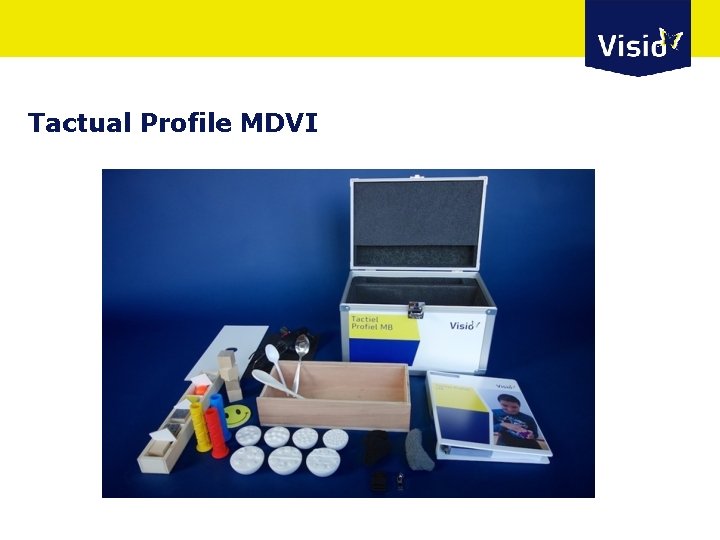
Tactual Profile MDVI
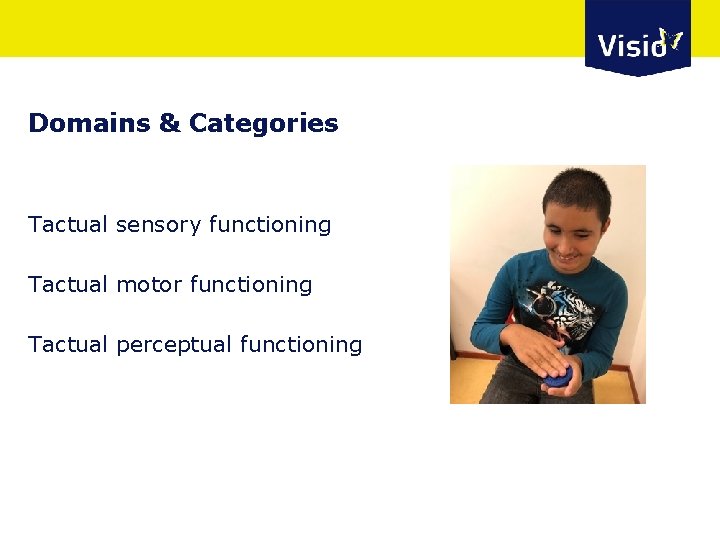
Domains & Categories Tactual sensory functioning Tactual motor functioning Tactual perceptual functioning
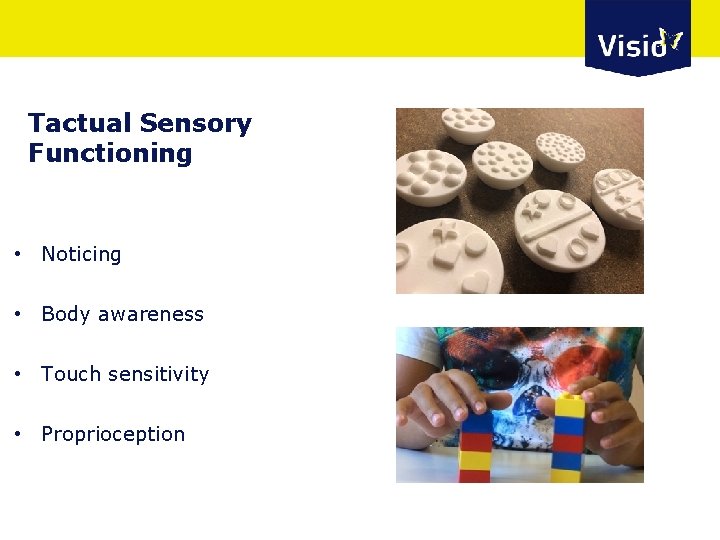
Tactual Sensory Functioning • Noticing • Body awareness • Touch sensitivity • Proprioception
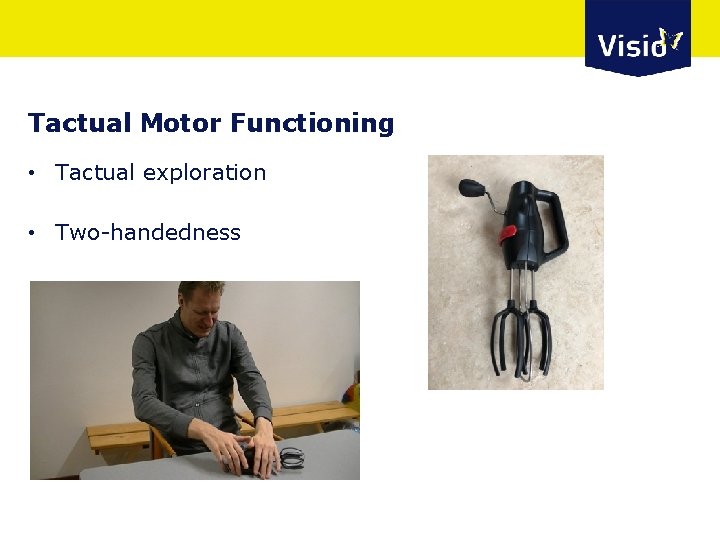
Tactual Motor Functioning • Tactual exploration • Two-handedness
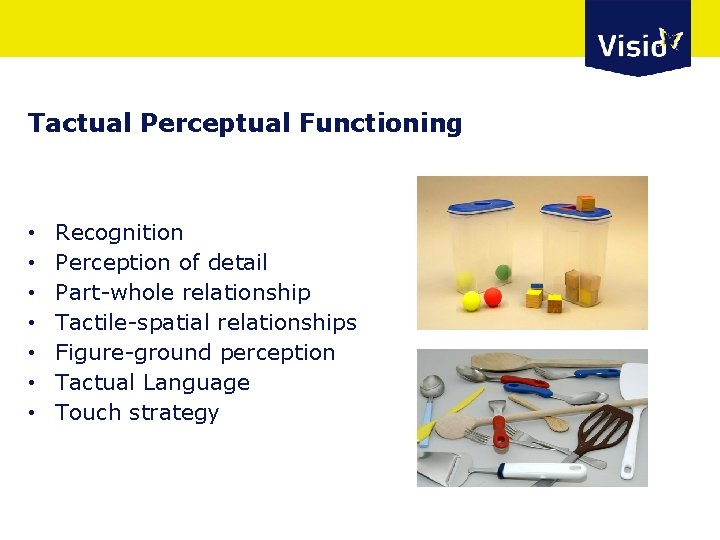
Tactual Perceptual Functioning • • Recognition Perception of detail Part-whole relationship Tactile-spatial relationships Figure-ground perception Tactual Language Touch strategy
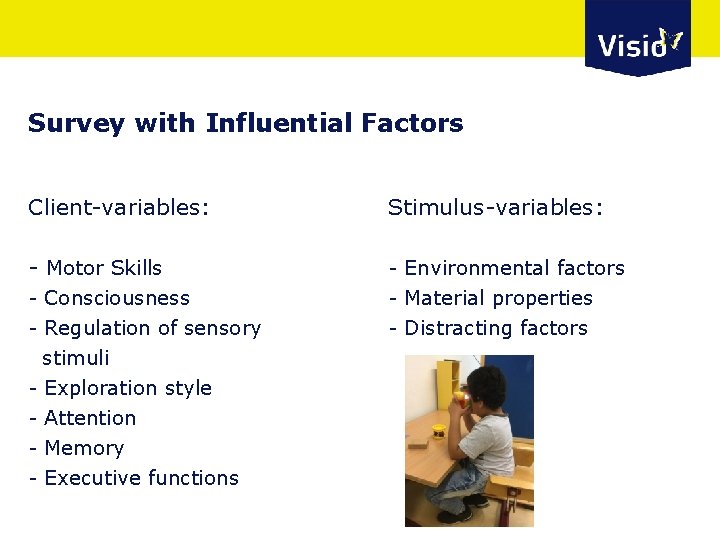
Survey with Influential Factors Client-variables: Stimulus-variables: - Motor Skills - Environmental factors - Material properties - Distracting factors - Consciousness - Regulation of sensory stimuli - Exploration style - Attention - Memory - Executive functions
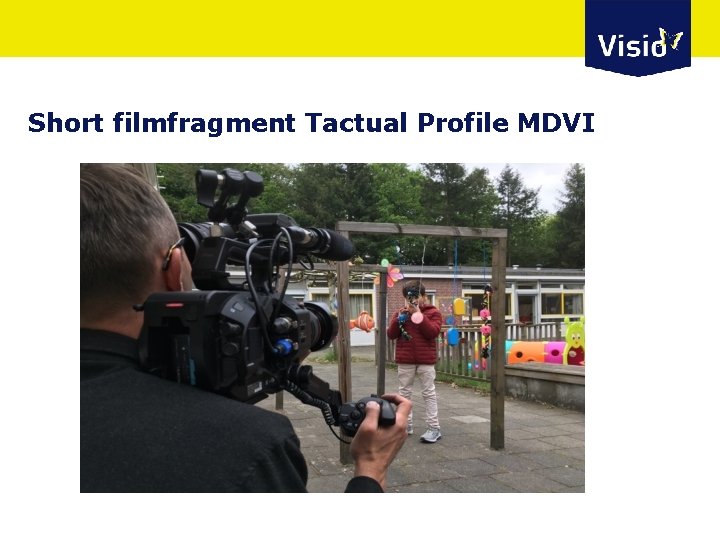
Short filmfragment Tactual Profile MDVI
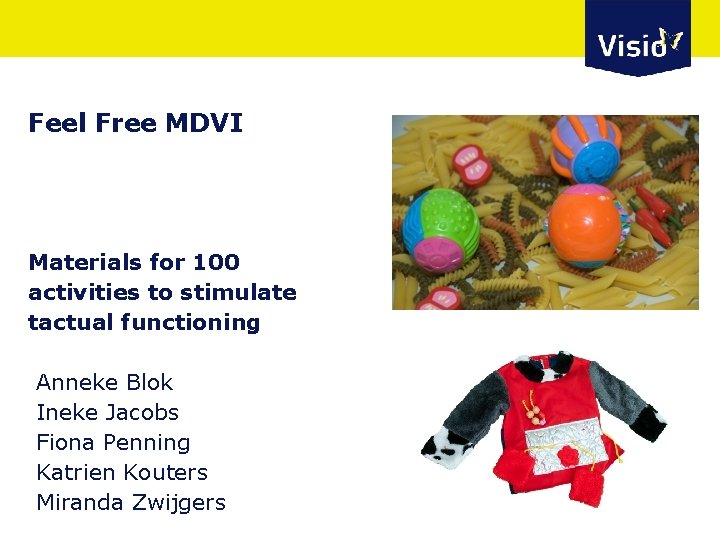
Feel Free MDVI Materials for 100 activities to stimulate tactual functioning Anneke Blok Ineke Jacobs Fiona Penning Katrien Kouters Miranda Zwijgers
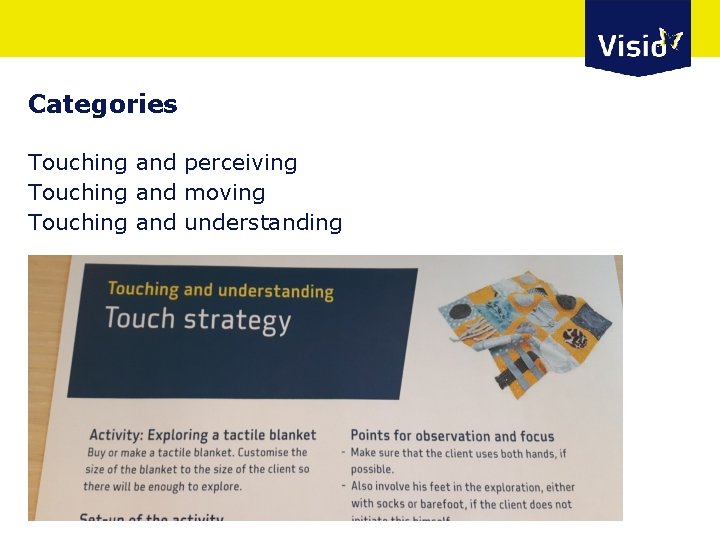
Categories Touching and perceiving Touching and moving Touching and understanding
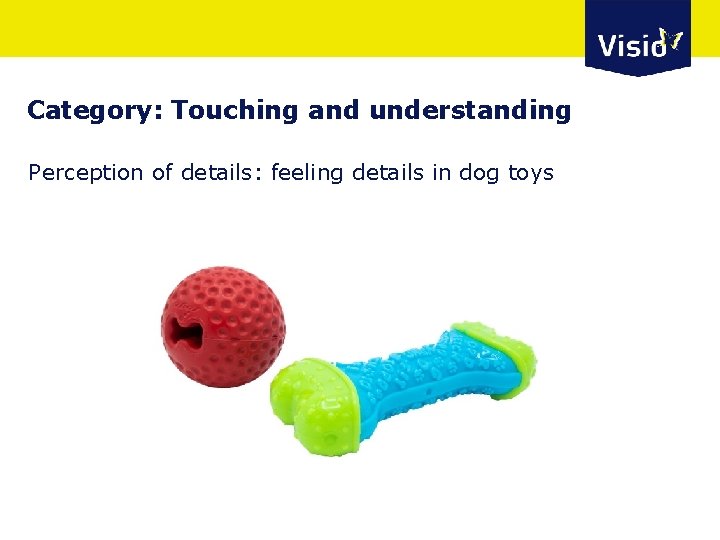
Category: Touching and understanding Perception of details: feeling details in dog toys
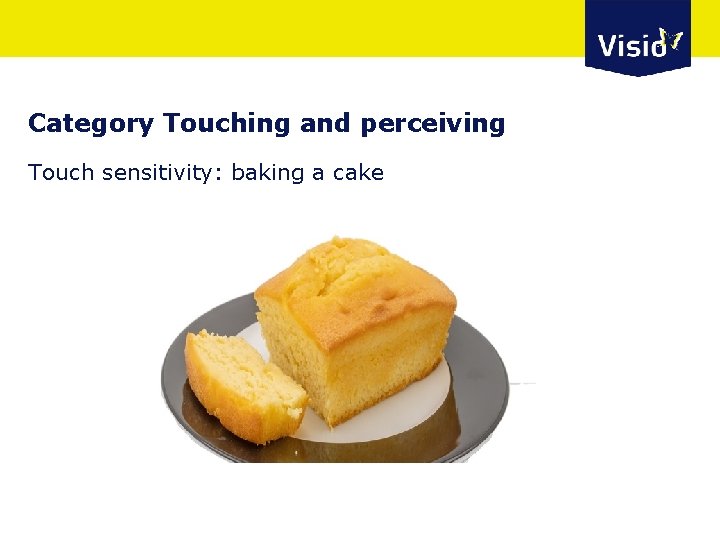
Category Touching and perceiving Touch sensitivity: baking a cake
www. tactualprofile. org tactualprofile@visio. org
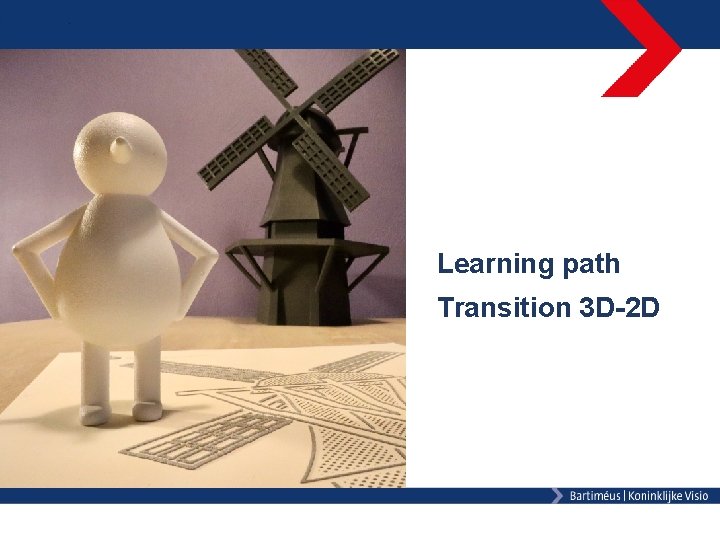
Learning path Transition 3 D-2 D
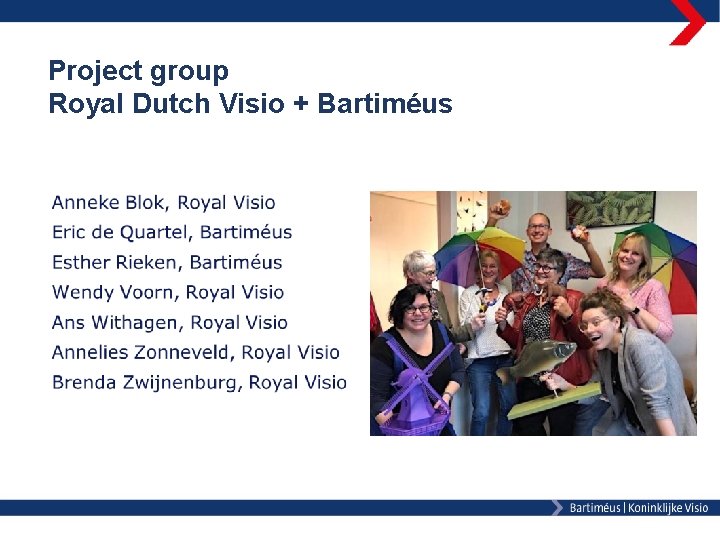
Project group Royal Dutch Visio + Bartiméus
Aim of the project To develop an educational guideline to gain blind children insight in the transformation of a three-dimensional object into a two-dimensional tactile drawing. With this learning path, the relationship between objects and associated drawings, which can be produced by different viewpoints, is explained step by step. The learning path increases in complexity and difficulty level.
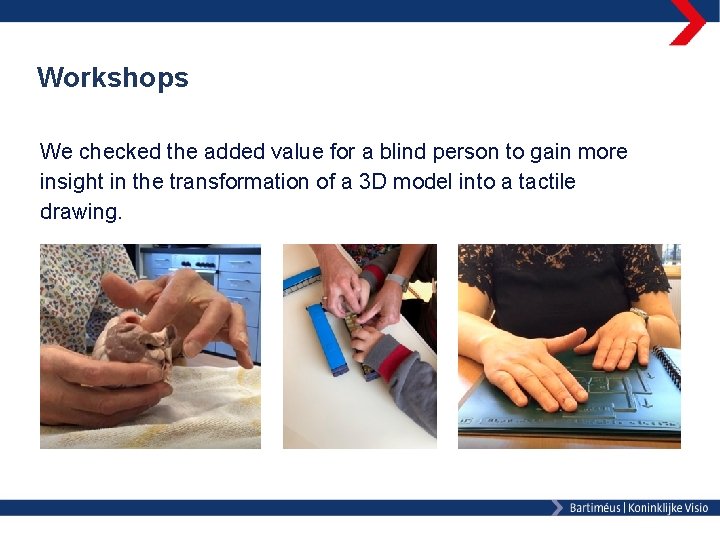
Workshops We checked the added value for a blind person to gain more insight in the transformation of a 3 D model into a tactile drawing.
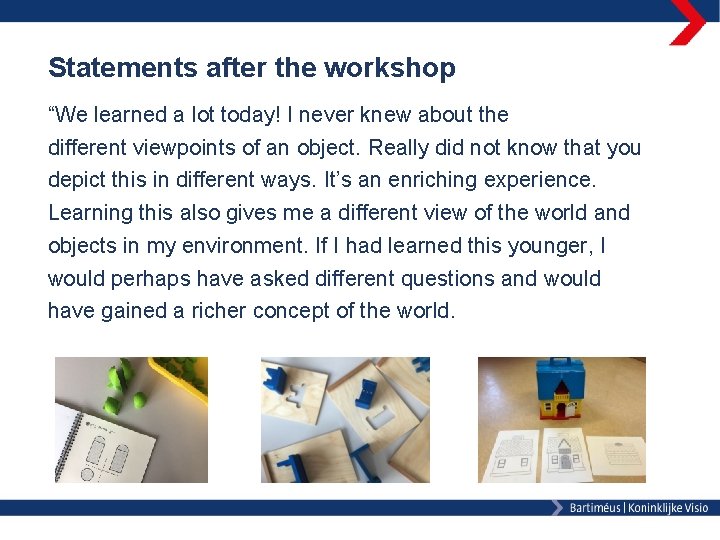
Statements after the workshop “We learned a lot today! I never knew about the different viewpoints of an object. Really did not know that you depict this in different ways. It’s an enriching experience. Learning this also gives me a different view of the world and objects in my environment. If I had learned this younger, I would perhaps have asked different questions and would have gained a richer concept of the world.
Starting points Ø Participation of pupils in regular schools Ø Focus of the learning path: practicing insights in the transition of 3 D into 2 D. The learning path does not focus on concept development Ø The learning path is not a fixed pattern: it should be used in line with the insight and understanding of the pupil •
Structure in levels (age is indication) Preparatory phase: age level 4 -7 Initial phase: age level 7 - 10 Continuous phase: age level 11+
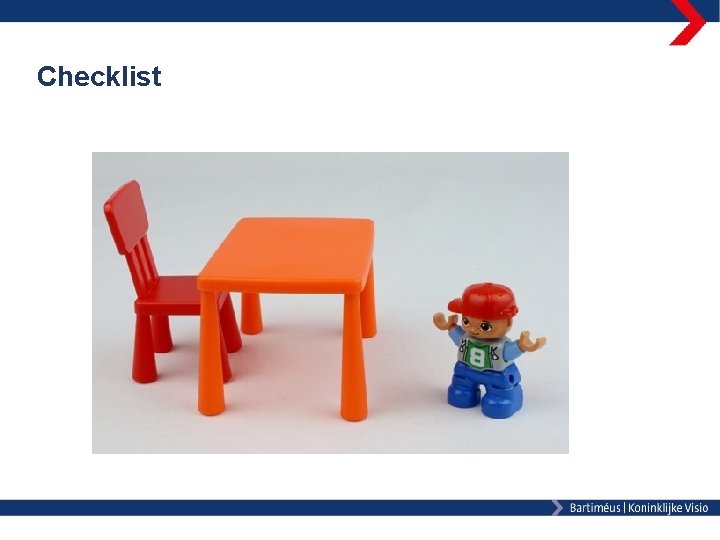
Checklist
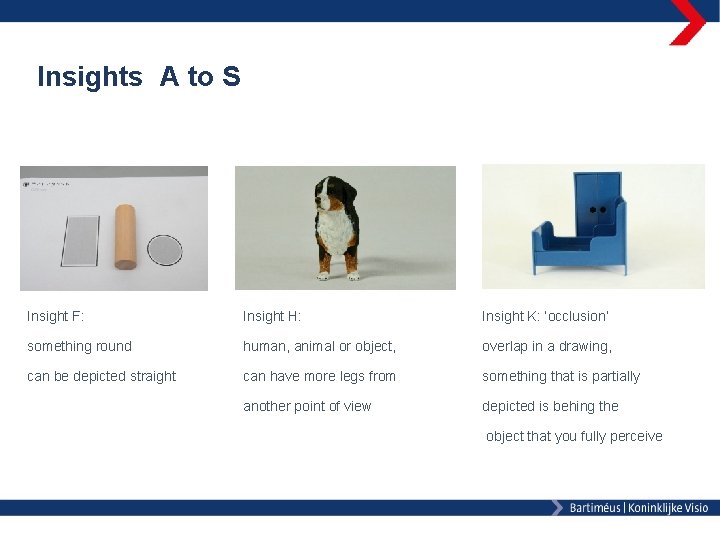
Insights A to S Insight F: Insight H: Insight K: ‘occlusion’ something round human, animal or object, overlap in a drawing, can be depicted straight can have more legs from something that is partially another point of view depicted is behing the object that you fully perceive
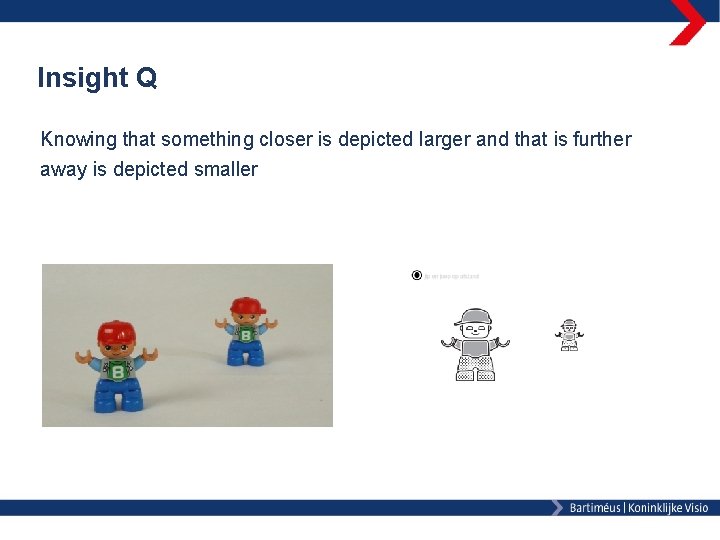
Insight Q Knowing that something closer is depicted larger and that is further away is depicted smaller
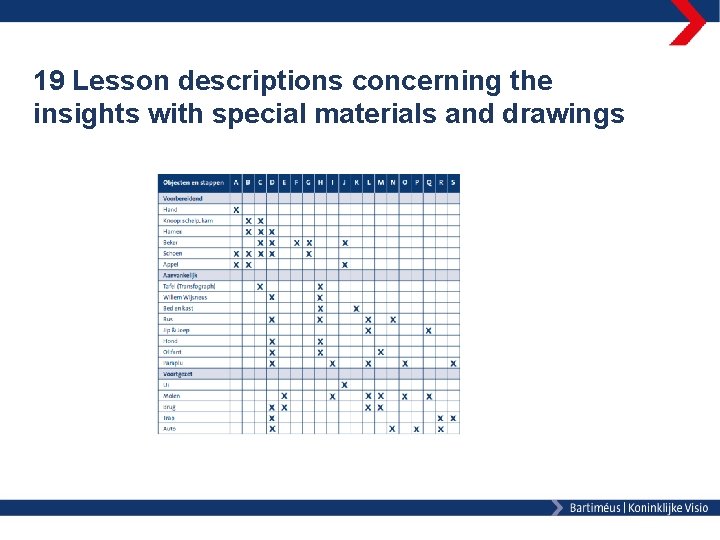
19 Lesson descriptions concerning the insights with special materials and drawings
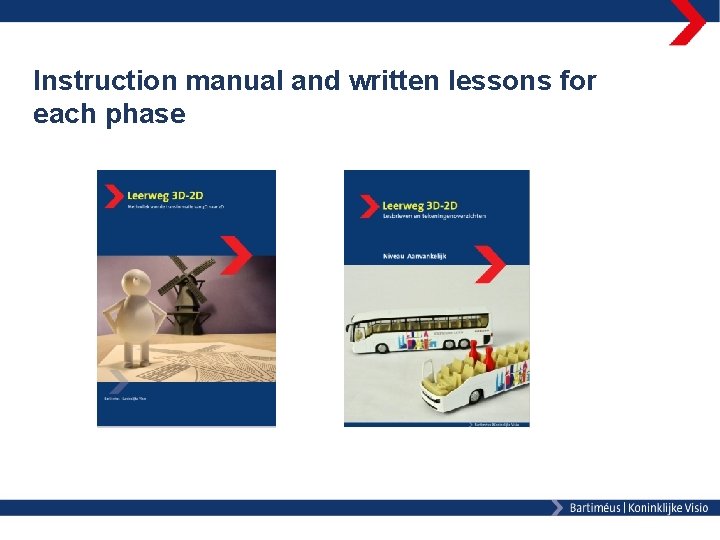
Instruction manual and written lessons for each phase
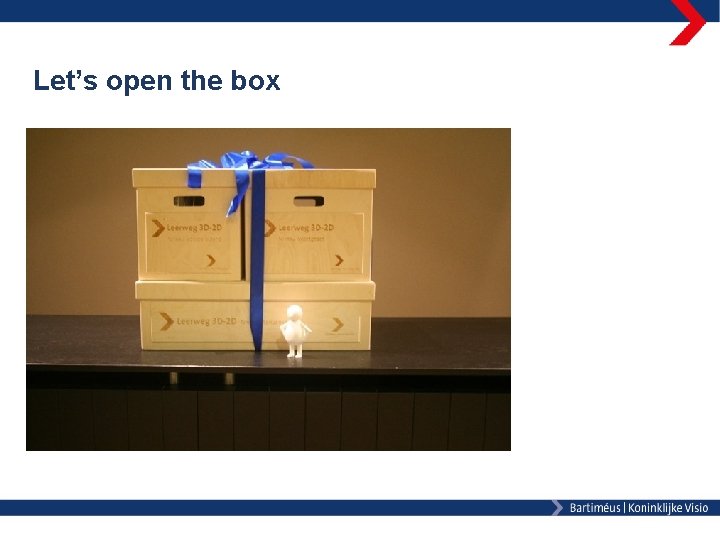
Let’s open the box
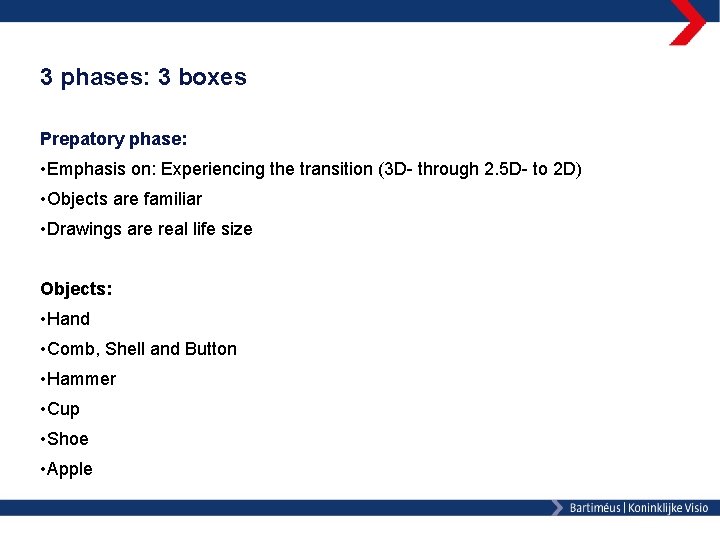
3 phases: 3 boxes Prepatory phase: • Emphasis on: Experiencing the transition (3 D- through 2. 5 D- to 2 D) • Objects are familiar • Drawings are real life size Objects: • Hand • Comb, Shell and Button • Hammer • Cup • Shoe • Apple
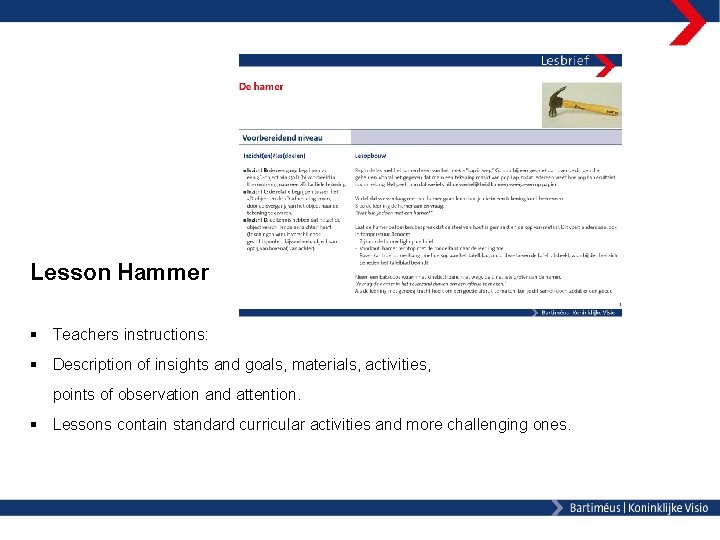
Lethe Hammer • Lesson Hammer § Teachers instructions: § Description of insights and goals, materials, activities, points of observation and attention. § Lessons contain standard curricular activities and more challenging ones.
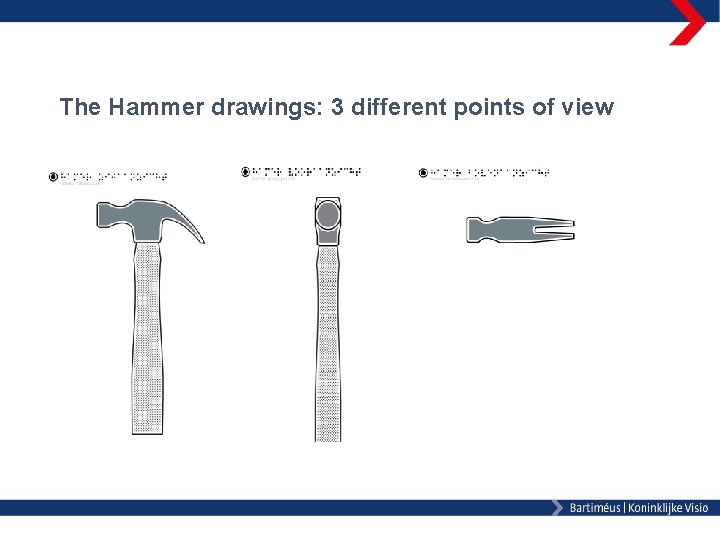
• The Hammer drawings: 3 different points of view
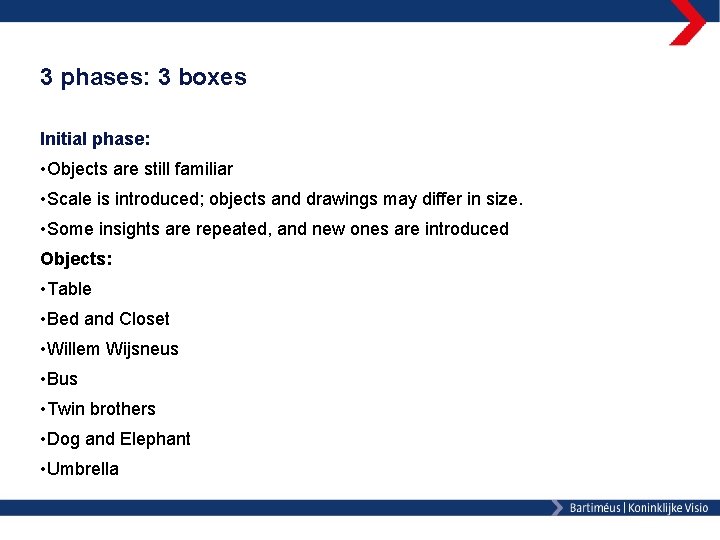
3 phases: 3 boxes Initial phase: • Objects are still familiar • Scale is introduced; objects and drawings may differ in size. • Some insights are repeated, and new ones are introduced Objects: • Table • Bed and Closet • Willem Wijsneus • Bus • Twin brothers • Dog and Elephant • Umbrella
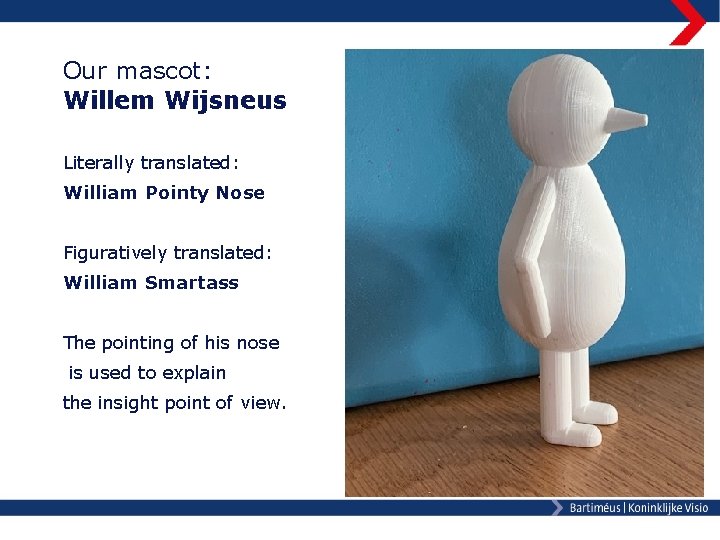
Our mascot: Willem Wijsneus Literally translated: William Pointy Nose Figuratively translated: William Smartass The pointing of his nose is used to explain the insight point of view.
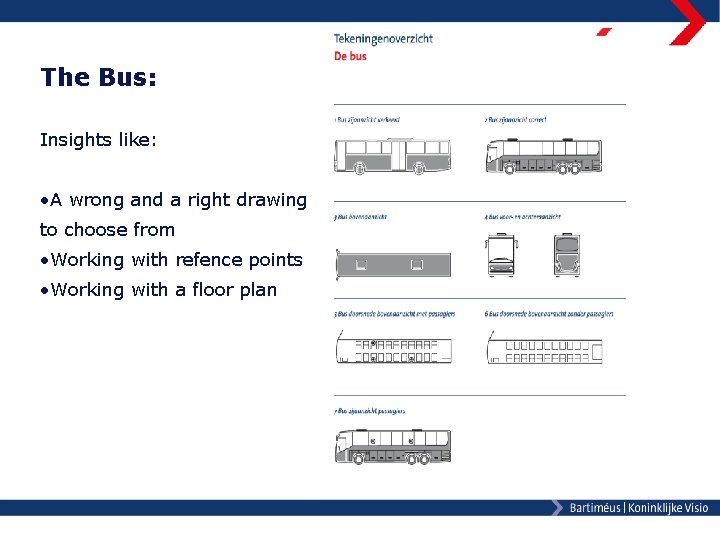
The Bus: Insights like: • A wrong and a right drawing to choose from • Working with refence points • Working with a floor plan
3 phases: 3 boxes Continuous phase: • Objects and drawings are more complex • Some insights return but are treated on a more complicated level • New complex insights are introduced Objects: • Onion • Windmill • Bridge • Staircase • Car
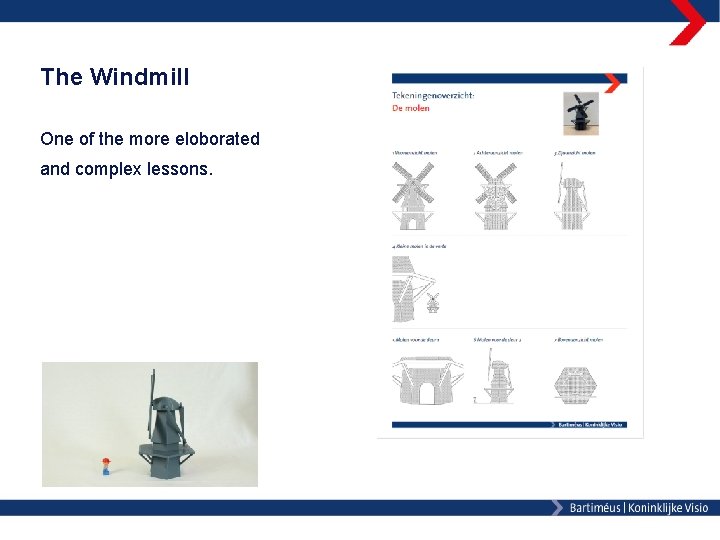
The Windmill One of the more eloborated and complex lessons.
Special Thanks Prof. Dr. Boguslaw Marek Dr. Mathijs Vervloed
More information For more information about these presentations and the presented products visit § § www. visio. org/tactile-reading-2021 §