
TACTICS OF WAR SWBAT identify the tactics used
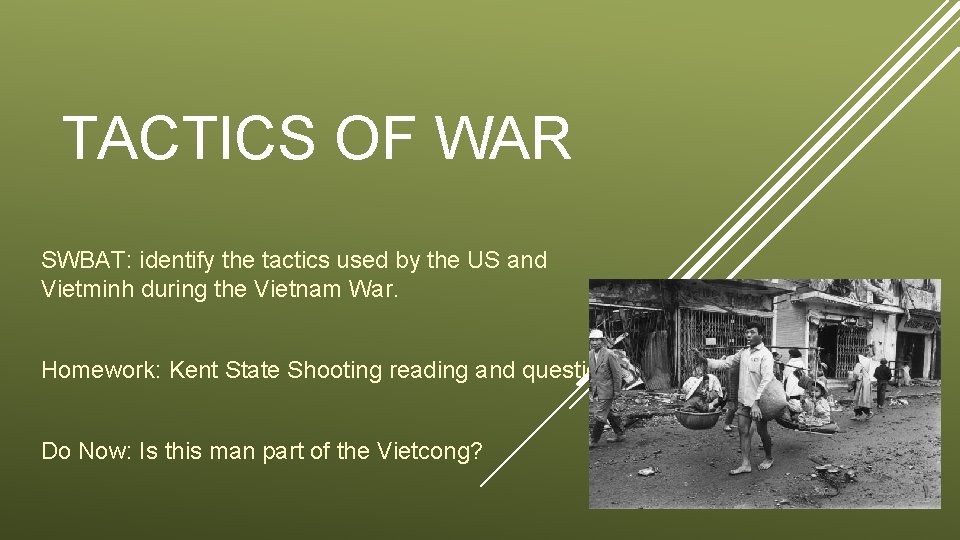
TACTICS OF WAR SWBAT: identify the tactics used by the US and Vietminh during the Vietnam War. Homework: Kent State Shooting reading and questions Do Now: Is this man part of the Vietcong?

QUESTION: Is this man part of the Vietcong? How do you know?
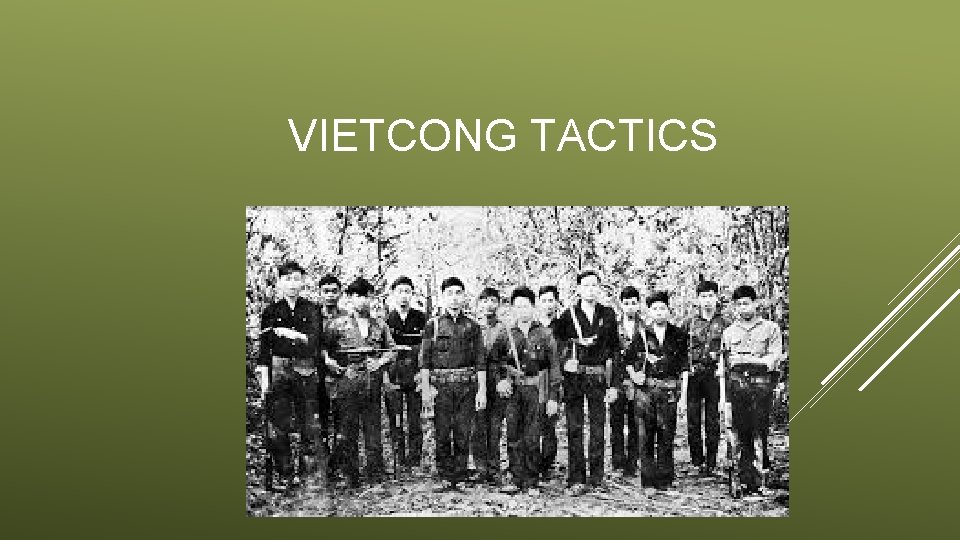
VIETCONG TACTICS
Guerrilla warfare was a nightmare for US forces Why? guerrillas did not wear uniforms and had no base or HQ. Hard to tell difference between them and peasants. Attacked and disappeared into the jungle, villages or tunnels in ambush attacks. Aim = to wear down the enemy and wreck their morale – VERY EFFECTIVE. GREATEST STRENGTH – they refused to give up – whatever the casualties, there were replacement troops available. US soldiers lived in constant fear of ambushes or booby traps. GUERILLA WARFARE
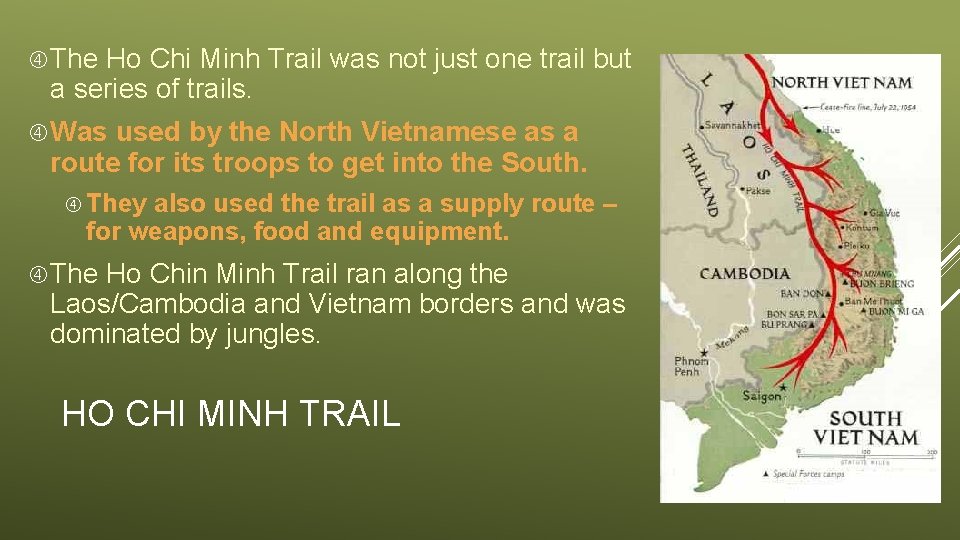
The Ho Chi Minh Trail was not just one trail but a series of trails. Was used by the North Vietnamese as a route for its troops to get into the South. They also used the trail as a supply route – for weapons, food and equipment. The Ho Chin Minh Trail ran along the Laos/Cambodia and Vietnam borders and was dominated by jungles. HO CHI MINH TRAIL
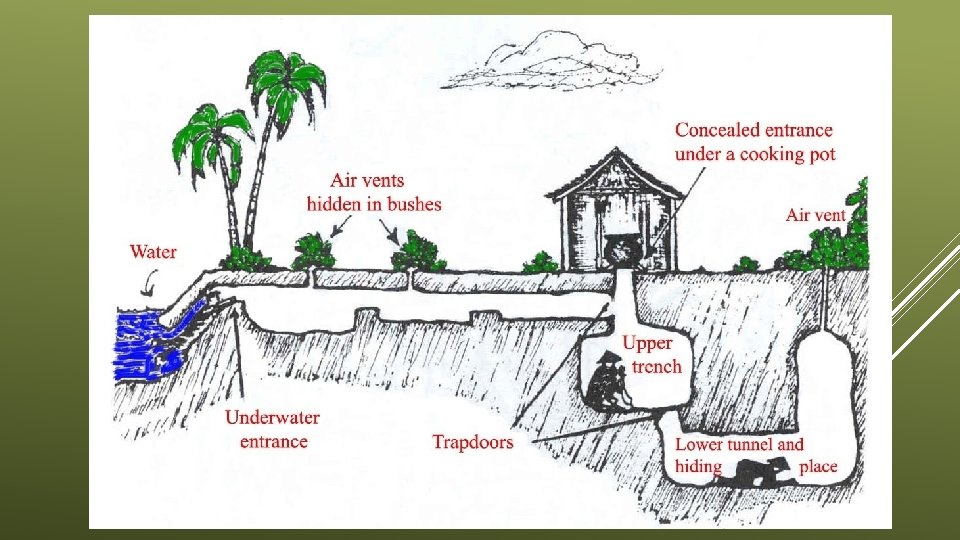
Uses: hiding spots during combat, served as communication and supply routes, hospitals, food and weapon caches and living quarters for numerous North Vietnamese fighters. Despite trying to eliminate the tunnels, the Americans were generally unsuccessful. On occasions when troops found a tunnel, they would often underestimate its size. Rarely would anyone be sent in to search the tunnels, as it was so hazardous. The tunnels were often rigged with explosive booby traps or punji stake pits. TUNNELS
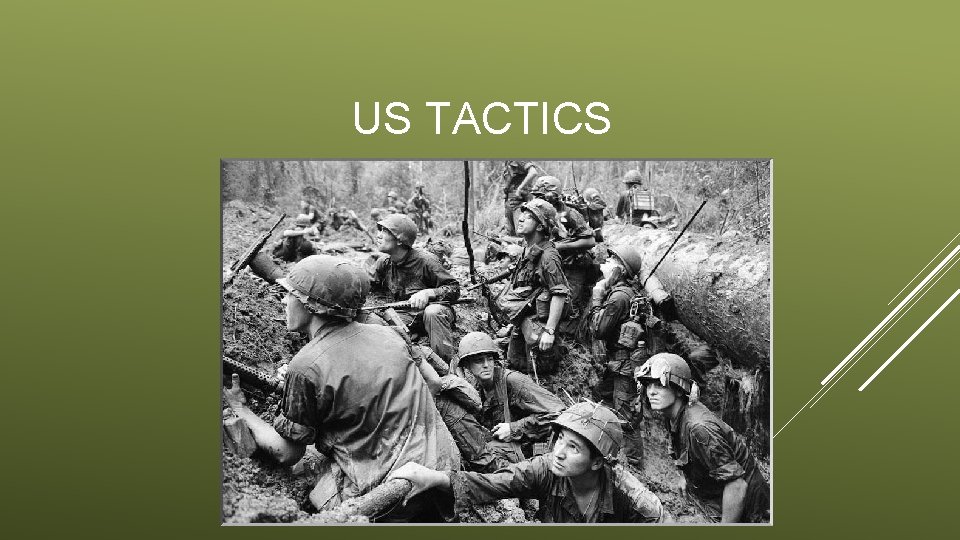
US TACTICS
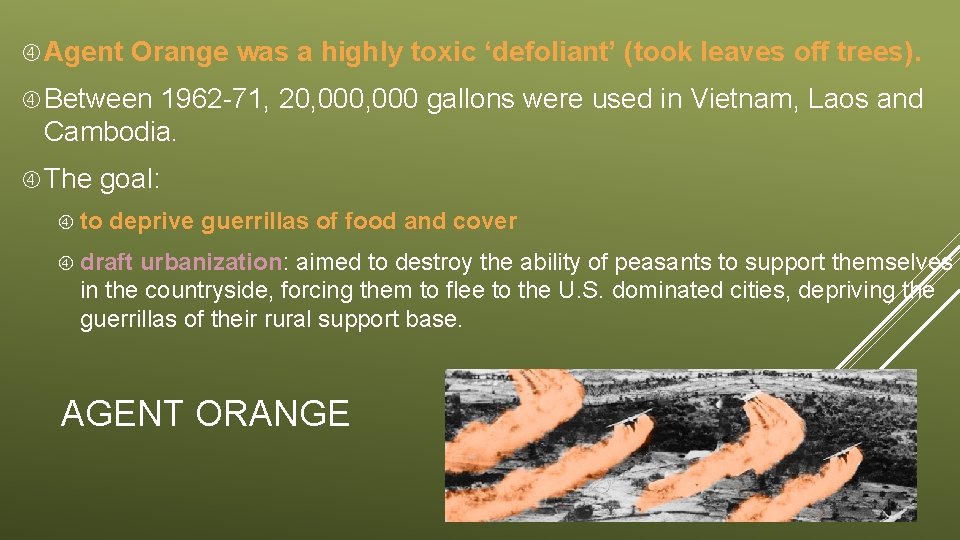
Agent Orange was a highly toxic ‘defoliant’ (took leaves off trees). Between 1962 -71, 20, 000 gallons were used in Vietnam, Laos and Cambodia. The goal: to deprive guerrillas of food and cover draft urbanization: aimed to destroy the ability of peasants to support themselves in the countryside, forcing them to flee to the U. S. dominated cities, depriving the guerrillas of their rural support base. AGENT ORANGE
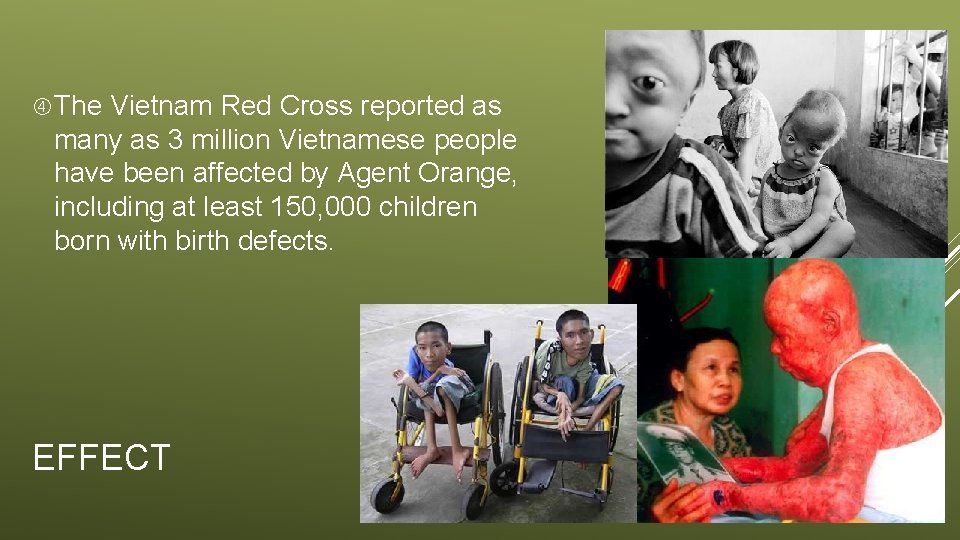
The Vietnam Red Cross reported as many as 3 million Vietnamese people have been affected by Agent Orange, including at least 150, 000 children born with birth defects. EFFECT
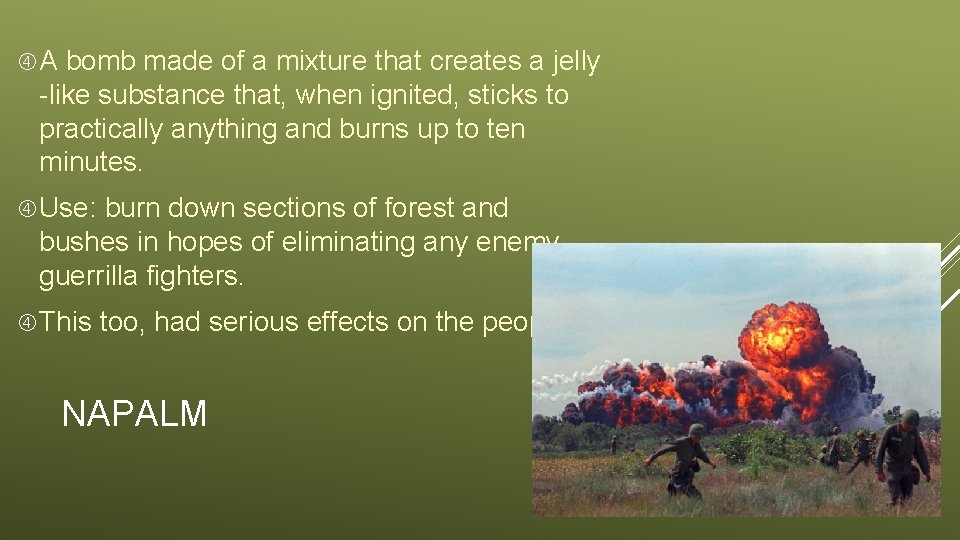
A bomb made of a mixture that creates a jelly -like substance that, when ignited, sticks to practically anything and burns up to ten minutes. Use: burn down sections of forest and bushes in hopes of eliminating any enemy guerrilla fighters. This too, had serious effects on the people. NAPALM
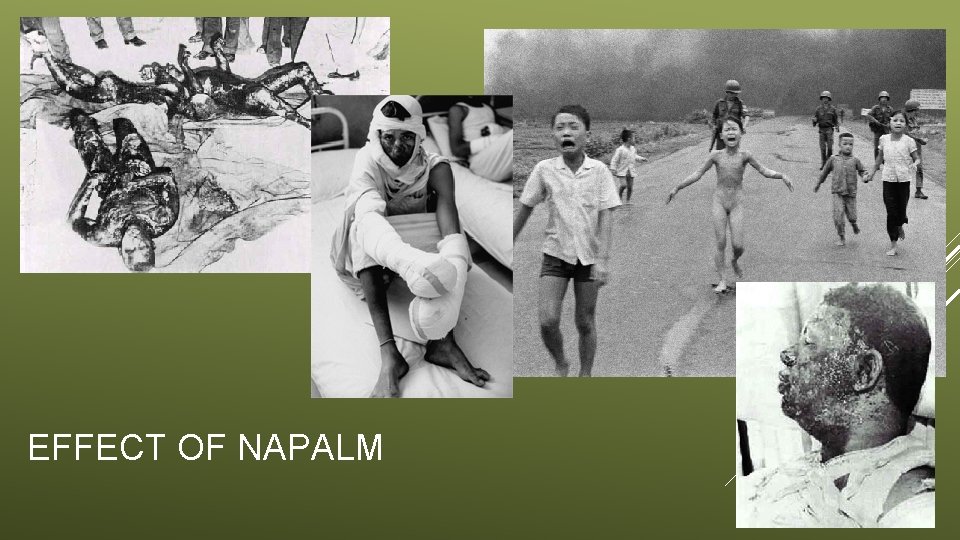
EFFECT OF NAPALM
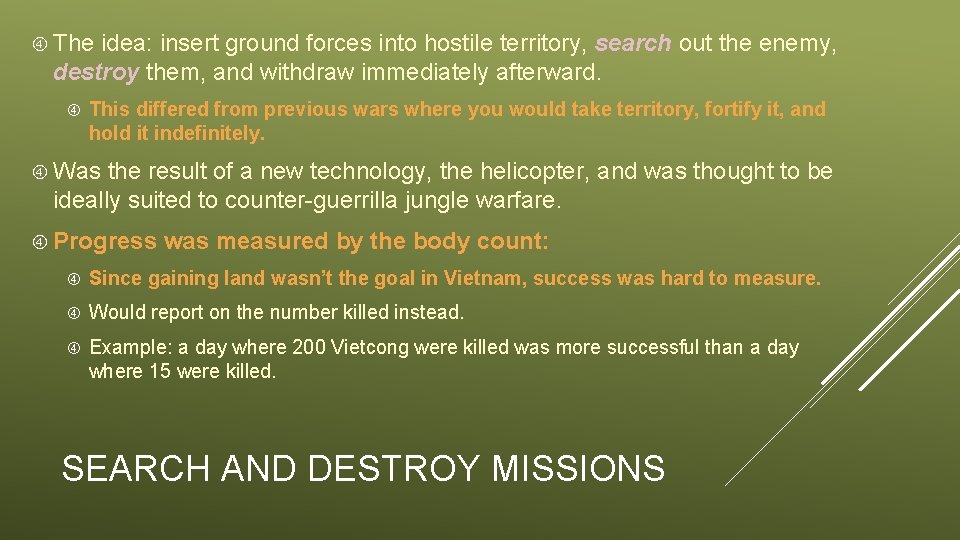
The idea: insert ground forces into hostile territory, search out the enemy, destroy them, and withdraw immediately afterward. This differed from previous wars where you would take territory, fortify it, and hold it indefinitely. Was the result of a new technology, the helicopter, and was thought to be ideally suited to counter-guerrilla jungle warfare. Progress was measured by the body count: Since gaining land wasn’t the goal in Vietnam, success was hard to measure. Would report on the number killed instead. Example: a day where 200 Vietcong were killed was more successful than a day where 15 were killed. SEARCH AND DESTROY MISSIONS
About 2/3 of American troops were volunteers, the rest were selected for military service through the draft. When someone’s name was called, he had to report to his local draft broad, which was made up of various community members. Men who had physical problems, were attending college, or were needed at home to support their families might be granted deferments. As a result, most drafted U. S. soldiers were from poor and working-class families. https: //www. youtube. com/watch? v=-p 5 X 1 Fjy. D_g THE DRAFT
- Slides: 14