
Tabuk University Faculty of Applied Medical Sciences Department
Tabuk University Faculty of Applied Medical Sciences Department Of Medical Lab. Technology 2 nd Year – Level 4 – AY 1433 -1434
Normal Haemopoiesis ﺇﻧﺘﺎﺝ ﺧﻼﻳــﺎ ﺍﻟﺪﻡ Mr. Waggas Elaas, M. Sc, MLT
References n 1. 2. 3. 4. 5. For theory : Essential Haematology, John Wiley & Sons Ltd , 6 th Edition, Victor Hoffbrand. Harmening, Denise. (2009). Clinical Hematology and Fundamentals of Hemostasis. 5 th Edition, F. A. Davis Company For practical : Practical Haematology, Churchill Livingstone, Eighth edition, John V. Dacie, S. M. Lewis, Fischbach and Dunning. (2009). A Manual on Laboratory Diagnostic Tests. 8 th Edition. Wolters Kluwer Health Lippincott Williams and Wilkins, PA ATLAS: Carr and Rodak. (2008). Clinical Hematology. 3 rd Edition, Saunders/Elsevier Internet site(s): http: //www. essentialhaematology 6. com/default. asp = MCQs http: //www. hematologyatlas. com/ http: //pathy. med. nagoya-u. ac. jp/atlas/doc/atlas. html http: //themedicalbiochemistrypage. org/ http: //www. bloodline. net/ 3

Marks n n n Final Theoretical exam : 40 Final Practical exam : 20 (including written questions) 1 st Periodic exam : 10 theory, 5 Practical 2 nd Periodic exam : 10 theory, 5 Practical Homework and class activities : 5 Theory, 5 Practical Total : 100 4
Objectives 1. 2. 3. 4. 5. To introduce Hematology to the students as a new science. To identify blood components and the function of each. To know the sites of Hemopoiesis (blood production). To know the different stages of cell production of each cell linage. To be able to differentiate between blood cells especially white cells. 5
What is hematology? n Hematology is the study of blood which is composed of plasma (55%), and the formed elements which are: – The erythrocytes (RBCs) (44%) § Contain hemoglobin § Function in the transport of O 2 and CO 2 – The Leukocytes (WBCs) and platelets (thrombocytes) (1%) § Leukocytes are involved in the body’s defense against the invasion of foreign antigens. § Platelets are involved in hemeostasis which forms a barrier to limit blood loss at an injured site. 6
Functions of blood : 1. Transports O 2 and Co 2 between tissues. 2. Transports nutrients (Glucose, vitamins. . etc). 3. Take waste products such as lactic acid away from the muscles ; and urea from the liver to the kidneys. 4. Maintain body temperature. 5. Defense – White blood cells. 6. Coagulation. 7
Hematopoiesis = Hemopoiesis Hematopoiesis is a term describing the formation and development of blood cells. n Hematopoiesis in the bone marrow is called Medullary hematopoiesis. n Hematopoiesis in areas other than the bone marrow is called Extramedullary hematopoiesis n 8
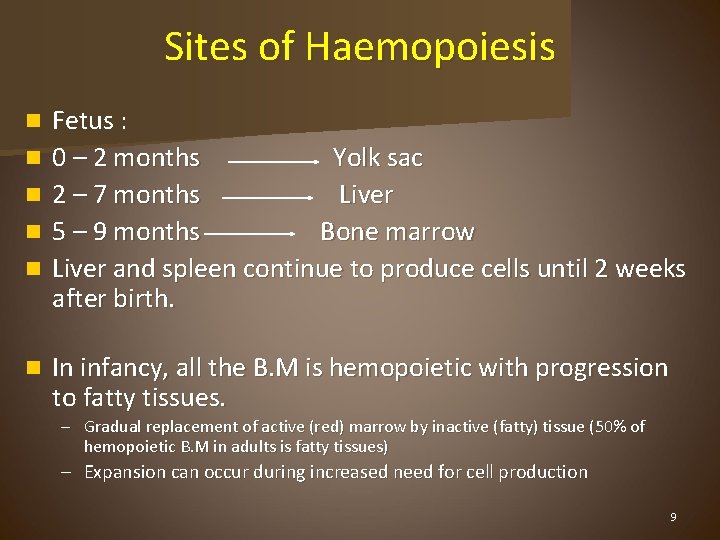
Sites of Haemopoiesis n n n Fetus : 0 – 2 months Yolk sac 2 – 7 months Liver 5 – 9 months Bone marrow Liver and spleen continue to produce cells until 2 weeks after birth. In infancy, all the B. M is hemopoietic with progression to fatty tissues. – Gradual replacement of active (red) marrow by inactive (fatty) tissue (50% of hemopoietic B. M in adults is fatty tissues) – Expansion can occur during increased need for cell production 9
n In adult life, hemopoietic B. M is restricted to central skeleton – proximal ends of femurs ( ﻋﻈﻢ )ﺍﻟﻔﺨﺬ and humeri. ( )ﻋﻈﻢ ﺍﻟﻌﻀﺪ n Hemopoiesis can extend to long bones. n Liver & spleen can resume hemopoiesis = Extramedullary Hemopoiesis. 10
First cell : Pluripotential Stem Cell (PCS) n Appear like small Lymphocyte. n Rare in B. M : 1 in every 20 million nucleated cell. n Self – renewal capacity B. M cellularity remain constant. Hemopoietic progenitors : When stem cells differentiate 11
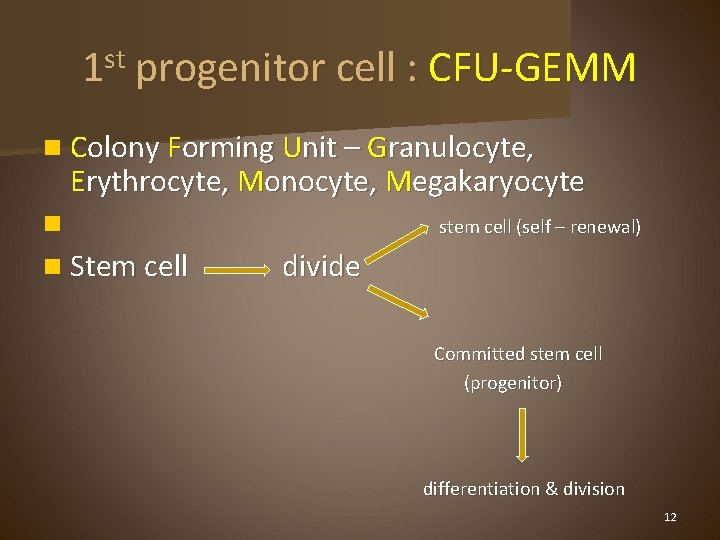
1 st progenitor cell : CFU-GEMM n Colony Forming Unit – Granulocyte, Erythrocyte, Monocyte, Megakaryocyte n n Stem cell stem cell (self – renewal) divide Committed stem cell (progenitor) differentiation & division 12
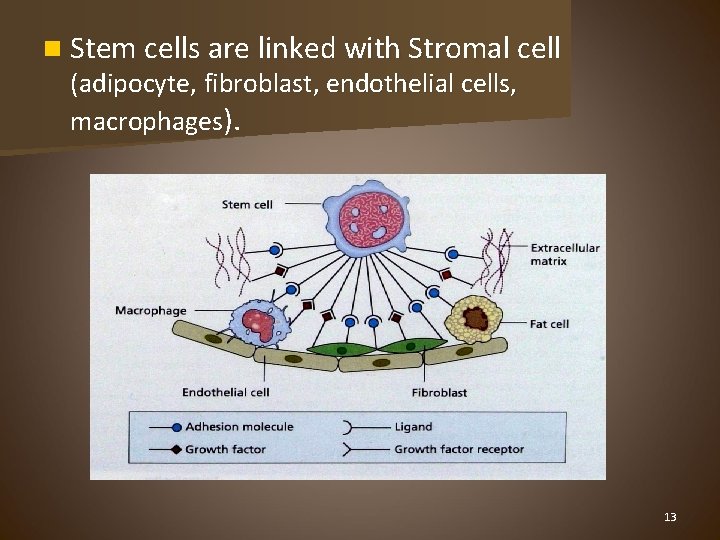
n Stem cells are linked with Stromal cell (adipocyte, fibroblast, endothelial cells, macrophages). 13
n Stromal cells secrete substances needed by stem cell to survive. ( collagen, fibronoectin, growth factors). n Growth factors are hormones that regulate proliferation & differentiation of cells. 14
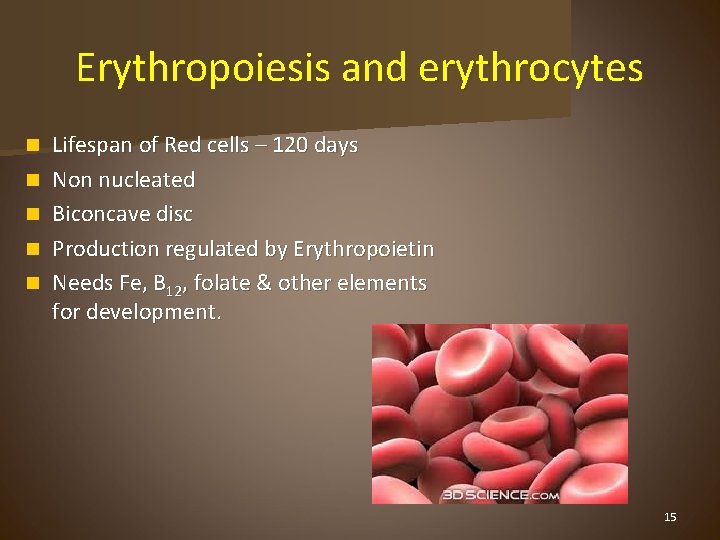
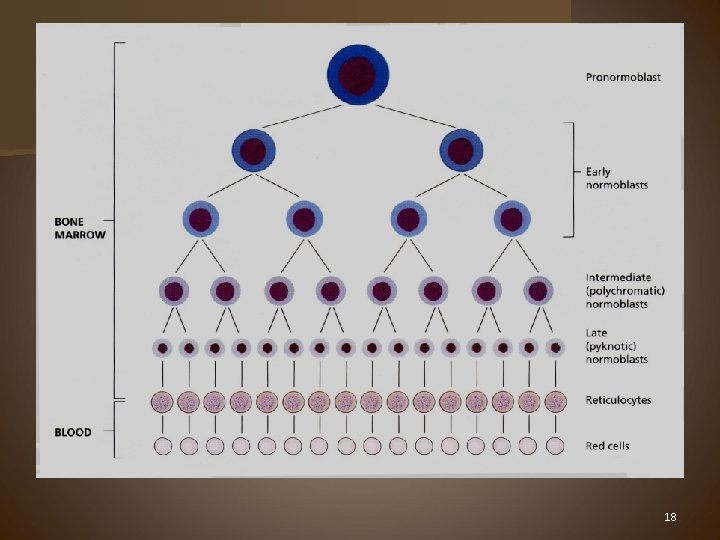
Erythropoiesis and erythrocytes n n n Lifespan of Red cells – 120 days Non nucleated Biconcave disc Production regulated by Erythropoietin Needs Fe, B 12, folate & other elements for development. 15
16
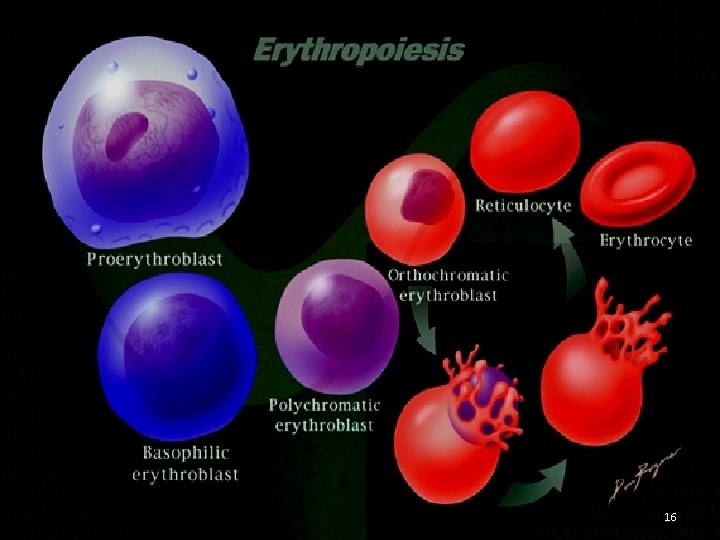
n CFUe the first recognizable cell in this lineage. Large cell with dark blue cytoplasm, central nucleus and nuclei and slightly clumped chromatin. The cytoplasm stains paler blue as it loses its RNA and protein synthesis apparatus and nuclear chromatin becomes more condense. The nucleus is finally extruded from the late normoblast with in the marrow and reticulocyte are formed which still contains RNA and still can synthesize hemoglobin. 17
18
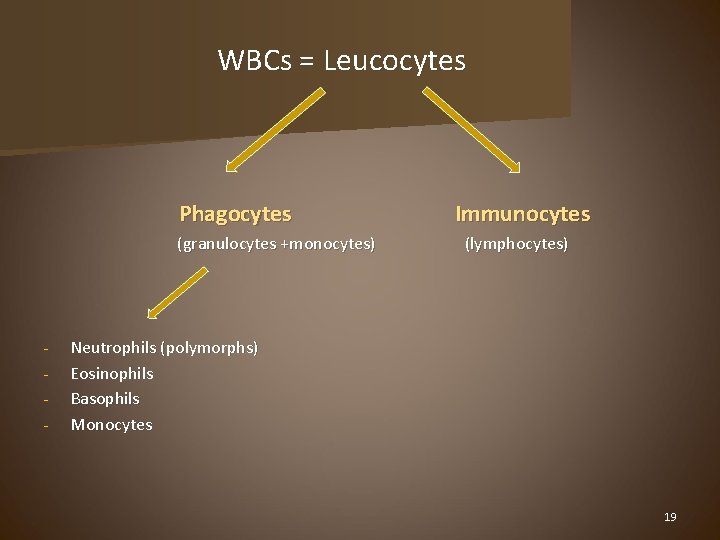
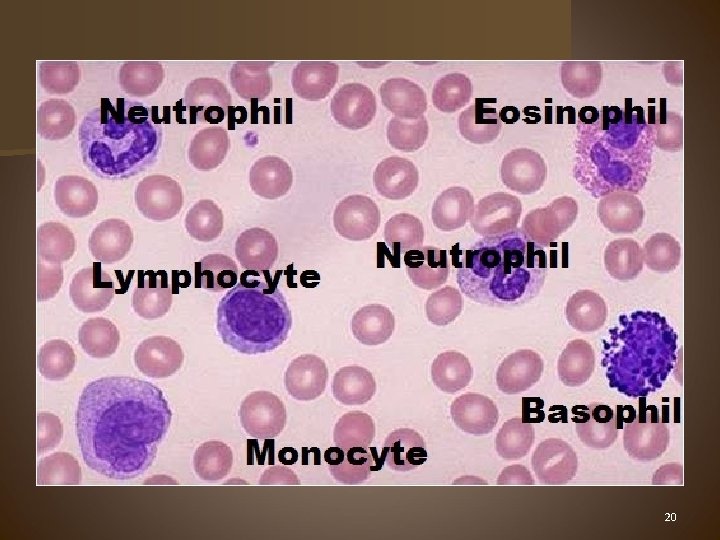
WBCs = Leucocytes Phagocytes (granulocytes +monocytes) - Immunocytes (lymphocytes) Neutrophils (polymorphs) Eosinophils Basophils Monocytes 19
20
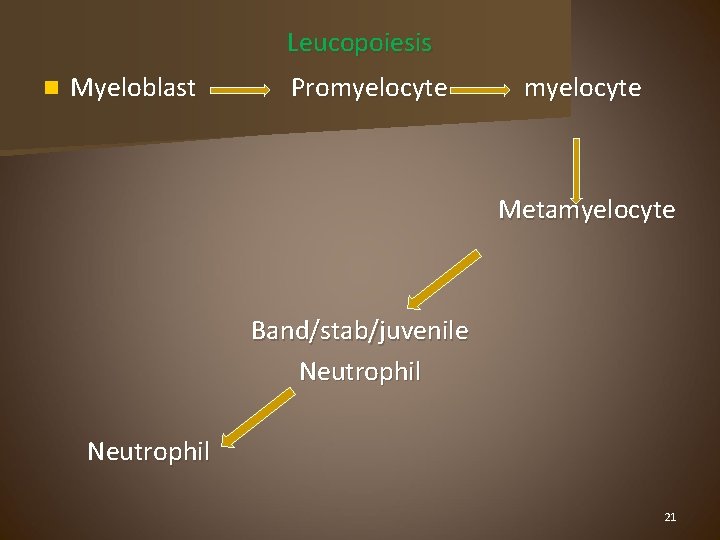
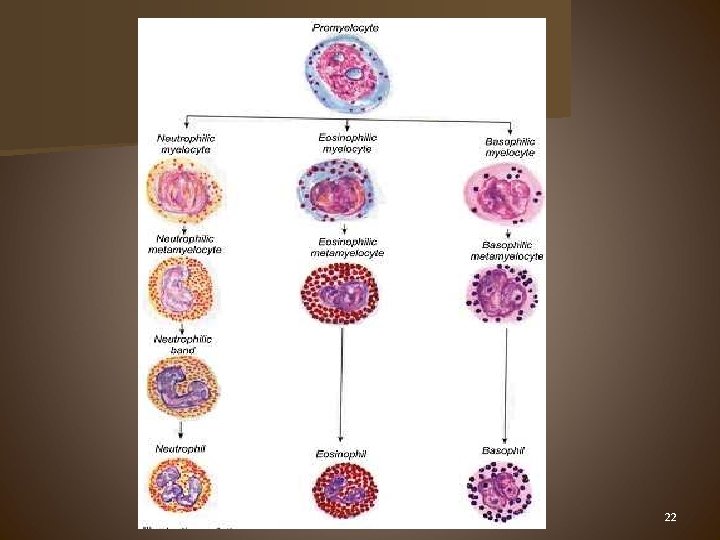
Leucopoiesis n Myeloblast Promyelocyte Metamyelocyte Band/stab/juvenile Neutrophil 21
22
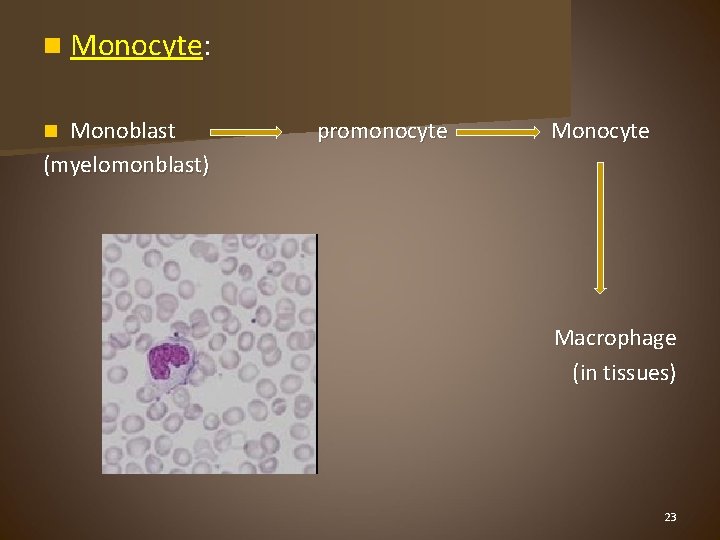
n Monocyte: Monoblast (myelomonblast) n promonocyte Macrophage (in tissues) 23
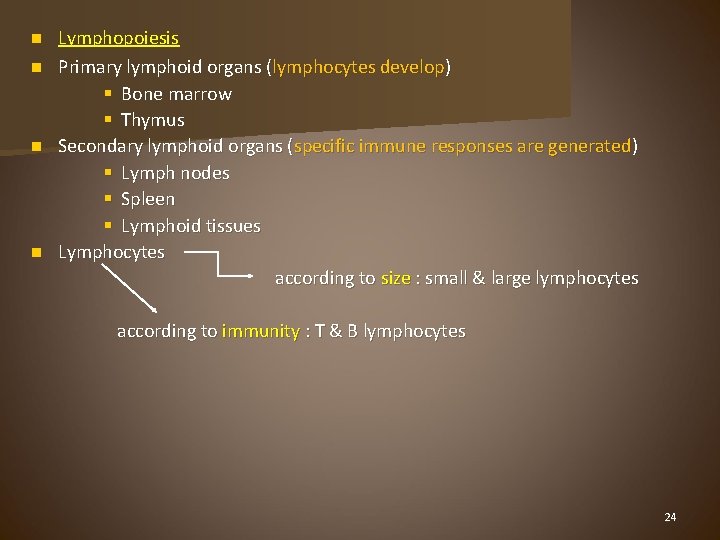
Lymphopoiesis n Primary lymphoid organs (lymphocytes develop) § Bone marrow § Thymus n Secondary lymphoid organs (specific immune responses are generated) § Lymph nodes § Spleen § Lymphoid tissues n Lymphocytes according to size : small & large lymphocytes n according to immunity : T & B lymphocytes 24
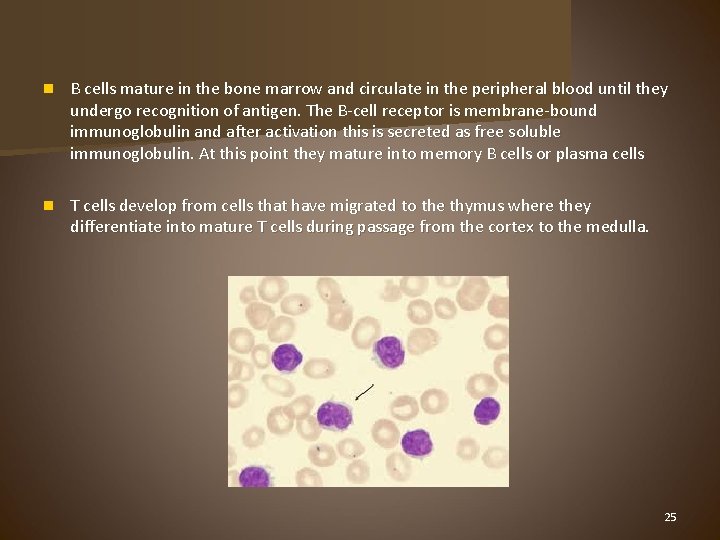
n B cells mature in the bone marrow and circulate in the peripheral blood until they undergo recognition of antigen. The B-cell receptor is membrane-bound immunoglobulin and after activation this is secreted as free soluble immunoglobulin. At this point they mature into memory B cells or plasma cells n T cells develop from cells that have migrated to the thymus where they differentiate into mature T cells during passage from the cortex to the medulla. 25
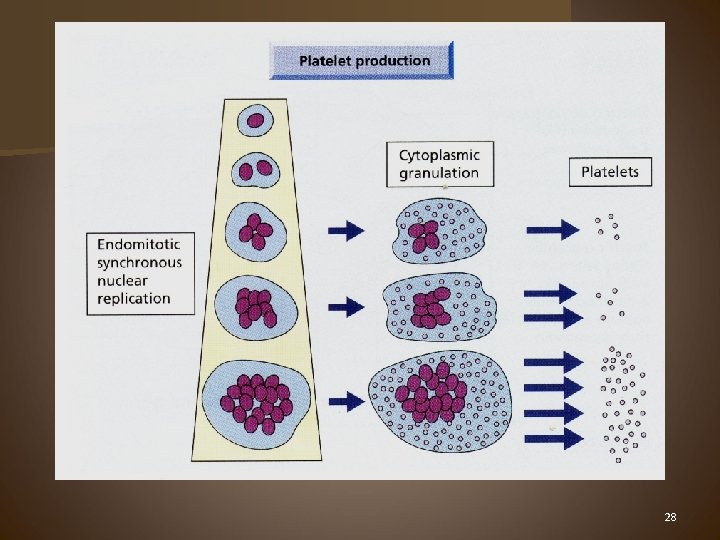
Thrombopoiesis n n n n Platelets play a major role in primary hemostasis, Life span 7 -10 days. Small discoid non nucleated. Produced in B. M by fragmentation of cytoplasm of megakaryocytes. Megakaryocytes undergoes endomitotic division = DNA replication without nuclear or cytoplasmic division. One megakaryocyte gives 1000 – 5000 plts Thrombopoietin hormone (produced by liver & kidney) is the main regulator. 26
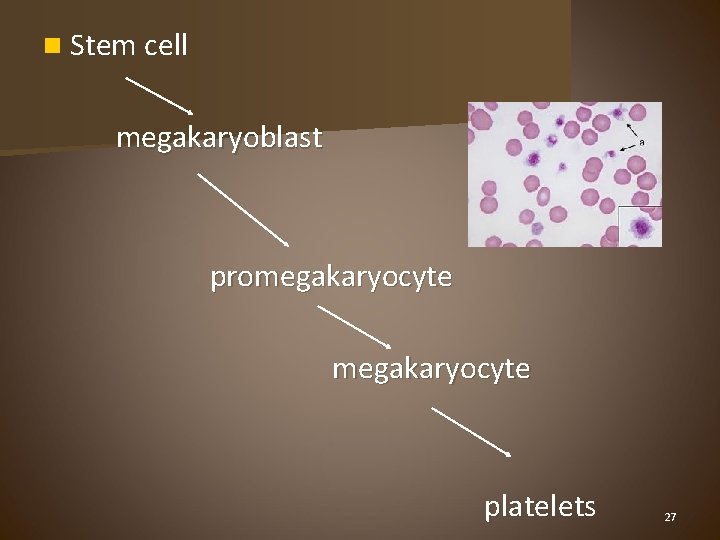
n Stem cell megakaryoblast promegakaryocyte platelets 27
28
Homework 1 1. 1. List the organs or systems involved in adult hematopoiesis. 2. Describe a "pluripotent cell". 3. Define the following terms: a. erythropoiesis b. granulopoiesis c. lymphopoiesis d. megakaryopoiesis 4. Differentiate between a monocyte and a macrophage. 5. The hematopoietic stem cell is capable of : a-Replication b-Differentiation c-Replication and differentiation 6. The process of hematpoiesis under the control of: a- Growth hormone b- Hematopoietic growth factorsc c- Thyroid hormone 29
- Slides: 29