
Tabloid and Broadsheet Journalism Headlines Sub headlines StraplineOverlines

Tabloid and Broadsheet Journalism
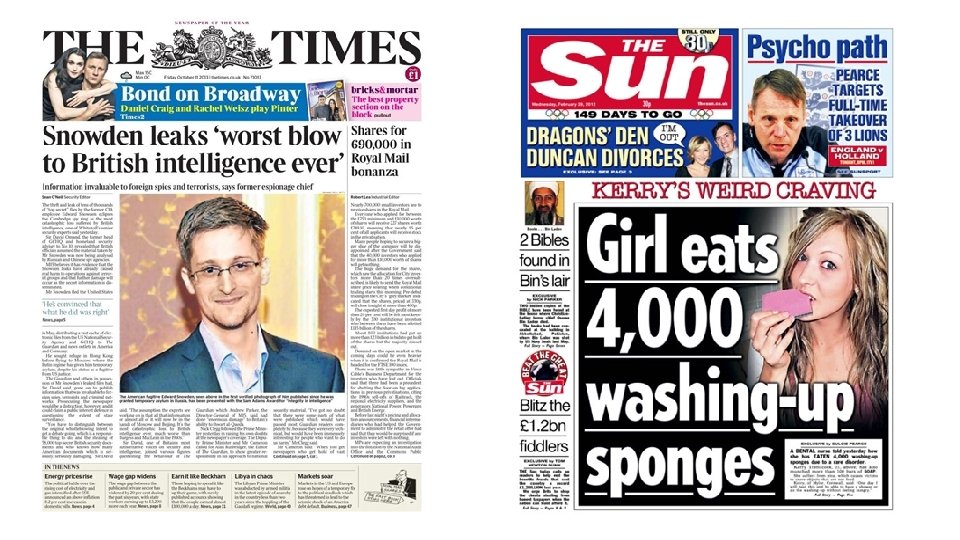
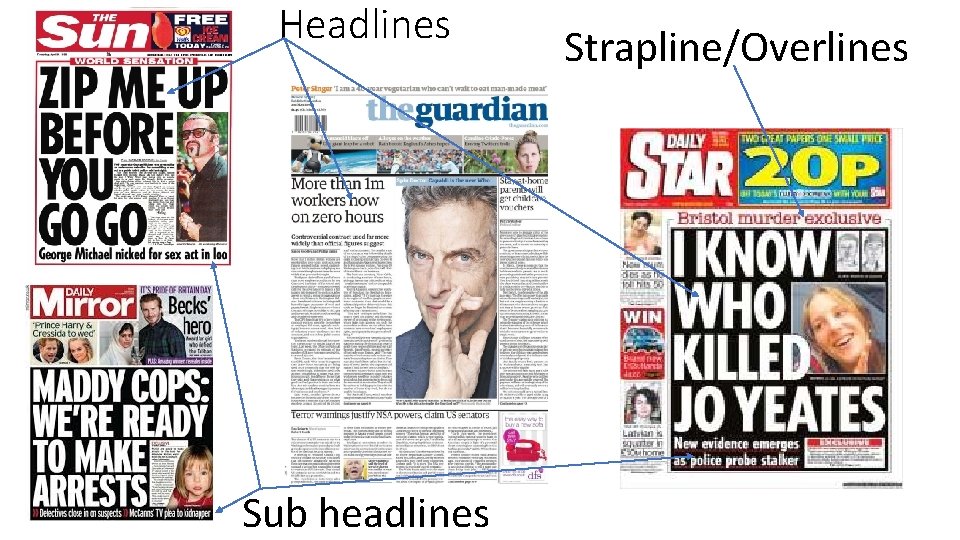
Headlines Sub headlines Strapline/Overlines
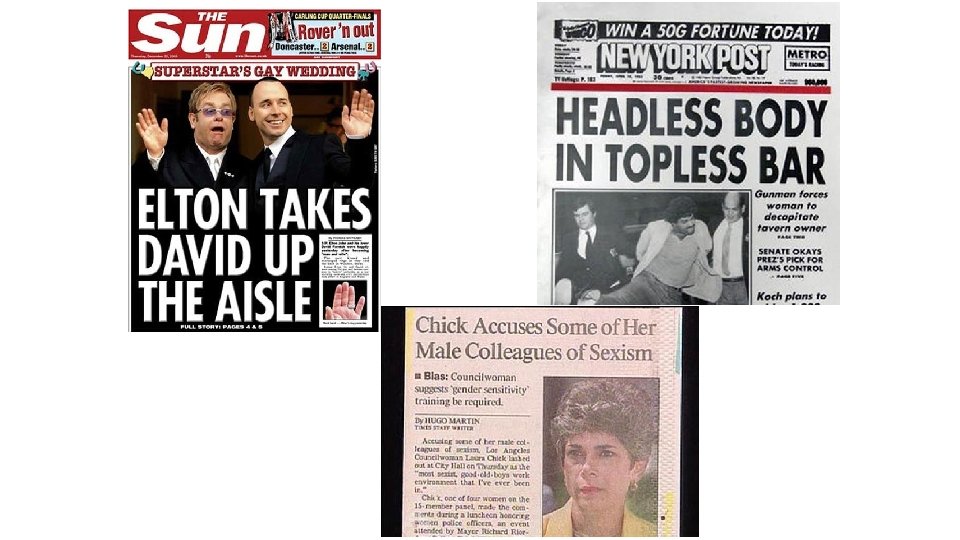
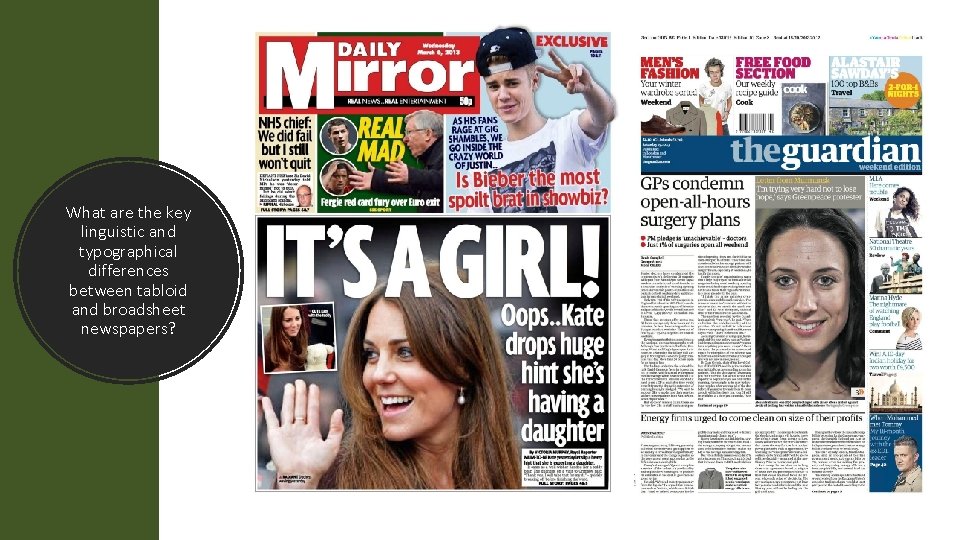
What are the key linguistic and typographical differences between tabloid and broadsheet newspapers?
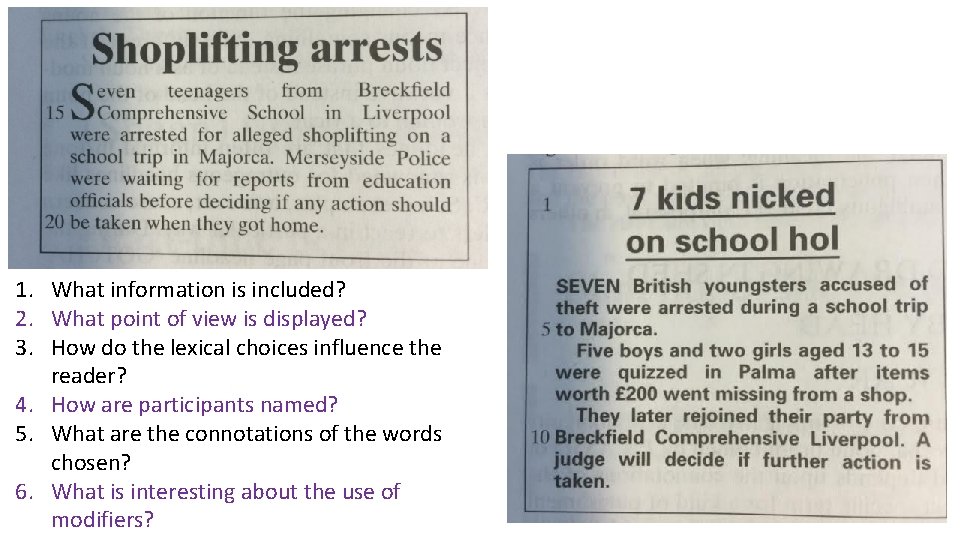
1. What information is included? 2. What point of view is displayed? 3. How do the lexical choices influence the reader? 4. How are participants named? 5. What are the connotations of the words chosen? 6. What is interesting about the use of modifiers?
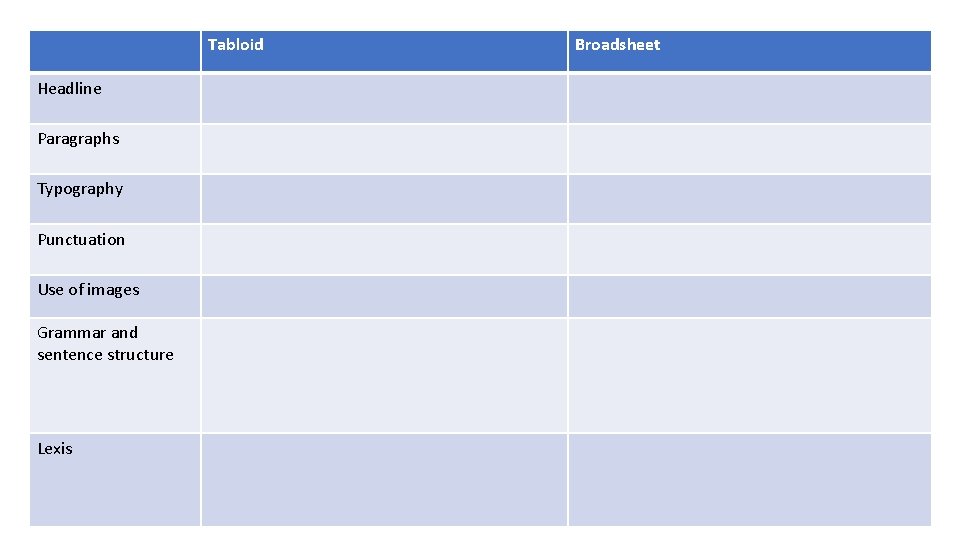
Tabloid Headline Paragraphs Typography Punctuation Use of images Grammar and sentence structure Lexis Broadsheet
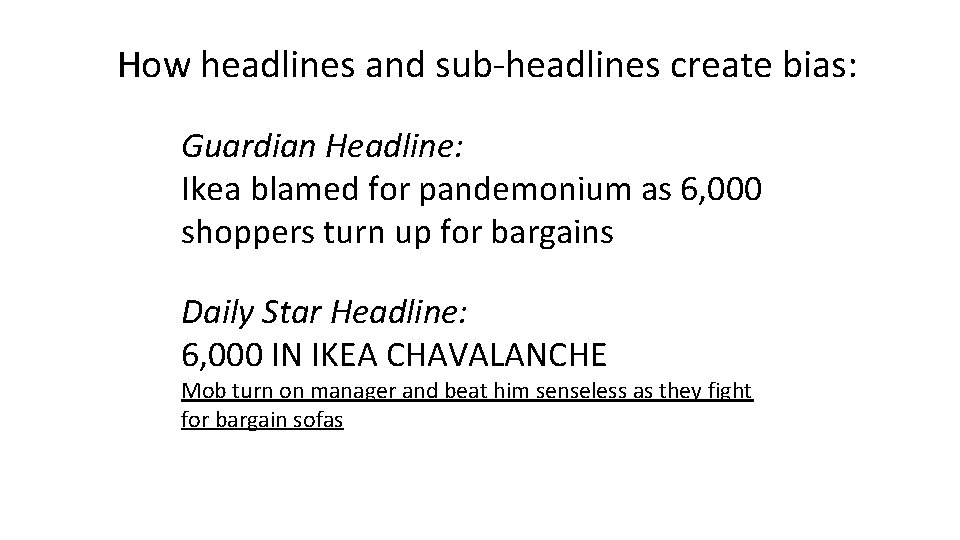
How headlines and sub-headlines create bias: Guardian Headline: Ikea blamed for pandemonium as 6, 000 shoppers turn up for bargains Daily Star Headline: 6, 000 IN IKEA CHAVALANCHE Mob turn on manager and beat him senseless as they fight for bargain sofas
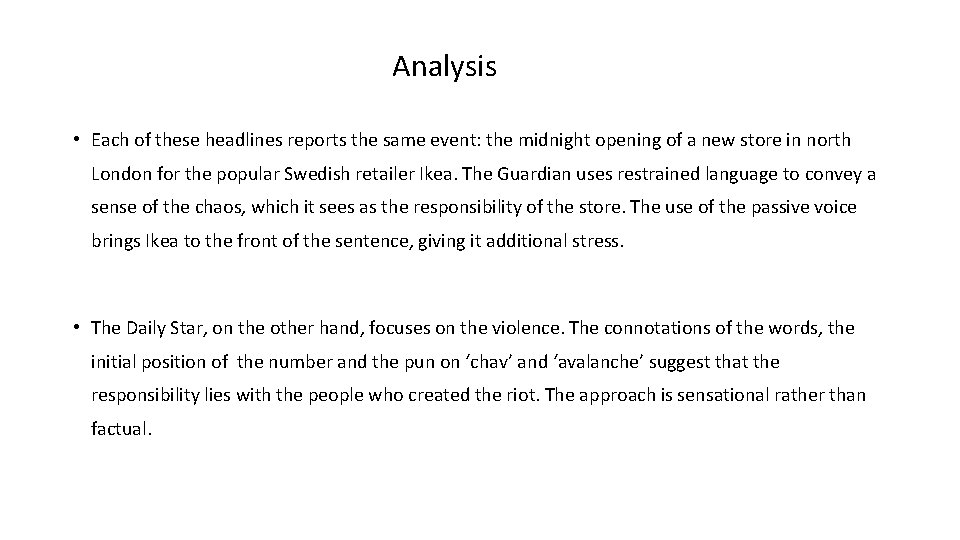
Analysis • Each of these headlines reports the same event: the midnight opening of a new store in north London for the popular Swedish retailer Ikea. The Guardian uses restrained language to convey a sense of the chaos, which it sees as the responsibility of the store. The use of the passive voice brings Ikea to the front of the sentence, giving it additional stress. • The Daily Star, on the other hand, focuses on the violence. The connotations of the words, the initial position of the number and the pun on ‘chav’ and ‘avalanche’ suggest that the responsibility lies with the people who created the riot. The approach is sensational rather than factual.
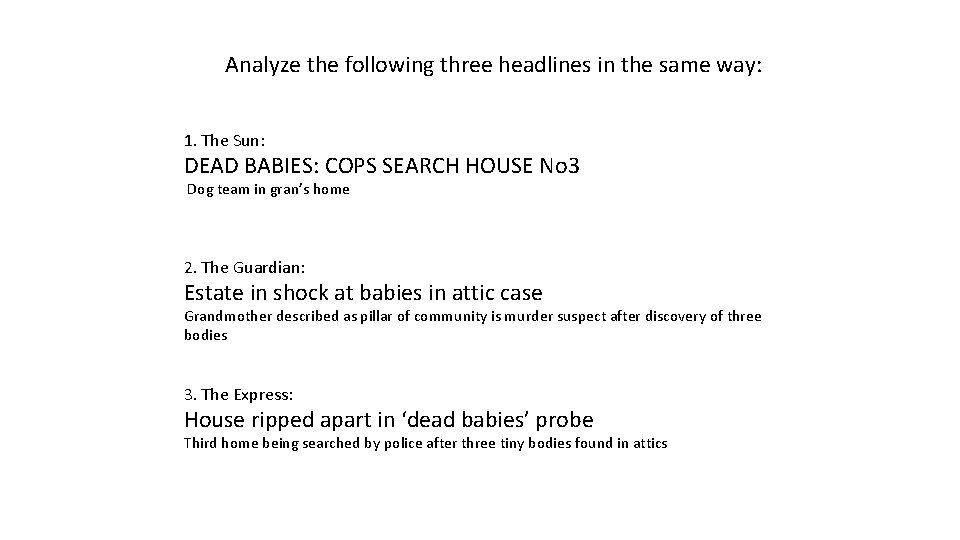
Analyze the following three headlines in the same way: 1. The Sun: DEAD BABIES: COPS SEARCH HOUSE No 3 Dog team in gran’s home 2. The Guardian: Estate in shock at babies in attic case Grandmother described as pillar of community is murder suspect after discovery of three bodies 3. The Express: House ripped apart in ‘dead babies’ probe Third home being searched by police after three tiny bodies found in attics
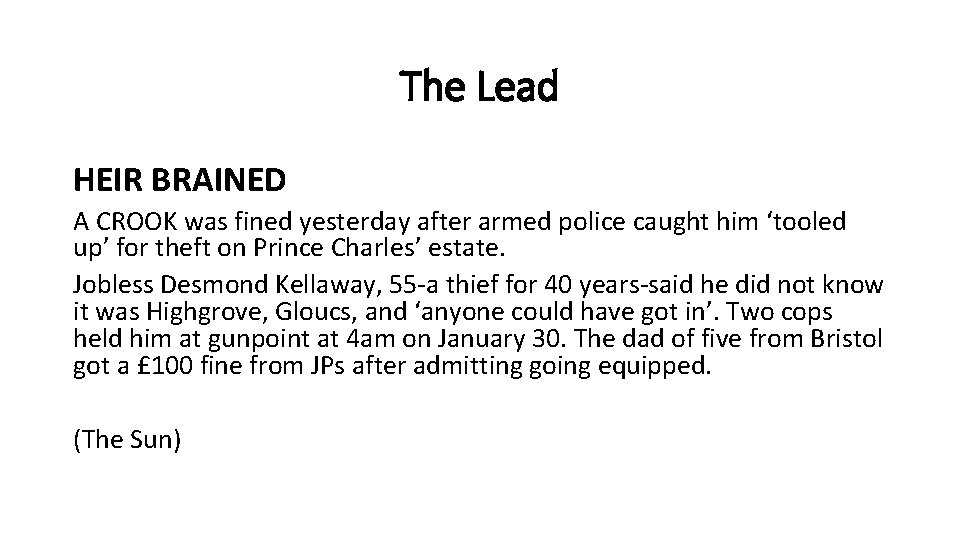
The Lead HEIR BRAINED A CROOK was fined yesterday after armed police caught him ‘tooled up’ for theft on Prince Charles’ estate. Jobless Desmond Kellaway, 55 -a thief for 40 years-said he did not know it was Highgrove, Gloucs, and ‘anyone could have got in’. Two cops held him at gunpoint at 4 am on January 30. The dad of five from Bristol got a £ 100 fine from JPs after admitting going equipped. (The Sun)
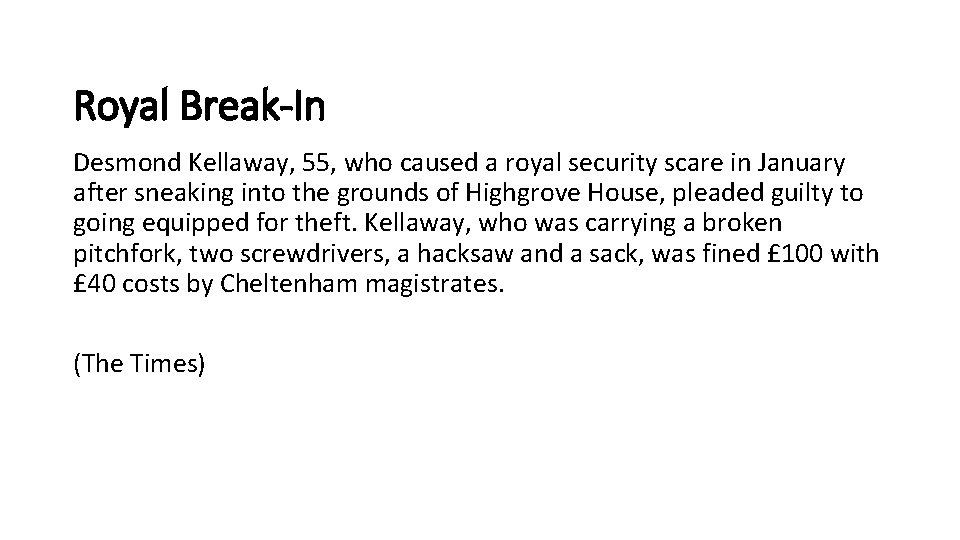
Royal Break-In Desmond Kellaway, 55, who caused a royal security scare in January after sneaking into the grounds of Highgrove House, pleaded guilty to going equipped for theft. Kellaway, who was carrying a broken pitchfork, two screwdrivers, a hacksaw and a sack, was fined £ 100 with £ 40 costs by Cheltenham magistrates. (The Times)
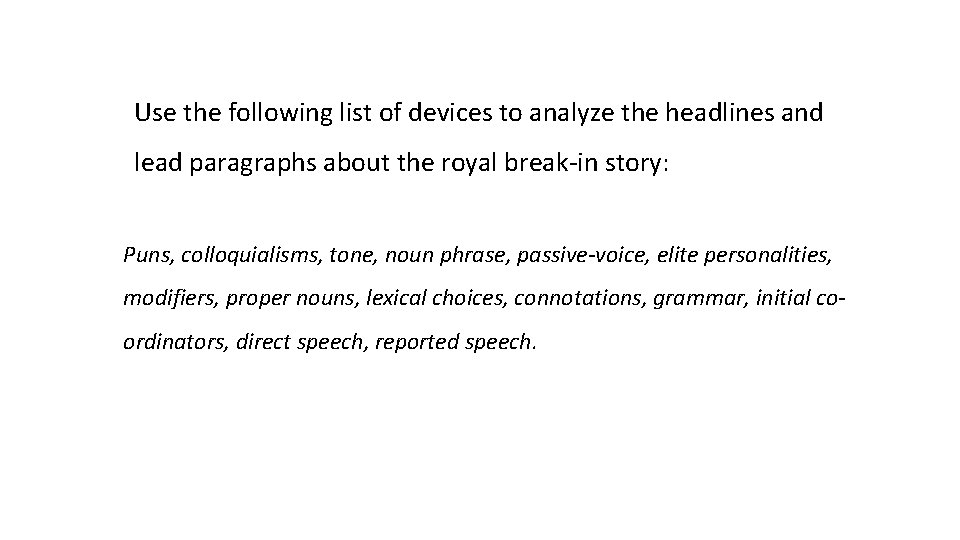
Use the following list of devices to analyze the headlines and lead paragraphs about the royal break-in story: Puns, colloquialisms, tone, noun phrase, passive-voice, elite personalities, modifiers, proper nouns, lexical choices, connotations, grammar, initial coordinators, direct speech, reported speech.
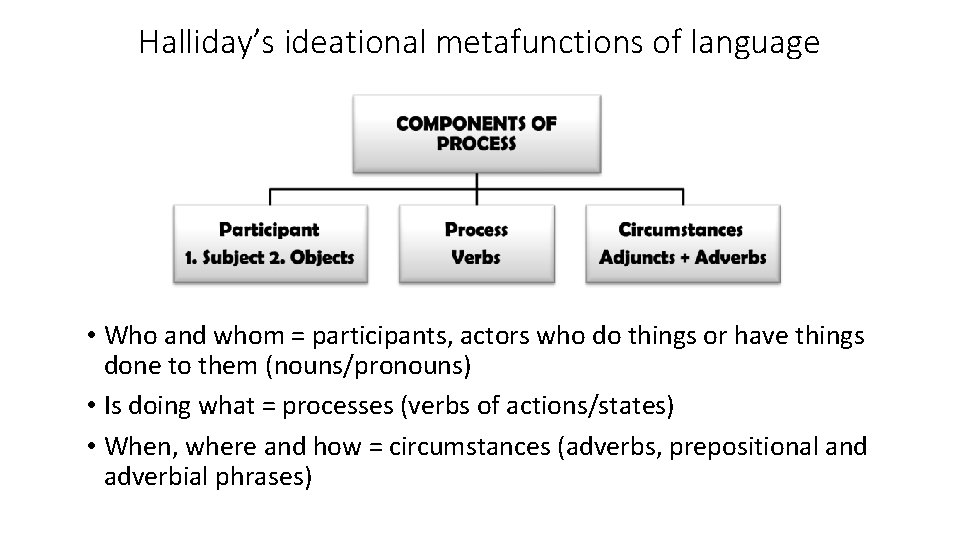
Halliday’s ideational metafunctions of language • Who and whom = participants, actors who do things or have things done to them (nouns/pronouns) • Is doing what = processes (verbs of actions/states) • When, where and how = circumstances (adverbs, prepositional and adverbial phrases)
• Apply Halliday’s ideational metafunctions to analyse this headline and lead: GIRL 10 MURDERED WHILE MUM WAS OUT WITH BOYFRIEND Little Julie Smith was strangled in her home while her Mum was having a good time with her boyfriend in the local pubs and clubs.
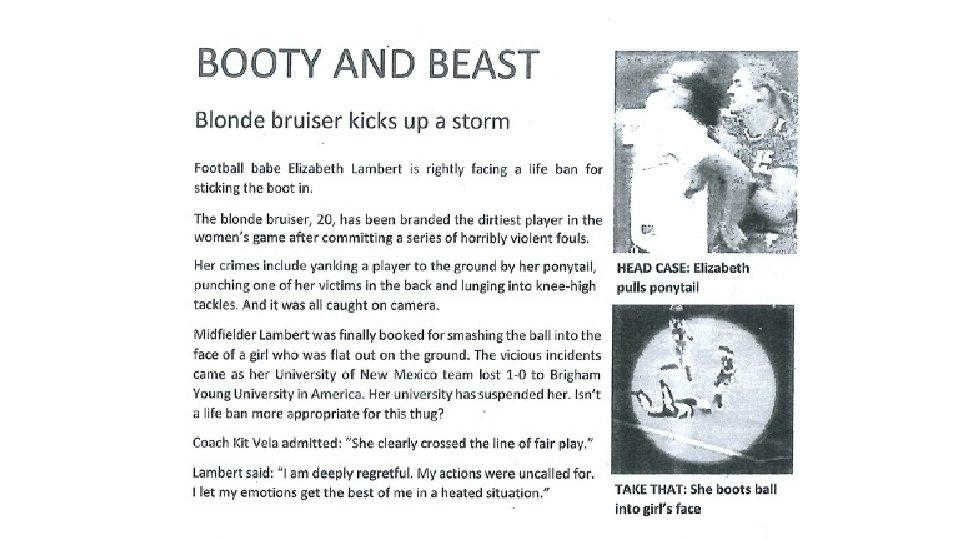
Putting it all together • Complete an analysis on the newspaper report on the following slide. Explain how the article positions the reader in relation to the subject – what are you meant to think and feel about Elizabeth Lambert?
- Slides: 17