
Table of Contents Title Wind Page 75 Date
Table of Contents Title: Wind Page #: 75 Date: 2/14/2013
Objective • Students will be able to describe conditions that contribute to the likelihood that an area will experience wind erosion. • Students will be able to identify wind-formed landscape features. • Students will be able to describe how dunes form and migrate.

Word of the Day • Velocity: The speed of an object and its direction of motion.
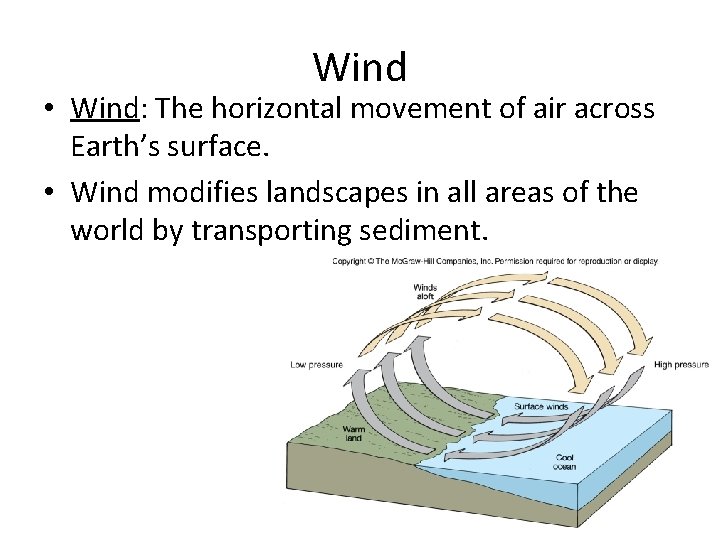
Wind • Wind: The horizontal movement of air across Earth’s surface. • Wind modifies landscapes in all areas of the world by transporting sediment.
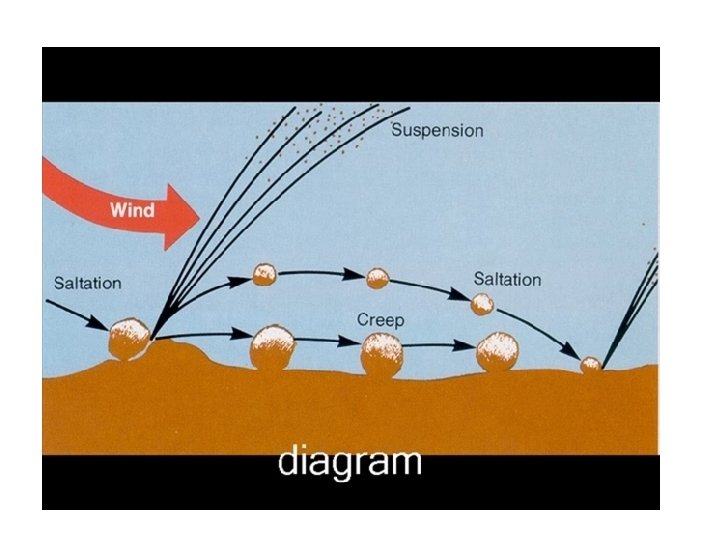
Wind • Wind Erosion and Transport: • Wind can move smaller particles. – It can cause them to roll: “creep. ” – It can pick them up and carry them long distances: “suspension” – It can cause large particles to bounce up and down: “saltation”
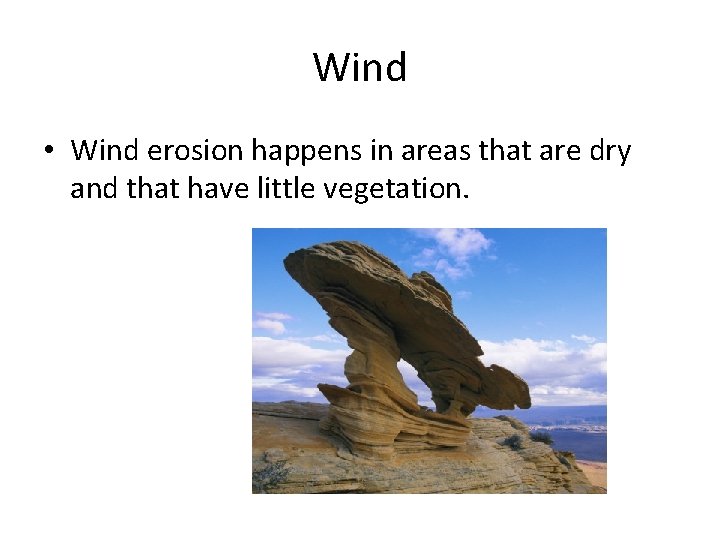
Wind • Wind erosion happens in areas that are dry and that have little vegetation.
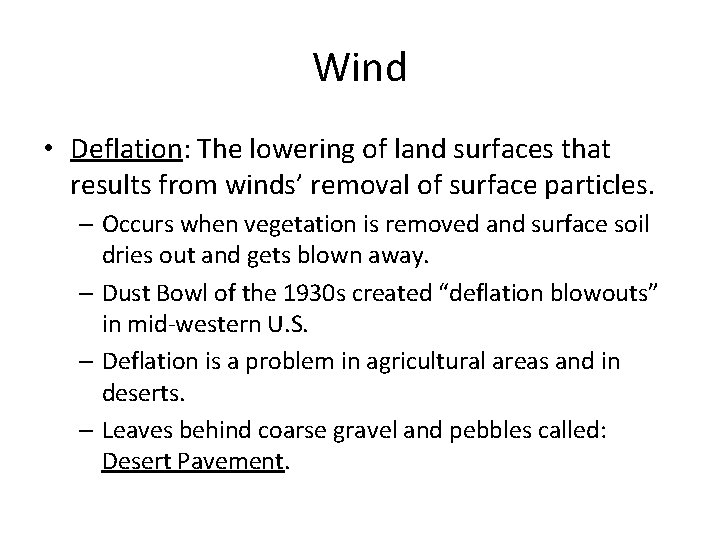
Wind • Deflation: The lowering of land surfaces that results from winds’ removal of surface particles. – Occurs when vegetation is removed and surface soil dries out and gets blown away. – Dust Bowl of the 1930 s created “deflation blowouts” in mid-western U. S. – Deflation is a problem in agricultural areas and in deserts. – Leaves behind coarse gravel and pebbles called: Desert Pavement.
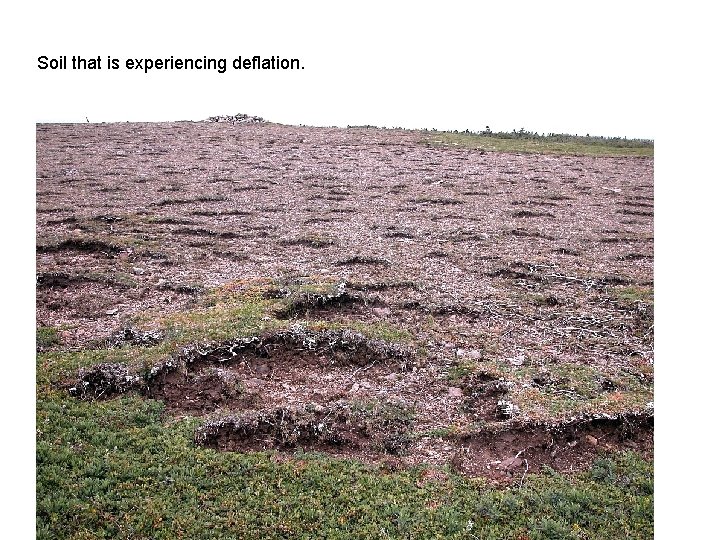
Soil that is experiencing deflation.
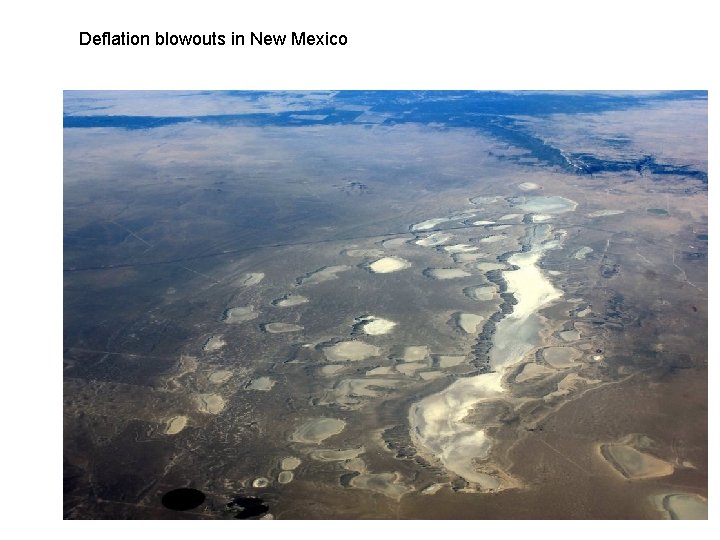
Deflation blowouts in New Mexico
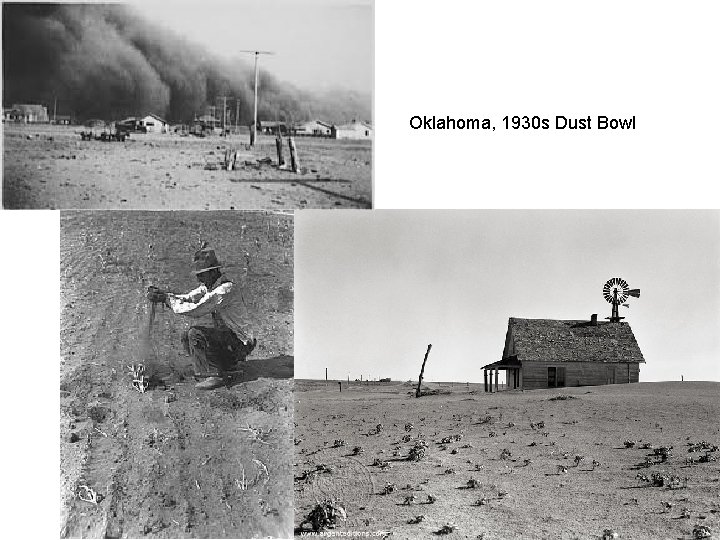
Oklahoma, 1930 s Dust Bowl
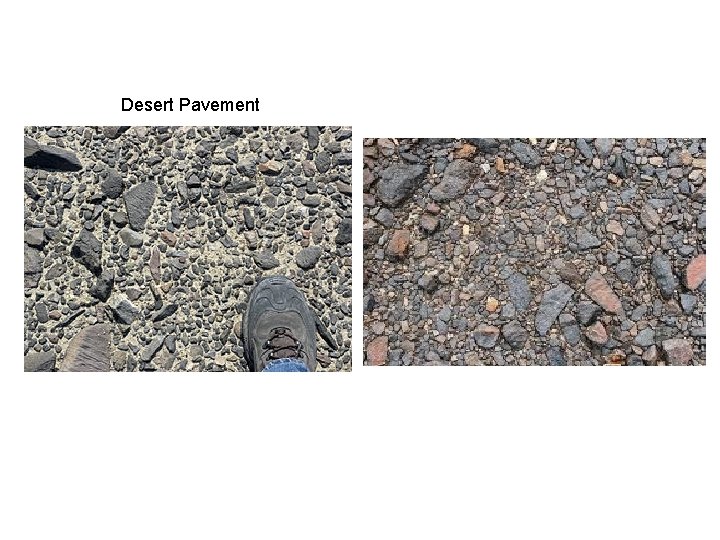
Desert Pavement
Wind • Abrasion: When particles of sand rub against the surface of rocks or other materials. – Sand contains quartz – a hard mineral that wears away rock. – Characteristics of wind abrasion: • Rocks are pitted and grooved. • Rocks become polished on windward side and develop smooth surfaces with sharp edges.
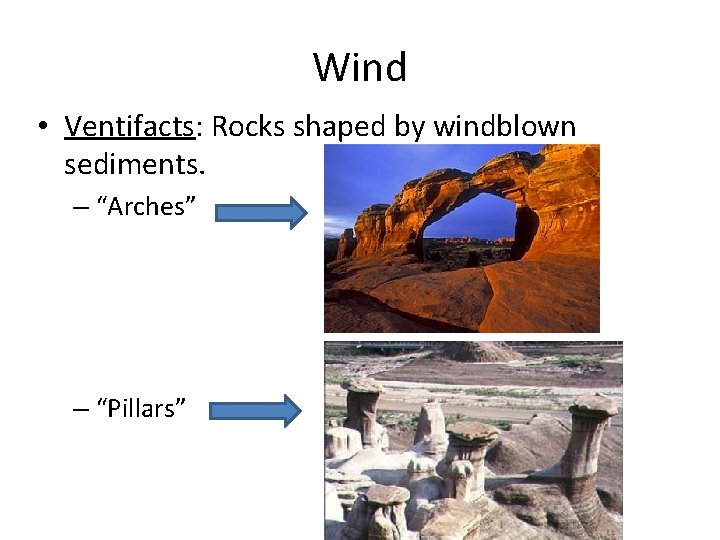
Wind • Ventifacts: Rocks shaped by windblown sediments. – “Arches” – “Pillars”
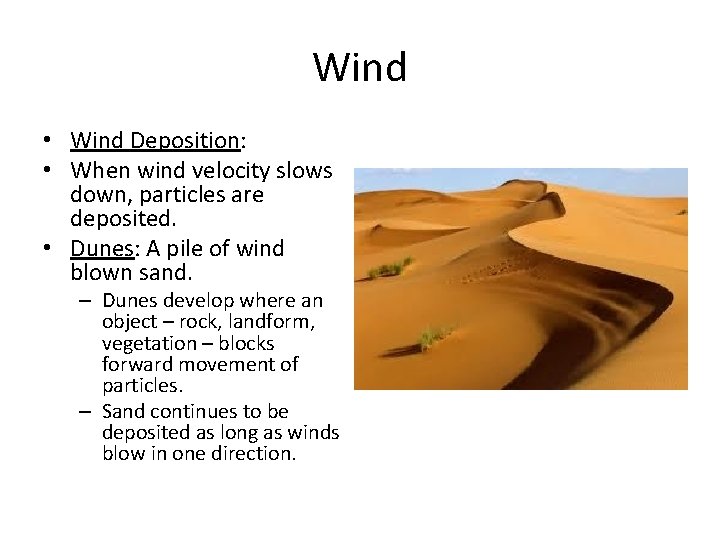
Wind • Wind Deposition: • When wind velocity slows down, particles are deposited. • Dunes: A pile of wind blown sand. – Dunes develop where an object – rock, landform, vegetation – blocks forward movement of particles. – Sand continues to be deposited as long as winds blow in one direction.
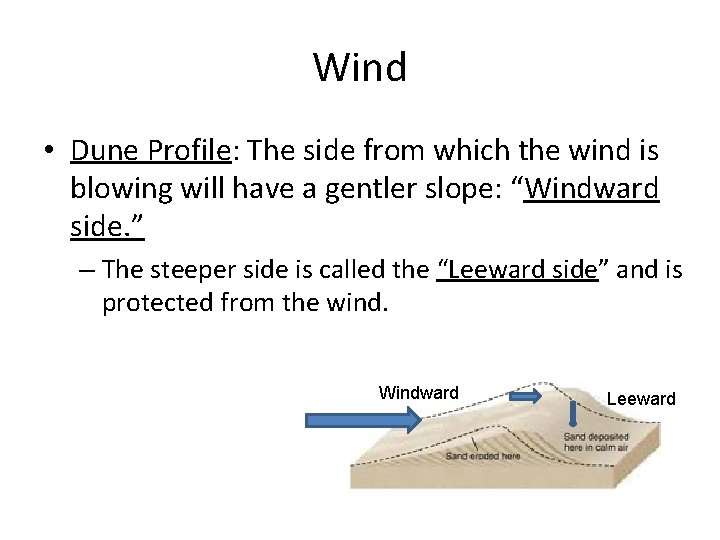
Wind • Dune Profile: The side from which the wind is blowing will have a gentler slope: “Windward side. ” – The steeper side is called the “Leeward side” and is protected from the wind. Windward Leeward
Wind • Different Types of Dunes: Determined by wind direction, vegetation, wind velocity and the amount of sand. • Dune Migration: Dunes move as long as wind blows sand hard enough to cause it to blow of the windward side and onto the leeward side.
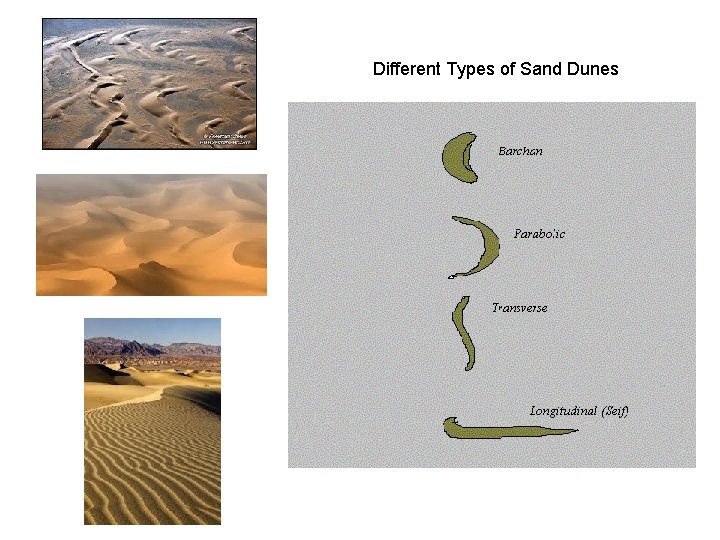
Different Types of Sand Dunes
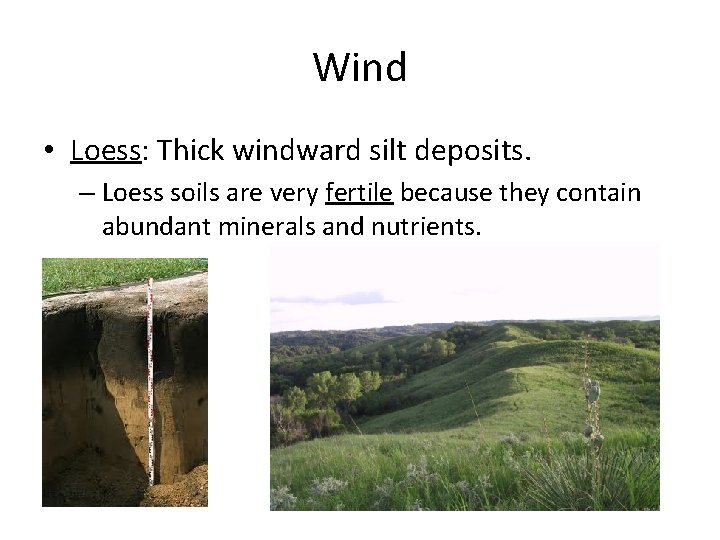
Wind • Loess: Thick windward silt deposits. – Loess soils are very fertile because they contain abundant minerals and nutrients.
- Slides: 19