
Table of Contents Title Rate of Weathering Page
Table of Contents Title: Rate of Weathering Page #: 54 Date: 1/7/2013
Objective • Students will be able to identify variables that affect the rate of weathering.
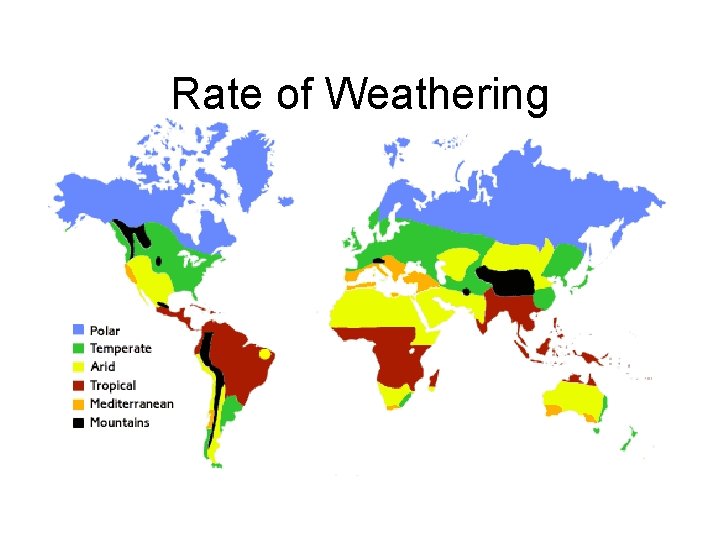
Rate of Weathering • Effects of Climate on Weathering: Climate is the major influence on the rate of weathering of Earth’s materials. – Interaction between temperature and precipitation in a given climate determines the rate of weathering in a region.
Rate of Weathering
Rate of Weathering • Rates of Chemical Weathering: – Chemical weathering occurs rapidly in places with warm temperatures, abundant rainfall and lush vegetation. – Greatest effects of chemical weathering occur along the equator.
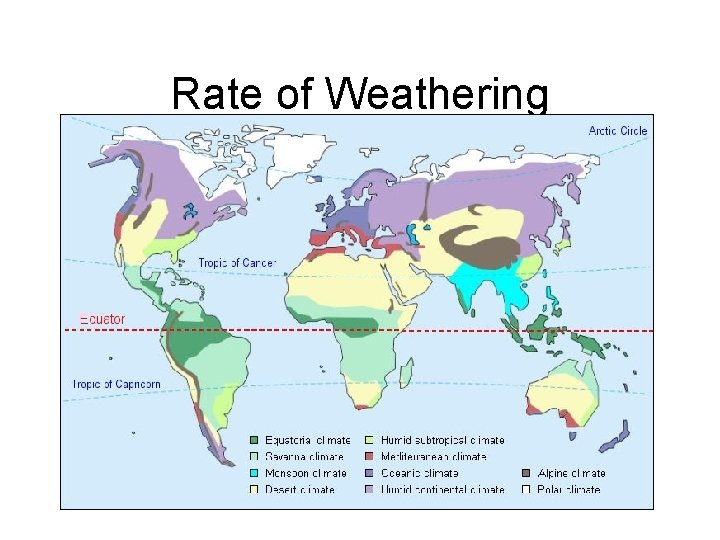
Rate of Weathering
Rate of Weathering • Rates of Physical Weathering: – Physical or Mechanical Weathering is most rapid in places with cool climates - Frost Wedging. – Cooler temperatures slow reaction rates of chemical weathering.
Rate of Weathering • Rock Type and Composition: – Not all rocks in a climate weather at the same rate. – The types of minerals in a rock play a role in how fast a rock weathers. – Example: Limestone and Marble contain Calcite and will weather more quickly than rocks containing mostly Quartz such as Quartzite and Granite.
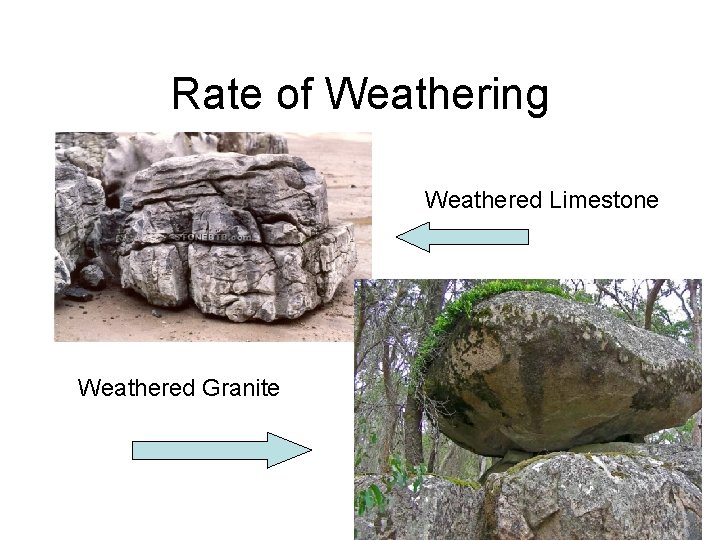
Rate of Weathering Weathered Limestone Weathered Granite
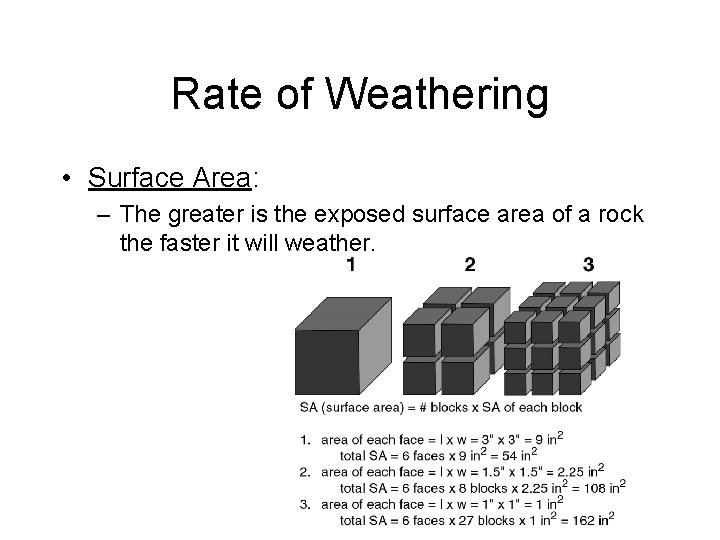
Rate of Weathering • Surface Area: – The greater is the exposed surface area of a rock the faster it will weather.
Rate of Weathering • Topography: – The slope of landscape determines the rate of weathering. – Steep Slope = Faster weathering (rocks will fall down because of gravity. ) – Flat Surface = Slow weathering (rocks do not move. ) – Steep slopes promote erosion and continuously expose less weathered material.
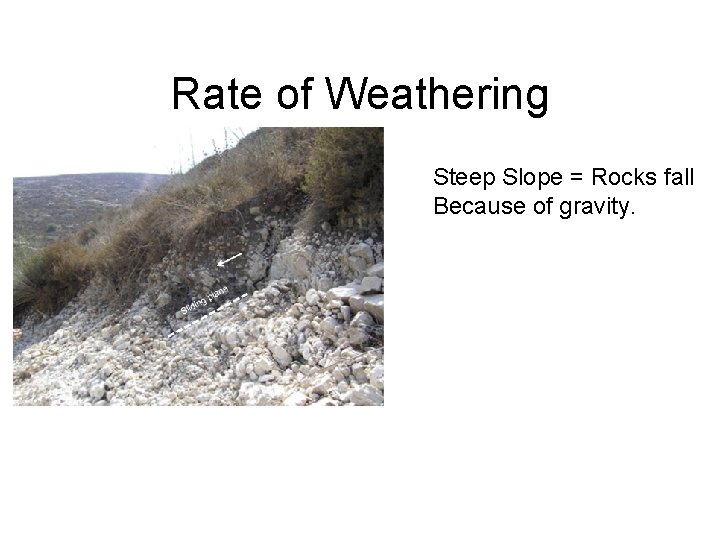
Rate of Weathering Steep Slope = Rocks fall Because of gravity.
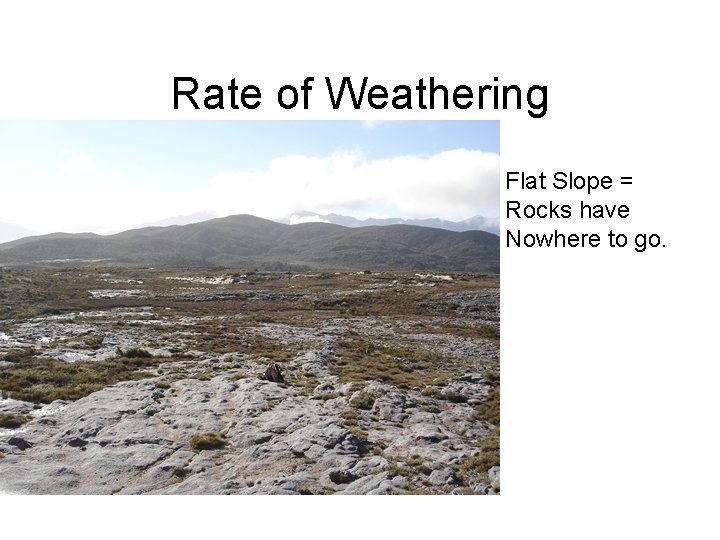
Rate of Weathering Flat Slope = Rocks have Nowhere to go.

Classwork: • Page 170 questions 1 -5.
- Slides: 14