
Table of Contents Title 7 3 Soil Texture
Table of Contents Title: 7. 3 Soil Texture, Fertility and Color Page #: 62 Date: 1/29/2013
Objectives �Students will be able to differentiate among the factors of soil formation.
Words of the Day �Hue: Color �Value: Lightness or darkness �Chroma: Intensity
Soil Texture � Particles of soil are classified by their size. • There are 3 classifications: � 1) Clay (smallest particles) � 2) Silt (medium particles) � 3) Sand (largest particles) � Particle size effects soil’s capacity to retain moisture and to support plant growth.

USDA Soil Classification
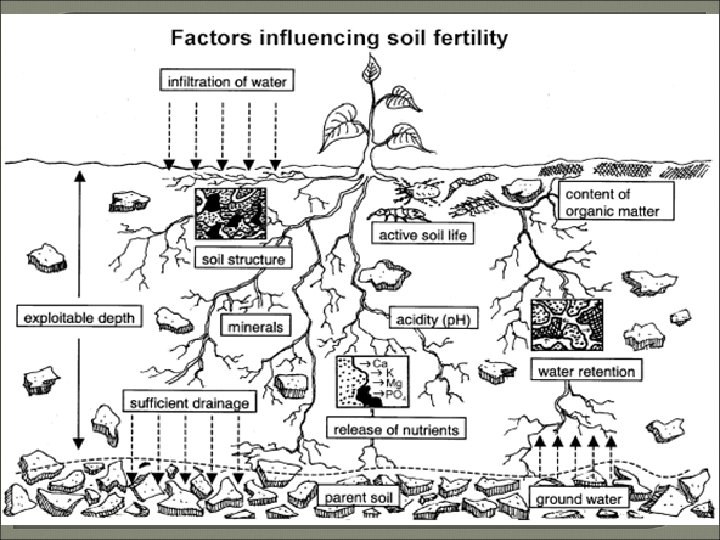
Soil Fertility � Fertility: A measure of how well a soil can support growth. � Factors of fertility: 1. 2. 3. 4. � Topography Availability of minerals and nutrients Microorganisms present Amount and availability of precipitation Commercial fertilizers put nitrates, potassium and phosphorous into soils.
Soil Color � Determined by the minerals, organic matter and moisture in each soil horizon. 1. 2. 3. 4. � O and A horizons are dark in color = Rich in Humus Red and yellow soils = oxidation of iron minerals (rust) Yellow soils = environmental problems, poor drainage Gray / blue soils = poor drainage, little oxygen Scientists describe soil color using the Munsell System of Color Notation. • 1. 2. 3. 3 Parts: Hue (color) Value (lightness, darkness) Chroma (intensity)
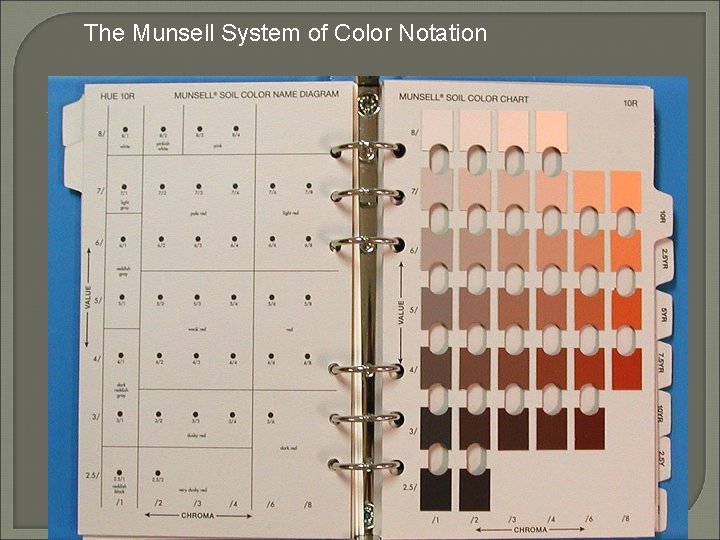
The Munsell System of Color Notation
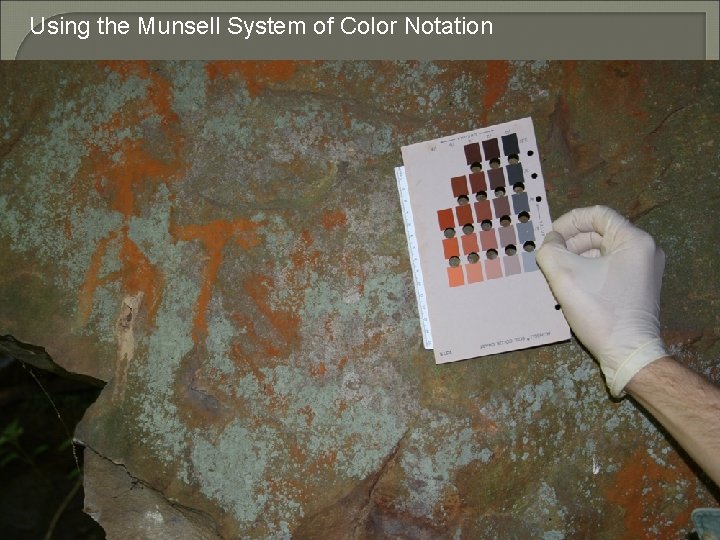
Using the Munsell System of Color Notation
- Slides: 10